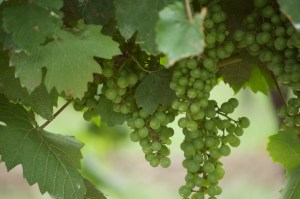
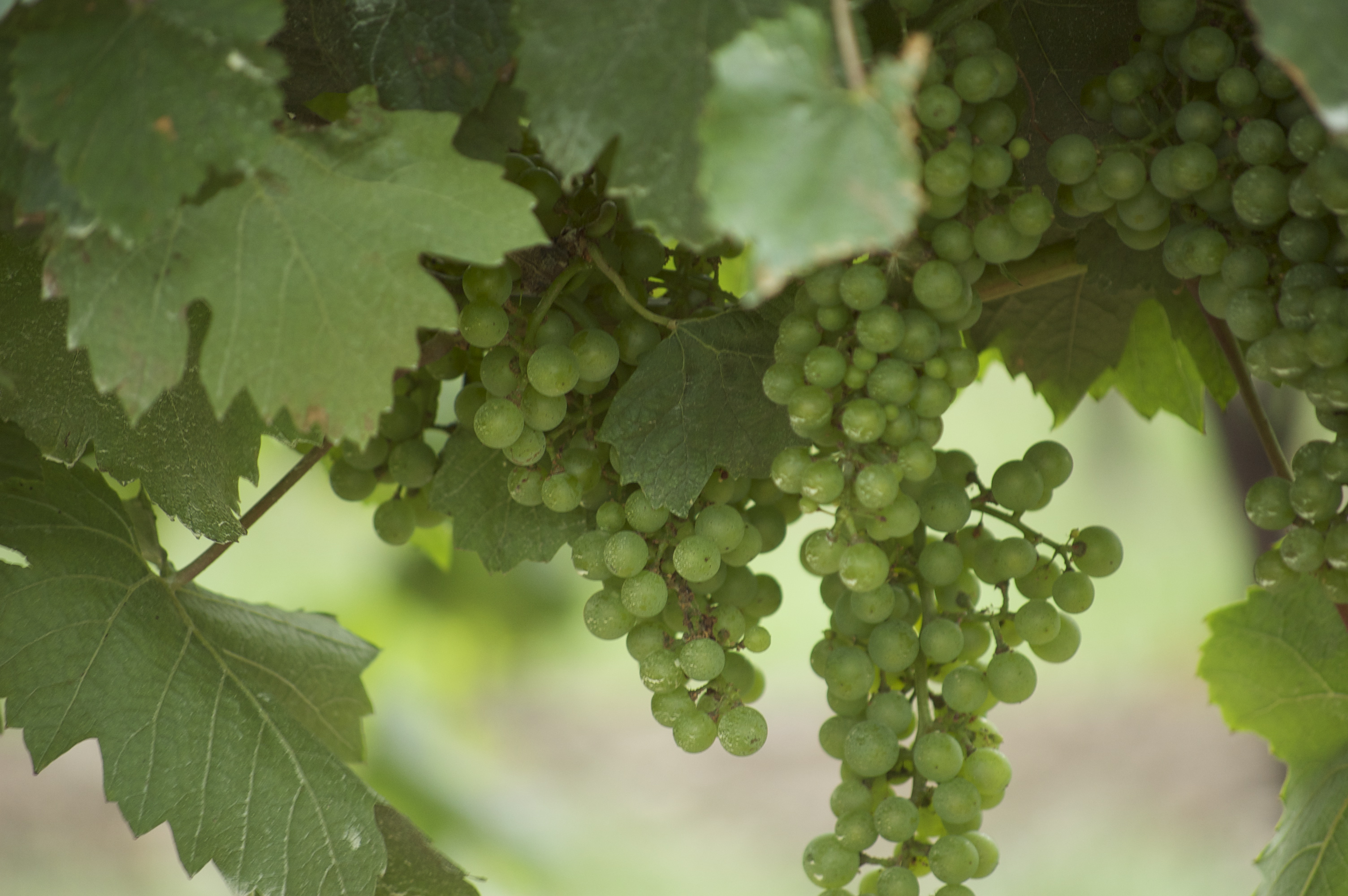
Grapes on the vine ~ ready to be picked
September, to me, always means two things: back to school (whether I’m going or not) and the grape harvest. This year, I am planning to go back to school for the WSET Foundation Course through the American Wine School here in Cleveland. For four weeks, I’ll learn the basics about how to taste, serve, buy and store wine, and get a little introduction to food and wine pairing. It’ll be great knowledge for my trip to California Wine Country in November. More about that in future posts.
So, I’m back to the study hall and today’s subject: harvest and white wine production.
The harvest itself can be done in two ways:
Machine harvest is by far the quickest and most efficient but it is very costly. It can also be a little heavy on the grapes, and depending on the variety, can damage or minimize the flavor. You have to have the correct vineyard setup (your vines must be straight), and it doesn’t lend well to grading. This is a task that can’t be done afterwards; you have to go through the vineyard before the machines ever start up.
Manual harvest allows you to grade or sort as you go, and allows for the removal of low quality and damaged fruit. This, in turn, can maximize potential quality and flavor of the product.
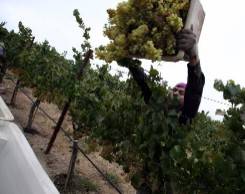
Harvest ~ Justin Sullivan/Getty Images
Once the grapes are harvested, sorted and graded, they go to the ‘crusher’ for stem removal. If stems are left on in the pressing, the wine can become bitter, thereby reducing the quality of the wine. Who wants bitter wine?
Main steps for white wine:
First, it’s a must that I talk about must. Sorry. I know that’s a bad groaner, but I had to. Must is ~ the juice, seeds, pulp and skins from the grape. All of it (except stems) is thrown into the press.
Juice is extracted from the must and then sent to the fermentation vessel (barrel, tank or concrete lined).
Yeast is added next to convert grape sugars into alcohol. When all the sugars are finally converted, the yeast dies and fermentation stops.
Voila! We have white wine.
The whole process for white wine takes from between 5 ~ 15 days. Smaller batches allow for more finely tuned wine making. A large batch might give you a bigger yield but the result will be a less finely nuanced wine. Sometimes great things can come in smaller packages.
Any winemaker would say that there is so much more that goes into the process than that, and I agree. You have to take into account the weather, how the growing seasons were up to harvest time, canopy management, terroir, among other things. All have great influence on what ends up in the bottle and eventually in your glass. I’ll get to those elements in greater depth as we go along, but this is a general overview of the basics.
Next study hall, I’ll write more about the influence that yeast in particular has on making or breaking a wine.
Cheers!
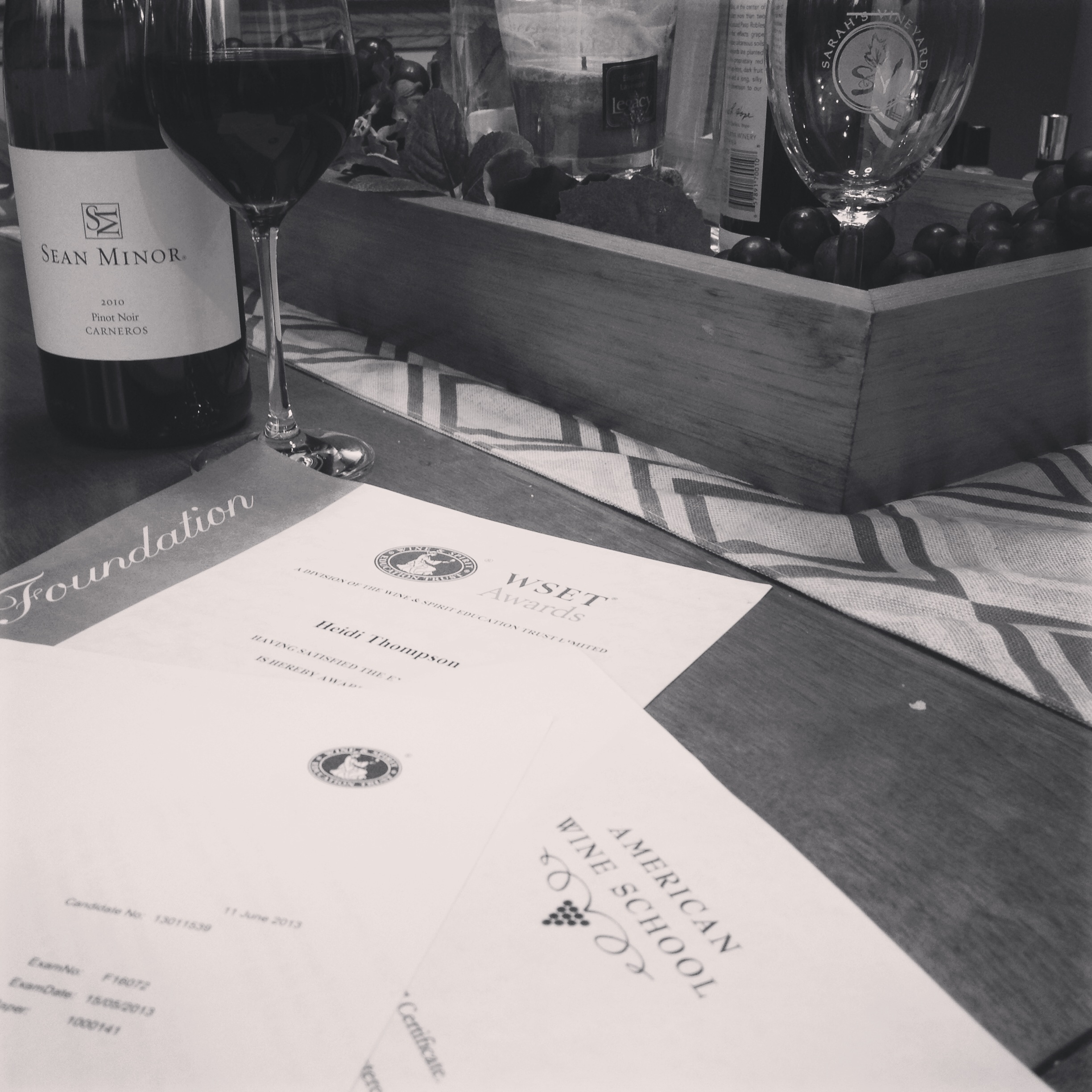 It came in the big envelope, which almost always means good news. I passed my WSET Foundation exam! Scoring a 97, HubbyDoug wondered aloud, “What happened to the other 3 percent?!” Quite the joker, he is. To celebrate, he decided to play sommelier and chose a ’10 Sean Minor Pinot Noir. Lovely! As we sipped, I thought about how long it had been since I had to commit facts and details to memory; it had been a while. As it turned out, I didn’t need to worry.





 The Wine Student