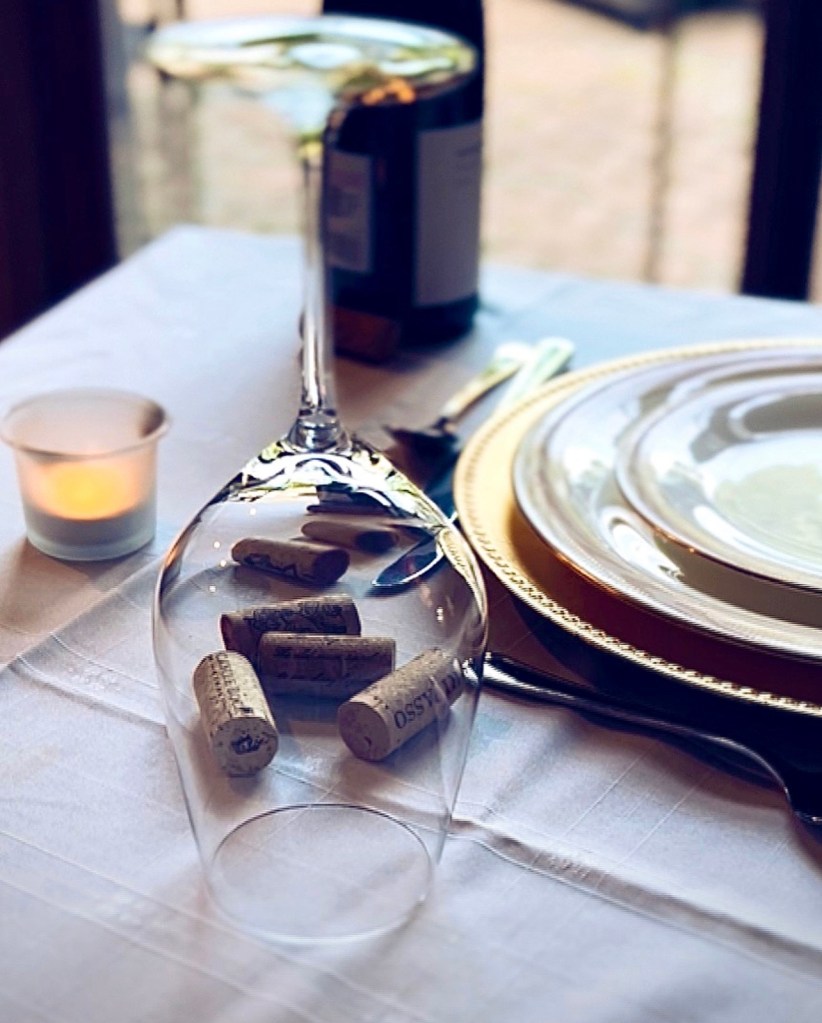
Dig if you will the picture: you’re in a great restaurant, your sommelier has just opened a wonderful bottle of wine at your table. They pour a bit in your glass. You swirl, then you sniff, then you sip. You nod to the somm that all is well, and the remaining glasses are poured. Easy, right?
But what happens if you get a wine that smells (or tastes) awful? The immediate impulse (aside from spitting it all over the tablecloth) is to just grin and bear it, and pretend that it’s delightful. Don’t make waves, and don’t seem like a wine snob. Wait. You’re paying for that bottle; it should be delightful.
How can you detect the fault in our wine? Start with your nose. Especially with things like cork taint, the nose always knows. Think back to the restaurant example, and the swirl, sniff, sip. This isn’t just fluffy posturing, there is a point to it. If the wine is corked, it’ll smell like wet newspapers, musty cardboard or, yep, a wet dog. We love Fido, but not in our wine.
What to do at a restaurant if you’ve noticed cork taint or another fault? With kindness, send it back. Yes. Send. It. Back. This is precisely why they have you sample the wine before pouring for the rest of the table. Be polite but don’t be shy. Most restaurants want to know if they have a bad bottle. It might not be an isolated situation; the entire case or shipment may be off. You’re paying a lot of money to not drink bad wine.
Please remember to be kind to your server or somm. Any fault isn’t their fault. They are there to help you.♥️
Now, if you’ve opened your wine at home and it’s corked, don’t dump it! Pour the remaining wine back into the bottle and take it back to your place of purchase. Most wine sellers will happily take it back or will offer an exchange. In fact, it’s good to let them know so they can notify their distributor or the winery. Companies need to know if they have a bad batch floating around; their reputation’s on the line.
Some Causes of Faulty Wine:
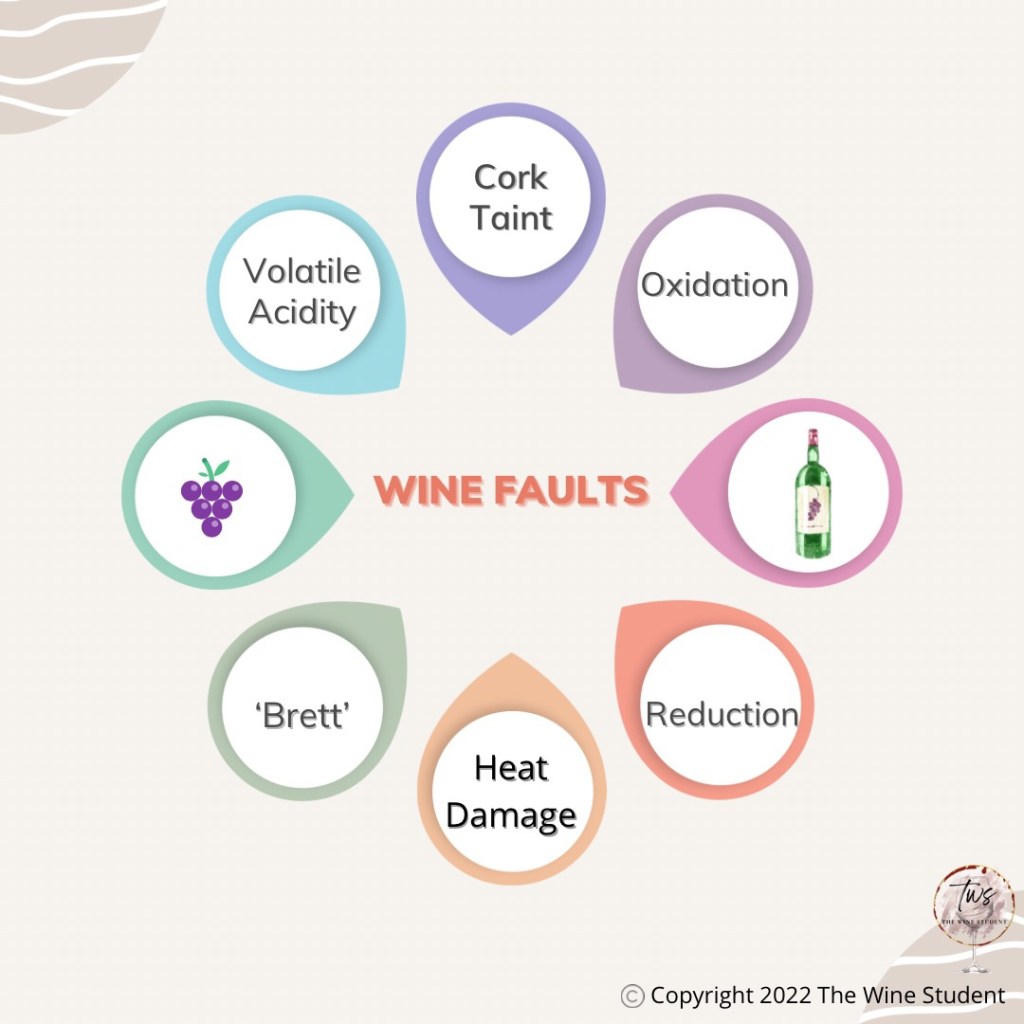
Cork Taint ~
• Infected cork – caused by chlorine (TCA-Trichloranisole) coming in contact with corks
• TCA compounds may also be present in wood/rubber in the winery (barrels, beams, rubber transfer tubing, etc) – this is why even some screw cap wines can become corked
• Smells like: wet dog, wet cardboard, musty cellar
• Remedy: None. Be kind and send it back
Also: cork in your wine doesn’t mean your wine is corked. A crumbly cork doesn’t always mean the integrity of the wine is compromised. But be safe and taste the wine before you serve it!
Remedy: to get rid of floating cork bits pour your wine through a fine mesh strainer or coffee filter
Oxidation ~
• Wine (red or white) has a brownish tinge
• Not always bad – sometimes oxidation can be a winemaking choice
• It can be prominent (in a good way) in Sherries or Tawny Port
• Oxidation can happen over time to all wine, white or red, and happens when storage allows too much oxygen into the bottle (e.g. storing bottles upright instead of sideways)
• If you find this in young, light wines, like Pinot Grigio, Pinot Noir, Sauv Blanc, it’s a fault
• Smells like: sharp scents of bruised apples, linseed oil, a nutty or caramel vibe (which is not always a bad thing)
• Ask whether the wine is meant to be oxidized before sending it back⚠️
Brettanomyces ~
• Not technically bad, Brett is a wild yeast that ferments along with wine yeast
• Earthy, rustic aromas permeate the wine which many enjoy, and can be a winemaking choice
• Smells like: bandage (medicinal), sweaty leather or a barnyard ~ and if that’s your thing, it’s not a fault!
Reduction ~
• Occurs when wine doesn’t get enough oxygen during winemaking – balance is everything
• Smells like: garlic, rotten eggs, burnt matches, sulfur
• Remedy: Decanting the wine can help (by providing needed oxygen) or stirring your wine with a silver spoon. If it doesn’t help, kindly send it back
Volatile Acidity (VA) ~
• In small amounts, VA can contribute to the complexity of wine, giving it depth, though many people can be very sensitive to this, making it unpleasant to drink
• In larger amounts, it becomes a nice mix for salad dressing
• Having some VA doesn’t make it necessarily a fault, but if it’s not for you, see if you can exchange it for something different
Smells like: nail polish remover, sharp vinegar
Heat | UV Damage ~
• Damage from UV rays doesn’t just happen to skin, it is a serious issue for wine as well.
• Light + heat increase chemical reactions that cause premature aging of wine and heat can cause the bottle to expand a bit, loosening the seal, and letting air in
• ‘Light strike’ happens when wine is exposed to direct light – e.g. if the wine is left in a sunny window
• Wine can also suffer damage when left in a too hot car (even for an hour) or stored in a room that has wide temperature fluctuations or is too hot.
• Many hot climate wineries will not ship their wines in peak heat seasons to avoid heat damage in shipping.
• Sparkling and white, and older wines are the most vulnerable.
• Smells like: not much on the nose, and it tastes ‘cooked’
• Remedy: don’t leave your wine in a hot car or store in sunny window!🥵
Now that you know what to look for, hopefully you feel a little more confident in deciding if your wine should be enjoyed or sent back.
The more you sniff (and taste) the better you’ll get at detecting the faults in your wine.
And with any luck, it won’t happen too often!
Cheers!🍷
©️Copyright 2022 The Wine Student


 The Wine Student