Earth Day 2022 šŸŒŽ: Rethinking Capsules

You’re opening your favorite bottle of wine, you take the sharp cutter blade and begin to cut, scrape or pull the foil capsule off the bottle. Where does it go next? Probably into the trash. Hey, we all do this; I’m guilty as well. And it’s just a little bit of foil, no big. But when you consider that the US alone generates approximately 286 tons of waste per year, much of which ends up in landfill, a little foil can become a big problem.

Click the video below for more info!šŸ‘‡

In days of old, foil capsules were placed on corks because they prevented rodents and cork weevils from getting into the bottle.

Historically, these foils were made from lead, which we now know is poisonous. Lead was phased out by law in many countries beginning in the late 1970’s.

Capsules are now made from polyethylene or aluminum, which can be recycled, but more often than not, ends up in landfill.

Another issue with capsules is that they obscure the cork and fill level in the bottle. This is important – if the fill is not close to the cork, the wine may become oxidized. Which means not-so-great wine for you.

Additionally, there’s a great expense to the winemaker by using capsules, costing approximately $25,000 per year.

Now, there’s a growing movement to eliminate capsules altogether. With advances in quality control and cellar management, weevils and rodents aren’t the problem they once were. And with screw caps, there’s no issue at all.

Screw caps have steadily become the preferred choice for bottle closure, with many benefits. According to George Zaboura of Royal Park Fine Wines, ā€œscrew cap closures are better for the wine. There’s less chance of air getting into the bottle and less chance of the wine being tainted.ā€

And since they’re made from aluminum, you can recycle your screw caps!

An easy way is to put them back on the empty bottle and place in the recycle bin. You can also collect them in a large can, and once filled, crimp the top and place with your recyclables. This keeps the caps from flying about.

There is still much love, however, for the cork. Cork has, historically, been the preferred wine closure for generations, steeped in tradition. Made from the bark of the cork oak tree which is grown primarily in Northeast Africa, Portugal, Spain, France, Morocco and Tunisia; one tree’s bark can provide enough cork for hundreds of bottles. The tree remains unharmed during the harvest – the bark is scraped off the surface.The material is a renewable, sustainable and biodegradable which makes it an environmentally friendly bottle closure. Natural corks can be recycled. Find out how to recycle yours here!

Additionally, microscopic pores allow minute amounts of air to contact the wine which is key for proper aging, something the screw cap is lacking. With many reds, some of them investments, sometimes that microscopic bit of air can be the difference between a spectacular sip, and one that’s pretty good.

And where would we be without the ceremony and tradition? Popping a cork is much more romantic and satisfying than twisting off a cap.

You may occasionally notice some bottles are dipped in a wax. This is another way to seal the wine without the capsule but it’s very time consuming and costly for the winemaker. That’s why you’ll probably only see the wax seal on very select, more expensive wines. When I was out looking for wines, I found only three vintages (out of the entire wine shop) that had a wax seal.

Cork has its share of drawbacks – the quality can be variable, the material can be fragile and the cost is up to three times more than a screw caps. As well, there is the issue of cork taint – which can make your wine taste like wet newspaper. No one wants their wine to taste like wet newspaper. That’s nasty!

As with any debate about the environment, there are many points of view. So the choice is yours. With more of a push towards sustainability, reducing waste and recycling, there can be many ways to love our wine and help make a healthier planet. šŸŒŽšŸŒ±šŸ’š

Cheers!šŸ·

Ā©ļøCopyright. The Wine Student, 2022.

International Sauvignon Blanc Day Game Changer: Whitehaven Sauvignon Blanc

He told me it would change my life. And that sounded good. To celebrate International Sauvignon Blanc Day I was looking for something crisp, expressive and a little different from the Sauvs I’d enjoyed in the past.

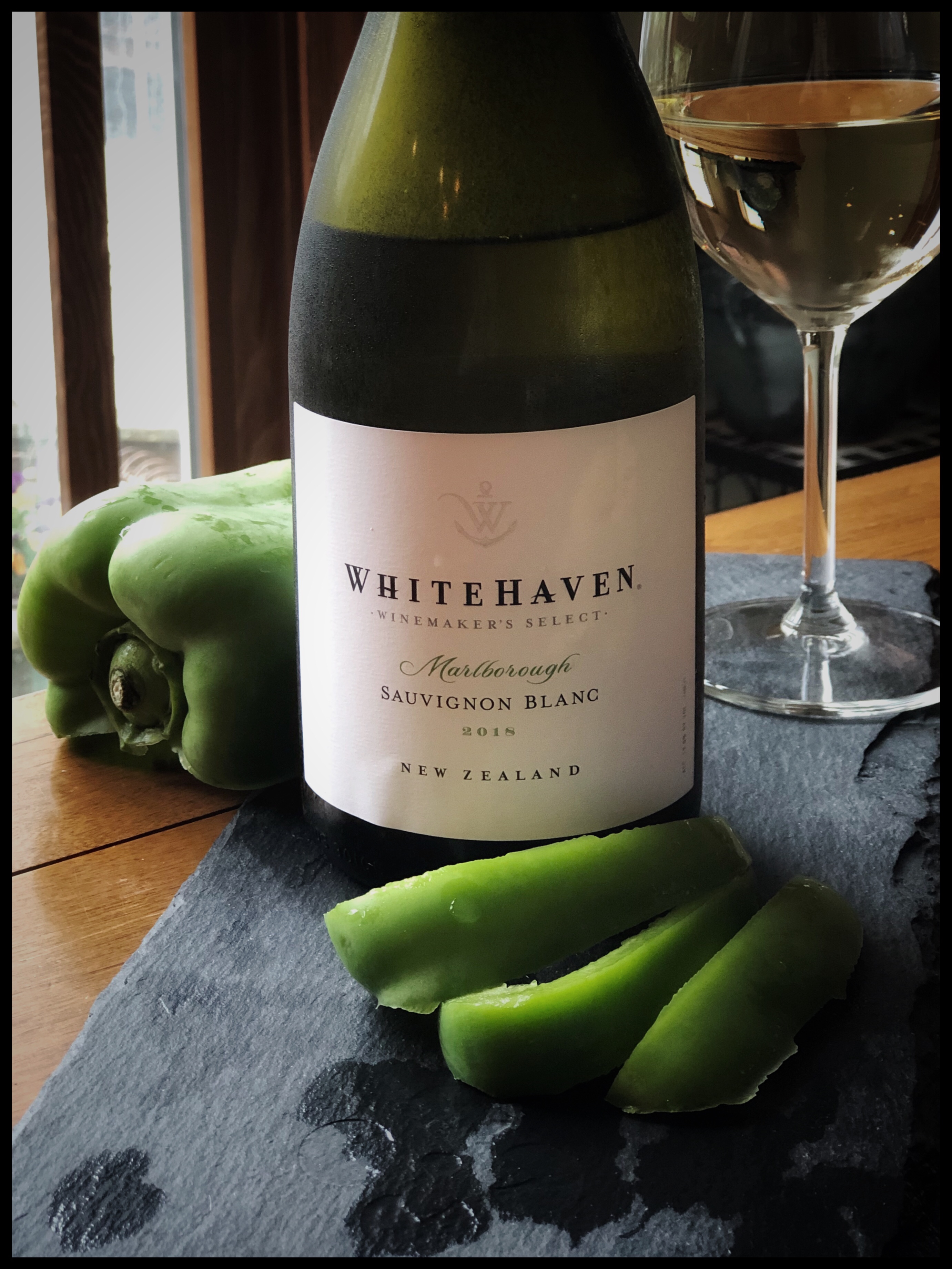
When I first walked into Royal Park Fine Wines in Strongsville, Sommelier George Zaboura listened carefully to the basic flavor profile I was looking for, then immediately took me over to the 2018 Whitehaven from Marlborough, NZ. “It will change your life.ā€, he said. And hey, if my life can be changed for under $20, I’m in!

The general profile of Sauvignon Blanc is dominated by a fruity, fresh quality with aromas of green fruit, and vegetables like green bell pepper and asparagus. The classic New Zealand Sauv style is dry, high acid, no oak, and zesty flavors of passion fruit, gooseberry, green pepper, and black currant leaf. The herbaceous qualities can be a deal breaker for some who prefer their white wines to be a festival of fruit. Yet the green features can make these wines that much more interesting to drink, and to pair with food.

This wine was incredible! Zesty essences of grapefruit and passion fruit wafted up from the first pour into the glass. Its high acidity was crisp and refreshing and made it bouncy on the tongue. Flavors of tangy white peach, black currant, and the gentle kick of green pepper made this delightful. It was a great expression of the style.

Most Sauvs are best enjoyed young, although this can be cellared for three to five years to bring out more of the asparagus quality of gently aged Sauvs.

Suggested pairings:

  • Summer salads
  • Chicken
  • Lobster
  • White fish

At a price point of $17.99, this Sauvignon Blanc did change my life in a big way. This is now my go-to white wine for the Summer of ’19.

George was right!

Cheers!

Ā©ļøCopyright TheWineStudent, 2019

Top Three Picks for Thanksgiving Dinner: Red, White and Bubbles

The snow is starting to swirl and I’m so excited to see my sisters, Megan and Shiona, who are coming to visit for the holiday! This year, instead of my safe and sure one wine dinner, I want to make it a little more festive. We’re still going to serve Pinot Noir ~Ā it’s a favorite of HubbyDoug and I’m thankful for him, so without question, it’s on the menu.

But I’ve found myself enjoying whites this year; George at Royal Park Fine Wine in Strongsville suggested Gerwurztraminer as a nice change of pace. He said that the spice of this wine would beautifully coax out the flavors of the turkey (which on its own can be a little mellow) and any vegetable dishes we had on the side.

Two should do, right? No, I don’t think so. I wanted to begin the celebration on a fun note. Bring on the bubbly!

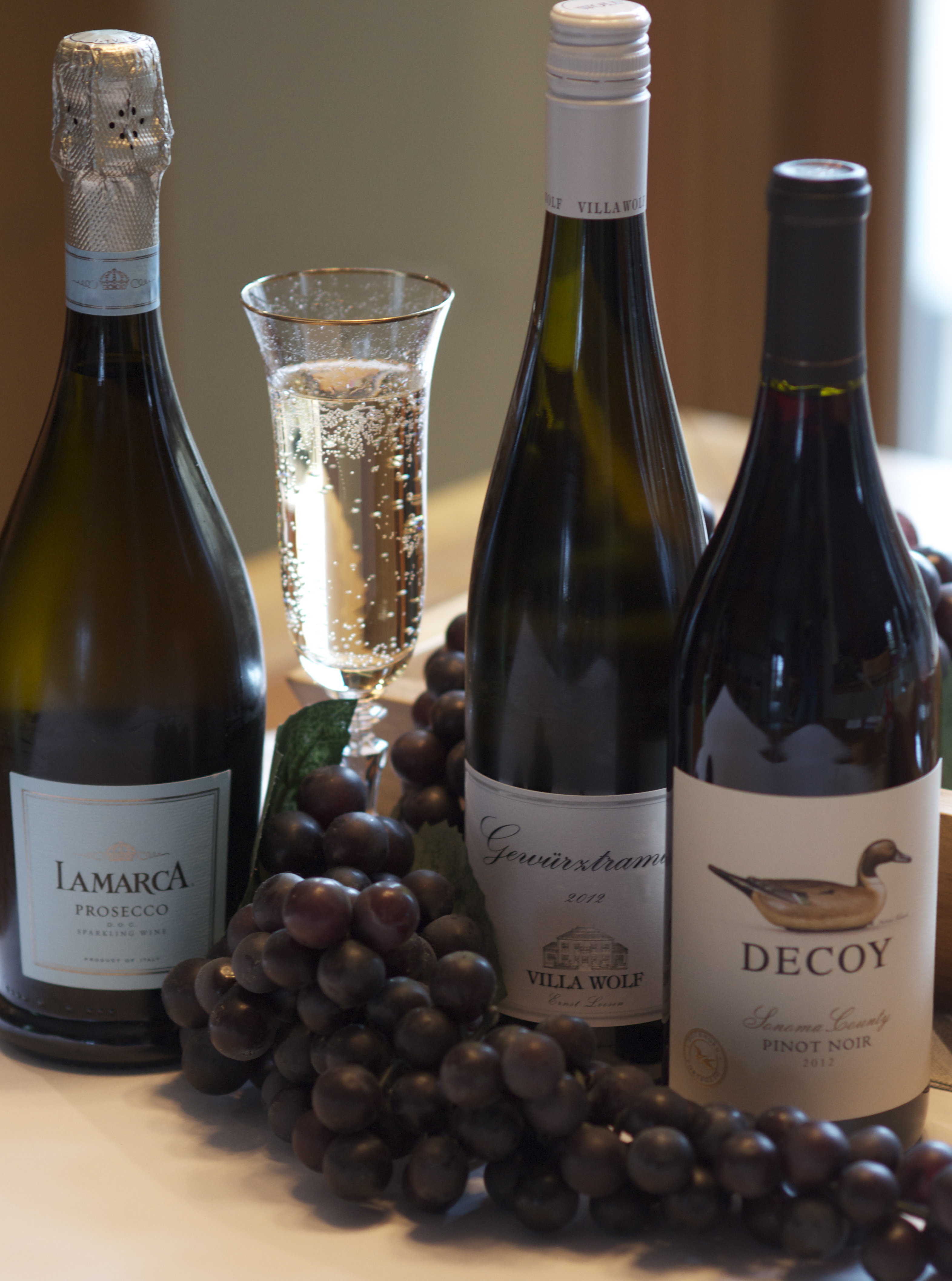
So… here are my choices for Thanksgiving dinner, 2013:

Ā 2012 LaMarca Prosecco (Italy) ~ It was described as a great sparkler that was not lip puckering dry, but also not cloyingly sweet. The tasting notes say that it is fresh and vibrant feel with essences of golden apple, white peach and honeysuckle. I believe I’ll pair this with a warm Brie and toast points, and fresh fruit.

2012 Villa Wolf Gerwurztraminer (Germany) ~ Combining fruit and spice should be a nice counterbalance to the mild turkey, and just enough acidity to cut through some of the fat from the gravy.

2012 Decoy Pinot Noir (Sonoma County) ~ Steadfast and true, Pinot Noir, with its low to medium tannins is a staple for lighter fare. Since it is also has high acidity, it, too, will be perfect with lots of gravy and mashed potatoes dripping with butter (blood pressure cuff not included). Tasting notes say that essences of red fruit (red cherry, strawberry and the tang of raspberry) are prominent. I think it’ll be interesting to experience how differently the food tastes with each wine choice.

I am thankful for wonderful family and friends; those who have made a long trip to be with us in the Cleve, and those who are with us in spirit. And I feel very thankful to those of you who read the blog. It means a great deal to me.

No matter what you choose to pair with your holiday dinner, I hope you all have a wonderful, happy and safe Thanksgiving.

Cheers!

©TheWineStudent, 2013