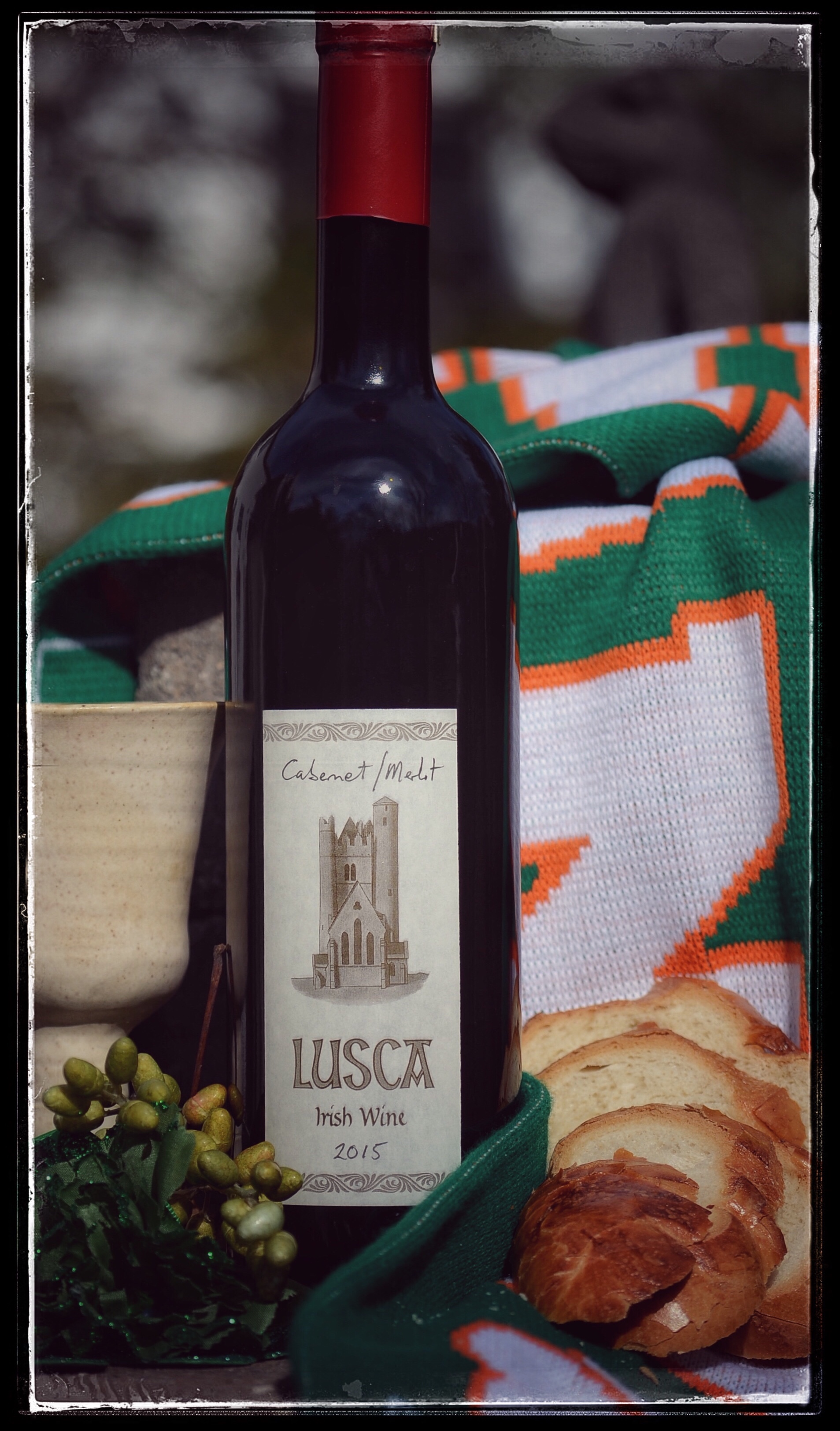
Like trying to find a leprechaun hiding in fields of green, Irish wine can be almost impossible to locate. A few years ago, I wrote about the existence of wine from Ireland; curious at the time if there even was such a thing. I hadn’t seen any bottles locally or read very much in wine magazines about them. Each year, as St. Patty’s Day approached, I’d talk to several local wine merchants about trying to find them, and each year I would hear, “If you’d only asked a little earlier, we might’ve been able to find some for you!” Arrrgh! My bad. My timing was always off.
This year, I was determined. I began my quest in mid-January, searching, not only for the wine itself, but how to get a bottle. Short of flying to Ireland to buy it, I was told that because of small shipment sizes, and varied state-to-state legalities/constraints regarding shipping international wine, my request would be incredibly difficult and expensive to fulfill. Dauntless, and into the wee small hours, I searched and found two Irish wineries: Thomas Walk Vineyard, and Lusca Irish Wine.
Be sure to click the embedded video for some more information about the wineries and cool pics of how the vines are grown!
Thomas Walk Vineyard ~
Originating in 1980, Thomas Walk was one of the first wine makers to successfully, and organically, grow red grapes outdoors in Ireland. Hailing from Germany, and enjoying a good challenge, he chose to bring German wine-making techniques to the Emerald Isle and its cool, damp climate. Years of perseverance and research led to the discovery that the ‘Vitis Amurensis’ (Amurensis Walk) or ‘Rondo’ varietal could thrive. Located in the Kinsale region, their vineyards eventually expanded to include south-facing microclimates, planted entirely with Rondo.
Organic and sustainable are key components in the cultivation of this wine, with most of the process done by hand. Minimal pruning ensures that grapes can be harvested from ergonomically safe and comfortable standing positions. The distance travelled to the winery from the vineyard is short, ensuring optimum freshness of the grapes which are de-stemmed and crushed the same day. No sitting around for these berries. All grapes used in the wine are cultivated only from Thomas Walk vineyards. After fermentation, the wine rests with occasional removal of any sediments, without using any additional filtering methods. Occasionally, there may be some sediment in the bottles, but this is normal and shows that the wine was clarified organically, without filters or centrifuge.
Some of the wines produced include:
• Rosé
• Velvet ~ similar to Pinot Noir
• Exubérance Clairet | Exubérance Rosé ~ sparklers made in the méthode traditionnelle’
Lusca Irish Wine ~
Named for the village of Lusk, where it is located, Lusca Irish Wine has been cultivated since 2002. To grow within the challenges of Ireland’s climate, David Llewellyn adapted a way around this: he grows his vines in ‘tunnels’ ~ metal hoops that are assembled up over the rows and draped with a polythene cover. Both fruit and foliage are well-protected from rain, thereby keeping disease and pests at bay without the use of pesticides. As well, temperature inside the cover is raised to help late-ripening fruit mature during typical cool summers. The combined effects of the tunnel and using the disease-resistant Rondo varietal has proven to be most successful.
Their wine grapes consist of Cabernet Sauvignon, Merlot, Dunkfelder and Rondo for red wine. Until recently, Sauvignon Blanc and Gewurtztraminer were cultivated but have since been pulled to focus on red varietals. Like Thomas Walk, Lusca’s total wine-making process, from vine to bottle, is accomplished entirely on site. And only simple, traditional methods are used; allowing the wine to clear naturally, without complex filtration. The wine is fermented and finished dry in the bottle, without any back-sweetening during bottling. All wine is hand bottled and labelled. Currently, they have a production of around 500 bottles per year, but with the additional plantings of reds, they are hoping to increase production to 2,000 bottles in the future.
As well as making wine, Llewellyn cultivates a functioning orchard producing:
• Apple Juice
• Pear juice
• Vinegar
• Cider
• Mulled Cider
Ah, luck, (with a wee bit of persistence), was on my side. With the kind help of Saileog and Rutherson from Wines on the Green | Celtic Whiskey Shop in Dublin, my bottle of 2015 Lusca Irish Wine Cab | Merlot arrived here in the Cleve, safe and sound, within a week.
But alas! I will not open it this year. When I asked David Llewellyn via email how long I should cellar it, he said, “ I think it should improve over the next 2-3 years or so, and remain very good for a further 2-3 years at least.”
I look forward to it!
With that, I’ll leave you with a wee Irish blessing:
“‘Tis better by far at the rainbows end to find not a pot of gold, but the heart of a friend.”
Tis also better to share a bottle of wine with that friend! 😉
Whatever drinkable you choose to celebrate St. Patty’s Day, please pace yourself, and imbibe safely.
Sláinte!🍷🍀
©TheWineStudent, 2018


 The Wine Student