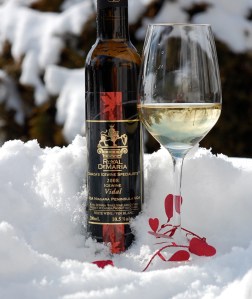
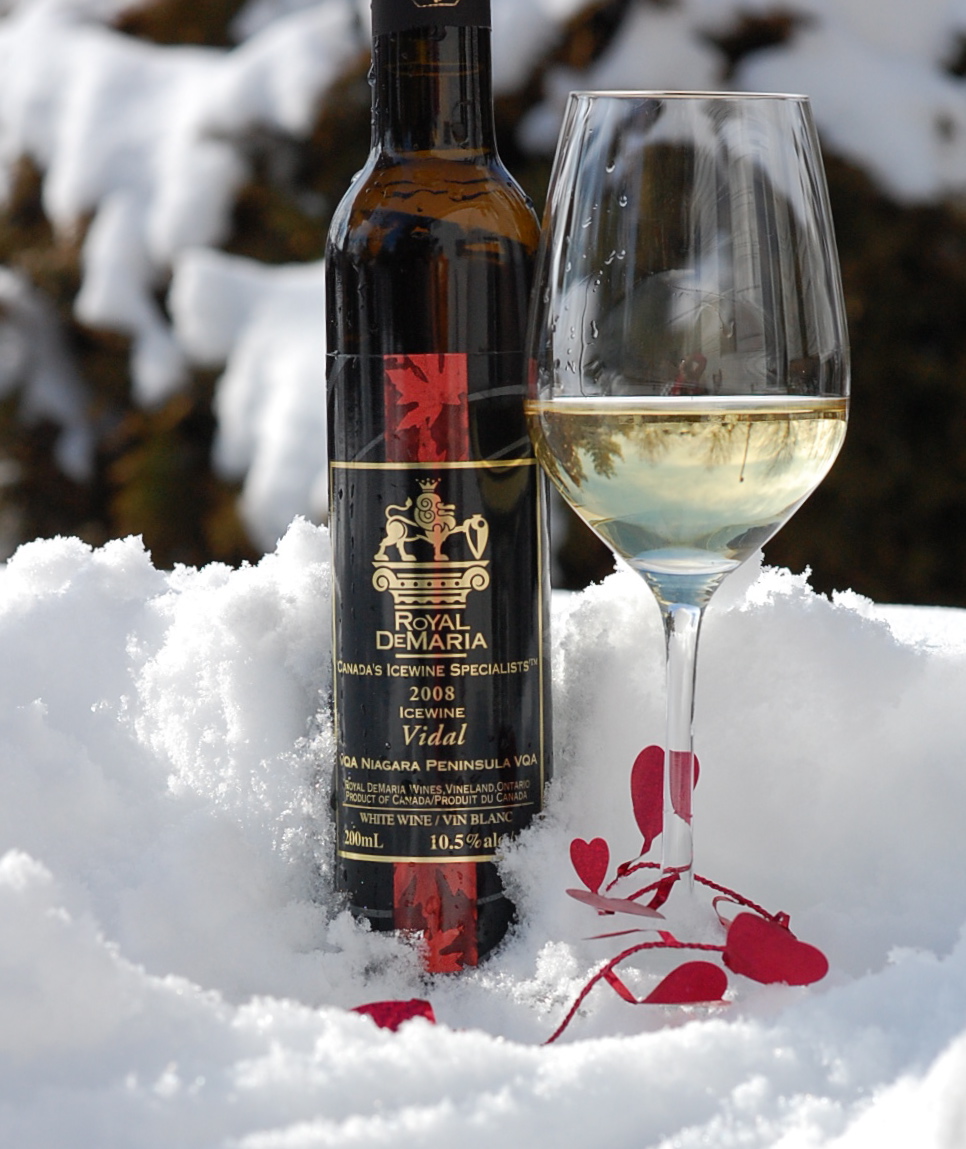
The Sweet Escape: Ice Wine
It’s sweet and rare, and if you knocked back a whole bottle by yourself, you might need a trip to your local ER to check your blood glucose levels. It’s ice wine and it’s mighty fine. It’s taken me a little while to put these next couple of posts together. For one thing, there’s so much information about it, for another, I wanted to get it right. Producers of true ice wine work very hard to accomplish what they do and in some chilly, low temps. Shrinkage is a given. So here we go, into the land of ice wine and snow …
Ice. Wine. Baby.
Ice wine is a rich, dessert wine made from the juice of partially frozen grapes. They must remain on the vine and harvested when temperatures dip to between -8 and -12 degrees Celsius over three consecutive days. The sugar content of the grapes at this time will be at its most concentrated. The water inside the juice is minimal resulting in extreme concentration of flavor, sweetness, aromatics and viscosity.
![Iced Vineyard [image via David Boily|AFP|Getty Images]](https://thewinestudent.org/wp-content/uploads/2012/01/thumbnail-aspx1.jpeg "Iced Vineyard [image via David Boily|AFP|Getty Images]") Canada (primarily the Niagara region) and Germany are the leading producers of ice wine (with an increasing number of good producers in Western New York and Ohio) and yet it is still quite rare; yielding 5-10% of a normal harvest. The brisk temperatures that we complain about when we scrape off our cars are ideal for ice wine, but it’s a delicate balance. The colder the temperatures become, the more the grapes freeze and it can become more difficult to extract the juice. Most ice wine is harvested in late December to mid January when the lower temperatures stay constant. Before the harvest, ice wine grapes must be netted for protection from birds and animals. Picking is generally done by hand and much of the time at night, when the low temperatures stay most consistent. The crush is also done outside to keep the must at a constant, cold temperature. If any thaw occurs, the water content inside the grapes will increase, potentially spoiling the sugar concentration. It’s these factors that make ice wine a premium wine product and legitimize the price of $30.00+/ 375ml. Think about it: you’ve got to give it up to those who go out in the middle of the night to pick and press grapes for you to enjoy.
Canada (primarily the Niagara region) and Germany are the leading producers of ice wine (with an increasing number of good producers in Western New York and Ohio) and yet it is still quite rare; yielding 5-10% of a normal harvest. The brisk temperatures that we complain about when we scrape off our cars are ideal for ice wine, but it’s a delicate balance. The colder the temperatures become, the more the grapes freeze and it can become more difficult to extract the juice. Most ice wine is harvested in late December to mid January when the lower temperatures stay constant. Before the harvest, ice wine grapes must be netted for protection from birds and animals. Picking is generally done by hand and much of the time at night, when the low temperatures stay most consistent. The crush is also done outside to keep the must at a constant, cold temperature. If any thaw occurs, the water content inside the grapes will increase, potentially spoiling the sugar concentration. It’s these factors that make ice wine a premium wine product and legitimize the price of $30.00+/ 375ml. Think about it: you’ve got to give it up to those who go out in the middle of the night to pick and press grapes for you to enjoy.
The best grapes for Icewine are those with thicker, more durable skins that will hold together during the freeze ~ thaw cycle common in cold weather. Grapes with higher acid, extremely high sugar yield the best. As with any wine, differing varieties produce different characteristics: Riesling has a green apple and honey vibe; Cabernet Franc produces a rich, berry, buttery character and Vidal, a good, hearty hybrid used commonly because of it’s durability gives a traditional raisin-y essence. Troutman Vineyards in Wooster, Ohio make an ice wine using Chambourcin, a rare, red varietal.
Grapes are 80-90% frozen to give the required concentration of sugar, which is measured by degrees Brix, typically 35 degrees. Brix is measured using hydrometer or refractometer. Both provide vital information about the amount of sugar that been dissolved and that will help the winemaker determine how much yeast to add, since yeast converts sugar into carbon dioxide and alcohol. The yeast used in ice wine must be one that can handle high sugar and not go too high in alcohol. The yeast must be gradually acclimatized to increase the sugar environment. Fermentation can take 3-6 months and the percentage points in alcohol must progress slowly as this can increase spoilage if progressed too quickly.
After 3-6months, the ice wine needs to be filtered again, and very slowly or you get a fizzy wine. It’s a sticky process. Bottling is also slow so the wine doesn’t end up like fermented Hawaiian Punch.
Storage
Chardonnay, Cabernet Franc and Merlot are best when to drink when young. Gewurztraminer and Ehrenfelzer: 3-5 years maximum. Vidal and Riesling tend to be the most hearty and are best to cellar the longest at between 5-7 years. They make the best bet for long term cellaring because they are able to retain their acidity.
Like revenge and ice cream, ice wine is best served cold:
Ice wine should be served chilled but not frozen; extreme variations in temperature can compromise the quality of wine, so just chill in the fridge. The ideal temperature is around 12 degrees. As with most chilled wine, allow it to stand at room temp for about 15 minutes to open up the bouquet.
Raise your glass
The glassware you choose is also important. I’ve made the mistake of serving it in liqueur glasses. I was wrong. So very wrong. The common viewpoint among experts is that ice wine, like any other fine wine, should be served in glassware with a larger bowl (about 9 oz). All the better to sniff and swirl with. When you think about it, it makes sense. By swirling, you can better open up the intensity, bouquet and flavors of the ice wine. You also want to use a glass that has a stem, and hold by the stem or base to not heat your ice wine; it’s very delicate! While you might want it to stay cold as you sip, don’t you dare put ice in your ice wine. Considering what you’re paying for this rich nectar, you don’t want to water it down with melting ice. An option to keep it cold would be whiskey stones. You can put in them the freezer, and they’ll keep your wine chilled but won’t dilute it.
The best pairing for ice wine are chocolates, fresh fruit, and delicate, lighter cheeses. Yum.
After it’s been opened, ice wine can be re-corked and stored in the fridge for 3-5 days. But why would there be any left?? If, by chance, you’re looking for another way to use what remains, why not make an ice wine martini?
Ice Wine Martini:
10 large seedless grapes (2 halved grapes for garnish)
2oz Ice wine (red gives a nice blush vibe to the ‘tini)
2oz Vodka (I use the Goose, but any will do)
ice (yes, here you’re watering it down, so shoot me)
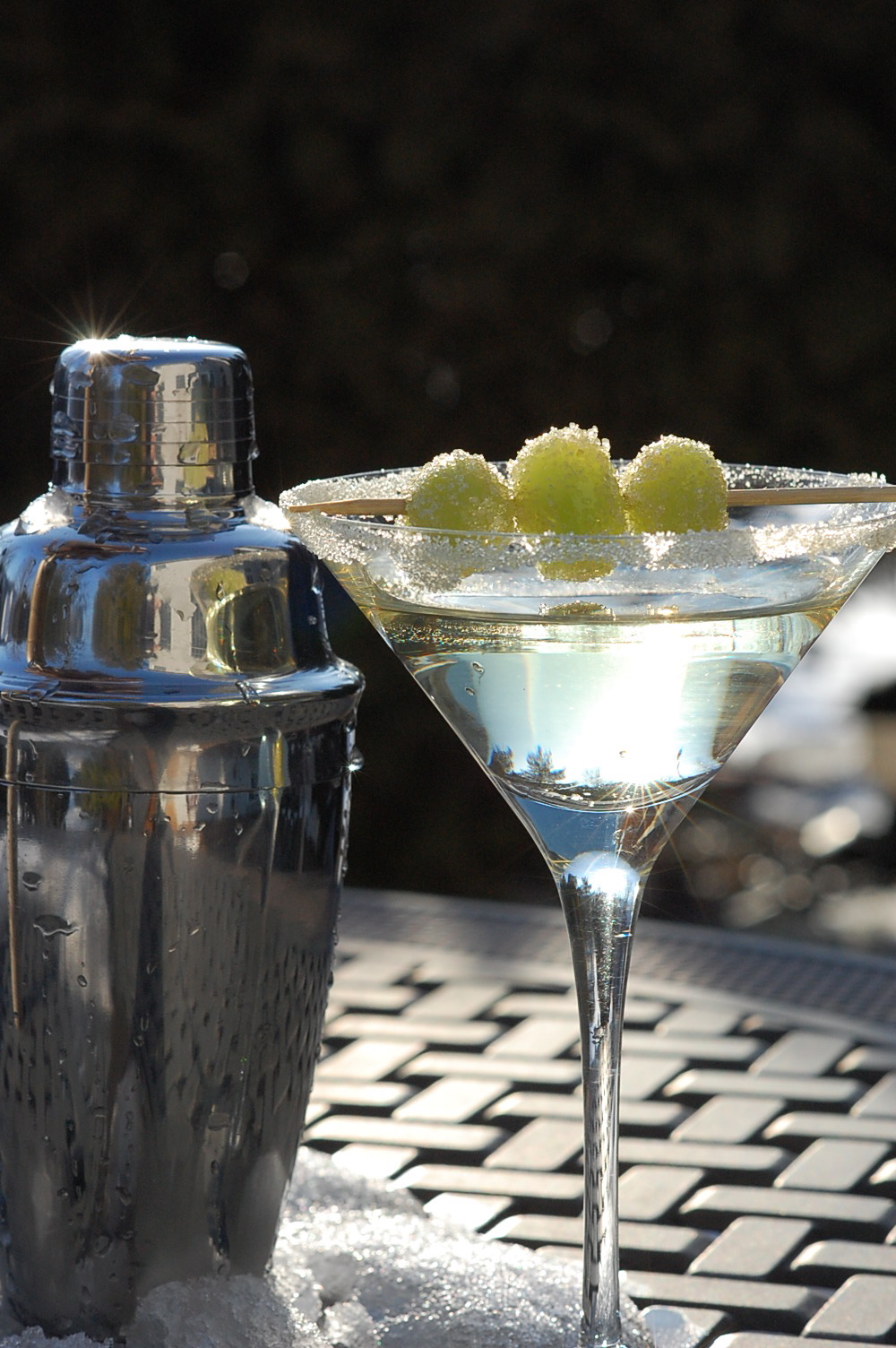
In your blender, puree 10 grapes with ice wine and vodka. Pour through a small strainer into the ice filled shaker. Shake it like you mean it! Strain again into a chilled martini glass and garnish with the grapes that you’ve dipped in lemon juice and sugar. Enjoy!
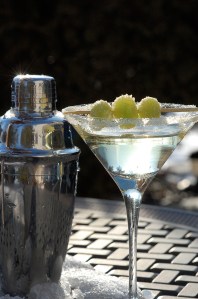
My Ice wine Martini
Next post, I’ll talk about the difference between Ice Wine and Iced Wines. And, yes, there is a difference between the two.
In the meantime bundle up, butter cup. We’ve got a little more ice on the horizon.
Cheers!










 The Wine Student