TWS 2022 Hallowine Roundup!

“I don’t mind being locked in here, but at least leave me a corkscrew.”

– Natalie MacLean

In her book, Red, White and Drunk All Over, Canadian wine writer Natalie MacLean was referencing Edgar Allan Poe’s short story, The Cask of Amontillado. Essentially, it’s about a guy who gets fed up with a rival always insulting him so he creates a ruse to trap him, literally, in a catacombs cellar in search of a good glass of wine. I can see why the rival might fall for it. But this is a cautionary tale: never go on a drunken hunt for wine, especially if it leads you to a dank, musty, skull-filled cellar, lest you be shackled and bricked into a room. You’ll need more than a corkscrew, my friend.

And so, with the midnight hour close at hand, join me, as we descend into… the catacombs.

I know I left a great vintage down there, somewhere.

Check out the video for some Halloween fun!👇👻

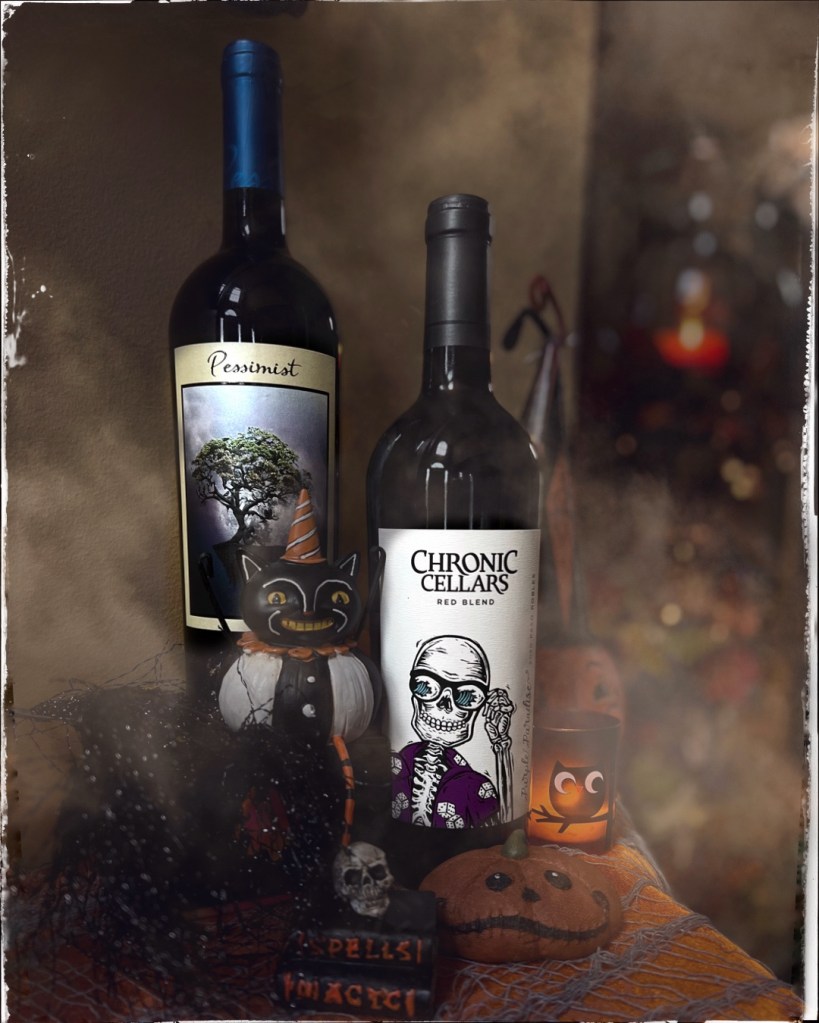
💀2020 Pessimist by Daou Red Blend –

Judging by most of Poe’s writings, he seemed to be an eternal pessimist so this is choice is apropos.

A haunting blend of 62% Petit Sirah, 18% Zinfandel, 17% Syrah and 3% Lagrien.

🍇Tasting notes – Hints of black cherry on the nose, deep blood red in color, it tasted of ripe, smoldering fruit compote – rich blueberry, dark raspberry and blackberry. Whispers of spice lingered like an apparition, then evaporated on the finish. When paired with a creamy Brie, the fruity, jammy vibe was coaxed out. With cheddar, the jammyness gave way to a more subdued vibe. It had a rich mouthfeel with substantial legs. 15.2% alc.

$30.00💰💰

Rattling the bones here’s:

💀2020 Chronic Cellars Purple Paradise Red Blend –

Simple, tasty and bewitching, and, though similar, this blend turns the tables on the Pessimist with 70% Zinfandel, 16% Petit Sirah, 10% Syrah and 4% Grenache.

🍇Tasting Notes: Rich, creamy flavors of mocha chocolate, stewed blueberry and raspberry, with hushed whispers of leather, and smoked dark cocoa on the nose. Paired with a simple dish of pasta, olive oil, fresh parmesan and basil, the flavors settled in to a more savory, less fruit forward vibe. The color was deep purple burgundy, and mouthfeel wasn’t quite as full as the Pessimist – it had skeleton legs on the glass. 14.8% alc

$16.99💰

It’s interesting that these two wines, both Paso Robles, both similar in character and flavors, can have subtle, tasty differences.

Both wines had such beautiful, deep purply-red color that I know my teeth are purple.

So…

What is the difference between Petit Sirah and Syrah? According to Wine Spectator’s Dr. Vinny, Petit Sirah and Syrah (Shiraz) are two different types of grapes. Petit grapes are smaller in size than Syrah, and have a more dense skin-to-pulp ratio. This makes their color dark like ink, rich in flavor, and more tannic than Syrah. Small is mighty.

In this haunting season, please tread carefully. Beware the late night drunken scavenger hunt for the elusive vintage. And if anyone mentions a cask of Amontillado, run!

Have fun, be safe!🍷🎃

Happy Halloween!💀

©️Copyright. 2022 The Wine Student.

What We Drink in the Shadows – 3 Wines to Sink Your Teeth Into for Halloween

Daylight is beginning an early decline, the shadows getting longer. A chilling breeze causes the leaves outside to rustle, and your candle to flicker and then blow out. You hear a scratching at the window…

Don’t be frightened…it’s just me with my annual Halloween wine round up! 🎃🍷

If you know your vampire lore, you have to invite me in.🧛🏻‍♀️

But first, click the video below for more fun!👇

This year, we’ll become familiar with three. And since I never play favorites, here they are in no particular order:

🎃Banshee – 2018 Pinot Noir – Sonoma County With a cooler than usual start to their growing season, and moderate temperatures throughout the summer, the fruit yielded an offering with intense flavors and optimal acidity. This wine was then left to its slumber for 9 months in new French oak casks.

Shhhh…. don’t wake the master!

Flavor profile: sweet | tart mix of bright cherry, raspberry, tea and vanilla.

Aromas: pomegranate, tart cherry, earthy pine.

Pairs well with: turkey sausages, wild mushroom risotto, grilled lobster, grilled asparagus.

Price Point: $19.99

🎃Sixth Sense – 2018 Syrah – Lodi, CA

Awaken your senses with this lush warm – climate Syrah. From Michael David Winery (they make a wonderful Petit Petit), this is darker than Cabernet Sauv with lots of antioxidants and lends well to aging (the wine, not you). It will come out of the botttle with a big, bold bite at the start that gently settles into a gentle warming spice on the finish.

So how can you tell if your wine is a warm climate or cool climate offering? Let your sixth sense guide you (or just check the alcohol level on the label). Warmer regions have alcohol levels of more than 14%+, cooler regions less than 14%. This wine checks in at 15%.

Flavor Profile: rich raspberry, plum, coffee bean, tobacco, black olive.

Aromas: blackberry, boysenberry, fig, dark chocolate & allspice.

Pairs well with: grilled or roasted lighter meats – especially pork spare ribs, tender chicken thighs, anything with a little fattiness to rip into the high tannins; fragrant, softer cheeses with lavender, fennel or thyme.

Price Point: $15.99

👻Halloween fun trick: say, “Sixth Sense Syrah” 5x, as fast as you can after drinking a full glass. And please video it and upload to the comments if you dare! Lol

🎃Carnivor – 2019 Zinfandel – Lodi, CA

Sink your teeth into this cozy throuple of Zinfandel | Cab Sauv | Merlot, aged in American and French oak. It summons the dark arts of flavor. Lodi’s climate is more like the Mediterranean; warm days and cool nights to grow intense, ripe grapes with wonderful structure and style. Flavors meld together to hit you like a stake through the heart.

Flavor profile: blackberry, dark cherry, mocha, toasted oak, whisper of smooth caramel.

Aromas: spice and pepper with a little bite of jammy berry.

Pairs well with: Any good cut of red meat, BBQ beef kabobs, beef tenderloin; cheeses such as aged Gruyere, Havarti, Parmesan and Gorgonzola.

It says right on the label that meat was made for this wine so choose anything juicy and red from the meat counter and feel free to char broil. The smokier the better as it will pair beautifully with the robust spiciness of this wine.

Price Point: $11.99

So now you have a few treats to get you going this Halloween season. Whether you’re doing a little socializing or staying in your catacombs with a good scary movie, cheers!🍷🧡

Stay well, stay safe and Happy Halloween!🎃

©️Copyright TheWineStudent, 2021

Yes•No•Maybe: My Top Wine Picks for Valentine’s! 🍷💌🍷

On the hunt for Valentine’s wines, I naturally look for fun label art. It’s something I’ve grown accustomed to over the past few years. Each season, I’d find a few to choose from that were on display, (and sometimes on special) to celebrate the lovey holiday. This year seemed a bit, well … skimpy on the label art front.

So I had to really search for wines that caught my eye, and would be a good choice in the glass. I found…two.

And with that, I did a little tasting with HubbyDoug to find our best match. Kind of like ‘The Dating Game’ but with wine. Getting out our Wine Aroma | Flavor Wheel, we were going to attempt educated assessments in our sampling (as opposed to just saying, “Yep, that’s good!”). We’ll see who gets a yes, a no, or a maybe.

Check out the fun slow jam video below for some more info about these wines! 👇🍷

Prophecy 2015 Red Blend ~ I loved the beautifully romantic label but damned if I can tell you what’s in it. Any research led me nowhere about the specific varietals in the bottle. I can tell you that it is a conscious coupling of grapes from both Washington State and California, which is a good start.

Spinning the flavor wheel, here’s what we found:

•Color: Deep Purple

•Nose: vanilla caramel vibe

•Flavors: dark chocolate cherry w/ a pleasant whisper of smoky tobacco on the finish.

•Mouthfeel: Creamy smooth,

•Price point $10.99- $14.99. We found this was a little drier than the Intrinsic. But that was ok. And with gorgeous label art from Victo Ngai, it’s a… yes!

Intrinsic 2016 Cabernet Sauvignon ~ 96% Cab Sauv and 4% Cab Franc. Produced in Columbia Valley, WA, this wine is fermented for a limited time in concrete tanks, which give a mineral character to the wine, then transferred to barrel where it’s aged 12 months. When Dougie found out it was a Cab, he gave the eye roll (he likes Cab only slightly better than Merlot). But here’s what we discovered:

  • • Color: Bright Ruby
  • • Aroma: Pepper, Stewed Plum
  • • Flavors: Black Currant Jam, hints of Leather w/ a pleasant sweetbitter finish
  • • Mouthfeel: Velvety, Silky
  • • Price point: $22.99

The big feature for us was that it seemed like a Cab with Pinot envy; lighter with delicate flavors – not so ‘in-your-face’ as some Cabs have a tendency to be. So that was a nice surprise for our Pinot fan. We have another… yes!

For Valentine’s fun here are two wines that are as nice on the inside as they are on the outside. And, really, isn’t that what we want from a Valentine’s date? ❤️

Happy Valentine’s Day! 💌💋

Cheers!🍷

©️Copyright, TheWineStudent, 2020

Wines of Three~So Mote It Be ~My Top Halloween Picks of 2019!

“I put a spell on you…because you’re mine. “

~ Jay Hawkins

Hey party people! It’s that special time of year when a chill’s in the air, frost is afoot, and it’s not just the pumpkin that’s getting lit! 🎃

Each year, I look for two things from my All Hallows vintages: Label art and/ or contents. While the label art is the first thing to catch my eye, what’s inside the bottle actually matters; you don’t want to be sipping swill at your gathering. Breathe easy, there’s no danger with these three wines.

**Click the video below to find out more about these great wines! 👇🧟‍♀️** yes, there is a video there!

My top picks for the season – no particular order:

Prayers of Sinners – A spooky little blend of 90% Syrah and 10% Merlot, this moody offering from Washington State boasts flavors of violet, cocoa, and dark fruit such as blackberry. It pairs well with braised beef, hellfire roasted peppers, and devilish molten chocolate cake. At a price point of around $10.99, this wine will steal your soul. It was sumptuous in my glass.

7 Moons Dark Side Red BlendA haunting seven layer blend of Syrah, Merlot, Petit Syrah, Zinfandel, Cabernet Sauvignon, Malbec and Grenache, it screams of robust flavor and texture. Swirling aromas of rich chocolate cherry, blackberry, and vanilla dance with the cherry Coke, creamy milk chocolate flavors on the tongue. It plays well with barbecue chicken, caprese salad and many Asian foods. Be not afraid, the price point is $19.99. The only trick to get this treat is to open the bottle.

Sin Zin – This wicked wine is straight up, 100% Zinfandel from Alexander Valley Vineyards in Sonoma. Known for their other worldly Zins, this wine is aged in the cask for fourteen months in American Oak which gives aromas of spice and earthy notes and conjures flavors of black cherry, plum, black pepper and chocolate. It pairs well with spicy braised beef, lamb or venison, tomatoes, eggplant, mushrooms and olives. The price point of $17.99 – $19.99 makes it a potion to die for.

Wherever you plan to haunt this year, make sure to sink your teeth into a great wine or two.

Have a safe and happy Halloween! 👻🍷🎃

Cheers!

©️Copyright The Wine Student, 2019

Message in a Bottle

When you think Malbec, what country immediately comes to mind? Argentina. And it’s true, they make some amazing Malbec.

But today, on this particular Malbec Monday, I’m sipping a kicky Malbec from Arizona: Caduceus Cellars’ 2013 VSC Malbec.

This offering is 100% Malbec from Deep Sky Vineyards in Cochise County, AZ. In order for Malbec to thrive it needs hot, dry days with cooler nights and little to no risk of frost or mildew. Considering that todays temps were topping 102F, there’s probably no frost on the horizon.

Aged 18 months in cask and puncheon (a short, portly 500l cask made from thick staves of American Oak) this Malbec rivals its Mendoza counterpart.

The bold, rich, deep flavors of black cherry, raisin, dark plum, cocoa, with a hint of black pepper, and medium tannin can stand up really well to red meats. But it can dial it back for lighter fair like pork and veal. It paired beautifully with our grilled fish with garlic brown rice.

The price point on this treasure is about $65 and is sold online as part of Caduceus’ exclusive Velvet Slippers Club.

It’s a good expression of the varietal, so don’t shy away from domestic Malbec from Arizona.

Message received. ☺️

Cheers! 🍷💋🍷

O Tannin Bomb

At dinner with friends the other night, the subject of tannic wine came up. “Tantric wine?” I asked, “That sounds like fun!” I thought it meant we’d just take a really, really, really long time to enjoy a bottle of red. I’ve been to tastings, seminars and parties where one will take a sip and proclaim that the wine is very tannic. But what does that even mean?

The term tannin comes from the long time practice of using plant extracts to ‘cure’ leather. In winemaking, tannins are compounds that bind to proteins ~ proteins that exist both in other chemical components of  wine as well as the salivary proteins within the mouth. This is a very basic description of a very complex process but you get the idea. This complexity is also what makes studying tannin quite difficult as these bonds break and reform several times before the nectar ever comes close to hitting your belly.

You can liken wine tannin to steeping tea ~ look at 4 cups of tea in various stages of brew. The first one is after a few moments, the next after 3 minutes, next after 5 and after 8-10. You’ll notice significant differences in how the tea looks (light to tar-like) and tastes (weak to very strong). A wine high in tannin will look darker and taste stronger.

There are two classes of tannins: one coming from the oak barrels the wine is aged in and grape-derived.

Green and Mean ~

In nature, tannins serve as a kind of defense for the plant. It gives plants an unpleasant taste, discouraging animals from consuming them, allowing them to grow to maturity. Grapes begin tiny and  green in order to match the new stems and are extremely bitter ~ it also keeps the birds from dining too soon. These berries are where the developing seeds are housed, undisturbed until they go to college, hit a few keg parties and then graduate to become adult grapes. When birds consume the mature grapes, they eventually deposit the digested seeds and re-propagation of grapes begins anew. Unless of course the deposits end up on your car. Since the seeds also contribute a great deal of tannin to red wine, they can have a very nasty effect if they are unripe.

 Bitter is the New…Bitter ~

Here we can pull out our trusty mouthfeel wheel. Tannins contribute to both astringency and bitterness; with bitterness being sensed by taste bud receptors located on the very back of the tongue and soft palate.

Rather than being able to smell tannins, it’s more of how it feels on your tongue. Astringency is the feeling because the tannins bind with proteins in saliva, thereby increasing the friction between the mouth surfaces leading to a sensation of dryness or roughness. On the wheel, you might see words like furry, cottony or wooly ~ that’s what astringent ‘feels’ like.

Style meets Substance ~

Light ~ lighter in color and on the palate , thin consistency. Good examples: Gamay, Beaujolais Nouveau

Medium ~ a little more tannin, is richer on the palate and is  not as beefy.  Good examples: Merlot, Pinot Noir, Shiraz

Full ~   has the highest tannin content, more pucker on the palate,  creamy consistency with usually a higher alcohol content. Good example: Cabernet Sauvignon

With high tannic wines, what you see will generally be what you get. You’ll find wines rich in color; deep ruby or claret, purple and maroon.

For many who enjoy wine, tannin really isn’t an issue unless it adversely affects the taste. Choosing wines that have high or low tannin depends entirely on your preference. Just make sure you take a really, really long time to enjoy them.

Cheers!

Crabby night

The Lovely Lugana

The Lovely Lugana

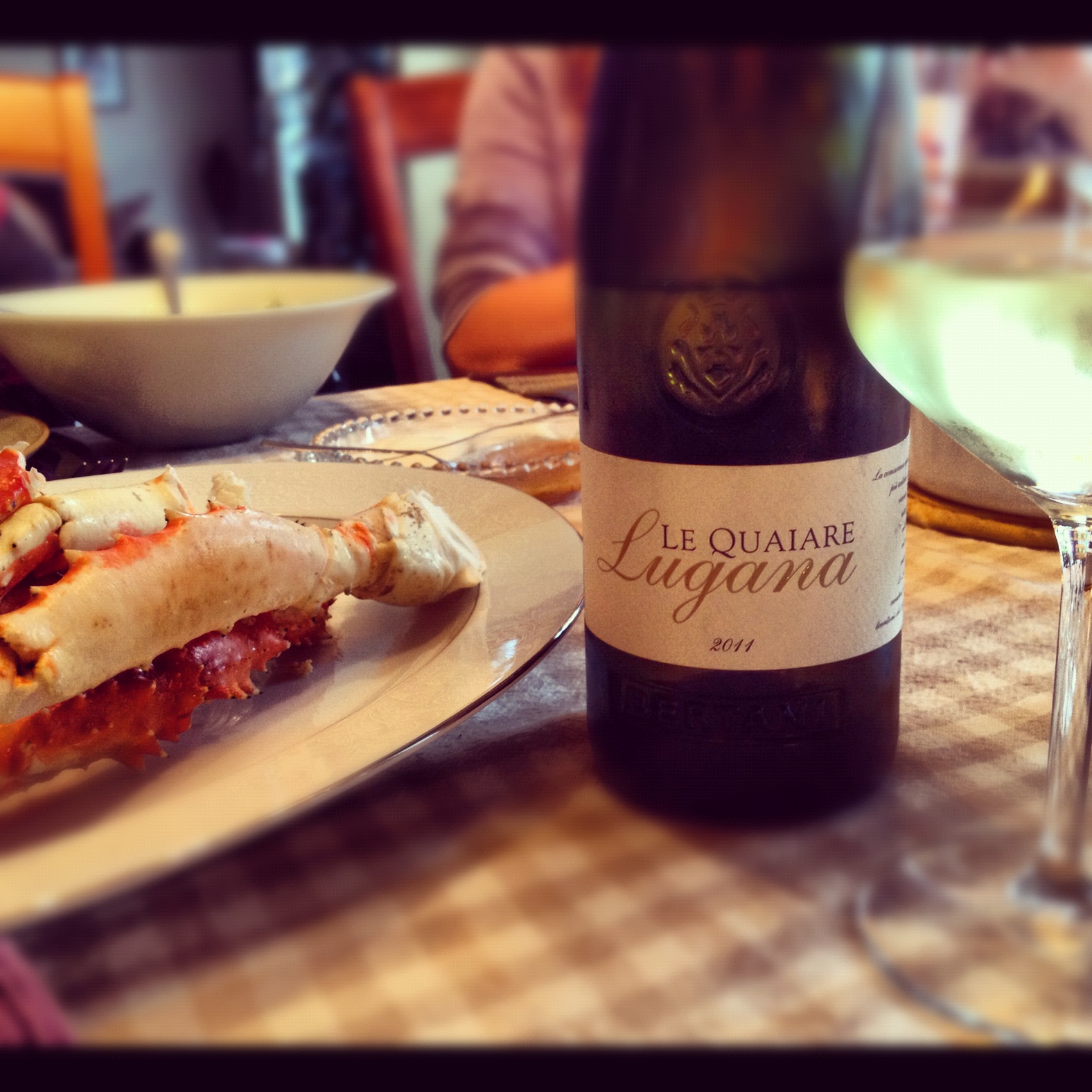
Tonight we dined on crab. It’s a treat we don’t have very often. And we don’t have it often because it’s somewhat pricey and also it makes my feet swell. I wrote swell, right? I’d hate for you to think it made my feet smell. It doesn’t. Anyway. HubbyDoug came back from his most recent trip to Italy with a lovely ’11 Le Quaiare Lugana. Wait. A white wine? It’s true, I’ve spent much of this blog writing about red wine and, for the most part, we do prefer the reds. Yet this white was something special. And it needed to be paired with something just as special. I think what I enjoyed most about this wine was that it had a light, playful grape and honey essence on the nose. It tasted of delicate apple that seemed to enhance the light, salty brine of the crab while adequately cutting through the fattiness of the butter. To paraphrase Cole Porter it was de-lovely!

Cheers!


Wine Making 101 ~ Red, Red Wine

It’s November and harvest time is really winding down. Now in the vineyards, they’re getting ready for late harvest and in a few areas of the US and Canada (notably Niagara), preparing for Icewine. That’s a topic I’ll delve into more throughly a little later on.

I thought I’d head back to the study hall and focus on red wine making.

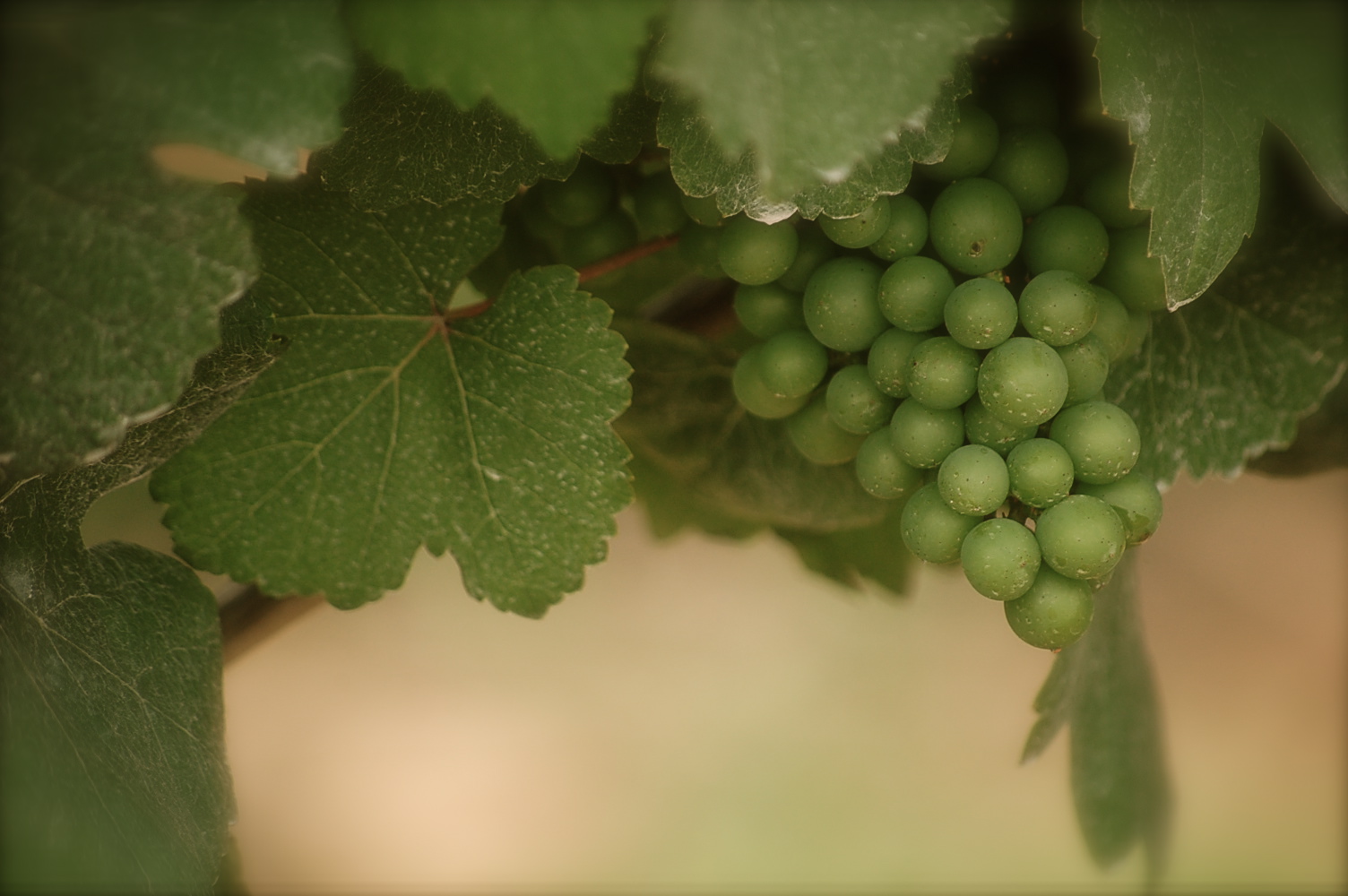
Beautiful Grapes [Image via LovetoKnow]The initial process is the same as I described a few posts back with white wines, the difference for reds is the amount of time the juice is left in contact with the skins. Most blue skinned grapes have a colorless juice which contains: water, sugar and acid. Once the mustis placed in a vessel to soak the skins with the liquid juice a very quick separation occurs. Seeds settle to the bottom, skins float to the top and form what’s called a ‘cap’.

The skins contribute the color, flavor, tannin and some aromatics. It makes sense that the skins need to stay in contact with the juice as long as possible to achieve the quality the winemaker is looking to produce. The amount of time that there is skin contact is called maceration. Say that slowly to yourself a couple of times; if you say it fast it sounds like something else.

After the initial separation, the seeds are removed once by straining through a screen. The juice and skins are then reintroduced to one another one of two ways: by pumping the juice over the skins or by punching down the cap. Punching the cap is exactly what it sounds like: the skins are pushed or plunged into the juice to allow for more skin contact, thereby increasing all the qualities we look for in a truly, wonderful red wine.

Punching the Cap [Image via Flickr]The total amount of punching down the cap, pumping over; maceration time depend on the type of grape, the style of wine, equipment and the winemaker, depending on his or her style and philosophy. plunging the cap is generally done every four hours when fermentation is most active. With time and manipulation, the skins become saturated with liquid and the cap drops. The wine is then drained off, leaving the skins to be pressed (since they now contain wine). The wine produced from skins when pressed is called press wine(makes sense) is highly concentrated, more intense and more tannic.

A final step sometimes involves what’s called chaptalization: adding sugar to the must, before fermentation, to yield the desired alcohol in the finished product. I say sometimes because countries such as Australia, Austria, Italy, South Africa and the state of California prohibit the practice. Regions where sugar content in the grapes is low are able to do so.

While all this punching, plunging and pumping is great, it’s a matter of timing that truly makes a great wine. A tight reign must be kept on the temperatures produced by processing; too much heat (caused by too much manipulation) will cause too much fermentation, rendering the end product undrinkable. Colder temperatures prevent excessive fermentation and allow for maximum fruit extraction. When fermentation takes place, so does alcohol production. That doesn’t sound like a bad thing, I know, but it’s another factor that that can go against the winemakers vision of how the style of their wine should be.

The whole process takes around 7-21 days to complete depending on the type of red. It’s then transferred to either stainless steel tanks or barrels where it’s stored and then bottled.

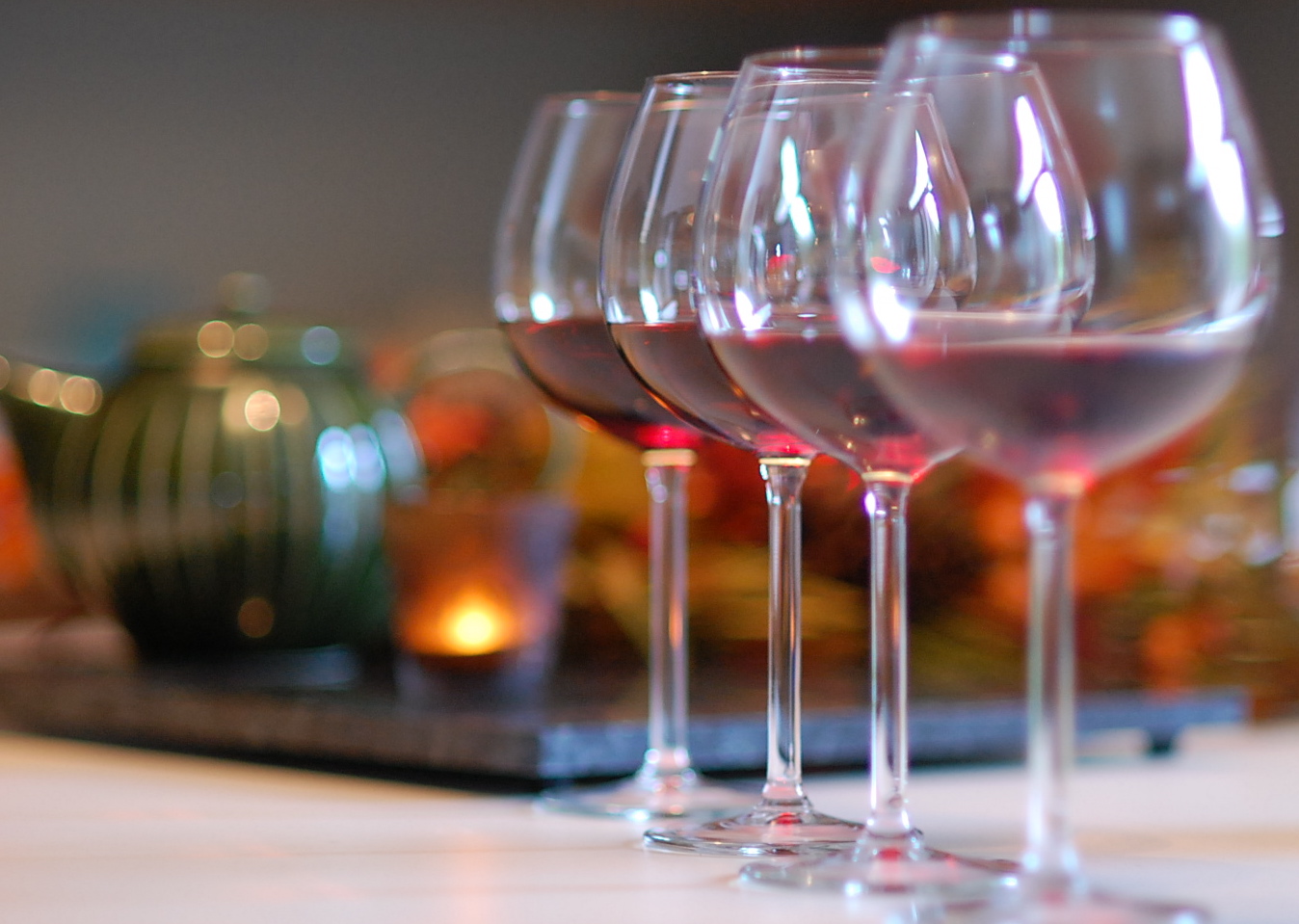
A nice leggy Red

A nice leggy Red

I don’t know about you but all this writing about wine is making me thirsty.

Cheers!