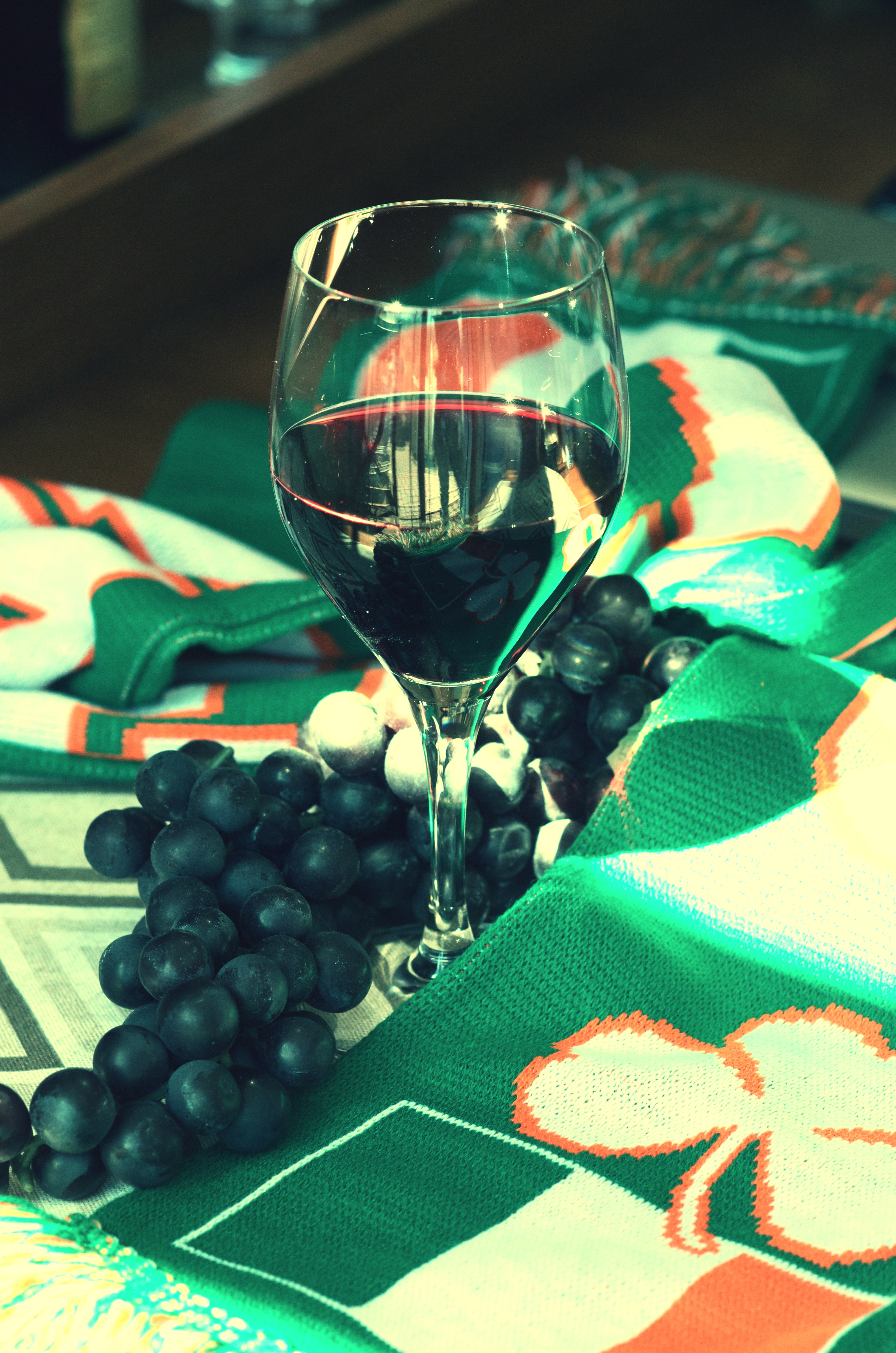
Lusca the Irish: Wine from the Emerald Isle

Kiss me! I’m Irish. Actually, I am. And for these past three St. Patrick’s holidays, I’ve been on a quest to find the elusive Irish wine. Coming up about as lucky as a sliding down a banister with the splinters pointing in the wrong direction, I found nothing that was a true wine made exclusively in Ireland. So I wrote instead about Mead ~ and while it is a traditional Irish honey fermented drink, it’s not wine in the sense of the true grape nectar. Faith and begorrah, I searched today and found a little pot ‘o’ gold at the end of the rainbow. The third time was definitely the charm.

Planted in 2002 by David Llewelyn, Lusca Irish Wine currently produces a small trove of about 300 bottles per year of: Cabernet Sauvignon, Merlot, Dunkfelder and Rondo. Sauvignon Blanc, Gerwurztraminer and Schoenberger round out their whites. Vineyards are planted near their orchards, just outside the village of Lusk , and use cloche-like polythene structures to encase the vines during the summer months. They find that this helps protect the fruit and foliage canopy from rain, subsequent rot, disease and insects ~ negating the need for pesticides. It also acts to increase temperatures helping to mature the late-ripening fruit.

The wine is made exclusively from their own grapes, using simple winemaking methods, natural filtration processes and is hand bottled and labelled. These are some mighty young wines, to be sure, but may be worth a sample after a wee bit of cellaring to gain some depth and complexity.

Lusca wines are currently available from www.winesonthegreen.com.

As my Da used to say when he’d toast the day, “May the good Lord take a liking to you … But not too soon!”

Slainte!

©TheWineStudent, 2014

Here’s Mead in Your Eye

It’s St. Patrick’s Day and I made my annual feast of Dirty Nellie’s Irish Stew. I know ~ you’re wondering what makes it dirty, right? I’ll leave that to your own imagination. Alright, it’s made with Guinness ~ minds out of the gutter, all of ya.

This year, I wanted to pair it with something other than Guinness (not that there’s anything wrong with it). I wanted wine, which, for the most part, was a no-brainer, except that I wanted something with an Irish vibe. And that proved to be an interesting quest. While looking at my local wine store, I asked for something a little different. I was introduced to Mead. Mead, is a fermented honey and water beverage that dates as far back as 2000 BC. And while Ireland is quite proud of what they produce, many countries in Europe, and as far as Ethiopia lay claim to it as well.

Mead can be extremely diverse, depending on the type of honey used and ingredients added (i.e. maple syrup, fruit, chili peppers, herbs and spices). The names of some of them sound like characters from Lord of the Rings. After a few glasses, it’d be easy to slip into a monologue of, “Fill my goblet with that Acerglyn nectar, and I will drink to the dregs!” Oh man, I didn’t even have that much with dinner.

Mead can look quite different in your glass. The bottle of Chaucer I bought was fairly thick and very sweet; it made me think of a late harvest Vidal or light Ice wine. I really didn’t think it would work at all with the savoury nature of the stew. And for me, it didn’t. On the label, it said to serve it a little warm, which I did, but I just couldn’t handle the juxtaposition of the two very different vibes. It’s not to say it wasn’t good, just not with this particular dish. The Chatoe Rogue Mead with Jasmine poured and tasted like a very light beer. I served it chilled, like beer, and sipped between bites. This seemed to work a little better for me but not as well as a nice red wine.

Looking at the difference between the two glasses got me wondering: Is Mead a wine…or is it a beer?

Mead is honey, water and yeast much like beer…and wine. The confusion seemed to begin during the days of yore. Mead was boiled before fermentation, much like making beer but not wine. The very high temperatures caramelized the sugars, giving it a darker color. Today, Mead undergoes the same fermentation process as wine, with very little added heat. And like wine, there are many varieties and variations of taste, color, consistency and dryness. Other types, like beer, are brewed and add hops to the mix. Mead ranges in price from $10 to 30 per bottle.

It was interesting to try two very different types of Mead and I think next year, it’ll  be worth sampling more with a variety of traditional Irish dishes.

Slainte!

©TheWineStudent, 2013