A long time ago, when I worked as a bartender, I once served a wine that was orange.
It was not a design choice. It was just bad.
So when I saw that orange wine has been making a big splash, I was a little skeptical. Fool me once…
Orange wine is not made from oranges. It’s also not a rosé. It’s actually a natural white wine that gets its colour and flavor from keeping the white grape skins and seeds in contact with the juice for between 4-30 days. The orange colour comes, in part, from the lignin in grape seeds. The longer the contact, the deeper the colour. Most white wines have little to no skin contact.
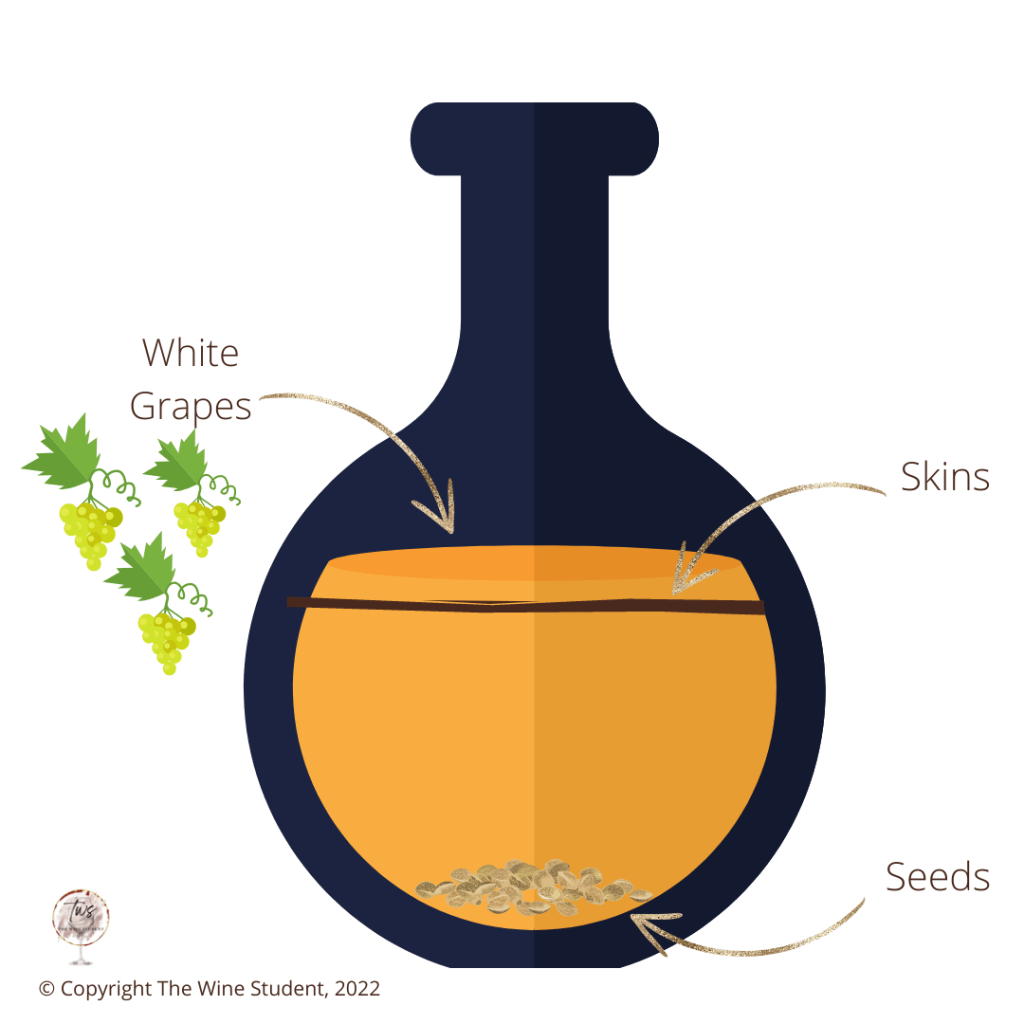
In most wine production, seeds get discarded prior to any processing of the juice and fermentation. That’s because seed contact can make wine taste bitter. So how do orange wines stack up? Do they taste sour or bitter? It depends. While technically a white wine, orange wines are very dry and tannic, much like a bold red wine. Flavors are bold and brassy with aromas of honeyed jack fruit, sourdough, juniper (like gin), brazil nut, apricot, orange blossom, and bruised apple. They can be very intense on the palate with a sour vibe much like a fruit based beer.
What is jack fruit? I don’t know jack $&@! about jack fruit so I did a little research. When ripe, jack fruit has a strong aroma and tastes like tropical fruit: mango and pineapple, and banana.
Orange wine is not a new ‘oops’. It is an ancient process dating back roughly 5000 years. All elements were left to ferment for time in large buried clay vessels called quevri (kev-ree).
Check out the video below for a little summer fun!
Pairing:
Bold for bold, orange wines pair well with bold foods like curry and Moroccan dishes, Korean and traditional Japanese cuisine. Because of the high tannin, and hint of almond-like nuttiness, it can pair with beef and fish. This is something you can play around with to find your favorite.
It’s a white wine that thinks it’s a red so the pairings could be really colourful. But be careful of the spice quotient: it will bring out the heat in some dishes.🌶🌶🌶
If you’re looking for ‘grippier’ offerings with increased tannin, look for 30+ days of skin contact; fresher, lighter versions have maybe 4-10 days. Because they’re natural with little to no preservatives, drink within 2-3 days after opening. Store in cool, dark areas (between 50-60F). Serve chilled, at around 55-65F. If it’s too cold, you’ll lose the nuance of the flavors.
Look for wines from Italy, Solvenia, Australia, France, South Africa, Austria, and the US.
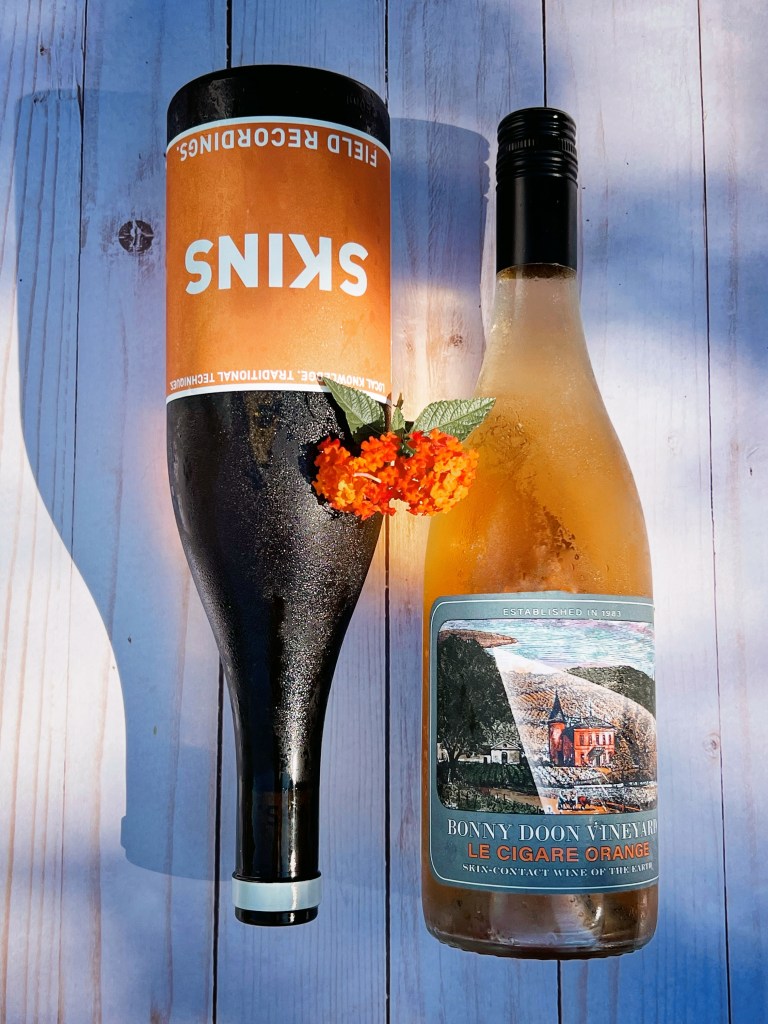
I recently tasted a 2021 Bonny Doon Vineyards Le Cigare Orange (California). It is the ‘skin-contact wine of the earth’ (says so right on the bottle) and is made from 10% Grenache, 80% Grenache Blanc and 10% Orange Muscat. It had a hint of orange blossom on the nose, and a sour, almond vibe on the palate with a dry, puckery, yet bouncy mouthfeel. Flavors of white peach, early-ripe apricot and citrus lingered on the finish.
It sells for $17.99
Here are three others that might float your boat:
• Cos Pithos Bianco (Italy) $27
• Attems Pinot Grigio Ramato (Italy) $20
• Field Recordings Skins (California) $24
I chose the Field Recordings Skins to share and here’s what we thought:
(Pairing with Thai food)
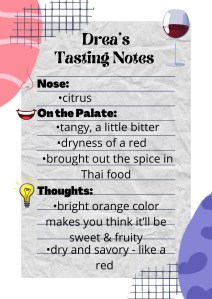
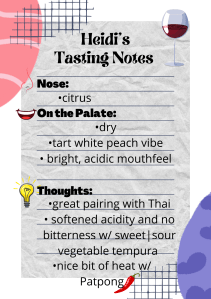
These orange wines restored my faith that not all orange wine is wine gone bad. And they can be very different than what you might be expecting. But isn’t that half the fun about summer wines ~ trying something new, refreshing and just a little bit different?
Cheers!
©️Copyright. The Wine Student. 2022.

 The Wine Student