Summer Lovin’ 2: Electric Boogaloo

 “Summertime is always the best of what might be.” ~ Charles Bowden

Friday’s summer wine feast highlighted a few of the best of what is to come this summer.  Shelly and I had two hours to sample as many of the fine wines as we could. It proved to be fairly tricky since there were seven tables with five wines each. Five food stations with samples of cheeses, main course offerings and dessert were available to navigate along with the wine.

David fromVintage Wines said that Riesling was going to be one of the big trends this summer and we paired the Richter Estate Riesling with samples of baked, breaded Hake in pesto sauce. I’d never tried Hake, but it proved to be a tasty yet light fish. The flavorful delicacy of the fish and basil from the pesto brought out the floral and citrus vibe of the wine. As for the reds, the Tamarack Red Blend was pleasant enough at first taste but as the sample wound down, Shelly found it became more bitter with a vinegar aftertaste she wasn’t really into ~ so in the chum bucket it went.

On to our next pick of the night: an 07 Tudal Cabernet Sauvignon. Cab Sauv always brings to mind colder temps and a hearty beef dinner. Jack from Wine Trends suggested pairing it with the tricolor tortellini salad and kale with blueberry quinoa. I didn’t think it would pair well at all but found it to have a subtle strawberry on the nose; fruit forward jam essence, peppery in the middle and a finish of soft caramel. The mild spice of the tortellini and sweetness of the kale quinoa was beautifully offset by the complexity of this Cab and it was surprisingly refreshing. Only 490 cases of this vintage were produced so it was a rare and wonderful find. At a price point of 39.99, I thought I’d splurge for a wine that was toe-curl worthy.

We did our best to use our limited time wisely but didn’t get through all the stations before closing time. Yet with the rush, we still managed to get to the cassata cake. Even when you’re at your busiest, there’s always time for cake.

It was great to experience a tasting like this; like speed dating but with wine. And while we couldn’t sample everything, we did come away with a couple of good numbers to hook up with for the summer.

Cheers!

Celebrity Skins 101~ Muscat Love

Drake with Martini Moscato D'Asti (Photo credit: David Becker/ Wire Image)

Drake with Martini Moscato D'Asti (Photo credit: David Becker/ Wire Image)

I have to admit, when I think of Muscat I think of soda pop: One that goes to your head quicker than a fast roll down a hill. I know that’s making an uneducated assumption because lately, you can’t escape the fact that Muscato D’Asti’s popularity is growing in leaps and bounds. That’s thanks, in part, to the constant references by artists like Kanye West, Drake, Lil Kim and others singing about its sweet charms and how it makes them feel. It also seems to have helped christen it as a bonafide brand. Muscato is now what Cristal used to be in rap songs: the wine of choice for a new generation of trend setters rolling to the club and chilling in the VIP.

It’s an interesting pick, but not surprising when you think about it. Muscato is a good, easy drinking, entry level wine: sweet but not overpowering, light and refreshing. And the price point of between $12-14 a bottle makes it an attractive alternative to white zinfandel.

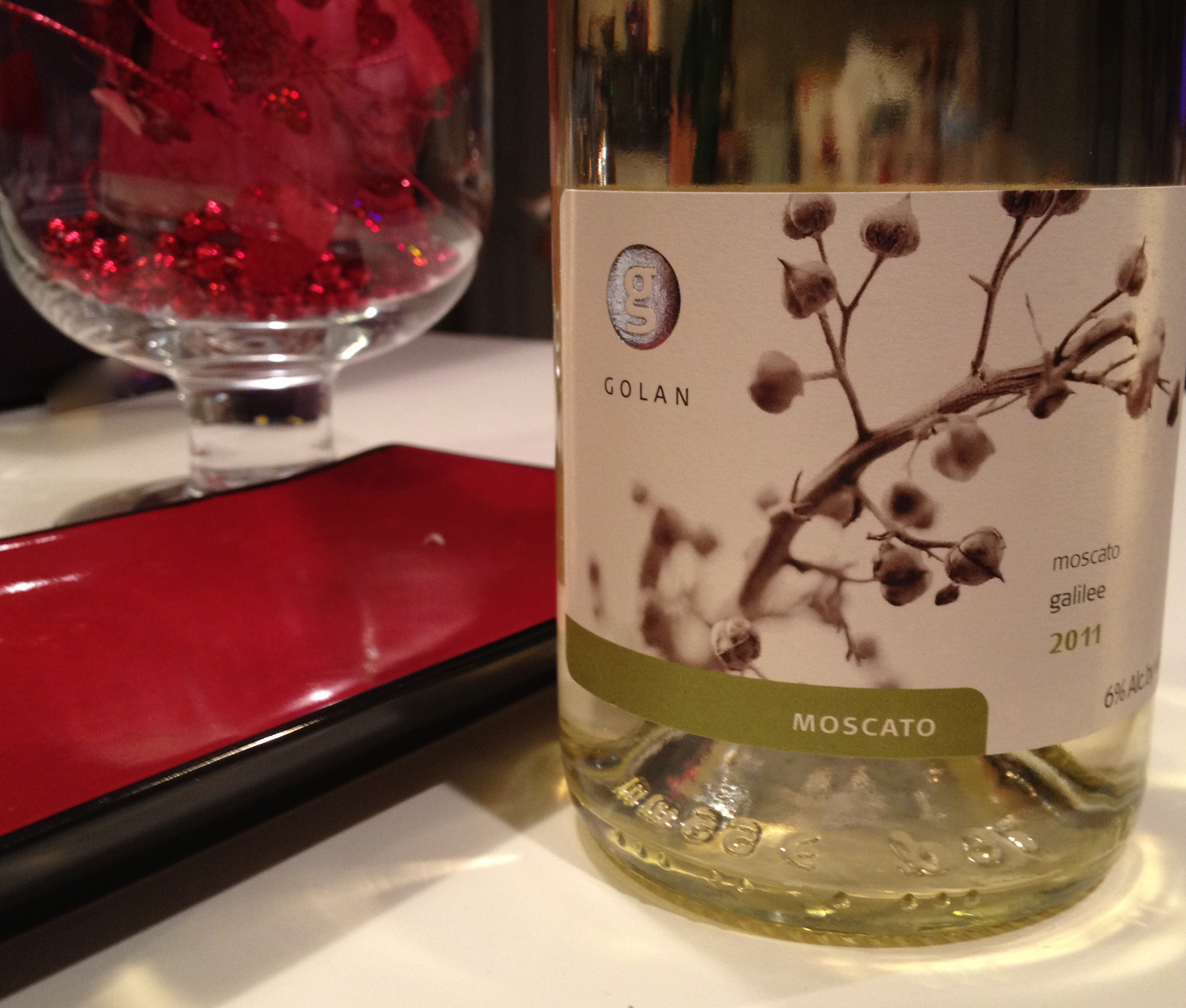
According to a recent article in New York Magazine, the demand for Muscato is far outweighing the supply, with wineries scrambling to increase its cultivation and production.Most of the bigger producers of wine are now introducing or heavily promoting their Muscato offerings.  A big push is being felt even here in the Cleve. Heinen’s Strongsville wine manager Paul Hoefke says he’s seen a steady increase in sales over the last eight months and doesn’t expect it to dip any time soon. He suggested an ‘11 Galilee Muscato from Golan Heights, an Israeli winery. It’s one that is difficult to come by and once gone, can’t be found again for at least a year.  The price point on this was about $17.99 as compared to most Moscato I saw that ranged between $9.99 and $14.99.

'11 Galilee Moscato from Golan Heights

'11 Galilee Moscato from Golan Heights

One of the oldest known varietals, Muscat thrives in warmer climates. You won’t see any grown here in Ohio, it’s too damn cold.  The largest producer in the US is California, which makes perfect sense. There are more than 200 types of Muscat and range in color (from white to  blush to a black); some are sparkling, while other less so. The main distinction with Muscato is in the fermentation process,Golan Heights states that it is the stopping of fermentation early that makes it sweeter. It has a relatively low alcohol content that makes it lighter and more refreshing. Since it has a strong, sweet base, Muscat generally pairs well with light cheeses like Parmiagiano-Reggiano, goat cheese, triple creams, desserts with Marscapone;  spongy cakes and cookies. Yet, contrary to some opinions, a dryer offering in the style of  Muscat d’Alsace apparently pairs nicely with shellfish such as lobster or shrimp. Drake was right!

In the past, I’ve found Muscat to be a heady, sweet confection of a wine (although different from a late harvest or ice wine).  Since I was researching it, an experiment was necessary. It looked like fun as it poured into my glass; bubbles raced to the rim and released an effervescent scent of citrus and honey. While it was, as promised, sweet on the top, it wasn’t sickly or cloying. It was very light, very refreshing and very enjoyable. I could enjoy a glass on a hot summer day but only one small glass. Any more, and it would be a quick ride to headache city, a place where there is no VIP room.

Fizzy fun

Fizzy fun

It’s always good to try something a little different and fun, and this certainly was. As for what to pair it with, I think that has more to do with what an individual likes, as opposed to any hard and fast rules. That game, appears to be changing. Rapidly.

Cheers!


Vegan and the Big O: Compare and Contrast

This slideshow requires JavaScript.

I must say that I had a little trouble finding Vegan wines, ready to buy, here in the Cleve. While the wine stores I went to were happy to order it for me, I got myself into a conundrum for time; I wanted to post the comparison tasting soon after the initial post. So I took a little trip over to World Market Explorer on the West side, where I found a ’10 Pinot Noir from McManis Family Vineyards.

The Organic wine, an ’09 Bonterra Zinfandel, I found with no trouble at Heinen’s, my local supermarket.

According to the vegan beer, wine and liquor site, Barnivore, McManis is vegan friendly and uses only Diatomaceous earth and paper filtration.

Commenter Natural Ed had some great suggestions and I did take a road trip out the Whole Foods to try to find them. It felt a little like the Amazing Race for wine. Unfortunately, both stores didn’t have any of them in stock. I was pressed for time to order online, so I stayed with the McManis for the tasting. I had wanted to find two of the same varietal, but it was tricky enough to find a Vegan wine much less two Zins. I know that comparing Pinot and Zinfandel is a little like comparing apples to oranges, but I tried to keep an open mind about the quality of the wine itself. That said, I happen to like both Pinot Noir and Zin. For me, I didn’t taste any tangible difference between the organic and traditional; when they’re good, they’re good. And I’d expect the opposite is equally true.

DirtySpicyBerry 

We began with the Vegan Pinot Noir from McManis. The first impression was that it appeared a bit cloudy almost opaque in the glass. It had such a light bouquet that all of us had to get our noses far into our glasses to detect the light berry essence on the nose (which, for me, actually ended up on my nose). Shelly found a spicy, berry vibe that she thought was good. Cindy described a ‘dirty berry’ taste, while Terri found it to have a ‘Gurdy’ or astringent feel as it went down. I thought it tasted grippy, very earthy, young and thin. As a Pinot, I wasn’t expecting it to be as full as a Zin or Cab, and maybe I’ve been spoiled by Pinots from Oregon and Washington, but it did seem too simple and light for one hailing from California. I sipped more to see if it would evolve and gain some depth and it did, slightly, when I paired it with a little green pepper and tomato.

Smooth Operator

Yes, I know it’s a Sade song, but I think I accurately describes the Organic Zin from Bonterra. It was much richer in color (which is true of most Zins when compared to Pinot), with a full bouquet of rich berry that we could smell when I poured. It was a smooth and well-balanced with a flavor of deep blackberry, and a pepper kiss on the finish. Cindy described its quality as ‘full and creamy’ which it was. We agreed that it was very smooth with no bite; more complex by comparison. It was enjoyable on its own or paired with vegetables or crackers and hummus.

I know that our experiment had its flaws; comparing two different vintages and varietals being the most glaring. While we thought the McManis Vegan Pinot tasted young, the Zin had an extra year which could account for the complexity and richness.

The earthy overtones in the Vegan Pinot might be due to the fining process itself: could the earthy clay used to filter the wine, increase that quality in the taste?

My take away from this was that I was not put off Vegan wines at all; I’d like to try more.  I’d also like to test my hypothesis of clay fining’s influence on the final taste of vegan wine.

I enjoy trying new things and this study hall didn’t disappoint. It was a great night to experiment and to catch up with some great friends.

My next posts will be about the wonderful world of Icewine. With old man winter blowing into the Cleve tonight, it seems quite timely.

Cheers!

Thank you to Natural Ed for his great suggestions:

[From Whole Foods:

Pizzolato Prosecco made with Organically grown grapes & Vegan http://bit.ly/a0oSWW

Pizzolato Organic Italian Cabernet No Sulfites Added & Vegan http://bit.ly/a64esp

Biokult Austrian Grüner Veltliner – made with Organically grown grapes & farmed biodynamically http://bit.ly/a1e00e
Spartico Organic Spanish Tempranillo No Sulfites Added & Vegan http://bit.ly/cHbDz8

From Trader Joe’s:

ALBERO, Spanish Wines made with Organically grown grapes & Vegan http://bit.ly/eOQIFu