Earth Day 2022 🌎: Rethinking Capsules

You’re opening your favorite bottle of wine, you take the sharp cutter blade and begin to cut, scrape or pull the foil capsule off the bottle. Where does it go next? Probably into the trash. Hey, we all do this; I’m guilty as well. And it’s just a little bit of foil, no big. But when you consider that the US alone generates approximately 286 tons of waste per year, much of which ends up in landfill, a little foil can become a big problem.

Click the video below for more info!👇

In days of old, foil capsules were placed on corks because they prevented rodents and cork weevils from getting into the bottle.

Historically, these foils were made from lead, which we now know is poisonous. Lead was phased out by law in many countries beginning in the late 1970’s.

Capsules are now made from polyethylene or aluminum, which can be recycled, but more often than not, ends up in landfill.

Another issue with capsules is that they obscure the cork and fill level in the bottle. This is important – if the fill is not close to the cork, the wine may become oxidized. Which means not-so-great wine for you.

Additionally, there’s a great expense to the winemaker by using capsules, costing approximately $25,000 per year.

Now, there’s a growing movement to eliminate capsules altogether. With advances in quality control and cellar management, weevils and rodents aren’t the problem they once were. And with screw caps, there’s no issue at all.

Screw caps have steadily become the preferred choice for bottle closure, with many benefits. According to George Zaboura of Royal Park Fine Wines, “screw cap closures are better for the wine. There’s less chance of air getting into the bottle and less chance of the wine being tainted.”

And since they’re made from aluminum, you can recycle your screw caps!

An easy way is to put them back on the empty bottle and place in the recycle bin. You can also collect them in a large can, and once filled, crimp the top and place with your recyclables. This keeps the caps from flying about.

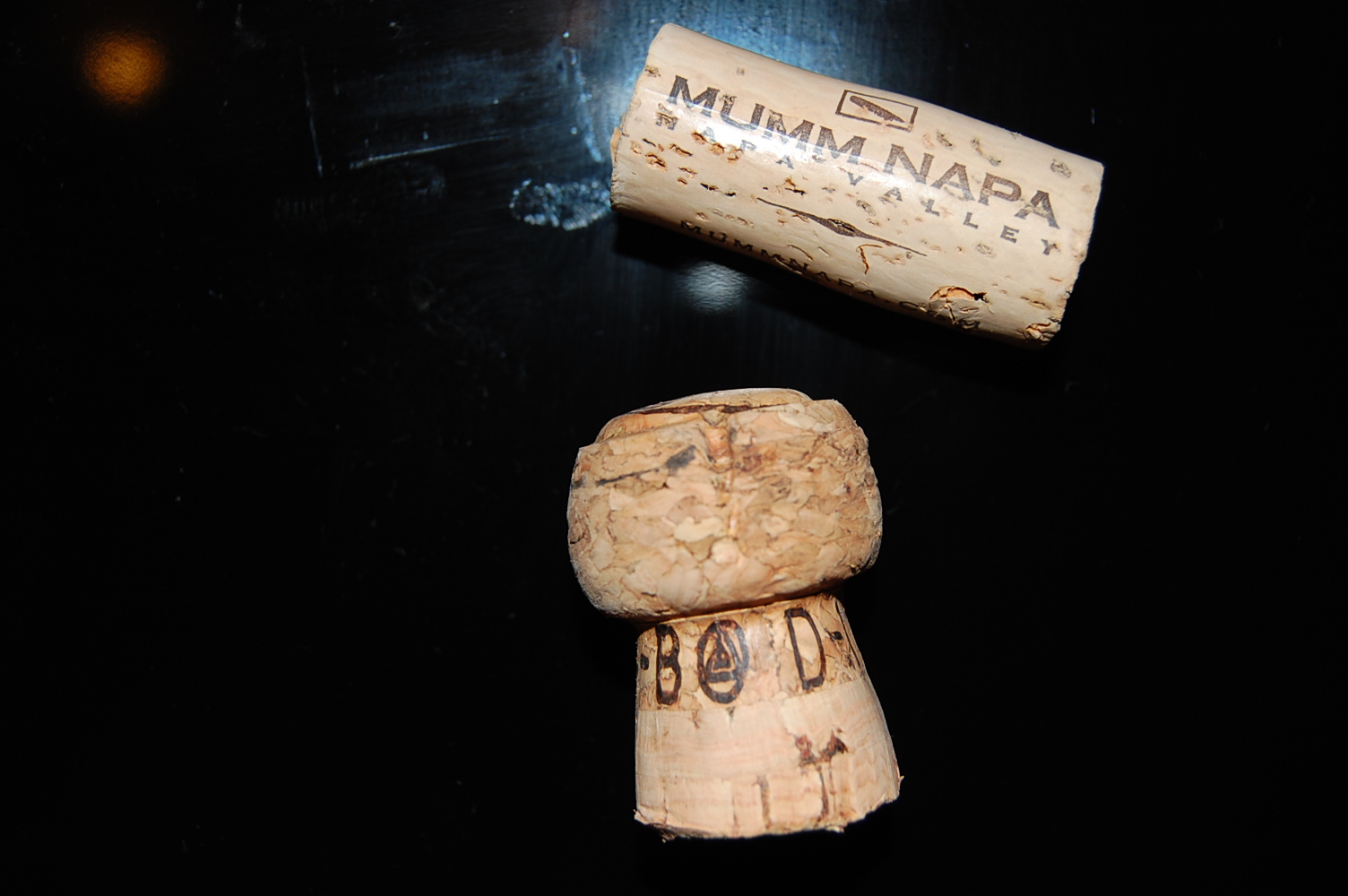
There is still much love, however, for the cork. Cork has, historically, been the preferred wine closure for generations, steeped in tradition. Made from the bark of the cork oak tree which is grown primarily in Northeast Africa, Portugal, Spain, France, Morocco and Tunisia; one tree’s bark can provide enough cork for hundreds of bottles. The tree remains unharmed during the harvest – the bark is scraped off the surface.The material is a renewable, sustainable and biodegradable which makes it an environmentally friendly bottle closure. Natural corks can be recycled. Find out how to recycle yours here!

Additionally, microscopic pores allow minute amounts of air to contact the wine which is key for proper aging, something the screw cap is lacking. With many reds, some of them investments, sometimes that microscopic bit of air can be the difference between a spectacular sip, and one that’s pretty good.

And where would we be without the ceremony and tradition? Popping a cork is much more romantic and satisfying than twisting off a cap.

You may occasionally notice some bottles are dipped in a wax. This is another way to seal the wine without the capsule but it’s very time consuming and costly for the winemaker. That’s why you’ll probably only see the wax seal on very select, more expensive wines. When I was out looking for wines, I found only three vintages (out of the entire wine shop) that had a wax seal.

Cork has its share of drawbacks – the quality can be variable, the material can be fragile and the cost is up to three times more than a screw caps. As well, there is the issue of cork taint – which can make your wine taste like wet newspaper. No one wants their wine to taste like wet newspaper. That’s nasty!

As with any debate about the environment, there are many points of view. So the choice is yours. With more of a push towards sustainability, reducing waste and recycling, there can be many ways to love our wine and help make a healthier planet. 🌎🌱💚

Cheers!🍷

©️Copyright. The Wine Student, 2022.

Top Five Wine-themed Crafts

With the holidays underway, and everyone having a bit of a break, there have been cries in my home of, “I’m. So. Bored!”  My daughter replied, “well, mom, why don’t you find a craft?” Damn, my own words coming back to haunt me. But she had a point. I began to troll around to find my top five picks for wine-y crafts.

Rather than just writing about them, I thought I’d actually try them.  And if they weren’t simple for me, I’d never recommend them for you. I’m all about the easy craft that doesn’t take too long or make a big mess.

I read about one that involved using a ‘diamond bladed wet-saw’. In my hands, with or without wine, this would not be good.

Here are my top five, in no particular order:

Wine Label Collage

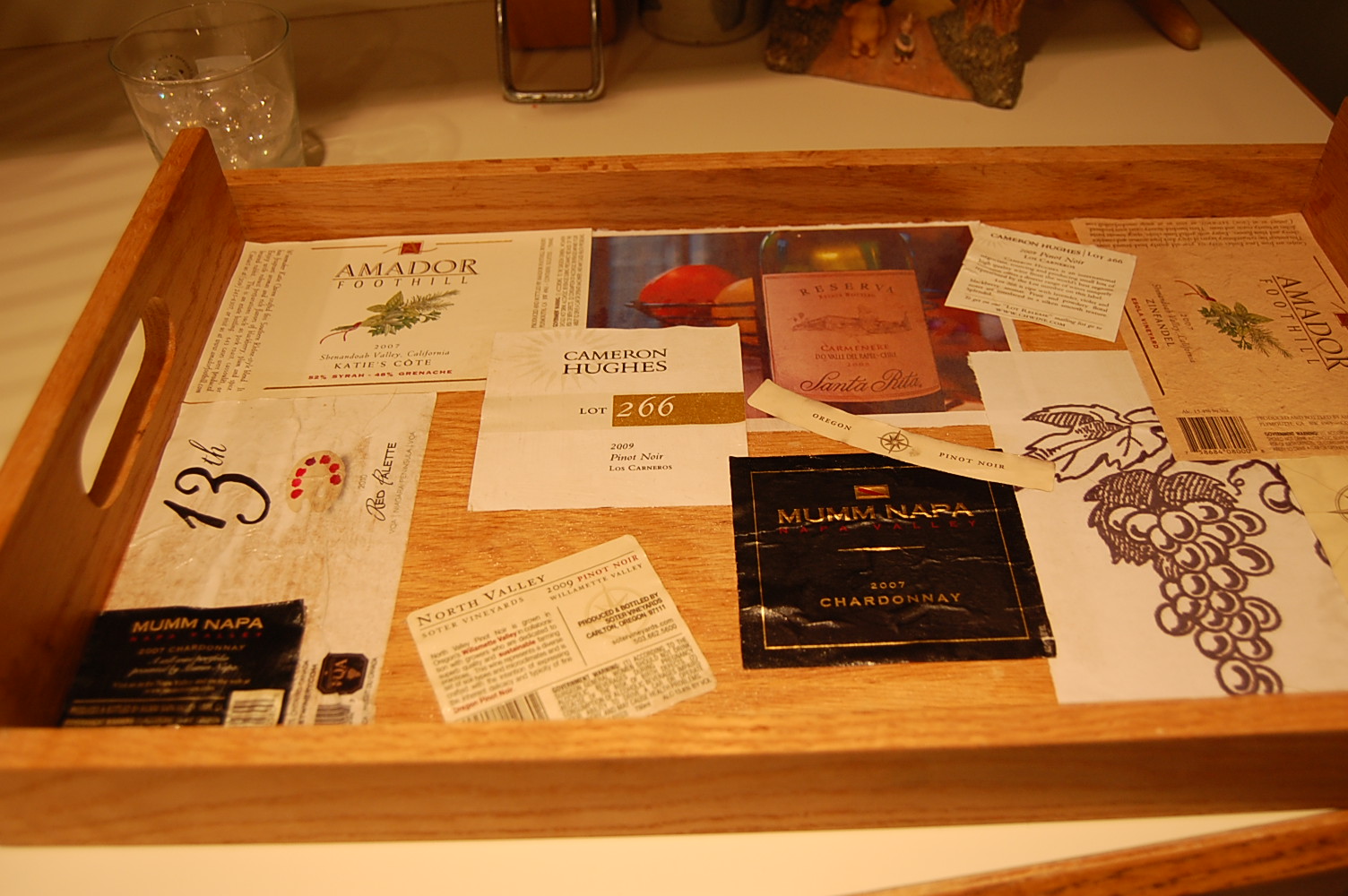
This one takes a little work but is still pretty simple. I did my collage on the bottom of an old wooden serving tray. You could do one on card stock and frame it as a poster.  Many wineries are using wonderful artists to design their labels, it’s a shame to toss the bottle in recycle without trying to preserve the label art in some way.

The real trick you’ll find with this craft, is getting the labels off the bottle; some slip off easily, some you have to finesse a little more ~ kind of like the shirt of that hot date you once had.

In a dishpan or sink, use enough hot water (hot enough for your hands to stand) and a drop or two of dish soap. Let it soak for a few minutes and beginning with the edges, slowly peel the label off (without ripping). At this point, I recommend having a sip of wine, a deep breath, and keep trying. Once you get the labels off, dry them on a paper towel, removing them every so often to keep them from sticking. You’ll need decoupage medium from an art or craft store. I used ‘Mod Podge’. For the tray, you’ll need to make the surface water resistant so when the labels have cured, cover with a final coat or two of clear acrylic sealant.

Wine Label Collage Tray (in progress)

Wine Label Collage Tray (in progress)

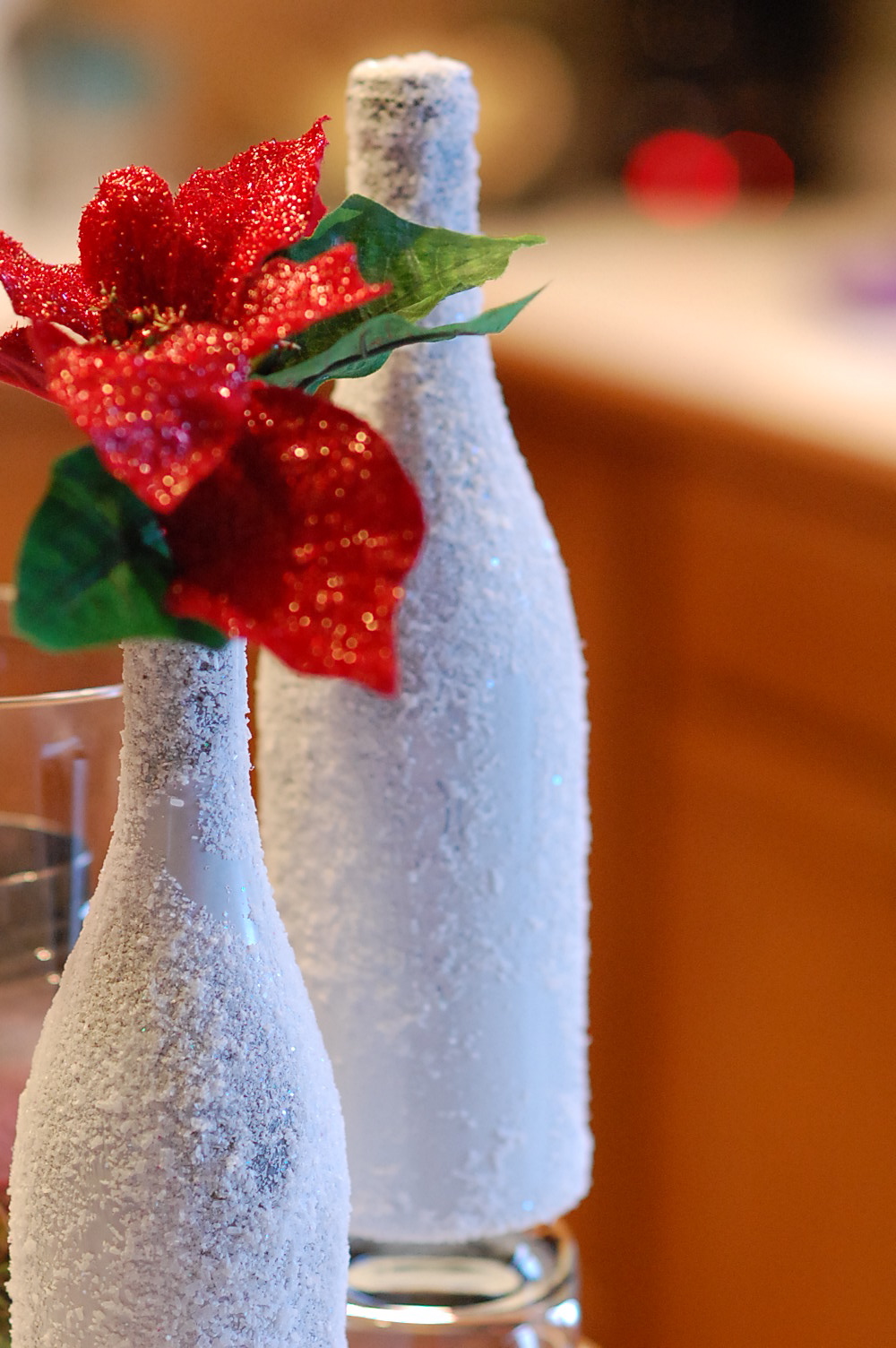
Frosted Wine Bottles with Salt

After you’ve successfully soaked off your labels for your collage, you can spray your naked wine bottles with a white primer. As the bottles are drying (and still sticky) roll them in an inch of Epsom Salts you’ve put on a foil-covered cookie sheet. I mixed a little iridescent glitter with my salt to give the appearance of ice. I found that I had to work quite quickly to get the salt and glitter to adhere. Let the bottles dry completely, spray with a sealant and display. I put a few of mine into my Christmas tree, securing them with white pipe cleaners.

[www.stylelist.com]

Frosted Salty Bottles

Frosted Salty Bottles

Cork Place Card Holders

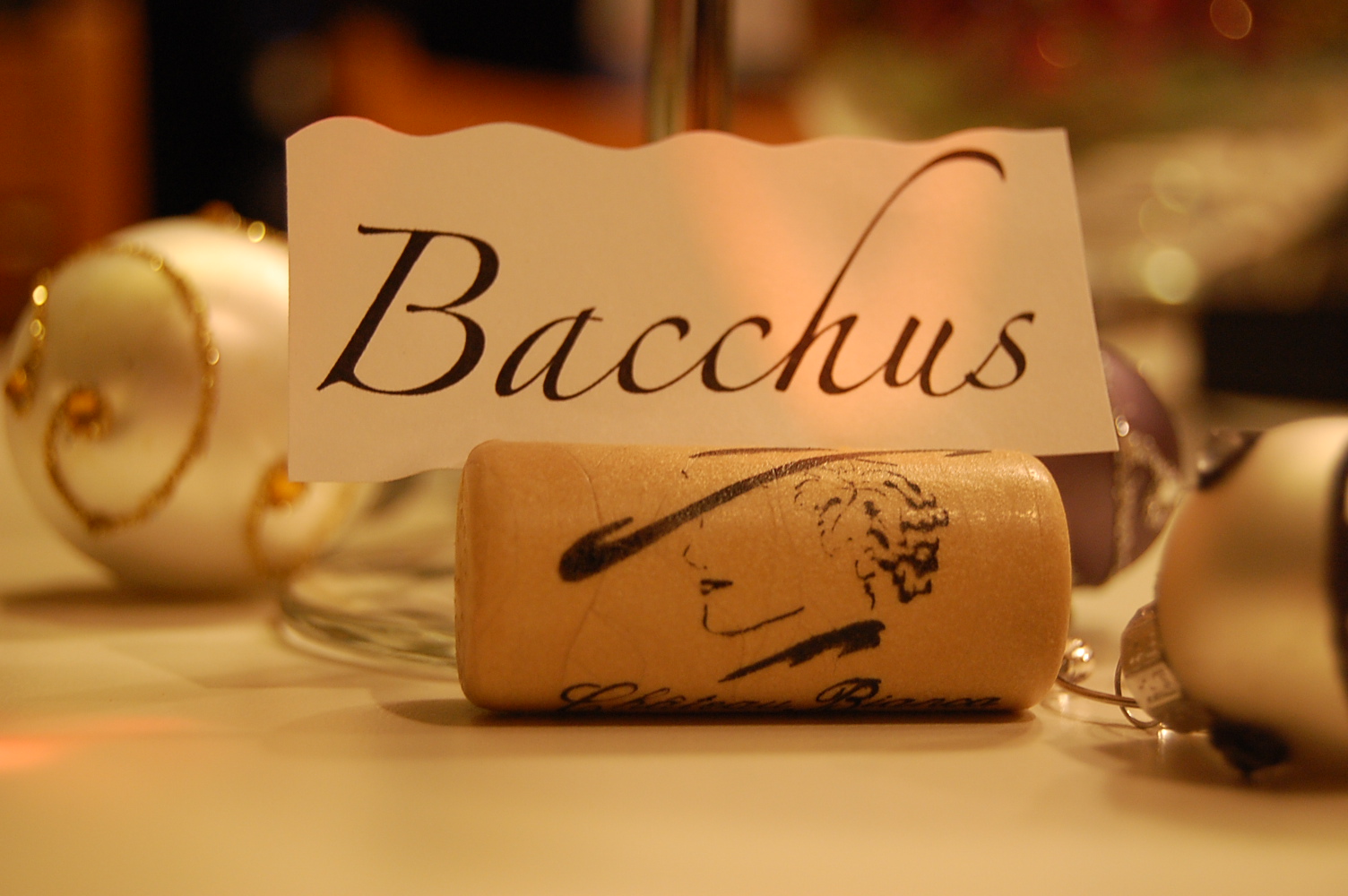
These sound like a no-brainer, and they are. They can look pretty cool if you have some decent artwork or logo on the cork. I was lucky to find this one from Chateau Bianca. Take a sharp knife and slice a lengthwise groove into the cork. If you’ve made your groove a little too large (which I did), simply glue the paper to card stock, which will make it a little heavier and more stable. A couple of drops of glue in the groove can help secure the card. They are really simple to make and would be great for a wine-themed wedding or dinner party.

[www.thebubblybride.com]

Cork Place Card Holder

Wine Cork Garland

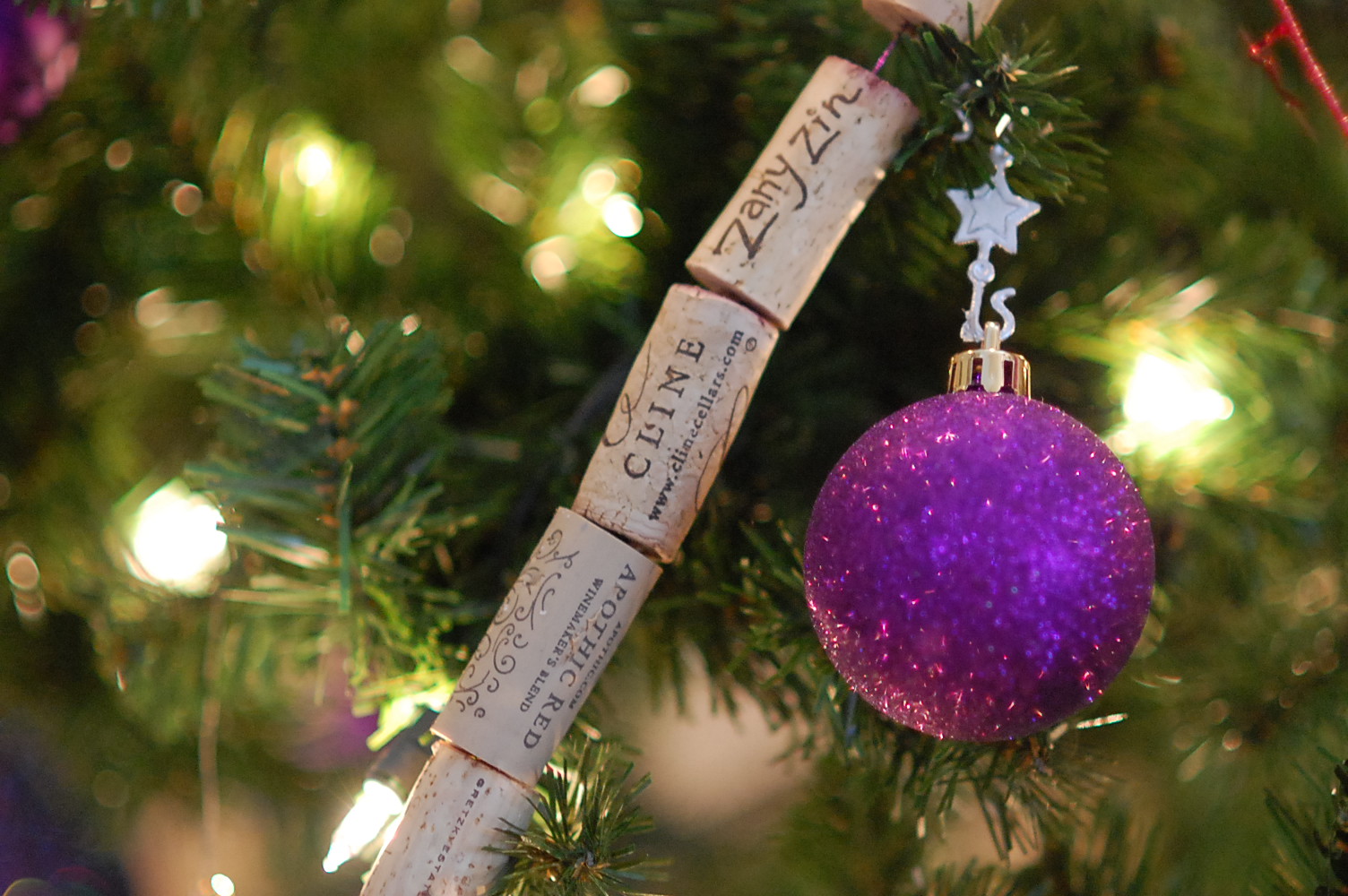
Again, this craft makes great use of any corks you have lying around and you have a tree with a wine motif (like I do). This is very simple; using a 3/8″ drill bit, drill through the cork, end to end. Take care with this; some corks can splinter and split so extra attention is needed. Synthetic corks tend to stay in tact more consistently. Also: you have to hold the cork steady as you drill, so save your quaffing until you’re ready to hang the garland. To string, I used a shiny metallic cording which was really easy to use.

Corky Garland (an awesome stage name!)

Corky Garland (an awesome stage name!)

Cork Magnet

This is as easy as opening a bottle of wine and drinking it. Except that you may have to use superglue and you want to do that before consuming any wine. Take your cork and a magnet piece (available at any craft store). Cut the magnet to fit the side of the cork, not the ends. Glue. Hold until dry. Put on fridge. Admire your awesome craftiness!  These are cool but are really more for show; mine slid oh-so-slowly down the fridge when I tried to stick up any notes.

Wine-y Magnets

Wine-y Magnets

And there you have it, a few projects to get you through the waning holidays, when you’re not recovering from that overexposure to turkey or wine buzz.

Tonight, I’ll be going to a Champagne tasting to learn how to pick a great bottle of bubbly to ring in the new year.

Cheers!