Snug as a Lady Bug🐞

“The Ladybug wears no disguises. She is just what she advertises. A speckled spectacle of spring, A fashion statement on the wing…. A miniature orange kite. A tiny dot-to-dot delight.”- J. Patrick Lewis

During the busy days of summer, it’s easy to forget the little things; a warm evening breeze, toes in the sand, glass of wine in your hand. If the past two years have taught us nothing else, it’s the simple pleasures that we need to pay attention to. Little things sometimes have the biggest impact.

Lady bugs are little, but they are mighty.

Farmers and gardeners love the lady bug. According to ThoughtCo.com, the lady bug (beetle) are beneficial predators who munch on many pests of the garden such as scale insects, whiteflies, mites and especially, aphids. Over the course of a day, a lady bug can scarf down 50 aphids, over a lifetime (about a year), they can consume over 5,000. They really are the ladies who lunch.

Too much of a good thing, though, can become a challenge for growers; an overpopulation can mean that many bugs can snuggle up in the fruit. And this can subsequently taint the wine if they’re not sorted out at pressing.

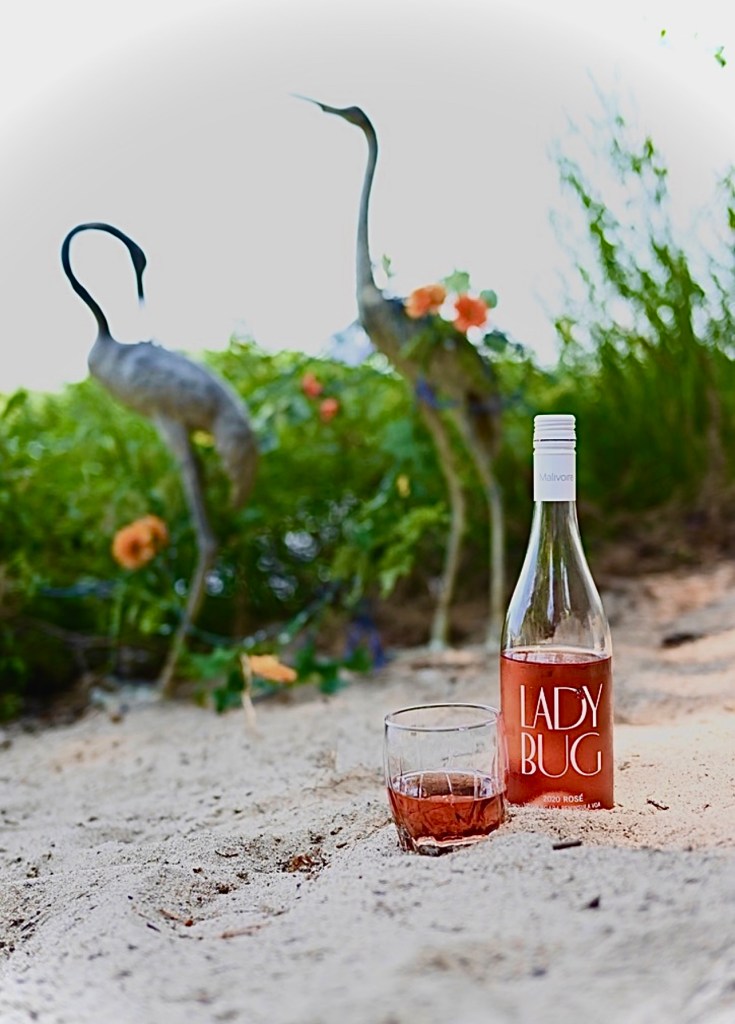
Searching for a nice light wine to pair with my evening chicken stir fry, I discovered this little but mighty gem: 2020 Malivoire Lady Bug. Located in Beamsville, ON, Malivoire is a Certified Sustainable winery. Made from a blend of 56% Cabernet Franc, 36% Gamay, 8% Pinot Noir, and cultivated especially for this wine, the grapes are harvested when sugars are at 19.5 Brix. The crushed grapes then soak in free-run juice ( juice that runs freely out of the tank by gravity) between two and twelve hours before press. After cold-fermentation and stabilization, the wine is transferred to stainless steel tanks to rest before bottling.

This lady bug had a surprising complexity, revealing different layers of flavor with each sip. Many single varietal roses are good but one-dimensional.

Check out the video below for more summer fun!🏖

Some tasting notes for ya!

• bright berry on the nose – flavors of red raspberry, strawberry,

• cherry, pomegranate – nice burst of tart flavor that sparkled down into a tangy tart that lingered on the finish.

• bouncy mouthfeel makes it great to sip on its own yet it paired beautifully with a gently spiced chicken stir fry with jasmine rice.

Recommended pairings:

Lighter meats such as:

• Butter Chicken

• Pork Roast

• Baked Ham

• Charcuterie

• Mussels

• White Bean Salad

•Available at LCBO – $17.99

Whether you’re sipping on a beach or dining al fresco with friends, please enjoy responsibly!

Cheers!🍷

©️Copyright. 2022 The Wine Student

What I Did This Summer

Sometimes we save for a special occasion. We’d saved up for a while, and in June, we were able to travel to France , and tour the beautiful village of Saint-Emilion, nestled in wine country, 35 km from Bordeaux. The primary grape varieties grown in this region are Cabernet Franc, and … Merlot. Uh oh. Being a Pinot Noir fan (and the movie ‘Sideways’ didn’t help) HubbyDoug had sworn that he’d never drink any *#@$ Merlot. But he did. And he liked it. More on that in a bit.

But first, some fun facts about Saint-Emilion.

  • Named after the reclusive Benedictine monk who relocated there in the 8th Century and lived in a cave.
  • Known for performing miracles, Emilion amassed many followers and made the town a great religious center
  • Home to one of the great subterranean monolithic churches in the world, Saint-Emilion Monolithic Church was carved into a rocky hillside to honour that along with 200 kms of underground galleries
  • Built on limestone, Saint-Emilion still has edicts in place that only small trucks can enter/ exit due to the vast number of underground tunnels.
  • Romans planted vineyards in what became Saint-Emilion as early as the 2nd century
  • One of the main red wine areas of Bordeaux
  • Wine profile: Varietals: Merlot, Cab Franc, some Cab Sauv
  • Soil: limestone, sand, clay

Click the video below to join me in Saint-Emilion!


With a population just over of 2,000, Saint-Emilion seems almost preserved in time. It’s weird to see cars (and if you do, they’re extremely small). But a more quaint town you be hard pressed to find. It’s such a beautiful place. Navigating some of the streets, however, you’d better have goat-like stability, especially in the rain. And to sample wine and other treats, you needed to plan your route. To get to the town center, you had to walk down a cobblestone avenue that had a railing running the entire length. While it was helpful, you really needed a human chain to get everyone there safely. Running shoes were not helpful ~ you needed mountain climbers’ spikes, and good hip flexibility. You wanna wear dressy heels on this wine tour? Leave them on the bus, this isn’t that kind of party.

Visiting the monolithic church is a little like your own private DaVinci Code. You can only get inside by booking through the tourism office. If you just show up, you won’t get in. Only designated tour guides have a key. Once you enter the church and catacombs with your guide, the heavy wooden door is locked behind you. No one enters. No one leaves. That was a feature that made some of our tour mates a little antsy. But it was such a cool place, and the tour was really interesting that the time went by very quickly.

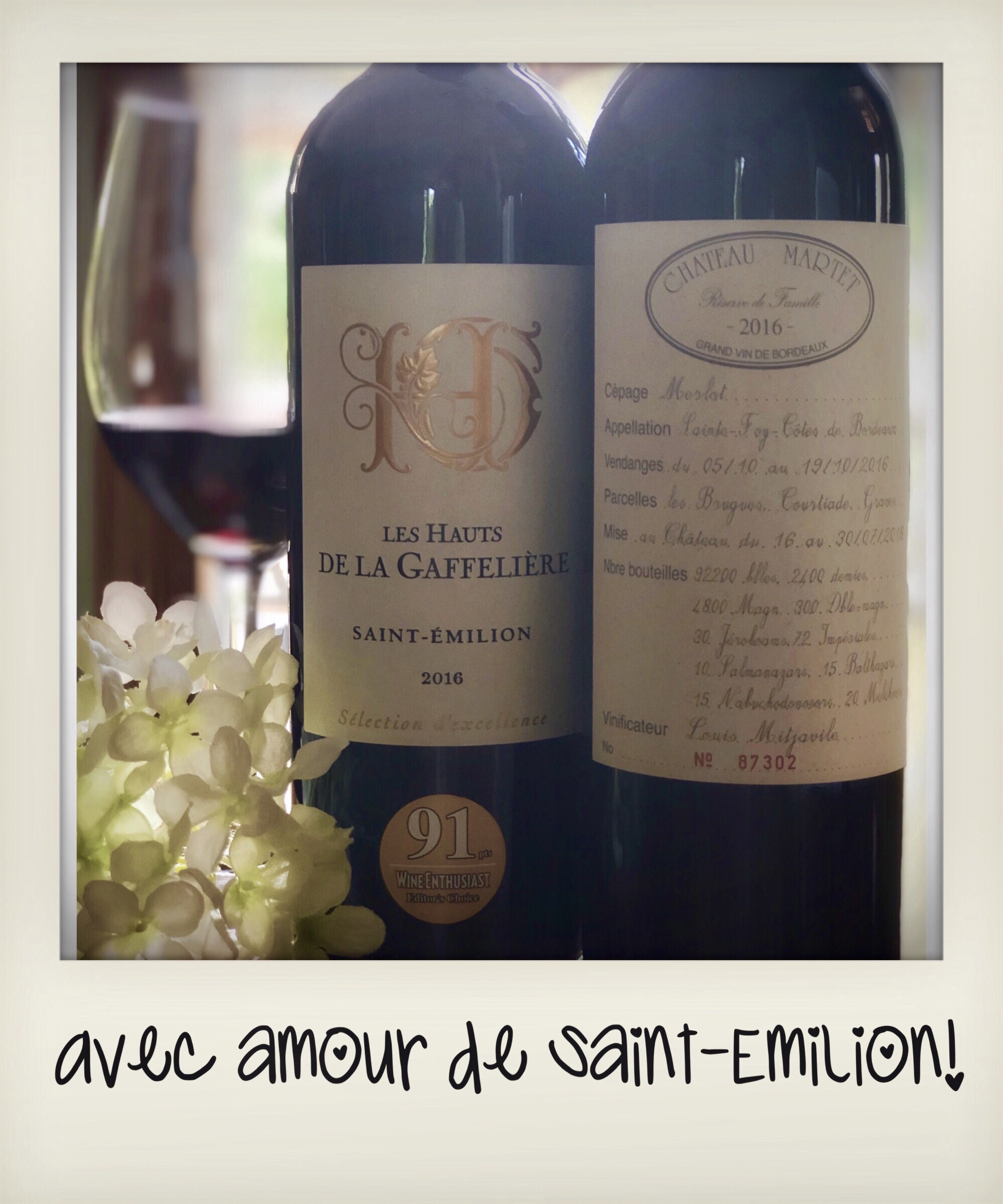
My friend Shelly and I soon went on to explore the rest of the town. HubbyDoug explored some wine. He chose two: 2016 Chateau Martet Reserve de Famille (the Merlot!) and a 2016 Les Hautes de la Gaffelière. Knowing that we would probably never be back (although I can always hope maybe one day…) we bought a couple of bottles to ship home.

The next stop on our journey was Chateau Franc Mayne. Located only about a kilometer from the little village, it’s guarded by a beautiful stone cross that overlooks seven hectares of lush vines. It is a Grande Cru Classe (exceptional) winery and they take great pride in working to be sustainable and environmentally conscious.

After visiting the vats ( concrete, steel and oak) and vineyard, we made our way to the underground galleries where most of the barrels were kept. Much like the underground networks under Saint-Emilion, these galleries seemed to stretch on to infinity.

It was wonderful to save for a summer adventure away from home. I feel so grateful to have had an opportunity to explore a new wine region, and to experience such a beautiful place with so much history.

Sante! 💋🍷

©️Copyright. TheWineStudent, 2019

2013 Cleveland Wine Festival

This slideshow requires JavaScript.

The night breeze was almost tropical. And that’s saying something for the Cleve. Every year, I look forward to going to the Cleveland Wine Festival at Voinovich Park, and this year it was spectacular. My friends, HubbyDoug and I arrived early enough to sample responsibly and get a good look at this year’s offerings. The pick of the night for my friends Terri and Shelly: the 2012 Estancia Moscato. Light and refreshing, it delivered a nice complexity with the sweetness, which made it a good sipping wine ~ requiring seconds (and thirds) to get the ‘full view’ of flavors. At least, that’s what they told me.

What I found most interesting this year was seeing a real change in label art. Many of the brands represented moved towards (especially for their entry-level wines) more eye-catching, funky artwork; spectrum of pastel to neon to color-blocked lettering, backgrounds, and lots of movement on the label. Be.Wines had a little test you could take to discover what type of wine suited you. I thought it’d be really interesting to see how the test scores changed as the night went on; someone who started the evening as a steadfast golden retriever (one of the choices) might end up as a jungle cat by closing time. Rowrrr!  They seemed to be reaching their target market; I saw a lot of  Millennial ladies taking the test as the night went on.

Many Ohio wines were well-represented and my choice for the evening was Laurello Vineyards Rodavi, a 50 | 50 blend of Merlot and  Cabernet Franc.I’m not always a fan of Merlot but blended with their Cab Franc, it brought an extra dimension of fruit and tannin that I don’t find with Merlot on its own.  I was also fortunate to sample a little of their 2012 Cabernet Franc, which I found to be a delicate combination of red cherry and a hint of vanilla.

When all the elements come together to make a great evening: good weather, great friends, food and wine, you can’t ask for anything more.

Cheers!

ŠTheWineStudent, 2013

Field Trip ~ Colaneri Estate Winery, Niagara.on.the.Lake ON

@ Colaneri Estate Winery

@ Colaneri Estate Winery

One of the things I love about going home to Niagara for the holidays; apart from seeing family and friends, is picking a new winery to try. Since I left almost 5 years ago, there has been an explosion of great wineries with something to please every palate.

When HubbyDoug and I were walking the main street we slipped into a little bar for a glass to take away the chill. We were treated to a Colaneri Estate Winery ’09 Cabernet Corposo. I noticed a distinctive richness and old world vibe from the very first sip. To be honest, my experience with many Niagara reds has been somewhat disappointing. They have a tendency towards a lightness and a green, vegetal quality that I don’t always care for. While they eventually settle into a pleasant flavor, it’s generally when you get to the bottom of the glass. I like a red to look me in the eye as it gently takes me by the collar and eases me back into my chair. This wine winked as it looked me in the eye.

I had to find out what made it so unique. A trip to the winery became my top priority.

Colaneri wines are made using an appassimento process that dates back to ancient Roman times. Harvested grapes are hung to dry before winemaking, to remove any excess water, thus shriveling the grapes. And why would you want this kind of shrinkage? All the better to concentrate the sugars and flavors in the resulting wine.

  • Recioto ~ also an ancient style of winemaking and also incorpporating the drying of grapes to concentrate the sugar content. Recioto may be red or white, dry or sweet. The dryer wines in this style are Amarone which can be intense at 16% alcohol.
  • Ripasso is a style that means to revisit or go over. It involves a double fermentation process in which additional dried grape skins are added. The sugar content has been heightened by drying and this increases the final alcohol and phenolic content in the wine which is known as passito.

Our winery guide, Pam, explained that Colaneri was one of only three Niagara region wineries to use this process. Their wines are kiln-dried, using both greenhouses with industrial fans and tobacco kilns. ”Since the kilns were no longer being used to dry tobacco, they have been put to use in winemaking”, she said. In the tobacco kilns, the fans push air up through the floor; where the greenhouse fans circulate the air around the fruit. The drying process can take up to two months with skin contact completed within 7-10 days.

After harvest, the grapes for Amarone and Recioto are set aside to dry in trays in kilns, or are hung in lofts ~ the hanging and careful placement in trays allows for complete air circulation so no mold develops. There they stay for approximately four months after which the semidried grapes are crushed and fermented with the grape skins. The grapes not used for Amarone or Recioto are crushed and fermented to be used later.

Once prolonged skin contact has finished, the wine is stored for aging. The additional wine (that had been fermented seperately) is introduced by being pumped over the Amarone | Recioto skins, thus starting the second fermentation. The saturated skins are still quite full of unfermented sugars, making them high in aromatics and tannins.

It was time to began our tasting with a spectrum of lighter fare: Pinot Grigio, Sauvignon Blanc, Gewurtztraminer, Chenin Blanc. The Chenin Blanc was my favorite; it had a taste of pear, pineapple and cotton candy (yum) with lots of citrus on the nose. Pam then took us into the reds starting the Red Blend ~ a combination of Cab Sav, Syrah, Merlot, Cab Franc and Petit Verdot. She mentioned that it was their everyday wine that pairs well with everything from pizza to red meats to chocolate.

We then turned our attention to the Cabernet that we had enjoyed the day before. The scent of rich molasses was prominent on the nose with sweet tobacco, blackberry and raspberry resonating on the palate. Awesome.

The Cabernet Franc was rich and flavorful, with an distinct essence of plum. Pam mentioned that some who tried it but don’t enjoy prunes/plums weren’t always fans. She recommended pairing with tomato-y dishes to counterbalance the prune essence.

We spend a good part of the afternoon sipping and learning a lot about some very special wines. Pam was friendly, knowledgeable and made the field trip to Colaneri so much fun.

I came away from the trip feeling happy to have discovered a jewel of a Niagara wine. I’ll make a point to look for more wines created using this time-honored method.

Cheers!

ŠTheWineStudent, 2013

Ice Wine in the Grand River Valley

The nasty weather held off here in Cleveland, and I was able to check out the WineGrower’s of the Grand River Valley 9th Annual Ice Wine Festival. It proved to be a good afternoon to sample some of their award winning offerings. My friends and I narrowed our trip to two participating wineries: Debonne and Ferrante. Click on any thumbnail to view the entire gallery.

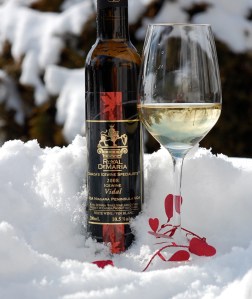
At Debonne, we were treated to some ice carving demonstrations and a taste of their Vidal Blanc ice wine with home made cheese. The pairing was nice and brought out the ‘velvet-y’ qualities of both. My friend, Kell, was quick to point out this term, one he had picked up from our discussions about the wine aroma wheel. Learning can be fun! We moved inside to the tasting room and sampled an off-dry to sweet varietal wine selection. It ranged from a blend (Jazz White) to Razzberry Riesling. My pick from this grouping was the Jazz White; a blend of Chardonnay, Pinot Grigio and Riesling. It was a clear, light straw color, very minimal on the nose, but was lightly nuanced on the palate; refreshing with a subtle honey finish. I thought it could be a great sipping wine on a hot summer day and would be particularly good with a mild, white fish. The Riesling Reserve lot 907 was also light and sweet but didn’t have the same complexity as the Jazz White. The Razzberry Riesling, to me, tasted a lot like a Jell-o shot; very sweet and fun.

Ferrante treated us to their Vidal Blanc as well as a delicious Cabernet Franc. I have a soft spot for Cab Franc because it’s fruit forward with a rich, warm vibe (yes, even for an ice wine). And it has a buttery finish that can cuddle you up like a favorite blanket. Ferrante’s 2010 Cab Franc was no exception; it had a rich cherry top note and, true to form, ended with that beautiful butter kiss. You might say it was almost … velvet-y.

The Grand River Valley Ice Wine Festival continues March 10 and again March 17.

Cheers!

The Ice Wine Cometh…

The Sweet Escape: Ice Wine

The Sweet Escape: Ice Wine

It’s sweet and rare, and if you knocked back a whole bottle by yourself, you might need a trip to your local ER to check your blood glucose levels. It’s ice wine and it’s mighty fine.  It’s taken me a little while to put these next couple of posts together. For one thing, there’s so much information about it, for another, I wanted to get it right.  Producers of true ice wine work very hard to accomplish what they do and in some chilly, low temps. Shrinkage is a given. So here we go, into the land of ice wine and snow …

Ice. Wine. Baby.

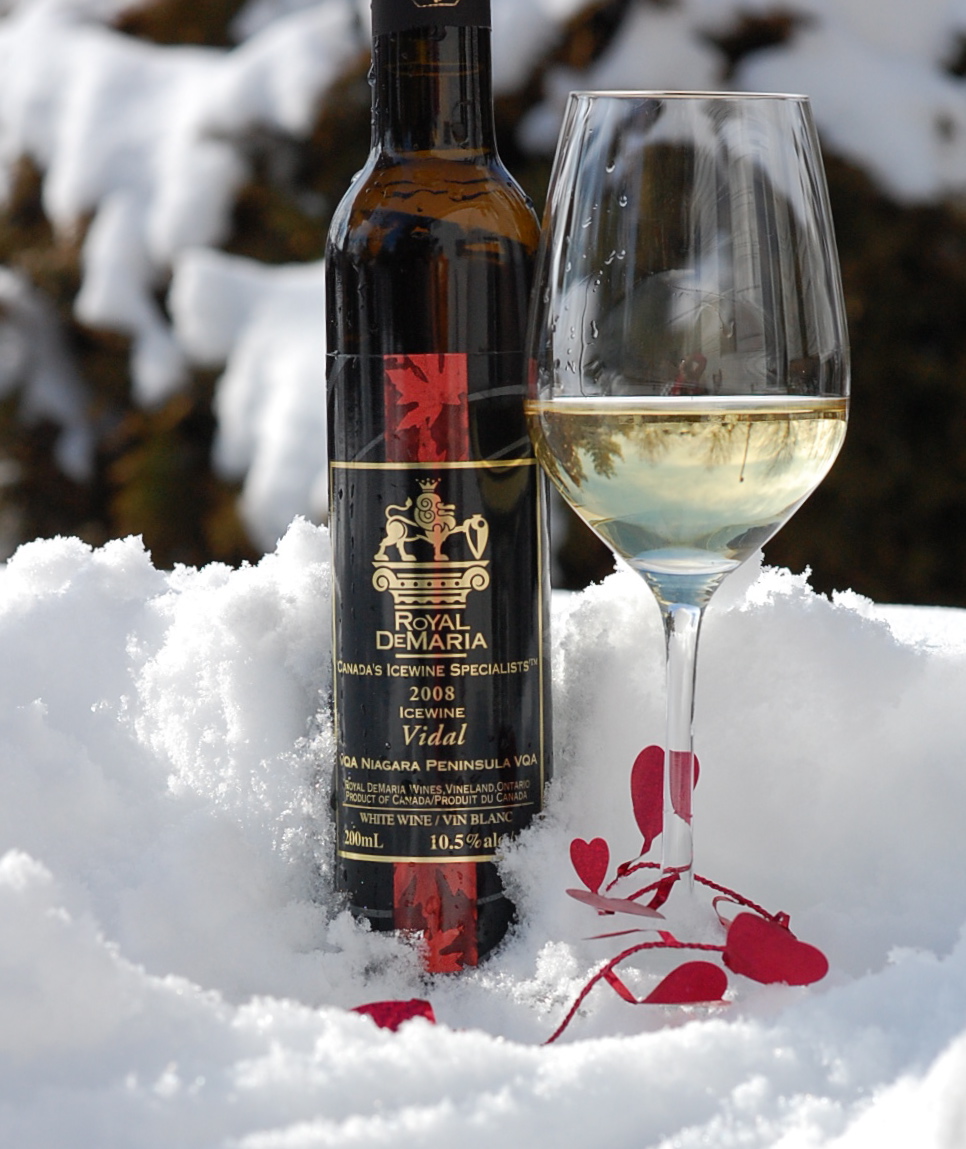
Ice wine is a rich, dessert wine made from the juice of partially frozen grapes. They must remain on the vine and harvested when temperatures dip to between -8 and -12 degrees Celsius over three consecutive days. The sugar content of the grapes at this time will be at its most concentrated. The water inside the juice is minimal resulting in extreme concentration of flavor, sweetness, aromatics and viscosity.

Iced Vineyard [image via David Boily|AFP|Getty Images]Canada (primarily the Niagara region) and Germany are the leading producers of ice wine (with an increasing number of good producers in Western New York and Ohio)  and yet it is still quite rare; yielding 5-10% of a normal harvest. The brisk temperatures that we complain about when we scrape off our cars are ideal for ice wine, but it’s a delicate balance. The colder the temperatures become, the more the grapes freeze and it can become more difficult to extract the juice. Most ice wine is harvested in late December to mid January when the lower temperatures stay constant. Before the harvest, ice wine grapes must be netted for protection from birds and animals. Picking is generally done by hand and much of the time at night, when the low temperatures stay most consistent.  The crush is also done outside to keep the must at a constant, cold temperature. If any thaw occurs, the water content inside the grapes will increase, potentially spoiling the sugar concentration. It’s these factors that make ice wine a premium wine product and legitimize the price of $30.00+/ 375ml. Think about it: you’ve got to give it up to those who go out in the middle of the night to pick and press grapes for you to enjoy.

The best grapes for Icewine are those with thicker, more durable skins that will hold together during the freeze ~ thaw cycle common in cold weather. Grapes with higher acid, extremely high sugar yield the best. As with any wine, differing varieties produce different characteristics: Riesling has a green apple and honey vibe; Cabernet Franc produces a rich, berry, buttery character and Vidal, a good, hearty hybrid used commonly because of it’s durability gives a traditional raisin-y essence. Troutman Vineyards in Wooster, Ohio make an ice wine using Chambourcin, a rare, red varietal.

Grapes are 80-90% frozen to give the required concentration of sugar, which is measured by degrees Brix, typically 35 degrees. Brix is measured using hydrometer or refractometer. Both provide vital information about the amount of sugar that been dissolved and that will help the winemaker determine how much yeast to add, since yeast converts sugar into carbon dioxide and alcohol. The yeast used in ice wine must be one that can handle high sugar and not go too high in alcohol.  The yeast must be gradually acclimatized to increase the sugar environment. Fermentation can take 3-6 months and the percentage points in alcohol must progress slowly as this can increase spoilage if progressed too quickly.

After 3-6months, the ice wine needs to be filtered again, and very slowly or you get a fizzy wine. It’s a sticky process. Bottling is also slow so the wine doesn’t end up like fermented Hawaiian Punch.

Storage

Chardonnay, Cabernet Franc and Merlot are best when to drink when young. Gewurztraminer and Ehrenfelzer: 3-5 years maximum. Vidal and Riesling tend to be the most hearty and are best to cellar the longest at between 5-7 years. They make the best bet for long term cellaring because they are able to retain their acidity.

Like revenge and ice cream, ice wine is best served cold:

Ice wine should be served chilled but not frozen; extreme variations in temperature can compromise the quality of wine, so just chill in the fridge. The ideal temperature is around 12 degrees. As with most chilled wine, allow it to stand at  room temp for about 15 minutes to open up the bouquet.

Raise your glass

The glassware you choose is also important. I’ve made the mistake of serving it in liqueur glasses. I was wrong. So very wrong.  The common viewpoint among experts is that ice wine, like any other fine wine, should be served in glassware with a larger bowl (about 9 oz). All the better to sniff and swirl with. When you think about it, it makes sense. By swirling, you can better open up the intensity, bouquet and flavors of the ice wine. You also want to use a glass that has a stem, and hold by the stem or base to not heat your ice wine; it’s very delicate! While you might want it to stay cold as you sip, don’t you dare put ice in your ice wine. Considering what you’re paying for this rich nectar, you don’t want to water it down with melting ice. An option to keep it cold would be  whiskey stones. You can put in them the freezer, and they’ll keep your wine chilled but  won’t dilute it.

The best pairing for ice wine are chocolates, fresh fruit, and delicate, lighter cheeses. Yum.

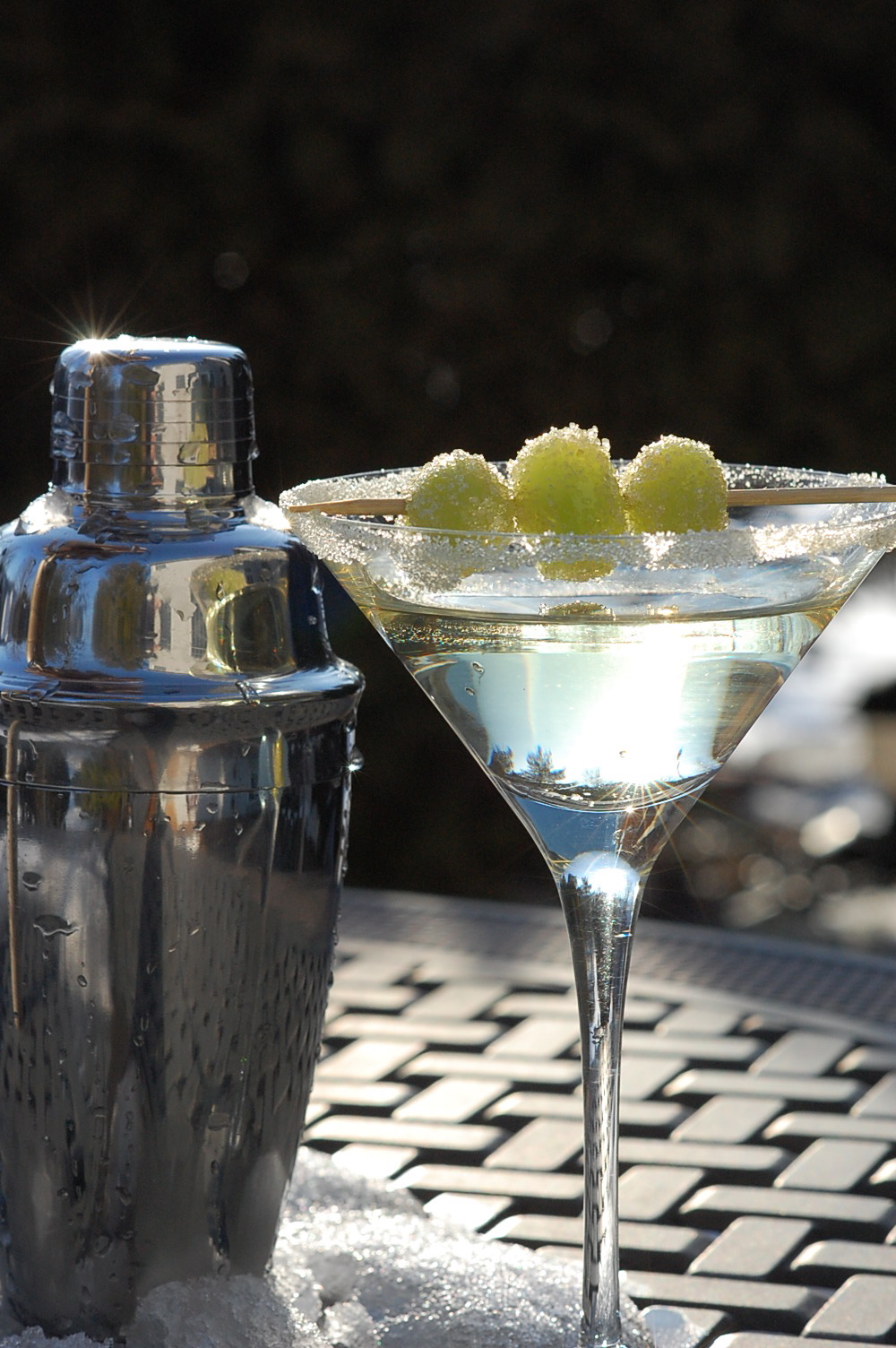
After it’s been opened, ice wine can be re-corked and stored in the fridge for 3-5 days. But why would there be any left?? If, by chance, you’re looking for another way to use what remains, why not make an ice wine martini?

Ice Wine Martini:

10 large seedless grapes (2 halved grapes for garnish)

2oz Ice wine      (red gives a nice blush vibe to the ‘tini)

2oz Vodka                  (I use the Goose, but any will do)

ice       (yes, here you’re watering it down, so shoot me)

In your blender, puree 10 grapes with ice wine and vodka. Pour through a small strainer into the ice filled shaker. Shake it like you mean it! Strain again into a chilled martini glass and garnish with the grapes that you’ve dipped in lemon juice and sugar. Enjoy!
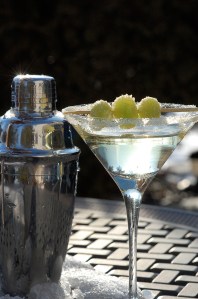
My Ice wine Martini

My Ice wine Martini

Next post, I’ll talk about the difference between Ice Wine and Iced Wines. And, yes, there is a difference between the two.

In the meantime bundle up, butter cup. We’ve got a little more ice on the horizon.

Cheers!
Wine Tasting 101 ~ The Wine Aroma Wheel

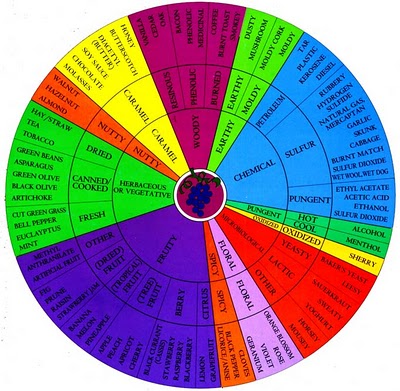
Okay, so we’ve learned a little about how to taste wine. Now, we want to actually be able to describe what the wine tastes like. The Wine Aroma Wheel is a great tool to help categorize what you’ve just tasted and define it as more than just ‘good’ or ‘bad’ or ‘grape-y’. It’ll help if you keep it near where you drink wine, so you can refer to it as often as you quaff. The more familiar you become with the Wine Aroma Wheel, the better you’ll be at identifying the flavors that draw you to a wine, or keep you from pouring another glass.

Developed in 1977 by Ann C. Noble, the Wine Aroma Wheel breaks the various tastes of wine into 12 categories:

A Wine Aroma Wheel (DREW LAMBERT)

A Wine Aroma Wheel (DREW LAMBERT)


Depending on the wine you choose to sip, you’ll notice certain flavors at the beginning ~ when the wine first hits your tongue, middle ~ when you’ve sloshed it around a bit, and the end ~ after you’ve swallowed. The remaining flavor is the ‘finish’. For example: a Cabernet Franc I had the other night, I would describe as having a light, raisin-y start, an almost soy-sauce component as I sloshed and it ended with a buttery finish. Does that correspond to how the experts might describe it? Probably not, but that’s what I tasted, and it was good.

You may not get all the nuances right away, that’s alright ~ you’re just learning. You may find that the taste at the beginning of the glass isn’t the same as what you taste at the end; it can change as you go along. To further complicate things; what you taste might be very different from what your friend does. And that’s okay. Everyone picks out something different. The good news is: nobody’s wrong. And the more discussion you have, the more you can learn about the wine you’re drinking.

Next study hall: the Mouth-feel Wheel. Yep, there’s a wheel for almost everything.

Cheers!

[ Drew Lambert]