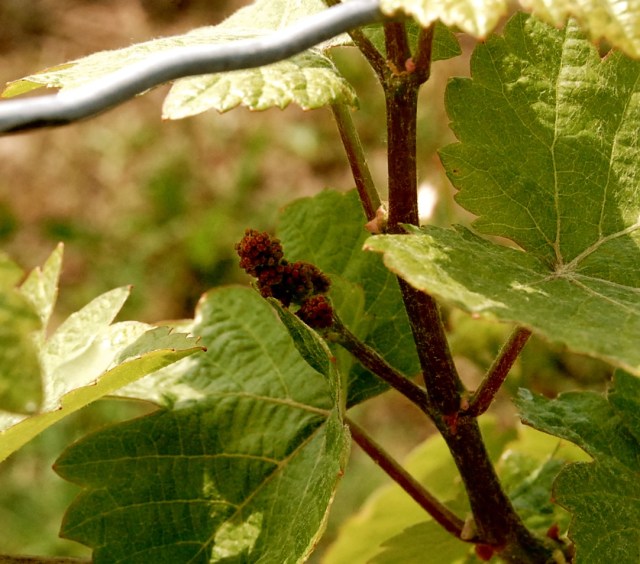
Breaking Bud

For the most part, this past winter was not one of discontent. Unless, perhaps if you’re a winemaker. It’s a balancing act when it comes to managing freeze-thaw cycles in a vineyard. Most vines are resilient enough to withstand the below freezing temperatures for a time only to rise and bloom when it’s safe to wake up. This winter and spring were a little different, though.

While bud break  in March is not unheard of, it usually it begins when the danger of frost has safely passed. Winter bud damage can occur at temperatures below -25 C; vine damage can occur between -28 and -30C. The level of damage also depends on the grape: Vidal and Cab Franc being heartier varietals can withstand extremes, but the more delicate Pinot Noir, and Gerwurtztraminer suffer the most when they are exposed to temps of below -10C.

But like anything in nature, adaptability is everything. According to an article in the University of Maryland Extension, buds acclimate in two ways:

  • Dehydration ~ where water contained inside the bud and vine move into intercellular spaces. Shrinkage, if you will.
  • Cryoprotection ~ sugar and protein complexes that bind water work as cryoprotectants which lower the freezing point of water allowing contents of the cell to ‘supercool’ without the generation of dangerous ice crystals.

The difficulty facing winemakers here in the Ohio River Valley is that spring came on early and strong with record mild temps, potentially causing grape buds to emerge earlier than usual. Bud break occurs approximately around late April through mid May. While early bud break allows for the potential of a longer growing season and riper fruit, it also increases the vulnerability to a late spring frost. If shoots are lost, the crop size decreases, yet the quality of the resulting wine can increase.

Matt Meineke, owner and vineyard manager of M Cellars in Geneva, Ohio says [via e-mail] , “with the mild winter early bud break was a concern but we do feel things should be in the clear at this point. Many growers use fans and we actually use a potassium/ calcium spray, and a little luck, to get by on our estate vineyards. On the vineyards we manage we use fans and of course luck!”

Temperatures in North East Ohio for March ranged from 28F on March 2 to a crazy high of 75F on March 8, with variations on that theme throughout the month, ending with a high on the 31st of 70F. It’s no wonder the buds were confused — I was. As temperatures began to decrease again, the frost, snow and ice could likely encroach upon the tender new vines, and damage could then take hold. Just how much damage remains to be seen. As Meineke explains, “ any extreme temperature fluctuation will cause the plants to deactivate from winter hardiness which is always a concern regardless of the variety. Some varieties are more tender, especially the vinifera wine grapes we grow such as Pinot Noir, Chardonnay, Cabernet Sauvignon, Riesling, etc.”

So what happens if frost bites the young vines? Having a plan B is essential to a successful season. According to Meineke, “if we have an early frost that causes damage, we would be using our secondary buds for production. This would cause production to be down and typically ripening may be delayed as well. That said, we would probably not be in a good position to make premium red wines, we should be considering premium rose wines as that is what nature has told us to do.”

As for any changes the consumer might see in terms of pricing, Meineke explains, “as far as pricing goes I don’t think we have a lot of room for an increase to the end consumer. We find local wines hard enough to sell on the open market and this would simply be one more reason for the end user to look elsewhere for their wine purchase.”

Even with this season’s fluctuations in temperatures, by the looks of things, the vines are all right. And so will be this year’s vintages.

Cheers!

©TheWineStudent, 2016

Hot Child in the Vineyard

The last little while, I’ve been hitting the study hall, partly to get a break from the heat, but mainly to learn about the first two components of the growth cycle of the grape: spring and summer.  And with August quickly approaching, it’s pretty clear, we’ve passed one season and are well into the next. So here we grow ~ remember, every time I make a bad pun you have to sip some wine. Since that was particularly bad, make sure you have a big glass.

After hibernating from mid December to April, we come into a time when the newest tendrils of the vine shake off the winter shroud and wake up ~ too flowery? Okay, I’ll keep it real. The first stage of the cycle is known as bud break ~when the initial shoots start to grow. This happens around May 1st through May 24th. If the temperatures are warmer earlier, the buds will pop a little sooner. Early bud break can be a positive because there is the potential for a longer growing; season and riper fruit. The downside is there is an increased vulnerability to late spring frost. Early shoots will not regrow if exposed to 0 C (frost). While this can be fairly tragic if the shoots are damaged, all is not necessarily lost. The crop size will decrease but quality of wine can increase..

In Ohio and most of the mid-west and Southern Ontario, this spring was particularly complex, with temps in March hitting in the 80’s and then diving back down to seasonal cool in April. It’s kind of like waking up on Mr. Toad’s wild ride when you’ve been having really long nap. For the newly emerging buds, it’s not something they want to ride too often.

Every fruit begins with a flower

Summer in the vineyard begins approximately June 21st when flowering occurs; this is usually a reference date because harvest is approximately 100 days after flowering. The flowering cycle in June, is typically 10-14 days. Flowers are delicate and really need clear weather to set. Fruit set happens in July and means that everything that is going to happen to the plant has happened, and all usable fruit is set to grow to be harvested and made into wine.

August or late summer is the last time the crop size can be affected. As I mentioned before, a smaller crop size gives greater quality fruit, but to a point. Again, it’s a fine line to tread when making a high-caliber wine from a less than ideal start.

Thinning on top

The deliberate harvesting of unripe grapes to encourage concentration of flavor or character in the remaining bunches is called grape thinning or green harvest

The percentage of fruit removed depends entirely on the grape variety; some ripen all the grapes and some only half. It also depends on the vigor or how much fruit the plant can support. Grape thinning also depends on the vintage, variations in the growing season, the style of wine and the philosophy of the winemaker and grower. Thinning involves removing any unhealthy fruit on the plant. This allows for the remaining fruit to receive all the nutrients. The concentration of energy of the plant moves from the inside, or main stock, to the outer fruit and leaves. It’s around this time that veraison occurs. Veraison marks the onset of ripening, when grapes soften and change color. This happens around 6-7 weeks after flowering.

Hanging loose

Canopy management of the current year’s fruit keeps the growth loose and separate to prevent disease and to maximize airflow and sunlight. I could liken it to wearing boxers versus briefs but I think that would be all kinds of wrong. And while it isn’t a bad pun, per se, feel free to quaff now. Canopy management is also employed to control the height of the plant; maximum canopy height is based on spacing, vintage and vigor. In September, leaf thinning occurs. This also promotes airflow and increased exposure to maximum sunlight to advance ripeness. The inefficient leaves that take vital nutrients from the efficient ones are removed.

There’s so much to look after and nurture throughout the growing season, and that’s before you even get to the harvest. With the hot, dry growing season this year, my prediction is that harvest may begin well before September.

With the plants stressed as they are, and knowing that sometimes stressed grapes can create more complex wine, I’m really looking forward to seeing what this year’s vintage tastes like.

Cheers!

This slideshow requires JavaScript.