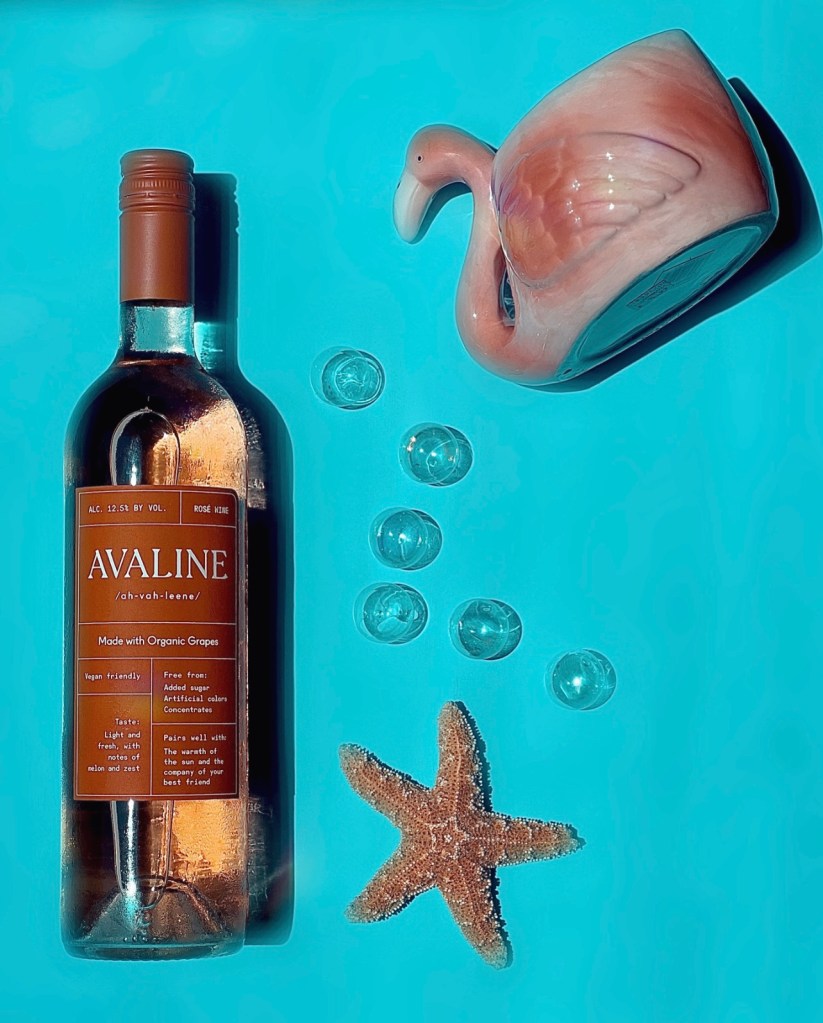
Cool for the Summer: Avaline Rosé 🩷😎

I think we can call it official – summertime is here!😎🥂

And when that mercury starts to climb, we want less heat and more chill in our glass. A clear choice to beat the heat this season is Avaline (ah-vah-leene) Rosé.

Cameron Diaz and business partner Katharine Power bonded over both a glass of wine, and a shared philosophy: to make great quality wines that are purely organic. They partner only with growers who share their commitment; using only natural methods to create wines from 100% certified organic fruit, with zero synthetic pesticides. No artificial colors, refined sugars or additives are present, and transparency in all winemaking, and labeling, is key. Current regulations do not require nutritional/ingredient information on wine labels. Other than the percentage of alcohol and short varietal list, most of us don’t always know what’s in our glass. This is something Diaz and Power wanted to highlight.

With respect to sustainable winemaking, their sourced vineyards are generally lo-irrigation, or they are dry-farmed, relying only on rain water to provide moisture. With water shortages becoming globally prevalent for growers, decreasing fresh water consumption has become a necessity.

Benefits of lo-irrigation and dry-farming are many: it’s an environmentally responsible choice, and produces more intense flavor in the fruit. Like all things, balance is important. Dry- farming is best with well-established vines that have deep root systems. However, it can take years before this happens. Vines that have regular irrigation tend to have more shallow root systems – they don’t have to work as hard to find their water source. To coax the younger vines into strong fruit producers, sometimes low irrigation, only when needed, is essential.

Avaline Rosé, a Vin de France wine, is cultivated in Provence by Famille Negrel wines. Their vineyards are lo-irrigation, adding moisture only when necessary, especially if the crop is in danger. Chickpeas are grown on site to provide vital nitrogen to the vines. Their vineyards are certified organic by ECOCERT.

Sometimes rosés can taste watered down, as though the crop had too much rain at harvest. Others taste as more heavy-handed, trying too hard to be flavorful. This wine, with its blend of Cinsault, Grenache, Cabernet Sauv, Syrah and Caladoc is flavorful, fresh and well-balanced.

Tasting notes:

Flavors of honeydew melon, orange zest, cardamom/ginger spice, and tart white peach lingered gently on the finish. Ethereal and delicious, and possessing a light-bodied, yet lingering mouthfeel.😙

A 5FL OZ pour was 107 calories, 2.6G carbs and zero fat (says so right on the label).

Ok, my pour was a little larger than that. 😉

See you on the patio!⛱️

Cheers!

©️Copyright. 2023. The Wine Student.

Field Trip: Biltmore Estate Winery🍷🏰

Visiting the Biltmore Estate is like taking a journey back in time. An awesome example of both architecture and design, its esthetic influenced by the great chateaux of France.

Click the video below to tour with me!👇

We’d originally planned this trip with our friends Carl and Deb, in May 2020… and we all know what wasn’t happening then. So it was wonderful to finally have all our schedules reconnect!

When I first researched Biltmore, I was pleasantly surprised to learn about their winery. Documents dating back to 1916 show that George Vanderbilt had begun collecting wines for his cellar. Jump forward to the early 1970’s, William Cecil, George Vanderbilt’s grandson, established vineyards on the property. The first Biltmore wines were made available for sale in 1979 under French winemaster Phillipe Jourdain’s direction. In May 1985, Biltmore Estate Winery opened its doors to the public for tours and tastings. Building on the original French-American hybrid plantings, Jourdain planted additional vinifera varietals to ensure the future of their wine cultivation.

Sharon Fenchak joined Biltmore in 1999, eventually becoming winemaker in 2003, then head winemaker in 2018, further crafting on the foundations laid out by previous winemakers, Jourdain and Bernard Delille. She now oversees an annual production of approximately 150,000 cases.

Situated in the Blue Ridge Mountains, at an elevation of 2,500 ft, growing conditions in this part of North Carolina can be challenging, especially with rapidly fluctuating temperatures during growing season. Days here are warm yet humid, with cooler nights, a high incidence of rainfall, and risk of late-harvest frost. This combination makes growing more delicate varieties difficult. Heartier varieties flourish here. Polk County, just south of the estate, has a lower elevation and a ‘thermal belt’ micro climate, reducing the risk of damage to the fruit.

Locally sourced wines include robust varietals including Chardonnay, Cabernet Sauvignon, Cabernet Franc, Petit Verdot, and Merlot. Their Biltmore Reserve NC Rosé is a home-grown, balanced blend of heartier Cab Sauv and Cab Franc of both estate and lower elevation North Carolina vineyards.

To produce a wide array of offerings, grapes and juice are sourced from not only North Carolina but California and Washington. Their American Series wines reflect this diversity.

The winery also maintains a commitment to sustainability; using locally sourced water from nearby Long Valley Lake, and recycling their plastic, glass, paper and steel. Adjacent to the Winery, is a nine-acre, 1.7 megawatt system that includes more than 7,000 solar panels to help counterbalance estate energy usage. Grape byproducts such as crushed stems and skins are used for mulch and compost. Retired barrels become planters and used corks are repurposed as wine racks to display their wines in retail stores. Biltmore has also partnered with Cork Reharvest and the Cork Forest Conservation Alliance to reuse corks and help decrease the depletion of cork trees. Visitors are encouraged to drop off used corks at the winery, all estate restaurants, and Whole Foods stores throughout North Carolina.

Out of town? You can mail your used corks to:
Biltmore Estate Wine Company
Re: Cork Recycling
1 North Pack Square
Asheville, NC 28801 👍

We tasted some wonderful wines on our tour but here are the three we took home:

2021 Biltmore Estate Grenache Blanc

My pick: The 2021 Limited Release Grenache Blanc. While it’s not from indigenous grapes, I loved the bright, refreshing and flavorful alternative to Rosé. I’m used to grenache as a lovely red so this was a treat. a nice, bouncy alternative. Tropical flavors of banana, melon, citrusy mandarin, and a light, playful mouthfeel. I can’t wait to pair with some delicate cheeses, fruit or charcuterie.

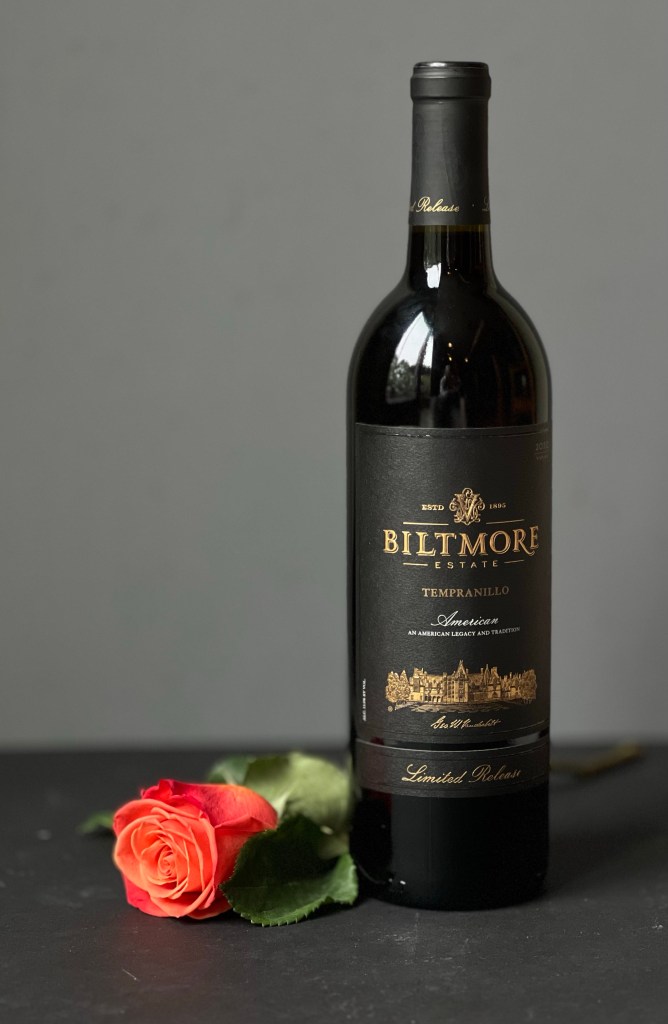
2020 Biltmore Estate Tempranillo

Dougie’s pick: The 2020 Limited Release Tempranillo. American Appellation with flavors of dark fruit, fig, and nice grippiness from the tannins. Aged 16-20 months in oak.

13% alcohol. $24.00

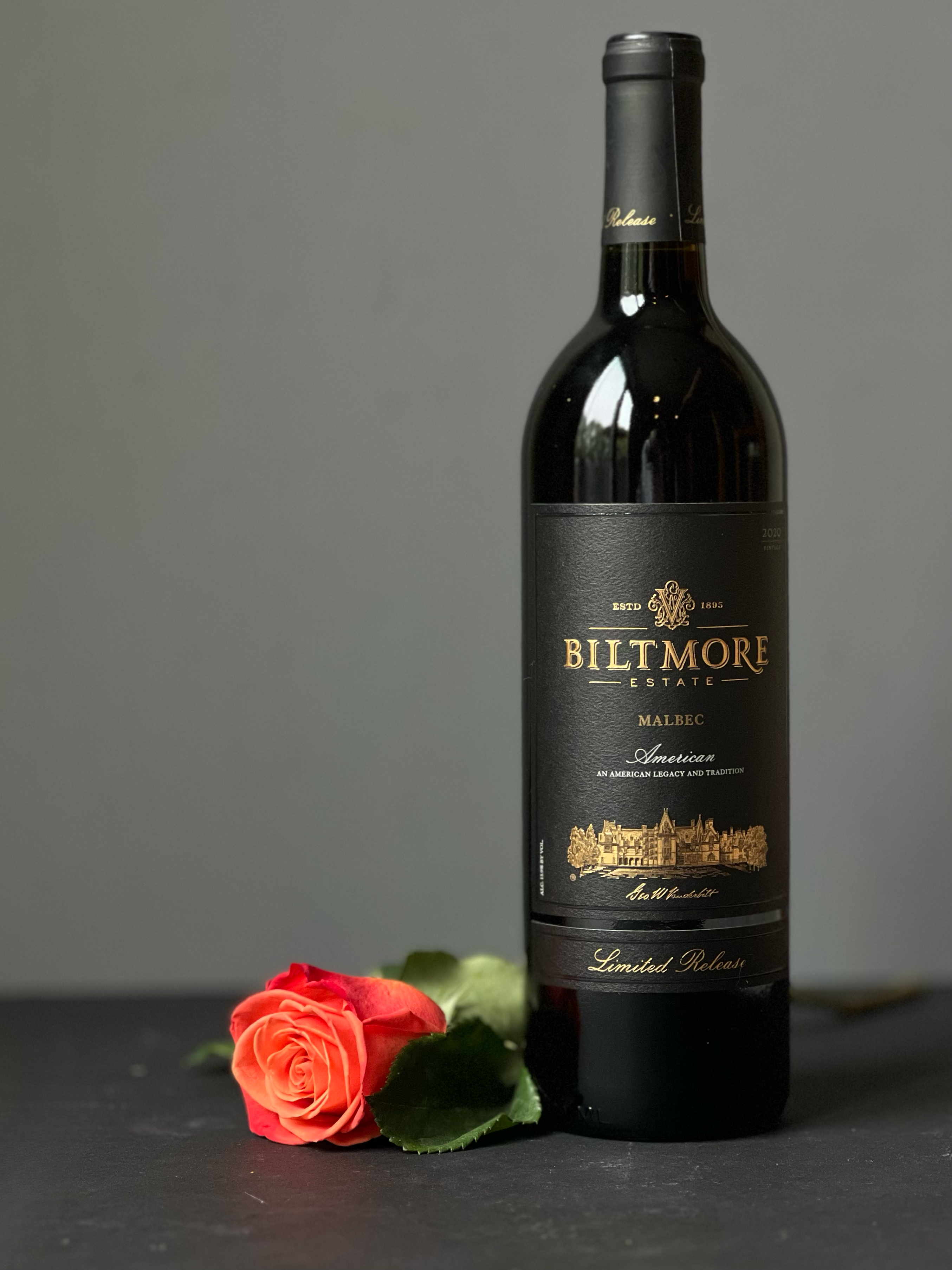
2020 Biltmore Estate Malbec

Our pick: The 2020 Limited Release Malbec. Something fun for Malbec Mondays! We haven’t had Malbec in some time so this was a nice change from our go to Pinot Noir. Rich blueberry, blackberry and plum with a hint of spice on the finish. Also aged 16-20 months in oak. It’s one to savor slowly and enjoy with maybe a nice beef brisket. Yum!

13% alcohol. $ 22.40

The best part about the trip was finally reconnecting with our friends again, and to take a little step back in time. ♥️

Biltmore is definitely worthy of a place on your bucket list; and the wine makes it even better!

Cheers!🍷

©️Copyright. 2023. The Wine Student.

Boozy Book Review: Wine Girl by Victoria James 🍷📖

When I first saw this book I thought it might be an easy, breezy trip through wine world. From the first chapter, it’s clear that this is a tenacious, and unforgettable journey.

In Wine Girl, Victoria James shines a graphic spotlight on her struggles rising through the ranks from greasy-spoon diners to Michelin- starred restaurants. Becoming America’s youngest sommelier was not an easy climb. James is remarkably honest about her chaotic early life, her struggles with addiction, and her unwavering determination to carve a place for herself in the world of wine. Incremental wins for her are everything. And they speak to the power of not giving up, even with some scorched hope along the way.

James pulls no punches about life in the wine industry. She paints an honest picture of the rampant misogyny, racism and abuse, not only from entitled guests but many in power positions within the worlds of hospitality, and wine. It can be a harrowing read at times. But it’s an important journey to share. There is light at the end of her story.

Because of her experiences, James co-founded Wine Empowered, with Cynthia Cheng and Amy Zhou. This non-profit provides free wine education, and support of leadership careers in wine world for minorities and women, as well as promoting safe work environments for all.

This is a significant book for everyone, especially those working in and around the world of wine and hospitality.

Cheers!🍷📖

©️Copyright. The Wine Student. 2023

Boozy Book Review: Bunny by Mona Awad🐰

Bunny is not a book about Easter. Not even close. And it’s not really a story about wine (but there is a wine cocktail reference so, in that sense, it fits nicely into my boozy book review standards). Bunny is a tale of dark academia and the power of loneliness and imagination.

Brief synopsis: Samantha Mackey is an MFA grad student at a prestigious New England college. She has absolutely nothing in common with her privileged writing seminar group who all hug, and express their undying love to each other as they squeal ‘BUNNY!!!’ whenever they meet.

One day, Samantha gets a random invitation to the bunnies’ conclave called ‘Smut Salon’. Well, who wouldn’t be just a little bit curious? On the surface, everything in bunny life is pink mini-cupcakes, fluffy party dresses and mind-altering cocktails. What lies beneath is much more sinister. Or… is it?

The book shines a flashlight on the often fine line between what is and isn’t real. It explores how easily one can fall down a rabbit hole of imagination, while asking the question, “I wonder what those perfect lives must be like?” We accompany Samantha as she enters into this glitter frosted world of privilege, only to find a sordid, inky-dark underbelly. Mona Awad does a deft job of subtly erasing the line between reality and fantasy, and often I found myself asking, “Did that really just happen?”

The cocktail in the book is a French 75 – it’s typically made with gin but I’m not a fan so switched it to vodka. Since a secondary theme includes mini-cupcakes (and one of the characters is nick-named Cupcake), why not add some pink sparkles to the mix?

What was my pick? Cupcake Rosé!

French 75 (w/ vodka)

•1/2 oz fresh lemon juice

•1/2 oz simple syrup

•1 oz vodka (if you don’t like gin)

•4 oz pink Champagne or sparkling wine

•splash grenadine (optional)

•garnish: lemon ribbon twist, sugar rim

Hoppy reading! 🐰 (ok, bad pun, everybody drink!)

©️Copyright. The Wine Student. 2023.
My Wild Irish Wine 🍷🍀🧝🏻‍♀️

With the luck o’ the Irish at yer back, may you find health, happiness and a pot of gold. Okay, that’s not really a blessing but a mashup of a few.

St. Patrick’s Day is a sure sign that spring is on its way. And spring is often viewed as a season of magic and alchemy. Wine is also a blend of magic and alchemy. Especially Irish wine.

Growing conditions in the Emerald Isle can pose many challenges to winemaking. And that’s where the magic comes in.

I first wrote about my quest for the 2015 Lusca Cab/Merlot in 2018 so this is a bit of a fun throwback.

Established in 2002 by fruit alchemist David LLewellyn, Lusca cultivates several varieties of grapes including Cabernet Sauvignon Merlot, Dunkelfelder and Rondo – a grape that can heartily withstand Ireland’s damp, misty weather.

Click the video to learn more about Irish wine and how its made!👇🍀

A few years ago I was determined to find my little pot of gold, and I did. To read more about my search click here. Since then this lucky bottle has remained, relatively undisturbed, in my little cellar wine fridge. I hope it’s been enough to ensure its good condition. All told, it has aged about 9 years. I had many thoughts before opening: has it already peaked? Is it a delightful vinegar? But maybe luck would be on my side.

There was only one way to find out…

Time to release the wine!

To be safe, I decanted for about 2 hours. I wanted to let it open up as fully as possible to make a fair assessment. So how was it?

It didn’t turn to vinegar! I wasn’t as concerned about the wine as my storage. I don’t have a fancy wine cellar, and occasionally had to move the bottle around. I had been worried that after all this time, maybe some oxygen had gotten inside. But I was so happy that all seemed to be well. Magic!

It was a lighter bodied Cab/Merlot. I enjoyed delicate notes of blackberry, dried herbs, and a pleasant, earthy cedar undercurrent. I found myself swirling my glass often to coax out every essence. It had a clear, deep ruby color giving way to a slight brownish rim variation (the outer edge of the wine). This suggests aging of the wine. I didn’t notice any nutty or toffee flavors that indicate an oxidized wine.

As I tasted, I noticed the sun was shining – here in the Cleve we catch it while we can- so I bundled up, sipped my glass outside.

To find out more or to order a bottle visit: The Celtic Whiskey Shop & Wines on the Green. They are super friendly and helpful.

I send you all the blessings to have a safe, fun and magical St. Patrick’s Day! ✨

Sláinte!🍷🍀

Friday Feature: McBride Sisters Wine Company🍷

To celebrate International Women’s Day, I popped open this bottle. I toasted all women with a beautiful glass that filled my senses with the scents and flavors of rich blackberry, black cherry, and a hint of chocolate on the finish. But what really intrigued me was the story and vision of this wine company.

Since 2005, Robin and Andréa McBride have created not only the largest Black-owned wine company in the United States, but one that is inclusive, accessible, socially aware, and sustainable.

As well as producing some pretty incredible wines, their roles as visionaries, innovators, leaders and advocates led to the development of the SHECANWines Fund initiative. It was created to promote the professional advancement of women in the wine industry in an effort to help close the gender and race gap.

To date, the SHE CAN Fund has invested more than $3 million in the professional advancement and career growth of high-potential, professional women, with a specific focus on women of color.

This year’s focus: Women learning and excelling in the business of wine.🎉

This includes:

•Supply Chain

•Sales & Marketing

•Viticulture

•Mass Wine Production

•Winery Operations

•Point of Purchase

•Importing & Exporting

🗓️ Applications open April 3rd! To find out more check out: www.mcbridesistersfund.org/#YESSHECAN

Cheers!🥂

©️Copyright. The Wine Student, 2023.

Boozy Book Review: The Widow Clicquot by Tilar J. Mazzeo🍾🥂

Perseverance, passion and steely determination.

That’s what it means to be a woman in any generation. To honor International Women’s Day, I wanted to explore more about the life of the Widow Clicquot, the most famous of the champagne widows.

A daughter of privilege, Barbe-Nicole Ponsant was expected to live an ornamental existence, yet her life was anything but. Married at age 21 to François Clicquot, then widowed at 27, she continued the wine passion project she and her husband started when they first married. Over time, she immersed herself in the art and science of winemaking, keeping a watch on all aspects from the vineyard to the cellar, to blending and aging the wine, and finally managing the business of champagne both in France and beyond. This was not an easy task in a male dominated industry. She had to work twice as hard to be recognized for her ingenuity and business acumen. Does this sound familiar?

While she did not adore the emperor Napoleon himself, nor many of his policies, under Napoleonic code, widows could assume prominent trade roles within business. Barbe-Nicole was able to use this to her advantage. But the road to prosperity wasn’t as easy as popping a cork. Lean times through the wars created an environment of doubt and anxiety at every turn. International trade embargoes imposed by the British left the first shipments languishing in Amsterdam warehouses, where fluctuating temperatures could ruin the wine. Further restraints against Champagne leveraged by Russia and other countries made international dealings difficult and dangerous.

But she pressed on.

The Year of the Comet Vintage in 1811 proved the stars were aligned to create one the best growing seasons in the Champagne’s history. Conditions were perfect from bud to harvest. Sugar levels that produced both alcohol and bubbles occurred naturally in this vintage. The only thing stopping her was fate. War was raging and threatening to ravage her business.

During this time she bottled her wines, and had the foresight to have the cellar bricked up to seal this vintage from pillagers. This had the added effect of allowing the wine to rest on the lees (the yeast) for longer than usual, creating a spectacularly beautiful, flavorful, and potent sparkler. Her 1811 comet cuvée made her an international celebrity, pushing Moët, who had the largess of the Russian markets, back a few spaces.

Prior to the lifting of international embargoes, she gambled by securing passage of her wines into Russia well before her competitors – a move that could have potentially ruined her, but payed off.

“I didn’t have any hope of doing anything [and] the advance of the Russians over the Rhine was the last straw. And now, out of all the misfortunes came the good business I have had, and I dare to hope for more. We can’t always be unlucky, in my experience. And so, my dear friend: courage, patience, and resignation.”

Barbe-Nicole Clicquot Ponsant

Mazzeo paints a rich, sweeping story from documentation, supposition, and anecdotal reportage. There’s much that she assumes the widow Clicquot must have felt and seen. But this works to create an intriguing tale. This is an engaging and fascinating read about the First Lady of Champagne, and what it means to persevere against all odds.💪🍾

Cheers! 🥂

©️Copyright. The Wine Student. 2023

These Women’s Work🍇🍷

Happy International Women’s Month!🎉

Here’s to all the amazing, strong women in the world: may we know them, may we be them, may we raise them, & may we enjoy their amazing wines! 🥂

I’ve written before about some amazing women winemakers, and a great book that celebrates them.

It’s wonderful to read about their journeys from vine to wine. Each woman has a unique tale to tell. Their stories are not always easy but they’re worth sharing; not just for us but to inspire our daughters, and their daughters, and generations of daughters.

These stories, especially in this current political landscape, are crucial. They show the courage, strength and perseverance that is very much like the struggles of the vine itself.

Visit their sites. Read their stories. If you can, buy their wines. You’ll be glad you did.

🍇 Theopolis Vineyards

🍷 McBride Sisters

🍇 Aslina Wines

🍷 Imagery Estate Winery

🍇 Groth Vineyards & Winery

🍷 Screaming Eagle

To get you started in the Niagara Peninsula:

🍇 Drea’s Wine Company

🍷 Sue Ann Staff Winery

🍇 Two Sisters

Read about more awesome Canadian women winemakers here.

Also check out Wine Women.org dedicated to championing the advancement of women’s careers in the wine industry.

Here are two more great books to look for:

Women Winemakers: Personal Odysseys by Lucia Albino Gilbert & John C. Gilbert

Labor of Love: Women Winemakers of Piedmont by Suzanna Hoffman – a historical perspective of women

Cheers!🍷

©️Copyright. The Wine Student, 2023.

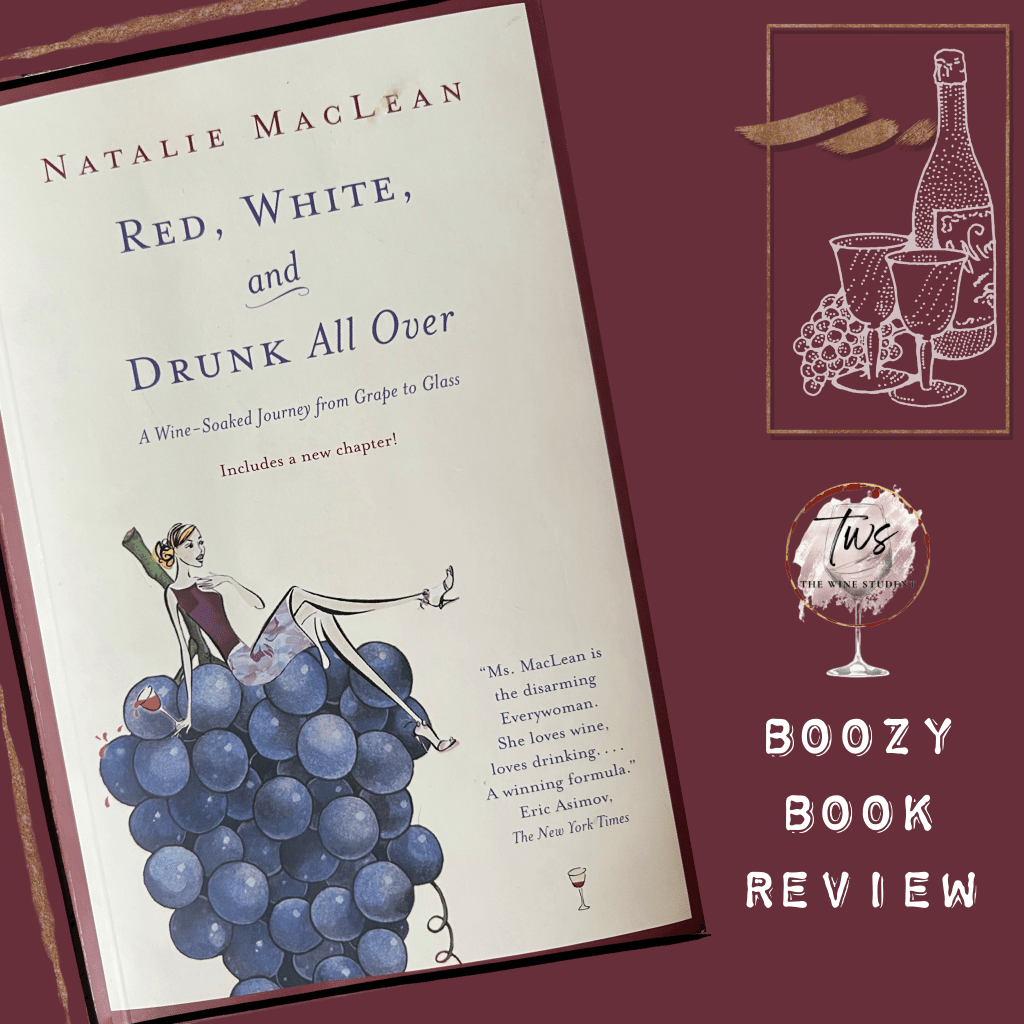
Boozy Book Review: Red, White, and Drunk All Over by Natalie MacLean 📖🍷

From vineyard to table, and everywhere in between, Canadian wine writer Natalie MacLean has seen, done, and drunk it all. On a summer trip to Muskoka, ON, last year, I was looking for my next great dock read. I found this book nestled amongst the shelves at The Owl Pen vintage book store in Bracebridge.

Published in 2006, Red, White, and Drunk All Over takes the reader along on MacLean’s journey discovering the earthy mysteries of the wines of Burgundy in France, helping collect zinfandel grapes in Sonoma Valley, California, working as a novice sommelier, learning how to sell wine at two bi-coastal retail shops, and much more. Along with the wine, it’s the people she meets that make the stories so fascinating. With each experience, MacLean takes us beyond the glass, and deep into the intriguing world of wine. Every new adventure teaches us so much about all aspects of wine; from soil to the grapes, harvest to the cellar, bottle to the glass, first sip to the buzz. Her descriptions are delicious.

With honesty and humour, MacLean illuminates how intimidating wine world can be, even for an accomplished expert. And she keeps it real by reiterating how, with perseverance, and taking a deep breath or two, one can find their groove and truly enjoy the ride.

This is a wonderfully accessible book for anyone interested in wine world; from seasoned oenophile to novice wine enthusiast. It’s a fun and informative read; an excellent reference for those just beginning a career in wine. It would be cool if it was required reading for college wine courses.

I think this quote honestly sums up what attracts many of us to wine,

“But I have to confess, much as I’m drawn to its nuances, I wouldn’t be writing about wine if it weren’t for the buzz. I love the way a glass of wine makes me feel – invigorated and animated, released from my natural shyness. After a couple of glasses, I’m mellow, soothed, contemplative.” Yup.

Good news: You don’t have to make a trek to Muskoka to find this book. Here’s the link.

Note: the cover art may be different than mine. 😉

Cheers!🍷

©️Copyright, The Wine Student, 2023.

Better Than Chocolate: 2023 Valentine Wine Picks!💝

Eduardo Galeano once wrote, “We are all mortal until the first kiss and the second glass of wine.”

It’s true – that first kiss can make us feel like we’ve had that second glass of wine; dizzy, fizzy, and warm all over. Don’t get me wrong, I love me some chocolate but it doesn’t usually make me feel like that. And chocolate doesn’t always fit in my wine glass.🍫

This year, I wanted to explore a couple of intriguing alternatives to the chocolate covered heart.

Check out the video below for more info about these wines!👇

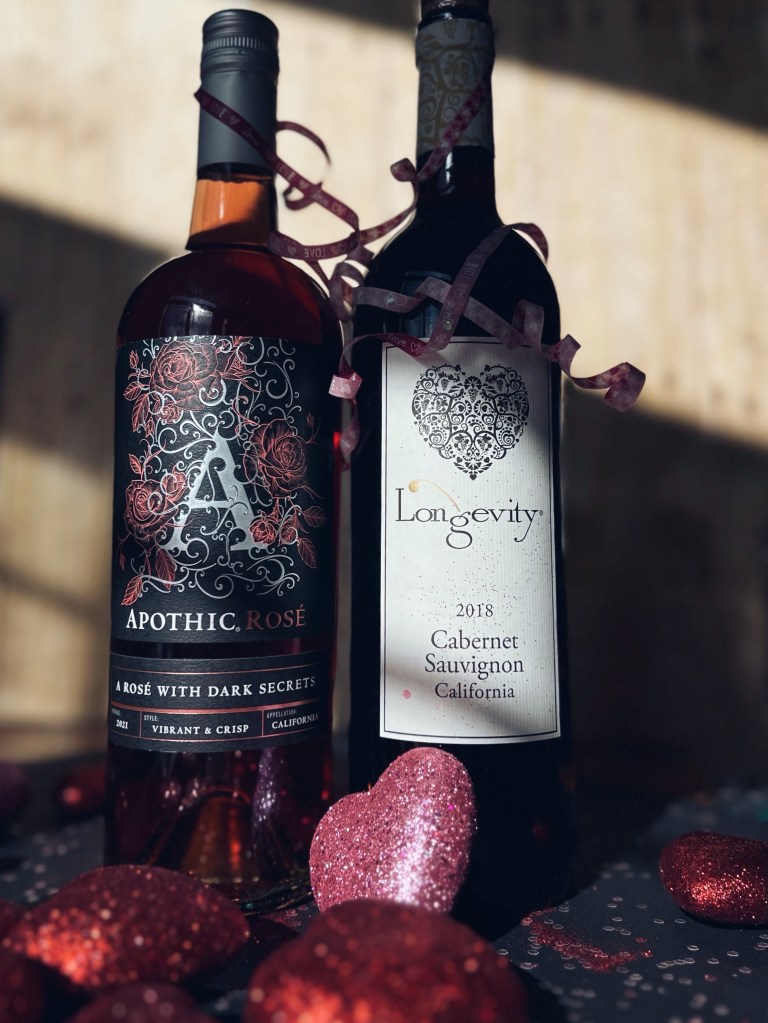
Apothic Rosé-

The label says that it’s the “rosé with a dark secret”. I would like to know what that secret is. Though maybe that’s what the second glass is for.

From E&J Gallo, and cultivated in Central Valley, California, this wine is a beautiful, deep rose-gold color. The classic color of many rosés is a light-medium salmon pink. This is a Grenache, Temperanillo, Pinot Noir, Sangiovese & Carignane blend that created a rich color in the glass. It had a subtle cherry vibe on the nose, and flavors of lush strawberry, ripe raspberry, and a sensual whisper of dark chocolate on the finish. Interlaced all together, it tasted like… more!

Also cool: the label art of swirling roses was designed by tattoo artist Sasha Masiuk.

💰Price point: $11.99

Longevity 2018 Cabernet Sauvignon

From the growing region of Livermore Valley, California, Longevity is one of the largest Black-owned wineries in the United States.

Deep, ruby red in color, this Cab was immediately drinkable. I tasted without decanting, and it was flavorful right out of the bottle. Often, a little merlot is blended with cabs to soften the harsh tannins. This was a cab with no harsh edges. Softer tannins made for a smooth and satiny experience, like slipping on a lux pair of silk pajamas. Classic flavors of red plum, black cherry, blackberry swirled together, with a little black licorice lingering on the finish. Together it created a deep, well-structured profile.

Their description of the wine was ‘muscular’, which is very true of most cabs. But no heavy lifting was required to enjoy this wine. This was full-bodied but not overpowering; so nice to slowly sip and savor.

The twist-off cork is genius! Like its sister the screw cap, it made opening the wine a breeze, especially if you’ve forgotten your wine key (corkscrew). It made storing even easier. No leaks!

The label is what first attracted me; a beautiful heart. Take a closer look and you’ll see the intertwining of grapes, hearts and vines. The heart was designed by Longevity’s owner, and winemaker Philip Long’s late wife-and business partner, Debra, who saw the design as an expression of their both their love of wine, and each other.

💰Price Point: $15.99

So whether you’re enjoying à deux or just celebrating you, surrender this Valentine’s to a little decadence. It’s better than chocolate!♥️🍫

Cheers!🍷💋

©️Copyright. The Wine Student. 2023