



Cheers!

Wine Making 101 ~ Red, Red Wine
It’s November and harvest time is really winding down. Now in the vineyards, they’re getting ready for late harvest and in a few areas of the US and Canada (notably Niagara), preparing for Icewine. That’s a topic I’ll delve into more throughly a little later on.
I thought I’d head back to the study hall and focus on red wine making.
![Beautiful Grapes [Image via LovetoKnow]](https://thewinestudent.org/wp-content/uploads/2011/11/112473-280x190r1-wine_making_0.jpg "Beautiful Grapes [image via Lovetoknow]") The initial process is the same as I described a few posts back with white wines, the difference for reds is the amount of time the juice is left in contact with the skins. Most blue skinned grapes have a colorless juice which contains: water, sugar and acid. Once the mustis placed in a vessel to soak the skins with the liquid juice a very quick separation occurs. Seeds settle to the bottom, skins float to the top and form what’s called a ‘cap’.
The initial process is the same as I described a few posts back with white wines, the difference for reds is the amount of time the juice is left in contact with the skins. Most blue skinned grapes have a colorless juice which contains: water, sugar and acid. Once the mustis placed in a vessel to soak the skins with the liquid juice a very quick separation occurs. Seeds settle to the bottom, skins float to the top and form what’s called a ‘cap’.
The skins contribute the color, flavor, tannin and some aromatics. It makes sense that the skins need to stay in contact with the juice as long as possible to achieve the quality the winemaker is looking to produce. The amount of time that there is skin contact is called maceration. Say that slowly to yourself a couple of times; if you say it fast it sounds like something else.
After the initial separation, the seeds are removed once by straining through a screen. The juice and skins are then reintroduced to one another one of two ways: by pumping the juice over the skins or by punching down the cap. Punching the cap is exactly what it sounds like: the skins are pushed or plunged into the juice to allow for more skin contact, thereby increasing all the qualities we look for in a truly, wonderful red wine.
”![Punching the Cap [Image via Flickr]](https://thewinestudent.org/wp-content/uploads/2011/11/thumbnail-aspx.jpeg "Punching the Cap [Image via Flickr]") The total amount of punching down the cap, pumping over; maceration time depend on the type of grape, the style of wine, equipment and the winemaker, depending on his or her style and philosophy. plunging the cap is generally done every four hours when fermentation is most active. With time and manipulation, the skins become saturated with liquid and the cap drops. The wine is then drained off, leaving the skins to be pressed (since they now contain wine). The wine produced from skins when pressed is called press wine(makes sense) is highly concentrated, more intense and more tannic.
The total amount of punching down the cap, pumping over; maceration time depend on the type of grape, the style of wine, equipment and the winemaker, depending on his or her style and philosophy. plunging the cap is generally done every four hours when fermentation is most active. With time and manipulation, the skins become saturated with liquid and the cap drops. The wine is then drained off, leaving the skins to be pressed (since they now contain wine). The wine produced from skins when pressed is called press wine(makes sense) is highly concentrated, more intense and more tannic.
A final step sometimes involves what’s called chaptalization: adding sugar to the must, before fermentation, to yield the desired alcohol in the finished product. I say sometimes because countries such as Australia, Austria, Italy, South Africa and the state of California prohibit the practice. Regions where sugar content in the grapes is low are able to do so.
While all this punching, plunging and pumping is great, it’s a matter of timing that truly makes a great wine. A tight reign must be kept on the temperatures produced by processing; too much heat (caused by too much manipulation) will cause too much fermentation, rendering the end product undrinkable. Colder temperatures prevent excessive fermentation and allow for maximum fruit extraction. When fermentation takes place, so does alcohol production. That doesn’t sound like a bad thing, I know, but it’s another factor that that can go against the winemakers vision of how the style of their wine should be.
The whole process takes around 7-21 days to complete depending on the type of red. It’s then transferred to either stainless steel tanks or barrels where it’s stored and then bottled.
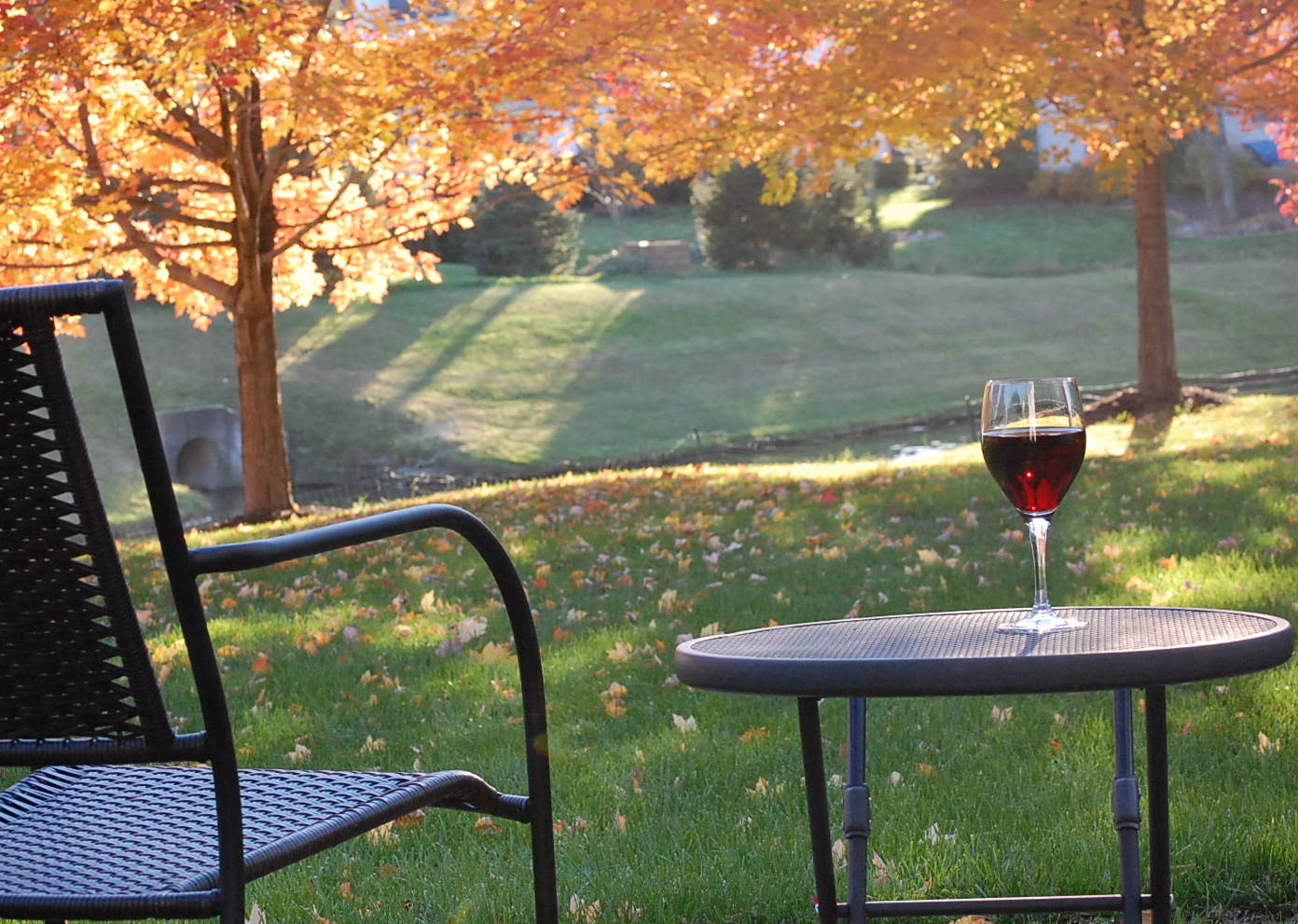
A nice leggy Red
I don’t know about you but all this writing about wine is making me thirsty.
Cheers!
Share this:

Wine Tasting 101~ An Italian Stallion
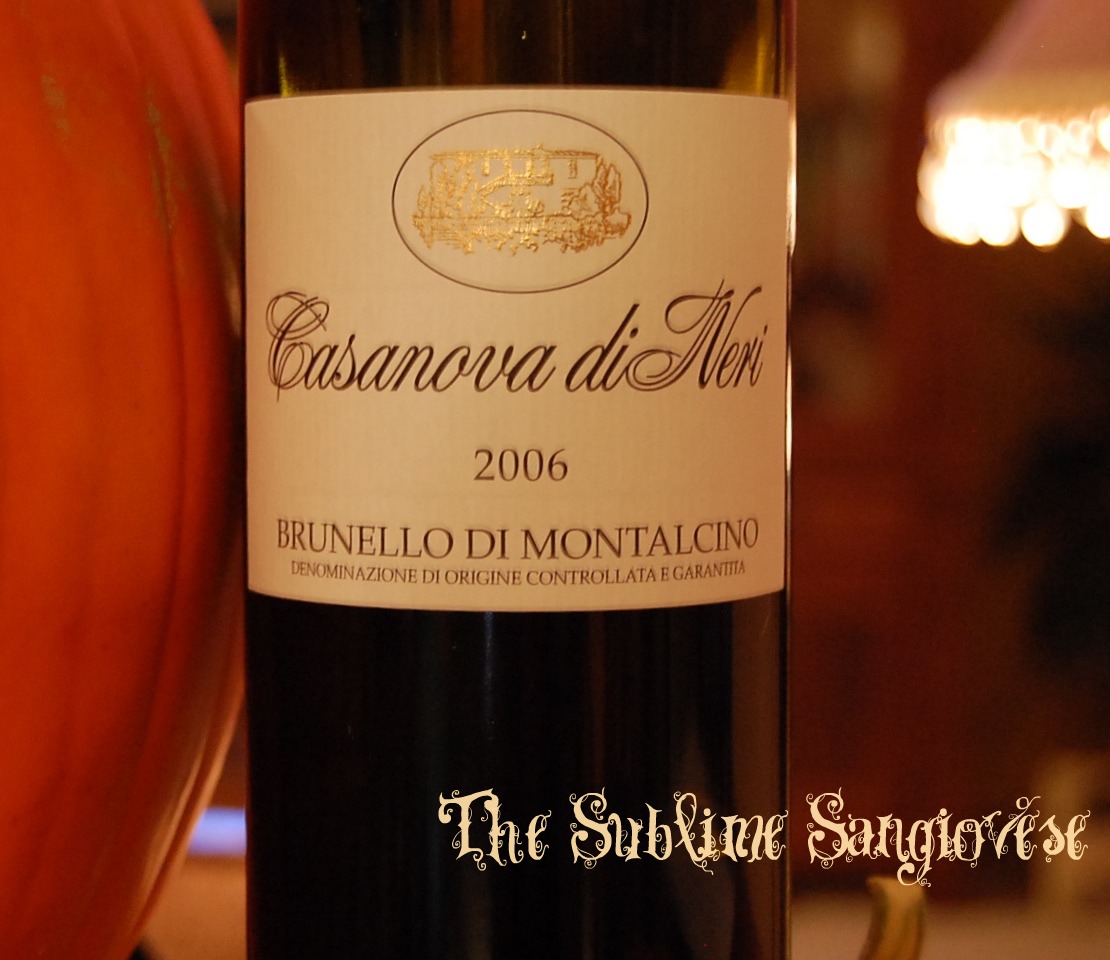
A new favorite.
Tonight, I had a romp with a great Italian Sangiovese (Brunello di Montalcino): an 06 Casanova di Neri. Since my husband brought the bottle back with him from a recent trip to Italy, I asked for his input. His take: a mix of black currant on the first nose, that melted into a sweet toffee as the sips went on. I thought it had more of a strawberry preserve vibe on the nose with a slightly astringent feel. At the end, it morphed into an almost cherry pie, dessert-like finish. So sinful and gorgeous, it almost made my eyes roll back…but not quite.
What I know of old-world wine is that the first sip will generally be just like the end: good to the last drop. And that’s what many like and depend on in a wine. That’s what draws them to old world wine vs. new world wine time and time again: they always know what to expect when it’s rolling in around in their glass.
It was my first foray into the world of Italian wine and I can honestly say that I wasn’t disappointed. A few more glasses and I might even need a cigarette.
Cheers!
Share this:

Wine Tasting ~ Original Zin and a little PromisQuity.
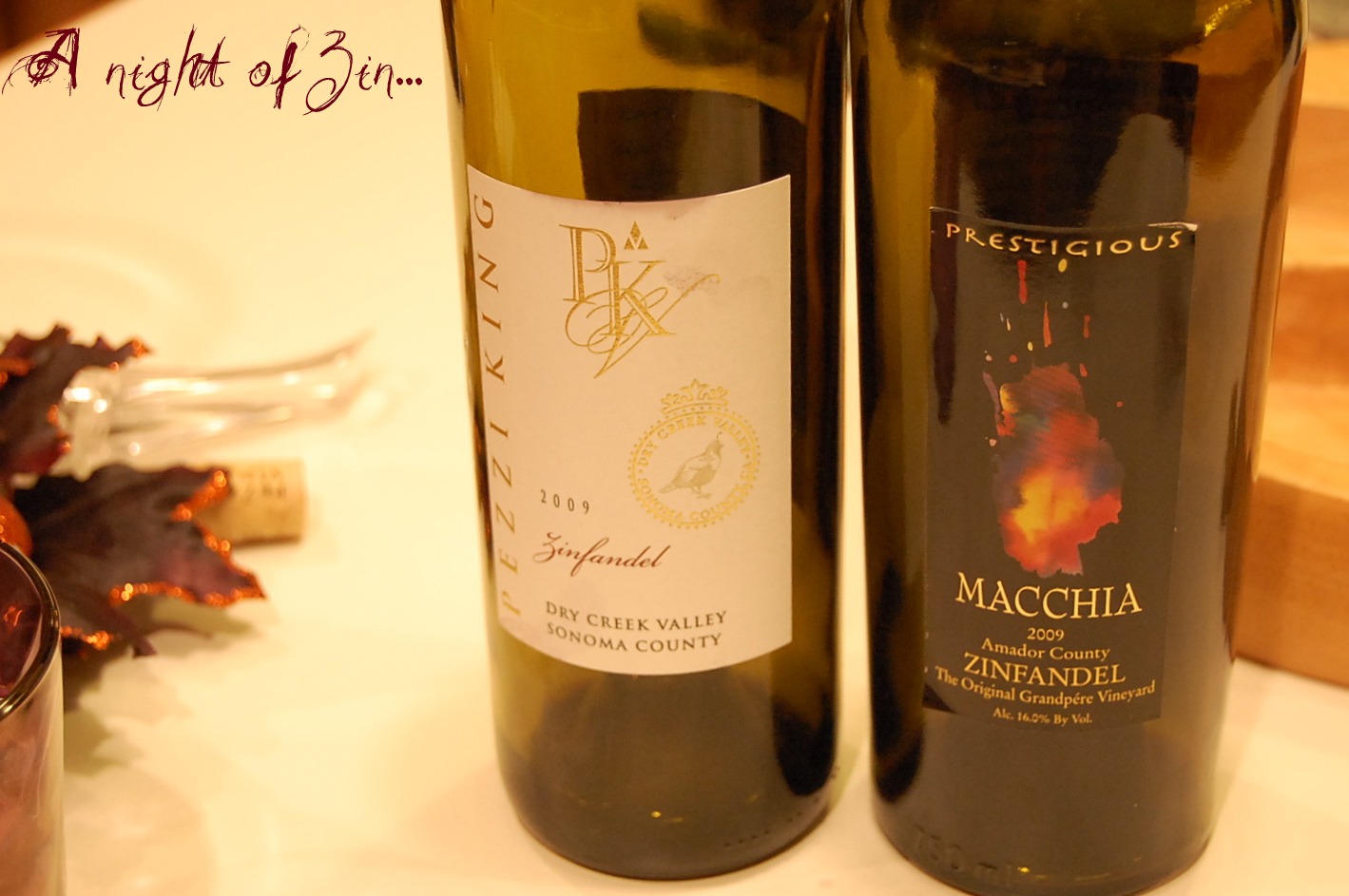
Zin-ful
I’ll admit it: I drink around. As a student of wine, I believe that I have to try a variety of wines to find out what I like and, more important, why I like it. I can’t buy a case of one type of wine. I have to experiment and the one I choose to spend the night with might not last until the next weekend. For this recent wine night with the girls, we compared and contrasted two Zinfandels. In the past, I haven’t necessarily favored the beloved Zinfandel; I’m not exactly sure why. I guess until now, I thought they weren’t full- bodied enough for my liking. That’s what making assumptions does: it makes an ass of, well, just me in this case.
We chose to go with 09 Macchia ‘Prestigious’ Zinfandel and an 09 Pezzi King Zin from Dry Creek Valley in Sonoma. The Macchia had a lovely, deep red color, was gentle on the nose and possessed a rich, bold berry on first taste. The next sips brought out more of the richness and lusty flavor. It made me think of a Cabernet in its style; I was pleasantly surprised. We were unanimous in our appreciation of this wine and it seemed to pair very well with the assortment of mild cheeses I had set out.
The Pezzi King Zin was also a pleasant drinking wine but the consensus was that it tasted very young, as though it could be cellared a little longer. While we did pour both through aerators, it might have enhanced the Pezzi to have been decanted for a time.
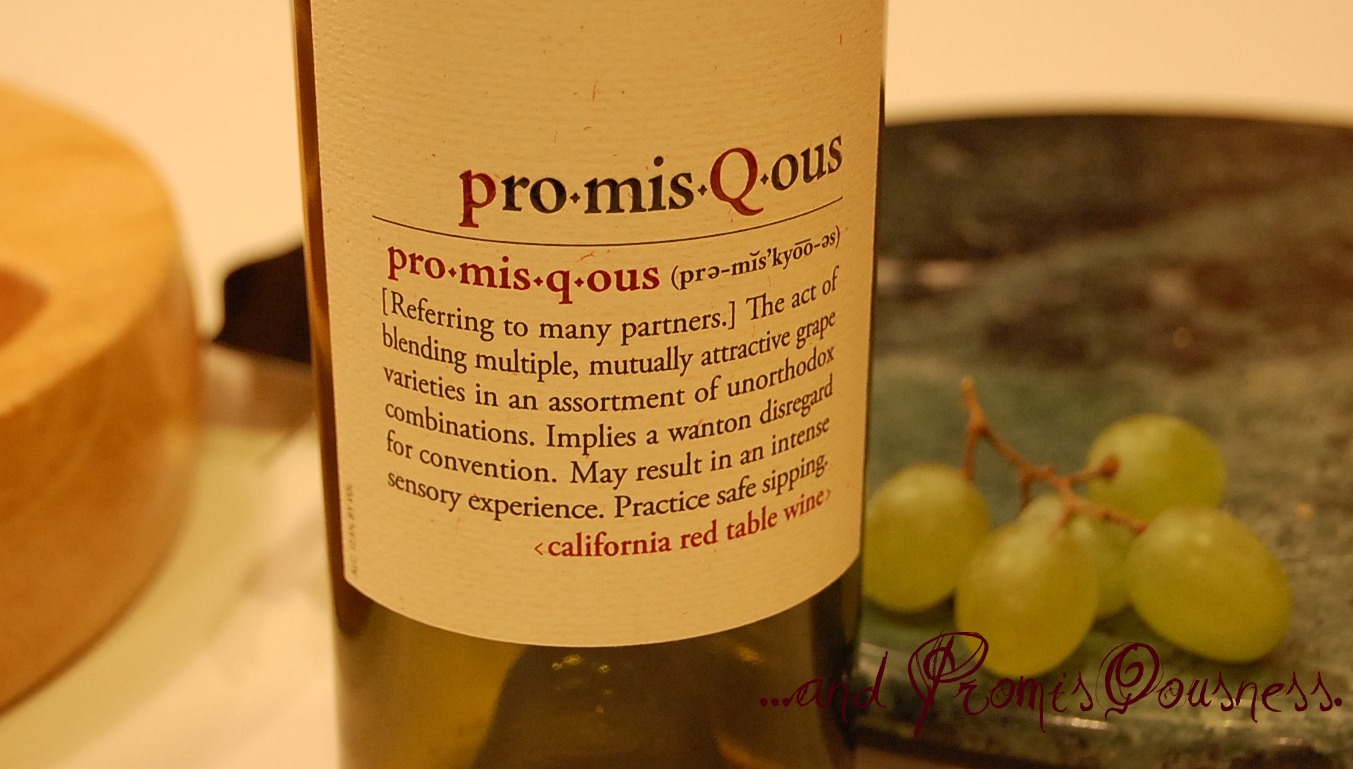
PromisQous
With the night still being young, we moved on to PromisQous, a red wine blend from California. It boasted a “delightful dalliance” of Zin, Merlot, Cabernet Sauvignon and Petit Syrah. We found that it was indeed a playful little minx and paired very well with the sharp cheddar left on our plates from the earlier tasting.
It was a great night of tasting, trying some new wines I’d never experienced before and getting to know some new friends. I’m not sure what the next wine night theme will be but with so many great wines out there, I’m sure it’ll be just as fun.
Just don’t expect me to call you in the morning.
Cheers!
Share this:

Night School
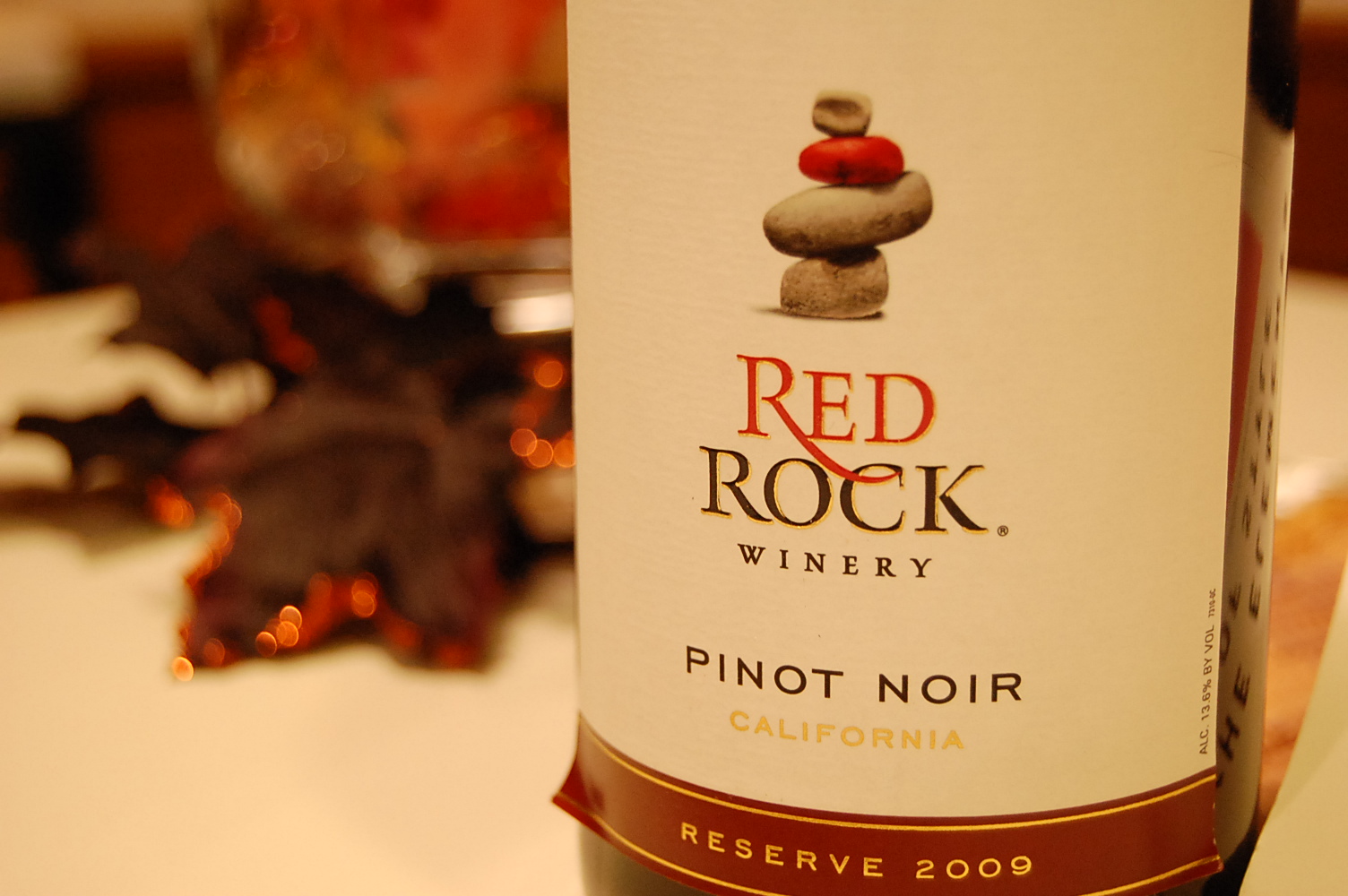
09 Red Rock Winery Reserve Pinot Noir
A benefit to online learning is that I can enjoy a glass of wine while in class. I couldn’t do that as an undergrad, so this is a nice perk. While I was waiting for our chat to begin, I thought a lovely red might get the creative juices flowing, so I closed my eyes…and chose another Pinot (we have a few in our cellar right now). It was one I hadn’t heard of before: an 09 Red Rock Reserve from California.
At first, I found it had a musty, black cherry quality on the nose, and a vinyl and berry taste with a slight metallic finish. None of these qualities were bad, per se, it’s just what I experienced. A few more sips revealed a nice peppery heat that I began to really enjoy (it’s still drizzly here in the Cleve).
There were some technical problems with my class chat session that never did get resolved, so I was able to enjoy more than one glass.
I didn’t learn much about grammar tonight, but I did learn that Red Rock Winery makes a very nice, unique Pinot. I also learned that 09 is shaping up to be a very good year.
Cheers!
Share this:

Candlelight, some wine and me
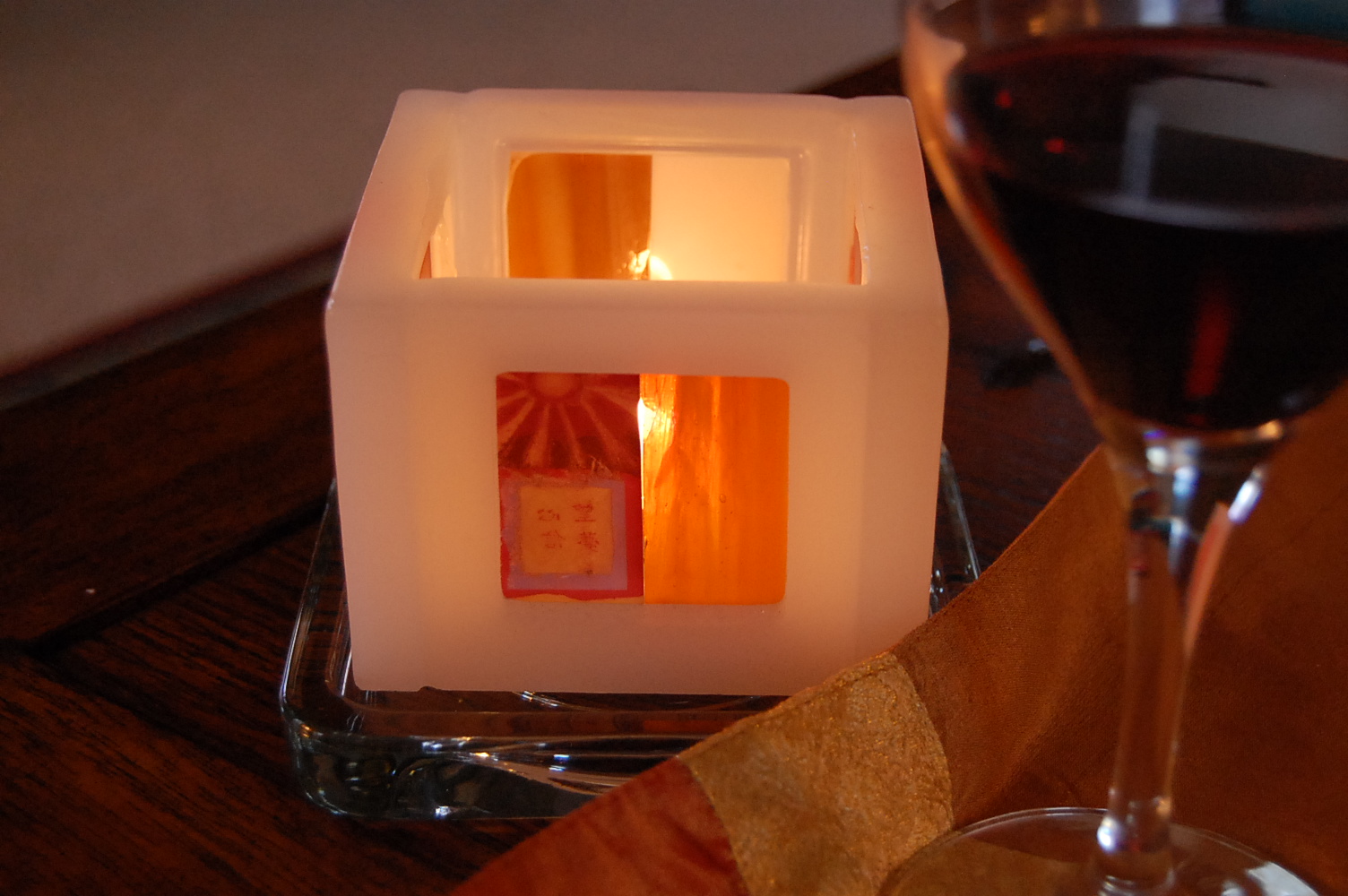
Taking the chill away
I’ve been out in the cold and dreary Cleveland weather today. So when I got home, I wanted something to take the chill away. I chose an 09 Santa Cristina Sangiovese. It had a nose of berry and the taste of mineral and pepper. I won’t even rate it tonight; that’s not the point. Tonight, it’s about enjoying the wine with my blanket, my candles and a good book.
Cheers!
Share this:

Yeast Inflection
I spent most of a recent rainy afternoon researching yeast and I came across so many pages of information, I quit after the ‘L’s. So I’ll boil it down to some essentials. It’s easier to digest that way.
Yeast is necessary component in fermentation process, and is added to the juice when in the barrel or fermentation vessel. It melds with the sugar in the juice, producing heat to convert sugar to alcohol. This reaction continues until the yeast dies off. Fermentation ceases, and we have wine. The end.
Okay, maybe I oversimplified there.The type of yeast is also important: yeast is generally selected for both the amount of alcohol content it will produce, and the taste it will create. It can come from two main sources: ambient (wild) or commercial.

Cups of Yeast ~ Chez Ray Winery
Going Native~
Bloom ~ refers to the pure or native yeast strain found on grape skins, and a common view is that to produce a truly indigenous wine, thus expressing terroir, one can only use wild yeast. A problem exists when using ambient or wild yeast: very few can consistently reproduce the qualities a wine maker is looking for. Where commercial yeasts win is that they are incredibly reliable and make it easier to control the outcome of the end-product.
For some purists, adding commercial yeast disrupts the ‘expression of terroir’ in a wine. That’s fair enough, I guess, but I’d imagine that to be easier to control if you’re making very small quantities of very specific wine, that’s going to a very limited customer; like your Aunt Lorraine. Most wineries, cottage or otherwise, have to answer the call of supply and demand, moreover, must address consistent quality issues. That is something that wild or native yeast can’t regularly deliver.
Terroir or no terroir, the last thing a winemaker needs, at the end of the day, are bottles of undrinkable wine coming back from the consumer.
What I want to know is: does the yeast go in before or after your feet?

Grape-stomp Lucy ~ Desi-lu Productions ~ jimi's cyberstore
Cheers!
Share this:

Wine 101 ~ Autumn Harvest
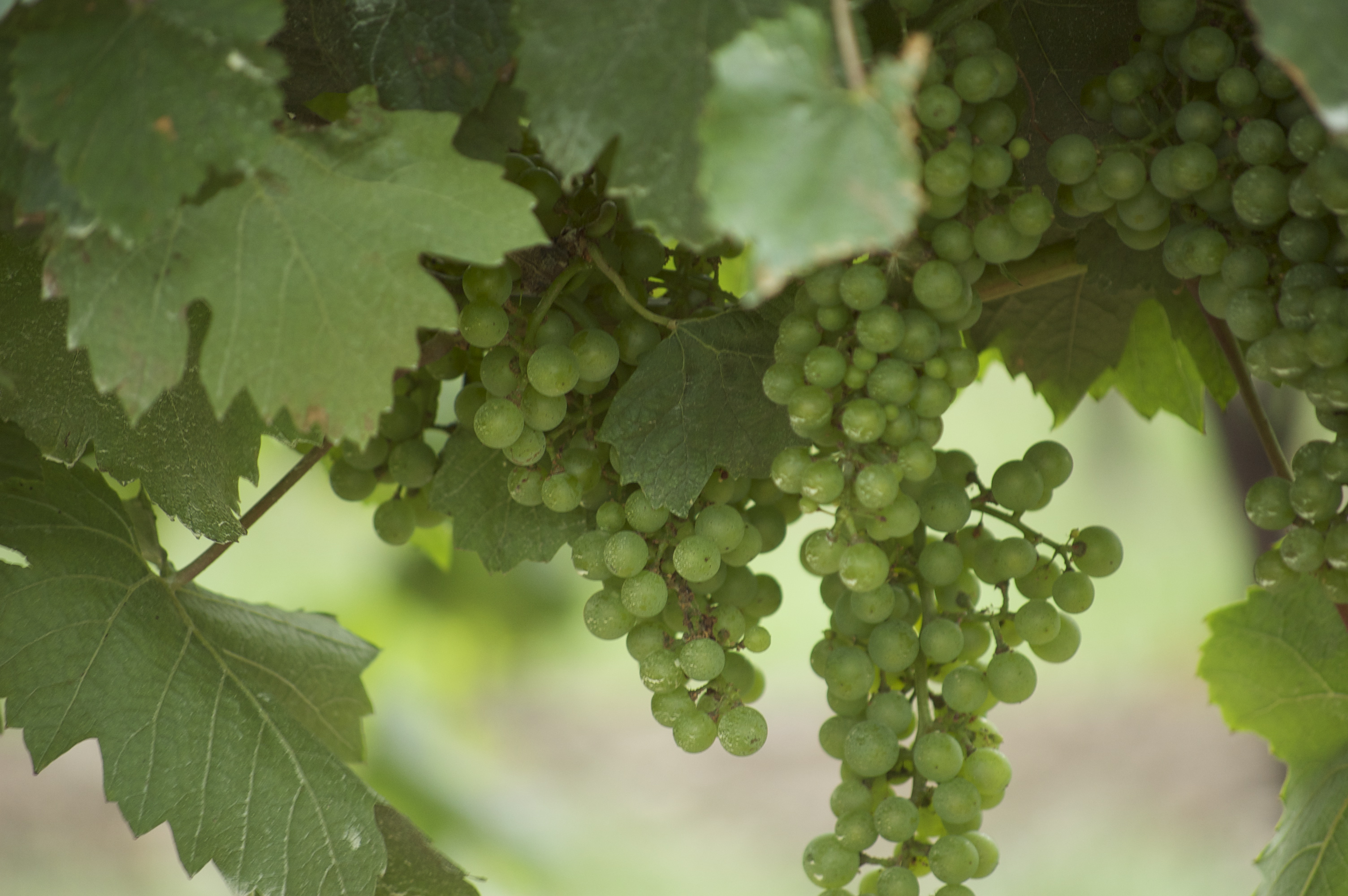
Grapes on the vine ~ ready to be picked
September, to me, always means two things: back to school (whether I’m going or not) and the grape harvest. This year, I am planning to go back to school for the WSET Foundation Course through the American Wine School here in Cleveland. For four weeks, I’ll learn the basics about how to taste, serve, buy and store wine, and get a little introduction to food and wine pairing. It’ll be great knowledge for my trip to California Wine Country in November. More about that in future posts.
So, I’m back to the study hall and today’s subject: harvest and white wine production.
The harvest itself can be done in two ways:
Machine harvest is by far the quickest and most efficient but it is very costly. It can also be a little heavy on the grapes, and depending on the variety, can damage or minimize the flavor. You have to have the correct vineyard setup (your vines must be straight), and it doesn’t lend well to grading. This is a task that can’t be done afterwards; you have to go through the vineyard before the machines ever start up.
Manual harvest allows you to grade or sort as you go, and allows for the removal of low quality and damaged fruit. This, in turn, can maximize potential quality and flavor of the product.

Harvest ~ Justin Sullivan/Getty Images
Once the grapes are harvested, sorted and graded, they go to the ‘crusher’ for stem removal. If stems are left on in the pressing, the wine can become bitter, thereby reducing the quality of the wine. Who wants bitter wine?
Main steps for white wine:
First, it’s a must that I talk about must. Sorry. I know that’s a bad groaner, but I had to. Must is ~ the juice, seeds, pulp and skins from the grape. All of it (except stems) is thrown into the press.
Juice is extracted from the must and then sent to the fermentation vessel (barrel, tank or concrete lined).
Yeast is added next to convert grape sugars into alcohol. When all the sugars are finally converted, the yeast dies and fermentation stops.
Voila! We have white wine.
The whole process for white wine takes from between 5 ~ 15 days. Smaller batches allow for more finely tuned wine making. A large batch might give you a bigger yield but the result will be a less finely nuanced wine. Sometimes great things can come in smaller packages.
Any winemaker would say that there is so much more that goes into the process than that, and I agree. You have to take into account the weather, how the growing seasons were up to harvest time, canopy management, terroir, among other things. All have great influence on what ends up in the bottle and eventually in your glass. I’ll get to those elements in greater depth as we go along, but this is a general overview of the basics.
Next study hall, I’ll write more about the influence that yeast in particular has on making or breaking a wine.
Cheers!
Share this:

A little chill
The past few weeks have been incredibly busy. I’m very grateful for the wonderful friends and family who have ventured down to see me. We’ve shared some wine, a lot of laughs and it’s been nice to feel that home isn’t really so far away.
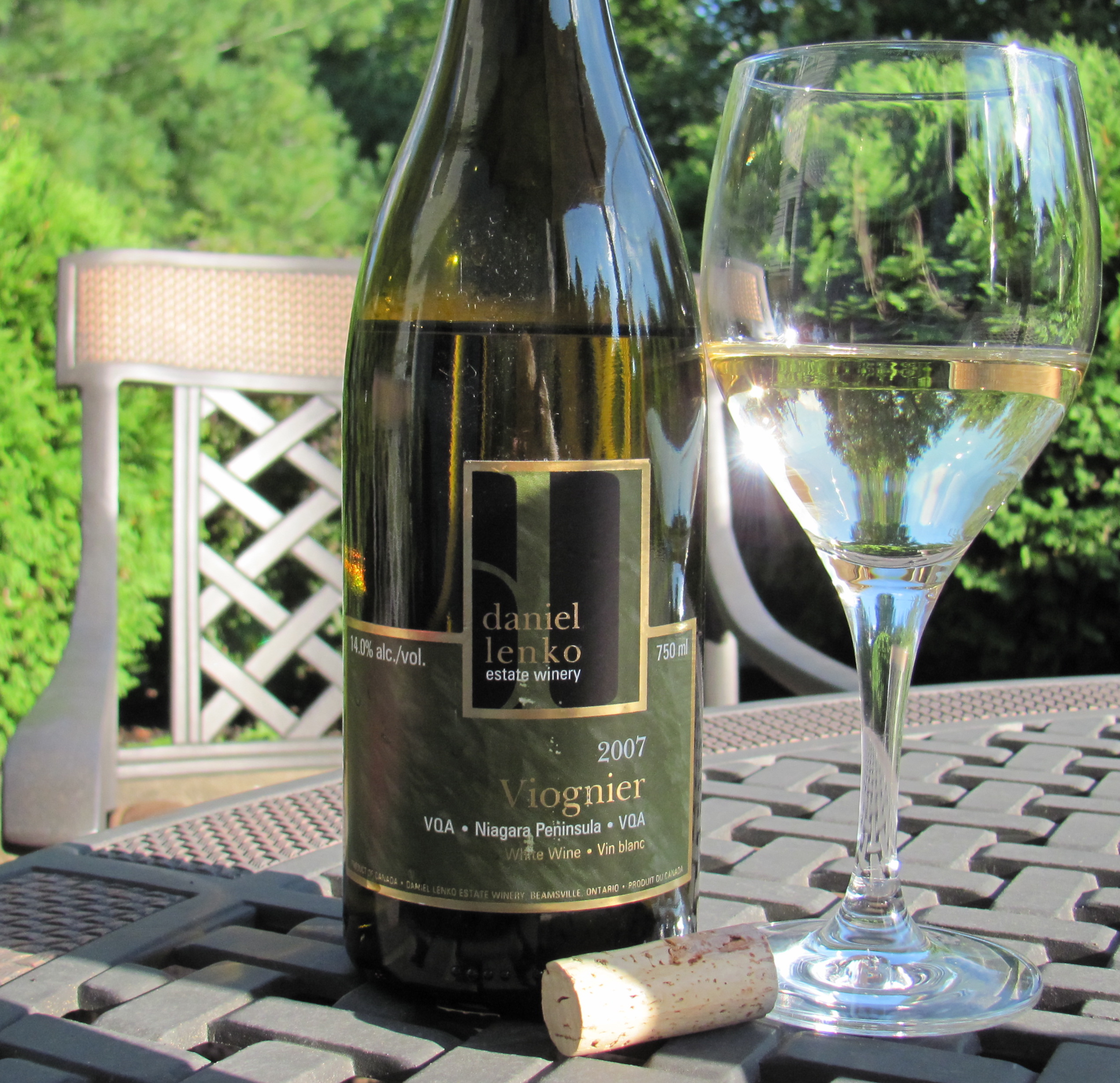
2007 Daniel Lenko Viognier
So tonight, I’m toasting the lovely new memories with an 07 Daniel Lenko Viognier from Niagara. It’s proving to be a delicious end to a wonderful few weeks.
Cheers!





 The Wine Student