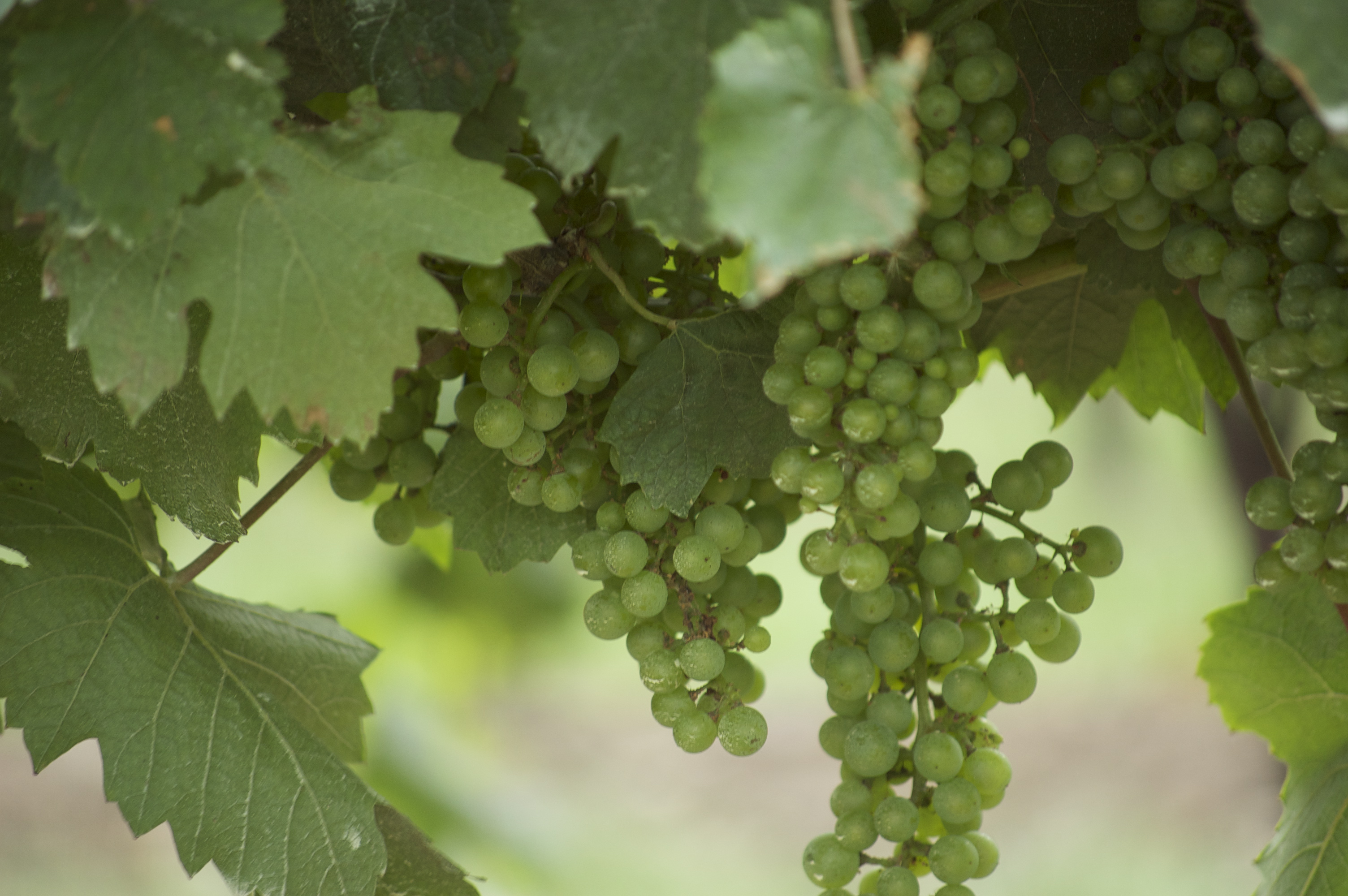
Vegan Wines and the Big O

I used to assume that all wines were essentially Vegan. It’s of the earth, made of fermented grapes, and that’s about it. Or so I thought. And the big O to which I’m referring is Organic wine, not…Ohio.

Vegan and organic wines are often mistaken as interchangeable; because a wine is labelled organic doesn’t necessarily mean it’s vegan. Yet vegan wine is usually organic. Got it? You will.

A vegan wine is due to the process it goes through, specifically the fining or filtering process. During wine production, elements are introduced to clear the wine, ridding it of cloudiness, bitterness –  removing ‘off’ tastes and aromas. Fining agents tend to work like a magnet, collecting the unwanted constituents that settle to the bottom of the tank. The filtered, clear wine is filtered once again before it is bottled, so there are no traces of the fining agents that remain in the final product.

 Fining agents include:

        • Egg Albumin
        • Milk Proteins
        • Edible Gelatin (from bone)
        • Isinglass (from fish)

Since vegans do not consume anything with animal components, you can understand why this would go against the grain. In a truly vegan wine, the most common fining agent used is Bentonite Clay, a safe element that absorbs proteins in the wine causing that pesky, hazy cloudiness and bitterness.

Multiple Organic-isms

Organic wines are produced without the use of conventional pesticides, petroleum-based fertilizers (or sewage-sludge fertilizers…ew), bio-engineering or ionizing radiation. Organic vineyards have a government approved certifier to make sure that USDA organic standards are met.

Types of Organic wines:

    • 100% ~ Organically grown with no added sulfites. NSA wines use only naturally occuring sulfites (from fermenting yeast that’s already present on the grapes). It can be considered an NSA wine if any added sulfites or total added sulfites don’t exceed 10ppm/bottle.
    • Made from Organic grapes ~ (adhering to the above USDA standards). These wines may have additional sulfates.
    • Biodynamically Farmed ~ This uses the vineyards natural resources to produce high-quality grapes without using pesticides, fungicides, herbacides, synthetic fertilizers or growth stimulants. Certified biodynamic vinyards meet and usually exceed standards of organic certified farming.
    • Sustainable Farming ~ For a farm to be sustainable, it must maintian productivity while supporting the long-term health of the eco system. They do this in a vairety of ways including encouraging and attracting insects that are beneficial to the vineyard; they attack the nasty ones while maintaining integrity to the vines and ripening fruit.

I Love “Ewe”
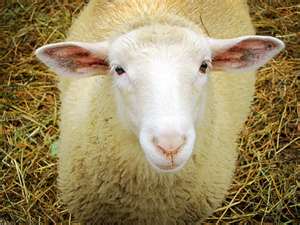
Got Weeds?

That’s a really bad pun. Every time I write a bad pun, you should take a drink of wine. You’ll be through that bottle of vegan wine in no time.

A growing number of organic, biodynamic sustainable farmers are using sheep to groom their vineyards. In fact, there are those who specialize in training both sheep and goats to eat only the weeds at their hooves, leaving the grape leaves, vines and emerging fruit to flourish. It’s a delicate balance; if they’re not trained, they’ll eat everything in front of them. And they might be pretty ticked if you try to tell them any different.

I’ve never had organic wine, much less  vegan and I’m looking forward to seeing whether there is a discernible difference between organic, vegan and traditional.

In my next post, I’ll compare and contrast, but I am having a bit of a challenge finding a true vegan wine at my local wine store. I’ll keep looking because the best part about being the wine student is experimenting.

Cheers!

New Year ~ New Choices

We had a lovely New Year’s Eve and the Mumm’s did not disappoint. It proved to be a terrific sparkler all on its own and gained even more depth when I paired sips with chocolate and strawberries. It wasn’t a night of partying down; we kept things quiet, low key and very special. It was nice to have a few moments to reflect and just enjoy being together, especially after so much ‘busy’ through the holiday.

For last night’s New Year’s Day dinner, I slow roasted a Prime Rib that I respectfully rubbed down with oil, minced garlic, (embedding garlic cloves along the way with great care) pepper, and a little thyme.

What should I pair it with? In the past, I’ve always reached for a robust Cabernet, but New Year’s is all about change and trying something new. A recommendation I read about was Petit Syrah. This is not to be confused with Syrah or Shiraz, which, I did. Petit Syrah is from a small grape that produces a deep wine with hi tannins and good acidity. It’s the acidity that cuts the fatty richness of the beef. That was exactly what I was looking for, so into the ‘cellar’ I went. And out I came, empty handed. We had a plethora of Pinot, a cacophony of Cab and a peppering of others but no Petit.

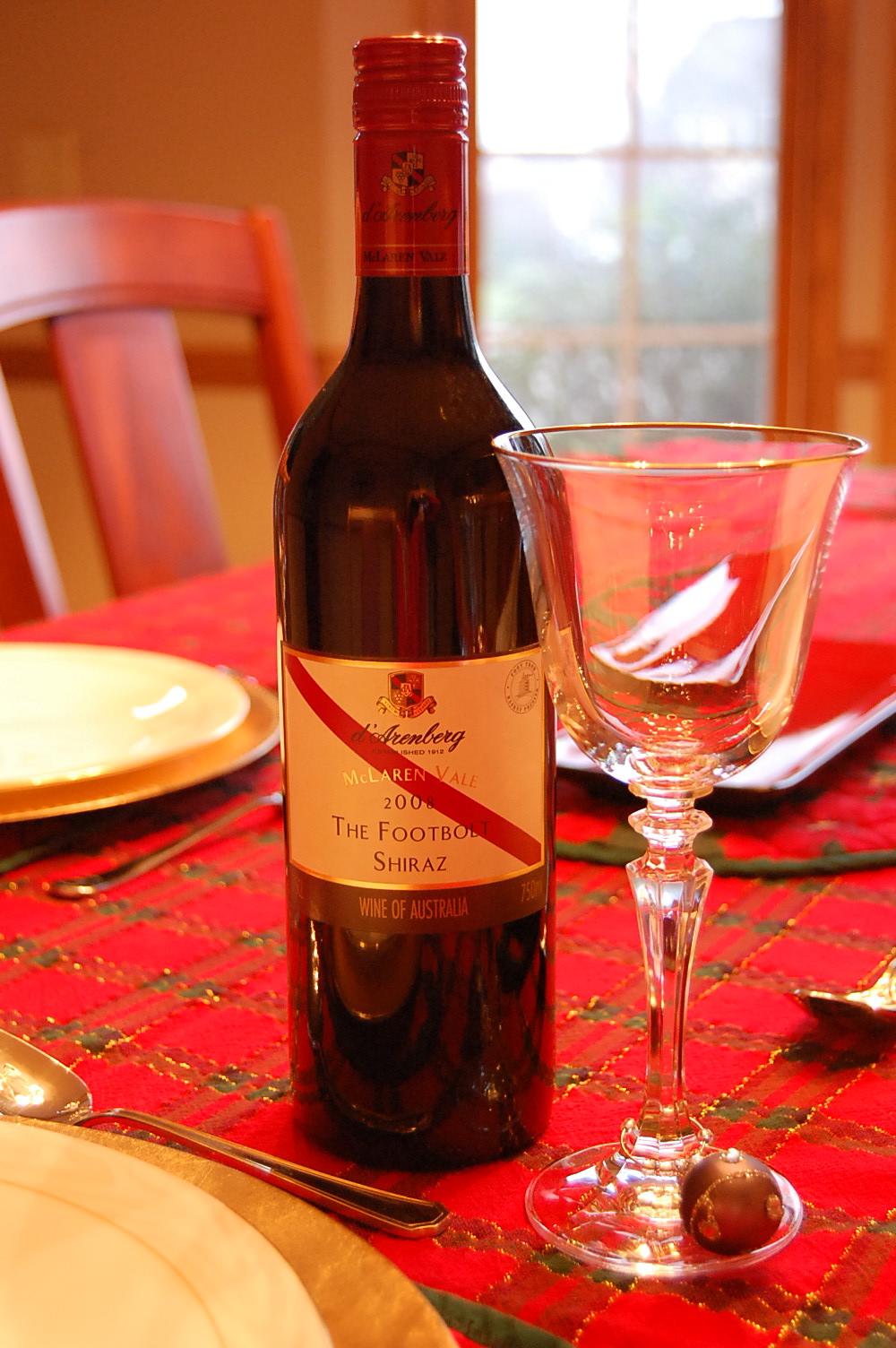
Ready to open: the 08 d'Arenberg 'The Footbolt' Shiraz

Ready to open: the 08 d'Arenberg 'The Footbolt' Shiraz

I had to move to Plan B. I remembered an 08 d’Arenberg The Footbolt Shiraz that we’d bought some time ago. Shiraz can be hearty and robust, with soft tannins and subtle oak. We noticed the flavors of this vintage were of a lightly spiced blackberry. On the palate was  a hi mineral taste at first finish. It began to settle nicely into a hearty pepper- berry combination when paired with the warm richness of the beef and Yorkshire pudding.

The Footbolt Shiraz is from the McLaren Vale appellation. Prime growing season tends to be very dry, hot and sunny which is ideal for producing robust, flavorful grapes. Rainy winters provide good natural irrigation held in reserve for the next growing season.

I admit I was a little skeptical but this Shiraz proved to be every bit as robust as the hearty Cab. Sometimes it’s good, and quite tasty, to move outside your comfort zone.

Cheers!
Bubbly

This slideshow requires JavaScript.

Champagne Wishes to you!

After a month of what felt like nonstop eating and drinking, and happy to not be exhibiting any visible signs of gout, I wanted to celebrate with a fun wine that would help me toast the end of a very good year. The Champagne tasting at Royal Park Fine Wines in Strongsville was a great place to meet friends and try a variety of wines for the season.

Royal Park Wines owner, George Zaboura, featured six Champagne/sparkling wines starting with the Santa Margherita Prosecco from Italy. This was a nice wine to begin the evening with and it boasted aromas of peach, apple and delicate citrus. It was light and refreshing and whet my appetite for the next offering: Freixenet Elyssia Rose from Spain. I found this one a little disappointing; it didn’t have much flavor. Even after pairing it with some strawberries and chocolate, it didn’t really jump out of the glass.

The next offering was the Piper Heidsick Cuvee Sublime from France. This was much sweeter and flavorful. It boasted a touch of violet, which was subtle and noticeable at the finish.

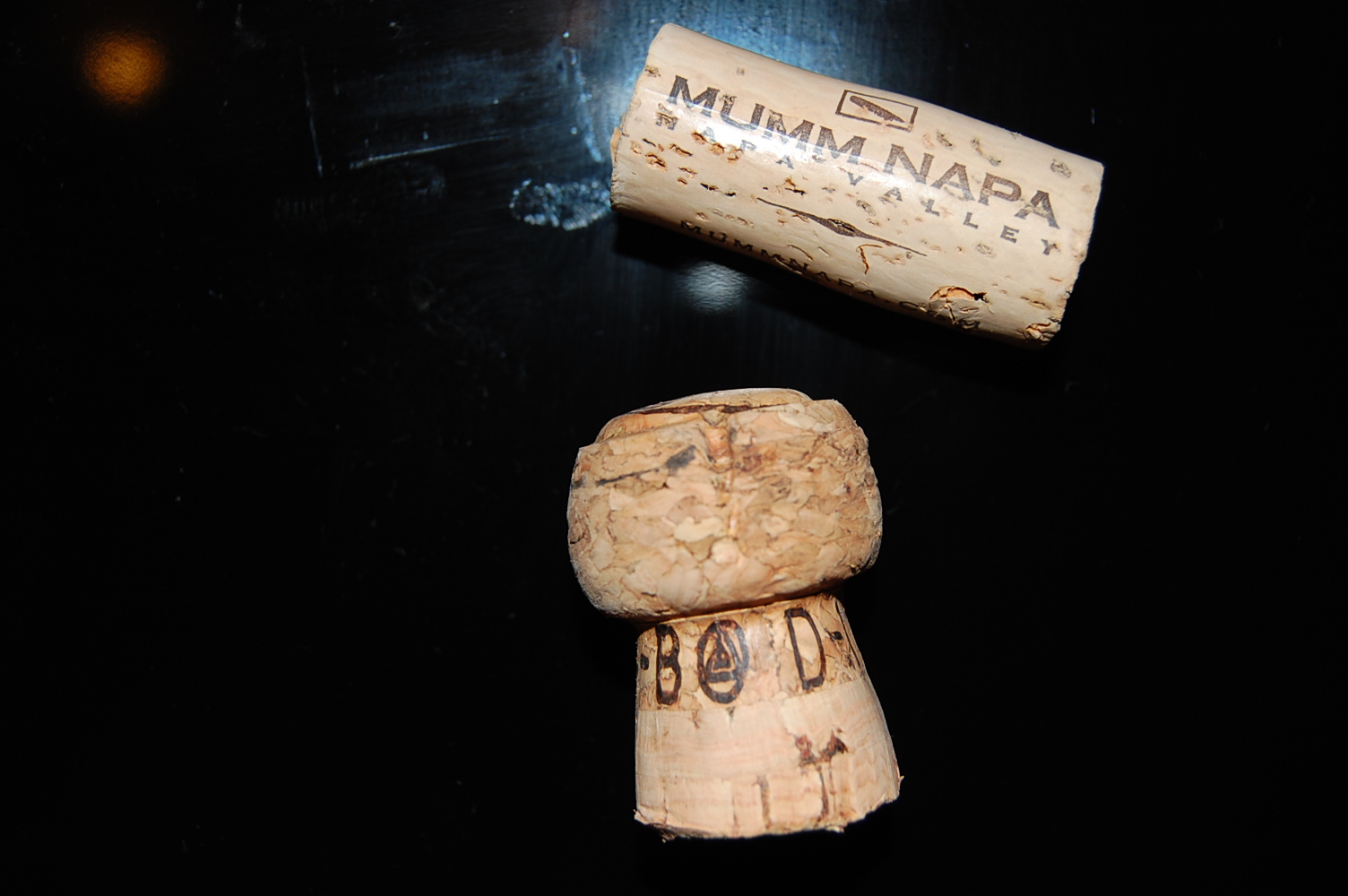
On to the Mumm Brut Prestige, Napa Valley. This had an almost creamy mouth-feel with pronounced a melon essence and a finish that lingered (in a good way) after your final sip.

Next up was the Perrier Jouet Grand Brut. It proved to be a lively wine with a subtle green apple and pineapple vibe that would be a great stand alone sparkler for toasting and enjoying throughout the night.

We finished with a Banfi Rosa Regale from Italy. This was a semi-dry wine that offered a sweet strawberry raspberry flavor. The color was a beautiful, light claret and it was good but very sweet.

Our choice: The Mumm Brut Prestige. Yum. I’m looking forward to popping the cork, sipping it slowly with some chocolate and strawberries and welcoming a brand new year.

Cheers!
Top Five Wine-themed Crafts

With the holidays underway, and everyone having a bit of a break, there have been cries in my home of, “I’m. So. Bored!”  My daughter replied, “well, mom, why don’t you find a craft?” Damn, my own words coming back to haunt me. But she had a point. I began to troll around to find my top five picks for wine-y crafts.

Rather than just writing about them, I thought I’d actually try them.  And if they weren’t simple for me, I’d never recommend them for you. I’m all about the easy craft that doesn’t take too long or make a big mess.

I read about one that involved using a ‘diamond bladed wet-saw’. In my hands, with or without wine, this would not be good.

Here are my top five, in no particular order:

Wine Label Collage

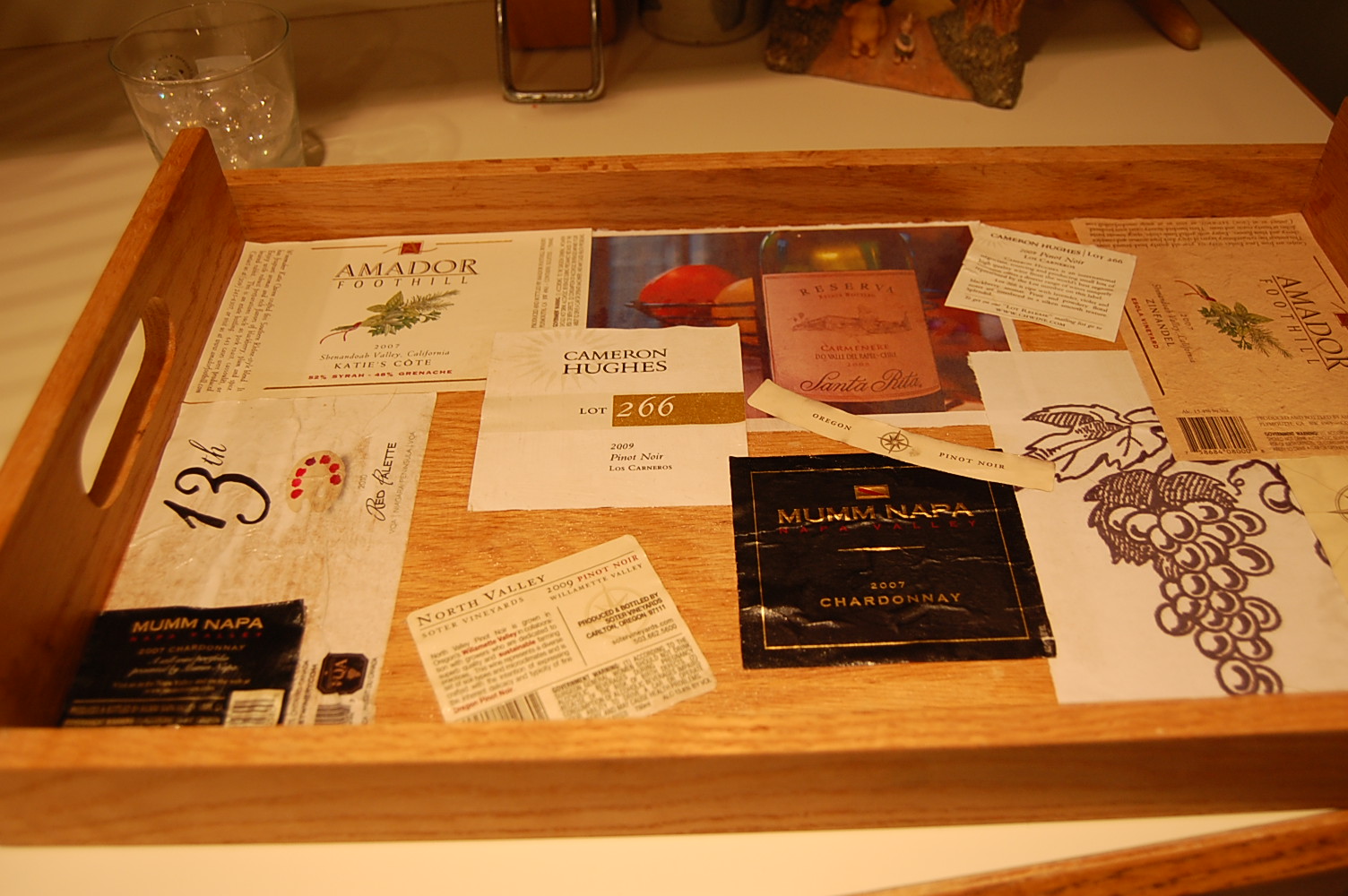
This one takes a little work but is still pretty simple. I did my collage on the bottom of an old wooden serving tray. You could do one on card stock and frame it as a poster.  Many wineries are using wonderful artists to design their labels, it’s a shame to toss the bottle in recycle without trying to preserve the label art in some way.

The real trick you’ll find with this craft, is getting the labels off the bottle; some slip off easily, some you have to finesse a little more ~ kind of like the shirt of that hot date you once had.

In a dishpan or sink, use enough hot water (hot enough for your hands to stand) and a drop or two of dish soap. Let it soak for a few minutes and beginning with the edges, slowly peel the label off (without ripping). At this point, I recommend having a sip of wine, a deep breath, and keep trying. Once you get the labels off, dry them on a paper towel, removing them every so often to keep them from sticking. You’ll need decoupage medium from an art or craft store. I used ‘Mod Podge’. For the tray, you’ll need to make the surface water resistant so when the labels have cured, cover with a final coat or two of clear acrylic sealant.

Wine Label Collage Tray (in progress)

Wine Label Collage Tray (in progress)

Frosted Wine Bottles with Salt

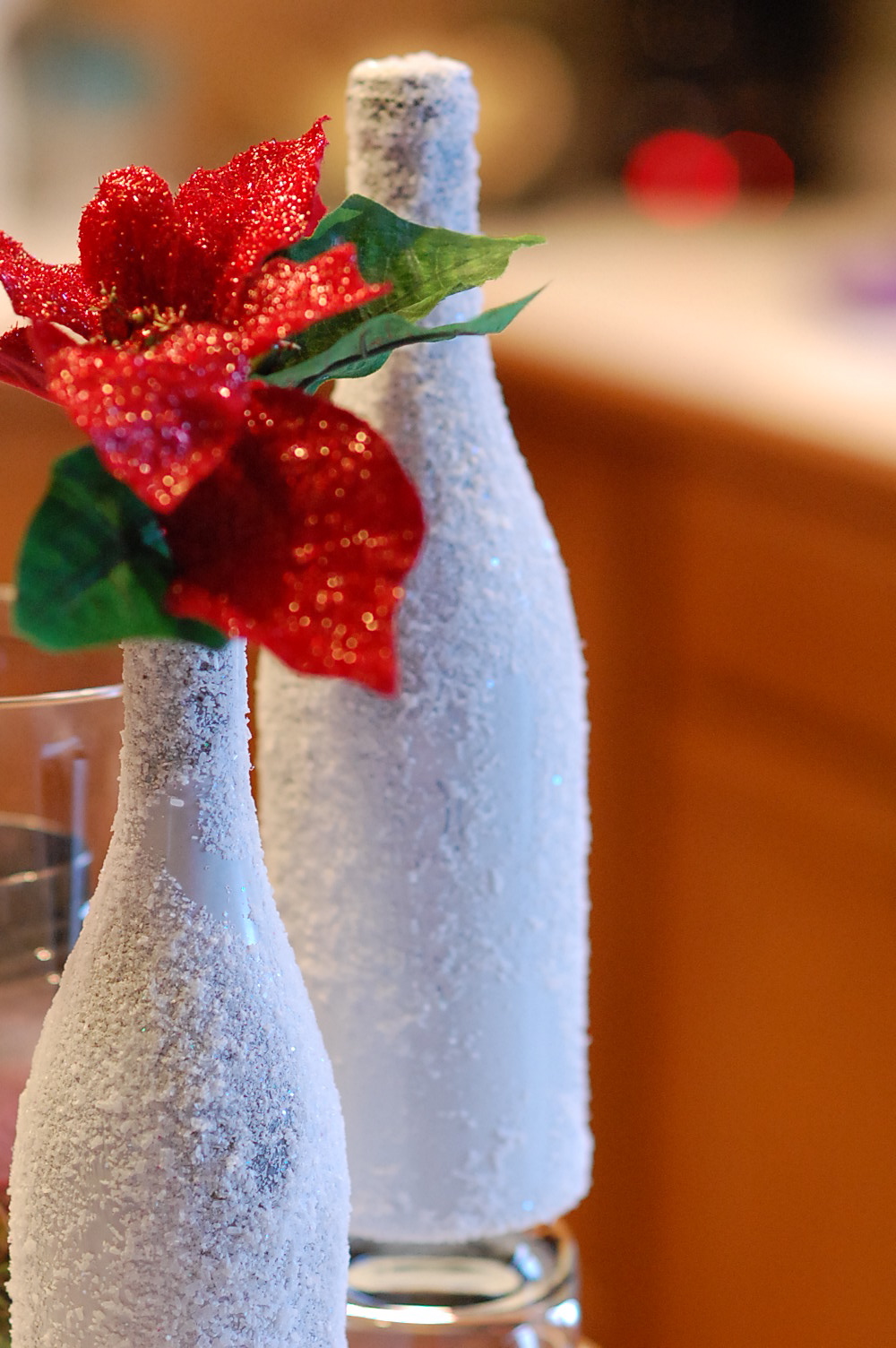
After you’ve successfully soaked off your labels for your collage, you can spray your naked wine bottles with a white primer. As the bottles are drying (and still sticky) roll them in an inch of Epsom Salts you’ve put on a foil-covered cookie sheet. I mixed a little iridescent glitter with my salt to give the appearance of ice. I found that I had to work quite quickly to get the salt and glitter to adhere. Let the bottles dry completely, spray with a sealant and display. I put a few of mine into my Christmas tree, securing them with white pipe cleaners.

[www.stylelist.com]

Frosted Salty Bottles

Frosted Salty Bottles

Cork Place Card Holders

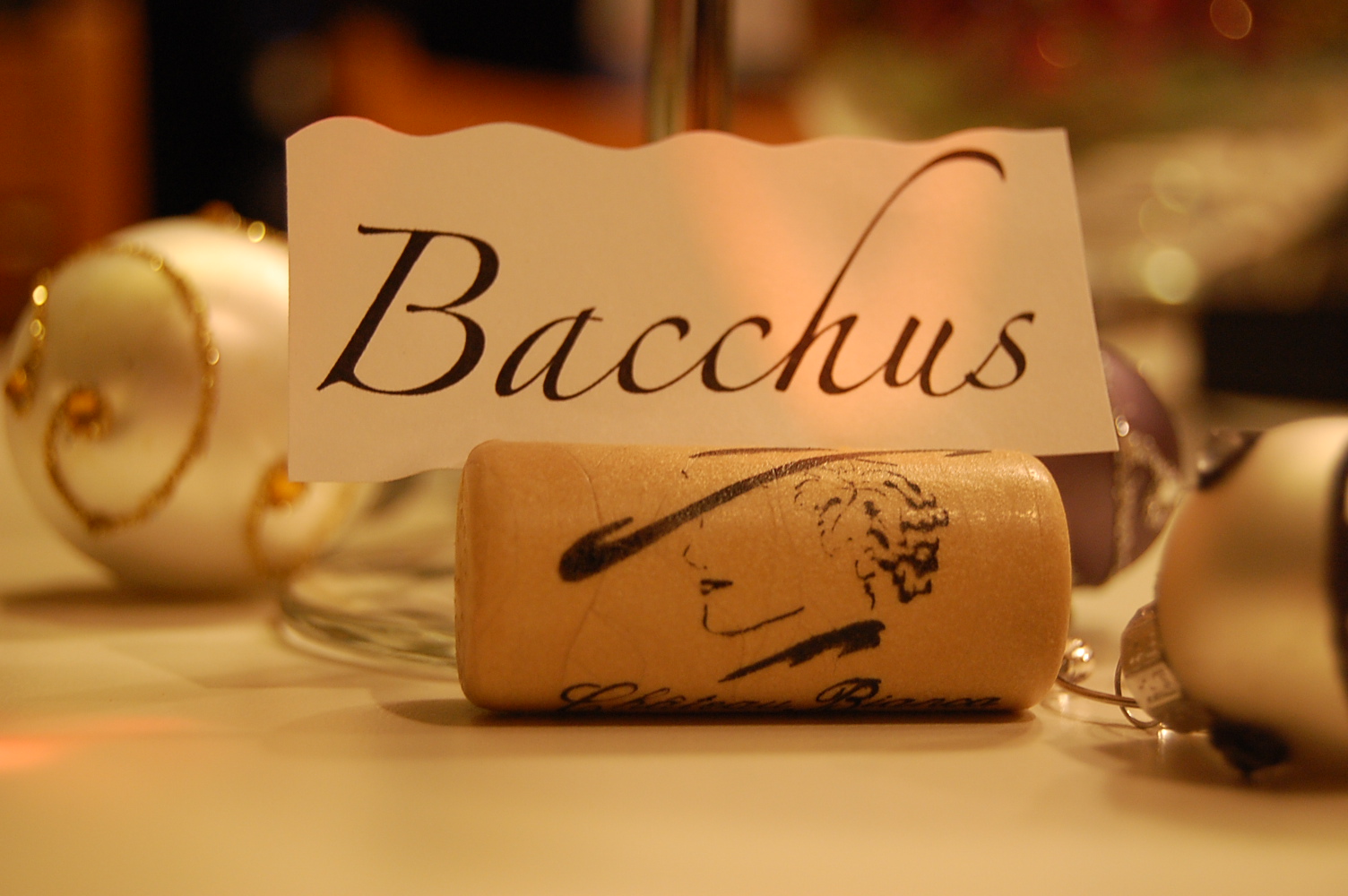
These sound like a no-brainer, and they are. They can look pretty cool if you have some decent artwork or logo on the cork. I was lucky to find this one from Chateau Bianca. Take a sharp knife and slice a lengthwise groove into the cork. If you’ve made your groove a little too large (which I did), simply glue the paper to card stock, which will make it a little heavier and more stable. A couple of drops of glue in the groove can help secure the card. They are really simple to make and would be great for a wine-themed wedding or dinner party.

[www.thebubblybride.com]

Cork Place Card Holder

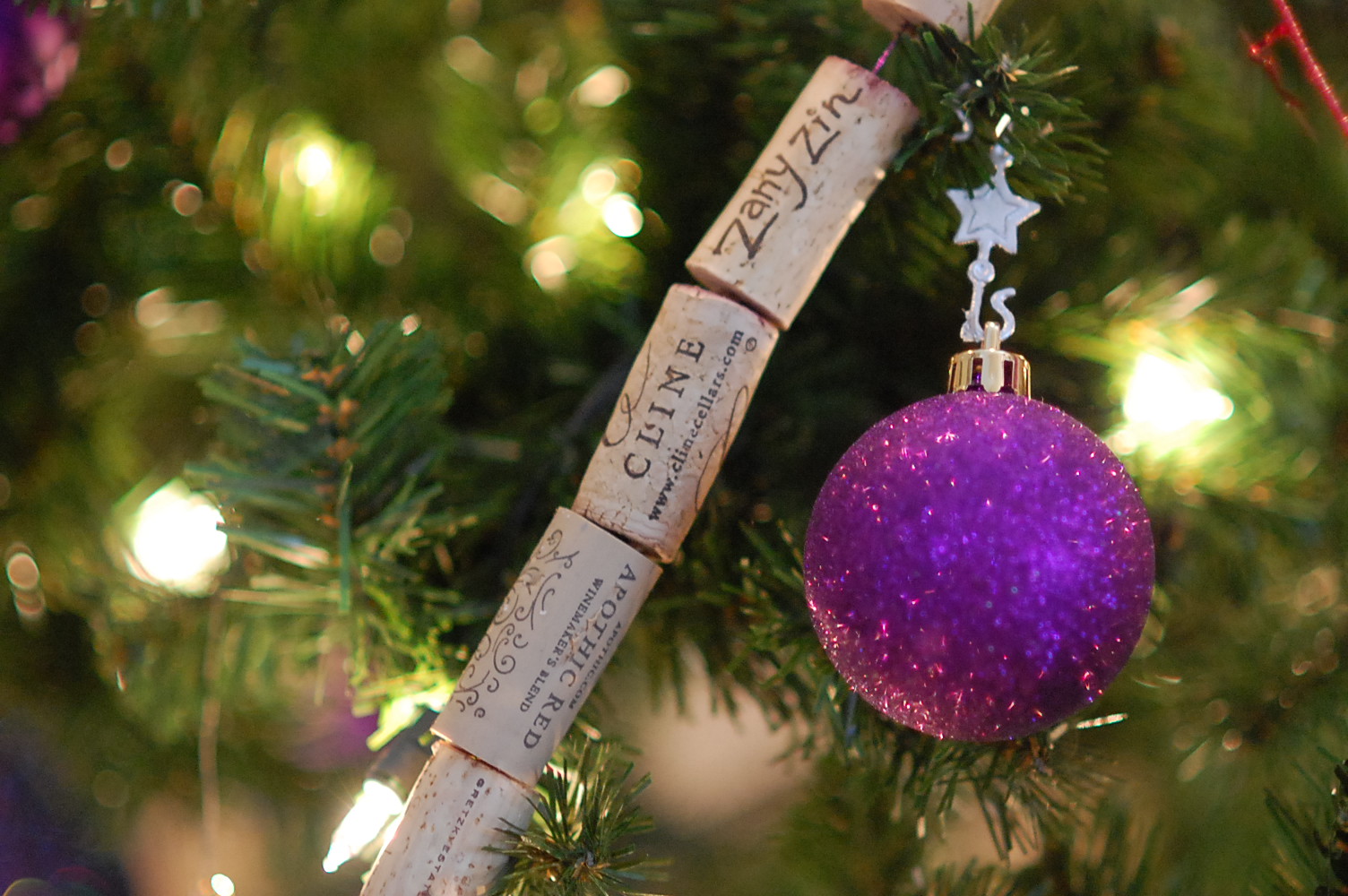
Wine Cork Garland

Again, this craft makes great use of any corks you have lying around and you have a tree with a wine motif (like I do). This is very simple; using a 3/8″ drill bit, drill through the cork, end to end. Take care with this; some corks can splinter and split so extra attention is needed. Synthetic corks tend to stay in tact more consistently. Also: you have to hold the cork steady as you drill, so save your quaffing until you’re ready to hang the garland. To string, I used a shiny metallic cording which was really easy to use.

Corky Garland (an awesome stage name!)

Corky Garland (an awesome stage name!)

Cork Magnet

This is as easy as opening a bottle of wine and drinking it. Except that you may have to use superglue and you want to do that before consuming any wine. Take your cork and a magnet piece (available at any craft store). Cut the magnet to fit the side of the cork, not the ends. Glue. Hold until dry. Put on fridge. Admire your awesome craftiness!  These are cool but are really more for show; mine slid oh-so-slowly down the fridge when I tried to stick up any notes.

Wine-y Magnets

Wine-y Magnets

And there you have it, a few projects to get you through the waning holidays, when you’re not recovering from that overexposure to turkey or wine buzz.

Tonight, I’ll be going to a Champagne tasting to learn how to pick a great bottle of bubbly to ring in the new year.

Cheers!

Cool Yule

Tonight, I’m off to visit friends for a Christmas dinner party and I wasn’t sure what wine to bring. I don’t really know what’s on the menu, and I didn’t know how to ask without sounding wrong somehow.
I want to bring something nice and friendly; not too sweet but not too bombastic, either. Since I’m still learning, and haven’t accrued the knowledge yet to blindly pick a winner, I’ve narrowed it down to two: an 09 Santa Cristina Sangiovese and an 08 Cloudline Pinot Noir. This Sangiovese is blended with 10% Merlot and 5% Cab Sauv, and that’s interesting to me, but the Cloudline boasts that it is “rich, charming and harmonious.” Who wouldn’t want to take that to a dinner party?
I dunno. I’ve been puzzling and puzzling…and now my puzzler is tired.
Oh what the hell, I’ll bring them both. And I’ll let you know how they were.
Cheers!

A little more about Amador County

This slideshow requires JavaScript.

With the hustle of Thanksgiving, and the bustle last week of writing with a deadline, I haven’t had much opportunity to finish my thoughts about my trip to Napa.

And I have to apologize, when I post my pictures in gallery format, I can’t get the titles to work properly. Try as I  might to acknowledge the people and places I’ve shot, it just doesn’t happen the way I’d like. So bear with me and please feel free to click on any thumbnail to see the larger version.

When I spoke with those who’ve often travelled to Napa, especially the Lodi and Amador regions, they told me about the qualities that distinguish what you’d experience in the wine. Lodi has loamy soil and the wine produced here is more fruit forward;  Amador County produces wines that tend to be high tannin (?) and hi pepper. They really aren’t that far geographically, so it was noteworthy the vast difference with seemingly little boundary between them. With that, we were on our way for a day of tasting. We hit five wineries, beginning with Young’s Vineyards.

Young’s at Heart

Young’s provided a photographically rich experience and they seemed to pay great attention to detail in the esthetic presentation of the winery; providing a lush environment in which to feature their wine. I have to admit, between the gorgeous scenery and sweet dogs for me to pet, I found myself a little distracted. What I did enjoy was their 09 Sangiovese. It was bold and bright and a flavorful entree to our day of tasting.

As someone who is attracted by label art, and I admit this freely, Young’s Vineyards doesn’t disappoint. The distinctive labels are designed by watercolor artist Jeanie Vodden.

A Little Taste of Tuscany

We were then off to VillaToscano, which was like driving up to, well, a Tuscan villa. It’s certainly an impressive looking winery, with the interior designed in frescos with a generous giftware and tasting area.  We were pressed for time and had to choose one station to sample. I spied the Barrel Futures, which looked interesting to me. I’d never sampled from a barrel before and wanted to spend what little time I had available, there. I sampled the 10 Sangiovese, which, to me, tasted very green and young. While I realize it had just gone into incubation from the first crush a few weeks earlier, I found myself wondering how this wine would develop in the coming year. From what I’ve studied so far about Sangiovese, it shouldn’t have a vegetal quality to it; I expected it to be a little more full-bodied, even at this early stage. Perhaps with a some time, TLC and the qualities from the barrel itself, it’ll grow, evolve and gain it’s depth over the next twelve months.

Historical Vines

Before the weather took a bad turn, we wound our way to Sobon Estate, winery and designated California Landmark. Located at the former D’Agostini Winery, one of the oldest in the state, Sobon boasts old vine Zinfandel as well as Rhône varietals. It also houses the Shenandoah Valley Museum within it’s tasting room and gift shop. It has a very quaint, pioneer-esque feel to it when you walk in. The walls are festooned with ribbons from the many awards won for their wines. I’ll be honest, I can’t comment about the wines here since I didn’t sample at Sobon. The reason: we decided to pace ourselves with tasting, and some wineries one of us needed to sit out and just drink water. Sobon was my sit out. Of my friends who did sample, the pick was: their 09 Zinfandel Port.

Amador Foothills: “Get good grapes, and don’t screw up!”

That great quote was from Katie Quinn, winemaker at Amador Foothill. We soggily rolled in to her winery at a time when I think she might have wanted to call it a day. I can’t blame her; the rain, by this time, had made things cool, grey and drab. She was kind enough to take her time and indulge us with some of her latest offerings.

My first pick was an 08 Late Harvest Semillon. Most late harvests tend to be more dessert-like: thicker and viscose with lots of heavy sweetness. Thsi one was very different; light and refreshing, bouncy with a vibe that made me think of a fresh pear salad: green and sweet.Most late harvests I’ve tried have been Vidal, which for me, have a tendency towards a heavier sweetness, that could pair with a richer dessert at the end of a meal. I’d place this Semillon at the very beginning of a meal, with a light salad of greens, pear,  and honey dressing or with some light cheeses.

Bev recommended trying the Côte du Rhone ~ another varietal I’ve never tried before. The 07 Katie’s Côte was a blend of 52% Syrah and 48% Grenache. I found this to be beautifully fruit forward, nicely jamm-y at the start then evolving into a complex, rich, butterscotch on the finish. I had to taste it again to be sure that the butterscotch wasn’t just wishful thinking. It was real … and consistent on the second sip. Especially, with these two wines, Katie did get some good grapes, and she didn’t screw up.

I bought a bottle of each to bring back to the Cleve.

Deaver Vineyards~ Mission Statement

Our last stop of the day was Deaver Vineyards, boasting mission vines that were planted by winemaker Ken Deaver’s great-grandfather John A. Davis in 1853. They are called ‘mission’ vines because they were brought from Mexico by Jesuit and Franciscan missionaries. While they are noted for their Zinfandels, Port was their featured tasting this visit.

Levi, our helpful guide, set out a variety to try, with appropriate sweet pairings such as: Orange Muscat Light Port paired with Mandarin Pumpkin Marmalade with graham crust, Petit Syrah Port with blueberry orange cheesecake, Golden Nectar Port, Black Muscat with Vanilla Bean Ice Cream. It was all pretty sweet.

My favorite was the Orange Muscat Light Port. The light sweetness just paired so well with the rich earthiness of the pumpkin marmalade and graham crust. My second runner-up was the Golden Nectar Port, which, on its own, had a sweet/scotch-y vibe. Being a Scotch drinker, it really appealed to me because of the complexity and contrast of sweet and smoke.

Our tasting at Deaver made me feel like the proverbial kid in the candy store: a candy store that had taxi’s waiting outside in case you sampled too much and needed help home. And for the record, we sampled very responsibly throughout the day and got home safely.

What’s wonderful to experience, no matter which winery you visit, is the unique fingerprint of each one. It might be the friendly dog who greets you, an Etruscan fresco on a wall or a journey back into history; each winery has a way that they want to present themselves to you. So far, I haven’t been to two that are even remotely similar.

I think that’s the beauty of exploring wine and the distinctive wineries it comes from.

Cheers!
Wild About Macchia! Fall Release Party

After a safe landing back in the Cleve, I am now in recovery mode from the past weekend at Macchia Wines’ Fall Release Party. From the incredible weather, to the fantastic turnout, I think Dionysus was smiling. I had the great opportunity  to work the Futures Barrel Tasting, which gave party goers a first taste of the ’11 Voluptuous and Oblivious Zins. It was both fun and a challenge; I knew some basics about wine, but clearly there was more I needed to learn. So I did what any good student would do: I asked  most of the knowledgable staff for the information. As resources they were helpful, patient and so much more fun than doing a Google search.

I wanted to thank Tim and Lani Holdener, their daughter Tanya, staff  and friends of Macchia who were so welcoming and friendly throughout the event and my time there.

My next posts will be about some thoughts (and pictures) of our adventures in Lodi and Amador County.

In the meantime, I wanted to share some of my pictures of Macchia’s Fall Release Party.

Cheers!
A Taste of Macchia and Amador County

It’s been a whirlwind trip so far and I’ll write more about the experiences at the wineries we toured in Amador County. In the meantime, I wanted to share some quick pics of my time there.

I’m off soon to the Fall Release Party at Macchia Wines and I’ll post those pictures later today.

Cheers!
On the prowl in Napa

This morning, I woke up in Napa and it isn’t one of those lost weekends where I don’t know how I got here. I’m here to help out at the ‘Wild about Macchia’ wine event in Lodi. I’ll be pouring wine, taking a few pictures for the blog and learning about the event side of the wine industry.
Celebrating their ten-year anniversary, Macchia Winery is going all out with a jungle theme. According to owner Lani Holdener, “Cougars are welcome!”
With my animal print shirt, I should fit right in.
Cheers!

Of Port and Sherry

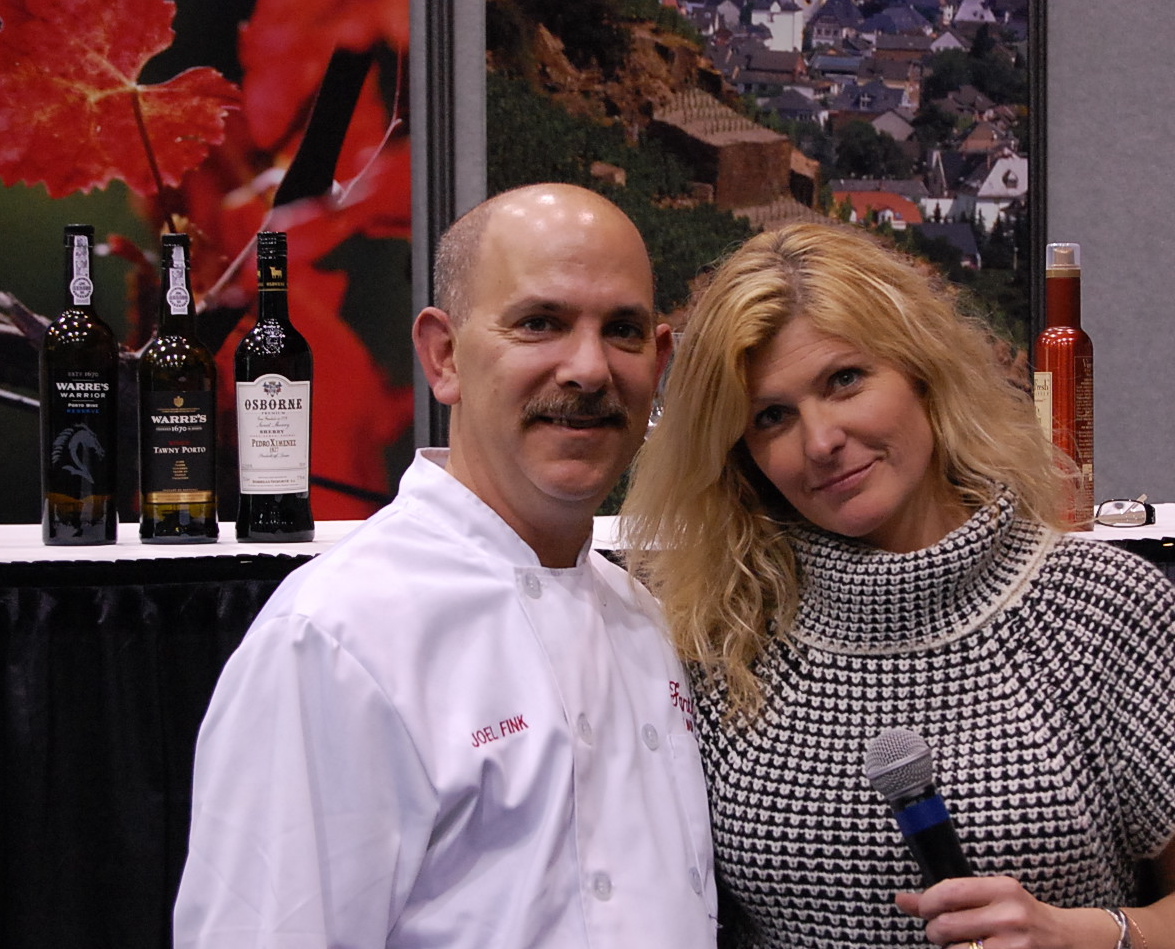
I wanted to add a little more about my experience at the Fabulous Food Show on Sunday. I went as I normally do for the wine sampling. I was particularly interested in the seminar on chocolate and wine pairing given by Joe Fink of Fantasy Candies and Marianne Franz of the American Wine School. I wasn’t disappointed.

Joe and Marianne

Joe and Marianne


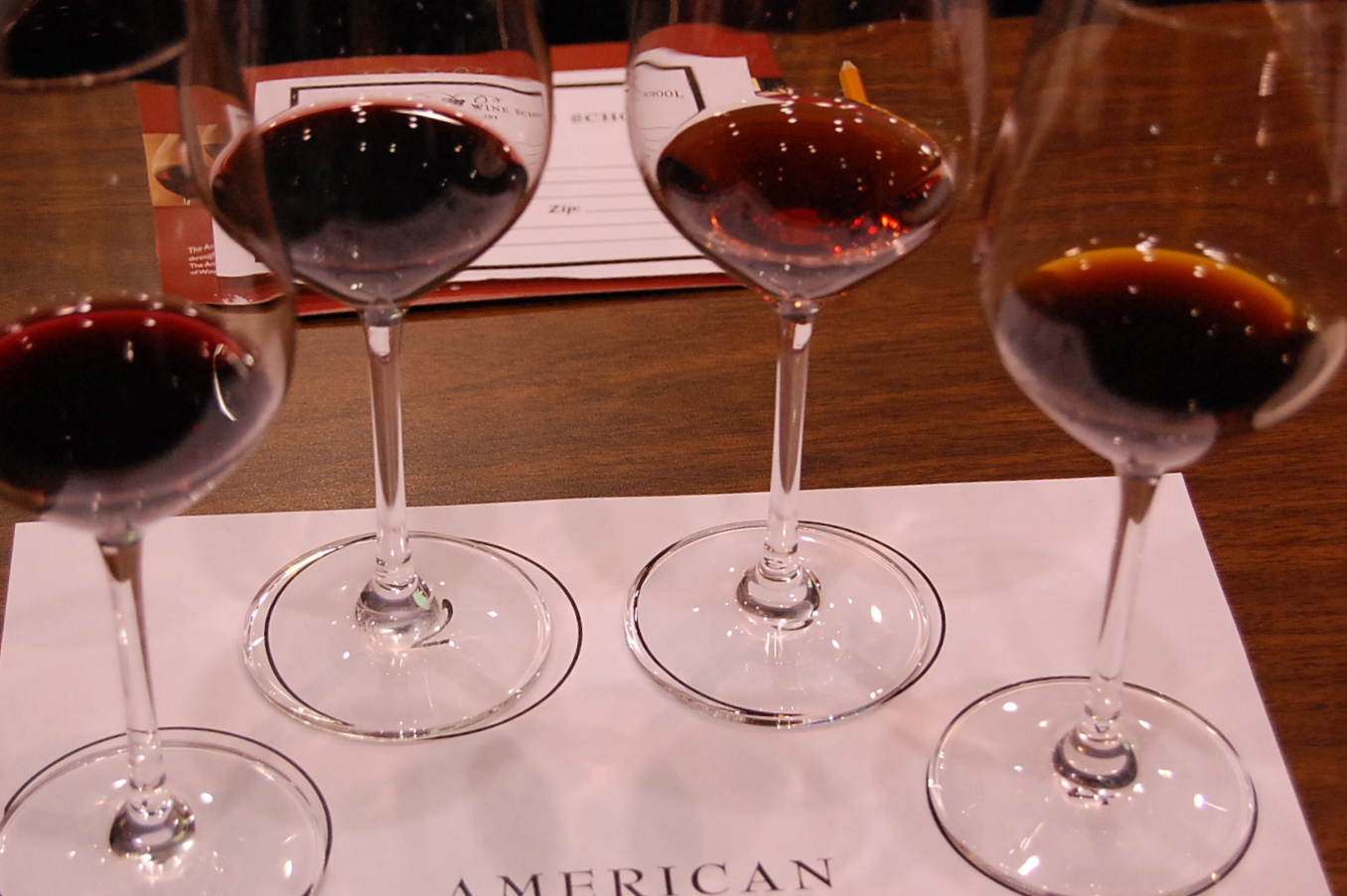
Four Sips of Yum

Four Sips of Yum


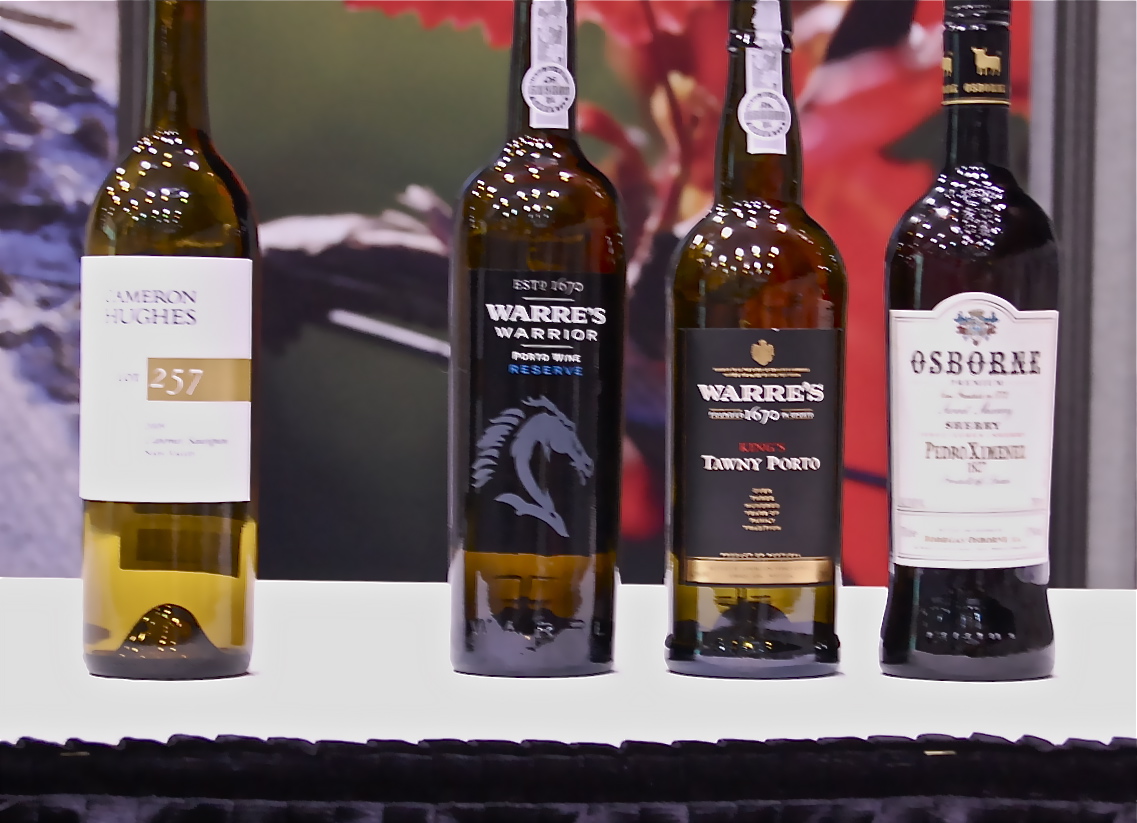
We started with four wines in front of us ranging from a hearty Cameron Hughes Bin 257 Cab Sav, a Warre’s Warrior Special Reserve Port, Warre’s Tawny Port and finally an Osborne PX Sherry. Starting from left to right we paired the Cab with a dark chocolate containing about 72% cocoa. The wine on it’s own was great but pairing it with the  exotic richness of the dark chocolate opened up and new level of deep rich berry and  added a light caramel finish I didn’t expect. While I’d pair chocolate with just about anything, I hadn’t thought of enjoying it with a Cab, which I generally save for a hearty beef dinner on a cold winter’s night. But that’s why I’m the student, and this is a learning experience.

We moved on to a 65% cocoa and paired that with the Special Reserve Port (alright, I tried some of the 72% with this as well, and it was really good). I’m not really a port drinker; in the past I’d found it to be too sweet, almost cloying, so this was a nice way to open my eyes to the world of port and how it could be served. As Marianne noted, sometimes two sweets together can cut down the sweetness you actually experience. But maybe it was the high I got from all the great chocolate that made me feel so accepting. Either way, I was enjoying the combination of the port and chocolate. Of the two, I found the tawny port much richer, complex when paired with the 65% cocoa sample.

Samples of the day ~ Vote for Pedro!

Samples of the Day ~ Vote for Pedro!

As the tasting went on, I became more interested in what the PX in my last glass would taste like. For years, I’ve had the cliched idea that sherry was something you kept in a cupboard and threw into a crock pot when nothing else was available. I was about to be schooled. I found myself intriqued by the color: a rich, golden brown with thick legs when you swirled it. Thick legs, in this case, is a compliment. The bouquet was of a buttery caramel toffee with a hint of a sweet cigar. Yes, cigar. You know when you smell a waft of a sweet tobacco in the air on a warm summer night? It was like that. When I told my friend Terri (who was also sampling) what I tasted, she looked at me like I was crazy…or needed to be cut off. I was neither. We paired this with with a honey-like milk chocolate and it brought out even more depth of the flavours. Once Terri tried the chocolate and sherry  together, she understood what I meant. When I researched a little further, I learned that Pedro Ximenez is actually made from a sweet vinegar made from grapes that have been sun-dried.

We had a great hour of decadence.  The best part was we didn’t get kicked out of class.

Cheers!