Ice Whine

Icy Loveliness: Ferrante Cab Franc Ice Wine

Icy Loveliness: Ferrante Cab Franc Ice Wine

If you’ve read my blog for a while, you’ll know that I love Ice Wine. And in Ohio, there is a burgeoning industry that I am very happy to enjoy and help promote. Last year, my friends and I ventured out to the far East of Cleveland to enjoy the Ice Wine Festival, if you click on the archives for March 2012, you’ll find pics. But I have a conundrum: to get to any of the events from where I live, you have to travel at least an hour, through a variety of possible weather conditions ranging from snow to snow | wind to snow and freezing snow | rain | slush | yuck mix. I think you see where I’m headed.

The way the North East Ohio (NEO) Ice Wine festival currently works, patrons travel from one winery to the next, sampling the latest offerings and pairing with specialty appetizers or desserts. It can be a lovely afternoon, if the weather gods are smiling. If they’re not, you can find yourself navigating some fairly tricky roads both on major freeways and the unplowed back roads to get to your destination.

I understand that having the Ice Wine festival at the individual estates is a great way to bring people out to the wineries during the off-season; and that’s good for business. I also understand that there are many who live on the East side and so the drive isn’t too difficult. But how about a little love for those of us on the West side or downtown?

An additional Ice Wine festival downtown, perhaps on E4th ~ where the area is closed to all but walking traffic, would bring visitors to the resident restaurants that also experience a bit of a slowdown in the winter months. It could be done as part of the annual East side festival ~ three weekends dedicated to Ice wine and the promotion of NEO wineries. The first weekend could be as it already is; with trips out to the participating wineries. The following weekend could have a more urban flavor, at E4th, and the third at Crocker Park,  providing greater access to downtown and West Side dwellers, respectively.

I know, it sounds a little like putting up a barn and having a floorshow. But I really like the NEO wine industry and the wines they are producing can be really terrific. In September, Crocker Park in Westlake sets up a premier wine event promoting the industry and recent vintages. Their attendance is usually quite high. Downtown wine events are also well-attended.

It’s just a thought but it might be a great way to bring in some other unique wineries from the surrounding regions as well as the East. And it might be a way to open up the NEO wine market to all of North East Ohio.

Cheers!

©TheWineStudent, 2013

Hollywood and Vines: Top 5 Wine Movies

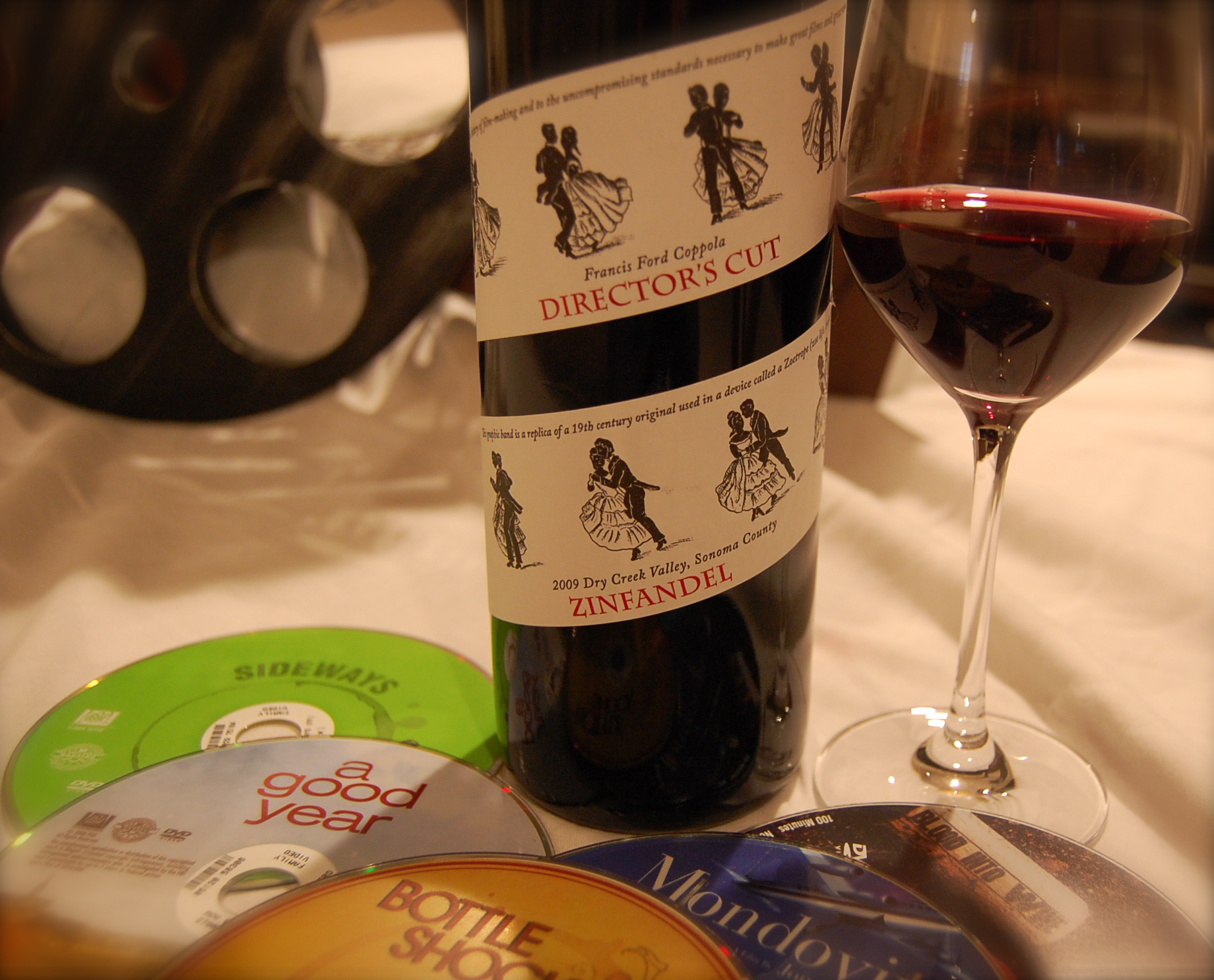
Action! Coppola's Director's Cut Zin

Action! Coppola’s Director’s Cut Zin

I love movies. I love them almost as much as I love wine. And with this being Oscar weekend, I thought I’d list a few that I enjoyed this past week ~ two documentaries and three dramatic.  I paired one of the movies with a rich and beautiful 09 Francis Ford Coppola Director’s Cut Zinfandel. I’d never tried it before and gave it two thumbs up.

So, for your consideration, and in no particular order:

Blood Into Wine (2010) ~ 90% documentary and 10% great marketing, Blood Into Wine stylishly illustrates Maynard James Keenan and winemaker Eric Glomski’s journey and struggles in the world of making Arizona wine. Keenan, drummer and frontman to some great bands such as Tool, A Perfect Circle and Puscifer, discusses how something ‘clicked’ for him about wine, leading him on a journey of ‘self-discovery’ and compelled him, ‘to know more…and see how far I can take this as an artist.” For Eric Glomski, a background in river ecology and early experiments with apple wine, made it clear how winemaking “helps us understand our relationship with the earth. And how wine is an expression of home.” The doc explains the growing seasons, the trials and tribulations of being a frontier winemaker in a rough northern Arizona terrain. From the political issues of water rights, to Javelina stripping one-third of their Sangiovese crop, to winter frost (which happens in higher elevation AZ vineyards), winemaking in Arizona is not for poseurs. For the entry-level wine drinker, it educates about the process and history of winemaking in a way that is entertaining and cool. Keenan is a rare celebrity winemaker who knows what he’s talking about, admits that he’s still learning and, literally, isn’t afraid to get his hands dirty. His story about his mother and the pride he has for Caduceus Cellars‘ ’07 Nagual de Judith Cab Sav (named in her honor) is very touching. While it occasionally had the subtle feel of a marketing video, that’s okay. I have no problem with promoting awareness and generating buzz for a burgeoning wine region.

Mondovino (2004) ~ This documentary by Jonathan Nossiter examines the conflict between big wine, in this case Mondavi, and the smaller European winemaking families trying to preserve their land and culture. It’s a whirlwind flight from Brazil, into the vineyards of Burgundy, and Sardinia, on to the gilded drawing rooms of Italy, and finally the sprawling colossus of the Mondavi vineyards in Napa. Early on, Nossiter introduces you to Michel Rolland, a wine consultant, who advises an international array of wineries in making their wines to suit a more “uniform, Mondavi style.” He uses the term ‘micro-oxygenation’ which such frequency and at almost every vinery he visits, you’d think it was his middle name. When asked about ‘diversity’ in winemaking, he replies, “That’s why there are so many bad wines.” Ouch. It goes on to illustrate the power of the Mondavi marketing machine and how the smaller ‘generation’ winemakers must, in essence, conform or be cast out. I think the point Nossiter is trying to make is that in order for the smaller wineries to compete at all in an ever expanding market, they have to allow Mondavi and it’s marketing power to take over, which means selling out their own expression, or terroir, to a standardized style of wine. It’s referred to as ‘globalization’ of wine and the narrative raises some very interesting points, to be sure. If there’s no diversity or personal expression/signature in wine, what’s the point?

A Good Year (2006) ~ Hmmm, my best nutshell description: icy Master of the Universe-inherits vineyard-meets and falls for sexy French chick-life dramatically changes. Russell Crowe plays Max Skinner, a British financier who, in the midst of his chaotic life, finds out he is the only living relative of his beloved, yet forgotten, Uncle Henry (Albert Finney). He becomes the default owner of his uncle’s French Chateau and adjoining vineyard. At the start, he sees it as just a piece of real estate, to be cashed in and sold off. What he doesn’t expect is that his life will be transformed (voila!) in a mere 7 days. Told partially through flashbacks to sunnier days of fun and wine with Uncle Henry, it’s nicely romantic but predictable ~ there’s even a mention of… Mondavi (ha). Still, it’s good to see Russell Crowe in something a little lighter and no phones were thrown. There’s a quick, ironic scene where Max makes a Lance Armstrong reference, which is funny, but now for a very different reason.The loose ends tie up a little too neatly but the beautiful shots of the Chateau and vineyard make up for that. The point is more than hit home that, try as you might, you can’t ever really outrun the ties that truly bind; for memories, love and wine will inevitably stand the test of time. Oh, the sexy French chick? Marion Cotillard.

Sideways (2004) ~ Starring the great Paul Giamatti, it’s probably one of the most famous movies about wine so I don’t think I need to go into a plot synopsis. Suffice to say,  it probably cast the most light on the whole Merlot vs. Pinot debate. My favorite scene is when Virginia Madsen’s character, Maya, waxes poetic on what she loves about wine; how wine continues to evolve over time, gaining complexity and how it is, actually, alive. Much like love. Amid the comedy and chaos of the movie, this is the scene that distills what it is to be a true lover of wine.

Bottle Shock (2008) ~ If you can get past the really bad wig that Chris Pine has to wear, Bottle Shock is an interesting look at the fledgling California wine industry in the mid-’70’s. Loosely based on a true story, it follows two tales. The first is the struggle between a failing California winemaker Jim Barrett (Bill Pullman) and his slacker son, Bo (Pine) to produce the perfect wine. The second, British wine educator Steven Spurrier (Alan Rickman), living in Paris, trying to find a bold way to promote his (at the time) unremarkable business. On the advice of an American friend, Spurrier creates an international wine competition to find the best of California to compete with the French. It illustrates the beginning of the globalization of wine and how a snubbed wine region can rise to the occasion and triumph. The message: sometimes you can make something too perfect; and that letting go is when perfection can truly be achieved. Woah. I think I need a drink.

This week, I watched some great wine movies, and enjoyed a new favorite wine. I’m ready for the big night with a chilled bottle of Chandon.

For those of you who, like me, are still waiting for that lost invite to the Governor’s Ball, I hope you enjoy the show.

Cheers!

©TheWineStudent, 2013

But Isn’t Every Day National Drink Wine Day?

Cheers to National Drink Wine Day!

Cheers to National Drink Wine Day!

Hey, it’s National Drink Wine Day. So…Happy National Drink Wine Day to you!

I hope you’ll enjoy thoroughly and responsibly. And I hope you’ll pick something for yourself that embodies the spirit of the day. So take a moment to slow down, savor the bouquet, the funky little nuances in flavor, and the way it makes you feel.

Cheers!

©TheWineStudent, 2013
Lovey Dovey

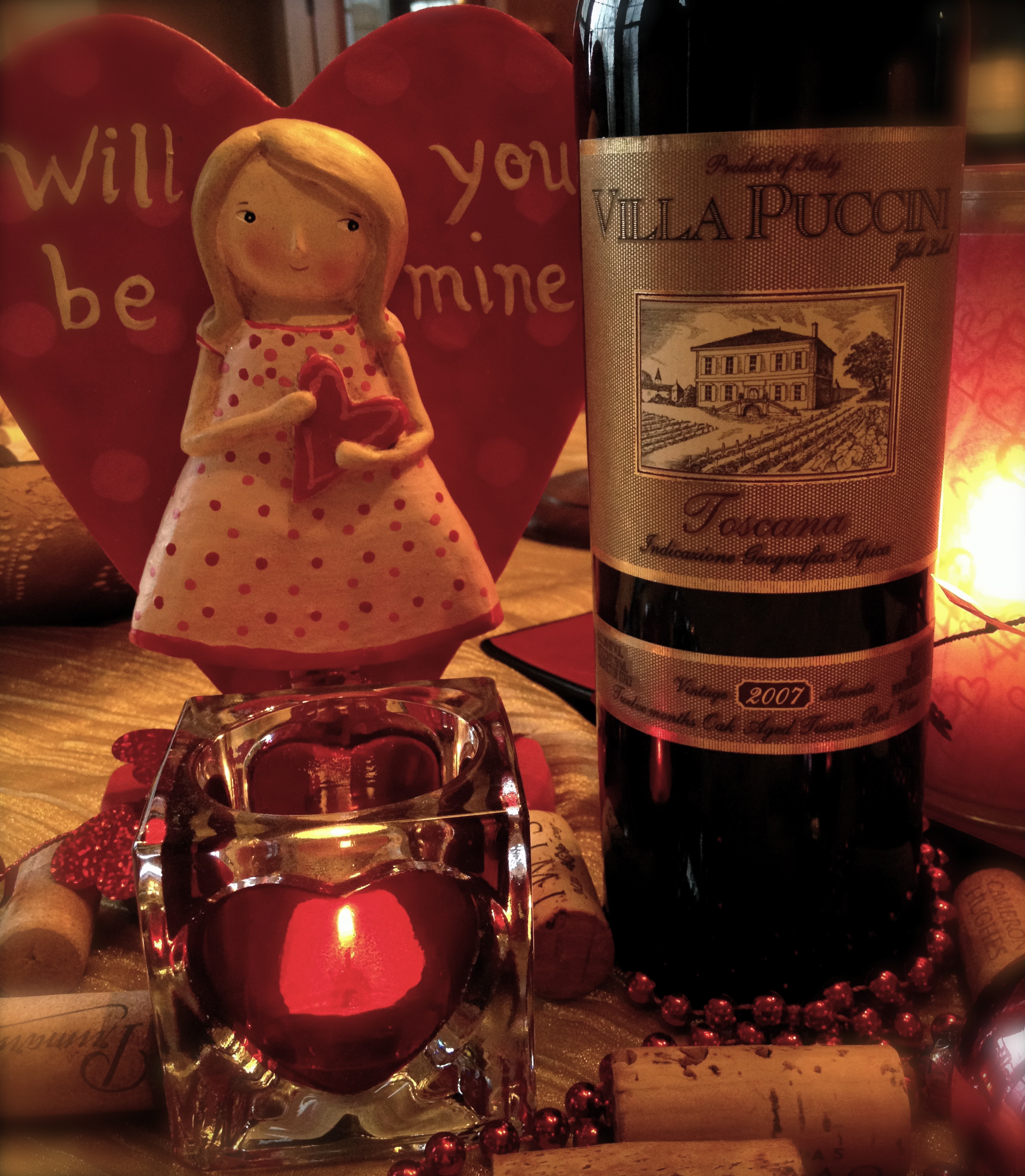
Will You Be Mine?

Will You Be Mine?

It’s been a busy week ~ what with Mardi Gras festivities and now Valentine’s Day. Chinese food is on the menu for our dinner tonight (I didn’t really feel like cooking). I have no idea whether the ’07 Villa Puccini Toscana is appropriate with egg rolls, won ton soup and sweet and sour chicken, and that’s okay. I’m just going to relax, enjoy the night with HubbyDoug, my girl, Andrea, and a fun meal together.

I wish you all a very Happy Valentine’s Day!

Cheers!

©TheWineStudent, 2013

Phat Tuesday

Sweets for the sweetest Mardi Gras!

Sweets for the sweetest Mardi Gras!


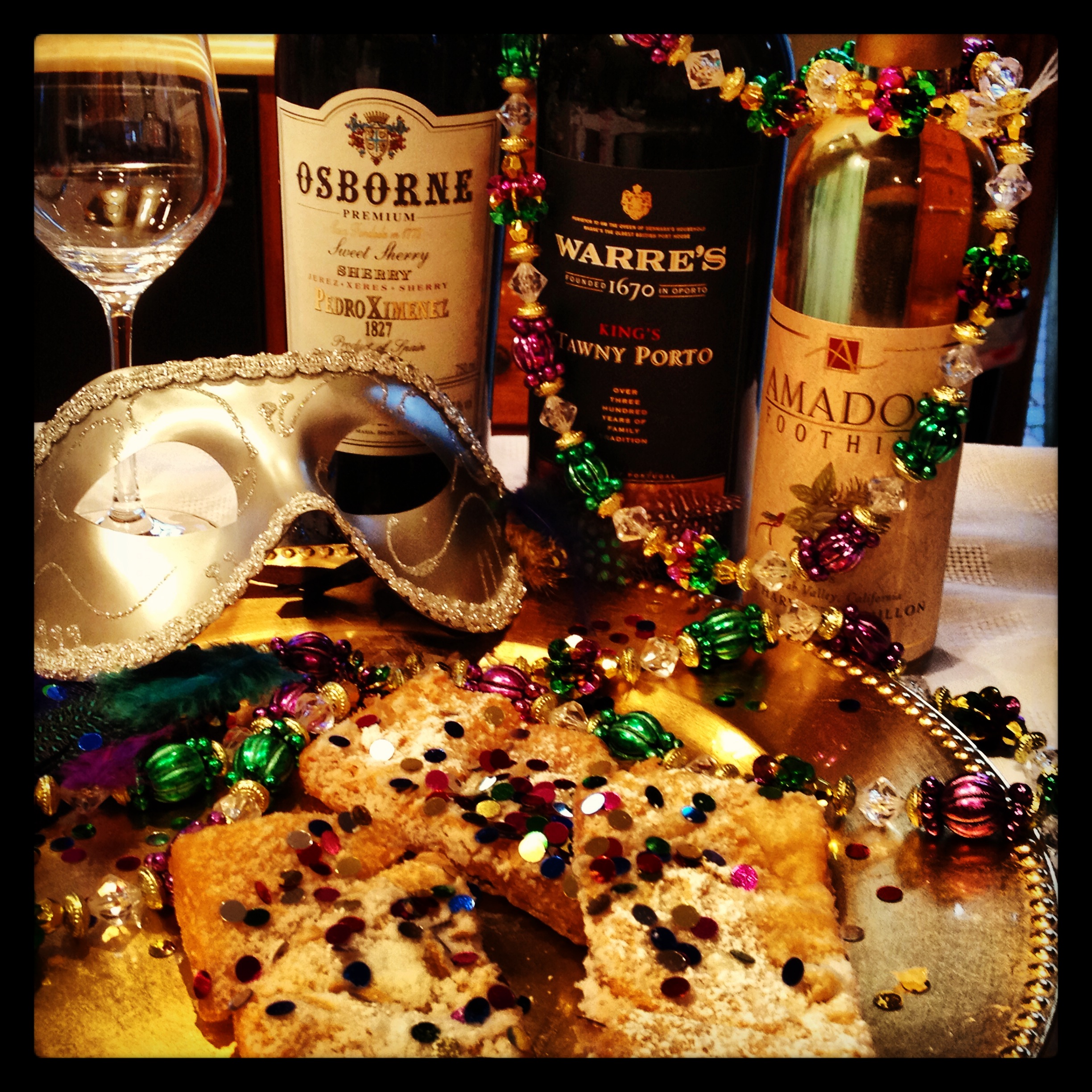
Joyeux Mardi Gras! Ah, Fat Tuesday ~ traditionally, it was the day when all good people used up their entire stores of butter, flour and milk to prepare for the Lenten fast. Hence the plethora of doughnuts, fried batter and pancakes. This year, I wanted to try a traditional Fat Tuesday treat: Beignets. I’d never made them before and wasn’t sure what wine to serve with them. Ice wine would be an obvious choice, since it pairs well with anything sweet. Looking in my little collection, I discovered a few alternatives: Warre’s Tawny Porto, Osborne Pedro Ximinez Sherry, and an 08 Amador Foothill Late Harvest Semillon.

I thought about throwing in a rich, red Zinfandel for a thrill but worried that by the end of the tasting, I’d be showing the neighbors my Mardi Gras beads ~ which tends to make things very awkward at the next cul de sac cookout.

I got my dough ready, cut up into rectangles and made sure I had enough powdered sugar. When the oil gets up to temperature, they cook pretty quickly. A warning: when you take these little bits of heaven out of the oil, let them sit a bit. They’re really hot. After I let my lips cool, I did the first pairing with the Late Harvest Semillon. It was refreshing , and the honey-pear essence was a nice counterbalance to the warm, sugar vibe of the beignet. The second offering was the Warre’s Tawny Port, which had a lovely deep cherry scent and flavor that offset the delicious deep-fried taste. The third pairing was with the Osborne Pedro Ximinez Sherry. It poured like molasses and tasted like a little Halloween kiss in my glass. I found myself wanting chocolate. Maybe next time, I’ll use powdered sugar and drizzled chocolate.

As a side-note: When I looked up the term PHAT, it was defined as an acronym for Pretty, Hot and Tempting. That really does describe the beignets, so I thought that it was appropriate for this post’s title. I’m sure if you looked it up on Urban Dictionary, you’d find a very different meaning. So don’t do that. Wait. You just did, didn’t you? Good news for you; tomorrow is Ash Wednesday, so you can atone for that last click.

It was a joyous Fat Tuesday filled with a new favorite treat, and some intriguing, alternate pairings that I might not otherwise have chosen. After all, variety is the spice of life.

Hey, wanna see my Mardi Gras beads?!

Cheers!

©TheWineStudent, 2013
Higher Elevation: Burger, Frites and an Interesting Glass of Riesling

2011 Vineland Estates Elevation Riesling

2011 Vineland Estates Elevation Riesling

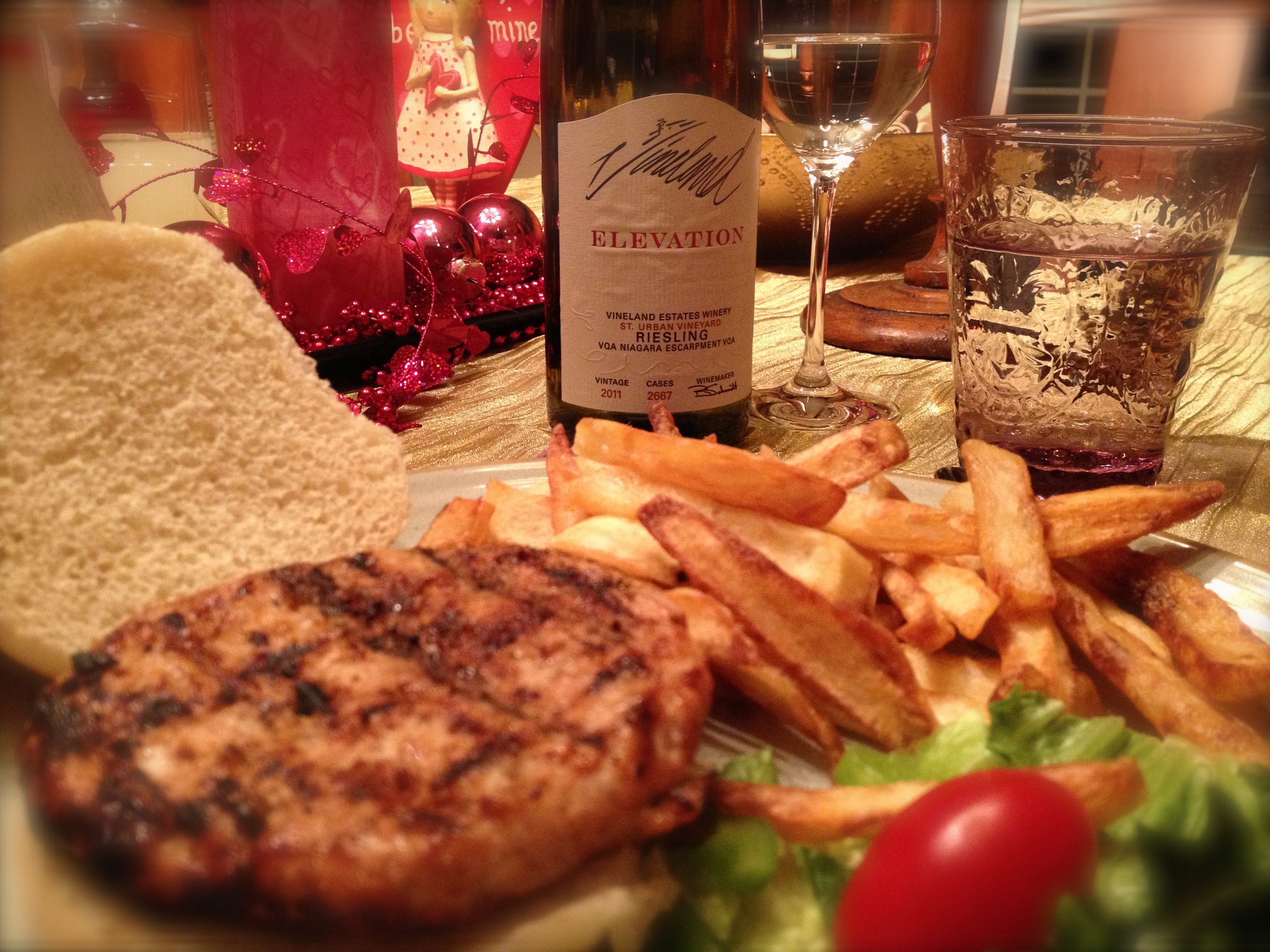
Snow piled up over much of the country this weekend, except in the Cleve. Cleveland, which tends to get many of Old Man Winter’s biggest dumps, was relatively sunny and clear. It was as perfect for barbecue cooking as you can get in February. And while we didn’t jump into our shorts and T-shirts, being outside wasn’t too bad. On the menu: Spiced chicken burgers, home made pommes frites ~ which sounds way cooler than French fries: fresh greens and a 2011 Vineland Estates Elevation Riesling. I rarely drink white wine during the winter; favoring reds for their robust qualities and ability to help keep me warm. But since the temperature rose a bit, I wanted to enjoy some lighter fare with my pseudo-summery dinner.

I’ve enjoyed Vineland Estate wines before so I was looking forward to pairing this one with the dinner. Looking in my collection, I discovered it was one of the last remaining guests from the past summer. I gave it the 15 minute rule and made sure to aerate as I poured it into my glass. It was very clear with a color of light straw. In the above picture, it looks almost like water, doesn’t it? This was deceiving. Based on the color, I thought it was going to be almost too thin but it packed a sweet and refreshing mix of lemons with a crisp green apple finish. The mouthfeel was grippy and dry and it had a sharp, oak-y grape vibe on the nose. At first, I thought it wouldn’t really pair well, but it surprised me by providing a nice balance to the spiced chicken and off-set the earthy quality of the potatoes.

The forecast in the Cleve for the rest of the week is changeable. But for this past weekend at least, I began to think that spring might actually be on the horizon. For those who spent their weekend digging out from the blizzard, I wish you well, and I feel your pain. I tackle snow the old school way; with a shovel…and a prayer.

I hope that there was a favorite drink as a reward for all your hard work ~ you earned it.

Cheers!

©TheWineStudent, 2013

Friends in Need

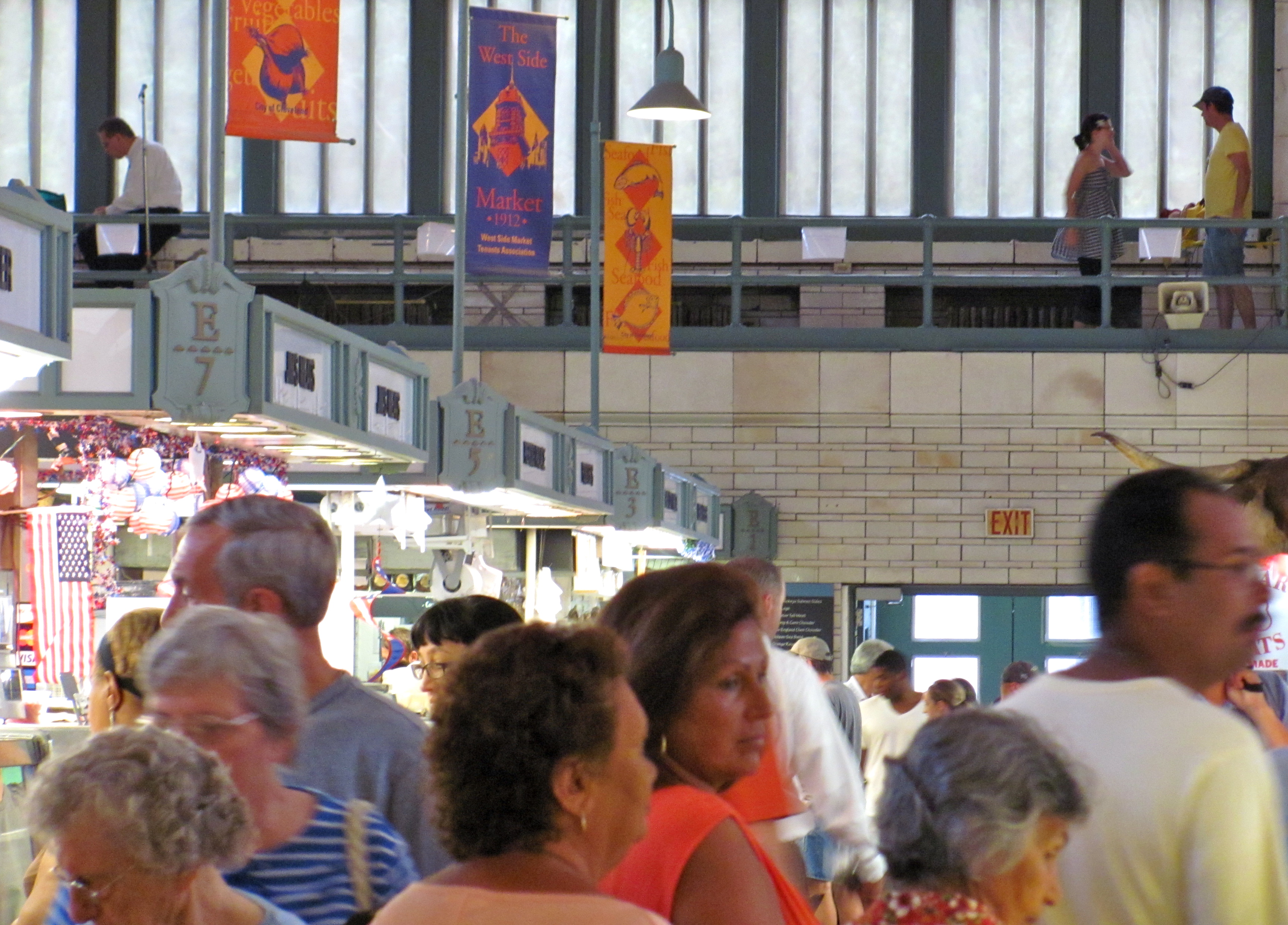
Last week, one of Cleveland’s historical treasures burned. The West Side Market on West 25th was one of those landmarks that I was told I absolutely HAD to visit when I first moved here 5 years ago. Since then, I’ve had the pleasure of shopping, sampling and moving about the busy stalls, interacting with sellers of just about anything you could imagine. There’s an energy there that rejuvenates me every time. When you dine at many of the restaurants within Ohio City, you know that what’s on the menu has come from the market. It’s great to know that the produce, fish and meat you’re getting is fresh and that you’re helping to support the local economy.The West Side Market represents a vital part of Cleveland as well as its heritage; many of the vendors are third and fourth generation.

And it will come back ~ the cafe just announced its reopening but it will be a few weeks before the entire market is back to full function. Many surrounding businesses that depend on the market for their livelihood have stepped up to the plate to offer their support.

Cleveland Clothing is also helping by designing a t-shirt, with 100% of all proceeds going to the Market Vendor Relief Fund of The Michael Symon Foundation.

You can get involved by purchasing a t-shirt or contributing directly to The Market Vendor Relief Fund.

Another way you can help is by keeping an eye out for announcements about the grand reopening in the news; on Facebook and Twitter and make sure to go back to visit and shop.

Helping those in need can always make us feel good. And with Valentine’s Day coming up, sharing the love can make helping that much sweeter.

Cheers!

©TheWineStudent, 2013
What’s a girl to do…?

Image vis Anne Taintor

Image via Anne Taintor

That’s a really good question. The past two weeks I’ve been a bit under the weather. And I think it’s, in part, because of the weather ~ the cold, snowy climes have made me somewhat blue and very sinus-y. And having sinusitis is not very conducive to drinking wine or feeling like doing much of anything. But I’m now on the mend and am working on some new posts.

I hope that all of you are faring well this winter and are able to find inspiration in much of what you see.

Cheers!

©TheWineStudent, 2013

Sake Night

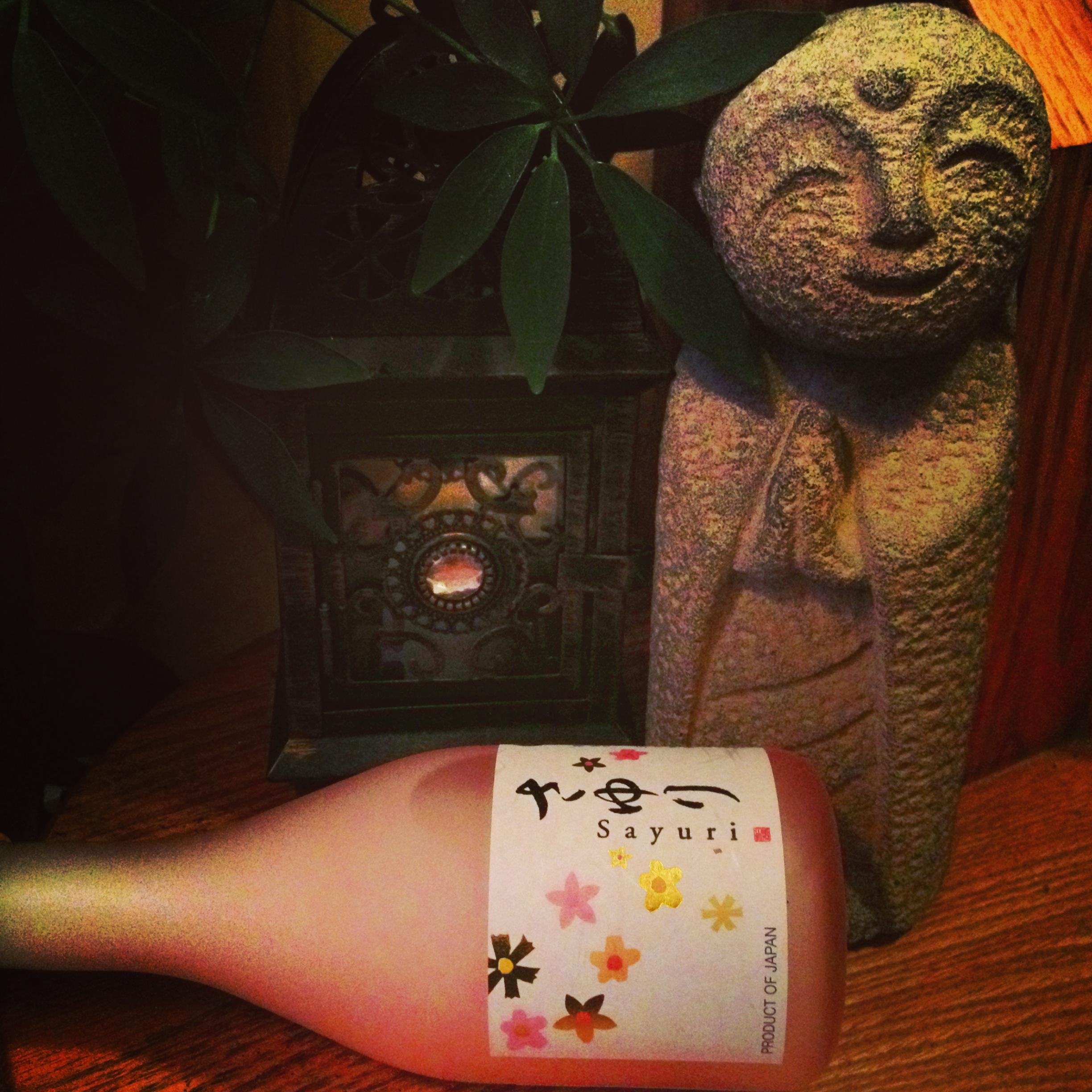
Sayuri Sake

Sayuri Sake

When I go out for Japanese food, it’s one of those bevvies that I think about trying but then I see a cocktail float by in a funky ceramic mug and I change my mind. I promised myself that Friday night would be different. Friday night, I would try Sake. With HubbyDoug as my DD ~ Sake contains between 15-17% alcohol so he’d better be ~ I was curious to see what it was like and whether it’d be something I’d choose more often.

I knew nothing about it and didn’t know whether it had similar ‘rules’ to wine: White with chicken or fish, red with meats. I didn’t know if there was even such a thing as ‘red’ or ‘white’ Sake (there isn’t).

I looked at the variety of premium Sake on the menu and chose one at random: Gekkeikan, which was highly regarded. When I asked the bartender if I could take a photo of the bottle it came from, he replied that I couldn’t because it came from a big box. That didn’t sound good. He served it up piping hot, warning me not to touch the ceramic carafe for quite a while. My research had told me that premium Sake is best served gently warmed. Strike two. When it seemed to have cooled, I took a sip. It was a juxtaposition of thin and strong and made me think of hot nail polish remover. There was no discernible bouquet, just an essence of straight up alcool. Maybe it was an acquired taste but I just wasn’t feeling it. And yet, I didn’t want to give up so easily so I kept a bit to have with my Teriyaki chicken dinner. Maybe the savoury of the soy and delicacy of the chicken would help ease that boozy vibe. It didn’t. And I ended up ordering a cocktail in the funky ceramic mug.

But I refused to be swayed by this experience. With the number of different types of Sake out there, I didn’t feel right about just giving up after one shot. A brand I’d read good things about was Sayuri; a coarse, filtered offering. On the label it said to just shake well ~ no need to warm. The consistency was described as creamy and naturally sweet. This one had a floral bouquet, which was quite nice. It wasn’t nearly as harsh as the Gekkeikan. But I was still not convinced. I suppose you could enjoy sipping it on its own or pair it with a soy-savoury dinner. But what the hell, just pound it into some beer and yell, “KAMPAI!”

Contrary to popular belief, Sake is not really a wine. It’s not really a liquor, since it isn’t distilled like vodka or gin. According to John Gautner of Sake-World.com, it’s a fermented rice alcohol beverage and with rice being a grain, it’s actually more like beer.

Here are some more fun facts about Sake:

  • It’s brewed for about four weeks and then a six-month aging process.
  • It is similar to Beaujolais in that it’s best consumed immediately or within six months of release.
  • It does well stored in a cool, dry place but is best with refrigeration.
  • It doesn’t contain sulfites (so no sulfite issues common with wine). Premium Sake is free from additives/preservatives and has few congeners (a contributor to that pesky hangover).
  • While cool brings out the best, it benefits from gentle warming.
  • It pairs very well with lighter fare such as chicken or fish.
  • Price range: between $18-35, $35-70 for 1.8 litres. The brands I found at World Market began at $13.99.
  • Snake in the bottle? Also known as Habushu ~ is generally not available in the US because there’s a freaking SNAKE IN THE BOTTLE! Enough said.
  • Some other top Sake brands: Juyondai ~ fruity and fragrant

                                                                         Isojiman  ~ balanced and rich

                                                                         Kubota      ~ light and dry

I gave Sake a good, college try and the second choice was much better than I expected. Eventually, I might try a few more. But I think I’ll be staying away from anything that has a snake in the bottle.

Cheers!

©TheWineStudent, 2013

Field Trip ~ Colaneri Estate Winery, Niagara.on.the.Lake ON

@ Colaneri Estate Winery

@ Colaneri Estate Winery

One of the things I love about going home to Niagara for the holidays; apart from seeing family and friends, is picking a new winery to try. Since I left almost 5 years ago, there has been an explosion of great wineries with something to please every palate.

When HubbyDoug and I were walking the main street we slipped into a little bar for a glass to take away the chill. We were treated to a Colaneri Estate Winery ’09 Cabernet Corposo. I noticed a distinctive richness and old world vibe from the very first sip. To be honest, my experience with many Niagara reds has been somewhat disappointing. They have a tendency towards a lightness and a green, vegetal quality that I don’t always care for. While they eventually settle into a pleasant flavor, it’s generally when you get to the bottom of the glass. I like a red to look me in the eye as it gently takes me by the collar and eases me back into my chair. This wine winked as it looked me in the eye.

I had to find out what made it so unique. A trip to the winery became my top priority.

Colaneri wines are made using an appassimento process that dates back to ancient Roman times. Harvested grapes are hung to dry before winemaking, to remove any excess water, thus shriveling the grapes. And why would you want this kind of shrinkage? All the better to concentrate the sugars and flavors in the resulting wine.

  • Recioto ~ also an ancient style of winemaking and also incorpporating the drying of grapes to concentrate the sugar content. Recioto may be red or white, dry or sweet. The dryer wines in this style are Amarone which can be intense at 16% alcohol.
  • Ripasso is a style that means to revisit or go over. It involves a double fermentation process in which additional dried grape skins are added. The sugar content has been heightened by drying and this increases the final alcohol and phenolic content in the wine which is known as passito.

Our winery guide, Pam, explained that Colaneri was one of only three Niagara region wineries to use this process. Their wines are kiln-dried, using both greenhouses with industrial fans and tobacco kilns. ”Since the kilns were no longer being used to dry tobacco, they have been put to use in winemaking”, she said. In the tobacco kilns, the fans push air up through the floor; where the greenhouse fans circulate the air around the fruit. The drying process can take up to two months with skin contact completed within 7-10 days.

After harvest, the grapes for Amarone and Recioto are set aside to dry in trays in kilns, or are hung in lofts ~ the hanging and careful placement in trays allows for complete air circulation so no mold develops. There they stay for approximately four months after which the semidried grapes are crushed and fermented with the grape skins. The grapes not used for Amarone or Recioto are crushed and fermented to be used later.

Once prolonged skin contact has finished, the wine is stored for aging. The additional wine (that had been fermented seperately) is introduced by being pumped over the Amarone | Recioto skins, thus starting the second fermentation. The saturated skins are still quite full of unfermented sugars, making them high in aromatics and tannins.

It was time to began our tasting with a spectrum of lighter fare: Pinot Grigio, Sauvignon Blanc, Gewurtztraminer, Chenin Blanc. The Chenin Blanc was my favorite; it had a taste of pear, pineapple and cotton candy (yum) with lots of citrus on the nose. Pam then took us into the reds starting the Red Blend ~ a combination of Cab Sav, Syrah, Merlot, Cab Franc and Petit Verdot. She mentioned that it was their everyday wine that pairs well with everything from pizza to red meats to chocolate.

We then turned our attention to the Cabernet that we had enjoyed the day before. The scent of rich molasses was prominent on the nose with sweet tobacco, blackberry and raspberry resonating on the palate. Awesome.

The Cabernet Franc was rich and flavorful, with an distinct essence of plum. Pam mentioned that some who tried it but don’t enjoy prunes/plums weren’t always fans. She recommended pairing with tomato-y dishes to counterbalance the prune essence.

We spend a good part of the afternoon sipping and learning a lot about some very special wines. Pam was friendly, knowledgeable and made the field trip to Colaneri so much fun.

I came away from the trip feeling happy to have discovered a jewel of a Niagara wine. I’ll make a point to look for more wines created using this time-honored method.

Cheers!

©TheWineStudent, 2013