Malbec Monday: Amancaya Gran Reserva 


If I hurry I can get it in under the wire! I’m definitely tardy today– busy days mean that sometimes I can’t get my wine homework done.
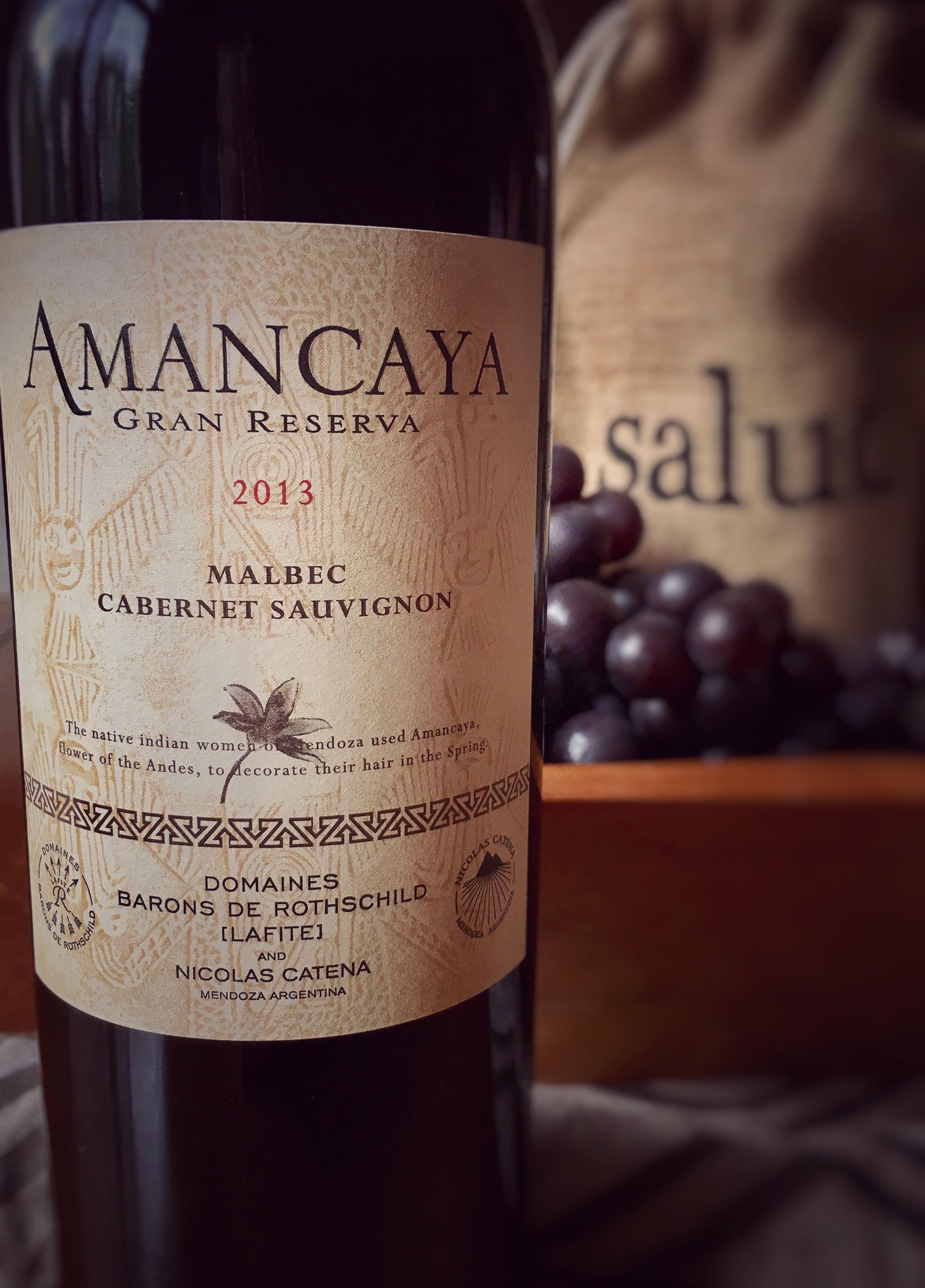
Rushing to find my weekly pick, I discovered a 2013 Amancaya Gran Reserva Malbec | Cabernet Sauvignon.

A collaboration between Nicolás Catena an Domaines Baron de Rothschild (Lafite), this wine was clear, garnet colored, full body offering with medium-hi tannin. It had a delicate nose of cherry and rose and tasted of  bold blackberry, black plum with just a hint of bell pepper. While it was 2013, it began to open up to reveal a bit more complexity; it was a nicely balanced 50/50 blended vintage.

Putting the Grand in Gran Reserva 

Gran Reserva  is a frequent term used on the labels throughout Spain to define both quality and style. In Spanish law there are labelling terms that indicate the minimum periods of ageing the barrel and the bottle. It is traditional practice to age wines for long periods of time in oak barrels and then in the bottle before it’s released. Therefore, Spanish produced vintages are usually older  than those from other countries.

On the label you’ll find one of four terms that indicate the levels of age. In order of increasing age:

  •  Joven~ wines bottled the year following the vintage for immediate release, and indicate wines that haven’t  been aged in oak for the minimum of time to be considered Crianza. $10-15
  • Crianza~ one year in oak– one year in the bottle. $15-20
  • Reserva~  one year in oak– two years in the bottle. $25+
  • Gran Reserva~ two years in oak– three years in the bottle. $35+                             Gran Reserva wines are produced in only exceptional vintages, and the best of these are beautifully complex.

So now when you look for Malbec, you’ll know what to look for on the label to get the most complex and flavourful offering. After all, age ain’t always just a number; it’s time spent in the barrel and bottle.

Cheers! 🍷

Mac n Cheese Monday!

Ok, so it’s more about the wine than the mac and cheese but Rosé doesn’t start with M

My girl is home from college and as a budding gourmet, she wanted to experiment with a simple but yummy mac and cheese recipe. So which wine would be interesting? 

A few days ago, HubbyDoug came across a 2016 Alexander Valley Vineyards dry Rosé of Sangiovese. We’ve enjoyed many of AVV’s offerings in the past but a Sangiovese Rosé was what peaked his interest. Who was I to say, “Bah!”? 

Rosé is made from black grapes and its production is similar to red wines, but fermentation is at lower  temperatures, and is taken off grapeskin contact after only 12 to 36 hours so that the wine doesn’t become too deeply colored or tannic. Most red wines maintain skin contact for more than two weeks (for richly flavored wines). 

This wine was amazing with the combination of Jarlsberg and Monterey Jack cheese; it cut through the creamy butter vibe with a refreshing acidity and wonderful light fruity quality. To try to assauge our guilt, we added a nice combination of sweet green peas and broccoli to the mix. 😉

I’ve often enjoyed a crisp, bubbly Prosecco with dishes that are this creamy and rich, but this Rosé was a surprising and wonderful alternative. And for summer, Rosé is a fun change of pace. Think pink!

Cheers! 

I Want Candy! 

It’s too damn hot for Malbec Monday. After breaking a sweat from the minute I started out today, I wasn’t keen on drinking something that would make me ferment any more. So I opted to try a blend that’s not only new to me but it’s chilled! Even better. 

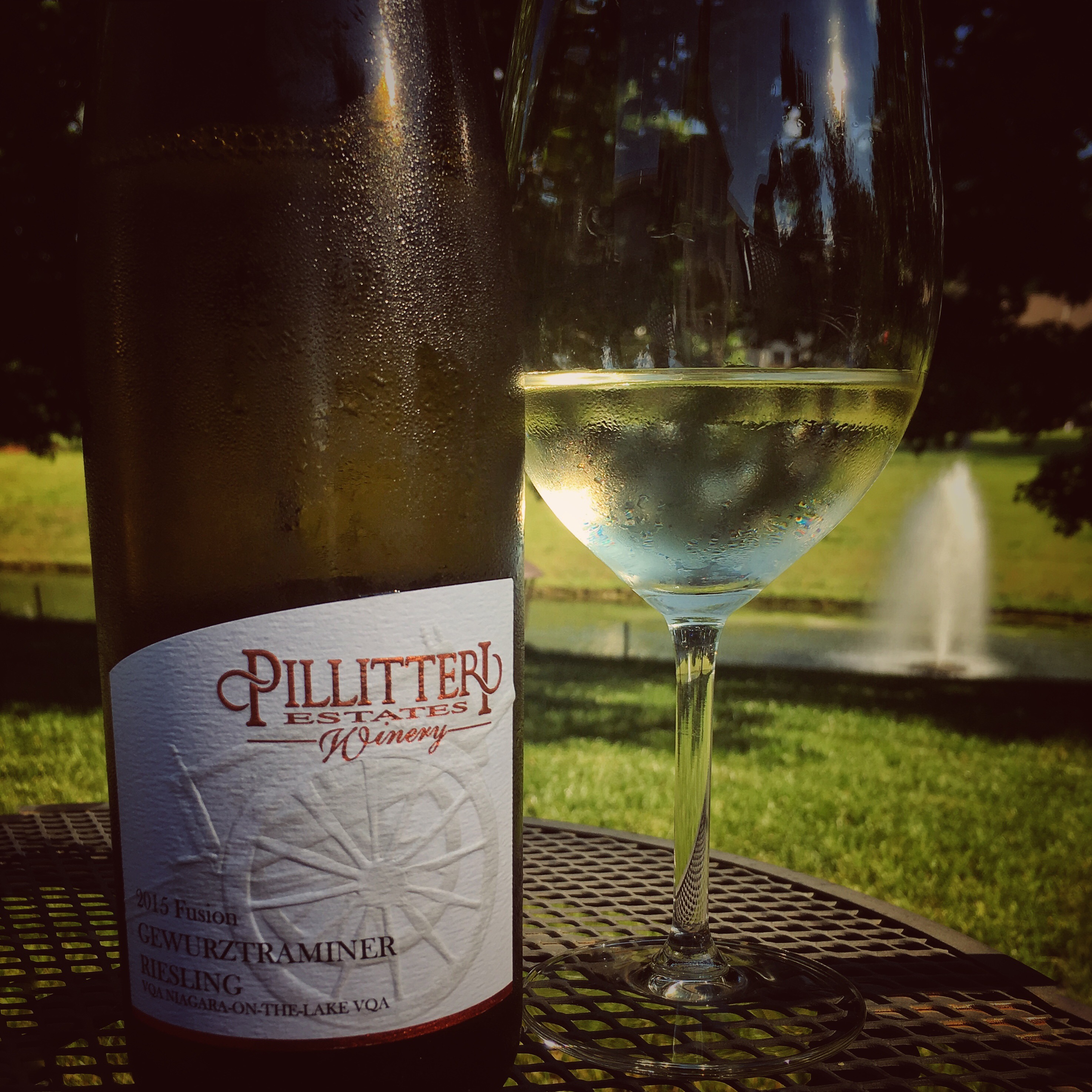
I won this 2015 Pillitteri Gerwürztraminer | Riesling at a charity golf tournament his past weekend and today, nestled there, chilling in my fridge, it looked so sweet it made my mouth water. 

Normally, I’m not a fan of really sweet wine, and I thought the addition of Riesling might tip the scales from medium dry to cloying. But this wine surprised me with a delicate hint of candied rose on the nose, and subtle flavours of orange blossom and white stone fruit (peach) on the palate. This is a light to medium body wine with very refreshing acidity. All of the flavours were nicely balanced, and it would pair nicely with slightly spicy pork and grilled strawberries. Yum!

Gerwürztraminer is a variety that typically produces beautifully perfumed whites and can range from dry, off dry and fuller bodied, high alcohol and lower acidity. In combination with Riesling’s higher acidity, this wine might be able to be aged a little longer, developing lush honey and nut aromas. 

On a scorcher like today,  it had everything I desire; setting the summer sun on fire. 😉

Cheers! 

MmmmmMonastrell Monday! 

Taking a break from my studying, I caught myself in a little daydream; thinking back to not long ago and a trip to Jerome, AZ. 

I’d heard of Caduceus Cellars from my nephew, Aaron, who’s really into the bands Tool and Puscifer. What does this have to do with wine? Caduceus was founded by Maynard James Keenan, frontman and songwriter of Tool, A Perfect Circle and Puscifer. Established in 2004, Caduceus is described as a ‘small production family owned winery’. Unlike some celebrity winemakers, Keenan likes to get his hands dirty in all aspects of the business; from planting and harvesting to winemaking and marketing.  

From our wine flights, HubbyDoug and our friends Carl and Deb picked the 2013 VSC Anubis (50% Cab, 30% Cab Franc, 20%Petit Syrah). My pick: the 2014 VSC Monastrell (100% Cochise County Monastrell). 

Monastrell (aka Mourvèdre) is a thick skinned grape that provides color, fruit and tannic structure especially when blended with Grenache and Syrah; it is the ‘M’ in GSM wines. On its own, it has intense perfume notes and blackberry flavours along with hints of meat. Age brings out more leather and gingerbread aromas and flavour. 

The wine in my glass had a beautiful garnet colour with sage on the nose (what I imagine the scent a desert flower would have). It had light-medium body with neutral oak, and flavors of basil, thyme, juniper with a kick of licorice and olive. It made me think of a fragrant, lush herb garden. Normally with reds, I expect to have more of a jammy, fruit forward experience, anything herbaceous I associate with a crisp Sauvignon Blanc. It wasn’t sweet wine, far from it. But, much like it’s winemaker, its juxtaposition from what I thought it should be, and what it was, I found a true expression of where it was cultivated. 

This Monastrell is hand-picked (by Keenan himself), sorted, submerged cap fermented and puncheon aged for 18 months. Puncheon is an extra large oak barrel (70-100 gallons). The larger size allows for stronger/ stricter controls in the wine’s development due to the higher inner barrel surface – wine ratio. 

I’d only had this varietal before as part of the GSM blend but on its own it was a wonderful surprise to add to my list of exceptional wines with a twist. 

Cheers! 

Malbec Monday: Random Pick

Hi there, Monday! Ok, I’m trying to be as enthusiastic as I can. I know it’s the start of the work week but since there’s no snow on the ground, and none in the near future, the week’s already off to a good start.

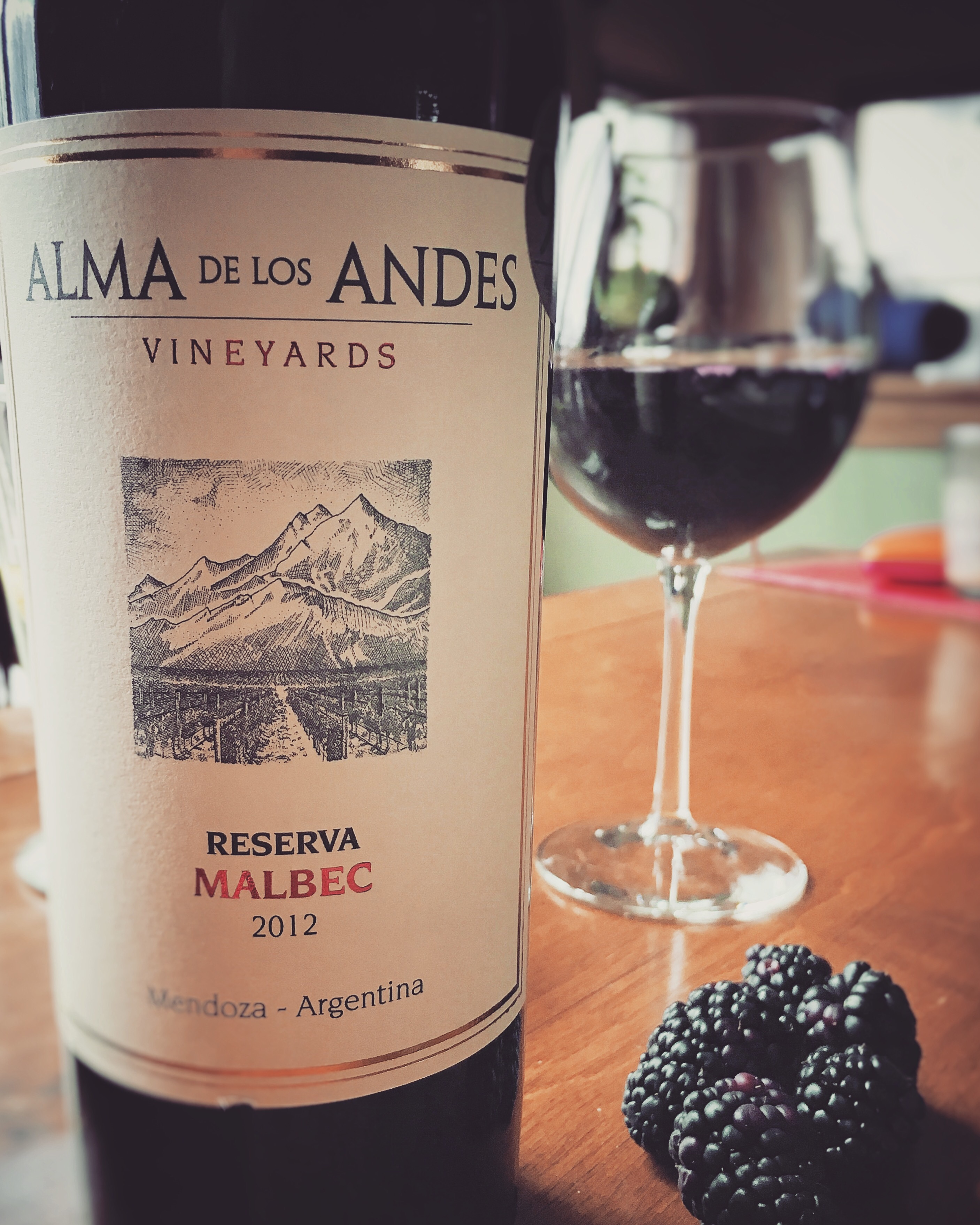
This week’s pick: a 2012 Alma de los Andes Reserva Malbec. Scoring 91 points from Wine Enthusiast Magazine, this clear, clean and dry offering boasts a tart blackberry vibe (experts describe this as ‘cassis‘ but I’ve never had cassis before so I’ll play it safe with the blackberry description). It has medium body, pleasant medium tannins, and its acidity was nicely balanced. While it’s jammy and fruit forward, it has a pleasurable whisper of smoke on the finish; aging for 12 months in French Oak will do that.

It retails for around $12.99, and recommended food pairings are steak with mushrooms, stews, aged cheeses and dishes featuring sun dried tomatoes.

What an awesome wine to help jump start a promising week!

Cheers!

©TheWineStudent, 2017

Just Another Malbec Monday: Fabre.Montmayou🍷

When you’re learning about wine, part of the journey is the wine lexicon: flavour/aroma characteristics, nose, palate and so on. Before my WSET Level 2 wine course begins in a few weeks,  I took a peek at the wine tasting ‘cheat sheet’ that distills the various descriptions and classifications of characteristics of wine. It’s incredibly helpful since I don’t always feel confident yet in how sophisticated my palate is, much less how I describe wine.

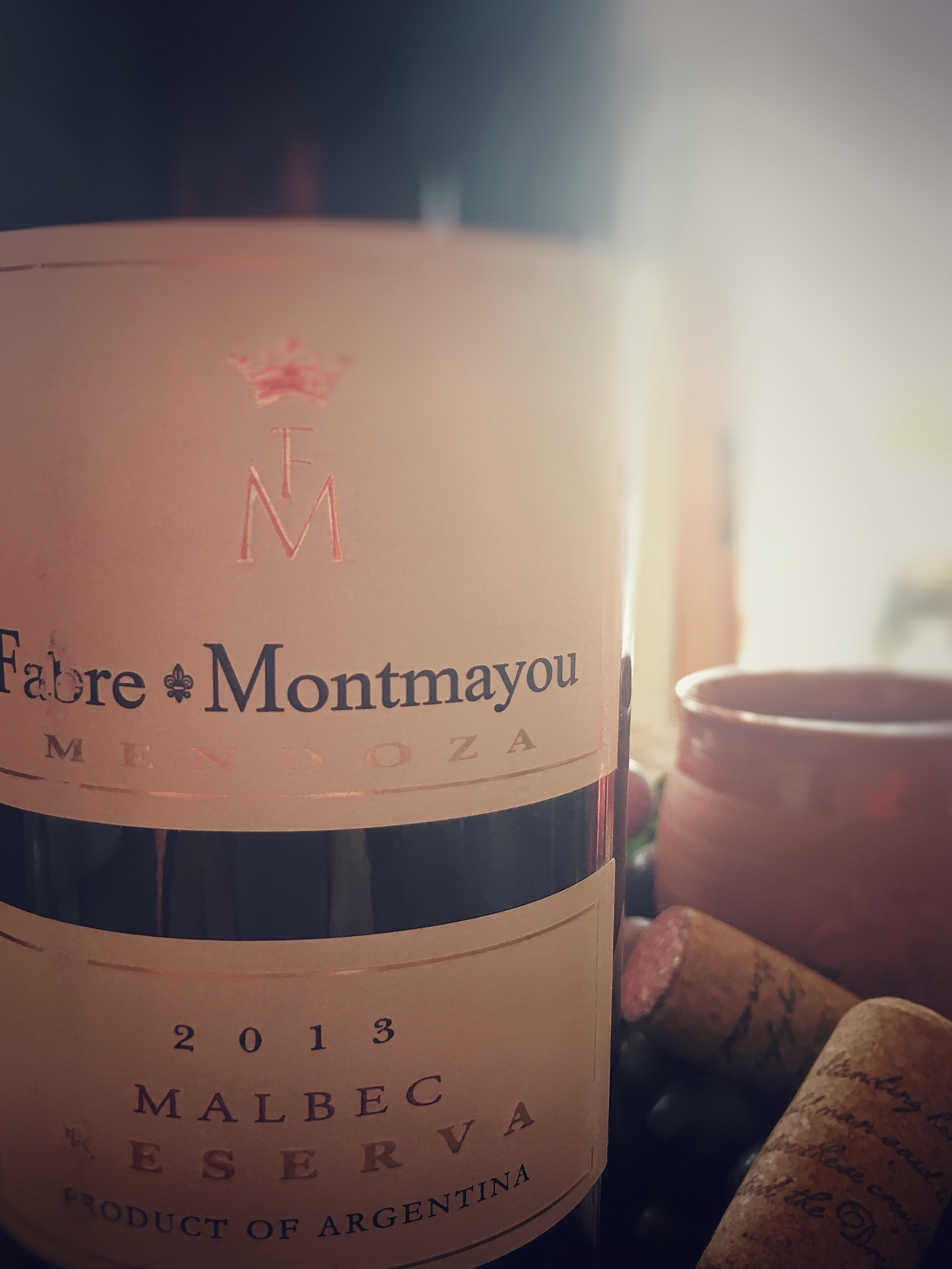
This week’s pick: a 2013 Fabre.Montmayou Reserva. From the first pour, I noticed a bouquet of dark cherry. The colour was clear with a ruby vibe, with a light viscosity after the swirl. Flavours were of stewed plum, liqourice, and light tobacco. Any spice I tasted became more prevalent after I paired it with a salty, light cheese. I thought I tasted cinnamon but it was savory, not sweet (the cheat sheet describes it as ‘pungent’) so I’ll go with it. 😄 It seemed to me to have medium tannin, meaning that it didn’t make my mouth feel too dry, not as dry as, say,  a Cab Sauv.

This was a very pleasurable wine that would pair well with cheese, grilled meats or poultry. Retailing for below $20, it would be a great wine to bring as your +1 to a dinner party or barbecue.

It’s been said by many a sommelier, the more you drink wine, the better your palate will become. I think in the next few months (of studying, of course!) mine should eventually earn an A+. 😉

Ah well… it’s just another Malbec Monday!

Cheers!

©TheWineStudent, 2017

Laissez les bons temps rouler! 💜💛💚

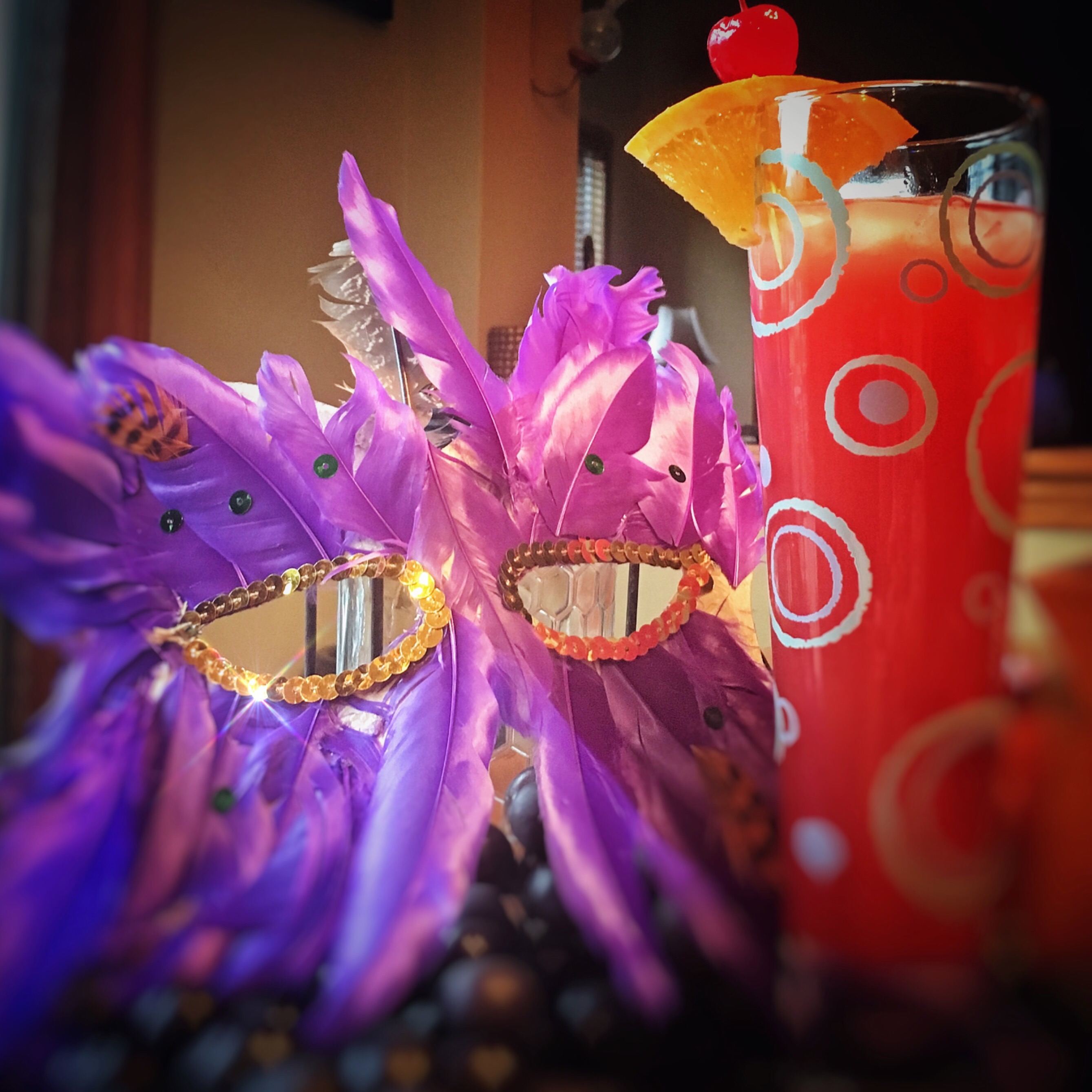
What would you do for Mardi Gras beads? I stuck to tradition. No, I didn’t flash anyone; I focused on traditional food and drink. HubbyDoug and I had a great debate over what to eat: I thought Jumbalaya, he favored pancakes and sausage. A compromise was struck: Jumbalaya, with pancakes on the side. 

But the traditional Mardi Gras drink doesn’t involve wine. I puzzled over how to add wine to the Hurricane recipe I found. Do I find a fruity wine to mimic the sweetness of the drink? 🤔 With a little research I found Rhumbero, a wine-based rum substitute. It tastes just like rum, and can be used in most recipes that call for light rum. An interesting feature, other than how wine can taste like rum, is that it makes it possible for locations with limited licences (beer and wine only) to legally offer cocktails.            I can report it tasted wonderful in my Hurricane! 

Today, I earned my beads… and my honour remained intact, which is always good. I wonder how HubbyDoug will earn his??!

However you choose to celebrate, enjoy responsibly, and let the good times roll!

Cheers! 

Malbec Monday! 🍷

So, Monday. We meet again. But like that spoonful of sugar, a glassful of Malbec will help the rest of the week go down… a bit easier.

This week’s pick is a 2012 Domain Bousquet Reserve Malbec. Located in the Andean foothills of Argentina, this vineyard is cultivated at an altitude of 1,200 meters (4,000 ft) above sea level; one of the higher altitude vineyards notonly  in Mendoza, but in the world. Since there is a low amount of rainfall at this height, a drip irrigation system is used allowing better hydration control, and producing grapes with a lower PH resulting in a more balanced, deep colour wine.

Made with organic grapes ~ 85% Malbec, 5% Cab Sauv, 5%Merlot, and 5% Syrah, the nose was very lush with a pronounced fruit forward vibe of black currant preserves. It felt more tannic than acidic on the tongue. Once the  wine had a little time to open, it developed a slight bitter almond taste that was quite pleasant as well as an interesting espresso-tobacco-hazelnut quality when paired with room temperature Brie.

I enjoyed this wine but couldn’t help think that a little more decanting would bring out much more of its depth.

Still, not a bad way at all to kiss the first day of the work week goodbye.

Cheers! 🍷

©TheWineStudent, 2017

Just Another Malbec Monday! 🍷

It’s the start of the week and a little motivation is needed. So I’ve added a new feature to The Wine Student: Malbec Mondays. It’s my way to help you ease back into that work week.

For this inaugural post, I chose a 2013 Elqui Wines Malbec blend. While Argentina is most noted  for its beautiful Malbec, the Elqui Valley in Chile produces  wonderful offerings that are fruit forward, earthy,  while retaining a pleasing silky mouthfeel. With 52% Syrah, and 37% Carménère and 11% Malbec this wine is a multi-faceted intro to some intriguing Chilean wine. It pairs well with sweet, spicy and barbeque dishes. Not a bad way to begin a week, eh?

So you may not be stoked by having to be back to work. That’s ok. The real fun can begin when you sign out for the day, get home and slip into something more comfortable.

And after a few sips, you’ll be glad it’s just another Malbec Monday. 😉

Cheers!

©TheWineStudent, 2017

A Noble Steed, and the Fireside Pizza 🔥

Is it the Riesling, or is it still National Pizza  Day? I guess it doesn’t matter since  I’m enjoying both either way.

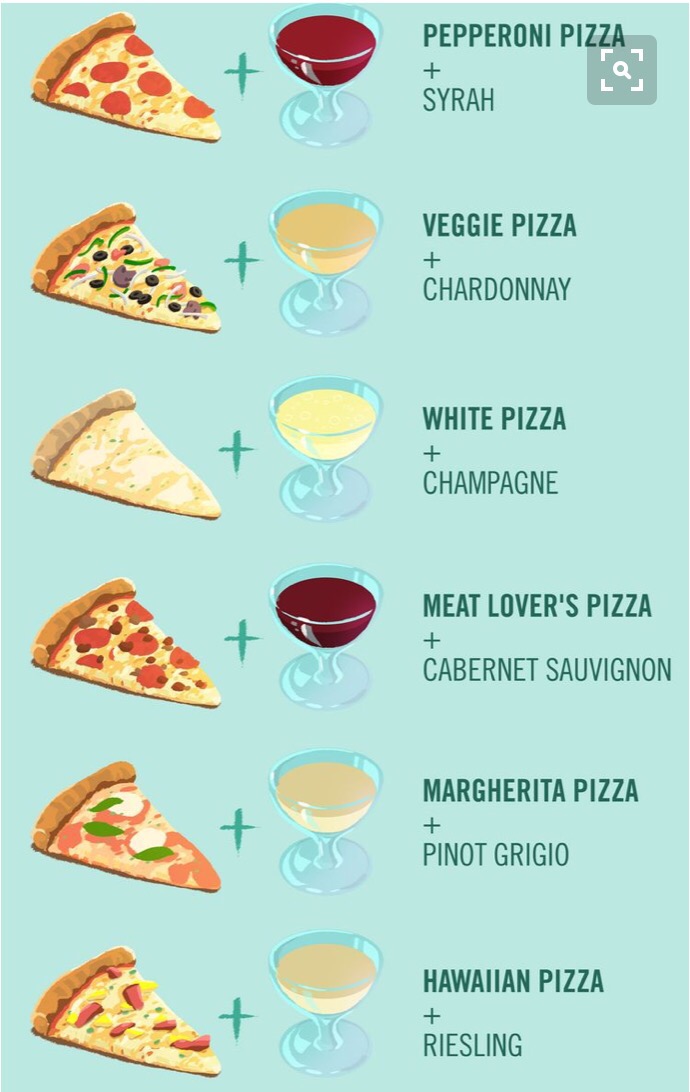
My research today led me to a chart about pizza and wine pairings. One of the more intriguing was Riesling and Hawaiian pizza; the key element being img_9508pineapple. I’ve never been a fan of pineapple on pizza. Ever. But for the sake of furthering my wine pairing education…

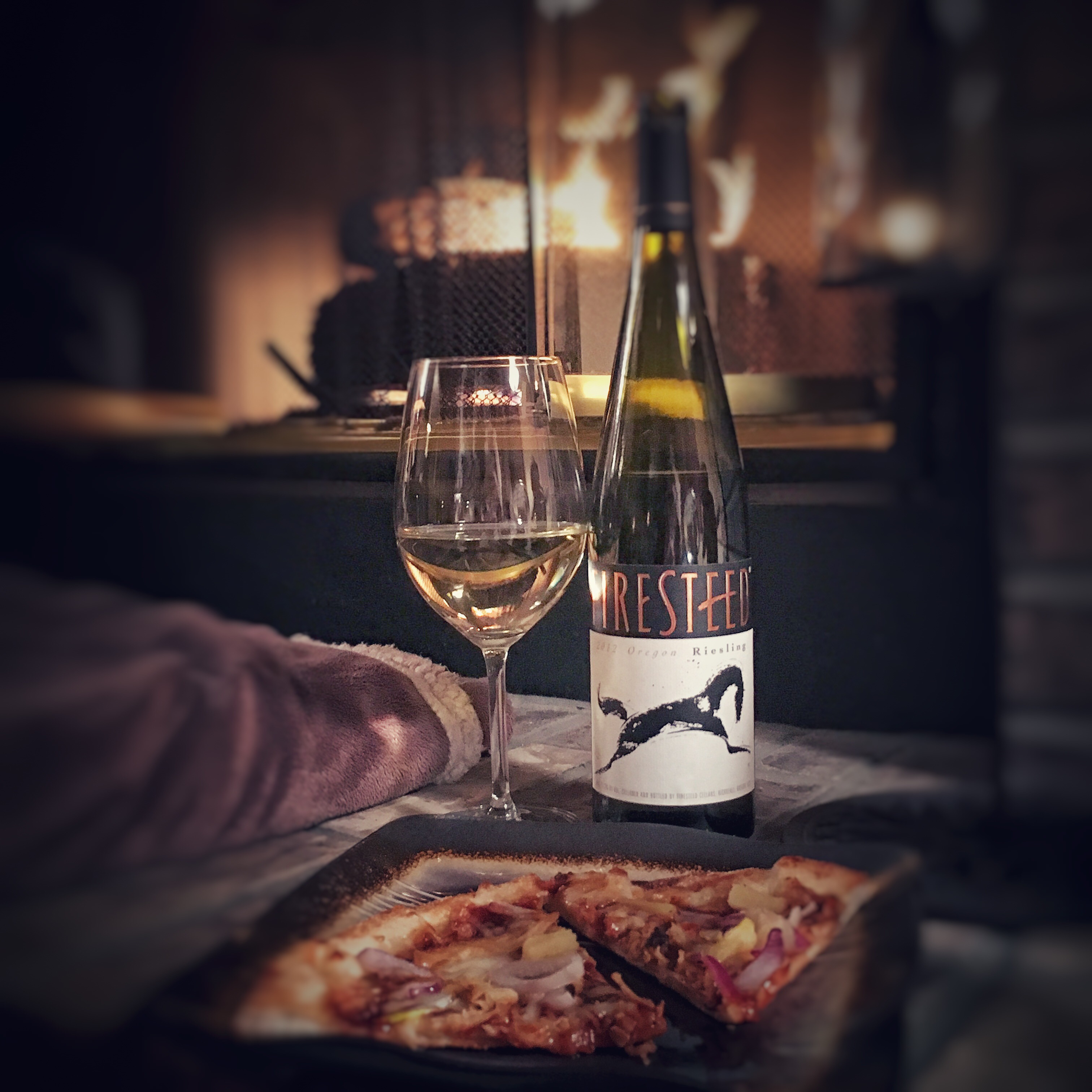
As it so happened, we had a nice 2012  Firesteed Riesling in our collection, and chilling in our fridge (so handy!) and looking on the menu at our local PizzaFire   I found a Za that looked pretty interesting: Free range chicken, red onion, barbeque sauce, and yes, pineapple.

The wine was a lovely, light offering; tasting of tart lemon zest, green, fresh fiddlehead, with just a whisper of white pepper. It paired so nicely with the sweet of the pineapple, and cut a swath through the tang of the barbeque. It really was an unexpected treat. The lack of floral and sweetness in this case worked to enhance the savoury tang of the pizza. Nice!

Whether you observe Pizza Day or not, it’s always good to find new ways to enjoy wine with everyday dining.

Cheers!

©TheWineStudent, 2017