Wines for a Brave New Year!


F8B4C92C-19F5-46CA-870B-0083CFEB5A47

As an icy wind howls and grips most of the Mid-West (and parts of Canada) this weekend, we need to be brave. Part of being brave is keeping an eye on the horizon, and the sunnier skies that will emerge once the storm has done its worst.

When a new year begins, we all have a tendency to want to move beyond the old habits and embrace something new. And that means occasionally moving from the safe, tried-and-true wines we know, towards those we maybe have overlooked.

According to Forbes.com, the biggest trends for 2018 include:

  • Increase in wines from “lesser known but traditional wine regions” including Hungary, Croatia, Bulgaria, and Georgia.
  • Red blends, especially from Bordeaux and Bordeaux Supérieur.
  • Big bottles ie magnums in both wine shops and restaurants.
  • Increases in premium wine sales ~ no more three buck Chuck at the table.
  • Wine with a conscience : organic, sustainably farmed, natural, and biodynamic wines will be on the rise.
  • In keeping with purposeful wines, experts predict a surge in wine purchases to support the California winemakers rebuilding from the devastating fires in ’17, especially from Napa and Sonoma regions.
  • Revisiting Chilean wines especially Pinot Noir from Casablanca and cool mountain Syrah.
  • Expect to see more rule breaking: drinking whites, sparklers and rosé in the winter, and bold, full-bodied reds in the summer.
  • Wine in cans ~ more and more producers are selling canned wine with the advent of Can Van Mobile, a canning line that can be assembled within a small or large winery within an hour. And let’s be honest, canned wines are easier to take in your backpack on your picnic than glass bottles.

Vivino’s take on the upcoming 2018 trends is just a little bit different:

  • Sweet, or dessert wine ~ in their 2018 Wine Style Awards, Sauternes took the number one spot, which is surprising since many will eschew sweeter wines for dry.
  •  Zero-sugar movement ~ in stark contrast to sweet wines upswing, wines such as Brut Nature (zero sugar) are also gaining in popularity. More and more health conscious wine drinkers want to cut out the sugar in their choices. Look for Brut NatureZero Dosage, or Sauvage on the label, which indicates that sugar is fermented to a level of ‘zero’.
  • Prosecco, Cava and Cremant ~ consumers want to continue the New Year’s party by enjoying sparkling wines all year! Prosecco leads the way, but also opens up the field for Cava (Spanish) and Cremant (sparkling French wine from outside the Champagne region).
  • Uruguayan wine ~ especially Tannat, a concentrated, full-bodied wine that comes in many forms: robust red, spicy rosé, and even sparkling red.
  • Small Production Wines ~ smaller, not as well known wineries in regions like Oregon (Vivino saw increases of 10 percent), and Washington, especially Gramercy Cellars are gaining in popularity by keeping their production small and quality high. Sometimes these wines are difficult to find, because many in the know buy them up quickly and quietly, but they are worth looking for.

And in North East Ohio, one wine tops the forecast:

  • Rosé ~ Shaun Hardon, Certified Specialist of Wine for Heidelberg Distributing Company in Independence, Ohio said via email that he sees rosé’s star continuing to rise. “I started seeing a growing popularity for rosé about six years ago but last year was eye opening! Based on what I’ve seen and heard, it looks like the popularity will continue to grow this season. And it is no longer just the bone dry Provence style anymore. I’ve noticed restaurants looking for something a little different from countries other than France.”

It looks like 2018 is going to be very bright indeed. With so many wines, regions and styles to explore, it’s a good thing there are 353 days left!

If you have to venture out this weekend, please be safe!

Cheers! 🍷

©TheWineStudent, 2018

Quick post: Saturday Night Special!

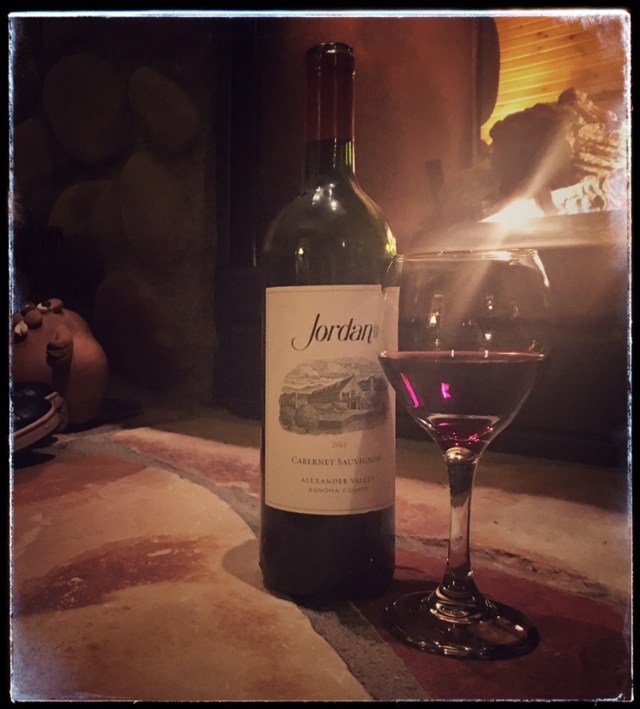
Come in from the cold, shake off the snow, and join me for a glass by the fire!

As we sip in our pajamas, and while the remaining hours of ’17, I’m happy to share my 2012 Jordan Winery Cabernet Sauvignon. What are friends for?!

Cheers! 🍷❄️🔥

Holly Jolly

The holidays are the perfect time to spend with the ones you love, and that might even include some people. Ho ho ho!

I know, that was naughty but it stands to reason that especially during this time of year, we all like to add some new and special wines to our collections.

This year, we enjoyed a 2013 Goldeneye Pinot Noir. A gorgeous medium body Pinot, it had lush, full flavors of cherry, blackberry and pomegranate, while remaining grounded with an underscore of earthy mineral and leather. It had an enjoyable long finish, which for me is something I crave in a Pinot but don’t always find. It paired beautifully with our Christmas eve supper of steamed crab and traditional Tourtiere.

From their production notes:

“An extremely dry winter was followed by just enough spring rain to carry us through to a successful harvest. With very few frost days, the fruit set was excellent throughout our estate vineyards. To ensure a perfectly sized, well-balanced crop we were very active in fruit dropping. The remaining clusters were compact, with the abundant small berries that are perfect for high-quality wine. We started harvest 10 days earlier than normal, during a period of ideal temperate weather that allowed us to pick at a leisurely pace, while ensuring optimal ripeness. The resulting wines are marked by a complexity only achieved in cooler years with coursing acidity, beautiful high-toned fruit and nuanced minerality.”

Notes like this are always interesting to read; almost like peaking behind the curtain of what the harvest process involves, and why timing is everything, especially in harvesting a top quality Pinot.

I hope you are enjoying the holidays, and taking time to savor those moments with loved ones, both in and out of the bottle!

Next post: wine to ring in a brave new year. 🥂😁✨

Cheers! 🍷🎁🍷🎄

The Thankful Heart

Emerson once wrote, “Cultivate the habit of being grateful for every good thing that comes to you, and to give thanks continuously.” It’s something I try to do in my daily life but it’s not always easy, especially with running here and there getting things ready for the official start to holiday season.

I think that’s what is nice about opening a bottle of wine; time slows for a second when you open the bottle, pour a glass for yourself and those you’re with. You take a moment, think of a little toast (no matter how profound or cheesy) and then take that first sip together. It’s a nice ritual.

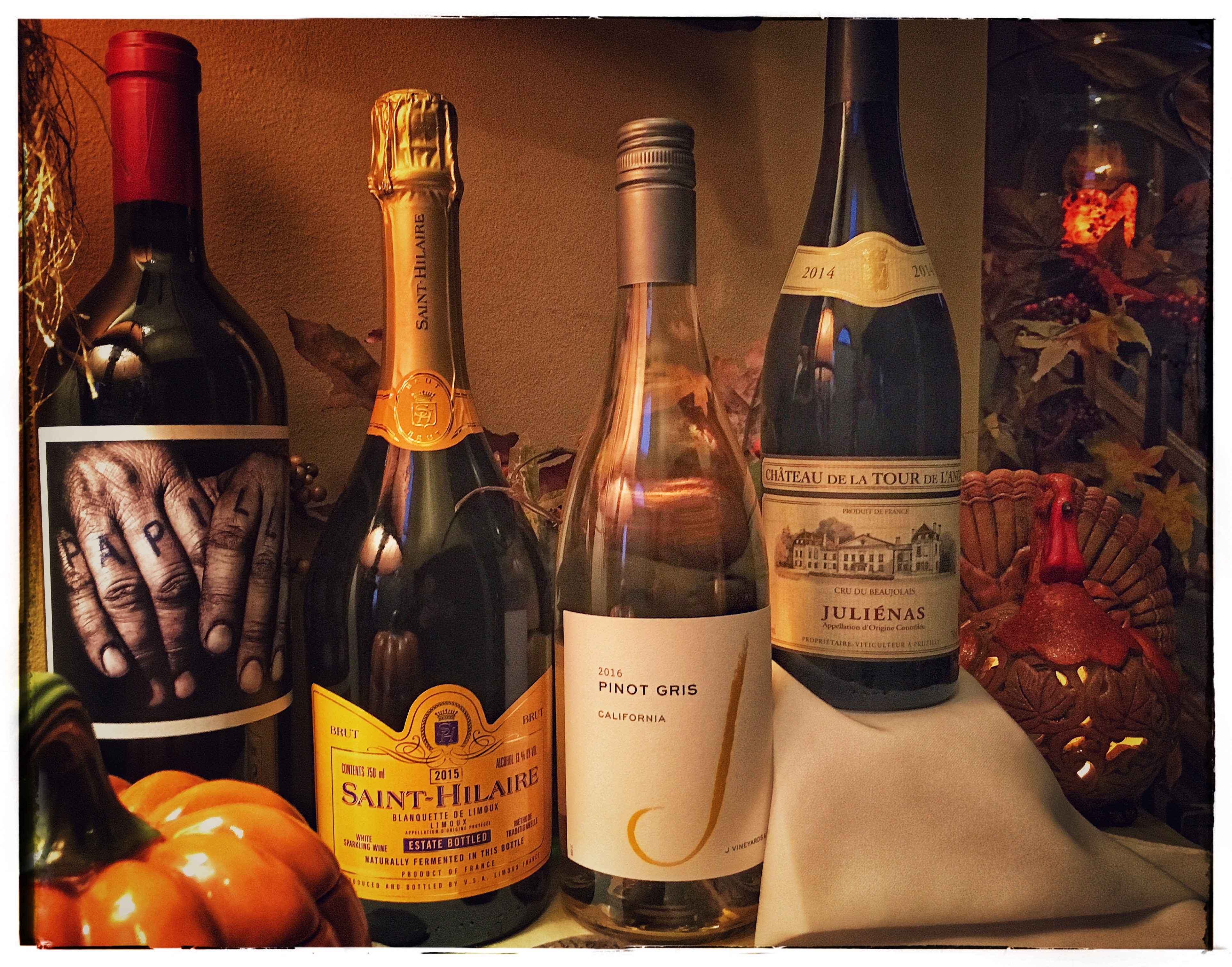
After tasting some wines at the annual Heinen’s Holiday Wine Tasting, here a few of my picks to enhance your holiday ritual! 🥂

And, yes, I will happily share my bottle of Papillon with dessert!

Cultivating the habit of gratitude and thankfulness is easy this time of year. And it’s a good thing to remember beyond the holidays.

I am truly thankful for my family, my friends and to all of you who stop by and check out my blog. ☺️

I hope you all have a happy and healthy Thanksgiving! 🍷🦃❤️

Cheers! 🍾🥂

Field Trip: Wine Dining with Orin Swift Wines

img_4145.jpg

This wine event at Bar Cento in Ohio City couldn’t have fallen on a better night. It was the perfect antidote to the cold November rain that was making me feel dark and drab.

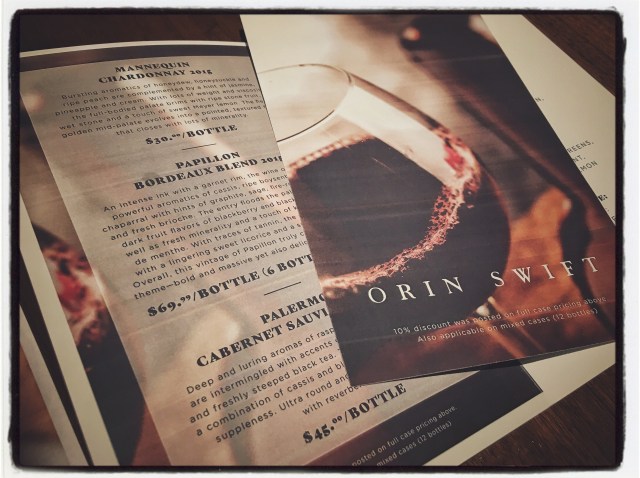
This wine pairing, presented by Chris Victor, National Account Manager for E&J Gallo, and Superior Beverage of Cleveland paired three wonderful wines from the cellars of Orin Swift with an amazing three course menu created by Chef Sean Conroy.

Our first pairing was a 2015 Mannequin Chardonnay with the Amuse Bouche of fall veggies featuring acorn squash, red beet, sweet potato, sultana and Brussels sprouts. The Chardonnay tasted of ripe white peach, jasmine with a nice acidity that was softened bu the creaminess of the food and the sweet of the sultana. We continued with the Chardonnay into the 1st course of halibut, pumpkin, saffron, pine nut, and golden sage. The delicate flavor of the halibut with saffron sauce was nicely balanced with the bright citrusy vibe of the wine.

Next up was the 2015 Papillon Bordeaux Blend that paired well with our 2nd course that included lamb rack, mustard greens, merguez, and eggplant. Yummy! The flavours of ripe blackberry, dark cherry and subtle tannin played beautifully with the mustard greens and horseradish eggplant, coaxing out a flavourful bite spice in the wine.

Our final course was Clafoutis: a baked flan-like dessert of brandied cherries, fresh fig, and DiSaronno Amaretto. Paired with the 2014 Palermo Cabernet Sauvignon, it provided and unexpected, amazing surprise of the evening; I’ve never enjoyed a Cab with dessert before. I’d always thought they were too heavy. But the silky combination of blackberry and cassis didn’t overpower the delicate, flavourful dessert, it enhanced the richness of the cherries and Amaretto. I had always thought that in pairing wine and dessert the rule was sweet for sweet. This pairing proved that rules were made to be broken.

As the evening came to a close, our group’s discussion turned to the 2014 Mercury Head Cabernet Sauvignon and as luck would have it, we were treated to a small sample. Outstanding!

Sometimes, even in the darkest, rainiest night, a little light can shine in: great friends, great food and some amazing wines. And if you’re really lucky, you can find all three in one place.

Cheers! 🍷

This slideshow requires JavaScript.

©TheWine Student, 2017


Fright Night ~ Top 3 wine picks for ‘17 Halloween!


What wine pairs well with… horror?! 
If you’re scared enough, pretty much anything will do. But if you’re a brave undead slayer these three picks for 2017 will give you plenty of treats while waiting for Nosferatu to rise from the catacombs. 

2016 HobNob Wicked Red Blend

Blend of: Grenache, Cab Sauvignon, Shiraz, Pinot Noir

Tasting Notes:

🎃 full body ~ lo acid, med tannin

🎃 roasted coffee, mocha, toasted hazelnut, hint of orange zest provides a nice little bite on the finish. 

Pairing:

🎃 BBQ, red meat, dark chocolate

👻 Definitely decant! This wine is very young fully release the hounds of flavour, this wine needs time to open up and breathe.


 2016 Black O’Noir Baco Noir Sue Ann Staff Estate Winery

Tasting Notes:

🎃 medium body~ hi acid, lo tannin

🎃 stewed blueberry, tomato jam, a little smoky

Pairing:

🎃 Aged cheddar

🎃 Charred beef, ribs ~ well done meats rather than rare or medium well.

Higher acidity in this wine means a good pairing with rich, meaty tomato sauce over pasta

🎃 Pizza with extra tomato sauce and spicy pepperoni 

👻 Make sure you decant! Often with young wines, they need decanting for around two hours to open the full bouquet and flavours.

 2014 Ravenswood Besieged Red Blend

Blend of: Petit Syrah, Carignan, Zinfandel, Syrah, Alicante Bouschet, Barbera

Tasting Notes:

🎃 full body ~ fine, soft tannin

🎃 blackberry, rich black cherry, baking spice, fruit forward

Pairing:

🎃 Beef, pork,

🎃 Salmon with chipotle chocolate sauce drizzle

👻 A 2014 shouldn’t need as much decanting but to bring out the full expression of these rich varietals, using a good aerator (if you don’t have time to fully decant) is a great idea. 

Don’t forget the Menagerie pourers!

Have a safe and happy Halloween! 😈🍷

 Cheers! 

The Heartbreak Grape

Image via gettyimages

Image via gettyimages

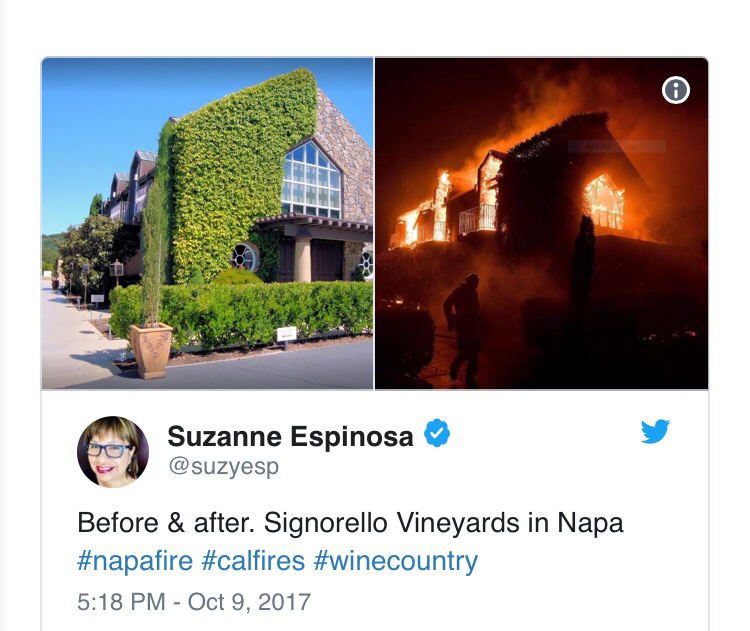
Reading the wine news out of Napa and Sonoma has my heart sinking. The accounts of both the devastation and tireless efforts of the firefighters and rescue teams left me in awe not only about the extent of the damage but at the bravery and tenacity of those helping to save people, homes, vineyards, and businesses. Many have seen the dramatic picture of Signorello Vineyards before and as it was engulfed by flames.

Amid the tragedy, one bright spot seems to be that the vineyards may have curtailed the fires’ growth in some areas. The reason: the wide space of the vineyards tend to hold more dampness than the surrounding forests. According to the Los Angeles Times, “Fire officials have said they considered the relatively open space of vineyards, which hold more moisture than oak forests, to be a natural firebreak that allowed their forces to concentrate on protecting populated areas and structures.” Meaning the fire patterns tended to stop at and go around vineyards.

As well, it was reported in The Sacramento Bee that many of the grapes had been harvested during the heat spike over Labor Day weekend, and were safely in tanks and barrels. Only the most expensive grapes; cabernet sauvignon and petite syrah still remained on the vine. But even if the vines weren’t seared by the flames, the biggest difficulty will be smoke and heat damage.

Smoke from wildfires cause what’s known as smoke taint which results in off-tasting flavors such as ‘bacon’, ‘smoky’, ‘ash’, ‘campfire’. According a 2012 Viticulture and Enology Extension Newsletter by Washington State University, it occurs when the vines and berries absorb chemical compounds from wildfire smoke. “These compounds are released during alcoholic and malolactic fermentation causing the wine to become unpleasantly ‘pharmaceutical’, ‘dirty, ‘ash tray’, ‘medicinal’, ‘camp fire’, or ‘burnt’ and reduces the perception of varietal fruit aroma.”

For the grapes harvested prior to the fire you won’t taste this. But for the cabs, petite syrah and late harvest varietals, it will be something you’ll notice. And the price points on these wines will be markedly higher, given that the remaining grapes will need a lot of TLC to harvest, and to modify the fermentation process. At this point, it’s difficult for the wine community to fully assess the extent of the damage, and when it might be felt by the consumer.

When we watch devastation unfold, it’s normal to feel helpless. But it doesn’t have to. Here’s how you can help:

The Redwood Empire Foodbank ~ providing food to evacuation shelters:

http://refb.org/

https://sonomacountyfirerelief.com/

Malbec Monday ~ Glama Llama 

It’s human nature to gravitate to what is new; the newest car, shoe, or smartphone. But in the world of wine, it pays to revere the old.

How old is old? This 2015 Belasco de Baquedano Llama Old Vine Malbec is about 106 years old. And old vines have plenty of tales to tell. Namely, what the condition of the soil is, how well they have been tended from year to year, how strong their roots are.

Tried and True

Celebrating their 100th birthday in 2010, these vines began with good roots: they are clones (genetically identical cuttings of mother vines, selected for particular characteristics) of  the French black Bordeaux grape. Nestled at the base of the Aconcagua Mountains, warmer days are counterbalanced by cool nights (dipping down almost as much as 45degrees F) which works to heighten the richness and complexity of the  wine’s flavor and aromatics. The grapes are given even further ‘hang time’ to develop flavors, even after sugar levels indicate that ripeness has been achieved.

While there is scant rainfall in this wine growing region, irrigation is provided in its purest form by runoff (comprised of melted snow) from nearby Andes mountains.

Age Before Beauty

Old vine grapes are generally hand harvested, which is more gentle on the vines and grapes. The higher velocity shaking of machine harvesting can be more jarring to the vines. The wine is then aged at least six momths in French oak which gives qualities of subtle toast, nuttiness and softer tannins. The final product is soft yet structured, and luxurious with rich flavors of ripe blackberry, rich plum and spice.

About the Llama

In Argentina, the llama regarded as a sure-footed, strong, support worker animal helping transport  packages and supplies through difficult terrain. Stalwart but stubborn, if you load them up too much, they will not budge. And they might even spit in your eye if you diss them.

With Age Comes

…Wisdom! But also some spectacular wine. So respect the hard working, old vine, it’s toiled through the ages to produce a wonderful bounty for you to enjoy.

Cheers! 🍷

Malbec Monday: Amancaya Gran Reserva 


If I hurry I can get it in under the wire! I’m definitely tardy today– busy days mean that sometimes I can’t get my wine homework done.
Rushing to find my weekly pick, I discovered a 2013 Amancaya Gran Reserva Malbec | Cabernet Sauvignon.

A collaboration between Nicolás Catena an Domaines Baron de Rothschild (Lafite), this wine was clear, garnet colored, full body offering with medium-hi tannin. It had a delicate nose of cherry and rose and tasted of  bold blackberry, black plum with just a hint of bell pepper. While it was 2013, it began to open up to reveal a bit more complexity; it was a nicely balanced 50/50 blended vintage.

Putting the Grand in Gran Reserva 

Gran Reserva  is a frequent term used on the labels throughout Spain to define both quality and style. In Spanish law there are labelling terms that indicate the minimum periods of ageing the barrel and the bottle. It is traditional practice to age wines for long periods of time in oak barrels and then in the bottle before it’s released. Therefore, Spanish produced vintages are usually older  than those from other countries.

On the label you’ll find one of four terms that indicate the levels of age. In order of increasing age:

  •  Joven~ wines bottled the year following the vintage for immediate release, and indicate wines that haven’t  been aged in oak for the minimum of time to be considered Crianza. $10-15
  • Crianza~ one year in oak– one year in the bottle. $15-20
  • Reserva~  one year in oak– two years in the bottle. $25+
  • Gran Reserva~ two years in oak– three years in the bottle. $35+                             Gran Reserva wines are produced in only exceptional vintages, and the best of these are beautifully complex.

So now when you look for Malbec, you’ll know what to look for on the label to get the most complex and flavourful offering. After all, age ain’t always just a number; it’s time spent in the barrel and bottle.

Cheers! 🍷

Mac n Cheese Monday!

Ok, so it’s more about the wine than the mac and cheese but Rosé doesn’t start with M

My girl is home from college and as a budding gourmet, she wanted to experiment with a simple but yummy mac and cheese recipe. So which wine would be interesting? 

A few days ago, HubbyDoug came across a 2016 Alexander Valley Vineyards dry Rosé of Sangiovese. We’ve enjoyed many of AVV’s offerings in the past but a Sangiovese Rosé was what peaked his interest. Who was I to say, “Bah!”? 

Rosé is made from black grapes and its production is similar to red wines, but fermentation is at lower  temperatures, and is taken off grapeskin contact after only 12 to 36 hours so that the wine doesn’t become too deeply colored or tannic. Most red wines maintain skin contact for more than two weeks (for richly flavored wines). 

This wine was amazing with the combination of Jarlsberg and Monterey Jack cheese; it cut through the creamy butter vibe with a refreshing acidity and wonderful light fruity quality. To try to assauge our guilt, we added a nice combination of sweet green peas and broccoli to the mix. 😉

I’ve often enjoyed a crisp, bubbly Prosecco with dishes that are this creamy and rich, but this Rosé was a surprising and wonderful alternative. And for summer, Rosé is a fun change of pace. Think pink!

Cheers!