Better Than Chocolate: 2023 Valentine Wine Picks!💝

Eduardo Galeano once wrote, “We are all mortal until the first kiss and the second glass of wine.”

It’s true – that first kiss can make us feel like we’ve had that second glass of wine; dizzy, fizzy, and warm all over. Don’t get me wrong, I love me some chocolate but it doesn’t usually make me feel like that. And chocolate doesn’t always fit in my wine glass.đŸ«

This year, I wanted to explore a couple of intriguing alternatives to the chocolate covered heart.

Check out the video below for more info about these wines!👇

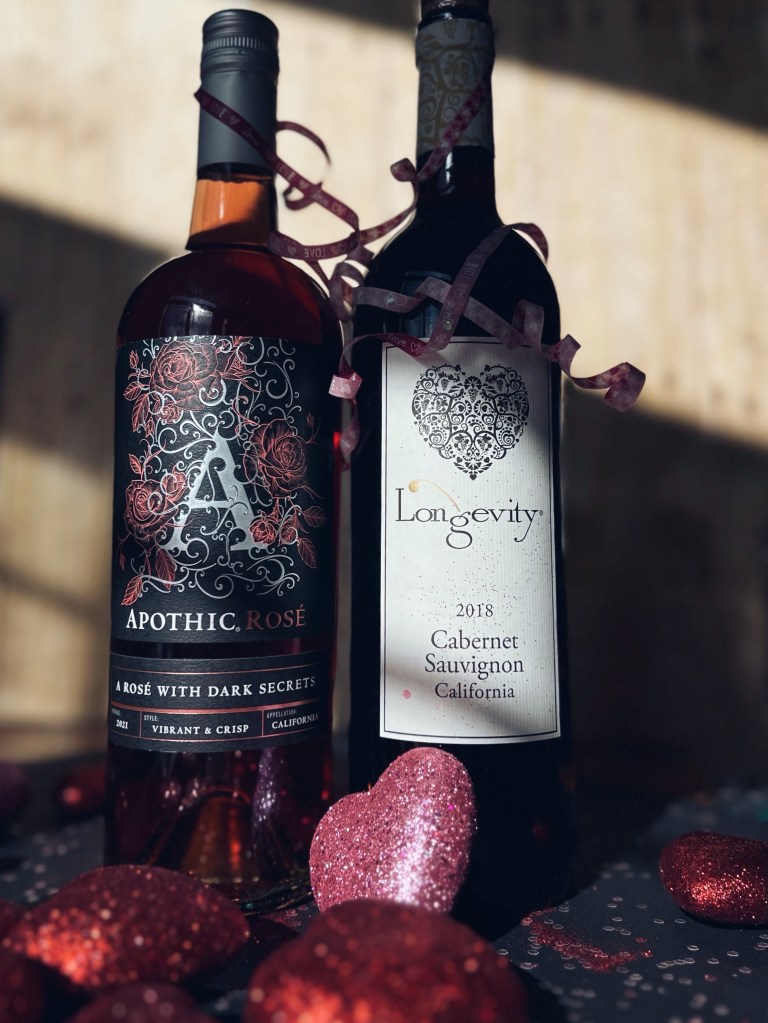
Apothic Rosé-

The label says that it’s the “rosĂ© with a dark secret”. I would like to know what that secret is. Though maybe that’s what the second glass is for.

From E&J Gallo, and cultivated in Central Valley, California, this wine is a beautiful, deep rose-gold color. The classic color of many rosés is a light-medium salmon pink. This is a Grenache, Temperanillo, Pinot Noir, Sangiovese & Carignane blend that created a rich color in the glass. It had a subtle cherry vibe on the nose, and flavors of lush strawberry, ripe raspberry, and a sensual whisper of dark chocolate on the finish. Interlaced all together, it tasted like
 more!

Also cool: the label art of swirling roses was designed by tattoo artist Sasha Masiuk.

💰Price point: $11.99

Longevity 2018 Cabernet Sauvignon

From the growing region of Livermore Valley, California, Longevity is one of the largest Black-owned wineries in the United States.

Deep, ruby red in color, this Cab was immediately drinkable. I tasted without decanting, and it was flavorful right out of the bottle. Often, a little merlot is blended with cabs to soften the harsh tannins. This was a cab with no harsh edges. Softer tannins made for a smooth and satiny experience, like slipping on a lux pair of silk pajamas. Classic flavors of red plum, black cherry, blackberry swirled together, with a little black licorice lingering on the finish. Together it created a deep, well-structured profile.

Their description of the wine was ‘muscular’, which is very true of most cabs. But no heavy lifting was required to enjoy this wine. This was full-bodied but not overpowering; so nice to slowly sip and savor.

The twist-off cork is genius! Like its sister the screw cap, it made opening the wine a breeze, especially if you’ve forgotten your wine key (corkscrew). It made storing even easier. No leaks!

The label is what first attracted me; a beautiful heart. Take a closer look and you’ll see the intertwining of grapes, hearts and vines. The heart was designed by Longevity’s owner, and winemaker Philip Long’s late wife-and business partner, Debra, who saw the design as an expression of their both their love of wine, and each other.

💰Price Point: $15.99

So whether you’re enjoying Ă  deux or just celebrating you, surrender this Valentine’s to a little decadence. It’s better than chocolate!â™„ïžđŸ«

Cheers!đŸ·đŸ’‹

©Copyright. The Wine Student. 2023

Wine Wednesday: Unshackled!

The weather had been so grey and damp lately, I’m feeling it in my bones. Because the chill is going so deep, I wanted to find a wine that could warm me to my toes.

The 2021 Unshackled Cabernet Sauvignon was a luscious choice. With its deep pomegranate color, dark chocolate essence on the nose, and creamy mouthfeel, this wine helped me to break free from the cold. At least for a little while.

Soft tannins joined with flavors of black currant and blueberry, much like a dark fruit compote. Warming hints of clove lead my palate to a cozy, buttery smooth finish. Toasty!

Price point: $26

Happy wine Wednesday!â˜ș

Cheers!đŸ·

©Copyright. The Wine Student, 2022.

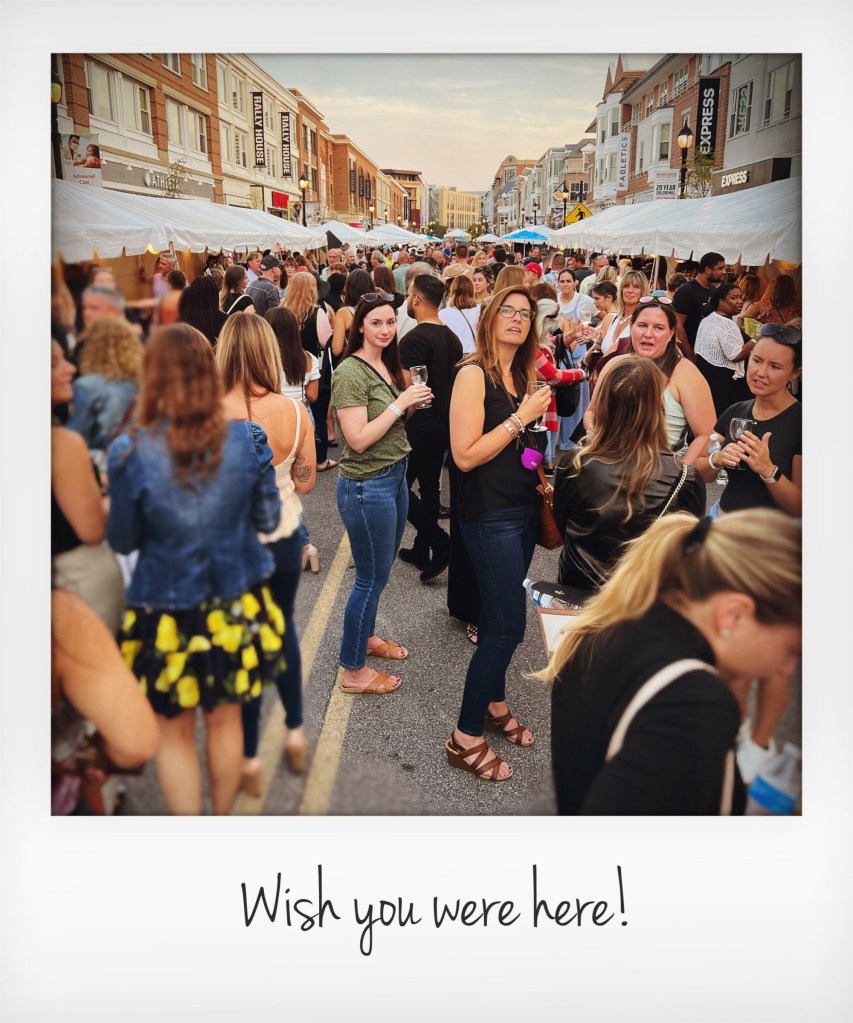
Crocker Park Wine Festival â€˜22

What was the coolest field trip you ever went on in school?

For a wine student like me, this is pretty much the Holy Grail. Where else can you learn about wine, meet people who love it, & sample the product, too?So much fun!

The last time I volunteered at the Crocker Park Wine Festival ( benefitting University Hospitals’ Rainbow Babies Children’s Hospital) was before the pandemic. It felt so good to be back!

My station was Canadian Sparkling wines. I was so excited! đŸ„‚

The sparklers we featured:

‱ Ziraldo Prosecco

‱ 13th Street Winery Blanc de Blanc

‱ Henry of Pelham CuvĂ©e Catherine

‱ 13th Street Winery CuvĂ©e RosĂ©

‱ Megalomaniac Bubblehead RosĂ©

My fave: the 13th Street Winery CuvĂ©e RoseđŸ„‚

It was a beautifully dry, lush blend of Chardonnay and Pinot Noir giving it a nice, subtle complexity. This would be lovely for a Sunday brunch. But honestly, all of them would!â˜ș

Click the video below to join me at the festival!

Lots of great sampling to be had and the proceeds go to help many wonderful children!🌈

The Crocker Park Wine Festival continues Sept 17th from 2pm until 10pm.

Cheers!đŸ·

©The Wine Student. 2022.

Snug as a Lady Bug🐞

“The Ladybug wears no disguises. She is just what she advertises. A speckled spectacle of spring, A fashion statement on the wing
. A miniature orange kite. A tiny dot-to-dot delight.”- J. Patrick Lewis

During the busy days of summer, it’s easy to forget the little things; a warm evening breeze, toes in the sand, glass of wine in your hand. If the past two years have taught us nothing else, it’s the simple pleasures that we need to pay attention to. Little things sometimes have the biggest impact.

Lady bugs are little, but they are mighty.

Farmers and gardeners love the lady bug. According to ThoughtCo.com, the lady bug (beetle) are beneficial predators who munch on many pests of the garden such as scale insects, whiteflies, mites and especially, aphids. Over the course of a day, a lady bug can scarf down 50 aphids, over a lifetime (about a year), they can consume over 5,000. They really are the ladies who lunch.

Too much of a good thing, though, can become a challenge for growers; an overpopulation can mean that many bugs can snuggle up in the fruit. And this can subsequently taint the wine if they’re not sorted out at pressing.

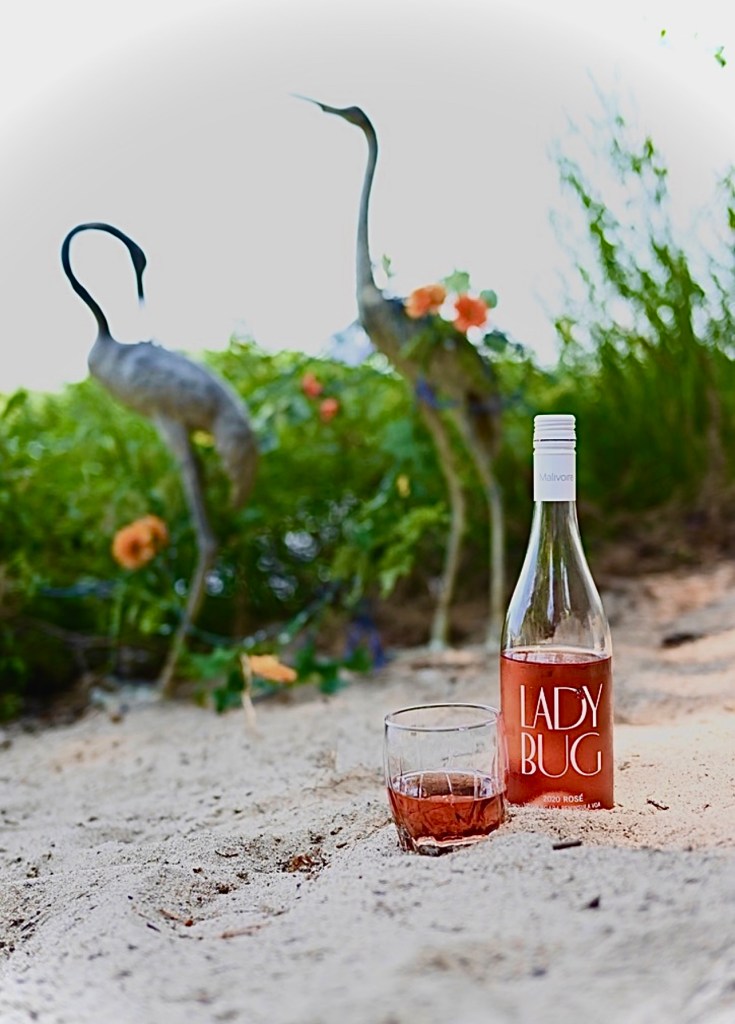
Searching for a nice light wine to pair with my evening chicken stir fry, I discovered this little but mighty gem: 2020 Malivoire Lady Bug. Located in Beamsville, ON, Malivoire is a Certified Sustainable winery. Made from a blend of 56% Cabernet Franc, 36% Gamay, 8% Pinot Noir, and cultivated especially for this wine, the grapes are harvested when sugars are at 19.5 Brix. The crushed grapes then soak in free-run juice ( juice that runs freely out of the tank by gravity) between two and twelve hours before press. After cold-fermentation and stabilization, the wine is transferred to stainless steel tanks to rest before bottling.

This lady bug had a surprising complexity, revealing different layers of flavor with each sip. Many single varietal roses are good but one-dimensional.

Check out the video below for more summer fun!🏖

Some tasting notes for ya!

‱ bright berry on the nose – flavors of red raspberry, strawberry,

‱ cherry, pomegranate – nice burst of tart flavor that sparkled down into a tangy tart that lingered on the finish.

‱ bouncy mouthfeel makes it great to sip on its own yet it paired beautifully with a gently spiced chicken stir fry with jasmine rice.

Recommended pairings:

Lighter meats such as:

‱ Butter Chicken

‱ Pork Roast

‱ Baked Ham

‱ Charcuterie

‱ Mussels

‱ White Bean Salad

‱Available at LCBO – $17.99

Whether you’re sipping on a beach or dining al fresco with friends, please enjoy responsibly!

Cheers!đŸ·

©Copyright. 2022 The Wine Student

Orange is the New White

A long time ago, when I worked as a bartender, I once served a wine that was orange.

It was not a design choice. It was just bad.

So when I saw that orange wine has been making a big splash, I was a little skeptical. Fool me once


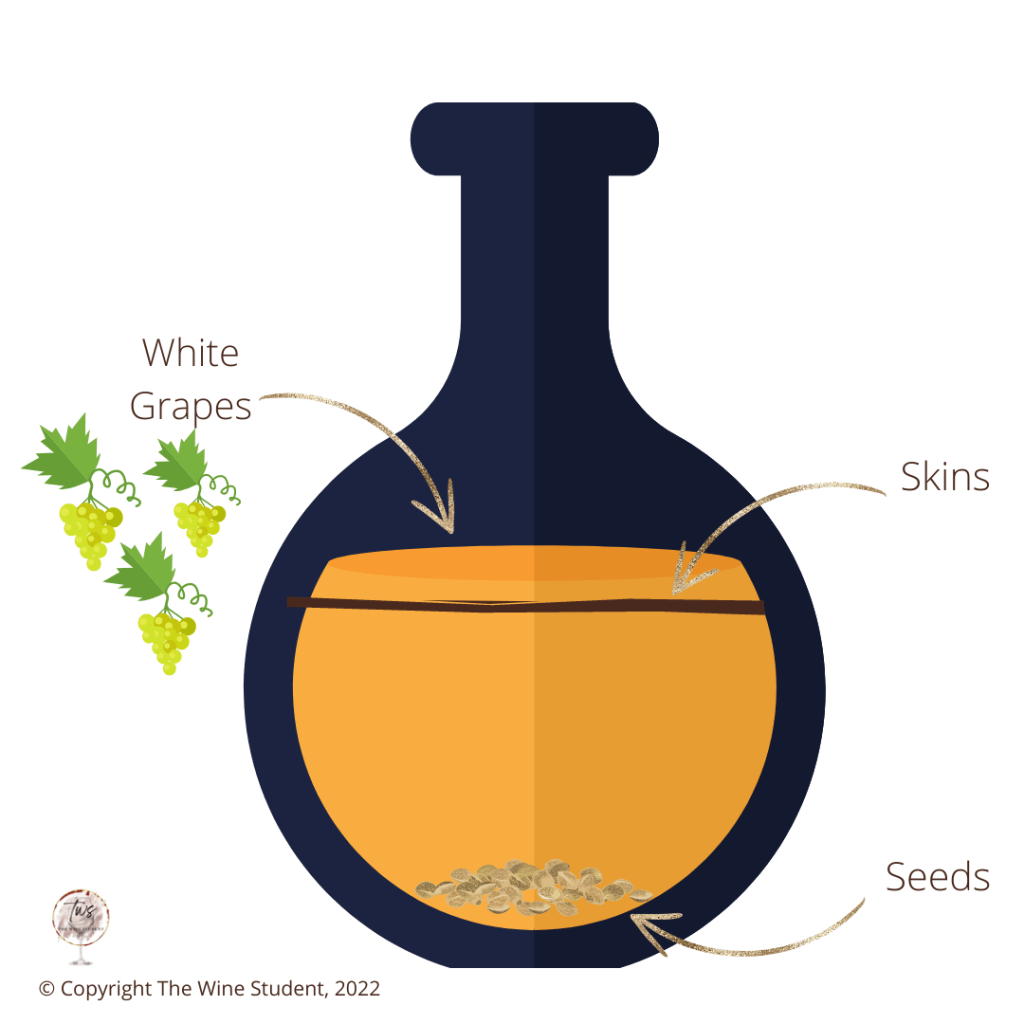
Orange wine is not made from oranges. It’s also not a rosĂ©. It’s actually a natural white wine that gets its colour and flavor from keeping the white grape skins and seeds in contact with the juice for between 4-30 days. The orange colour comes, in part, from the lignin in grape seeds. The longer the contact, the deeper the colour. Most white wines have little to no skin contact.

In most wine production, seeds get discarded prior to any processing of the juice and fermentation. That’s because seed contact can make wine taste bitter. So how do orange wines stack up? Do they taste sour or bitter? It depends. While technically a white wine, orange wines are very dry and tannic, much like a bold red wine. Flavors are bold and brassy with aromas of honeyed jack fruit, sourdough, juniper (like gin), brazil nut, apricot, orange blossom, and bruised apple. They can be very intense on the palate with a sour vibe much like a fruit based beer.

What is jack fruit? I don’t know jack $&@! about jack fruit so I did a little research. When ripe, jack fruit has a strong aroma and tastes like tropical fruit: mango and pineapple, and banana.

Orange wine is not a new ‘oops’. It is an ancient process dating back roughly 5000 years. All elements were left to ferment for time in large buried clay vessels called quevri (kev-ree).

Check out the video below for a little summer fun!

Pairing:

Bold for bold, orange wines pair well with bold foods like curry and Moroccan dishes, Korean and traditional Japanese cuisine. Because of the high tannin, and hint of almond-like nuttiness, it can pair with beef and fish. This is something you can play around with to find your favorite.

It’s a white wine that thinks it’s a red so the pairings could be really colourful. But be careful of the spice quotient: it will bring out the heat in some dishes.đŸŒ¶đŸŒ¶đŸŒ¶

If you’re looking for ‘grippier’ offerings with increased tannin, look for 30+ days of skin contact; fresher, lighter versions have maybe 4-10 days. Because they’re natural with little to no preservatives, drink within 2-3 days after opening. Store in cool, dark areas (between 50-60F). Serve chilled, at around 55-65F. If it’s too cold, you’ll lose the nuance of the flavors.

Look for wines from Italy, Solvenia, Australia, France, South Africa, Austria, and the US.

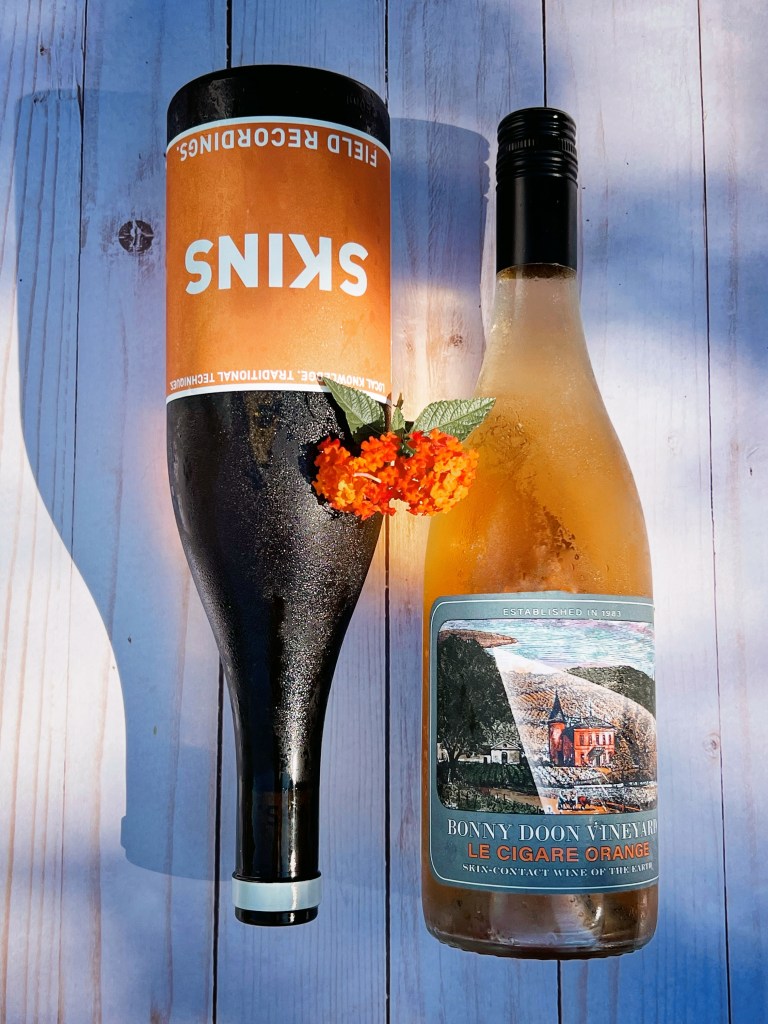
I recently tasted a 2021 Bonny Doon Vineyards Le Cigare Orange (California). It is the ‘skin-contact wine of the earth’ (says so right on the bottle) and is made from 10% Grenache, 80% Grenache Blanc and 10% Orange Muscat. It had a hint of orange blossom on the nose, and a sour, almond vibe on the palate with a dry, puckery, yet bouncy mouthfeel. Flavors of white peach, early-ripe apricot and citrus lingered on the finish.

It sells for $17.99

Here are three others that might float your boat:

‱ Cos Pithos Bianco (Italy) $27

‱ Attems Pinot Grigio Ramato (Italy) $20

‱ Field Recordings Skins (California) $24

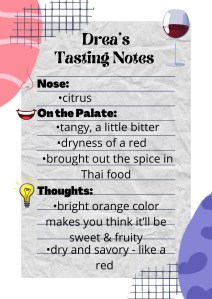
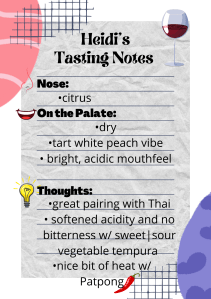
I chose the Field Recordings Skins to share and here’s what we thought:

(Pairing with Thai food)

These orange wines restored my faith that not all orange wine is wine gone bad. And they can be very different than what you might be expecting. But isn’t that half the fun about summer wines ~ trying something new, refreshing and just a little bit different?

Cheers!

©Copyright. The Wine Student. 2022.

Valentine’s Wines for 2022!â€ïžâ€đŸ”„

With this February being what it is, we probably want to be cozying up under a soft, warm blanket, with a fire or candle glowing and enjoying a glass or two of something nice.

The pickings this year were a little slim in terms of wines marketed specifically to Valentine’s Day. This could be due to the current and pervasive supply chain issues. Whatever the reason, I managed to find a couple that looked fun and holiday ready.

Check out the video I made for a little more info on these fun wines!âŁïž

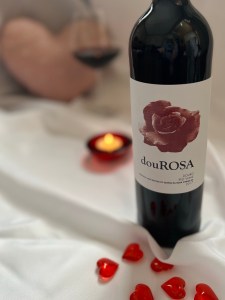
Quinta De La Rosa 2017 douRosa Red Blend

Made in the Douro region of Portugal, this is a luscious red blend from Portugal comprised of 35% Touriga Nacional, 35% Touriga Franca, and 30% Tinta Roriz grapes. Hand-picked and quietly left to mature for two years in stainless steel tanks, it is deep in color with an intense dark berry, blueberry vibe with both leathery and hint ‘o’ mint qualities. Younger wines have more of a violet vibe on the nose and they tend to have a dry and grippy mouthfeel due to bolder tannins.

The Douro region has a drier climate, with very warm summers. Because of an unusually dry, warm summer in 2017, harvest was a little early; mid – August, when the fruit was at its peak.

Tasting Notes:

‱ Deep ruby color – rich and clear – so beautiful in the glass

‱ Hints of violet (a soft, powdery raspberry vibe on the top) and caramel on the nose

‱ Dark, rich raspberry and blackberry w/a lush mouthfeel

‱ Medium tannin and mid-hi alcohol

‱ Paired beautifully with vegetarian pizza and fresh ripe blackberries

‱ Decant for at least an hour to open flavors

$19.99

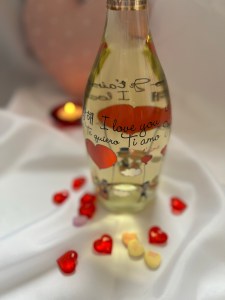
Santero Villa Jolanda I Love You Extra Dry Spumante – This is one of the cutest damn bottles I’ve seen so far. Santero comes up with seasonal cool graphics; Halloween (which always sells out so I can never get my hands on one :/ ), Christmas, and Valentine’s Day.

That’s part of the reason to check it out, and as an affordable sparkler, this is a fun offering. Especially if you’ve spent some of your cash on flowers, chocolate, and dinner, it adds up. Your sparkling wine should never leave you with a negative balance. Some might disagree on that statement. And while it is true, the sky can be the limit on what you can pay for a beautiful sparkling wine, feel free to adjust your Valentine’s budget accordingly.

Tasting Notes:

‱ Light yellow straw color – lots of pretty bubbles

‱ Nice acidity, not too sweet

‱ Flavors of honeydew melon, pear, cream

‱ Lighter body, refreshing mouthfeel,

‱ No decanting needed (don’t want to lose those bubbles)

‱ Serve ice cold

‱ Pairs: Anything

‱ $15.99

I hope you all have a happy and safe Valentine’s Day!💝

Please enjoy responsibly, and if you can’t be the with wine you love, love the wine you’re with!đŸ„°

Cheers!đŸ·đŸ„‚

©Copyright, The Wine Student, 2022

Wine in the Raw

Totally natural. Wild and unfiltered. Just as nature intended. Wine in the raw refers to how some wines are made. It doesn’t mean you have to drink it without your clothes on. But I guess if that’s your thing, by all means.

Circling back to ancient winemaking techniques, natural wines came to prominence again in France and Italy in the 1980’s. And now there is a growing natural wine movement here in North America, dovetailing with farm-to-table philosophy.

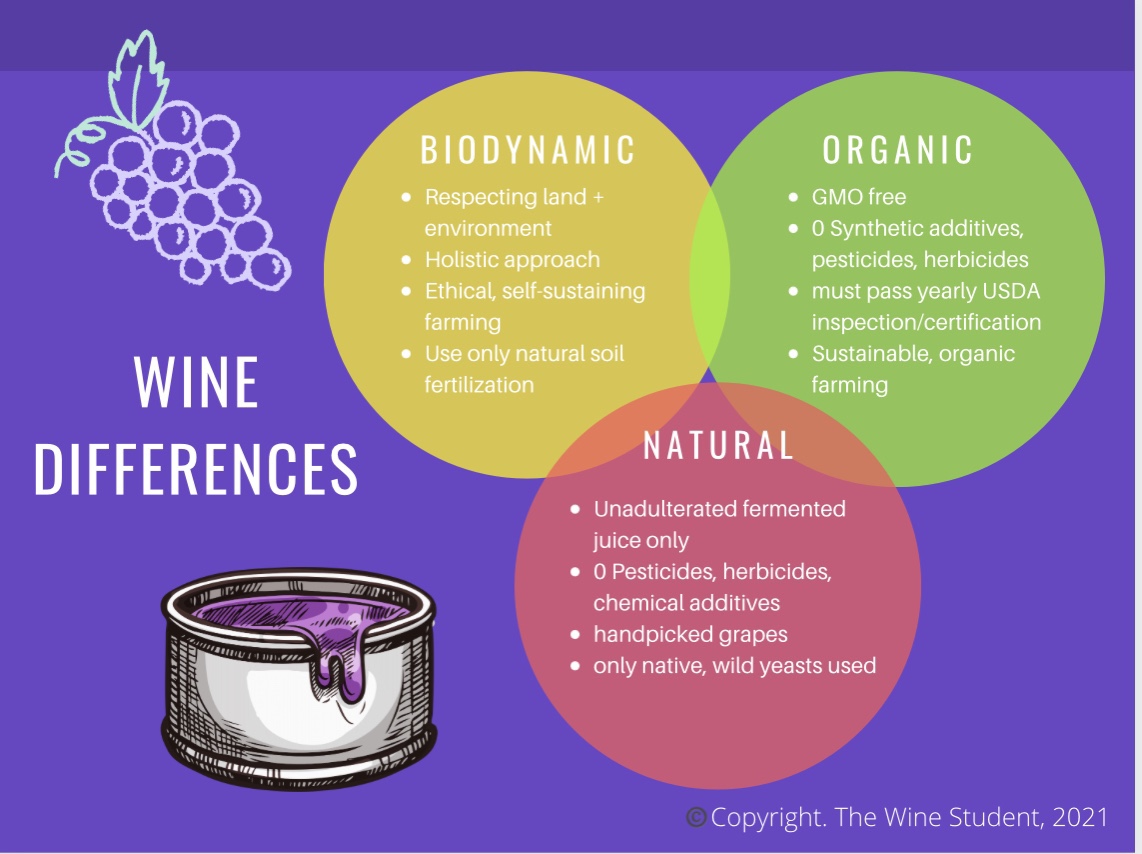
So what’s the difference between natural, biodynamic and organic wine?

Biodynamic winemaking embraces a holistic view that everything in the universe is connected; man, the moon, the planets and the stars. Respecting the environment, and ethical, self-sustaining agriculture, it’s more about the processes before harvest; farming, cultivating and tending to the land and fruit.

Like natural wines, no pesticides or unnatural herbicides are used. Ducks, horses, cows and sheep living on the vineyard provide natural fertilizer, and weed management.
Discarded grape skins are recycled into compost and spread back onto the land to nourish future vintages.

Biodynamic wines are also cultivated and harvested based on the biodynamic calendar – planting and harvesting on moon cycles and daily tasks broken down into the earth’s four elements.
It sounds a little trippy but you have to love the philosophy; great, sustainable wine production that literally gives back to its roots and the environment.

Organic wines are GMO free with no synthetic additives, pesticides or herbicides. Organic winemakers also respect sustainable farming practices and must pass yearly USDA inspection to retain certification.
Certification can be seen on the label and is an assurance that what you’re pouring into the glass is 100% organic.

Like Organic and Biodynamic, natural wines use grapes that haven’t been sprayed with herbicides, and only natural predators are used to manage pests.
Grapes are hand-picked, and only native or wild yeast is used in fermentation. The wine is unfiltered and there are less than 50ppm sulfite additives, if any. Natural wine can be seen as an excellent display of terroir – the true expression of the wine growing region – since what you pick and cultivate on site is precisely what goes into the bottle.

Many natural winemakers prefer ancient techniques such as fermenting in clay or concrete ‘amorphae’ vessels that impart no flavor to the wine. Oak barrels can sometimes be rejected because of the additional flavors they may add to the wine. But, again, that’s a choice. Many natural winemakers want their wines to taste of the grape, and only of the grape.
Some also allow their white wines a little bit of skin contact; just enough to produce an orange hue (more on that in an upcoming post).

Natural wine can have a lower alcohol content and higher acidity. Since it’s unfiltered, it can sometimes look cloudy with natural sediment that floats and then settles at the bottom of the bottle.

Bottle for bottle, natural wines taste
just as lush and lovely as commonly cultivated wines, but not all travel well. As Jake, Wine Steward at Giant Eagle said, “Because they are natural, they don’t always do as well with shipping.Your best bet for natural wines is to buy them directly on site if you can.”

While natural wines can be stored for a few years, it’s best to enjoy them sooner rather than later. They typically require refrigerated storage because of their volatility. The lack of preservatives can make them less able to handle changes in temperature and therefore are more prone to going off.

Be sure to look for the terms ‘minimal intervention’, ‘natural winemaking techniques’ or ‘unfiltered/unfined’ on the label.

I have to admit, it isn’t always easy to find all-natural, unfiltered wines in a local wine shop. I did manage to find one: Newton Unfiltered Chardonnay from Napa Valley, California. And it was one of the last bottles available.
When I looked at the bottle, I was expecting to see something cloudy or with sediment resting gently at the bottom like an unshaken snow globe. This wine was crystal clear.
During maturation, their winemakers hand-stir the wine, as needed, to re-distribute any sediment. The reason is clear: many people seeing sediment or cloudiness in a wine assume that the wine has gone bad, is tainted or off, and are less likely to purchase a wine that looks this way. In the world of wine, looks can be everything.

Newton Vineyard has a decades long commitment to sustainable winery practices and are Napa Green Certified; held to strict requirements including water | energy conservation, reducing greenhouse gas emissions and the winey’s carbon footprint, pollution prevention, and a commitment to social equity.

Going natural might be a little more expensive to buy but consider the amount of time and care taken to cultivate and produce these wines. Great things sometimes take time. And with the growing numbers of wineries adopting sustainable practices, they’re headed in the right direction.

Here are some other notable natural wines to look for.

In these times of growing global environmental awareness and truths, it makes sense to support those who have made a commitment to sustainable wine production.đŸŒ±đŸŒżđŸ‡

And you can enjoy them with or without clothes.â˜ș

Cheers!đŸ·

© Copyright The Wine Student, 2022

Winey Friday: Curmudgeon Red Blend

The other day, I gently brushed off a favorite old collection of stories that I hadn’t seen in a while. The spine cracked open as a puff of dust billowed up. It revealed a tale of adventure and thirst. A thirst that could only be quenched by
 wine. The name of this tome: my blog, The Wine Student.

If we’re speaking truths here, I haven’t been very motivated to write lately. With everything happening in the world, I’ve really only wanted to curl up under a blanket and not come out ‘til the coast is clear. And since I’m already in my stretchy pants and sweatshirt
 also, I’m a little crabby. You might even say, a little curmudgeonly.

The other day, I found myself in the wine section of my local store (one of the few times I venture out) and I found myself just staring off into space for a split second. But what brought me back to earth was some of the label art in front of me. I started to see a theme: the label art was getting kinda dark.

But maybe it was just me


And yet, the Curmudgeon spoke to me.
From Parlier, California, this Curmudgeon is actually a friendly blend of 42% Zinfandel, 32% Merlot, & 26% Petit Verdot. Fermented in stainless steel, then aged 3 months in Kentucky bourbon barrels, this wine smelled amazing right at the first pour. Wafting scents of vanilla, and caramel was a nice preview of coming attractions. I let it open up a bit to coax out the flavors of stewed blackberry, dark chocolate, caramel and a hint of smoky spice. Because of the high percentage of Zin in the mix, it was very fruit forward, jammy- a little sweet-ish, then settling into a nice dark, leathery chocolate earthiness.
While I didn’t pair it with anything except crackers – because I’m a curmudgeon today- it was a juicy, rich blend to take the chill off a cold day in January.

Price point was about $14.99

The upside lately – I’ve noticed that the days are gradually getting longer. Which is a wonderful sign. We’re headed in the right direction!

And you know what? I refuse to give in to the darkness. Better days are ahead. Even us curmudgeons have our moments of hope.

Cheers!

Copyright, TheWine Student, 2021

My 2020 Halloween Wine Picks!

Well look who’s ready for a Halloween at home! đŸŽƒđŸ§›đŸ»â€â™€ïžđŸ·

With tricks and treats around the corner, this year, you want to stay extra safe. So wash your hands often, wear your mask, and don’t go near the woodshed that belongs to the creepy guy who lives at the end of the dark road

Like downing one too many tequila shots, nothing good can come of it.

My Halloween this year consists of maybe making a candy chute for trick or treaters, and being distanced from friends and neighbors. But that’s ok. It’s where we’re all at right now.
And wine pairs well with pretty much everything this year has thrown at us.

So
 without further delay
my All Hallows wine picks for this unprecedented year.đŸ™ƒđŸ·

Click below to see the video👇 and then read the roundup beneath!

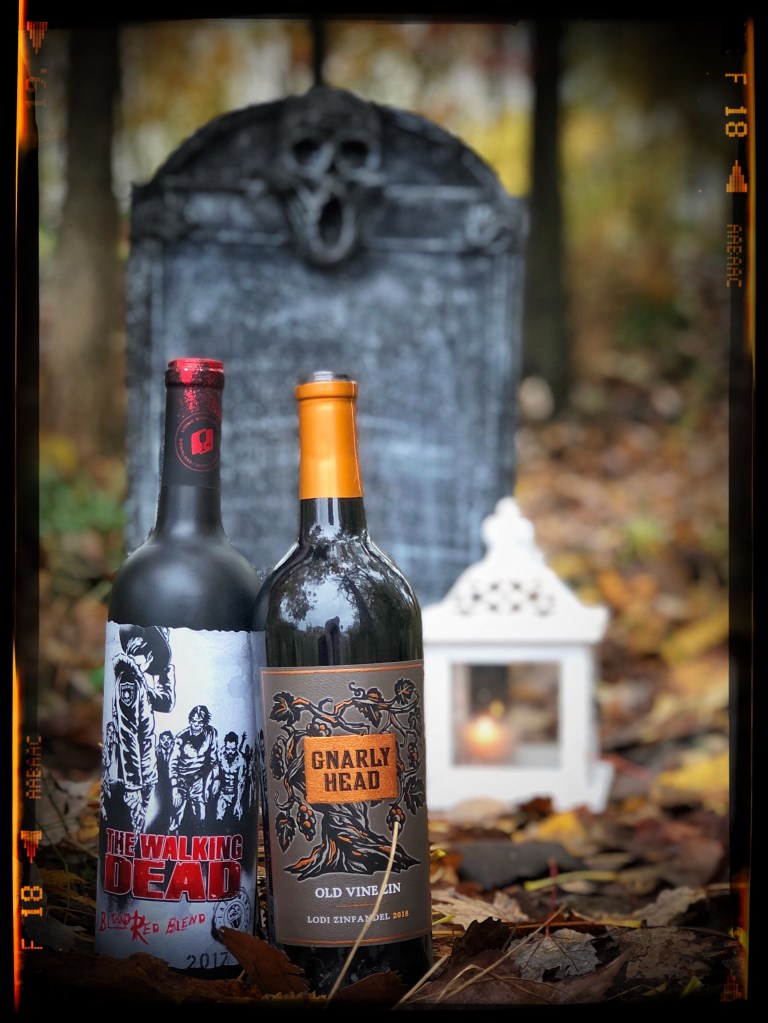
The Walking Dead Bloody Red Blend 2017

A very bright blend of 40% Merlot, 10% Malbec, 30% Cab Sauv and 20% Petit Verdot.
Tasting of cranberry, raspberry, and shining cherry, it was very bouncy in my skull goblet.
Aged 10 months in French and American Oak casks, there’s some good body yet it still retains it’s lip-smacking vibe. That is, if you have lips, some zombies, sadly, don’t.

It pairs well with dark meat turkey, which has a fattier component (this helps cut into the bright acidity of the wine), roasted pork, creamy cheeses, and in particular bleu cheese.

It’s a pretty good wine for $14.99, and it has a cool “Living Label” app you can download to watch the dead ‘rise’ on your bottle! Spooky fun!đŸ§Ÿâ€â™‚ïž

Gnarly Head Old Vine Zinfandel 2018

If you want a luscious, juicy red you can sink your teeth into, this is a great one.
Unleash the cork and you’ll find dark, rich notes of jammy blackberry, mocha, vanilla, and whispers of spice. This is from Lodi, which is known for its spooktacular Zins.

It pairs well with deviled eggs, sinful short ribs, and cheeses with deeper flavors like smoked gouda, and sharp cheddars.

You don’t need to bargain with the devil for this Zin, it’s a steal at $9.99.
Give it a little time in a decanter to really open up the vault of flavors. A treat indeed.

Whatever you find yourself enjoying this Halloween, please stay safe and don’t be afraid! It’s always darkest just before the dawn.💋

Cheers! đŸŽƒđŸ·đŸ§Ÿâ€â™‚ïž

©copyright 2020 TheWineStudent

Get Your CĂŽtes!

Hello! It’s been a long time! This summer has been flying by, and I hope you’ve all been keeping safe and well!

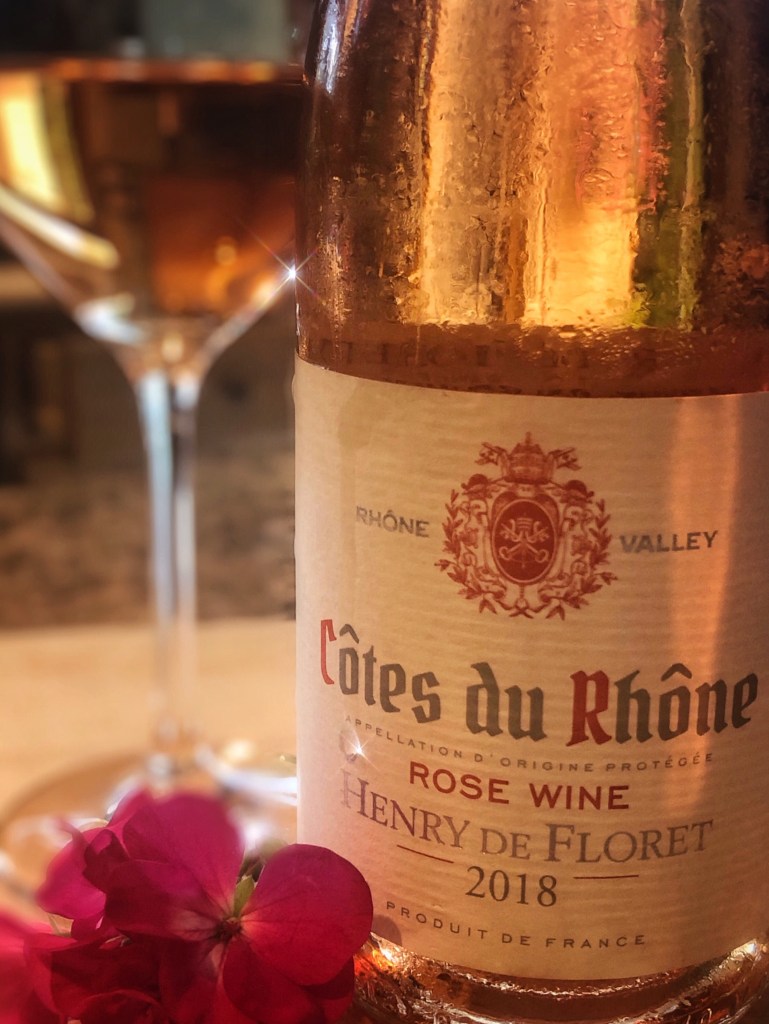
The other day, I found a lovely surprise in my fridge – a bottle of Henry de Floret CĂŽtes du RhĂŽne RosĂ©! It always feels like summer in my glass. The shimmery, salmon-pink color + the flavors of strawberry, golden plum, dried apricot and black currant bring to mind visions of warm sunsets of pink and golden light through a gentle haze.

CĂŽtes du RhĂŽnes wines of all types must adhere to the regulations of Apellation d’Origine ContrĂŽllĂ©e (AOC) which ensures a uniformity of flavor and style within this growing region.

Rosé from this region boasts the classic GSM (Grenache, Syrah, Mourvedre) blend with primary grape being Grenache. It can also include Carignan, Cinsault as well as white varietals Voignier and Rousanne. This gives a wonderful depth of flavor and aromas. Feel free to pair with some delicate cheeses, savory nuts and mild paté or experiment with whatever you have on hand!

This wine was the perfect pairing with a delicate breeze + some jazzy summer beats. đŸŽ¶

Wondering how this bottle found its way into my fridge? Sweet HubbyDoug. 💗

We may have to keep our distance, and not go out as much as we might like right now. But it may be the simpler pleasures, and sweet surprises we’re meant to enjoy.

Take good care of yourselves, enjoy the sunshine, and some good wine, whenever you can! 🌞

Cheers!đŸ·