Eduardo Galeano once said, “we are all mortal until the first kiss and the second glass of wine”.
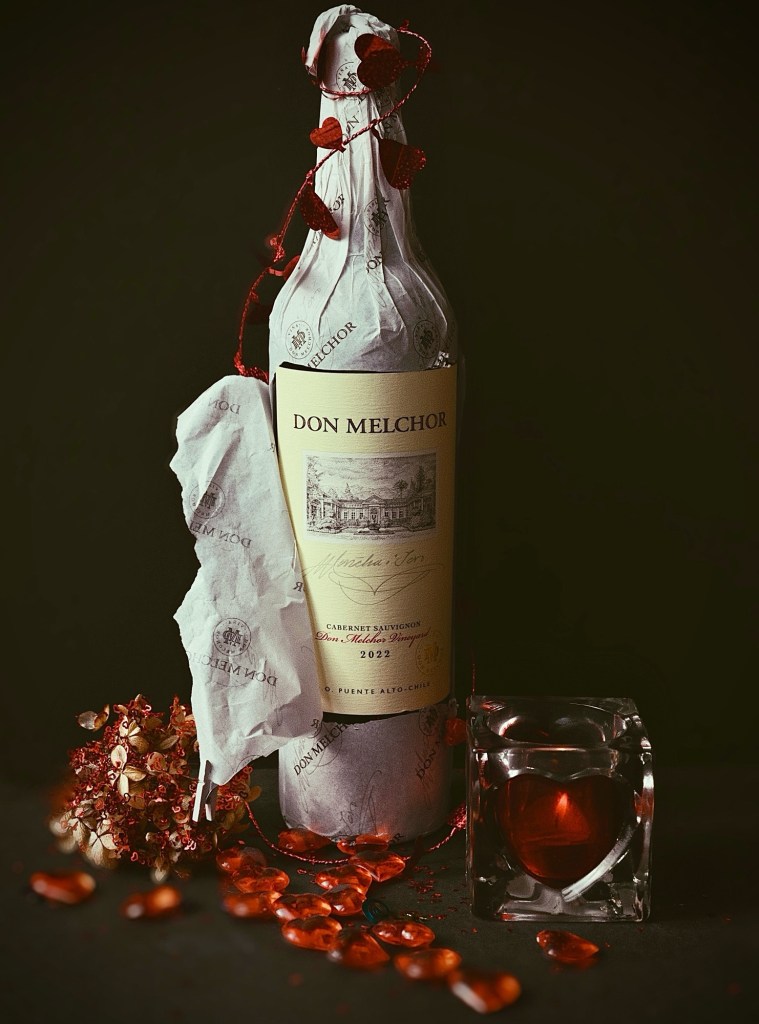
The 2022 Don Melchor Cabernetwould be a good example of a wine transporting you from ordinary soul to a beloved immortal.
And it’s not just because you’re tipsy.
Made from vines on the N bank of the Maipo River at the foot of the Andean Mountains, in loamy, well-drained soil, this lush offering is comprised of 95% Cabernet Sauvignon, 5% Cabernet Franc, 1% Merlot and 1% Petit Verdot. It’s aged 15 months in French Oak barrels which adds to its complexity and depth of flavor. Robust notes of blackcurrant, floral, spice and vanilla tickle the nose. Jazzy flavors of blackberry, dark cherry, peppered chocolate and hint of coffee embrace your palate to take you to a magical place.✨
Pairs well with:
• Char-grilled Steak – marbled cuts like Ribeye are buttery, juicy and flavorful, and play well with the wine’s strong tannins and acidity
• Roasted Lamb – w/ rosemary, garlic and salt
• Aged Cheddar – contrasts beautifully with the high tannins of the wine
• Mushroom Risotto – the umami quality of mushroom beautifully juxtaposes the structured tannins of the wine
• Roasted Vegetables – root veggies like beets, carrots, sweet potatoes can bring out the subtle sweetness of the wine
• Dark Chocolate – 70% is best – the slight bitterness of this chocolate pairs beautifully with the fruit-forward qualities of this wine – Yum!
Price Point is a little more on the expensive side, about $150 – $200 ( tho some online shops sell this gem for a little less)
I hope you find this Valentine’s Day filled with the things that bring a little heat and elevate you to an extraordinary place.❤️🔥
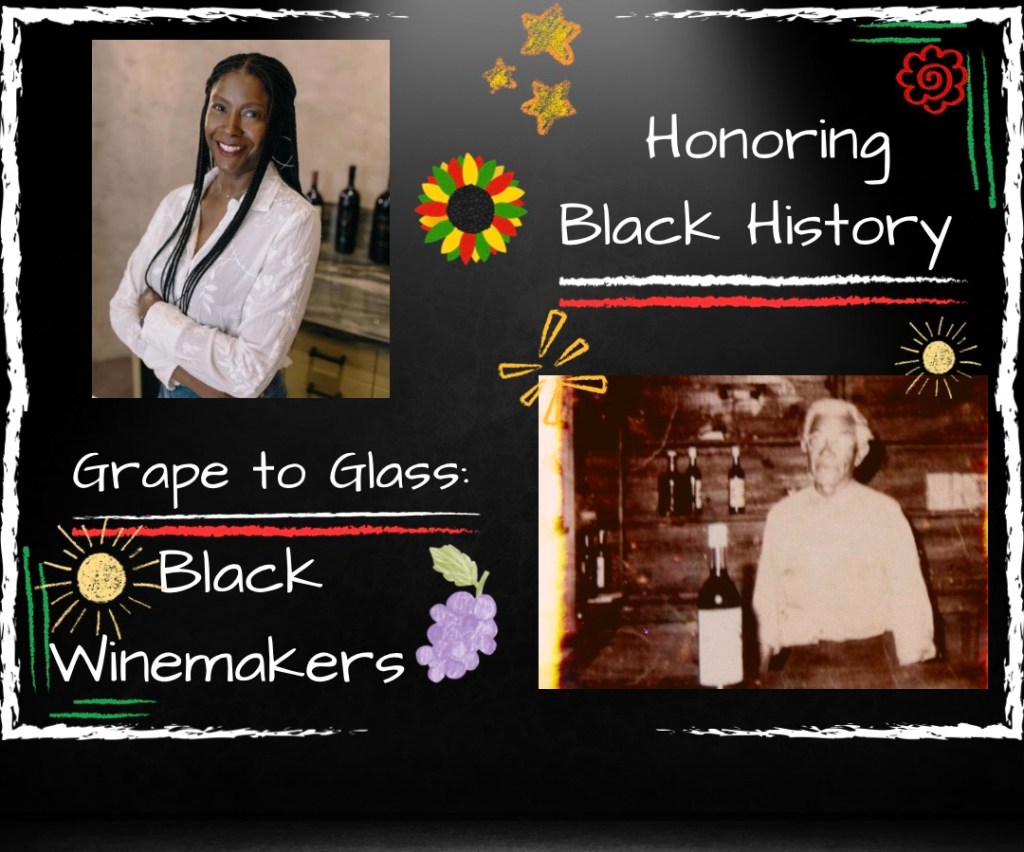
Victoria Coleman image via Lobo Wines / John June Lewis image via Woburn Winery
When you think about the history of American winemaking, you must honor the significant contributions of Black Americans. While Thomas Jefferson receives much of the credit for early popularization of winemaking in this country, it was enslaved Black Americans who tended the soil, cultivated the vineyards and helped manufacture the end product. It is a complicated history to be sure but one that bears attention.
The history of Black-owned wineries begins with John June Lewis (1894-1974). In 1919, while serving in WWI among the occupied vineyards of the Rhineland, Lewis learned about, and developed a passion for, viticulture and wine. After he returned to the United States, he inherited from his father 10 acres of land in Clarksville, Virginia. Shortly after the repeal of Prohibitionin April of 1933, Lewis planted his first vineyard. By 1940, he established Woburn Winery, selling his exclusive wines to local residents until his death in 1974. Woburn Winery is the first noted Black American-owned winery in the United States, and the only Virginia winery of its time to produce estate-sourced wines from Labrusca and hybrid grapes. Known as the “Virginia-Carolina Brand”, they were classified as table and dessert wines. This was a significant breakthrough – and Lewis’ resilience, innovation and commitment to excellence has made him the catalyst for Black winemaking’s future.
Over the years, Lewis has galvanized many aspiring Black vintners to persist despite myriad challenges: lack of representation, limited access to capital, and being underestimated as business owners.
Jump forward to the West Coast in 1995, Daneen, David and Coral Brown open Brown Estateon land purchased by their parents in the Chiles Valley AVA. In 1997, Rideau Vineyard in the Santa Ynez Valley launched – the first winery owned by a Black woman, Iris Rideau. Soon after, Vision Cellarsunder Mac McDonald opened its doors, paving the way for future Black winery owners and winemakers.
In 2005, Victoria Coleman (pictured above) became Napa Valley’s first Black female winemaker. Beginning at Stag’s Leap Winery in 1998, first as receptionist, then Production Assistant under Michael Sillacci in 2004, she then enrolled at UC Davis to become their first Black woman wine student. There, she studied with Mario Bazar, eventually becoming his winery’s founding winemaker in 2005. In 2008, she worked with Eric Tourbier at Château Mouton Rothschild in Bordeaux, France, as well as commuting several times a year to Xi’an China at Jade Valley Winery. Today, she is the principal winemaker atLobo Wineryproducing three varietal wines; Chardonnay, Pinot Noir and Cabernet Sauvignon. Victoria is also in charge of both their Atlas Peak and Wolff Vineyards Napa Cabernet and Pinot Noir production.
Out of approximately 11,000 wineries across the US, only 65 are currently Black-owned. But the numbers are beginning to change. As more Black wine enthusiasts become inspired by the influence of Black tastemakers/winemakers/winery owners such as the McBride Sisters, Theodora R Lee at Theopolis Vineyards and Phil Long of Longevity Wines, the Black wine industry will bring more of its own unique flavor to the landscape, while remaining firmly rooted in tradition.
For those starting out there’s no greater advice than from Chrishon Lampley, CEO of Love Corkscrew: “embrace setbacks, work twice as hard, remain authentic, and let perseverance drive success.” Just like John June Lewis.
Here are some additional Black-owned wines and stories for you to check out:
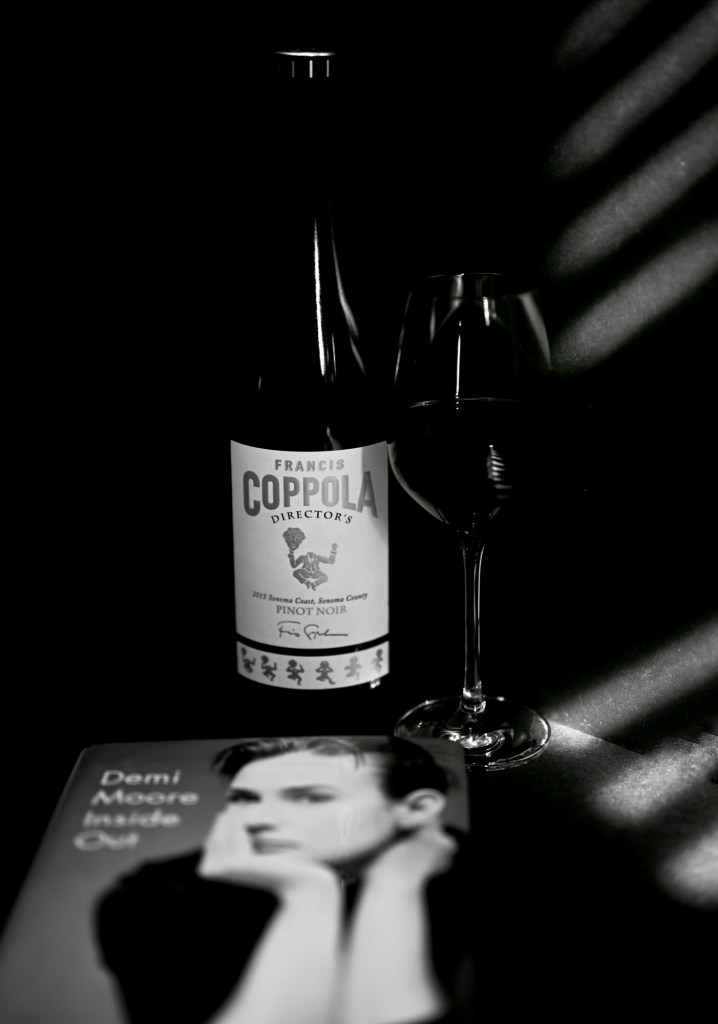
To cap award season, I’m spending time with two of Hollywood’s finest: Francis Ford Coppola and Demi Moore. One, a past winner for The Godfather Pt II; the other, a current nominee for her tour de force performance in The Substance.
It’s pretty cool to be up close and personal with the big stars. Well… kind of, sort of. To mark the occasion, I dusted off a bottle of 2015 Director’s Pinot Noir that we purchased on an unforgettable visit to his Coppola Winery. Saving it for a special occasion, it’ll be perfect to enjoy as they hand out the gold hardware.
But before that, I’ll be hunkered down reading Moore’s book, Inside Out – her candid memoir about a life of fame, fortune and stardom amidst immense struggles. I’ve always loved her work and can name so many of her films coinciding with different times in my life. Ghost can still make me cry. Ditto?
So from now until the Oscars on Sunday night, I’ll be off the grid with a good book, then tuning into the broadcast with a great bottle of wine. And once the bottle is empty, I’ll be sure to thank the Academy…
Know what’s been around as long as love? Volcanos. And much like a volcano, love can sit quietly patient until all the elements are in place and then…🌋
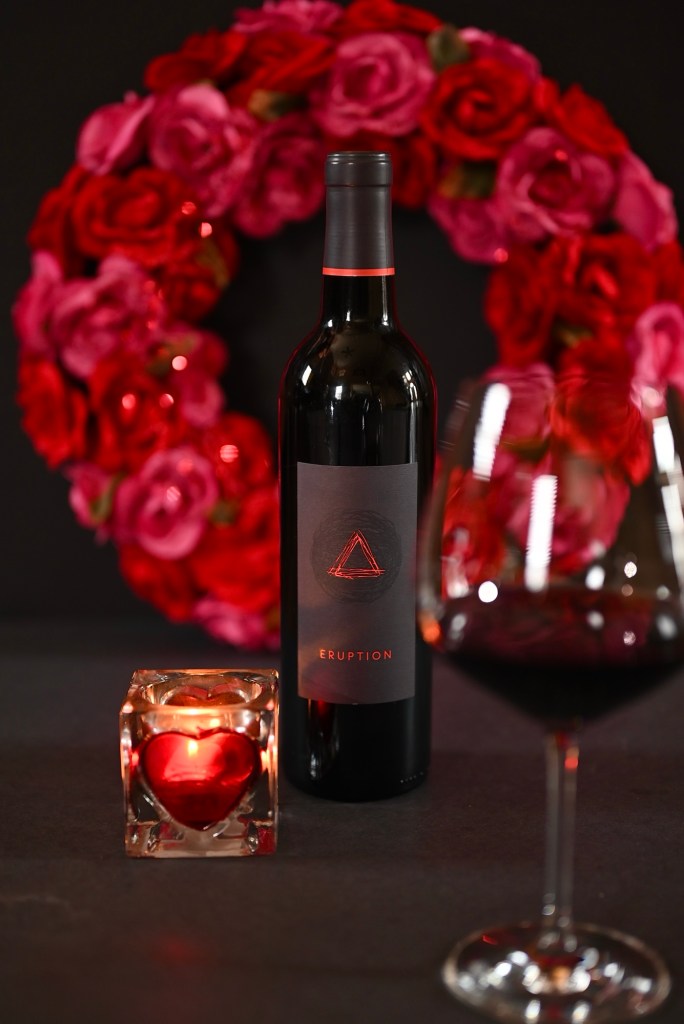
When I first saw this 2020 Eruption I was intrigued about the name – that’s some mighty hot stuff for a red blend. I discovered that it’s named for its terroir.
The Struggle is Real
Nuzzling into a remote eastern edge of High Valley, California, not far from a majestic, primordial cinder cone, the Volcano Ridge vineyard is a landscape of spectacular red volcanic soils with steep slopes. Originally planted in 2003 and 2004, the vineyard is home to a large number of varietals, including Cabernet Sauvignon, Syrah, Malbec, Petite Sirah, Mourvèdre, Grenache and Zinfandel. The rich yet coarse volcanic earth creates an environment for an excellent drainage system. Through sandy, pebbly soil, vines must struggle to find their way to water and nutrient sources. When vines struggle this way, the intensity of that struggle is reflected in the fruit’s structure, complexity, and concentration. These elements meld together to produce full-bodied, rich, flavorful wines. Just like creating volcanic wine, love’s struggle, patience and kindness can be an essential element to cultivating true devotion and passion.
Eruption of Flavors
On the nose, this blend has a blackberry | blueberry vibe with hints of lilac and oak spice.
Deep ruby lusciousness cascaded into my glass bringing forth tastes of blackberry jam, stewed blueberry, a little sweet tobacco in the background, and a whisper of spice on the finish. It had that gravitas of a Cab with the jammy playfulness of a lush Zin and Petit Sirah. So much yum!
Conscious Couplings
Best pairings for this blend include: ◦ aged cheeses: gouda, gruyere, cheddar ◦ main attractions: lamb/ pork chops w/ fingerling potatoes, mushrooms ◦ steak, roasted root vegetables
Steer clear of lighter fare such as fish.
Winemaker’s notes – “The fruit for this blend was harvested in the early morning to maximize quality. The various components of our Eruption were fermented separately in small lots to enhance the varietal attributes needed to produce the perfect blend. This blend was then aged on both French and American Oak for 10 months for structure and character.”
No matter whether you’re celebrating Valentine’s, Galentine’s or Palentine’s – enjoy responsibly and let your love, and the wine, flow!
Next week kicks off the official start to the holidays!🦃🎄🥂🍷
And with those celebrations come many traditions. Many that our loved ones might be hard pressed to abandon or change.
Not surprisingly, one of those traditions involves wine. And a very particular type of wine.
Over the years, HubbyDoug has been very ‘stamped-it-no-erasies’ about the centerpiece of our Thanksgiving wine offerings. Without question: Pinot Noir. And I understand why.
Pinot Noir has a beautiful lightness, a subtle yet present mouthfeel, delicate flavors of cherry, raspberry , clove, vanilla and mushroom. Oregon Pinots are a favorite because the cooler climate creates more tartiness in the vibe (Old World Pinots tend to have more earthiness but it’s all a matter of taste). Across the board, Pinot’s bright acidity makes it a great dinner companion – not only for the turkey main attraction but a variety of holiday savory and sweet side dishes. Think green beanand fried onion casserole, candied yams, squash-pecan casserole.
This year I want to break out an option: the beloved Zinfandel. Its bold, fruit forward vibe pumps up the jam along with some nuanced smoky notes. Flavors of blackberry, strawberry, cinnamon, crushed gravel and white pepper give it a lot of depth to play with the myriad flavors present on the table. The juicy fruit, richness of the tannins and smooth, lingering finish is worth popping the cork.
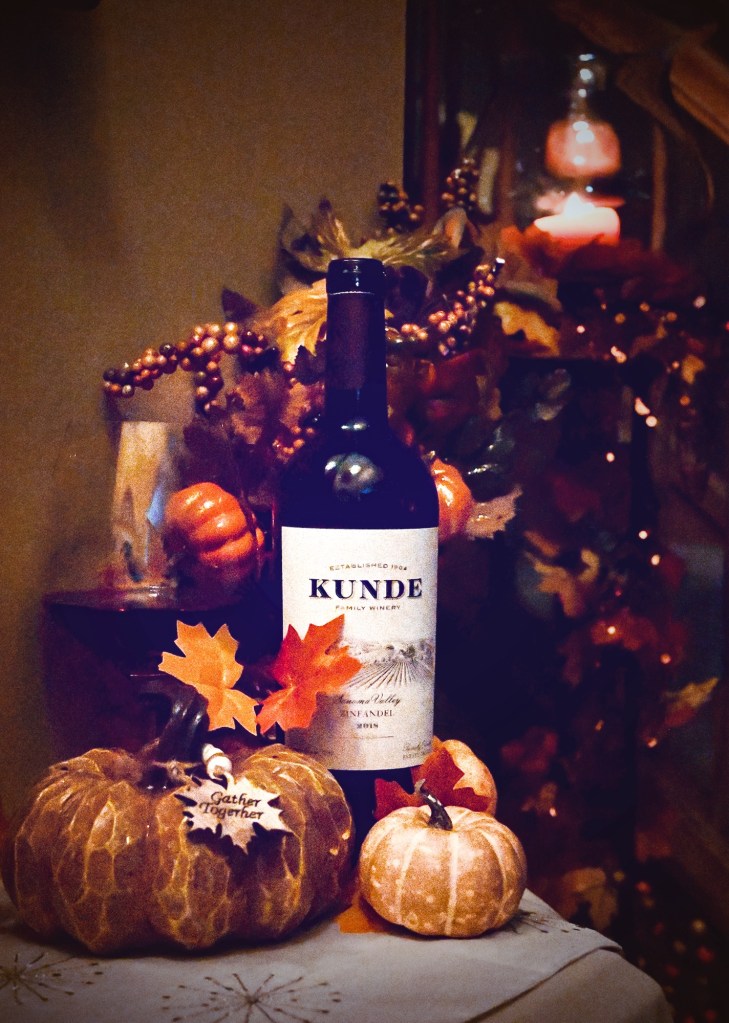
My pick is a 2022 Kunde Family Winery Sonoma Valley Red Zinfandel. I’ve enjoyed this wine during the year paired with roasted chicken, rosemary-garlic mash and charred broccoli with olive oil, and toasted pine nuts. I know it won’t let me down.
Ultimately, these two varietals will coexist in the most lovely way on our holiday table.
So this Thanksgiving, feel free to be a little zinful!😈
No matter what your choice, have gratitude in your heart and the sweetest day.💋♥️
One of the best things about having visitors from the North is not only spending time together but the treats they bring! 🍬🍭❣️ • Canadian Smarties are a sweet little taste of childhood; creamy milk chocolate enveloped in crunchy, brightly multi-colored candy shells. What I paired it with might be a little surprising. • Typical pairings for milk chocolate are richer, sweeter wines; tawny ports, Lambrusco,Reciotto della Valpolicella; late-harvest reds such as pinot noir, petit sirah, and shiraz. My pick of this 2022 Gundlach Bundschu DryGerwürstraminer is not a typical pairing. So why would I choose a dry white wine of all things??? Whyyyyyy?? That’s not in the rules!
Well…I like a juxtaposition of flavors, styles and mouthfeel when pairing food and wine. And I was looking for something a little off the typical path. I didn’t want the sweet sensation to become cloying (no one likes a clingy anything). Its flavors of lychee, tangy tangerine, crisp white pear and ginger give more bounce to the ounce on your palate. 🍊🍐🫚 • This was a beautiful balance. A little surprising, I wasn’t sure what to expect at first. But the dryness of the wine played so nicely with the light creaminess of the Smarties and candy shell. Its balanced acidity took just a tiny edge off the creamy; providing bright bursts of flavor to the mix. • Serving notes: Chill overnight, then let it sit just a little – about 55-60F (12-15C) to open up. Then bring on the chocolate Smarties.
It’s a crisp October night. Candles lit, you nestle in with a great horror novel. The moon is full, suddenly there’s the sound of leaves rustling outside. You shake off the sensation of the hairs standing up on the back of your neck. It’s just silly jitters. And then you hear the scratching at the window…
One of my favorite Halloween novels is Stephen King’s Salem’s Lot. I also loved the classic 1979 film version to get my creep on and send shivers down my spine. The freaky glowing eyes, the glimpse of fangs in the moonlight, the creepy little kids wanting to come in and play, the slow creak of the rocking chair in the empty room upstairs. And that house.
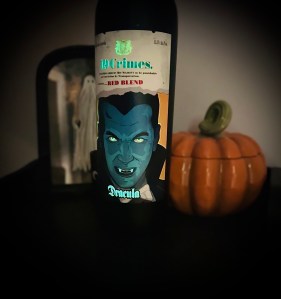
Lore tells you never to invite a vampire inside your home. But these two are ok. Let them in.
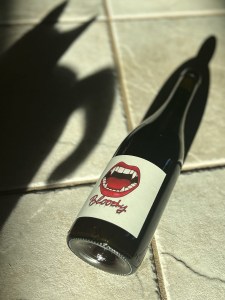
Organically grown in France’s Loire Valley, this Bloody wine is made from hand-harvested Grolleau grapes. Picking by hand is what can account for a higher price point. This is labour intensive work. Similar to Pinot Noir, this grape variety is thin-skinned, has fewer tannins, and is very susceptible to damage and disease. Extra care must be taken. Whole cluster fermentation is also used to impart more of a fruit forward quality and give a bright acidity on the palate.
The color is a bright, vibrant red as it pours. It seems to levitate just like Danny Glick floating to your window.
On the nose: • blackberry • cherry
Flavor profile: • sour cherry ( a little like a Jolly Rancher) • herbaceous • earthy vibe
Pairs well with: • Red peppers staked with goat cheese • Grilled seasoned chicken • Mild creamy cheeses • Patè
I think we can call it official – summertime is here!😎🥂
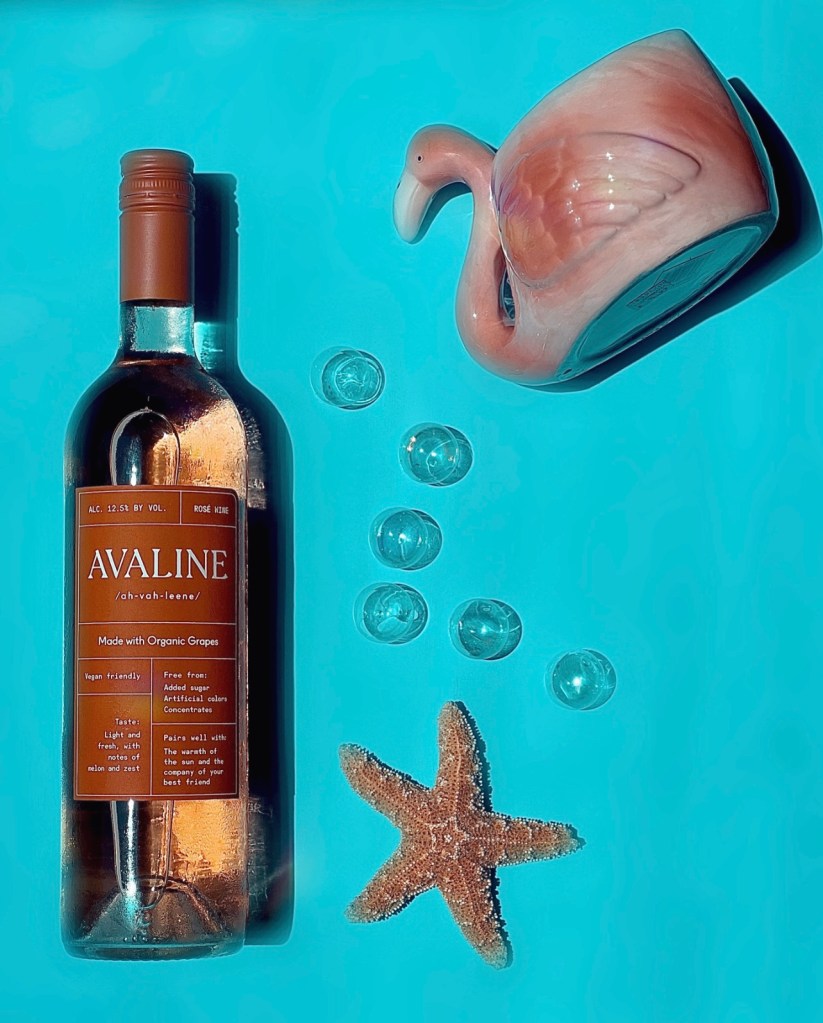
And when that mercury starts to climb, we want less heat and more chill in our glass. A clear choice to beat the heat this season is Avaline (ah-vah-leene) Rosé.
Cameron Diazand business partner Katharine Powerbonded over both a glass of wine, and a shared philosophy: to make great quality wines that are purely organic. They partner only with growers who share their commitment; using only natural methods to create wines from 100% certified organic fruit, with zero synthetic pesticides. No artificial colors, refined sugars or additives are present, and transparency in all winemaking, and labeling, is key. Current regulations do not require nutritional/ingredient information on wine labels. Other than the percentage of alcohol and short varietal list, most of us don’t always know what’s in our glass. This is something Diaz and Power wanted to highlight.
With respect to sustainable winemaking, their sourced vineyards are generally lo-irrigation, or they are dry-farmed, relying only on rain water to provide moisture. With water shortages becoming globally prevalent for growers, decreasing fresh water consumption has become a necessity.
Benefits of lo-irrigation and dry-farming are many: it’s an environmentally responsible choice, and produces more intense flavor in the fruit. Like all things, balance is important. Dry- farming is best with well-established vines that have deep root systems. However, it can take years before this happens. Vines that have regular irrigation tend to have more shallow root systems – they don’t have to work as hard to find their water source. To coax the younger vines into strong fruit producers, sometimes low irrigation, only when needed, is essential.
Avaline Rosé, a Vin de France wine, is cultivated in Provence by Famille Negrel wines. Their vineyards are lo-irrigation, adding moisture only when necessary, especially if the crop is in danger. Chickpeas are grown on site to provide vital nitrogen to the vines. Their vineyards are certified organic by ECOCERT.
Sometimes rosés can taste watered down, as though the crop had too much rain at harvest. Others taste as more heavy-handed, trying too hard to be flavorful. This wine, with its blend of Cinsault, Grenache, Cabernet Sauv, Syrah and Caladoc is flavorful, fresh and well-balanced.
Tasting notes:
Flavors of honeydew melon, orange zest, cardamom/ginger spice, and tart white peach lingered gently on the finish. Ethereal and delicious, and possessing a light-bodied, yet lingering mouthfeel.😙
A 5FL OZ pour was 107 calories, 2.6G carbs and zero fat (says so right on the label).
With the luck o’ the Irish at yer back, may you find health, happiness and a pot of gold. Okay, that’s not really a blessing but a mashup of a few.
St. Patrick’s Day is a sure sign that spring is on its way. And spring is often viewed as a season of magic and alchemy. Wine is also a blend of magic and alchemy. Especially Irish wine.
Growing conditions in the Emerald Isle can pose many challenges to winemaking. And that’s where the magic comes in.
Established in 2002 by fruit alchemist David LLewellyn, Lusca cultivates several varieties of grapes including Cabernet Sauvignon Merlot, Dunkelfelder and Rondo – a grape that can heartily withstand Ireland’s damp, misty weather.
Click the video to learn more about Irish wine and how its made!👇🍀
A few years ago I was determined to find my little pot of gold, and I did. To read more about my search click here. Since then this lucky bottle has remained, relatively undisturbed, in my little cellar wine fridge. I hope it’s been enough to ensure its good condition. All told, it has aged about 9 years. I had many thoughts before opening: has it already peaked? Is it a delightful vinegar? But maybe luck would be on my side.
There was only one way to find out…
Time to release the wine!
To be safe, I decanted for about 2 hours. I wanted to let it open up as fully as possible to make a fair assessment. So how was it?
It didn’t turn to vinegar! I wasn’t as concerned about the wine as my storage. I don’t have a fancy wine cellar, and occasionally had to move the bottle around. I had been worried that after all this time, maybe some oxygen had gotten inside. But I was so happy that all seemed to be well. Magic!
It was a lighter bodied Cab/Merlot. I enjoyed delicate notes of blackberry, dried herbs, and a pleasant, earthy cedar undercurrent. I found myself swirling my glass often to coax out every essence. It had a clear, deep ruby color giving way to a slight brownish rim variation (the outer edge of the wine). This suggests aging of the wine. I didn’t notice any nutty or toffee flavors that indicate an oxidized wine.
As I tasted, I noticed the sun was shining – here in the Cleve we catch it while we can- so I bundled up, sipped my glass outside.
To celebrate International Women’s Day, I popped open this bottle. I toasted all women with a beautiful glass that filled my senses with the scents and flavors of rich blackberry, black cherry, and a hint of chocolate on the finish. But what really intrigued me was the story and vision of this wine company.
As well as producing some pretty incredible wines, their roles as visionaries, innovators, leaders and advocates led to the development of the SHECANWines Fund initiative. It was created to promote the professional advancement of women in the wine industry in an effort to help close the gender and race gap.
To date, the SHE CAN Fund has invested more than $3 million in the professional advancement and career growth of high-potential, professional women, with a specific focus on women of color.
This year’s focus: Women learning and excelling in the business of wine.🎉









 The Wine Student