Eduardo Galeano once said, “we are all mortal until the first kiss and the second glass of wine”.
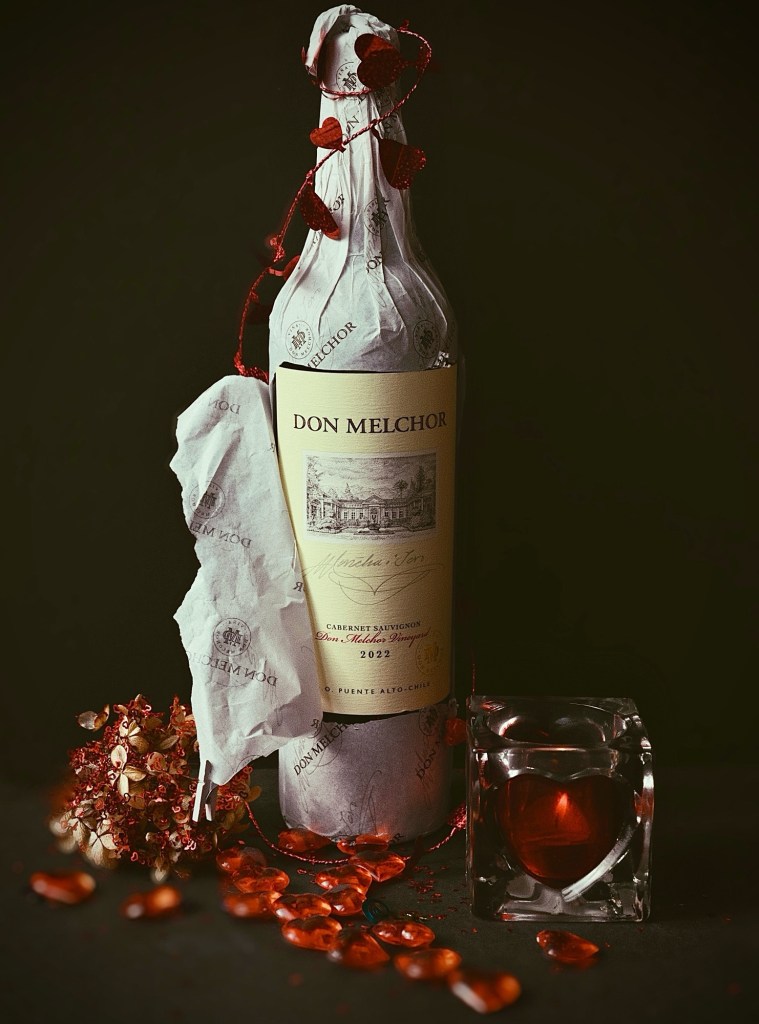
The 2022 Don Melchor Cabernetwould be a good example of a wine transporting you from ordinary soul to a beloved immortal.
And it’s not just because you’re tipsy.
Made from vines on the N bank of the Maipo River at the foot of the Andean Mountains, in loamy, well-drained soil, this lush offering is comprised of 95% Cabernet Sauvignon, 5% Cabernet Franc, 1% Merlot and 1% Petit Verdot. It’s aged 15 months in French Oak barrels which adds to its complexity and depth of flavor. Robust notes of blackcurrant, floral, spice and vanilla tickle the nose. Jazzy flavors of blackberry, dark cherry, peppered chocolate and hint of coffee embrace your palate to take you to a magical place.✨
Pairs well with:
• Char-grilled Steak – marbled cuts like Ribeye are buttery, juicy and flavorful, and play well with the wine’s strong tannins and acidity
• Roasted Lamb – w/ rosemary, garlic and salt
• Aged Cheddar – contrasts beautifully with the high tannins of the wine
• Mushroom Risotto – the umami quality of mushroom beautifully juxtaposes the structured tannins of the wine
• Roasted Vegetables – root veggies like beets, carrots, sweet potatoes can bring out the subtle sweetness of the wine
• Dark Chocolate – 70% is best – the slight bitterness of this chocolate pairs beautifully with the fruit-forward qualities of this wine – Yum!
Price Point is a little more on the expensive side, about $150 – $200 ( tho some online shops sell this gem for a little less)
I hope you find this Valentine’s Day filled with the things that bring a little heat and elevate you to an extraordinary place.❤️🔥
To cap award season, I’m spending time with two of Hollywood’s finest: Francis Ford Coppola and Demi Moore. One, a past winner for The Godfather Pt II; the other, a current nominee for her tour de force performance in The Substance.
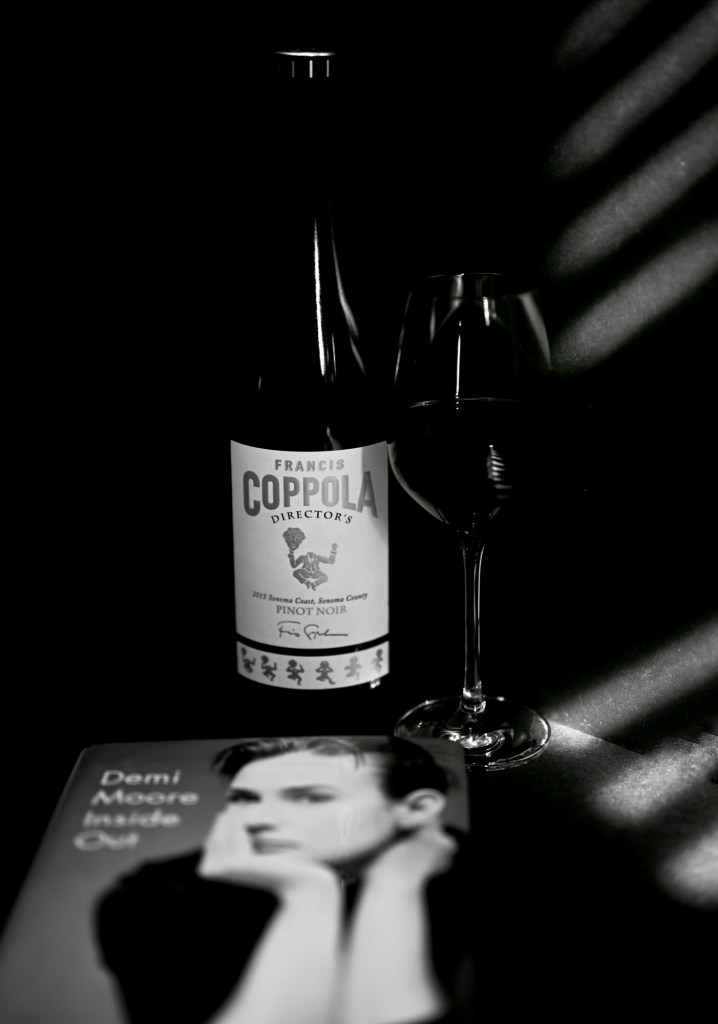
It’s pretty cool to be up close and personal with the big stars. Well… kind of, sort of. To mark the occasion, I dusted off a bottle of 2015 Director’s Pinot Noir that we purchased on an unforgettable visit to his Coppola Winery. Saving it for a special occasion, it’ll be perfect to enjoy as they hand out the gold hardware.
But before that, I’ll be hunkered down reading Moore’s book, Inside Out – her candid memoir about a life of fame, fortune and stardom amidst immense struggles. I’ve always loved her work and can name so many of her films coinciding with different times in my life. Ghost can still make me cry. Ditto?
So from now until the Oscars on Sunday night, I’ll be off the grid with a good book, then tuning into the broadcast with a great bottle of wine. And once the bottle is empty, I’ll be sure to thank the Academy…
Eduardo Galeano once wrote, “We are all mortal until the first kiss and the second glass of wine.”
It’s true – that first kiss can make us feel like we’ve had that second glass of wine; dizzy, fizzy, and warm all over. Don’t get me wrong, I love me some chocolate but it doesn’t usually make me feel like that. And chocolate doesn’t always fit in my wine glass.🍫
This year, I wanted to explore a couple of intriguing alternatives to the chocolate covered heart.
Check out the video below for more info about these wines!👇
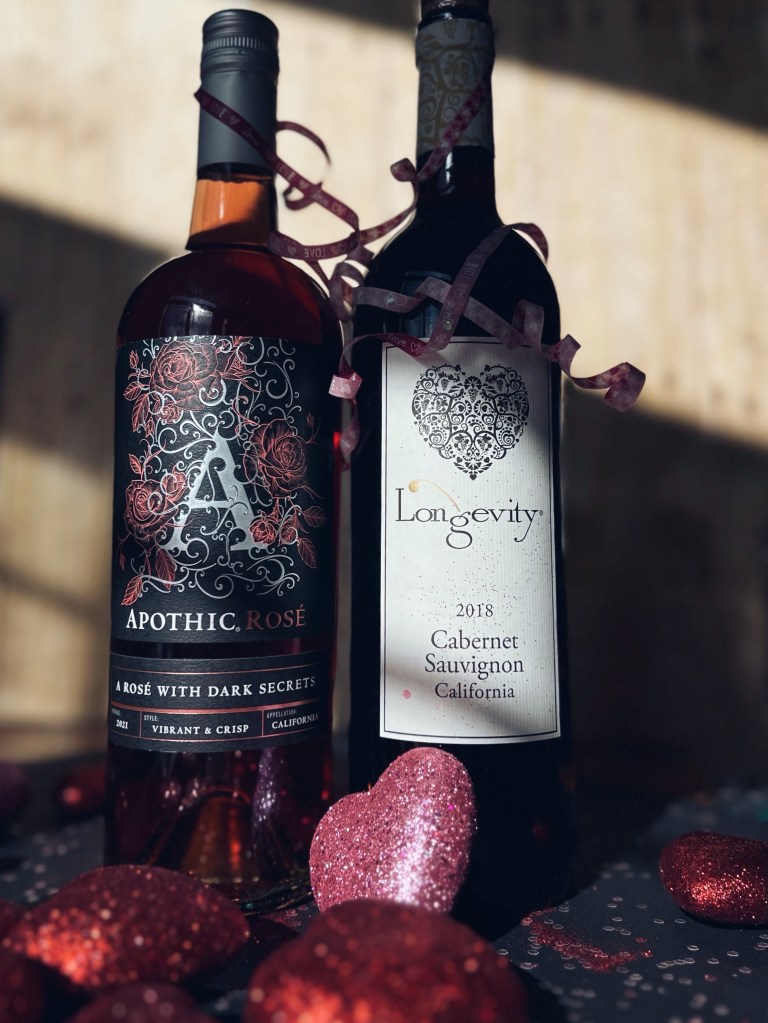
The label says that it’s the “rosé with a dark secret”. I would like to know what that secret is. Though maybe that’s what the second glass is for.
From E&J Gallo, and cultivated in Central Valley, California, this wine is a beautiful, deep rose-gold color. The classic color of many rosés is a light-medium salmon pink. This is a Grenache, Temperanillo, Pinot Noir,Sangiovese & Carignane blend that created a rich color in the glass. It had a subtle cherry vibe on the nose, and flavors of lush strawberry, ripe raspberry, and a sensual whisper of dark chocolate on the finish. Interlaced all together, it tasted like… more!
Also cool: the label art of swirling roses was designed by tattoo artistSasha Masiuk.
From the growing region of Livermore Valley, California, Longevity is one of the largest Black-ownedwineries in the United States.
Deep, ruby red in color, this Cab was immediately drinkable. I tasted without decanting, and it was flavorful right out of the bottle. Often, a little merlot is blended with cabs to soften the harsh tannins. This was a cab with no harsh edges. Softer tannins made for a smooth and satiny experience, like slipping on a lux pair of silk pajamas. Classic flavors of red plum, black cherry, blackberry swirled together, with a little black licorice lingering on the finish. Together it created a deep, well-structured profile.
Their description of the wine was ‘muscular’, which is very true of most cabs. But no heavy lifting was required to enjoy this wine. This was full-bodied but not overpowering; so nice to slowly sip and savor.
The twist-off cork is genius! Like its sister the screw cap, it made opening the wine a breeze, especially if you’ve forgotten your wine key (corkscrew). It made storing even easier. No leaks!
The label is what first attracted me; a beautiful heart. Take a closer look and you’ll see the intertwining of grapes, hearts and vines. The heart was designed by Longevity’s owner, and winemaker Philip Long’s late wife-and business partner, Debra, who saw the design as an expression of their both their love of wine, and each other.
💰Price Point: $15.99
So whether you’re enjoying à deux or just celebrating you, surrender this Valentine’s to a little decadence. It’s better than chocolate!♥️🍫
The last of the holiday treats are gone, and you feel like you need to take a little break. You’ve decided to embraceDry January. Good for you! In your quest, maybe you’ve noticed a few alcohol-removed,dealcoholized or non-alcohol wines on the shelves of your local store.
Although the tipsy factor might not be there, alcohol-removed red wines, like their boozy cousins, contain resveratrol, a powerful anti-oxidant contained in the skins of red wine grapes.
Here are some other health benefits of drinking dealcoholized red wine:
• Decreased risk of cardiovascular disease
• Decreased risk of cancer, inflammation, diabetes
• Decreased blood pressure
• Less calories than regular wine
• Decreased passing out while binge-watching your favorite show and missing the best part
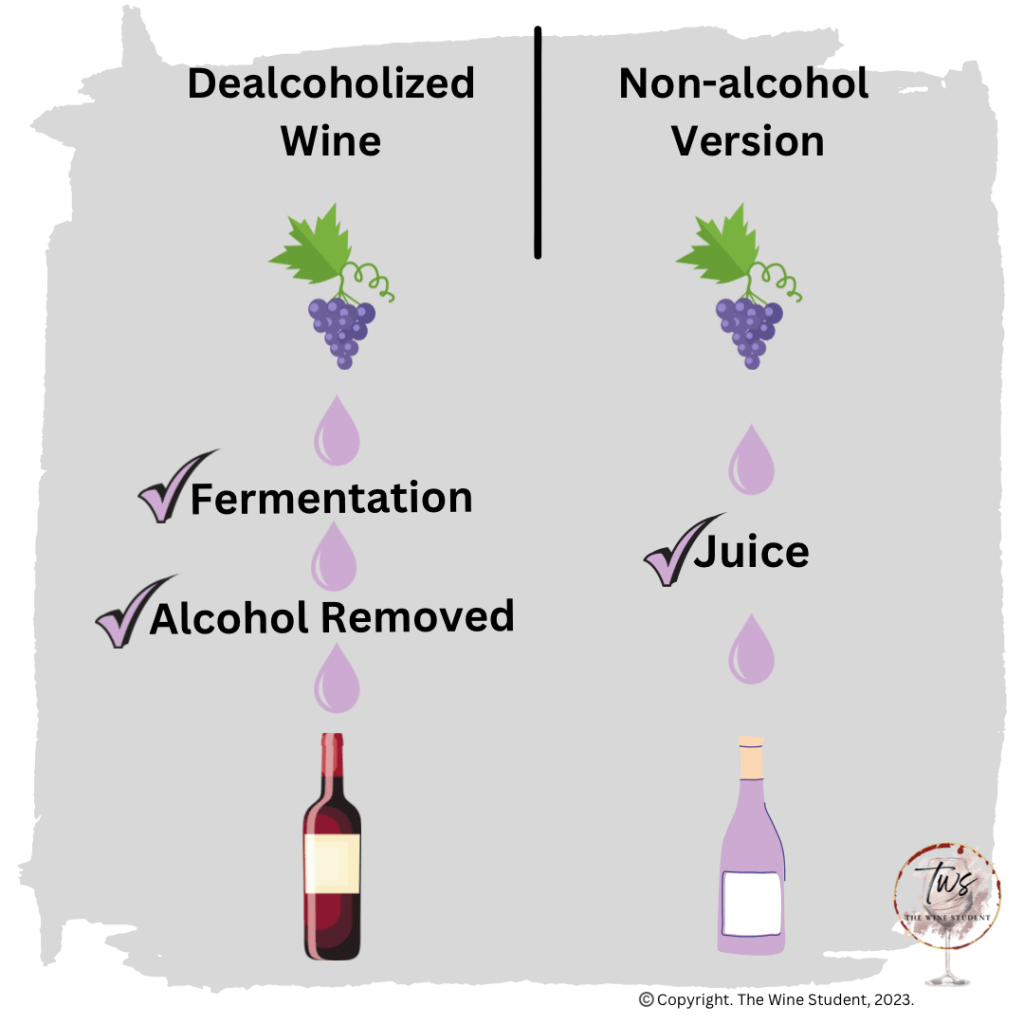
What’s the difference between dealcoholized and the non-alcohol version? Dealcoholized wine has gone through the traditional processes of winemaking: fermentation – which ensures skin contact, and turns grape juice into wine. The alcohol is then removed before bottling. Non-alcohol vino goes straight from juice to the bottle with no fermentation.
Still, it can be a little confusing when you’re searching for these wines. So check the label.
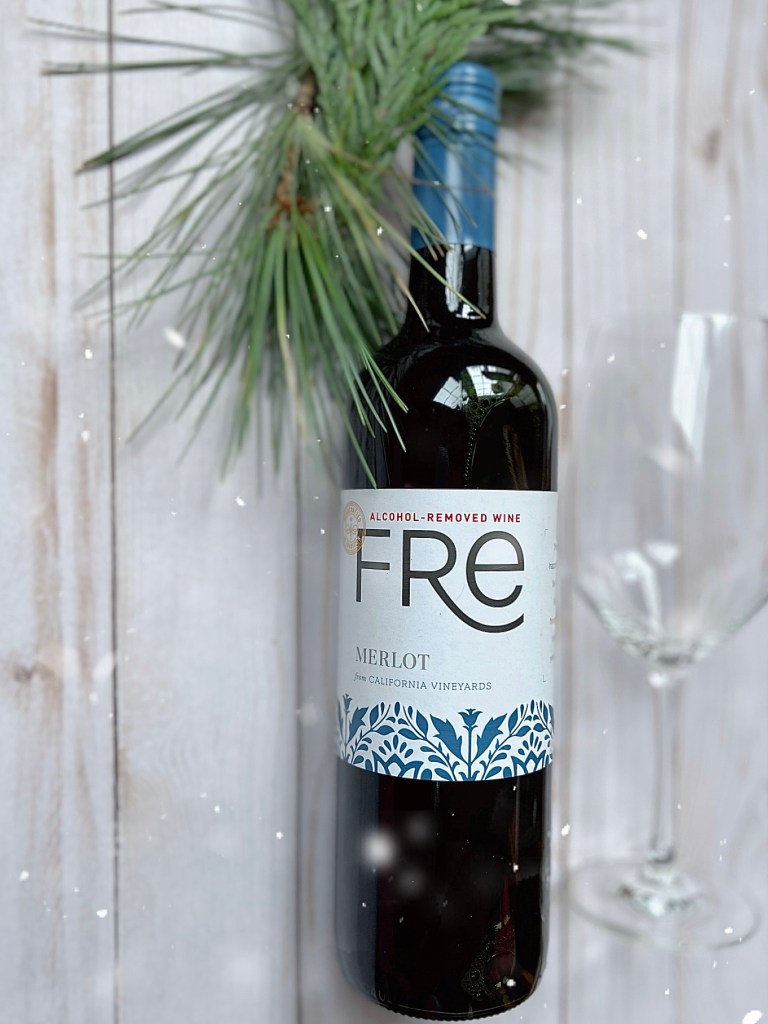
On the front, look for the term ‘alcohol-removed wine’. The back will have a nutrition facts label, and the terms ‘contains less than 0.5% alcohol by volume’ and ‘dealcoholized wine’. Some non-alcohol offerings simply state “wine alternative” which means it is juice that hasn’t been fermented.
So how do you take alcohol out of wine?
Here are three methods:
Spinning Cone Technology:
Freshly fermented wine, made in the traditional way, is poured into the top of a spinning cone column. Rotating cones transform the wine by centrifugal force, and turn it into a thin filmy liquid. Nitrogen gas is then fed into the bottom part of the column to extract flavors and aromas of the wine, and to prevent the wine from oxidation. The remaining liquid is passed through the column again to remove the alcohol. Flavor and aroma essences are then recombined with the dealcoholized wine, and blended with unfermented varietal grape juice to replace any lost volume. This creates a wine with less than 0.5% alcohol by volume. The entire process is done repeatedly and at low temperatures.
Vacuum Distillation:
Similar to spinning cone, traditional winemaking occurs before the alcohol is removed by extracting off the alcohol at a low temperature in a vacuum, keeping the wine’s flavors and aromas intact. Once the alcohol is removed, the essences and flavors are mixed back in.
Reverse Osmosis:
We’ve heard about this for water purification; in winemaking the process is the same. Wine passes through a very fine filter that water and ethanol pass through. The ingredients of wine, such as tannins, and other elements responsible for color, flavor and aroma are left behind.
According to liquor.com, here are some of the more popular alcohol-removed wines:
I tried the Fre Merlot. The consistency is thinner than its traditional counterpart. It tastes sweet, like a natural varietal grape juice. It had a nice, bright mouthfeel, and a beautiful claret color. And the looks you get when you pour a glass at 10:00 am are pretty comical. 😆
If you want to enjoy a dry new year, but still want enjoy the health benefits of red wine, take a closer look at some of these wine options. And let me know what you think in the comments!
We’ve all been there. It’s almost zero hour, almost go time. But wait! You suddenly remember that your primo bottle of bubbly is… still sitting on the counter. At room temperature. Damn. What to do?
If you’ve got 30 minutes, you’ve got it covered!
Your first instinct might be to put your bubbly in the freezer. If you do, make sure to watch your time! The reason? Pressure in the bottle can build up quickly. Any more than 30 minutes in the deep freeze, and you might have some premature poppage, and no one wants that. So maybe try this as a last resort.
And you don’t want to open it warm because you’ll shoot your eye out (or someone else’s). Part of the reason sparkling wine is chilled is to decrease some of the internal pressure; making opening the bottle easier, and less dangerous to everyone around you. Also: who wants to drink warm sparkling wine?
But the clock is ticking, and you don’t have time! Actually, you do. I got you.
The best, quickest, and safest method is an ice water bath.
Click the video below to find out more!👇
Ice Water Bath:
• Fill an ice bucket, pail, deep tray or sink half way with cold water
• Place bottle(s) in the container
• Fill the rest of the way with ice and add some salt.
• Leave 30 minutes (or a little longer if you can). Be sure to turn the bottle occasionally to ensure an all-over chill.
Adding salt to the ice water lowers the freezing point of the water, making the mixture much colder. The ice will melt more slowly because the water’s freezing and melting points have been lowered by the addition of salt. This also helps keep the cold temperature consistent.
When I worked the wine show last fall, we quickly cooled our sparkling wines using ice water baths. It only took about 30 minutes or so to efficiently chill the bottles so they could be opened safely, and were cold enough to drink.
Peppermint has always seemed like a tough pairing with wine. And I guess because brushing your teeth before a wine tasting always makes for a wonky flavor. Maybe it’s a toothpaste thing (heavier concentration of mint, surfactants in toothpaste that maybe coat the tongue) rather than a mint thing?🤷🏼♀️
But since peppermint is an aromatic herb, why not try it with an aromatic white wine or rosé?
•Gewürztraminer – intense floral aromas, grapefruit and lychee. Higher sweetness pairs with sweetness and mint. And just saying Gewürztraminer makes you sound kind of drunk. Don’t believe me? Try it!
•Sauternes – dessert wine from Bordeaux with Botrytis cinerea(which makes it delightfully sweet). Flavors of honey, quince and apricot make it sweet and oh so smooth. 🍯
•Sparkling Rosé – nothing better than bubbles to cut into some of the creaminess of the ice cream. The gentle acidity of the delicate fruity notes play hide and seek with the minty sweetness of the ice cream. 🍨🍾
Combining gingerbread with dates, cloves, allspice and toffee is basically a carnival on your palate!🎪
•Chenin Blanc – sweet golden nectar of pear, yellow apple, chamomile and honey, little more acidic to help carve through the richness of the toffee and cake consistency.
•Riesling – aromatic variety ranging from bone-dry to quite sweet. If you like dry, look for “Trocken” on the label. Anything sweeter: look for “Pradikat” – Kabinett (sweet) , Spatlese (sweeter), Auslese (sweeter still), all the way to Eiswein (sweetie sweet). Flavors range from dried apricot, citrus, green apple, green papaya, jasmine, depending on the growing region. High acidity again cuts into the rich cake.
•Port – Beautiful notes of black plum, chocolate, dries cherry and cinnamon complement this ooey gooey dessert as you nestle deeper into a spicy bliss with each sip.
I always feel a little bad for the nutty fruit cake. It’s so maligned. True, some can be as dense as a brick (and maybe even taste like one). But the combination of the buttery rum cake, rich nuts and dried fruit can be a lovely melt-in-your-mouth experience. Aromatic whites are a terrific pairing but so are some light-medium bodied reds.🍷
•Torrontés – From Argentina, this white wine can smell sweet but is dry and matches well with the spices, and melded aromatic flavors in fruit cake. Flavors of rose petal, geranium and peach round out this interesting wine.
•Cabernet Franc – Flavors of strawberry, raspberry and a hint of chili pepper make this a nice complement to the fruit cake’s nutty vibe.
•Merlot – Merlot is a softer red, and often blended with Cab Sauv soften its harsher nature. Yummy flavors of black cherry, plum and chocolate add to the fun, making that fruit cake the best you’ve ever had.
And if you find yourself overwhelmed, Ice Wine goes with everything!
So there ya go! Sometimes the best pairings are unexpected. Feel free to try your favorite holiday treats with different new, and fun wines.🍷🎄
♥️Thank you so much for stopping by, and supporting my blog. It’s fun to write, and I hope it’s fun to read.♥️
Wishing you all a happy and healthy holiday season, and we’ll see you in the new year for more wine adventures!🥂
The weather had been so grey and damp lately, I’m feeling it in my bones. Because the chill is going so deep, I wanted to find a wine that could warm me to my toes.
The 2021 Unshackled Cabernet Sauvignon was a luscious choice. With its deep pomegranate color, dark chocolate essence on the nose, and creamy mouthfeel, this wine helped me to break free from the cold. At least for a little while.
Soft tannins joined with flavors of black currant and blueberry, much like a dark fruit compote. Warming hints of clove lead my palate to a cozy, buttery smooth finish. Toasty!
• 2 1/2 oz Kinky Pink Liqueur – I used Mango, Passion Fruit + Blood Orange (chilled)
• Prosecco or Sparkling Wine (or no-alcohol sparkler)
• Fresh raspberries
• Lemon twist for garnish
Directions:
Pour tbsp Mathilde Cassis liqueur into a champagne flute (or pretty glass – Mom always deserves a pretty glass). Add Kinky Pink liqueur. Fill rest of glass with your choice of ice cold Prosecco, sparkling wine or favorite no-alcohol option.
Garnish with raspberries and twist of lemon. 🍋
Enjoy!
To all the hard working moms out there, take a some time just for you, and have a very happy Mother’s Day!💖
If you live where there is a regular accumulation of snow, then this winter has been a long one. And if you’ve been a little reluctant to go out right now, and just finished bingeing SuperPumped, The Dropout, or S2 of Bridgerton, here’s a way to unplug, and decompress. And apart from just drinking wine, which is always nice, reading about it can be just as interesting (without the buzz).
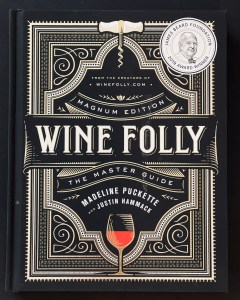
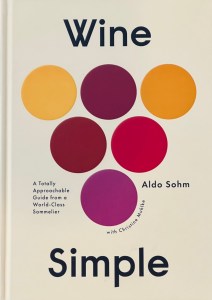
Below are two books that helped me get through many a long winter’s journey into night.
Packed with lots of info, and so well-written, they’re like taking a comprehensive, self-directed wine course without the hefty fee and stress-inducing exam at the end.
Check out the video below for a little taste of what you’ll find!
From the #1 ranked wine education site winefolly.com, Wine Folly: Magnum Edition is a culmination of many viewpoints: from wine writers and educators, to wine professionals and scientists.
Madeline Puckette is a wine sommelier, writer and visual designer. Justin Hammack is an entrepreneur, digital strategist and web developer.
This book takes you on a journey through the basics and beyond; how wine is made, facts about drinking wine (and how to avoid that pesky headache), a funny section on wine etiquette, and how to smell wine (to actually detect faults, not just to look fancy). It lays everything out with super cool graphics, and easy to digest descriptions that make learning easy if you’re new to wine, and a great review if you’re an old pro.
Sohm was named 2008 Best Sommelier in the World by the Worldwide Sommelier Association and namesake of the Aldo Sohm Wine Barin New York City. Christine Muhlke is former food editor of the New York Times Magazine, and contributing editor at Bon Appêtit magazine.
Wine Simple also has great depth of information, fun graphics, and cool side bars. An added feature: the main points of each section are highlighted for you, saving you time (and highlighter).
Check out the ‘Wine With Bad Raps” section for a good rundown on pre-conceived wine reputations that might make you go “hmmmm…”. It may have you completely reconsidering your next wine purchase.
There’s also an honest view about boxed, bagged and canned wines (spoiler: they’re not all that bad).
Both books examine wine regions, flavor profiles, practical magic of storing and serving, and much more.
Each have excellent chapters about food and wine pairing, which can be daunting at the best of times. And each have fun graphics, charts and practical info about cooking with wine. Wine Folly has a little pairing exercise that involves potato chips, cheese, honey and a pickle. I am SO going to try this in an upcoming post!
Both books are excellent and make learning accessible, enjoyable, and will have you understanding, pairing and enjoying wine like a pro in no time!
If you read either (or both) let me know what you think in the comments! 👇
With this February being what it is, we probably want to be cozying up under a soft, warm blanket, with a fire or candle glowing and enjoying a glass or two of something nice.
The pickings this year were a little slim in terms of wines marketed specifically to Valentine’s Day. This could be due to the current and pervasive supply chain issues. Whatever the reason, I managed to find a couple that looked fun and holiday ready.
Check out the video I made for a little more info on these fun wines!❣️
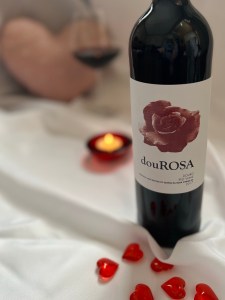
Made in the Douro region of Portugal, this is a luscious red blend from Portugal comprised of 35% Touriga Nacional, 35% Touriga Franca, and 30% Tinta Roriz grapes. Hand-picked and quietly left to mature for two years in stainless steel tanks, it is deep in color with an intense dark berry, blueberry vibe with both leathery and hint ‘o’ mint qualities. Younger wines have more of a violet vibe on the nose and they tend to have a dry and grippy mouthfeel due to bolder tannins.
The Douro region has a drier climate, with very warm summers. Because of an unusually dry, warm summer in 2017, harvest was a little early; mid – August, when the fruit was at its peak.
Tasting Notes:
• Deep ruby color – rich and clear – so beautiful in the glass
• Hints of violet (a soft, powdery raspberry vibe on the top) and caramel on the nose
• Dark, rich raspberry and blackberry w/a lush mouthfeel
• Medium tannin and mid-hi alcohol
• Paired beautifully with vegetarian pizza and fresh ripe blackberries
• Decant for at least an hour to open flavors
$19.99
Santero Villa Jolanda I Love You Extra Dry Spumante – This is one of the cutest damn bottles I’ve seen so far. Santero comes up with seasonal cool graphics; Halloween (which always sells out so I can never get my hands on one ), Christmas, and Valentine’s Day.
That’s part of the reason to check it out, and as an affordable sparkler, this is a fun offering. Especially if you’ve spent some of your cash on flowers, chocolate, and dinner, it adds up. Your sparkling wine should never leave you with a negative balance. Some might disagree on that statement. And while it is true, the sky can be the limit on what you can pay for a beautiful sparkling wine, feel free to adjust your Valentine’s budget accordingly.
Tasting Notes:
• Light yellow straw color – lots of pretty bubbles
• Nice acidity, not too sweet
• Flavors of honeydew melon, pear, cream
• Lighter body, refreshing mouthfeel,
• No decanting needed (don’t want to lose those bubbles)
• Serve ice cold
• Pairs: Anything
• $15.99
I hope you all have a happy and safe Valentine’s Day!💝
Please enjoy responsibly, and if you can’t be the with wine you love, love the wine you’re with!🥰









 ), Christmas, and Valentine’s Day.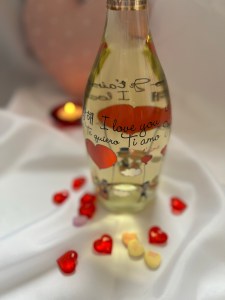

 The Wine Student