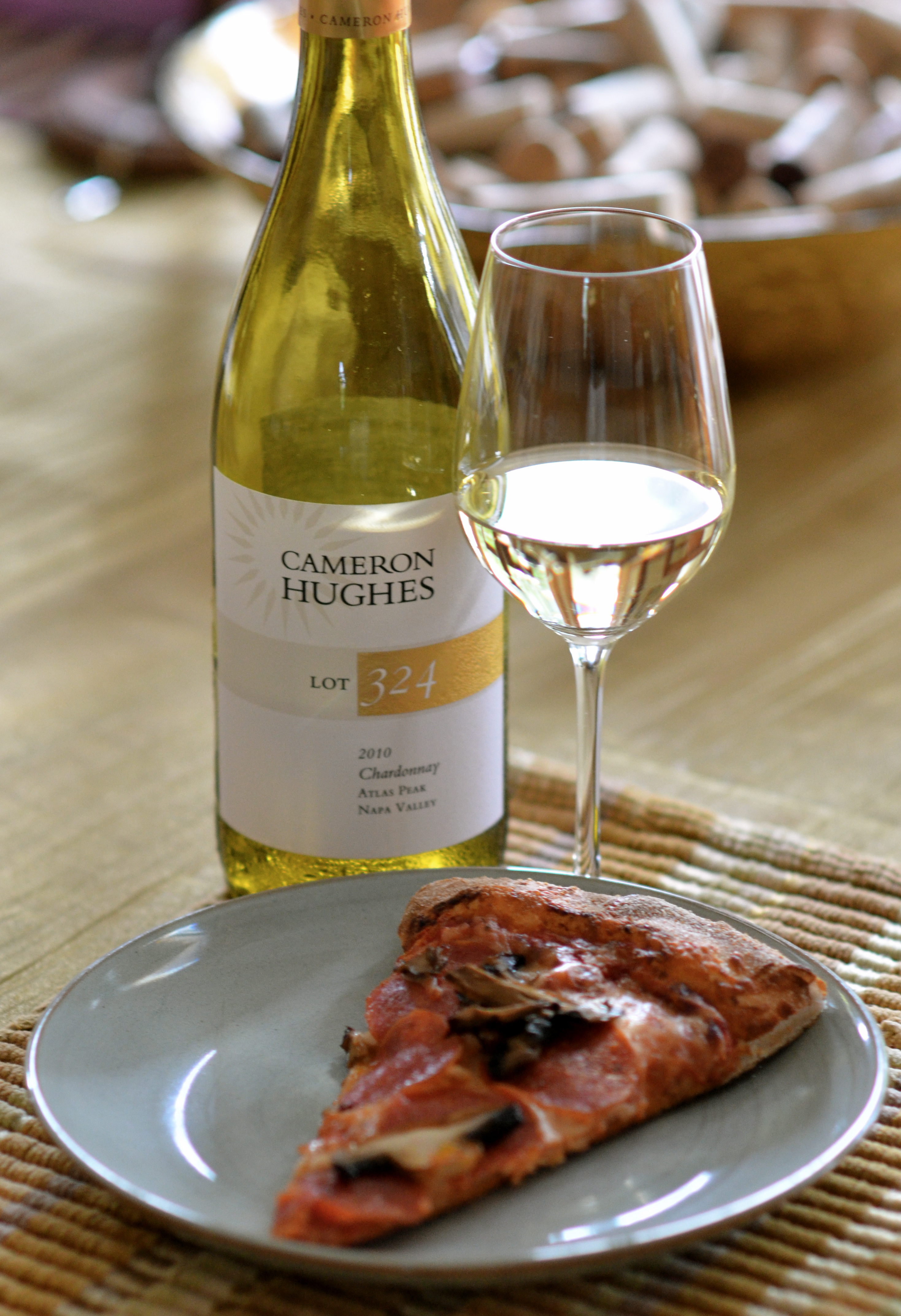
After a crazy week getting my girl to and from her end-of-school-year activities, I had a bit of time to grab a slice and wind down. And I did the very thing that would make most wine connoisseurs grimace and develop a nervous tic. I drank a wine that had been in my fridge for a few days. I know what you’re thinking, “Ack, what the hell, girl?!” But like bravely taking the walk of shame, and accepting my culpability, now I have no regrets.
When I pulled the bottle of Cameron Hughes Lot 324 Chardonnay from my fridge, I had my doubts. But it was a warm evening and I wanted something a little refreshing ~ somehow, a red just seemed too heavy. And there it was, just like the kinda-cute guy you didn’t quite notice until closing time. It wasn’t until I paired it with the basic cheese, mushroom and pepperoni pizza that things really started to happen. (Really, pairing pizza with WHITE? Girl, you must be tired.) Read on, brave one… First on the nose was a pleasing pineapple vibe. I wasn’t expecting to detect anything, given how long it had been laying low. As I sipped, while enjoying my pizza, the flavours of almond, toast and flowers were ever present; ending with a rich buttery finish. It totally surprised me that after this length of time, it could still offer such a nice flavour experience. The pizza must’ve been very salty; since that element is a very wine-friendly component that helps to soften hard elements , increase the perception of body in the wine and take down the acidity and bitterness. See, I did learn something from my course!
It wasn’t a wine expert’s ideal situation, at all. I understand completely. But I also understand the pleasure you can get from a little surprise that happens when you least expect it.
Chardonnay! ~What word did you think I meant? Probably one of the most ubiquitous and popular varieties, Chardonnay is being celebrated today. So in honor of Chardonnay Day, I wanted highlight some of the wonders of this familiar, yet kicky little grape.
One of the seven ‘noble’ varieties, Chardonnay, with it’s higher alcohol and low acidity makes it very easy to drink ~ refreshing with maximum buzz. Its flavours can range from green apple, pear, and citrus (cooler climates) to stone fruits like peach, apricot and nectarine. Cultivated in warmer climates, it tends towards tastes of tropical fruits such as banana, pineapple, mango and kiwi. An oaked Chard may reveal essences of vanilla or coconut if lightly oaked. Heavier oak gives flavours of toast, smoke, and yeast. Malolactic processes bring out the attributes of butter, cream and hazelnut. Mmmhmmm, that’s a lot of taste sensations to pack into one medium sized glass. Maybe we should have two. When paired with the playful and talented Pinot Noir grape, it’s the basis for Champagne.
According to Jancis Robinson, Chardonnay can be aged from between 2-6 years. Chards with that buttery, malolactic vibe have a shorter life span, so it’s best to consume quickly, about a year or so after the vintage date. The ideal serving temperature is lightly chilled; 10-13C (50-55F).
It’s a tough little berry but because of its early bud break, it runs the risk of frost damage in the cooler regions of Canada, New York and Ohio. So tender loving care must be used in nurturing this noble grape.
Although not generally a Chard drinker, I didn’t want the day to pass by without paying a little homage .After reading about the interesting tastes headed my way, I may have been a bit hasty in my bias. A little attitude adjustment can be a good thing. I found a ’10 Cameron Hughes Chard from Napa tucked away in my cellar. It boasts ‘riveting aromatics and unctuous textures of orange blossom, lemon curd, toasted almond and honeysuckle.” It’s the wine that drinks like a meal! But I’m really looking forward to what I experience in my glass.
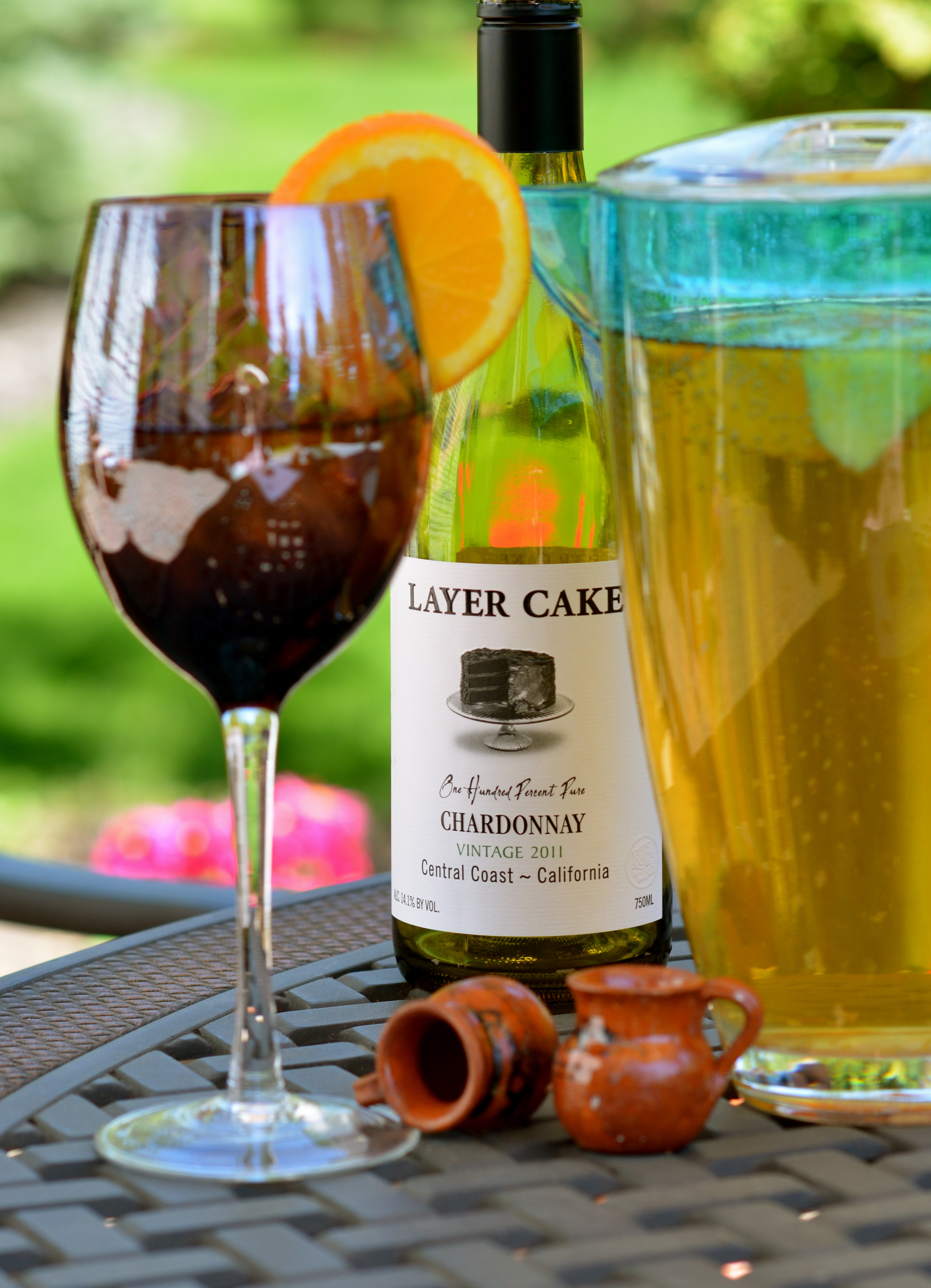
KISS ~ Keep it Simple, Sweetness! I used to think that making Sangria would be an arduous task, so I stayed away from it. But I wanted something fun to celebrate Cinco de Mayo. Though not a beer drinker, I’d usually choose the safe and sure Corona ~ where the hardest part would be finding my bottle opener and cutting some lime wedges. But with the weather being so beautiful (and in the Cleve, you have to take advantage when you can) I craved something fruity, fun and wine- based. I found an easy recipe for Peach~Mango~Chardonnay Sangria.
Some of the recipes I looked up suggested using Voignier, Pinot Grigio, Sauvignon Blanc, which tend to be much more fruity and lighter. Chardonnay is generally a full-bodied white. I chose an ’11 Layer Cake Chard. In part, because it was a less expensive bottle~ about $11~ and because I’d be mixing it with juices, ice and liqueur. I also thought since Chardonnay is so full-bodied, the taste would stand out more in the mix. The tasting notes claimed a citrus, pineapple and lemon curd vibe with a clean finish that I thought would be cool. I was pairing it with homemade Guacamole that was quite salty, and thought the sweet of the Sangria would meld nicely with the salt.
I really liked the Peachy ~ Mango first flush that quickly settled into the citrus and pineapple of the Chardonnay; and it really balanced out the onion, tomato and garlic elements of the guac. The next time I try it, though, I’m going to change it up using an inexpensive Voignier or Sauvignon Blanc, just to see if there is any discernible taste difference.
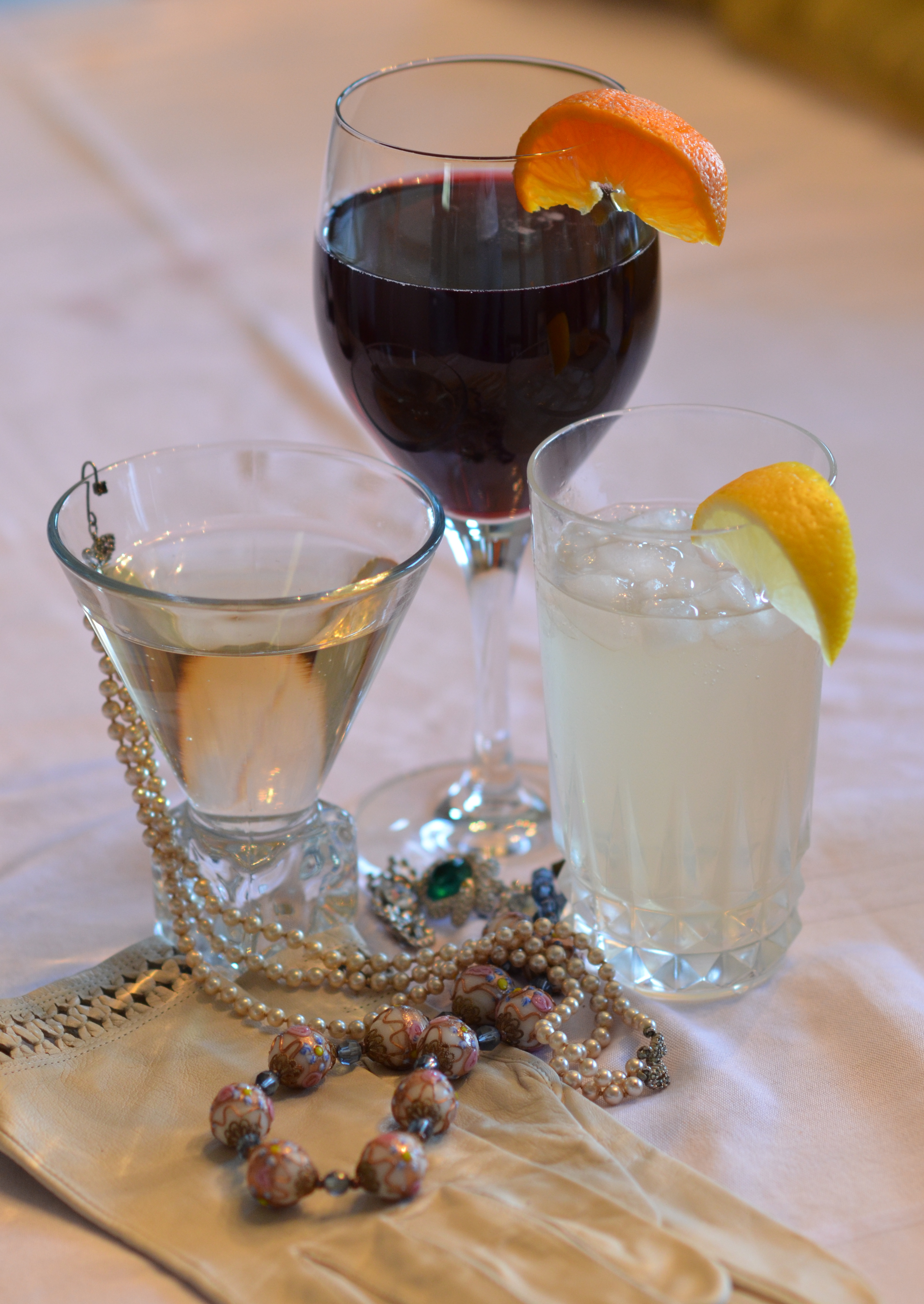
It’s no secret that I love AMC’s Mad Men. In the spirit of its Season 6 premier tonight, I found some wine-based cocktails that made me think of my three favorite lady characters: Peggy, Joan and Betty.
The Peggy (Operator)
2oz chilled dry white wine
2oz dry ginger ale
1 tsp lime juice
Pour over some cracked ice in an old fashioned glass. Garnish with a slice of lime and a generous dollop of sarcasm.
The Joan (Cabernet Cobbler)
4oz chilled Cabernet Sauvignon
1tsp fresh lemon juice
1tsp superfine sugar
2oz soda water
Dissolve sugar in lemon juice and water in a big, beautiful wine glass. Pour in Cabernet, stir gently and garnish with a slice of orange and a knowing wink.
The Betty (Diamond Fizz)
2oz Gin
juice of 1/2 lemon
1tsp powdered sugar
chilled Champagne
Shake gin, lemon juice sugar and ice, then strain into a high ball glass and fill with chilled Champagne. Garnish with an icy stare and a touch of resentment.
After some of the shocks of last season, I’m honestly not sure where this season will take us. But if memory serves, the Mad Men way of dealing life’s challenges is to remain calm, fasten your seat belt and smooth the rough edges with a great cocktail.
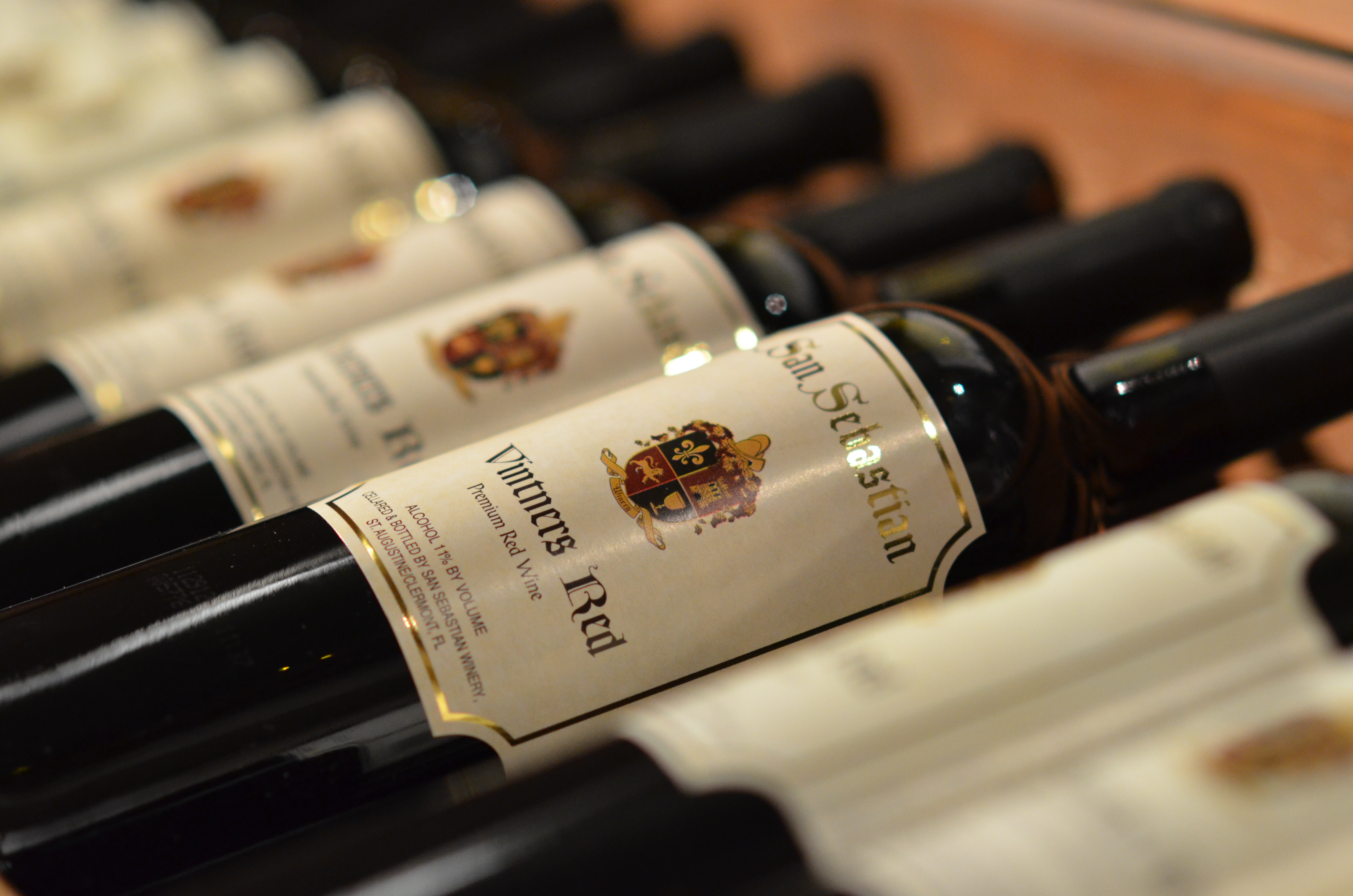
Wherever I travel, I always try to find a winery. Not that I can’t go a day without a glass of wine, but it’s a great way to check out local offerings and to taste the differences in growing regions. On this first trip to Jacksonville, I wasn’t sure I’d find one so close. San Sebastian Winery in St. Augustine, was only 45 minutes away by car. Sweet.
Established in 1996, San Sebastien Winery uses a combination of hybrid bunch grapes; Stover, Suwannee, Blanc Du Bois along with Muscadine. The Muscadine grape thrives in humid, warm conditions and well-drained, loamy sand. It bears fruit in small, loose clusters that allow for better air flow and circulation. If you look at the picture, they look really different from what we’re used to here in Ohio.
Muscadine Grapes Image via drlindseyduncun
Their growing season begins from bud break in mid-March to harvest in late July and August.The skins change from a bronze into a deep blackberry color, when fully ripe, and have a very high content of polyphenols and trans-resveratrol, highly touted for its’ health benefits. Muscadine wine is typically sweeter due to the sugar content from the winemaking process.
Unlike many wineries I’ve visited, there was no direct access to their vineyards, (Lakeridge Winery) located several miles away in Clermont, Fla. So we toured the winery, saw an informational video about how wine is made, had a quick look at the barrel room, the bottling area and finally wound it all up in the tasting room. There, we sampled a few of their products including: the Castillo Red (very Merlot-like) and the StoverReserve ~ quickly moving down the list, from dry to sweet, until we reached the sherry and port.
Tour guide Doc Michealson, instructed visitors on why the swirl is important and, specifically, how to properly sip the port and sherry. He explained that it would take three sips of each to get the full flavor. One lone sip and all we’d taste would be “the booze”, not that there’s anything wrong with that. However, I got his point that the beauty was in tasting the nuance of the flavors. For a winery whose mandate is for visitors to take with them some education about wine, and also a bottle or two, they do a nice job.
We found that most of the wines tended to be on the sweet side, even ones that were billed as dry, tasted quite sweet. That makes sense given the type of cultivar that do well in summer heat as well as the style of winemaking. It also could be because our palates are used to beefier, full-bodied reds from Italy, Oregon, Washington and Napa.
But that was the most interesting element because it was a true expression of their particular terroir.
Instead of being a copy of some other style, it was uniquely their own.
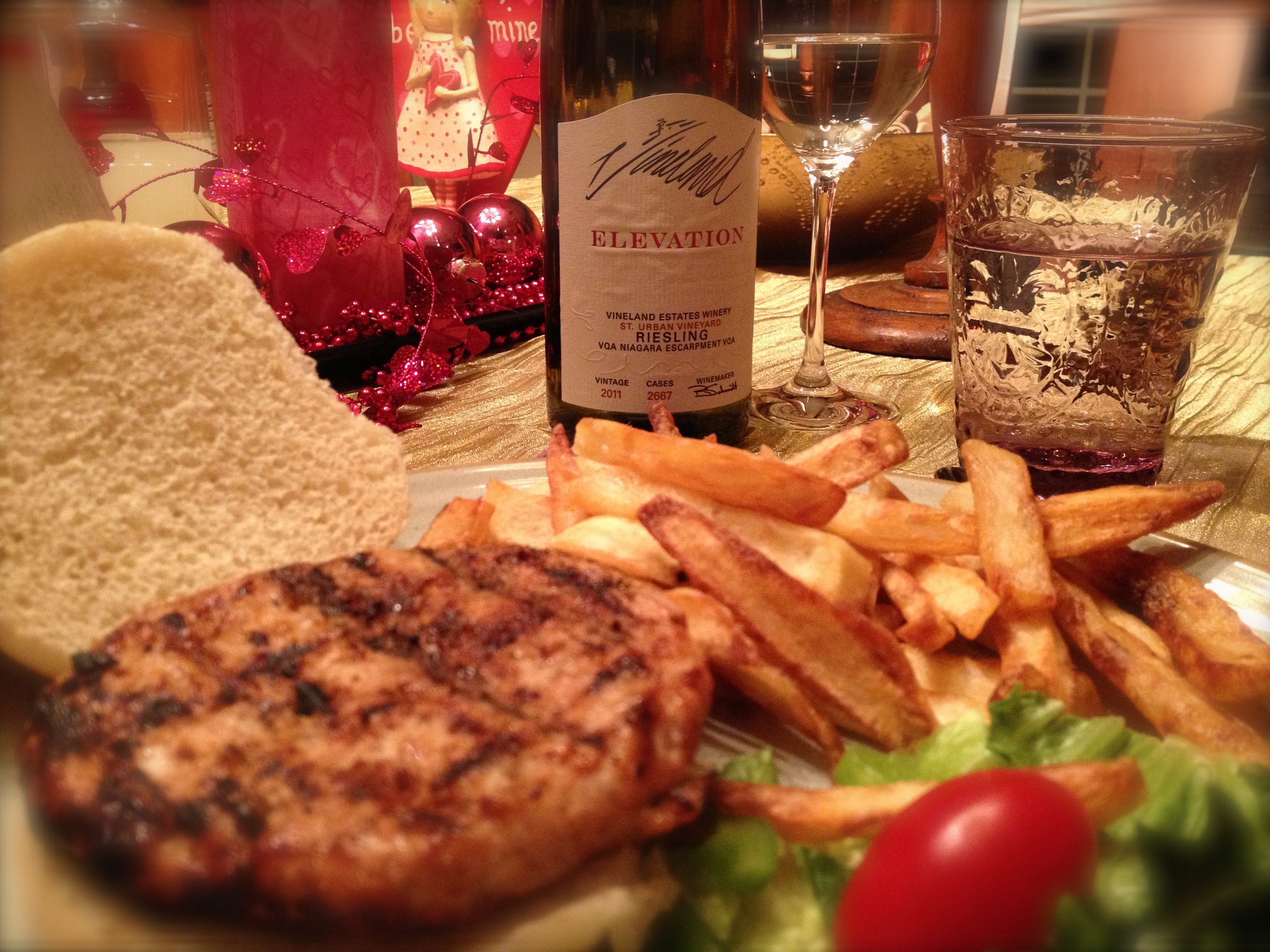
Snow piled up over much of the country this weekend, except in the Cleve. Cleveland, which tends to get many of Old Man Winter’s biggest dumps, was relatively sunny and clear. It was as perfect for barbecue cooking as you can get in February. And while we didn’t jump into our shorts and T-shirts, being outside wasn’t too bad. On the menu: Spiced chicken burgers, home made pommes frites ~ which sounds way cooler than French fries: fresh greens and a 2011 Vineland Estates Elevation Riesling. I rarely drink white wine during the winter; favoring reds for their robust qualities and ability to help keep me warm. But since the temperature rose a bit, I wanted to enjoy some lighter fare with my pseudo-summery dinner.
I’ve enjoyed Vineland Estate wines before so I was looking forward to pairing this one with the dinner. Looking in my collection, I discovered it was one of the last remaining guests from the past summer. I gave it the 15 minute rule and made sure to aerate as I poured it into my glass. It was very clear with a color of light straw. In the above picture, it looks almost like water, doesn’t it? This was deceiving. Based on the color, I thought it was going to be almost too thin but it packed a sweet and refreshing mix of lemons with a crisp green apple finish. The mouthfeel was grippy and dry and it had a sharp, oak-y grape vibe on the nose. At first, I thought it wouldn’t really pair well, but it surprised me by providing a nice balance to the spiced chicken and off-set the earthy quality of the potatoes.
The forecast in the Cleve for the rest of the week is changeable. But for this past weekend at least, I began to think that spring might actually be on the horizon. For those who spent their weekend digging out from the blizzard, I wish you well, and I feel your pain. I tackle snow the old school way; with a shovel…and a prayer.
I hope that there was a favorite drink as a reward for all your hard work ~ you earned it.
One of the things I love about going home toNiagara for the holidays; apart from seeing family and friends, is picking a new winery to try. Since I left almost 5 years ago, there has been an explosion of great wineries with something to please every palate.
When HubbyDoug and I were walking the main street we slipped into a little bar for a glass to take away the chill. We were treated to a Colaneri Estate Winery ’09 Cabernet Corposo. I noticed a distinctive richness and old world vibe from the very first sip. To be honest, my experience with many Niagara reds has been somewhat disappointing. They have a tendency towards a lightness and a green, vegetal quality that I don’t always care for. While they eventually settle into a pleasant flavor, it’s generally when you get to the bottom of the glass. I like a red to look me in the eye as it gently takes me by the collar and eases me back into my chair. This wine winked as it looked me in the eye.
I had to find out what made it so unique. A trip to the winery became my top priority.
Colaneri wines are made using an appassimento process that dates back to ancient Roman times. Harvested grapes are hung to dry before winemaking, to remove any excess water, thus shriveling the grapes. And why would you want this kind of shrinkage? All the better to concentrate the sugars and flavors in the resulting wine.
Recioto ~ also an ancient style of winemaking and also incorpporating the drying of grapes to concentrate the sugar content. Recioto may be red or white, dry or sweet. The dryer wines in this style are Amaronewhich can be intense at 16% alcohol.
Ripasso is a style that means to revisit or go over. It involves a double fermentation process in which additional dried grape skins are added. The sugar content has been heightened by drying and this increases the final alcohol and phenolic content in the wine which is known as passito.
Our winery guide, Pam, explained that Colaneri was one of only three Niagara region wineries to use this process. Their wines are kiln-dried, using both greenhouses with industrial fans and tobacco kilns. ”Since the kilns were no longer being used to dry tobacco, they have been put to use in winemaking”, she said. In the tobacco kilns, the fans push air up through the floor; where the greenhouse fans circulate the air around the fruit. The drying process can take up to two months with skin contact completed within 7-10 days.
After harvest, the grapes for Amarone and Recioto are set aside to dry in trays in kilns, or are hung in lofts ~ the hanging and careful placement in trays allows for complete air circulation so no mold develops. There they stay for approximately four months after which the semidried grapes are crushed and fermented with the grape skins. The grapes not used for Amarone or Recioto are crushed and fermented to be used later.
Once prolonged skin contact has finished, the wine is stored for aging. The additional wine (that had been fermented seperately) is introduced by being pumped over the Amarone | Recioto skins, thus starting the second fermentation. The saturated skins are still quite full of unfermented sugars, making them high in aromatics and tannins.
It was time to began our tasting with a spectrum of lighter fare: Pinot Grigio,Sauvignon Blanc, Gewurtztraminer, Chenin Blanc. The Chenin Blanc was my favorite; it had a taste of pear, pineapple and cotton candy (yum) with lots of citrus on the nose. Pam then took us into the reds startingthe Red Blend ~ a combination of Cab Sav, Syrah, Merlot, Cab Franc and Petit Verdot. She mentioned that it was their everyday wine that pairs well with everything from pizza to red meats to chocolate.
We then turned our attention to the Cabernet that we had enjoyed the day before. The scent of rich molasses was prominent on the nose with sweet tobacco, blackberry and raspberry resonating on the palate. Awesome.
The Cabernet Franc was rich and flavorful, with an distinct essence of plum. Pam mentioned that some who tried it but don’t enjoy prunes/plums weren’t always fans. She recommended pairing with tomato-y dishes to counterbalance the prune essence.
We spend a good part of the afternoon sipping and learning a lot about some very special wines. Pam was friendly, knowledgeable and made the field trip to Colaneri so much fun.
I came away from the trip feeling happy to have discovered a jewel of a Niagara wine. I’ll make a point to look for more wines created using this time-honored method.
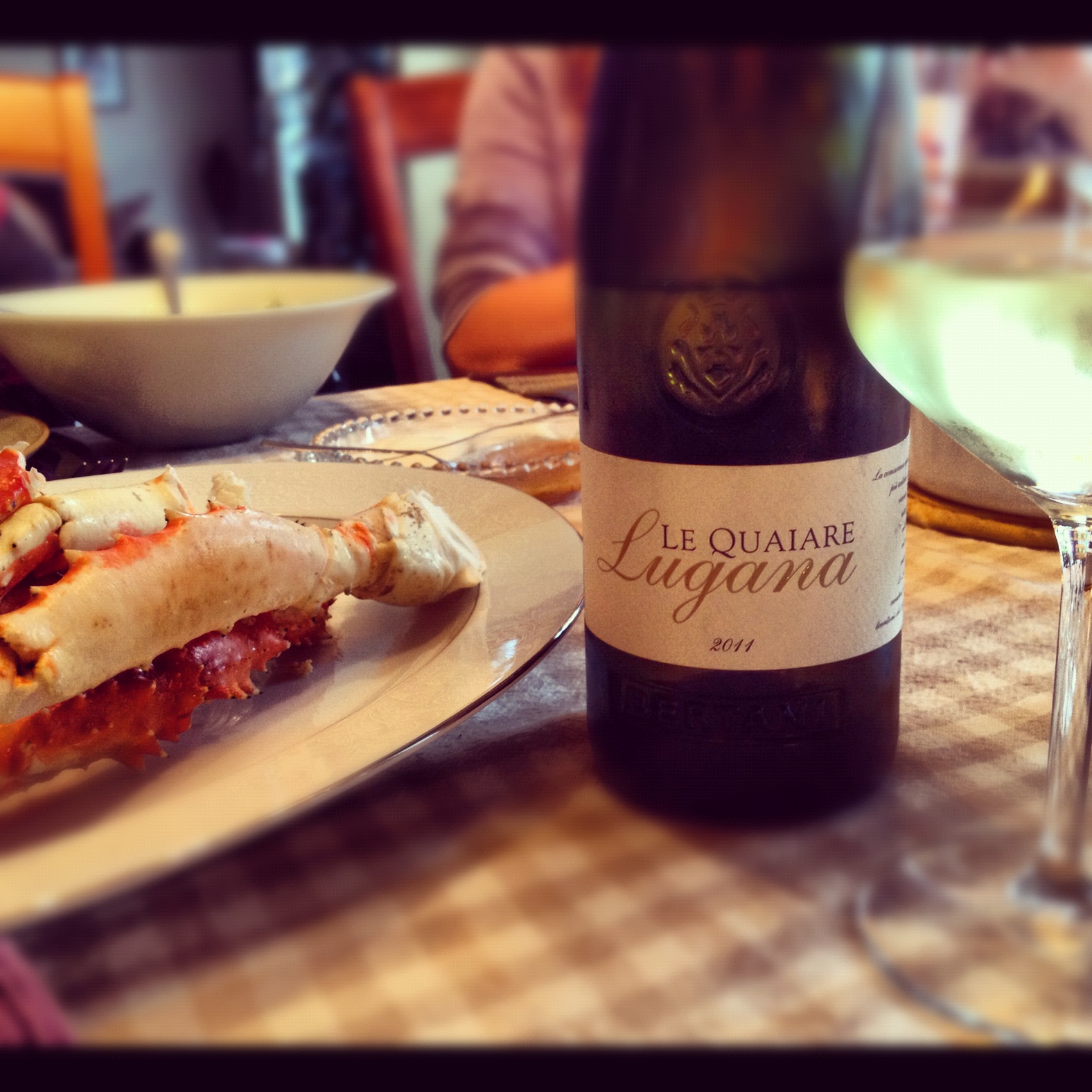
Tonight we dined on crab. It’s a treat we don’t have very often. And we don’t have it often because it’s somewhat pricey and also it makes my feet swell. I wrote swell, right? I’d hate for you to think it made my feet smell. It doesn’t. Anyway. HubbyDoug came back from his most recent trip to Italy with a lovely ’11Le Quaiare Lugana. Wait. A white wine? It’s true, I’ve spent much of this blog writing about red wine and, for the most part, we do prefer the reds. Yet this white was something special. And it needed to be paired with something just as special. I think what I enjoyed most about this wine was that it had a light, playful grape and honey essence on the nose. It tasted of delicate apple that seemed to enhance the light, salty brine of the crab while adequately cutting through the fattiness of the butter. To paraphrase Cole Porter it was de-lovely!
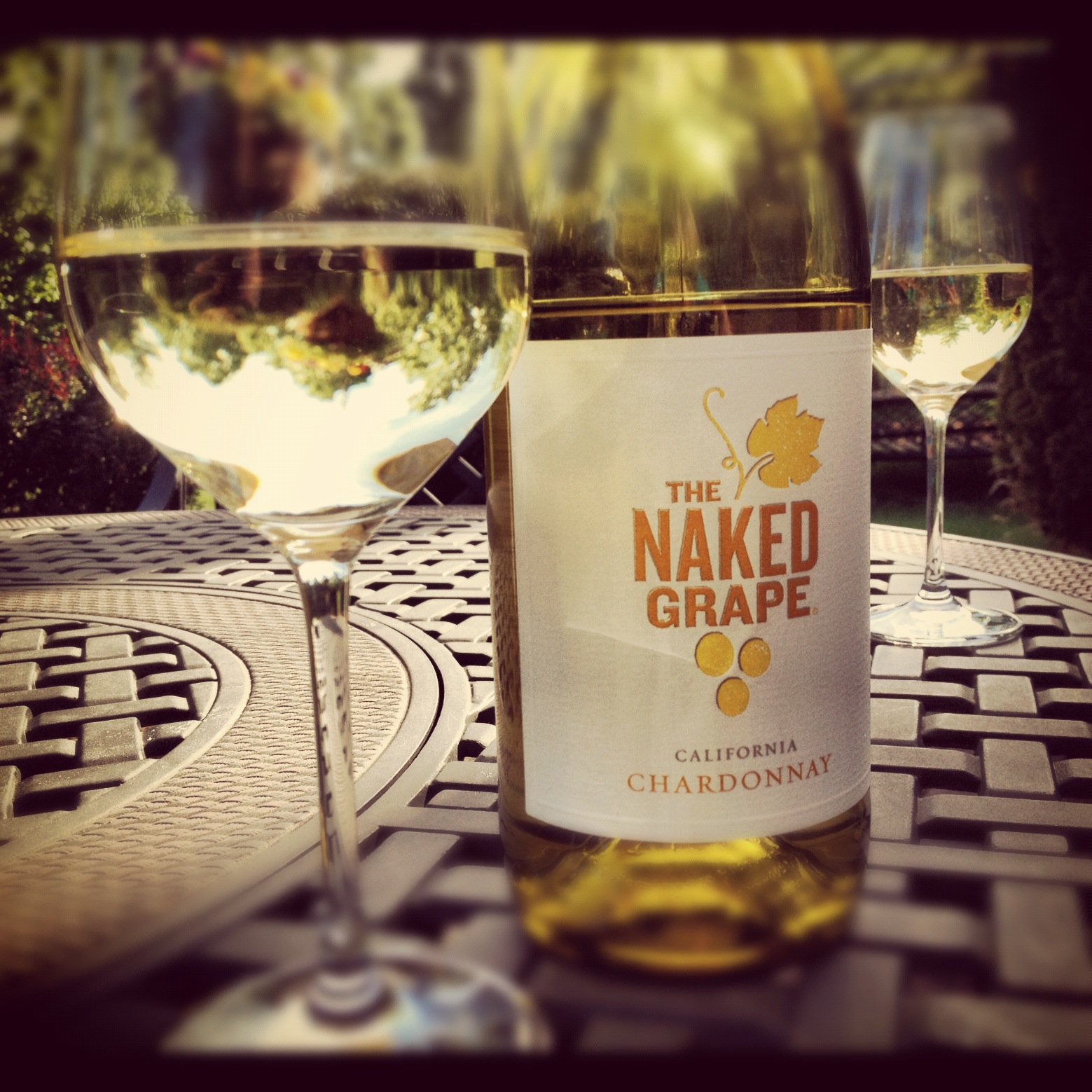
I have no idea whether this was a bad wine; just because I wasn’t a huge fan doesn’t necessarily mean it was ‘bad’ per se. This Naked Grape Chardonnay was an oake-y, light, basic wine; refreshing~ in a way, but not really anything to write home about, at least in my novice opinion. At first taste, I thought it might be a bit ‘off’, but as I continued to sip, it got a little better. And I found it difficult to determine what, other than oak, I could really taste. For the most part, it seemed more watery grape than anything else. There wasn’t much depth or complexity at all. In this case, keeping it simple made it drab and colorless.
Perhaps the most interesting thing I can say is that a blackfly actually did end up in it. Isn’t that ironic?
“Summertime is always the best of what might be.” ~ Charles Bowden
Friday’s summer wine feast highlighted a few of the best of what is to come this summer. Shelly and I had two hours to sample as many of the fine wines as we could. It proved to be fairly tricky since there were seven tables with five wines each. Five food stations with samples of cheeses, main course offerings and dessert were available to navigate along with the wine.
David fromVintage Wines said that Riesling was going to be one of the big trends this summer and we paired the Richter Estate Riesling with samples of baked, breadedHakein pesto sauce. I’d never tried Hake, but it proved to be a tasty yet light fish. The flavorful delicacy of the fish and basil from the pesto brought out the floral and citrus vibe of the wine. As for the reds, the Tamarack Red Blend was pleasant enough at first taste but as the sample wound down, Shelly found it became more bitter with a vinegar aftertaste she wasn’t really into ~ so in the chum bucket it went.
On to our next pick of the night: an 07 Tudal Cabernet Sauvignon. Cab Sauv always brings to mind colder temps and a hearty beef dinner. Jack from Wine Trends suggested pairing it with the tricolor tortellini salad and kale with blueberry quinoa. I didn’t think it would pair well at all but found it to have a subtle strawberry on the nose; fruit forward jam essence, peppery in the middle and a finish of soft caramel. The mild spice of the tortellini and sweetness of the kale quinoa was beautifully offset by the complexity of this Cab and it was surprisingly refreshing. Only 490 cases of this vintage were produced so it was a rare and wonderful find. At a price point of 39.99, I thought I’d splurge for a wine that was toe-curl worthy.
We did our best to use our limited time wisely but didn’t get through all the stations before closing time. Yet with the rush, we still managed to get to the cassata cake. Even when you’re at your busiest, there’s always time for cake.
It was great to experience a tasting like this; like speed dating but with wine. And while we couldn’t sample everything, we did come away with a couple of good numbers to hook up with for the summer.














 The Wine Student