Wine Tasting 101~ The Mouth~feel Wheel

The Mouth~feel Wheel

The Mouth~feel Wheel

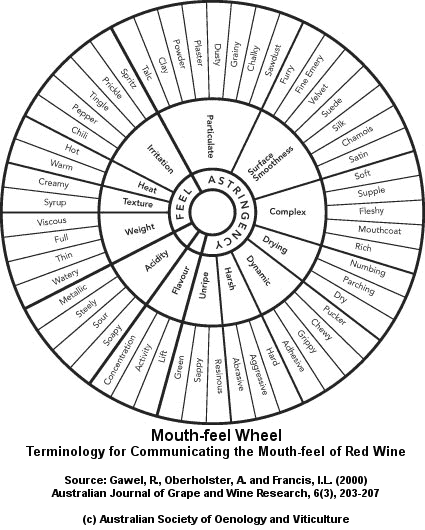
It’s been a busy time for the Wine Student; none of it wine related, I’m sad to say. So, yes, I’ve been blowing off my studies a bit. I’m back to the study hall and picking up where I left off: the Mouth~feel Wheel. Like the Wine Aroma Wheel, the Mouth~feel Wheel, is made up of various terms that describe how red wine feels when it’s on your tongue. This part of wine tasting is really new to me: I’ve never thought of wine as ‘chewy’ or ‘grippy’; according to the Mouth-feel Wheel, it can be.

Developed by Richard Gawel in collaboration with Dr. Leigh Francis and Anita Oberholster of the Australian Wine Research Institute, the Mouth~feel Wheel lists 53 terms to describe red wine’s various sensations and texture. When I was looking through the wheel, I noticed some of the terms weren’t anything I’d ever use to describe wine. Like ‘chamois’. Chamois, according to the wheel, describes the surface smoothness and astringency of the wine. A harsh wine could be described as hard and aggressive while a complex wine might be fleshy, rich or supple.

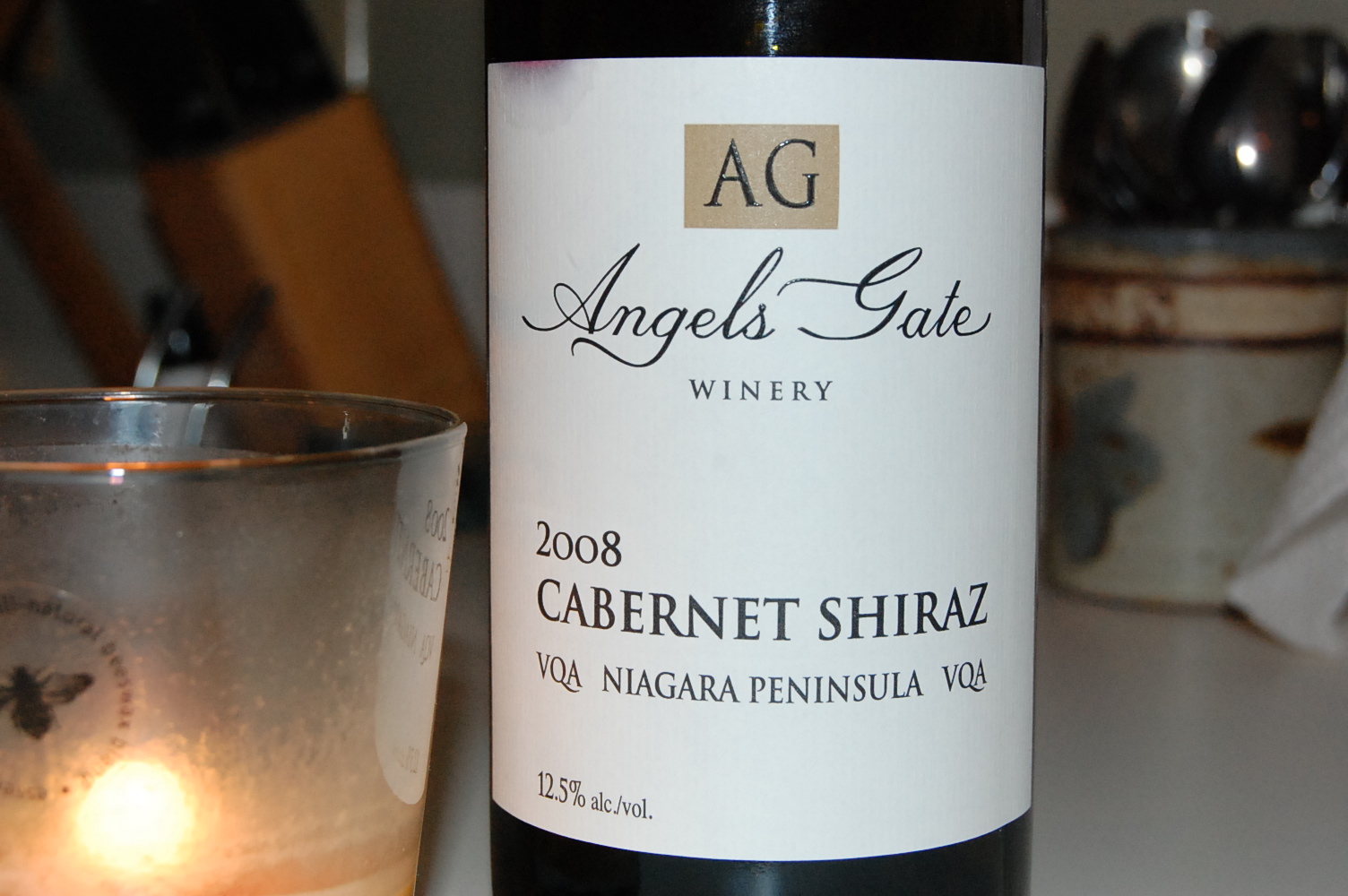
My friend Katrin (who was visiting for the weekend) and I decided to take a spin with two offerings: a 2008 Angel’s Gate Cabernet Shiraz from Niagara and a 2009 Sean Minor Pinot Noir, Carneros.

We found the Angel’s Gate Cab Shiraz to be ‘astringent’ or “pucker-y,’ with a thin weight. It seemed a little young but pairing it with dark chocolate covered pomegranates seemed to cut it nicely.

The Sean Minor Pinot Noir, Carneros offered us more mouth~feel. I found it had a fuzzy sensation with a slight tingle; Katrin found it to be ‘fleshy’ and ‘active.’ We agreed that it provided a good measure of heat: warm and peppery and the finish was like ‘microsuede.’ I’ve never tasted microsuede, but it’s probably like a chamois.

It took us a few glances around the wheel to really put terms to how the wines felt, and the more we sampled, the better the descriptions became. We likened it to CSI for wines, except I don’t think our findings would ever hold up in a court of law.

Cheers!


2008 Angel's Gate Cabernet Shiraz

2008 Angel's Gate Cabernet Shiraz


Wine Tasting 101 ~ The Wine Aroma Wheel

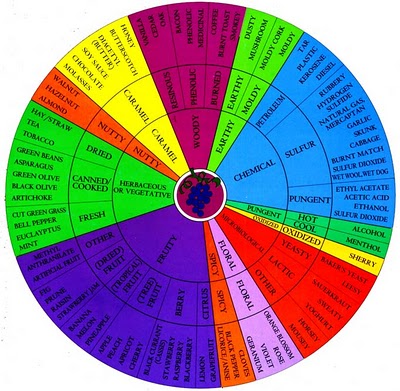
Okay, so we’ve learned a little about how to taste wine. Now, we want to actually be able to describe what the wine tastes like. The Wine Aroma Wheel is a great tool to help categorize what you’ve just tasted and define it as more than just ‘good’ or ‘bad’ or ‘grape-y’. It’ll help if you keep it near where you drink wine, so you can refer to it as often as you quaff. The more familiar you become with the Wine Aroma Wheel, the better you’ll be at identifying the flavors that draw you to a wine, or keep you from pouring another glass.

Developed in 1977 by Ann C. Noble, the Wine Aroma Wheel breaks the various tastes of wine into 12 categories:

A Wine Aroma Wheel (DREW LAMBERT)

A Wine Aroma Wheel (DREW LAMBERT)


Depending on the wine you choose to sip, you’ll notice certain flavors at the beginning ~ when the wine first hits your tongue, middle ~ when you’ve sloshed it around a bit, and the end ~ after you’ve swallowed. The remaining flavor is the ‘finish’. For example: a Cabernet Franc I had the other night, I would describe as having a light, raisin-y start, an almost soy-sauce component as I sloshed and it ended with a buttery finish. Does that correspond to how the experts might describe it? Probably not, but that’s what I tasted, and it was good.

You may not get all the nuances right away, that’s alright ~ you’re just learning. You may find that the taste at the beginning of the glass isn’t the same as what you taste at the end; it can change as you go along. To further complicate things; what you taste might be very different from what your friend does. And that’s okay. Everyone picks out something different. The good news is: nobody’s wrong. And the more discussion you have, the more you can learn about the wine you’re drinking.

Next study hall: the Mouth-feel Wheel. Yep, there’s a wheel for almost everything.

Cheers!

[ Drew Lambert]


Wine Tasting 101

Much of what I’ve learned about wine tasting (real wine tasting; not quickly sucking back a wine skin before a high school dance) I’ve garnered from trips over the years to wineries. The American Wine School here in Cleveland has some great classes to demonstrate how to quaff like a pro.  And once you have the basics, you can impress your friends at dinner with your learned snuffing and swishing. I don’t recommend spitting at dinner ~ it generally horrifies the others.

You’ll want to use a glass that gives you the ability to: swirl it without spilling, and get your nose into fully so you can inhale the aroma. In the coming weeks, I’ll write more about glassware and how it can enhance the wine drinking experience.

Unless you’re going to decant your wine for a few hours, or pour it through a wine aerator, you can: swirl it (on a table or countertop) to move a little oxygen through. This works to breathe new life, if you will, into a wine that’s been stopped up in a bottle for a while and improve the flavor you experience.

Love at First Sight

Once you’ve got your wine in the glass, and you’ve swirled it a few times, you’ll want to look for a few things:

  • Clarity: how clear is the wine?  Is there any sediment floating around or settling to the bottom
    • can be described as: muddy, cloudy, bright.
  • Intensity: is the color pale or dark?
  • Color: this indicates the tone or tint of the wine. you could use words like: ruby, purple, crimson, green, yellow, straw, amber

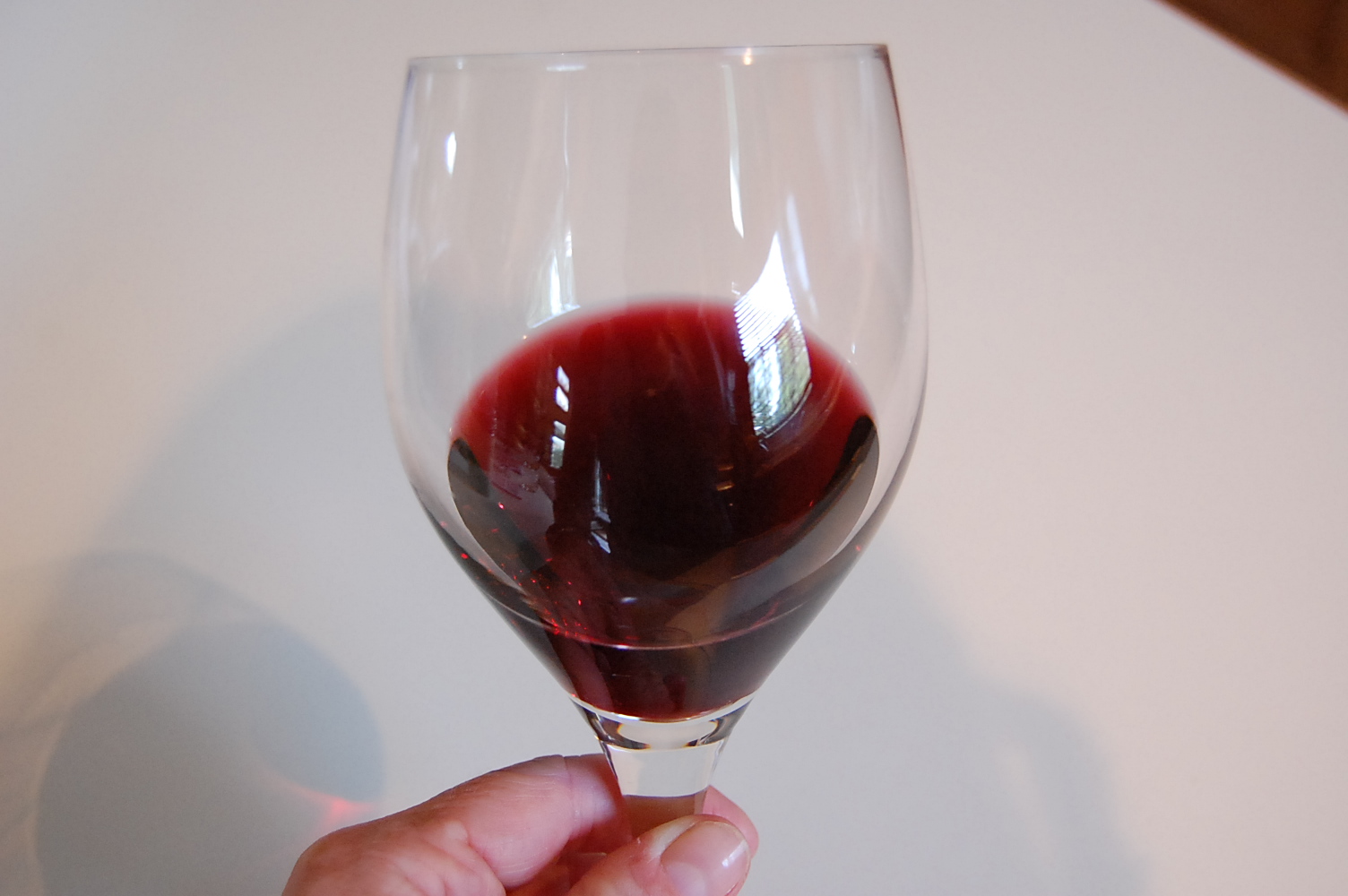
A good way to really see how it looks is to hold your glass at a slight angle over a white surface. You can use a white table cloth or a light countertop.The white surface helps to illuminate the wine and you can see more detail.

After swirling, tilt your glass and take a look. You’ll be surprised at what you can see.

White surface...for better clarity

White surface... for better clarity

On the Nose

Smelling, or nosing, determines several things about a wine:

  • condition (good or bad)
  • intensity (weak or robust and pronounced)
  • character (how you’d actually describe the fruit itself)
  • How to ‘Nose’ a Wine: I know, it sounds all kinds of wrong but it isn’t. Take one short sniff (to determine condition) and ask yourself: is it good or bad? Short sniffs are actually important because air that moves quickly into the nasal passages intensifies the sense of smell.
Hello Wine!

Hello Wine!

After this, you can take several more deep, gentle sniffs to determine the aroma’s intensity and character. When you swirl and sniff, see how many ways you can describe the aromas. And don’t worry if you’re just starting out, you will be able to tell if a wine just doesn’t smell good to you. Really.

Over the Teeth and Past the Gums: Taste the Wine

Many experts have said that the best way to taste wine is to take a bit in your mouth, swish it back and forth while opening your mouth just slightly as you do it. This is to bring air into the wine to further oxygenate and bring out the flavors. That may be true, but I just end up with it dribbling down my chin. You can try it but  make sure you have a napkin nearby, just in case.

According to the American Wine School, tasting involves seven components:

  • Sweetness ~ how dry or sweet is it? Whether a wine is ‘dry’ means that there is very little left over sugar
  • Acidity ~ this is the sour yin to the sweet yang; described as fresh, crisp, tart, flat.
  • Tannins ~ provide the robust texture and structure (like espresso); hard, soft, bitter, chewy, round.
  • Alcohol ~ is what carries the aroma and heat (and all this time I thought it was a hot flash); low, medium, high.
  • Body ~ how much weight the wine has on your tongue. It’s like a milky consistency of varying degrees, depending on the type of wine; light, medium, full
  • Fruit ~ the grapey, fruity (and non-fruit) flavors (like smoke, cherry, citrus, butter, stone and vinyl).
    • ** The wine aroma wheel is an excellent tool to help you to describe the fruit tastes you’ll experience. I’ll be looking at that in one of my next posts.
  • Finish ~ is the aftertaste and how long it stays in your mouth; usually described as short, medium, long.

So there you have it; some basics on tasting to get you started.

Cheers!

To read more about  wine tasting:  www.jancisrobinson.com