Earth, Wind and Wine

 Happy Earth Day, everyone!

A while ago, I wrote about vegan and organic wines and in that post touched on sustainable farming and winemaking.

While a good portion of sustainable winemaking is in California, I wanted to find out whether any wineries here in Ohio were making the move to being sustainable.


For a vineyard to be sustainable it has to meet much if not all of the following criteria:

  • Changing from power usage to solar power, thereby cutting energy consumption.
  • Reusing and recycling all water and making their own compost as fertilizer.
  • Practicing Integrated Pest Management: Using owls, bats, hawks or other wildlife, as well as cover crops to help control insects. Also using weed control/ border management by goats or sheep to cultivate the vineyards instead of traditional chemical pesticides and herbicides.
  • Using low-gravity flow techniques to move wine steadily downward through the winemaking process, decreasing the use of energy consuming conveyor belts and equipment in the process.
  • Recycling all materials used in the winemaking process.
  • Erecting or modifying buildings to make them energy efficient.
  • Using biofuel or alternately powered farming equipment; preferably using horsepower instead of tractors when workable.
  • Ensuring that workers, employees are fairly treated, paid and housed (when necessary). If you’re going to go sustainable, you need cover all the bases.

Maple Ridge Vineyard in Madison, OH appears to be one of the only sustainable wineries in North East Ohio. They have been certified by the Ohio Ecological Food and Farm Association since 1997 and along with specializing in European style wines, cultivate vegetables, flowers, herbs, eggs and maple syrup that is sold to local farmer’s markets. According to their website, their grapes are hand-picked and processed manually and they use minimal filtration, with some wines being 100% unfiltered. Their winery is a fairly small, exclusive operation, with small production and yield, which would account for why I couldn’t find their wines stocked on any local wine store’s shelves.

At this time of year, their hours are very sporadic; I was unable to get my schedule to work with when they were open. But I’m looking forward to making it a stop on my North East Ohio summer winery tour.

There are benefits to the philosophy of winemaking, be it traditional or exclusively sustainable. For the wineries that have it as their inherent philosophy ~ and the consumers who mirror it ~ the choices about wine become very clear.

I’d like to think that in the future, we’ll see most wineries incorporate sustainability as much as possible into their winemaking practices: For themselves, for the earth and for all of us.

Cheers!A little love from the Earth...in every drop :)

Celebrity Skins 101~ Muscat Love

Drake with Martini Moscato D'Asti (Photo credit: David Becker/ Wire Image)

Drake with Martini Moscato D'Asti (Photo credit: David Becker/ Wire Image)

I have to admit, when I think of Muscat I think of soda pop: One that goes to your head quicker than a fast roll down a hill. I know that’s making an uneducated assumption because lately, you can’t escape the fact that Muscato D’Asti’s popularity is growing in leaps and bounds. That’s thanks, in part, to the constant references by artists like Kanye West, Drake, Lil Kim and others singing about its sweet charms and how it makes them feel. It also seems to have helped christen it as a bonafide brand. Muscato is now what Cristal used to be in rap songs: the wine of choice for a new generation of trend setters rolling to the club and chilling in the VIP.

It’s an interesting pick, but not surprising when you think about it. Muscato is a good, easy drinking, entry level wine: sweet but not overpowering, light and refreshing. And the price point of between $12-14 a bottle makes it an attractive alternative to white zinfandel.

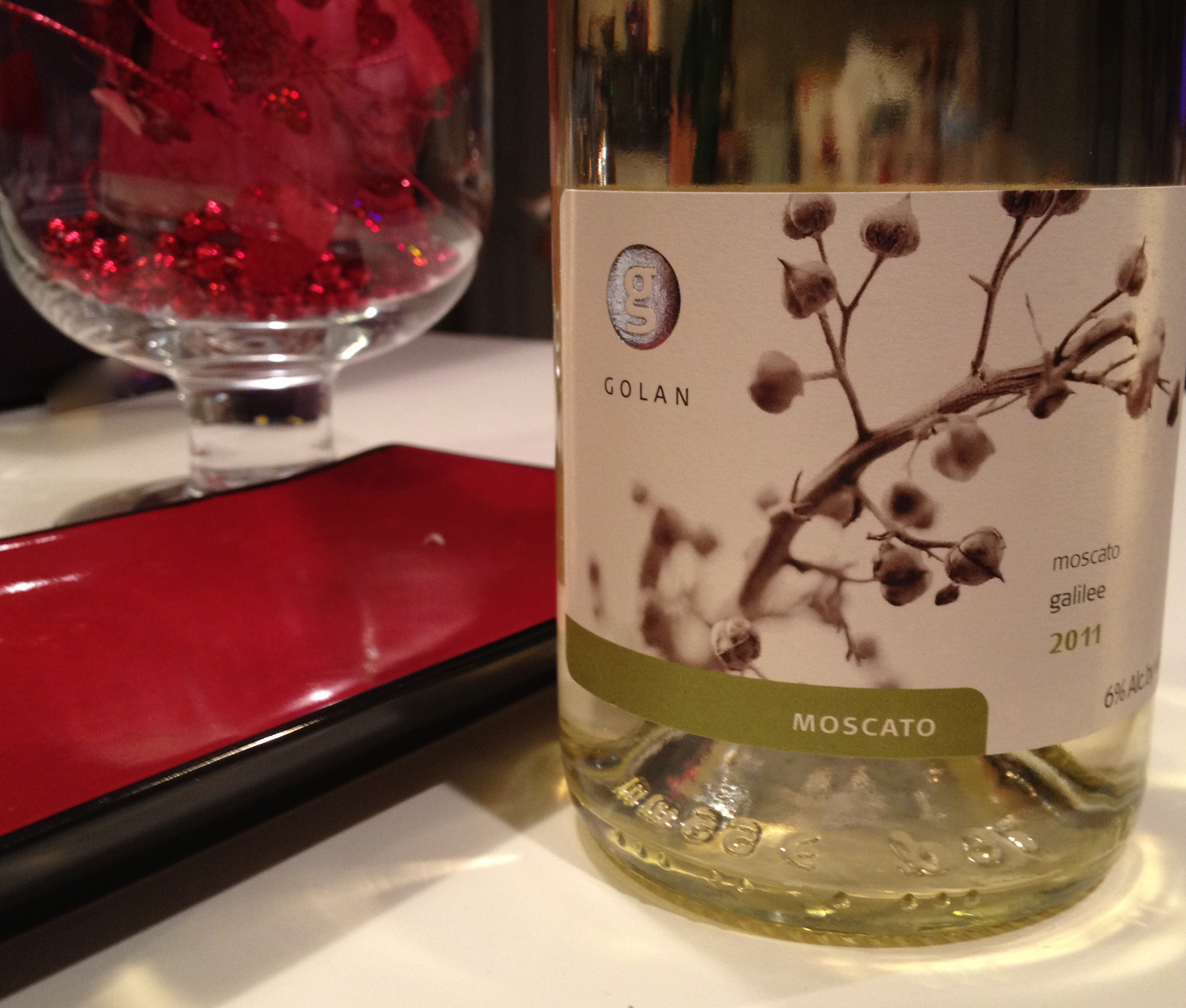
According to a recent article in New York Magazine, the demand for Muscato is far outweighing the supply, with wineries scrambling to increase its cultivation and production.Most of the bigger producers of wine are now introducing or heavily promoting their Muscato offerings.  A big push is being felt even here in the Cleve. Heinen’s Strongsville wine manager Paul Hoefke says he’s seen a steady increase in sales over the last eight months and doesn’t expect it to dip any time soon. He suggested an ‘11 Galilee Muscato from Golan Heights, an Israeli winery. It’s one that is difficult to come by and once gone, can’t be found again for at least a year.  The price point on this was about $17.99 as compared to most Moscato I saw that ranged between $9.99 and $14.99.

'11 Galilee Moscato from Golan Heights

'11 Galilee Moscato from Golan Heights

One of the oldest known varietals, Muscat thrives in warmer climates. You won’t see any grown here in Ohio, it’s too damn cold.  The largest producer in the US is California, which makes perfect sense. There are more than 200 types of Muscat and range in color (from white to  blush to a black); some are sparkling, while other less so. The main distinction with Muscato is in the fermentation process,Golan Heights states that it is the stopping of fermentation early that makes it sweeter. It has a relatively low alcohol content that makes it lighter and more refreshing. Since it has a strong, sweet base, Muscat generally pairs well with light cheeses like Parmiagiano-Reggiano, goat cheese, triple creams, desserts with Marscapone;  spongy cakes and cookies. Yet, contrary to some opinions, a dryer offering in the style of  Muscat d’Alsace apparently pairs nicely with shellfish such as lobster or shrimp. Drake was right!

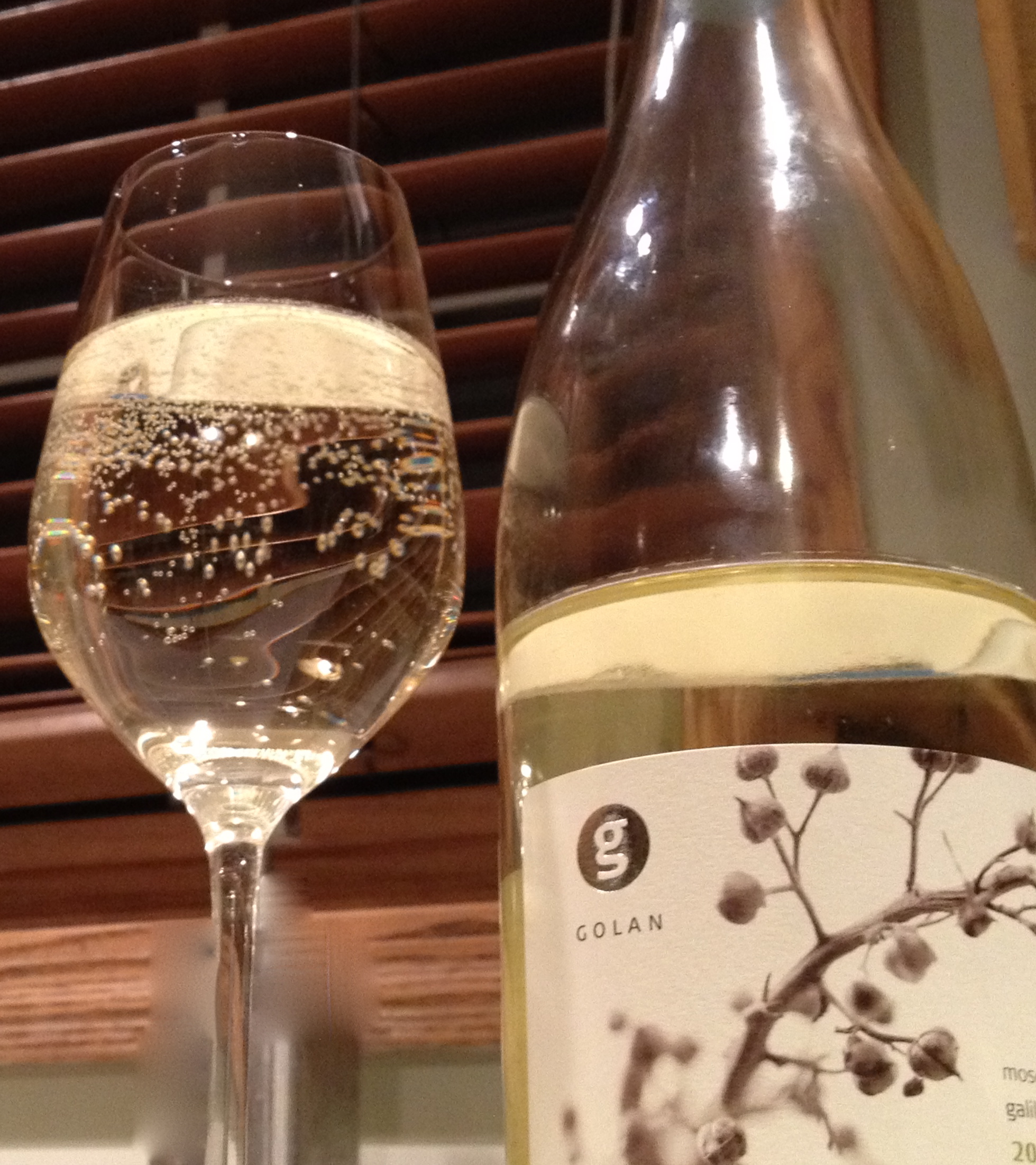
In the past, I’ve found Muscat to be a heady, sweet confection of a wine (although different from a late harvest or ice wine).  Since I was researching it, an experiment was necessary. It looked like fun as it poured into my glass; bubbles raced to the rim and released an effervescent scent of citrus and honey. While it was, as promised, sweet on the top, it wasn’t sickly or cloying. It was very light, very refreshing and very enjoyable. I could enjoy a glass on a hot summer day but only one small glass. Any more, and it would be a quick ride to headache city, a place where there is no VIP room.

Fizzy fun

Fizzy fun

It’s always good to try something a little different and fun, and this certainly was. As for what to pair it with, I think that has more to do with what an individual likes, as opposed to any hard and fast rules. That game, appears to be changing. Rapidly.

Cheers!


Chill out! ~ Ice Wine vs Iced Wine

Frost Bitten ~ an Iced Riesling

Frost Bitten ~ an Iced Riesling

So you’re standing in the aisle of your favorite wine emporium and you’re looking at a few bottles of ice wine. You come across something called ‘Ice Riesling” and you wonder, “what’s the difference?”

If you read my last post, you know that Ice wine is picked and pressed outside in sub- zero conditions to ensure consistency in both cold temps and sugar content. It faithfully adheres to a traditional method of wine making.

Iced wine, by comparison, is made from harvested grapes that are mechanically frozen after they are picked. Essentially, a wine broker or negociant can, via phone call or e-mail, hook up with a vineyard already growing and harvesting grapes, have them mechanically freeze some of the harvest and produce a variation of ice wine that is then bottled and sold.With iced wines, there’s no getting up at 3am, and venturing into the vineyards in a snowmobile suit to hand pick grapes until sunrise.

Frost BittenIce Riesling  is one such iced wine made this way.  Is it false advertising? Not necessarily. Most broker-based wines are careful to label accordingly. However, the distinction on ‘Frost Bitten’  is in small print on the back of the bottle: “Wine made from post-harvest frozen Riesling grapes.” On the website it’s described as, “A classic German-styled Trocken-Beernauslese- like dessert wine.” But how many lay people really know what that means?

That said, a wine broker is doing a service to many grape farmers who, due to the economic downturn, might not be able to sell all of their grapes in a particular year. It also gives them a way to sell off some of their product at a lower price point, under another name, while keeping their higher priced, name product intact. It is a win-win proposition and not necessarily a bad practice, I just think it’s important for the consumer to be aware of exactly what they’re getting in their glass. And I think it’s important to give the true ice wine makers their due: they get up awfully early, out in the cold to produce something rare for you to enjoy. And while the price point might seem extravagant, you usually get what you pay for.

I remember, some time ago, controversy between producers of Canadian ice wine and California vintners who wanted to  call their sweet, post-harvest frozen grape offering ‘Ice wine’. The Canadians and Germans (who originally created eiswein) took them to court to identify and protect  what could be classified as true ice wine. They also wanted to ensure that consumers weren’t buying something they thought was pure ice wine but was actually a variation. From this came some strict guidelines that were set in place and outlined by Wines of Canada.

In the name of science, and to appease my curiosity, I bought a bottle of Frost Bitten Ice Riesling to try after my Sunday night dinner. What I found was a light, sweet wine, similar in consistency to a thin late harvest. It had a nice pineapple bouquet and an robust raisin essence but it didn’t have the full, velvet-y mouthfeel of ice wine.  Overall, it was a refreshing, little dessert wine. When I paired it with some Belgian dark chocolate, it became less sweet but was still quite pleasant on the palate. I liked it, but it just didn’t taste as decadent and rich as an ice wine, and maybe that’s the point.

For some, it’s a probably like tomato and tomahto. It makes very little difference, except when you look at the price point: $12 per bottle for the iced variation, compared to $29 for ice wine. And I guess it all depends on what you like and what you want to pay for a dessert wine.

But I still think it’s good to keep in mind that part of what you’re paying for in the higher priced, true ice wine is the considerable time, effort and care it takes to produce it.

Cheers!

The Ice Wine Cometh…

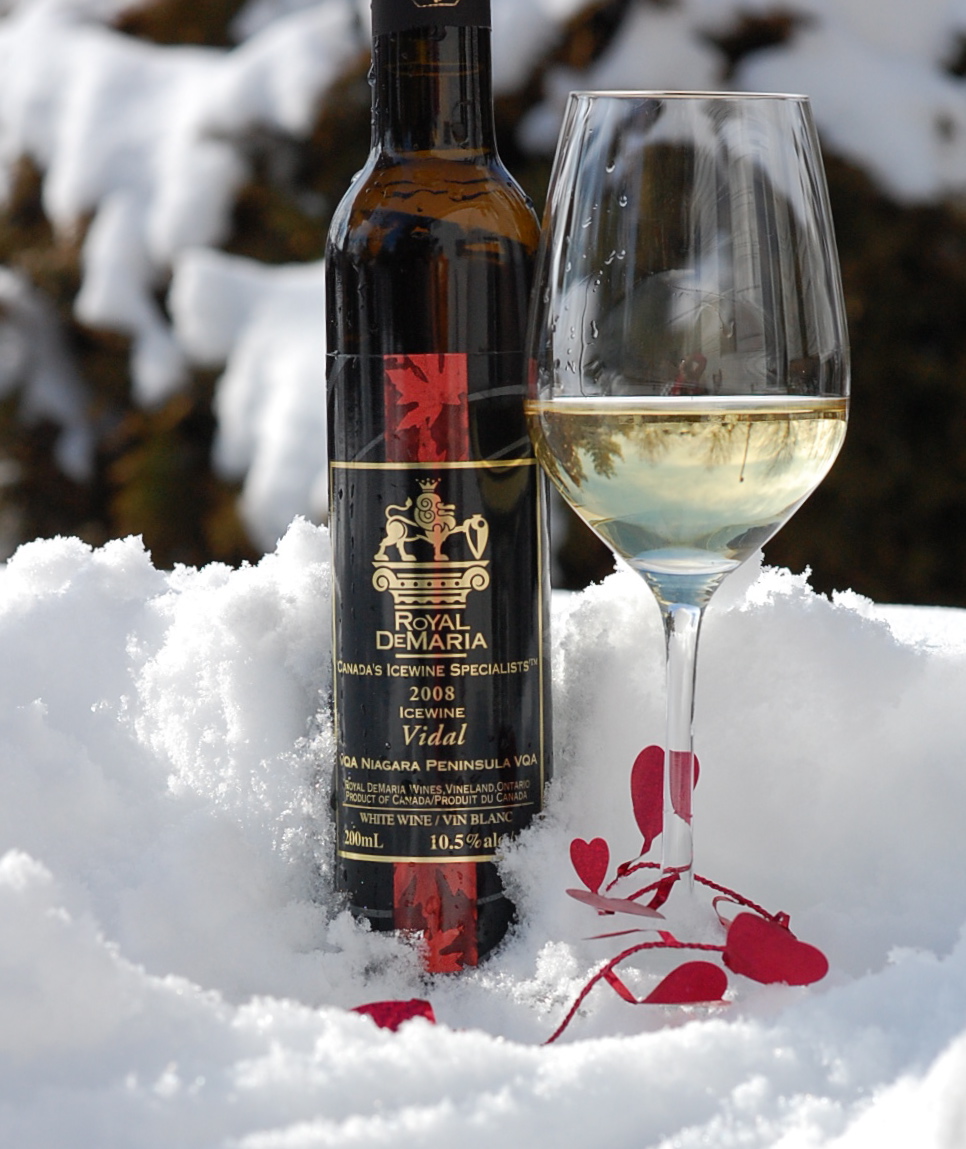
The Sweet Escape: Ice Wine

The Sweet Escape: Ice Wine

It’s sweet and rare, and if you knocked back a whole bottle by yourself, you might need a trip to your local ER to check your blood glucose levels. It’s ice wine and it’s mighty fine.  It’s taken me a little while to put these next couple of posts together. For one thing, there’s so much information about it, for another, I wanted to get it right.  Producers of true ice wine work very hard to accomplish what they do and in some chilly, low temps. Shrinkage is a given. So here we go, into the land of ice wine and snow …

Ice. Wine. Baby.

Ice wine is a rich, dessert wine made from the juice of partially frozen grapes. They must remain on the vine and harvested when temperatures dip to between -8 and -12 degrees Celsius over three consecutive days. The sugar content of the grapes at this time will be at its most concentrated. The water inside the juice is minimal resulting in extreme concentration of flavor, sweetness, aromatics and viscosity.

Iced Vineyard [image via David Boily|AFP|Getty Images]Canada (primarily the Niagara region) and Germany are the leading producers of ice wine (with an increasing number of good producers in Western New York and Ohio)  and yet it is still quite rare; yielding 5-10% of a normal harvest. The brisk temperatures that we complain about when we scrape off our cars are ideal for ice wine, but it’s a delicate balance. The colder the temperatures become, the more the grapes freeze and it can become more difficult to extract the juice. Most ice wine is harvested in late December to mid January when the lower temperatures stay constant. Before the harvest, ice wine grapes must be netted for protection from birds and animals. Picking is generally done by hand and much of the time at night, when the low temperatures stay most consistent.  The crush is also done outside to keep the must at a constant, cold temperature. If any thaw occurs, the water content inside the grapes will increase, potentially spoiling the sugar concentration. It’s these factors that make ice wine a premium wine product and legitimize the price of $30.00+/ 375ml. Think about it: you’ve got to give it up to those who go out in the middle of the night to pick and press grapes for you to enjoy.

The best grapes for Icewine are those with thicker, more durable skins that will hold together during the freeze ~ thaw cycle common in cold weather. Grapes with higher acid, extremely high sugar yield the best. As with any wine, differing varieties produce different characteristics: Riesling has a green apple and honey vibe; Cabernet Franc produces a rich, berry, buttery character and Vidal, a good, hearty hybrid used commonly because of it’s durability gives a traditional raisin-y essence. Troutman Vineyards in Wooster, Ohio make an ice wine using Chambourcin, a rare, red varietal.

Grapes are 80-90% frozen to give the required concentration of sugar, which is measured by degrees Brix, typically 35 degrees. Brix is measured using hydrometer or refractometer. Both provide vital information about the amount of sugar that been dissolved and that will help the winemaker determine how much yeast to add, since yeast converts sugar into carbon dioxide and alcohol. The yeast used in ice wine must be one that can handle high sugar and not go too high in alcohol.  The yeast must be gradually acclimatized to increase the sugar environment. Fermentation can take 3-6 months and the percentage points in alcohol must progress slowly as this can increase spoilage if progressed too quickly.

After 3-6months, the ice wine needs to be filtered again, and very slowly or you get a fizzy wine. It’s a sticky process. Bottling is also slow so the wine doesn’t end up like fermented Hawaiian Punch.

Storage

Chardonnay, Cabernet Franc and Merlot are best when to drink when young. Gewurztraminer and Ehrenfelzer: 3-5 years maximum. Vidal and Riesling tend to be the most hearty and are best to cellar the longest at between 5-7 years. They make the best bet for long term cellaring because they are able to retain their acidity.

Like revenge and ice cream, ice wine is best served cold:

Ice wine should be served chilled but not frozen; extreme variations in temperature can compromise the quality of wine, so just chill in the fridge. The ideal temperature is around 12 degrees. As with most chilled wine, allow it to stand at  room temp for about 15 minutes to open up the bouquet.

Raise your glass

The glassware you choose is also important. I’ve made the mistake of serving it in liqueur glasses. I was wrong. So very wrong.  The common viewpoint among experts is that ice wine, like any other fine wine, should be served in glassware with a larger bowl (about 9 oz). All the better to sniff and swirl with. When you think about it, it makes sense. By swirling, you can better open up the intensity, bouquet and flavors of the ice wine. You also want to use a glass that has a stem, and hold by the stem or base to not heat your ice wine; it’s very delicate! While you might want it to stay cold as you sip, don’t you dare put ice in your ice wine. Considering what you’re paying for this rich nectar, you don’t want to water it down with melting ice. An option to keep it cold would be  whiskey stones. You can put in them the freezer, and they’ll keep your wine chilled but  won’t dilute it.

The best pairing for ice wine are chocolates, fresh fruit, and delicate, lighter cheeses. Yum.

After it’s been opened, ice wine can be re-corked and stored in the fridge for 3-5 days. But why would there be any left?? If, by chance, you’re looking for another way to use what remains, why not make an ice wine martini?

Ice Wine Martini:

10 large seedless grapes (2 halved grapes for garnish)

2oz Ice wine      (red gives a nice blush vibe to the ‘tini)

2oz Vodka                  (I use the Goose, but any will do)

ice       (yes, here you’re watering it down, so shoot me)

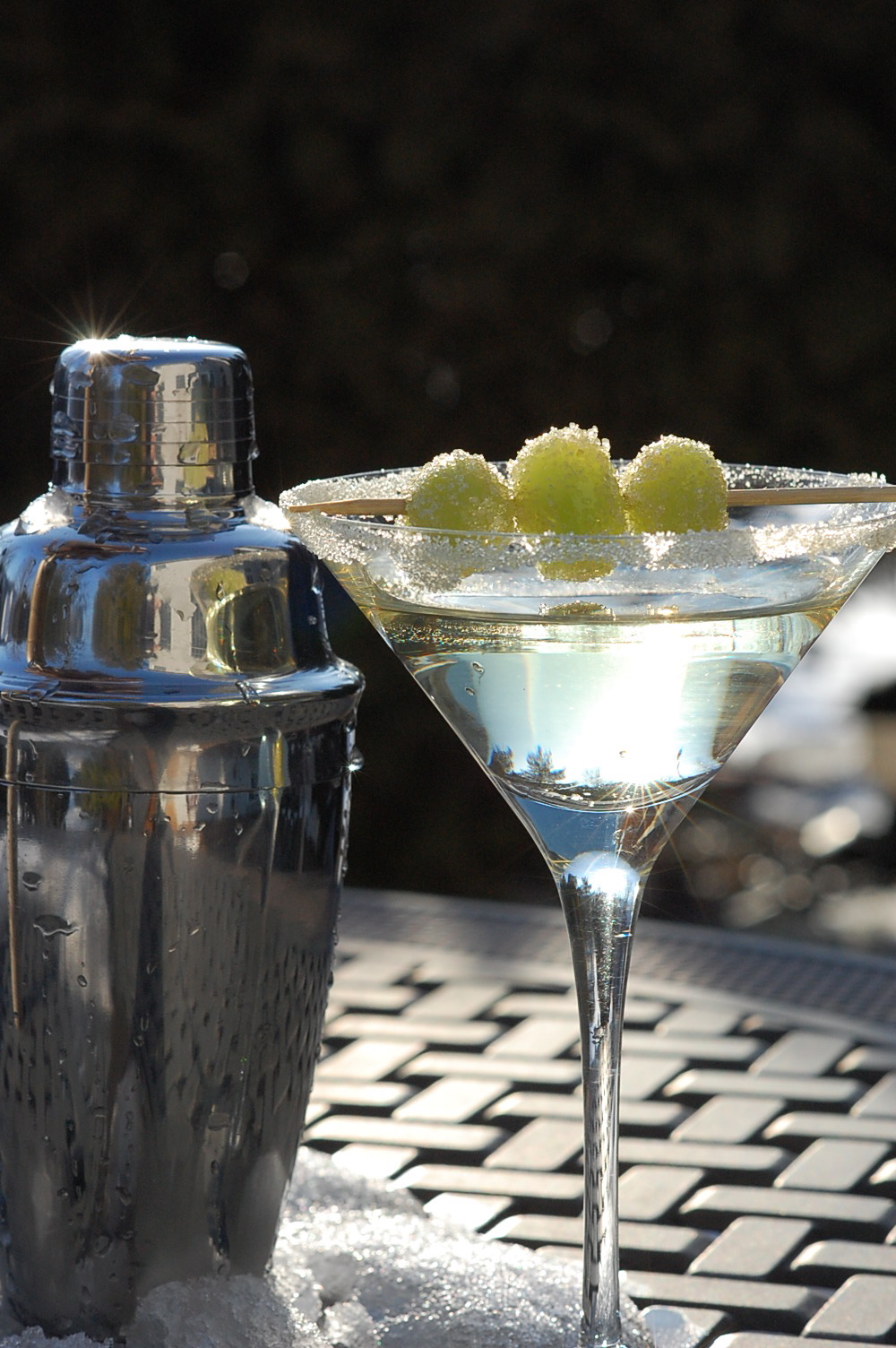
In your blender, puree 10 grapes with ice wine and vodka. Pour through a small strainer into the ice filled shaker. Shake it like you mean it! Strain again into a chilled martini glass and garnish with the grapes that you’ve dipped in lemon juice and sugar. Enjoy!

My Ice wine Martini

My Ice wine Martini

Next post, I’ll talk about the difference between Ice Wine and Iced Wines. And, yes, there is a difference between the two.

In the meantime bundle up, butter cup. We’ve got a little more ice on the horizon.

Cheers!

Vegan and the Big O: Compare and Contrast

This slideshow requires JavaScript.

I must say that I had a little trouble finding Vegan wines, ready to buy, here in the Cleve. While the wine stores I went to were happy to order it for me, I got myself into a conundrum for time; I wanted to post the comparison tasting soon after the initial post. So I took a little trip over to World Market Explorer on the West side, where I found a ’10 Pinot Noir from McManis Family Vineyards.

The Organic wine, an ’09 Bonterra Zinfandel, I found with no trouble at Heinen’s, my local supermarket.

According to the vegan beer, wine and liquor site, Barnivore, McManis is vegan friendly and uses only Diatomaceous earth and paper filtration.

Commenter Natural Ed had some great suggestions and I did take a road trip out the Whole Foods to try to find them. It felt a little like the Amazing Race for wine. Unfortunately, both stores didn’t have any of them in stock. I was pressed for time to order online, so I stayed with the McManis for the tasting. I had wanted to find two of the same varietal, but it was tricky enough to find a Vegan wine much less two Zins. I know that comparing Pinot and Zinfandel is a little like comparing apples to oranges, but I tried to keep an open mind about the quality of the wine itself. That said, I happen to like both Pinot Noir and Zin. For me, I didn’t taste any tangible difference between the organic and traditional; when they’re good, they’re good. And I’d expect the opposite is equally true.

DirtySpicyBerry 

We began with the Vegan Pinot Noir from McManis. The first impression was that it appeared a bit cloudy almost opaque in the glass. It had such a light bouquet that all of us had to get our noses far into our glasses to detect the light berry essence on the nose (which, for me, actually ended up on my nose). Shelly found a spicy, berry vibe that she thought was good. Cindy described a ‘dirty berry’ taste, while Terri found it to have a ‘Gurdy’ or astringent feel as it went down. I thought it tasted grippy, very earthy, young and thin. As a Pinot, I wasn’t expecting it to be as full as a Zin or Cab, and maybe I’ve been spoiled by Pinots from Oregon and Washington, but it did seem too simple and light for one hailing from California. I sipped more to see if it would evolve and gain some depth and it did, slightly, when I paired it with a little green pepper and tomato.

Smooth Operator

Yes, I know it’s a Sade song, but I think I accurately describes the Organic Zin from Bonterra. It was much richer in color (which is true of most Zins when compared to Pinot), with a full bouquet of rich berry that we could smell when I poured. It was a smooth and well-balanced with a flavor of deep blackberry, and a pepper kiss on the finish. Cindy described its quality as ‘full and creamy’ which it was. We agreed that it was very smooth with no bite; more complex by comparison. It was enjoyable on its own or paired with vegetables or crackers and hummus.

I know that our experiment had its flaws; comparing two different vintages and varietals being the most glaring. While we thought the McManis Vegan Pinot tasted young, the Zin had an extra year which could account for the complexity and richness.

The earthy overtones in the Vegan Pinot might be due to the fining process itself: could the earthy clay used to filter the wine, increase that quality in the taste?

My take away from this was that I was not put off Vegan wines at all; I’d like to try more.  I’d also like to test my hypothesis of clay fining’s influence on the final taste of vegan wine.

I enjoy trying new things and this study hall didn’t disappoint. It was a great night to experiment and to catch up with some great friends.

My next posts will be about the wonderful world of Icewine. With old man winter blowing into the Cleve tonight, it seems quite timely.

Cheers!

Thank you to Natural Ed for his great suggestions:

[From Whole Foods:

Pizzolato Prosecco made with Organically grown grapes & Vegan http://bit.ly/a0oSWW

Pizzolato Organic Italian Cabernet No Sulfites Added & Vegan http://bit.ly/a64esp

Biokult Austrian Grüner Veltliner – made with Organically grown grapes & farmed biodynamically http://bit.ly/a1e00e
Spartico Organic Spanish Tempranillo No Sulfites Added & Vegan http://bit.ly/cHbDz8

From Trader Joe’s:

ALBERO, Spanish Wines made with Organically grown grapes & Vegan http://bit.ly/eOQIFu

Vegan Wines and the Big O

I used to assume that all wines were essentially Vegan. It’s of the earth, made of fermented grapes, and that’s about it. Or so I thought. And the big O to which I’m referring is Organic wine, not…Ohio.

Vegan and organic wines are often mistaken as interchangeable; because a wine is labelled organic doesn’t necessarily mean it’s vegan. Yet vegan wine is usually organic. Got it? You will.

A vegan wine is due to the process it goes through, specifically the fining or filtering process. During wine production, elements are introduced to clear the wine, ridding it of cloudiness, bitterness –  removing ‘off’ tastes and aromas. Fining agents tend to work like a magnet, collecting the unwanted constituents that settle to the bottom of the tank. The filtered, clear wine is filtered once again before it is bottled, so there are no traces of the fining agents that remain in the final product.

 Fining agents include:

        • Egg Albumin
        • Milk Proteins
        • Edible Gelatin (from bone)
        • Isinglass (from fish)

Since vegans do not consume anything with animal components, you can understand why this would go against the grain. In a truly vegan wine, the most common fining agent used is Bentonite Clay, a safe element that absorbs proteins in the wine causing that pesky, hazy cloudiness and bitterness.

Multiple Organic-isms

Organic wines are produced without the use of conventional pesticides, petroleum-based fertilizers (or sewage-sludge fertilizers…ew), bio-engineering or ionizing radiation. Organic vineyards have a government approved certifier to make sure that USDA organic standards are met.

Types of Organic wines:

    • 100% ~ Organically grown with no added sulfites. NSA wines use only naturally occuring sulfites (from fermenting yeast that’s already present on the grapes). It can be considered an NSA wine if any added sulfites or total added sulfites don’t exceed 10ppm/bottle.
    • Made from Organic grapes ~ (adhering to the above USDA standards). These wines may have additional sulfates.
    • Biodynamically Farmed ~ This uses the vineyards natural resources to produce high-quality grapes without using pesticides, fungicides, herbacides, synthetic fertilizers or growth stimulants. Certified biodynamic vinyards meet and usually exceed standards of organic certified farming.
    • Sustainable Farming ~ For a farm to be sustainable, it must maintian productivity while supporting the long-term health of the eco system. They do this in a vairety of ways including encouraging and attracting insects that are beneficial to the vineyard; they attack the nasty ones while maintaining integrity to the vines and ripening fruit.

I Love “Ewe”

Got Weeds?

That’s a really bad pun. Every time I write a bad pun, you should take a drink of wine. You’ll be through that bottle of vegan wine in no time.

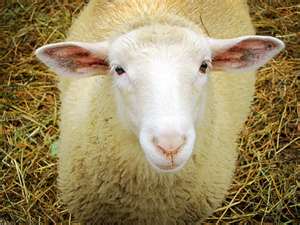
A growing number of organic, biodynamic sustainable farmers are using sheep to groom their vineyards. In fact, there are those who specialize in training both sheep and goats to eat only the weeds at their hooves, leaving the grape leaves, vines and emerging fruit to flourish. It’s a delicate balance; if they’re not trained, they’ll eat everything in front of them. And they might be pretty ticked if you try to tell them any different.

I’ve never had organic wine, much less  vegan and I’m looking forward to seeing whether there is a discernible difference between organic, vegan and traditional.

In my next post, I’ll compare and contrast, but I am having a bit of a challenge finding a true vegan wine at my local wine store. I’ll keep looking because the best part about being the wine student is experimenting.

Cheers!

Of Port and Sherry

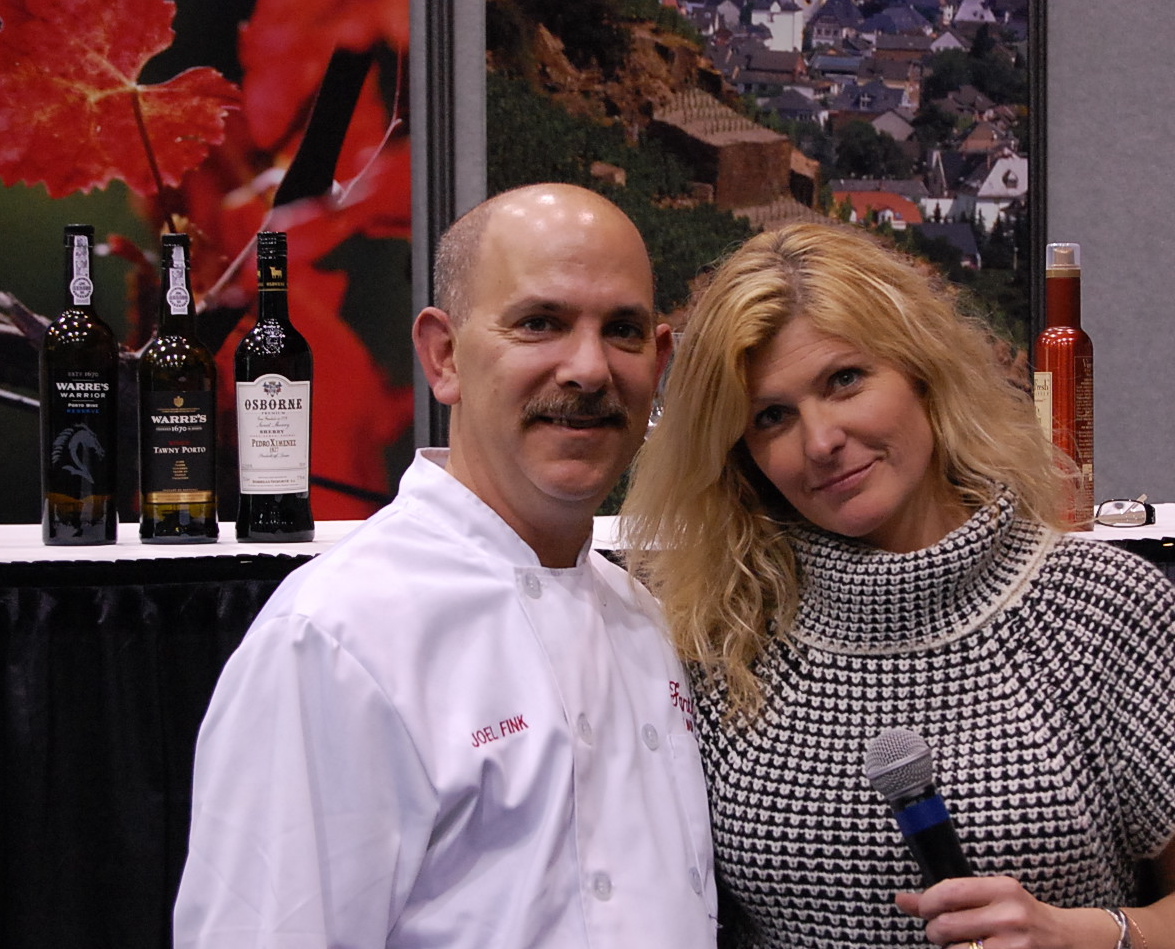
I wanted to add a little more about my experience at the Fabulous Food Show on Sunday. I went as I normally do for the wine sampling. I was particularly interested in the seminar on chocolate and wine pairing given by Joe Fink of Fantasy Candies and Marianne Franz of the American Wine School. I wasn’t disappointed.

Joe and Marianne

Joe and Marianne


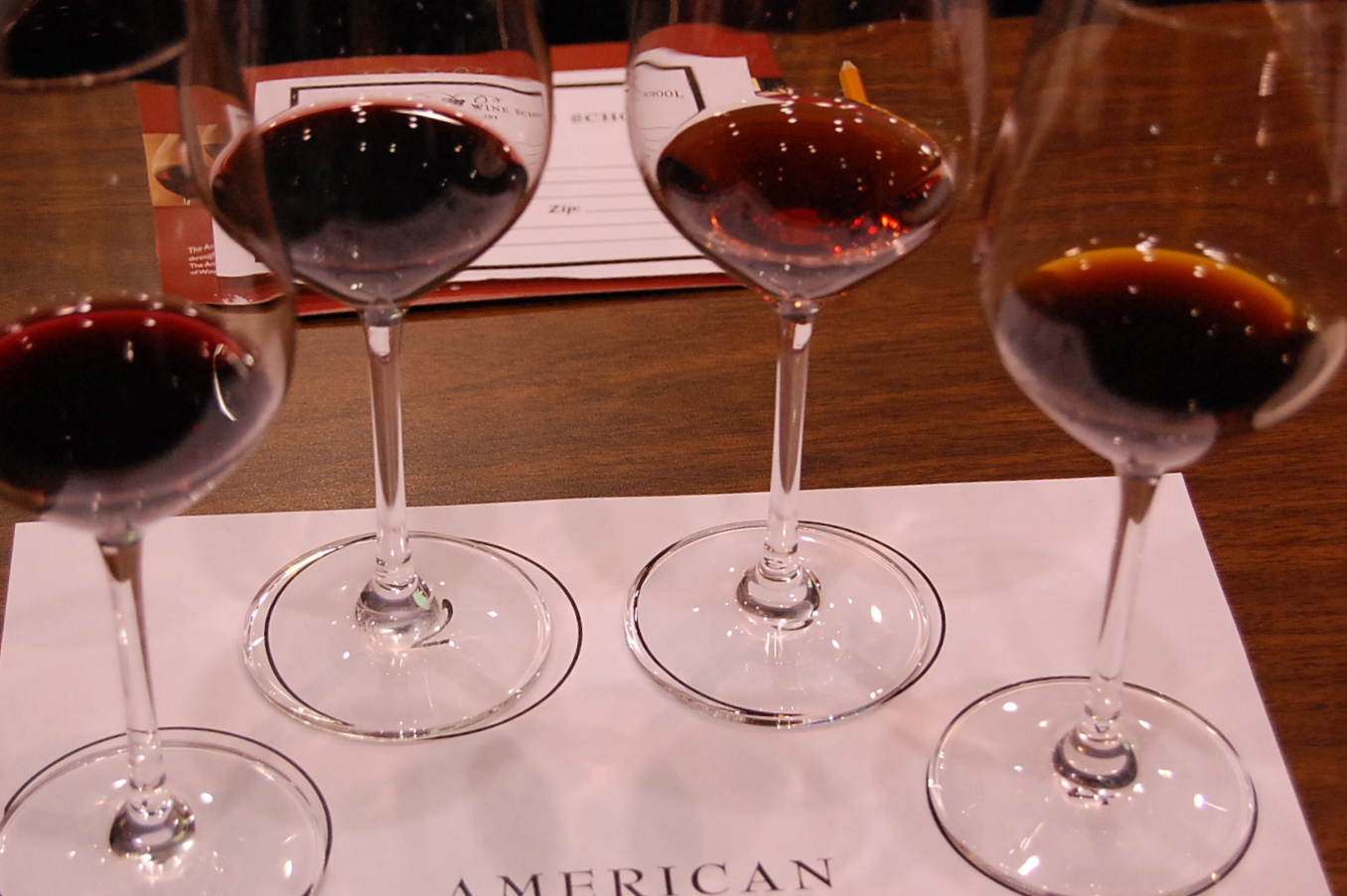
Four Sips of Yum

Four Sips of Yum


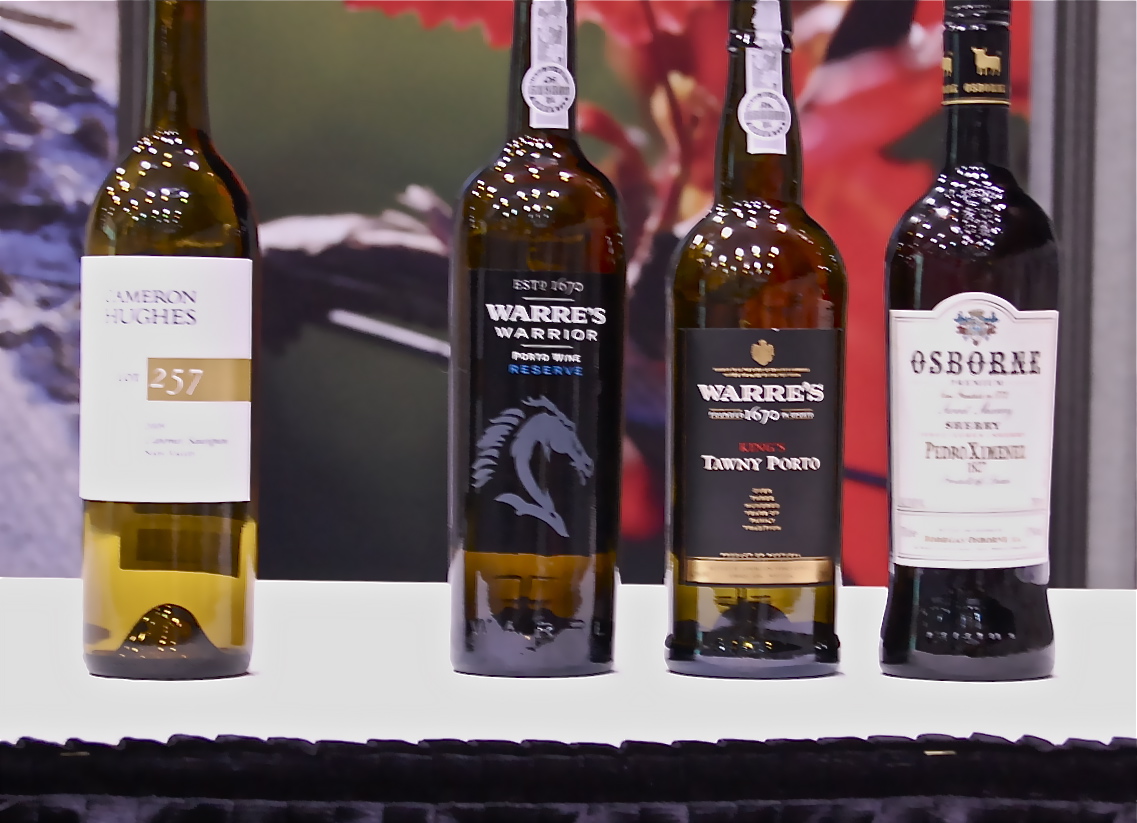
We started with four wines in front of us ranging from a hearty Cameron Hughes Bin 257 Cab Sav, a Warre’s Warrior Special Reserve Port, Warre’s Tawny Port and finally an Osborne PX Sherry. Starting from left to right we paired the Cab with a dark chocolate containing about 72% cocoa. The wine on it’s own was great but pairing it with the  exotic richness of the dark chocolate opened up and new level of deep rich berry and  added a light caramel finish I didn’t expect. While I’d pair chocolate with just about anything, I hadn’t thought of enjoying it with a Cab, which I generally save for a hearty beef dinner on a cold winter’s night. But that’s why I’m the student, and this is a learning experience.

We moved on to a 65% cocoa and paired that with the Special Reserve Port (alright, I tried some of the 72% with this as well, and it was really good). I’m not really a port drinker; in the past I’d found it to be too sweet, almost cloying, so this was a nice way to open my eyes to the world of port and how it could be served. As Marianne noted, sometimes two sweets together can cut down the sweetness you actually experience. But maybe it was the high I got from all the great chocolate that made me feel so accepting. Either way, I was enjoying the combination of the port and chocolate. Of the two, I found the tawny port much richer, complex when paired with the 65% cocoa sample.

Samples of the day ~ Vote for Pedro!

Samples of the Day ~ Vote for Pedro!

As the tasting went on, I became more interested in what the PX in my last glass would taste like. For years, I’ve had the cliched idea that sherry was something you kept in a cupboard and threw into a crock pot when nothing else was available. I was about to be schooled. I found myself intriqued by the color: a rich, golden brown with thick legs when you swirled it. Thick legs, in this case, is a compliment. The bouquet was of a buttery caramel toffee with a hint of a sweet cigar. Yes, cigar. You know when you smell a waft of a sweet tobacco in the air on a warm summer night? It was like that. When I told my friend Terri (who was also sampling) what I tasted, she looked at me like I was crazy…or needed to be cut off. I was neither. We paired this with with a honey-like milk chocolate and it brought out even more depth of the flavours. Once Terri tried the chocolate and sherry  together, she understood what I meant. When I researched a little further, I learned that Pedro Ximenez is actually made from a sweet vinegar made from grapes that have been sun-dried.

We had a great hour of decadence.  The best part was we didn’t get kicked out of class.

Cheers!


Wine Making 101 ~ Red, Red Wine

It’s November and harvest time is really winding down. Now in the vineyards, they’re getting ready for late harvest and in a few areas of the US and Canada (notably Niagara), preparing for Icewine. That’s a topic I’ll delve into more throughly a little later on.

I thought I’d head back to the study hall and focus on red wine making.

Beautiful Grapes [Image via LovetoKnow]The initial process is the same as I described a few posts back with white wines, the difference for reds is the amount of time the juice is left in contact with the skins. Most blue skinned grapes have a colorless juice which contains: water, sugar and acid. Once the mustis placed in a vessel to soak the skins with the liquid juice a very quick separation occurs. Seeds settle to the bottom, skins float to the top and form what’s called a ‘cap’.

The skins contribute the color, flavor, tannin and some aromatics. It makes sense that the skins need to stay in contact with the juice as long as possible to achieve the quality the winemaker is looking to produce. The amount of time that there is skin contact is called maceration. Say that slowly to yourself a couple of times; if you say it fast it sounds like something else.

After the initial separation, the seeds are removed once by straining through a screen. The juice and skins are then reintroduced to one another one of two ways: by pumping the juice over the skins or by punching down the cap. Punching the cap is exactly what it sounds like: the skins are pushed or plunged into the juice to allow for more skin contact, thereby increasing all the qualities we look for in a truly, wonderful red wine.

Punching the Cap [Image via Flickr]The total amount of punching down the cap, pumping over; maceration time depend on the type of grape, the style of wine, equipment and the winemaker, depending on his or her style and philosophy. plunging the cap is generally done every four hours when fermentation is most active. With time and manipulation, the skins become saturated with liquid and the cap drops. The wine is then drained off, leaving the skins to be pressed (since they now contain wine). The wine produced from skins when pressed is called press wine(makes sense) is highly concentrated, more intense and more tannic.

A final step sometimes involves what’s called chaptalization: adding sugar to the must, before fermentation, to yield the desired alcohol in the finished product. I say sometimes because countries such as Australia, Austria, Italy, South Africa and the state of California prohibit the practice. Regions where sugar content in the grapes is low are able to do so.

While all this punching, plunging and pumping is great, it’s a matter of timing that truly makes a great wine. A tight reign must be kept on the temperatures produced by processing; too much heat (caused by too much manipulation) will cause too much fermentation, rendering the end product undrinkable. Colder temperatures prevent excessive fermentation and allow for maximum fruit extraction. When fermentation takes place, so does alcohol production. That doesn’t sound like a bad thing, I know, but it’s another factor that that can go against the winemakers vision of how the style of their wine should be.

The whole process takes around 7-21 days to complete depending on the type of red. It’s then transferred to either stainless steel tanks or barrels where it’s stored and then bottled.

A nice leggy Red

A nice leggy Red

I don’t know about you but all this writing about wine is making me thirsty.

Cheers!

Yeast Inflection

I spent most of a recent rainy afternoon researching yeast and I came across so many pages of information, I quit after the ‘L’s. So I’ll boil it down to some essentials. It’s easier to digest that way.

Yeast is necessary component in fermentation process, and is added to the juice when in the barrel or fermentation vessel. It melds with the sugar in the juice, producing heat to convert sugar to alcohol. This reaction continues until the yeast dies off. Fermentation ceases, and we have wine. The end.

Okay, maybe I oversimplified there.The type of yeast is also important: yeast is generally selected for both the amount of alcohol content it will produce, and the taste it will create. It can come from two main sources: ambient (wild) or commercial.

Cups of Yeast ~ Chez Ray Winery

Cups of Yeast ~ Chez Ray Winery

Going Native~ 

Bloom ~ refers to the pure or native yeast strain found on grape skins, and a common view is that to produce a truly indigenous wine, thus expressing terroir, one can only use wild yeast. A problem exists when using ambient or wild yeast: very few can consistently reproduce the qualities a wine maker is looking for. Where commercial yeasts win is that they are incredibly reliable and make it easier to control the outcome of the end-product.

For some purists, adding commercial yeast disrupts the ‘expression of terroir’ in a wine. That’s fair enough, I guess, but I’d imagine that to be easier to control if you’re making very small quantities of very specific wine, that’s going to a very limited customer; like your Aunt Lorraine. Most wineries, cottage or otherwise, have to answer the call of supply and demand, moreover, must address consistent quality issues. That is something that wild or native yeast can’t regularly deliver.

Terroir or no terroir, the last thing a winemaker needs, at the end of the day, are bottles of undrinkable wine coming back from the consumer.

What I want to know is: does the yeast go in before or after your feet?

Grape-stomp Lucy ~ Desi-lu Productions ~  jimi's cyberstore

Grape-stomp Lucy ~ Desi-lu Productions ~ jimi's cyberstore

Cheers!

[Vinography] [Articlesbase]


Wine 101 ~ Autumn Harvest

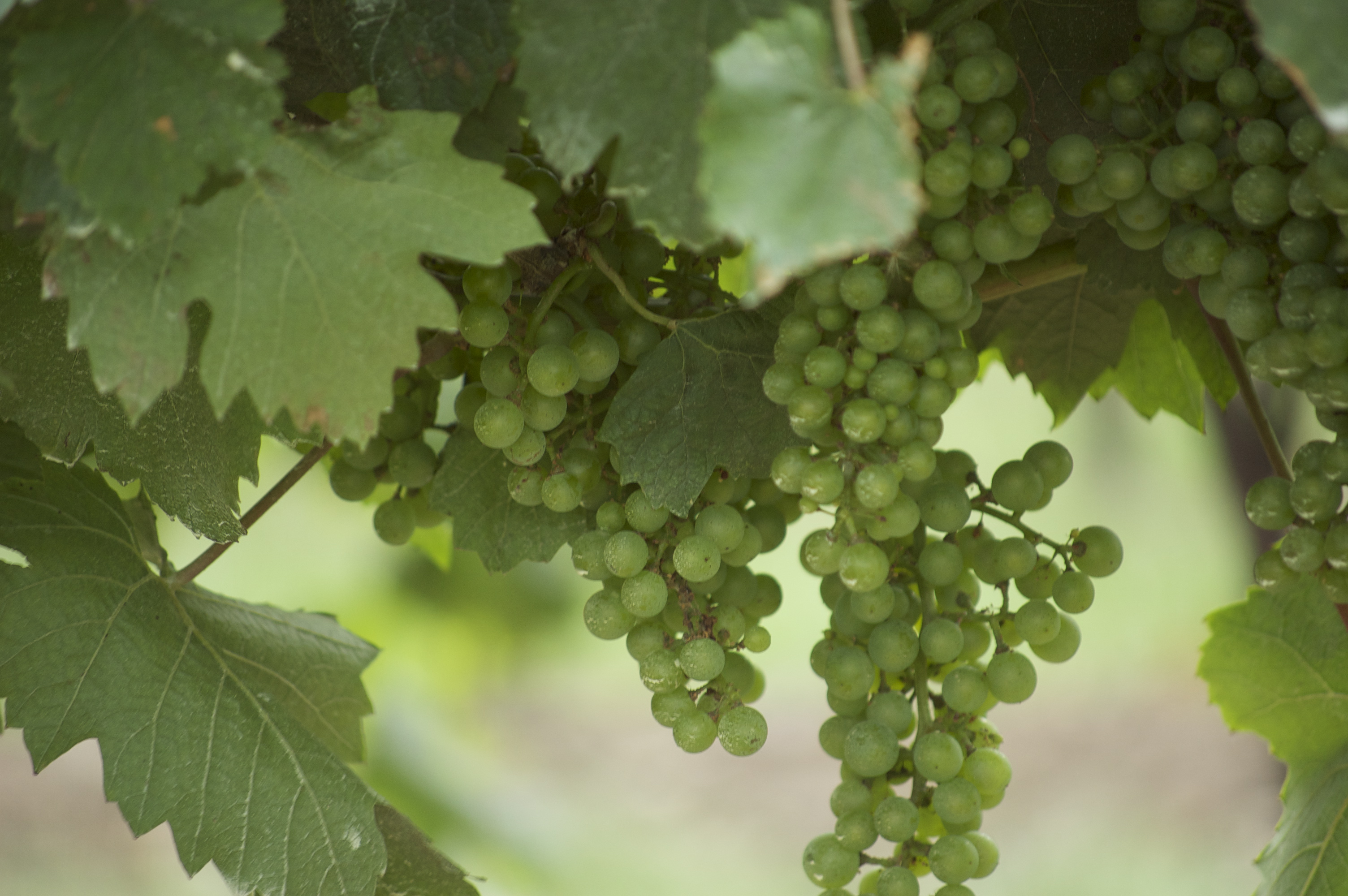
Grapes on the vine ~ ready to be picked

Grapes on the vine ~ ready to be picked

September, to me, always means two things: back to school (whether I’m going or not) and the grape harvest. This year, I am planning to go back to school for the WSET Foundation Course through the American Wine School here in Cleveland. For four weeks, I’ll learn the basics about how to taste, serve, buy and store wine, and get a little introduction to food and wine pairing. It’ll be great knowledge for my trip to California Wine Country in November. More about that in future posts.

So, I’m back to the study hall and today’s subject: harvest and white wine production.

The harvest itself can be done in two ways:

Machine harvest is by far the quickest and most efficient but it is very costly. It can also be a little heavy on the grapes, and depending on the variety, can damage or minimize the flavor. You have to have the correct vineyard setup (your vines must be straight), and it doesn’t lend well to grading. This is a task that can’t be done afterwards; you have to go through the vineyard before the machines ever start up.

Manual harvest allows you to grade or sort as you go, and allows for the removal of low quality and damaged fruit. This, in turn, can maximize potential quality and flavor of the product.

Harvest ~ JustinSullivan/Getty Images

Harvest ~ Justin Sullivan/Getty Images

Once the grapes are harvested, sorted and graded, they go to the ‘crusher’ for stem removal. If stems are left on in the pressing, the wine can become bitter, thereby reducing the quality of the wine. Who wants bitter wine?

Main steps for white wine:

First, it’s a must that I talk about must. Sorry. I know that’s a bad groaner, but I had to.  Must is ~ the juice, seeds, pulp and skins from the grape. All of it (except stems) is thrown into the press.

Juice is extracted from the must and then sent to the fermentation vessel (barrel, tank or concrete lined).

Yeast is added next to convert grape sugars into alcohol. When all the sugars are finally converted, the yeast dies and fermentation stops.

Voila! We have white wine.

The whole process for white wine takes from between 5 ~ 15 days. Smaller batches allow for more finely tuned wine making. A large batch might give you a bigger yield but the result will be a less finely nuanced wine. Sometimes great things can come in smaller packages.

Any winemaker would say that there is so much more that goes into the process than that, and I agree. You have to take into account the weather, how the growing seasons were up to harvest time, canopy management, terroir, among other things. All have  great influence on what ends up in the bottle and eventually in your glass. I’ll get to those elements in greater depth as we go along, but this is a general overview of the basics.

Next study hall, I’ll write more about the influence that yeast in particular has on making or breaking a wine.

Cheers!