Cool It!

The dog days of summer are upon us. At first, I thought it might be just a hot flash but my little weather station guy was reading 112F. In weather this hot, I always seem to have trouble keeping my wine cool. Putting ice cubes in the glass is sooo not done, yet there are several ways to accomplish this: the ice bath, which will  keep temperature relatively cool but can leave you with a drippy wine bottle and sometimes the wine ends up too cold to experience the delicate bouquet and flavours. I have Whiskey Stones that are both beautiful and supercool. In theory, they’d work well; you freeze them, put them in your glass to keep the wine a constant temp without melting but I found them to be to be a bit clunky. Though, for the sake of experimentation I tried them, and almost cracked a front tooth when one slid too quickly toward the rim of the glass. Drag!

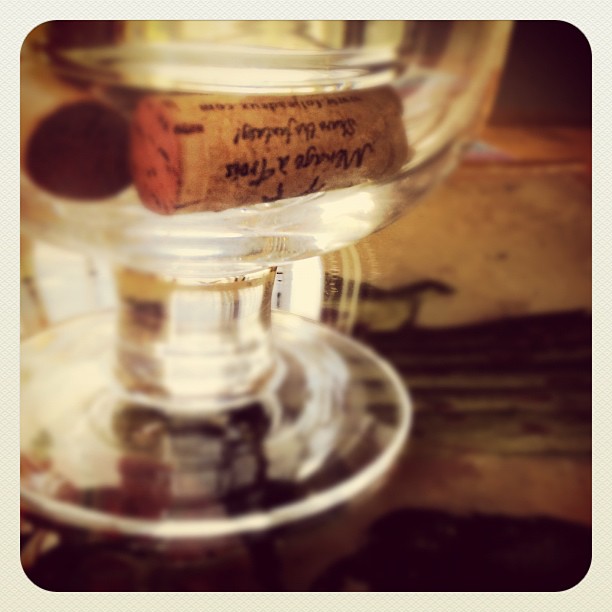
The Corksicle is another innovation that keeps your wine cool from the inside rather than external chilling. It says it will keep chilled whites perfectly chilled and will cool room temperature reds. First you freeze the Corksicle unit, then pour out a little of the wine from the bottle to make room. You then insert the Corksicle and leave it for the 15 minute rule. You wouldn’t want to use this to chill a bottle of white from room temperature. For reds, you’d use it to slightly cool a lighter red; one that’s best served at a lightly chilled temperature, such as Beaujolais.

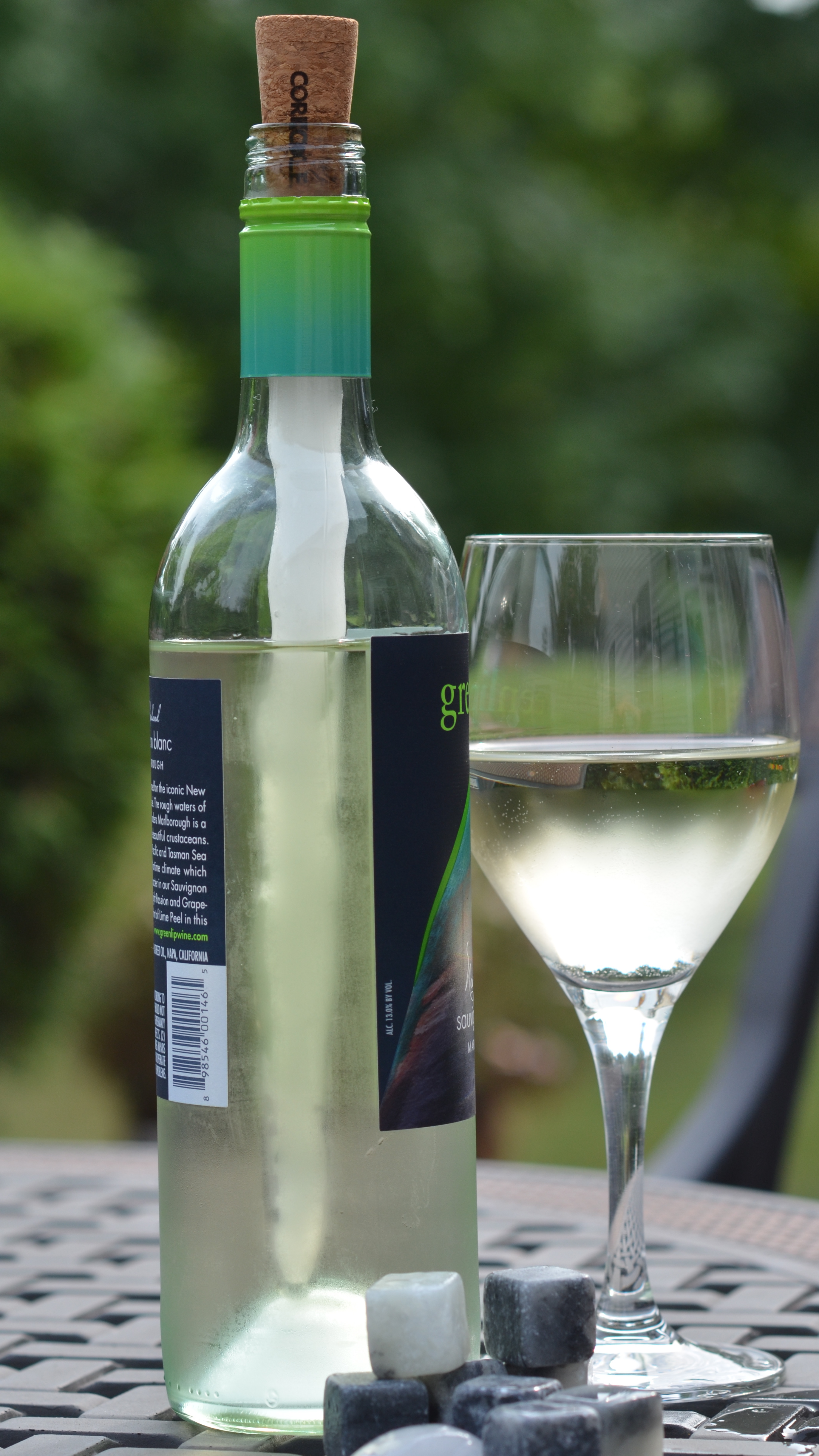
So I took the wine, an ’11 Greenlip Sauvignon Blanc from New Zealand, and with the Corksicle in place, made my way out to my patio lab. I thought this would be more of a test to how the Corksicle would really stand up. It was also a test of how well I could stand up to the heat.

I started the experiment at 5:01pm. The package says that it will keep wine at the proper cool temperature for 45 minutes. To get an idea of just how hot it was, I brought out some of the frozen whiskey stones to see how long they’d stay cold in the heat. The temperature was holding steady at 95F.  By 10 minutes, the whiskey stones had completely thawed and actually began to heat up. Hmmmm, interesting.

At 30 minutes, I was getting skeptical; had the Corksicle met its match in this Cleveland heat? I poured the lovely nectar into my glass, and as per their instructions, kept the Corksicle part way in the bottle as I poured and … it wasn’t ice cold ~ which isn’t necessarily bad. It was chilled, and I was able to taste more of the flavours of the wine. When wine is too cold, it can lose its subtlety and nuance. This was still quite drinkable and cool enough.

So how did it measure up?  The Corksicle kept its promise of keeping the wine chilled, without dilution, and in a high outdoor temperature. Perhaps a better test might be  the Corksicle vs. wrap-around wine coolers.

But I’d better make it soon. Last week, it seemed as though  Old Man Winter played spin the Corksicle and landed on the Cleve.

Cheers!

©TheWineStudent, 2013

Water Wait

Photo credit to Alessandro Beltrame/AGB Studio Video, NY Times

Photo credit: Alessandro Beltrame/AGB Studio Video, NY Times

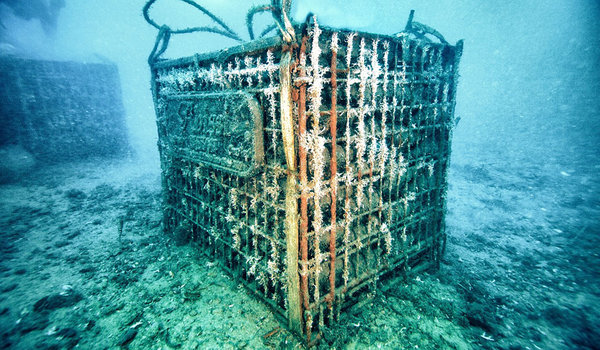
 The natural temps are near-perfect, there are no light effects to compromise the integrity, and the gentle rocking of the current keeps the lees (yeast particles) moving through the wine. And if you’re Charlie the Tuna, you’d have a veritable pirate’s booty for your drinking pleasure. Cellaring wine under the sea is becoming the new frontier. Since 2007, Winemakers from Spain, Italy, Greece and France have been sinking their vintage lots.

 In 2009, Piero Lugano had to find a creative solution to the lack of storage space for 6,500 bottles of his 2008  Bisson Abissi Prosecco. At a depth of about 200 feet, his bottles remained in non-corrosive stainless steel cages for 13 months ~ great care was taken to ensure that nothing about the process was harmful to the environment. What they found was that the wine was beautifully aged. Since the bottles were surrounded by water, obviously no air could penetrate the corks and compromise the wine inside.

 According to Recipeidol.comMira Winery in Napa this past spring underwent a test run of the underwater cellaring process. They took 48 bottles of their 2009 Cabernet Sauvignon and submerged them in the Charleston Harbor in S. Carolina. Registering a temp of 51 degrees, they were left to age for 3 months; and have just broken the surface to be tested. So far, the reviews of the first attempt are quite promising.

Yet it seems a fairly expensive propositon, unless your winery is close to a large body water, and a large body of water that is in no danger of freezing, like Lake Erie. The hit- or-miss nature of winter weather might be why, in Ohio, not much experimentation is yet being done with water cellaring. Still, it could be something worth exploring even with the natural limitations.

 In theory, it sounds like a great way to cellar. But the question remains: Will it be a process that will ultimately increase the price point for the consumer? And does it make the wine that much better that the consumer will  want to continue paying once the barnacles are brushed from the novelty?

In what I’ve read so far, the benefits seem good but still fairly general. There a plentiful tales of wines lost at sea garnering high prices at auction; but is that because it’s been cellared in sea water or because of the rarity of the bottle and the history behind it?  

It’ll be interesting to see where this will go; perhaps water cellaring will become the gold standard. There’s no doubt that as more and more wineries continue to produce great wines, storage space may be at a premium. 

Hmmm, maybe I should get that diver’s certification after all.

Cheers!

©TheWineStudent, 2013


Unknown Pleasures

After a crazy week getting my girl to and from her end-of-school-year activities, I had a bit of time to grab a slice and wind down. And I did the very thing that would make most wine connoisseurs grimace and develop a nervous tic. I drank a wine that had been in my fridge for a few days. I know what you’re thinking, “Ack, what the hell, girl?!”  But like bravely taking the walk of shame, and accepting my culpability, now I have no regrets.

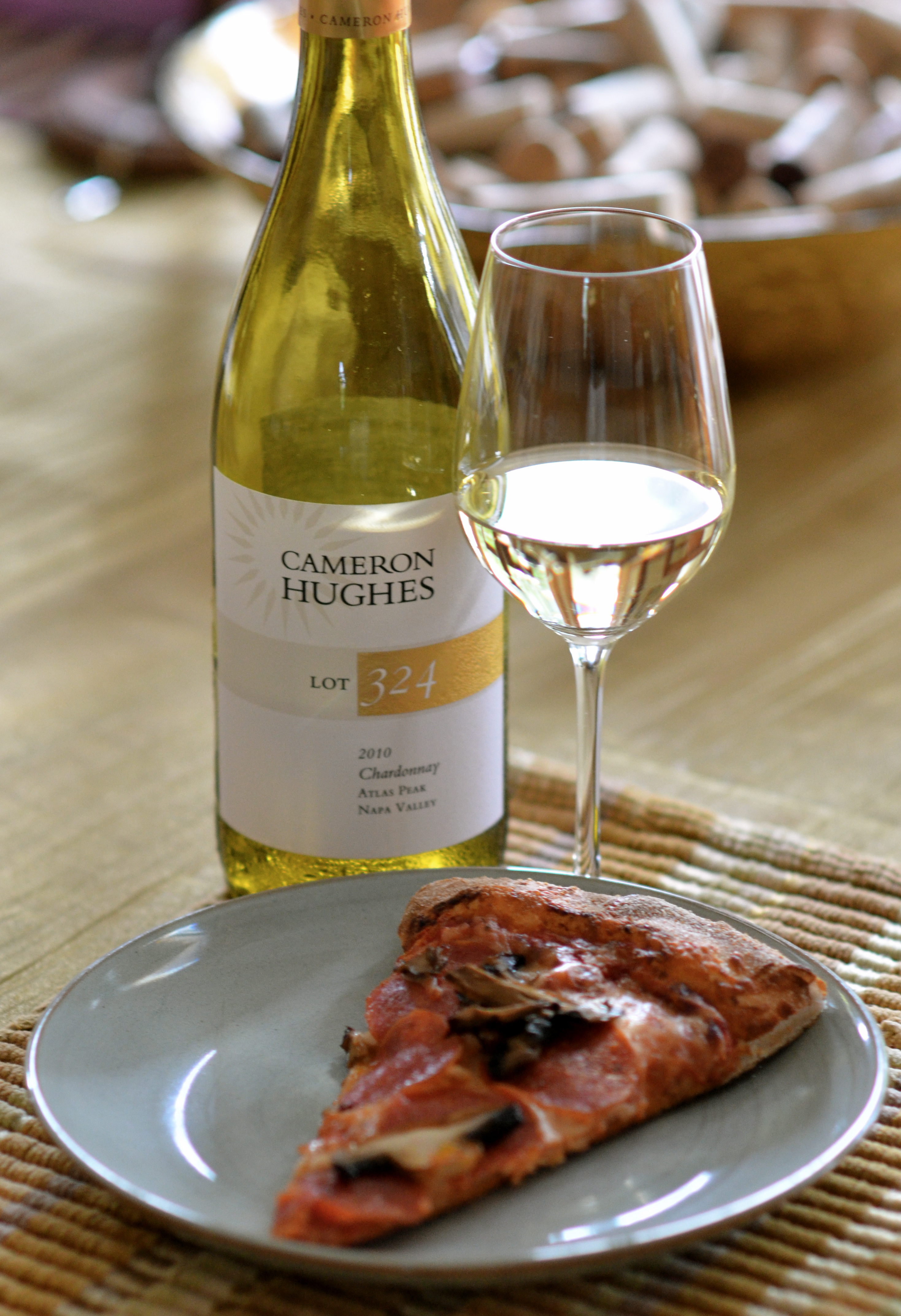
When I pulled the bottle of Cameron Hughes Lot 324 Chardonnay from my fridge, I had my doubts. But it was a warm evening and I wanted something a little refreshing ~ somehow, a red just seemed too heavy. And there it was, just like the kinda-cute guy you didn’t quite notice until closing time. It wasn’t until I paired it with the basic cheese, mushroom and pepperoni pizza that things really started to happen. (Really, pairing pizza with WHITE? Girl, you must be tired.) Read on, brave one… First on the nose was a pleasing pineapple vibe. I wasn’t expecting to detect anything, given how long it had been laying low. As I sipped, while enjoying my pizza, the flavours of almond, toast and flowers were ever present; ending with a rich buttery finish. It totally surprised me that after this length of time, it could still offer such a nice flavour experience. The pizza must’ve been very salty; since that element is a very wine-friendly component that helps to soften hard elements , increase the perception of body in the wine and take down the acidity and bitterness. See, I did learn something from my course!

It wasn’t a wine expert’s ideal situation, at all. I understand completely. But I also understand the pleasure you can get from a little surprise that happens when you least expect it.

Cheers!

©TheWineStudent, 2013

Corked

I’m not one to make a fuss but this was bad. That said, the beautiful thing about wine is that myriad styles can produce different scents and flavours ranging from floral to fruity to earthy and leathery. These are elements that may be pleasing, or not, depending on one’s own personal taste. For instance, I might like my reds to taste a little like mushrooms and wet leaves and molasses; you might enjoy one more jammy with a toasty-chocolatey vibe. And that’s okay. That’s what we love.

In the WSET course, we learned about what scents can be expected from good wines but also how to determine if there are faults ~ primarily whether a wine is corked. Cork taint in wine happens when naturally occurring fungus in the cork comes into contact with chlorides in bleach and other components used in winery sterilization. This creates the chemical compound TCA  (2,4,6 – trichloranisole) and it can affect not only the bottle but the entire winery. It’s a main reason why most wineries no longer use chlorine based products for sanitation. What does it taste like? Imagine chewing on a piece of wet, moldy cardboard. And while it poses no health threat if you drink corked wine, I can’t imagine why you’d want to. Blech.

So I did something I never do in a restaurant. I sent it back. It took a bit of deliberation because I used to think it was really officious of someone to send back a bottle; I mean who do they think they are?? And I think if you do it politely (as we did), it makes it easier for everyone. When you buy premium wine by the bottle, you should get what you’re paying for. It also helps make the restaurant aware of any problems with the wine they stock.

So the next time you’re dining out and find what’s in your glass is smelling like soggy cardboard, don’t be afraid. Send it back. You’re  paying a lot for that vintage ~ it really should be good to the last drop.

Cheers!

©TheWineStudent, 2013

The C-Word

Baby Berries

Baby Berries

Chardonnay! ~What word did you think I meant? Probably one of the most ubiquitous and popular varieties, Chardonnay is being celebrated today. So in honor of Chardonnay Day, I wanted highlight some of the wonders of this familiar, yet kicky little grape.

One of the seven ‘noble’ varieties, Chardonnay, with it’s higher alcohol and low acidity makes it very easy to drink ~ refreshing with maximum buzz. Its flavours can range from green apple, pear, and citrus (cooler climates) to stone fruits like peach, apricot and nectarine. Cultivated in warmer climates, it tends towards tastes of tropical fruits such as banana, pineapple, mango and kiwi. An oaked Chard may reveal essences of vanilla or coconut if lightly oaked. Heavier oak gives flavours of toast, smoke, and yeast. Malolactic processes bring out the attributes of butter, cream and hazelnut. Mmmhmmm, that’s a lot of taste sensations to pack into one medium sized glass. Maybe we should have two. When paired with the playful and talented Pinot Noir grape, it’s the basis for Champagne.

According to Jancis Robinson, Chardonnay can be aged from between 2-6 years. Chards with that buttery, malolactic vibe have a shorter life span, so it’s best to consume quickly, about a year or so after the vintage date. The ideal serving temperature is lightly chilled; 10-13C (50-55F).

It’s a tough little berry but because of its early bud break, it runs the risk of frost damage in the cooler regions of  Canada, New York and Ohio. So tender loving care must be used in nurturing this noble grape.

Although not generally a Chard drinker, I didn’t want the day to pass by without paying a little homage .After reading about the interesting tastes headed my way, I may have been a bit hasty in my bias. A little attitude adjustment can be a good thing. I found a ’10 Cameron Hughes Chard from Napa tucked away in my cellar.  It boasts ‘riveting aromatics and unctuous textures of orange blossom, lemon curd, toasted almond and honeysuckle.”  It’s the wine that drinks like a meal! But I’m really looking forward to what I experience  in my glass.'10 Cameron Hughes Chardonnay

Happy Chardonnay Day!

Cheers!

©TheWineStudent, 2013

Fun with Finals

I admit it: I was a little anxious. Yesterday was my exam for the WSET Level 1 Foundation course. I’d studied and paid attention in class, yet occasionally had the feeling in the pit of my stomach that I used to get before I wrote an exam. And it’d been a while since I’d studied for anything. While the course was only three weeks, there was a lot of great information shared not only in the study guide  but in class as well. The wealth of knowledge of instructors Paul Giudici and American Wine School Founder, Marianne Frantz, made the class so interesting and fun; their love and enjoyment of wine was infectious. We studied about the seven noble varieties, styles of wine and how other factors like oak, tannin and acidity affects the wine. We also e xplored the appropriate temperatures for serving wines (including varying temps for white and sweet and sparkling. Not all reds should be served at room temperature). We looked at the importance of correct glassware and why to keep it clean: Dust and detergent residue can adversely affect the taste.

The final night’s class on food and wine pairing  ~ the one  I missed, was in addition to my study notes that, thankfully, I had with me. I learned that: Sweeter and savory dishes can amplify your perception of bitterness, acidity and alcohol burn in your wine. Foods that are higher in acidity and salt can enhance your perception of  the wine’s body, sweetness and fruitiness. Until this class, when I’d choose wine with a dish, I typically thought only of the standard, safe-and-sure pairing principles: White wine with lighter meats and fish; reds with beef and certain pasta dishes.  I’ve since learned that it goes much further than that, in order to get the best taste experience. It’s good to consider the salt-to-acid ratio, not just in the food but also in your wine. For instance, if you’re having a dinner that’s packing some major Chili heat, you’d want to pair it with a lower alcohol white or low-tannin | low-alcohol red. Since Chili heat increases the perception of bitterness, acid and alcohol burn, pairing with a high alcohol wine would be like trying to put out a fire with gasoline. Yowza!

Once I turned the test paper over and read the questions, my nerves fell away. And to celebrate after the exam, I cracked open an ’02 Tempranillo. It was lovely and creamy; deep purple in color and tasted  of rich, ripe raspberry.

I really enjoyed my time at the American Wine School and I hope my schedule will allow me to take the other levels in the WSET Foundation series. If you’re looking for a great, fun way to improve your wine knowledge, I recommend checking out the AWS | WSET Foundation series classes.

Cheers!

©TheWineStudent, 2013
Just Peachy

Sald! Peach~Mango~Chardonnay Sangria

Salud! Peach~Mango~Chardonnay Sangria

KISS ~ Keep it Simple, Sweetness!  I used to think that making Sangria would be an arduous task, so I stayed away from it. But I wanted something fun to celebrate Cinco de Mayo. Though not a beer drinker, I’d usually choose the safe and sure Corona ~ where the hardest part would be finding my bottle opener and cutting some lime wedges.  But with the weather being so beautiful (and in the Cleve, you have to take advantage when you can) I craved something fruity, fun and wine- based. I found an easy recipe for Peach~Mango~Chardonnay Sangria.

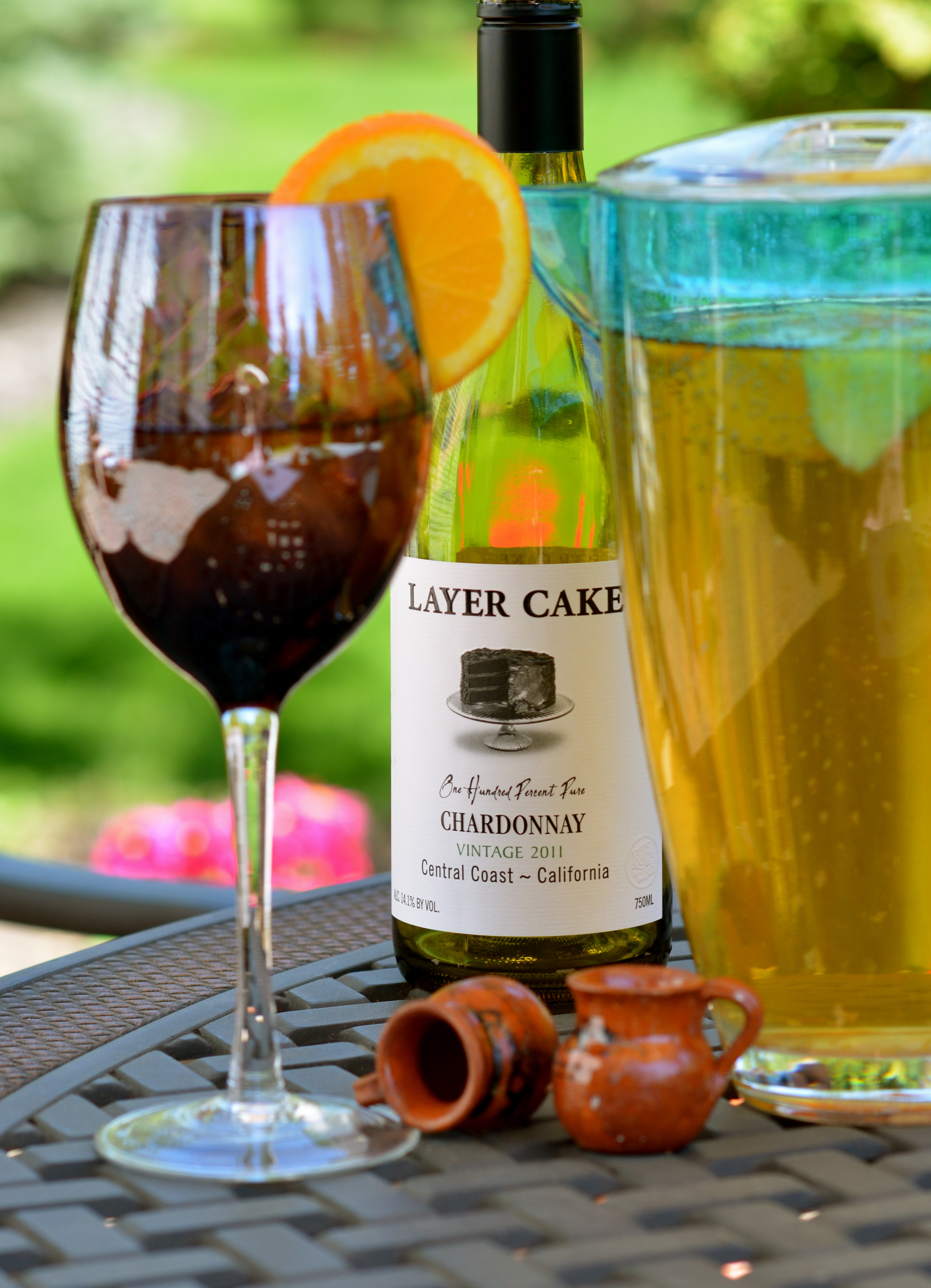
Some of the recipes I looked up suggested using Voignier, Pinot Grigio, Sauvignon Blanc, which tend to be much more fruity and lighter. Chardonnay is generally a full-bodied white. I chose an ’11 Layer Cake Chard. In part, because it was a less expensive bottle~ about $11~  and because I’d be mixing it with juices, ice and liqueur. I also thought since Chardonnay is so full-bodied, the taste would stand out more in the mix. The tasting notes claimed a citrus, pineapple and lemon curd vibe with a clean finish that I thought would be cool. I was pairing it with homemade Guacamole that was quite salty, and thought the sweet of the Sangria would meld nicely with the salt.

I really liked the Peachy ~ Mango first flush that quickly settled into the citrus and pineapple of the Chardonnay; and it really balanced out the onion, tomato and garlic elements of the guac. The next time I try it, though, I’m going to change it up using an inexpensive Voignier or Sauvignon Blanc, just to see if there is any discernible taste difference.

Cheers!

©TheWineStudent, 2013

Breathe Easy: The Winebreather Carafe

The Winebreather image via givesimple

The Winebreather image via givesimple

A few posts back, I wrote about decanters and aerators and found that there was a significant difference in wine when you use them. I recently read about the Menu Winebreather Carafe. Menu claims that it adds 10x more oxygen to the wine in under 2 minutes…hmmm…that’s pretty interesting … and fast.  When you decant, you have to wait about 2 hours to to get the full effect of the oxygenation. Aeration is pretty instantaneous by comparison.

The way it works: You press the decanter onto the top of any wine bottle then flip it over to pour the wine into the decanter and serve. The beauty of this design is that if there’s any wine left in your decanter, and that’s a big if, you flip again, pour the remaining wine back into the bottle to store in the fridge. That’s kind of cool.

It retails for $49.95 and is available pretty much everywhere including Menu, Wine Enthusiast and Amazon.

Having a little science background (which can be a dangerous thing) I couldn’t just go by marketing copy and a few gold stars (although it seemed to score a lot of them).

Oh no, I’m going to do my own experiment ~ decanter vs. aerator vs. winebreather. I’d like to see for myself what’s what. Alas, I’ll have to wait a couple of days for the last constant; the Winebreather isn’t available at my local wine shops.  That’s a bit of a drag but it’s okay.

I’ll be sure to write a full report on my findings. But to pass the time, I’ll continue to enjoy my Rabbit. The aerator, I mean.

Cheers!

©TheWineStudent, 2013

Bright, Young and Cool: Wine Marketing’s New Look

This slideshow requires JavaScript.


The face of wine marketing is changing. It’s getting younger. And it didn’t need Botox to do it. If you want to sell something, really sell it, it’s got to be cool. Look at any product out there; if it’s considered cool, it’s because younger consumers have deemed it so. The wine industry, for the most part, is becoming very aware.

Until the last decade or so, the impression of the world of wine has been a little, well, stuffy. But if you look at most wine stores now, as I recently did, you’ll see a distinct pattern emerging: the wines with the most interesting, funkycool label art and packaging are getting prominent shelf space, usually in the front row. And that’s the perfect position for the grab-a-bottle-on-the-way-to-the-party crowd.

Twenty-something Millennials are fast becoming the key group to the future of wine marketing. According to Donniella Winchell, Executive Director of Ohio Wines, there are two basic categories, the first ranging from ages 24 to 28. “This group are recent graduates who have been negatively affected by the recession but are still interested in fun wines; the sweet whites and reds. The over 28’s are well-employed and prefer wines in the $12 to $24 range.” She adds that, “By the ages of 14 to 25, they’ve established their taste in music, clothing and are well on their way to molding their decision-making in beverages, and there are lots of choices. Most have been exposed to better wines over the years because of what their parents were drinking.”

It’s no surprise that social media largely influences what’s trending in wine brands and what’s being chosen in the wine store. There’s also the tendency to veer away from traditional brands in favor of wines that have a celebrity buzz or are socially or environmentally conscious. Winchell notes, “They’re not always brand loyal or specific ~ paying more attention to what their friends are buying or what they’re reading about online via Twitter and Facebook.”

Differences are clear not only in buying habits but also at events. In tracking wine sales and attendance at winery events, Winchell notes that, “Millennials tend to gravitate to the sweeter wine and, at events, hang in larger groups ~ buying maybe a bottle. Wineries generally like to focus on the age 45 plus consumers who have larger incomes and buy wine by the case.”

But Millennials are the future and Winchell cautions that wineries who don’t account for them in their long-range forecasts will be left behind, “Those who don’t pay attention to Millennials now won’t know why they’re in trouble in 10 years.”

This is a really interesting trend for wine and it’s something I’ll be keeping an eye on, especially within the Ohio wine industry, in upcoming posts.

Cheers!

©TheWineStudent, 2013

Here’s Mead in Your Eye

It’s St. Patrick’s Day and I made my annual feast of Dirty Nellie’s Irish Stew. I know ~ you’re wondering what makes it dirty, right? I’ll leave that to your own imagination. Alright, it’s made with Guinness ~ minds out of the gutter, all of ya.

This year, I wanted to pair it with something other than Guinness (not that there’s anything wrong with it). I wanted wine, which, for the most part, was a no-brainer, except that I wanted something with an Irish vibe. And that proved to be an interesting quest. While looking at my local wine store, I asked for something a little different. I was introduced to Mead. Mead, is a fermented honey and water beverage that dates as far back as 2000 BC. And while Ireland is quite proud of what they produce, many countries in Europe, and as far as Ethiopia lay claim to it as well.

Mead can be extremely diverse, depending on the type of honey used and ingredients added (i.e. maple syrup, fruit, chili peppers, herbs and spices). The names of some of them sound like characters from Lord of the Rings. After a few glasses, it’d be easy to slip into a monologue of, “Fill my goblet with that Acerglyn nectar, and I will drink to the dregs!” Oh man, I didn’t even have that much with dinner.

Mead can look quite different in your glass. The bottle of Chaucer I bought was fairly thick and very sweet; it made me think of a late harvest Vidal or light Ice wine. I really didn’t think it would work at all with the savoury nature of the stew. And for me, it didn’t. On the label, it said to serve it a little warm, which I did, but I just couldn’t handle the juxtaposition of the two very different vibes. It’s not to say it wasn’t good, just not with this particular dish. The Chatoe Rogue Mead with Jasmine poured and tasted like a very light beer. I served it chilled, like beer, and sipped between bites. This seemed to work a little better for me but not as well as a nice red wine.

Looking at the difference between the two glasses got me wondering: Is Mead a wine…or is it a beer?

Mead is honey, water and yeast much like beer…and wine. The confusion seemed to begin during the days of yore. Mead was boiled before fermentation, much like making beer but not wine. The very high temperatures caramelized the sugars, giving it a darker color. Today, Mead undergoes the same fermentation process as wine, with very little added heat. And like wine, there are many varieties and variations of taste, color, consistency and dryness. Other types, like beer, are brewed and add hops to the mix. Mead ranges in price from $10 to 30 per bottle.

It was interesting to try two very different types of Mead and I think next year, it’ll  be worth sampling more with a variety of traditional Irish dishes.

Slainte!

©TheWineStudent, 2013