Sparkler Series – Part 3 – Paired Off!

Happy New Year!

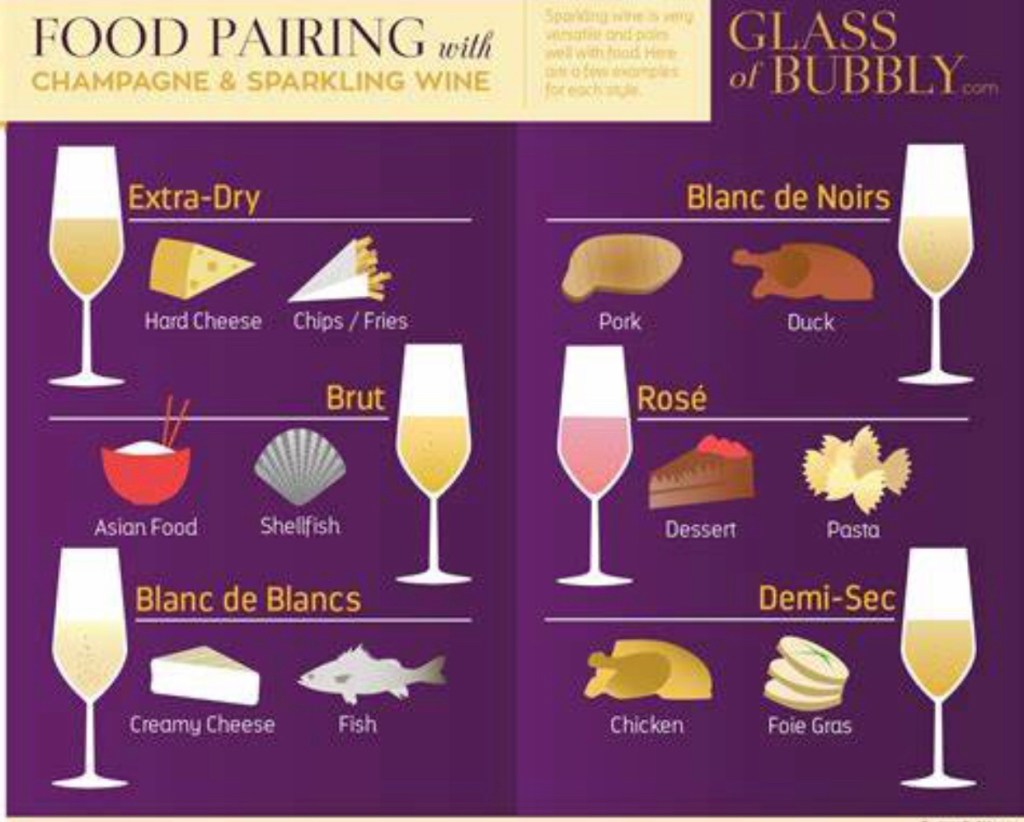
The general rule of thumb for pairing sparkling wines – fish, cheese, chicken.

But what if you’re not feeling that? What if you’re feeling adventurous and want to be free of all rules?

I say, go for it. For the most part, the sky’s the limit, just keep a few tiny guidelines in mind:

Serve your sparkler well chilled – the bottle opens easier and more safely when it’s cold. Allow a bit of time for the bubbly froth to settle and the delicate aromas to unfold.

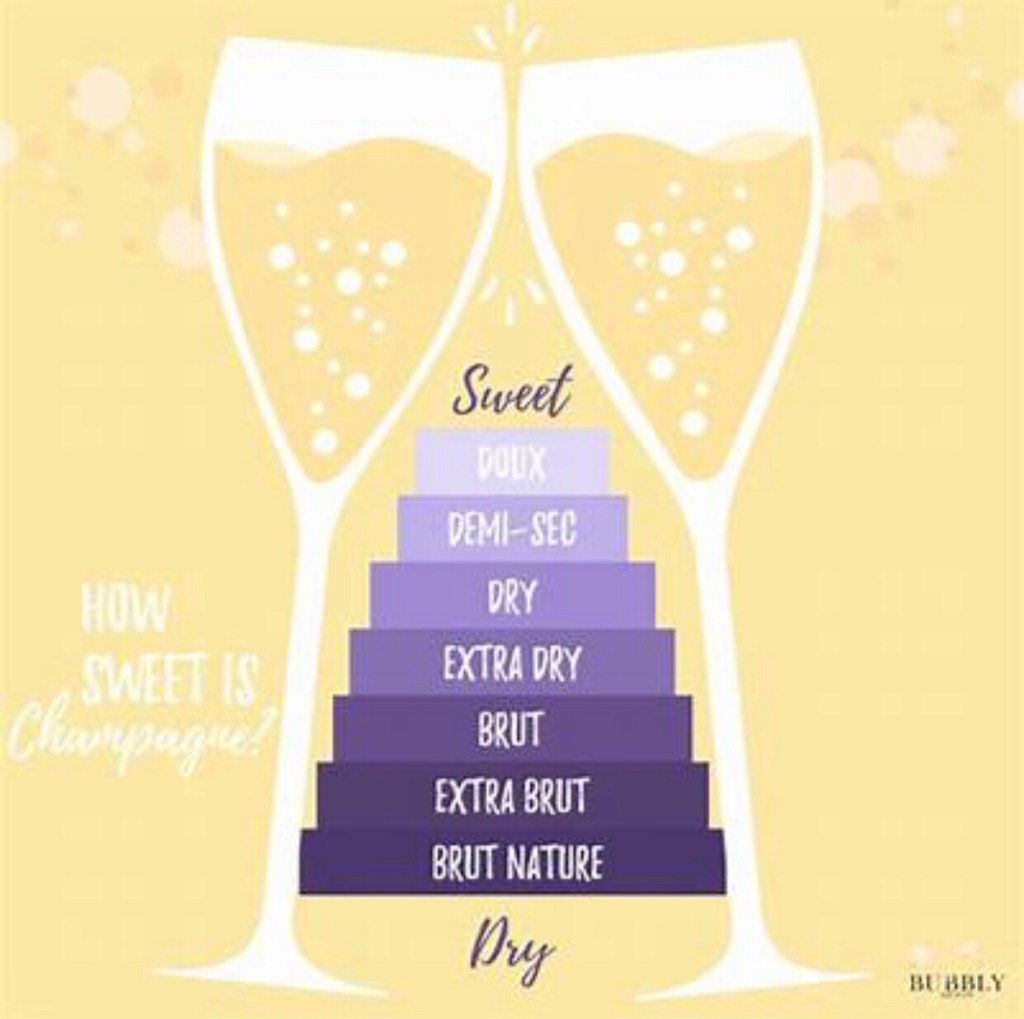
Here’s a great chart from bubblysideoflife.com gives the levels of sweetness to look for when choosing. Not all sparklers are the same.

And the answer is usually right on the label!

Sweetness Levels🥂
[Image via Bubbly Side of Life]

From dry to sweet, when pairing all wines, not just sparkling, you want to:

Match Flavor and Texture – For the most part, you don’t want your food to overpower your wine, or vice versa. You want both to compliment each other; bringing out each other’s best. Intensity of food and wine means its weight, which includes things like, salt, sweet, acidity, spiciness, etc. You want balance. For instance, I don’t enjoy a delicate, low tannin Pinot Noir with a hearty, fatty, juicy steak. The steak, (especially if served with a smoky or spicy sauce) overpowers the delicate flavours of the Pinot Noir, which doesn’t have enough tannins to cut through the robust fattiness of steak. It’s not that the wine is bad, it just doesn’t match with the weight of the food.

A beefy, hearty Cabernet Sauvignon, with it’s higher tannin and alcohol punches within its weight class, and matches the steak sip for bite.

Likewise, pairing a Cab with a delicate white fish, overpowers the flavor and weight of the fish so all you taste is the Cab.

When pairing sparkling wines with food, the same principles apply. Lighter, brighter effervescent wines provide a delicate acidity, and in the case of Champagne, have some richness and aged flavors that give you a different experience. I’ve paired Prosecco with a rich, creamy buttery orecchietti pasta dish that was amazing. The bright, fruitiness and acidity cut through the heavy cream of the dish, cleansing the palate with each sip. So if you’re craving mac and cheese (with any combination of cheeses), do it! Experiment! See what you like!😍

The key is matching the prominent aspects of the food and the wine.

Traditional Pairings [Image via Glass of Bubbly.com]

Sweet with Heat – To avoid feeling the burn, pair spicy fare with a sparkling wine that has some residual sugar in it. Sugar cools down the heat of your dish, creating balance.

⚠️Avoid pairing spicy foods with wines that have high alcohol. These will ramp up the heat, creating a three alarm blaze in your mouth. 🔥Most of us don’t enjoy sweating our way through dinner. 🥵 Going spicy? Choose a sparkler that has Extra-Dry, Dry, Demi-Sec or even Doux on the label.

Acid with Fat – Fatty or fried foods play well with high acid wines like Champagne. The acidity cuts a swath through the fat and fried, salty goodness; cleansing your palate for the next bite!

Try fried chicken or french fries, or put out a bowl of potato chips and watch them disappear!

Smoke ‘n’ Oak – Pair gently charred foods with sparklers aged in oak. Think traditional method Brut or Extra-Brut. And keep the meat on the lighter side; chicken, shrimp. Grilled foods tame the oak intensity and bring out the fruity aspects of the wine.

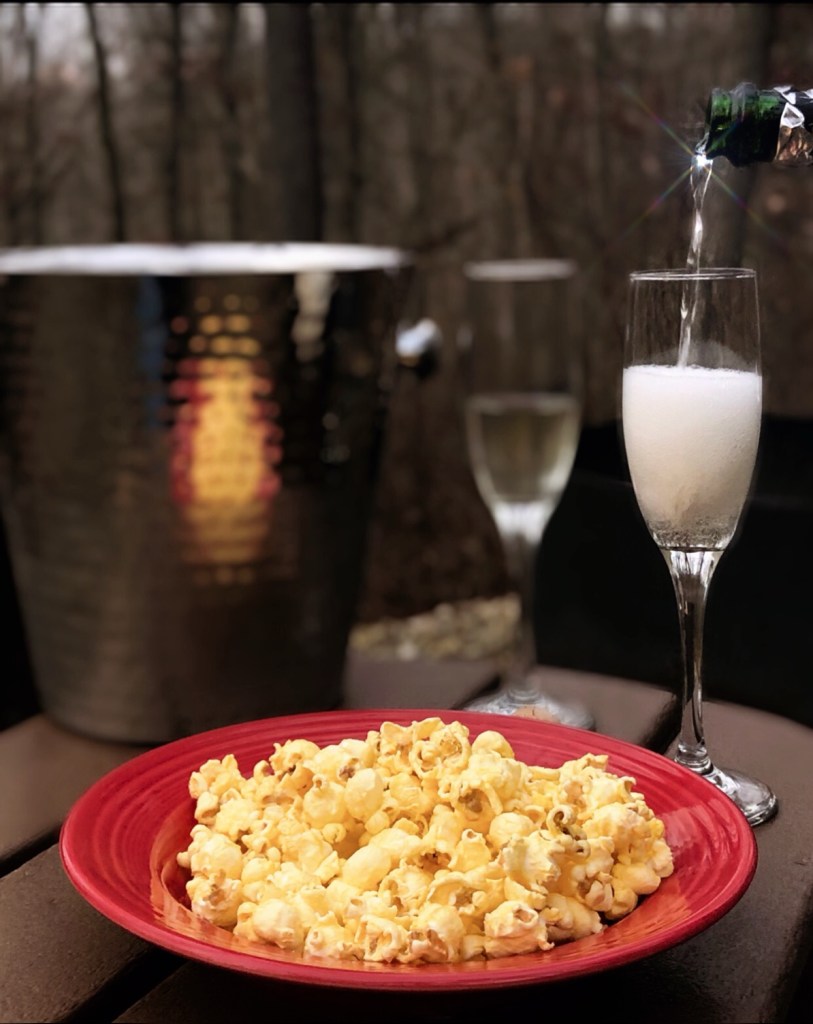
Sweet and Salty – If you love Chicago Mix popcorn (cheddar cheese and caramel blend) you know what’s going on here. Pairing salty foods with a sweet or almost sweet wine makes sweet wine more fruity (and less sweet), and salty foods more savoury. Try… corn dogs! Think about it – you have the gentle smokiness of the sausage inside, combined with the subtle sweetness of the corn bread on the outside, deep fried, and the sauce you put on top (dijon mustard, sweet bbq, ketchup) can change the vibe even more.

I like to keep it classy!😉

Sweet for the Sweet – with dessert, pair a wine that’s at least as sweet, if not sweeter. Sweet wines tend to highlight the sweet aspects of food. If your food is sweeter than your wine, the wine will fade, and seem dull. Again, go for sparkling wines that are higher on the sweet list; Dry, Demi-Sec or Doux.

Pair it with leftover Christmas cookies, Kit Kats, ice cream.🍪🍫🍨

Whatever sparkler you choose, whatever glass you have, whatever food you pair it with, please have yourself have a very happy, safe and healthy New Year!🎉🥳🍾

**Don’t forget to join me tomorrow, Thursday, December 30th, 11:00am on 900CHML’s Bill Kelly Show -with guest host Shiona Thompson!🎙

Thank you so much for visiting and your support!🥰

Cheers!🥂

©️Copyright. The Wine Student, 2021

Sparkler Series – Part 1 – Your Pocket Guide to Sparkling Wines


With the holidays fast approaching, we’re all turning our attention to fun, festive wines to fill our goblets. Even if our evenings may still be a little on the quiet side, enjoyable sparklers are out there to lift your spirits.
But finding the right one can take little prep and planning; there are so many options to choose from. Where to begin? Not to worry! In this 3-part series, we’ll explore several to help you decide which sparkling wines might make your holiday a little brighter.


So what IS the difference between Champagne and other sparkling wines? What glass should I serve it in? I don’t want to serve it with the same old tidbits…what’s unique and fun? These are the burning questions.
We have a bit of ground to cover so… settle in and check out the little video below for a
crash course!👇


Let’s take a closer look at four types of sparkling wines: Champagne, Prosecco, Cava, and Asti.


Champagne:
Champagne can only be called Champagne if it’s made in the Champagne region of France. No other place. Everything else is sparkling wine and as we’ll see, there are many, many bubbling options.
Made in the Traditional Method, and using a blend including Chardonnay, Pinot Noir (and Pinot Meunier), grapes are picked by hand, then quickly and gently pressed in whole bunches to mininmize any skin contact with the juice – leading to unwanted color or tannin in the end product.After press, it goes through a settling process to remove any solids.
Primary Fermentation: is much like still wine at a temperature of 64-68F. The fermentation vessel can be stainless steel tanks, concrete egg vessels, oak vats or barrels. It’s here that many go through malolactic fermentation (where good bacteria convert the hard malic acid (green apple like) to the softer lactic acid (a creamier vibe) which lowers the overall acidity of the wine.
The still wine is then aged, sometimes clarified by filtering, fining or centrifugation. The wine can also be aged on the lees (or dead yeast left over from fermentation). This is what gives the sparkling wine it’s bready or biscuity flavor and creamier mouthfeel. A pink color can be achieved by adding back some red wine, or giving the still wine a small amount of contact with the red grape skins.
After the addition of sugar, nutrients and yeast (liquer de tirage) bottling occurs – here is where the sparkling magic happens! Once bottled, it’s capped with what looks like a bottle cap so that the secondary fermentation can occur. This occurs at a cooler temperature (50-54F) – and a longer process than before. At the end of secondary fermentation, the bubbles have formed, and as the yeast has gobbled up all the sugar, it dies and decomposes. Bottles are then moved to storage where the now sparkling wine will rest on the yeast (lees) for a desired amount of time.

While resting, the bottles are gently and gradually rotated over time until they are in a vertical position – neck of the bottle upside down -to bring any sediment into one smaller area. At this point, the neck of the bottle is placed in a shallow freezing solution of liquid nitrogen and the semi-frozen sediment ‘plug’ is then propelled out of the bottle by the built up pressure. The beauty is that very little liquid is lost, and all of the dead yeast and sticky sediment is gone from the sparkling wine.


The bottle is then topped up with a small mixture of wine and sugar (dosage) to provide the desired amount of residual sugar, which acts to balance the high acidity of the wine.
Bottles are then corked, secured with a wire cage, and ready to ship or cellar.
Traditional method is why there is a higher alcohol content, and it’s why Champagne can be cellared for many years.
A true luxury item, this takes considerable time, skill, and craft to create what goes into your glass, and explains why many are so expensive.
Flavors: citrus, yellow apple, cream, almond, toast.
Brands: Veuve Clicquot, Moet & Chandon, Louis Roederer, and the big daddy, Dom Pérignon. **Keep your eyes open for Blanc de Blanc ~ Champagne made from 100% Chardonnay.


Prosecco:
Like Champagne, Prosecco can only be a true version if it is produced in Veneto region, Italy, the some of the best being from the sub-region of Valdobbiadene. Primary grape is Glera (though it is often blended) and it’s made in the Charmat or single tank method. Here, the base wines are added together with the sugar and yeast in a large stainless steel tank. As the wine goes through it’s secondary fermentation, CO2 is released causing the tank to pressurize. The wines are then filtered, then bottled without aging.
Prosecco generally has a fresher character (with only minor secondary yeast flavors) and should be enjoyed young, within 2-3 years of bottling.
Sweetness levels:
Brut: Dry, little or no detectable sweetness. 0-12 grams of sugar/litre.
Most Champagne is Brut.
Extra Sec (Extra Dry): Some detectable sweetness/sugar. 12-17 grams/litre residual sugar Sec (Dry): Noticeable sweetness/sugar. 17-32 grams/litre
Flavors: green apple, honeydew melon, pear, lager, cream.

Brands: Toresella, Ruffino, Tesoro Della, LaMarca


Cava:
From Spain, and made in the Traditional Method, this is made from three varieties; Xarello, Macabeo, Parellada.
This is a very earthy, rich and complex wine, can be cellared.
Flavors: marzipan, white chocolate, brioche.
Brands: Freixenet, Segura Viudad Brut Reserva, Elyssia.


Asti:
Another notable offering from Italy, Asti is produced in Piedmont using the Moscato Bianco grape. It’s made sparkling by single tank fermentation, giving it a bright and crisp quality, and is sweeter and lower in alcohol than the other three types.
Flavors: tangerine, apricot, peach and pear.
Brands: Martini & Rossi, Spumante, Risata.

This gives you a little more to think about when going to purchase your fun wines for the holidays.


Next post, we’ll explore which is the best glass to truly showcase the look and flavors of your sparkler!🥂


Cheers!🎄 🍾


© Copyright, The Wine Student, 2021.

Wine, Women & Song

To celebrate Women’s History Month in the best way I could think of, I revisited a book about women whose passion is both the grape and the wine. 🍇🍷🎉

In her book, Women of the Vine, Deborah Brenner explores the lives of several women in wine. Each woman shares her own story about how she came to be in wine world; the pitfalls, the triumphs, and candid views on their experiences of discrimination within the industry.

There are only a small handful of books that chronicle the lives, careers, and history of some incredible wine women – those who have gone the distance in a typically male-dominated profession. But this is a rapidly changing landscape as more and more women are finding themselves drawn to the world of wine.

Here are two more great books to look for:

Women Winemakers: Personal Odysseys by Lucia Albino Gilbert & John C. Gilbert

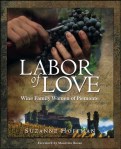
Labor of Love: Women Winemakers of Piedmont by Suzanna Hoffman – a historical perspective of women

And here’s how you can support some wonderful women winemakers! Check out their sites below (and their unique stories) and keep them in mind on your next wine run:

🍇 Theopolis Vineyards

🍷 McBride Sisters

🍇 Aslina Wines

🍷 Imagery Estate Winery

🍇 Groth Vineyards & Winery

🍷 Screaming Eagle

Here’s to all the amazing, strong women in the world: may we know them, may we be them, may we raise them, & may we enjoy their amazing wines! 🥂🎉

Cheers!🍇🍷

©️ copyright 2021 TheWineStudent

Wine in Pajamas! Moon over Mendoza 🌜🍷

Don’t know about you, but I’ve been in my pajamas for about a month. Ok, I’ve changed them from time to time but, yeah, it’s been a while since I’ve worn anything without an elastic waist band. And honestly with all the comfort food, Netflix bingeing, and wine ‘researching’, I’m not sure I can go back. Pajamas it is!


My interest in Malbec has been a long time thing. So I wanted to see how they stack up.
Originating in Cahors, France, Malbec’s reputation has been sealed in Argentina. Bright, beautiful, rich essences of black cherry, blackberry, spice, vanilla, plum, and black currant are expressed beautifully in Malbec from Mendoza but what happens when the new kid on the block shows up? That new kid being California. New is a relative term; Argentina Malbec was planted during the 1800’s. In California, Malbec was only considered a stand alone varietal since 1993. Before this time, it was lumped in with ‘other dark reds’. The majority of Malbec is cultivated in California, and primarily to produce Meritage, yet only 0.5% red grape plantings are Malbec, compared to Cabernet Sauv and Zinfandel.
Main growing regions for Malbec in California include Napa, Alexander Valley, and Paso Robles; known for deep, well-drained layers of gravel, sand and silt. Gravity works to pull water away from the vines, forcing vines to go after it. This in turn places stress on the vines, resulting in smaller berries with more intense flavor. Climate is similar to a dry Mediterranean, with sunny, warm, dry days cool evenings. This encourages the grapes to ripen at a slow and even pace. This grape is vulnerable, though, succumbing to many vine ailments such as downy mildew and frost so the higher the planting on the hill, the better.
My search for Malbec from Argentina was easy. My hunt for California Malbec not so much. But I managed to find one on one of my few excursions out. And having just watched the movie ‘Mad Max: Beyond Thunderdome’ thought I’d put it to the test.


Two go in…one gets… drunk
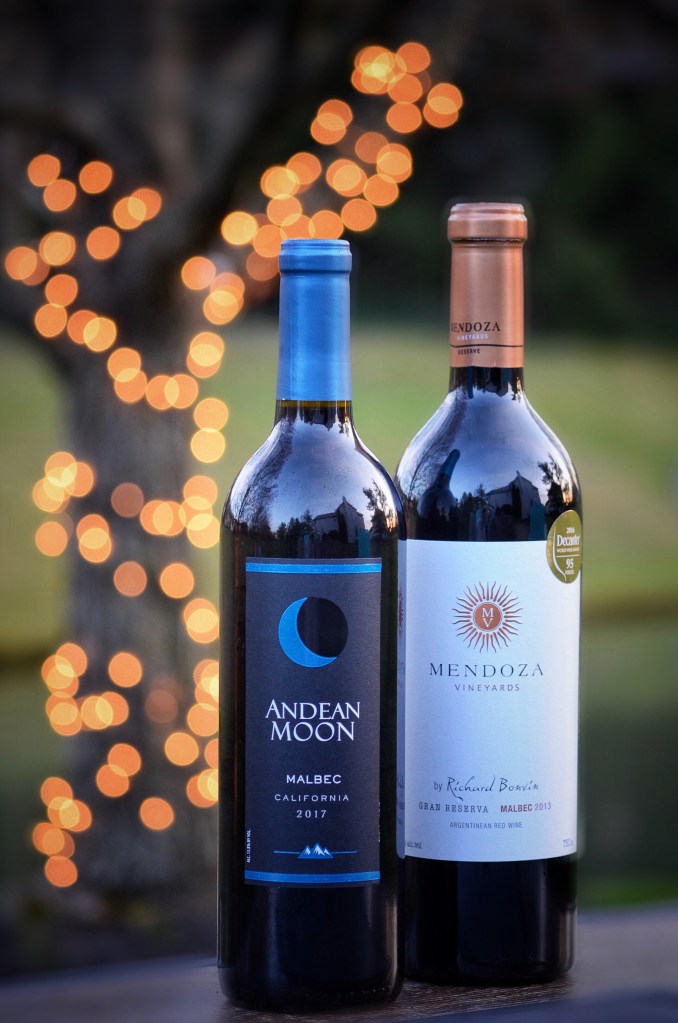
Andean Moon v Mendoza Vineyards. C’mon now, that’s hardly fair, a $5.99 wine from Trader Joe’s up against a grand region in Argentina? I dunno… some reviews I’ve read have hailed this wine as a good contender. So let’s put it to the test!
I pulled HubbyDoug and our girl, Andrea, 22, into the challenge. I tried to make it as blind a tasting as I could but had to ‘recuse’ myself because I did kinda sorta know which bottle was which (I’ve been bingeing ‘Billions’ so the word recuse seemed appropriate). In the next room I poured out a bit of each wine into each tasting glass, then brought them back in to the waiting judges. I did this because the bottles had enough difference as to give away their identity, even covered in a burlap bag.

What did the see..swirl…sniff…and sip reveal?
Wine A ~ a clear yet deep dark color, thin legs, a smooth caramel, cranberry, blackberry, dark cherry vibe with a pleasant, velvet mouthfeel ~ much like a Pinot Noir.
Wine B ~ a clear, brighter ruby color in the glass, also thin legs, with a smoked cherry essence; sweetbitter flavors of earthy, raspberry and licorice, making it seem more complex yet some bitter remained on the palate in the finish.
The winner, with a combined score of 7/10 was….. Wine A: Andean Moon! Yes, the little wine for $5.99 held its own!
It’s kind of like what we’re doing by sheltering in place, social distancing, and staying as positive as we can; we’re holding our own.
I hope that you’re all doing ok, and staying safe and well! And if a little wine tasting can help see us through until we can all be together again, that’s a little win for us. Thank you for doing your part to flatten the curve.
I want to send my gratitude to all our front line heroes: nurses, doctors, EMT, first responders, delivery drivers, grocery store employees, all of you are keeping the world going. Glasses are raised for you ~ you are the best!💕
Cheers!🍷

©️copyright TheWineStudent, 2020

Yes•No•Maybe: My Top Wine Picks for Valentine’s! 🍷💌🍷

On the hunt for Valentine’s wines, I naturally look for fun label art. It’s something I’ve grown accustomed to over the past few years. Each season, I’d find a few to choose from that were on display, (and sometimes on special) to celebrate the lovey holiday. This year seemed a bit, well … skimpy on the label art front.

So I had to really search for wines that caught my eye, and would be a good choice in the glass. I found…two.

And with that, I did a little tasting with HubbyDoug to find our best match. Kind of like ‘The Dating Game’ but with wine. Getting out our Wine Aroma | Flavor Wheel, we were going to attempt educated assessments in our sampling (as opposed to just saying, “Yep, that’s good!”). We’ll see who gets a yes, a no, or a maybe.

Check out the fun slow jam video below for some more info about these wines! 👇🍷

Prophecy 2015 Red Blend ~ I loved the beautifully romantic label but damned if I can tell you what’s in it. Any research led me nowhere about the specific varietals in the bottle. I can tell you that it is a conscious coupling of grapes from both Washington State and California, which is a good start.

Spinning the flavor wheel, here’s what we found:

•Color: Deep Purple

•Nose: vanilla caramel vibe

•Flavors: dark chocolate cherry w/ a pleasant whisper of smoky tobacco on the finish.

•Mouthfeel: Creamy smooth,

•Price point $10.99- $14.99. We found this was a little drier than the Intrinsic. But that was ok. And with gorgeous label art from Victo Ngai, it’s a… yes!

Intrinsic 2016 Cabernet Sauvignon ~ 96% Cab Sauv and 4% Cab Franc. Produced in Columbia Valley, WA, this wine is fermented for a limited time in concrete tanks, which give a mineral character to the wine, then transferred to barrel where it’s aged 12 months. When Dougie found out it was a Cab, he gave the eye roll (he likes Cab only slightly better than Merlot). But here’s what we discovered:

  • • Color: Bright Ruby
  • • Aroma: Pepper, Stewed Plum
  • • Flavors: Black Currant Jam, hints of Leather w/ a pleasant sweetbitter finish
  • • Mouthfeel: Velvety, Silky
  • • Price point: $22.99

The big feature for us was that it seemed like a Cab with Pinot envy; lighter with delicate flavors – not so ‘in-your-face’ as some Cabs have a tendency to be. So that was a nice surprise for our Pinot fan. We have another… yes!

For Valentine’s fun here are two wines that are as nice on the inside as they are on the outside. And, really, isn’t that what we want from a Valentine’s date? ❤️

Happy Valentine’s Day! 💌💋

Cheers!🍷

©️Copyright, TheWineStudent, 2020

Grapes in the Machine: Ice Wine Harvest

It was cold. It was crisp. And as we exhaled, our breath turned to ice crystals before floating to the ground. It was perfect weather to harvest some ice wine grapes!

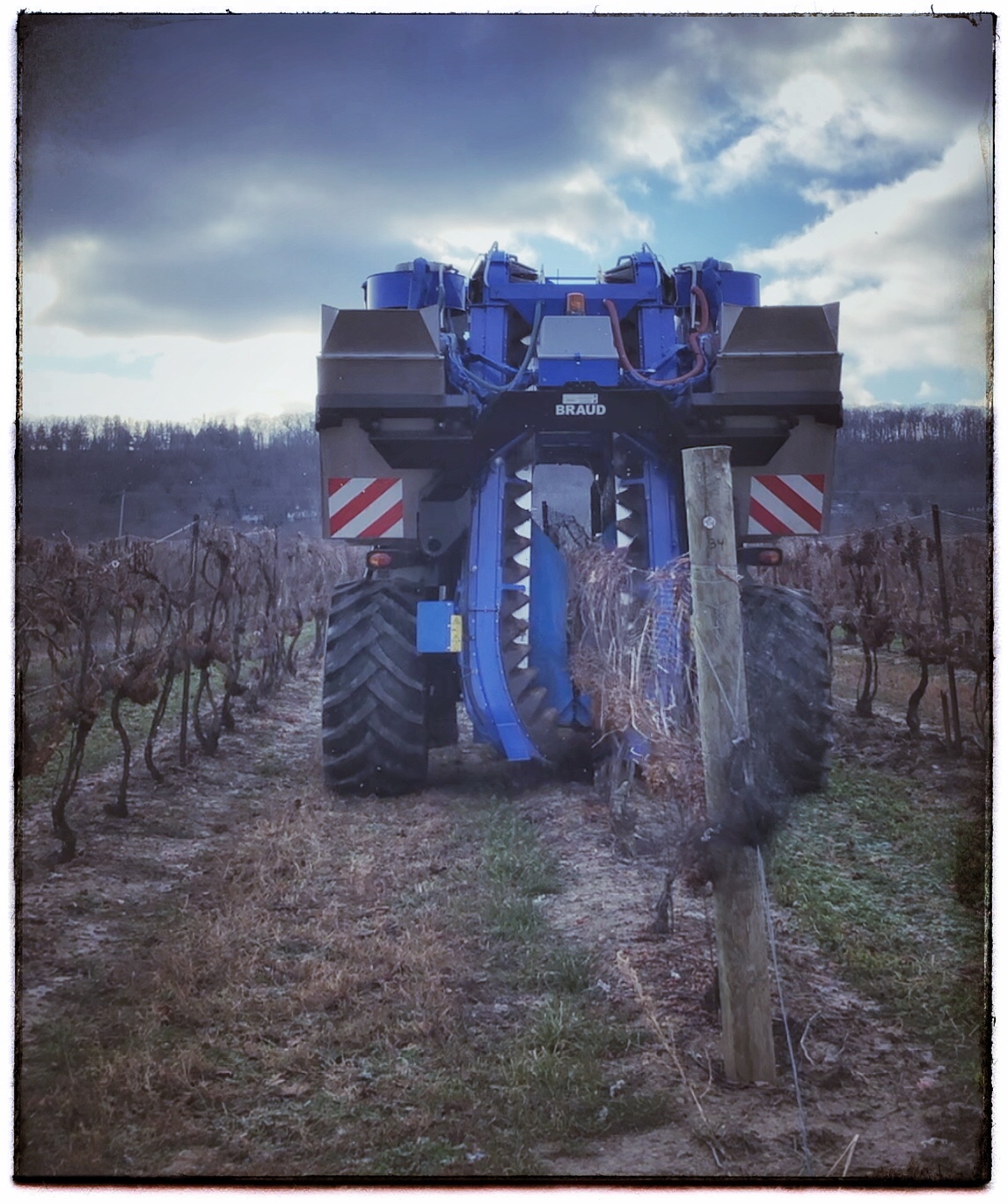
And on this bitterly cold morning, I was visiting friends in Niagara during the Ice Wine Festival, and saw several harvesters heading out to a nearby vineyard. If you recall my previous posts on ice wine, you’ll remember that many rigorous standards have to be met to be considered a true Ice wine: It must picked at consistent sub-zero temps, immediately pressed outside in those sub-zero temps to keep the grape temperature (and sugar content) consistent. AND… the frozen grapes should, ideally, be hand-picked since the grapes are extremely delicate. Hand picking is preferred so as to not damage the berries. So how does the machine fit into the picture?

The simple answer is: Volume.

Geographically, the Niagara region produces some of the largest volume of ice wine in North America. Wineries, most notably, Pilliteri Estates Winery in Niagara-on -the-Lake, have to keep up with the ever increasing demand. Therefore, the increase in machine harvest is due to the vast expansion of the number of vineyards that now produce ice wine. Typically, a machine can pick one acre in less than an hour. And it is difficult, especially when it’s cold enough to freeze your nose hairs, to entice people to hand pick grapes at sub-zero temperatures, in the middle of a cold winter’s night.

Timing is everything, and there is a very narrow window of time available to pick, and process ice wine grapes. And while much of the quality control can be done in the vineyard with hand harvest, you run the risk of losing much of your yield because of the considerable amount of time it takes to harvest by hand. Machine is much more efficient to get the grapes from vineyard to press.

The technology itself has dramatically improved. According to Wine Enthusiast, the argument against machines was that the quality of the wine would suffer. In the past, machines would shake the vines so harshly that “material other than grapes (MOG)” would get into the mix.“ That material could include stems, leaves, or birds and small animals.“ To avoid this, innovative technology now allows de-stemming and sorting while on board the harvester, which then makes hand sorting and grading at the winery much easier. MOG is efficiently taken care of.

But what about all that shaking going on with the grapes? Don’t the grapes get damaged? Machine harvesters are now programmable, and can be selectively calibrated to provide a more gentle shake for grapes that need more TLC, and to pick specific grapes rather than “every single grape.”

There is a definite freshness advantage to machine harvest because the grapes are delivered more quickly to the sorting tables and presses. At the winery, ice wine grapes are still sorted and pressed outside, as in the time-honoured tradition.

With respect to this year’s harvest, Pilliteri Estates Winery’s Social Media Rep, [via direct message] stated, “We currently machine harvest all our Icewine now and this year’s yield looks good. We lost about 30% to 40% to birds because of the warm start to winter but the grapes that we pulled in look great and we are looking forward to another excellent Icewine vintage.”

Check out the video below to see the harvester in action! 👇🚜🍇 Hopefully, the sound will work. If not, the pics are pretty!

Is there any real difference in the quality of wine produced after machine harvest?

Most wine producers are finding that there is very little difference in the resulting product whether it’s harvested by human or machine. And when time is of the essence (especially with ice wine), efficiency is everything.

While newer technology has changed the traditions a bit, especially in response to drastic increases in demand, ice wine remains a true luxury item. And, ultimately, it’s in the winery that humans can never be replaced; creating, and fine-tuning the liquid gold vintages that swirl in your glass.🥂

Cheers! 🚜🍇🍷

©️Copyright, TheWineStudent, 2020

Everything’s Coming Up Rosé!


With spring finally here, our thoughts turn to all things fun and rosy. Especially when it comes to wine. Some of us want a bit lighter fare but not necessarily white (not that there’s anything wrong with it). And like wearing white after Memorial Day, it’s now safe to say ok to rosé.

Rosé is a little enigmatic. It had an infamously bad rep for only being cloyingly sweet or watered down red in your glass. Not anymore. Many are made from red grapes but with much shorter amount of skin contact (the amount of time the wine is allowed to rest before the skins are removed). Skin contact gives a red wine its tannin, depth of flavor and color. Typically, most rosé is on the skins for between two and twenty hours, picking up color and a little tannin. Red wine typically rests on skins for a few days to two weeks or longer.

Four Main Methods of Making Rosé:

Saignee ~ the byproduct of making red wine, some of the wine is drained off after a quick time in contact with the skins.

Short Maceration ~ the most straightforward way to make rosé. Grapes are crushed and skins soak in cool temperature juice 2-20 hours. juice is then drained off and skins gently pressed prior to fermentation.

Direct Press ~ S-L-O-W press of whole red grapes which give the broken skins time to give some of their color to juice before fermentation.

Blending ~ While not generally done, even though it seems like a no-brainer, there are a few rules if this is how you want to make rosé:

*usually done with champagne; adding a bit of red wine to white, for a blush

*raw red and white grapes are mixed together in the same tank prior to fermentation

*adding lees (yeast sediment) from a white wine to fermenting pink juice. The lees sometimes take away some pigment and flavor so it’s not a method that’s widely used.

Also known as the ‘cold soak’, the maceration time for rosé isn’t always necessary but does give the best chance to extract the most color and character from the skins. fermentation vats are chilled to 50˚F (10˚C) ~ this works best for a pale wine. For a rosé with a richer blush, 55 to 65˚F (13 to 18˚C) is preferred.

According to Katherine Cole, most rosé is fermented and aged in stainless steel tanks, especially those that have a brighter, crisper vibe. Others are given time in larger, neutral barrels. Barrels that are smaller and new/toasted impart too much smokey, or woody flavors to the wine. Rosé is favored for its delicate, lightly silky nature– no one wants a campfire in their glass. Barrel-aged rosé is full-bodied and best with hardier foods.

Pretty in Pink


The color of rosé can tell you a lot about where it comes from. Just looking at the hue can tell you something about the varietal, region, and winemaker decisions. For instance, a Tempranillo rosé from Spain can be a light salmon pink, a Sangiovese has a bright, sparkly copper red, the deepest ruby color belongs to Cab Sauv, and Tavel rosé from the Côtes du Rhône. Rosé from Provence is a delicate pink.

Varietals in rosé are many, and it is also produced in exotic locations such as: Sardinia, Greece, Canary Islands, and Israel.

As for flavor, winemakers are spending more time and expertise in coaxing out aromas and tastes that are excellent expressions of the varietals, and regions from which they originate. For instance, a Pinot Noir rosé can have subtle aromas of crabapple, watermelon, strawberry, raspberry and wet stone. Zinfandel (the most popular varietal for rosé) is off-dry, and moderately sweet with flavors of green melon, lemon, cotton candy, and strawberry. Its sweet nature makes it a great entrée to those new to rosé.

I enjoyed Gassier Rosé recently that was a dry style with moderate acid and good fruitiness, with hints of green melon, ripe strawberry, essence of rose petals, and a little spice on the finish that gradually increased as it warmed up.

In general, most range from fruity and floral to savory and rich, which makes them so interesting to pair with a variety of foods.

Hands down, my favorite rosé pairing is with grilled strawberries over angel food cake (with a little sweetened creme fraîche!). Magnifique!

Here’s my handy serve & save chart for you!

Rosé Type

Serve

Save

Sparkling

40-45˚F (5-7˚C)

ice bath (the wine, not you)

Silicone stopper x 2 days

Barrel-aged

55-60˚F (13-18˚C)

leave bottle out 30 mins prior to serving

Recork, refrigerate -drink

w/5 days

Deep Pink

45-55˚F (7-13˚C)

leave chilling, but taste as it warms

Recork, refrigerate – drink

w/ 3 days

Light & Lively

35-40˚F (3-5˚C)

ice bath

You must drink it all that night

Battle of the Celebrity Rosé!


Since so many celebs are getting into the wine game, I wanted to try some star-studded offerings to see what they were like.

Let’s get ready to rumble…!!

The challengers:

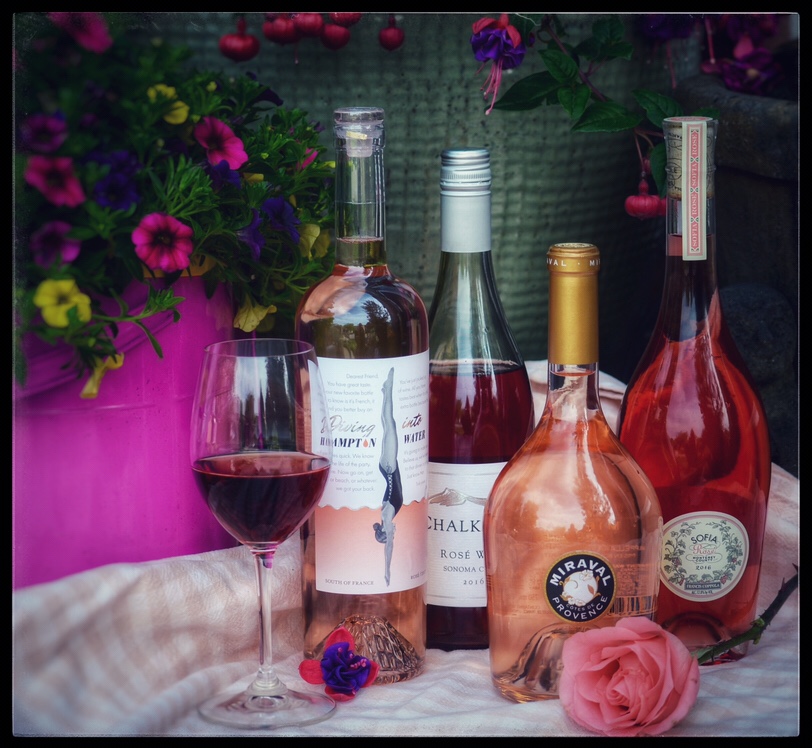
Francis Ford Coppola’s ‘Sophia~ a blend of Syrah, Grenache, and Pinot Noir. Swellegant bottle, too!

Miraval ~ the couple formerly known as Brangelina... (Mmmkay, so they don’t own the winery that produces it anymore but whatever, they’re in) ~

• He gives Rosé a good name? Jon Bon Jovi’s Diving into Hampton Water~ produced in France in the Languedoc region, it combines 60% Grenache with 15% Cinsault, Mourvédre and 10% Syrah.


• Just to shake things up we threw in a couple of non-celeb rosé: Chalk Hill, and Ménage á Trois.

Let’s see what the a blind tasting revealed ...click the video below to see how the wines measured up!


Full disclosure, while I purchased the wine, I didn’t see the wines when they were placed in the burlap bags, and I didn’t pour them, so I was in the dark as to which was which. And I was really amazed at the big reveal. I admit, I had some preconceptions as to what I figured I would pick. I thought that, for sure, my number one choice would be Coppola’s Sophia; I loved the gorgeous bottle and the beautiful color. And I thought its color would be an indicator of what I would taste. To my surprise, it offered little in terms of flavour and aroma. It tasted as though the grapes were picked in a very rainy harvest; it was very watery despite the beautiful color.

Our big pick had a pretty, amber-pink color with a nice white peach vibe and pleasing mouthfeel. It paired well with a creamy brie and fresh strawberry. With just a little sweetness (surprising because I’m not usually a sweet wine fan). It was a nice sipper and played well with others. If you checked out the video, you’ll know what it is! 😉

Sparkling or still, deep pink or rosy amber, celeb/non-celeb, rosé is one of the big wine trends that’s cool for the summer. It’s refreshing and right for a season of relaxing, reconnecting, and enjoying the summer sun.

Have a safe and happy Memorial Day!

Cheers! 🍷

©️TheWineStudent, 2018

Skin Deep ~ The Beauty of Wine

img_5856

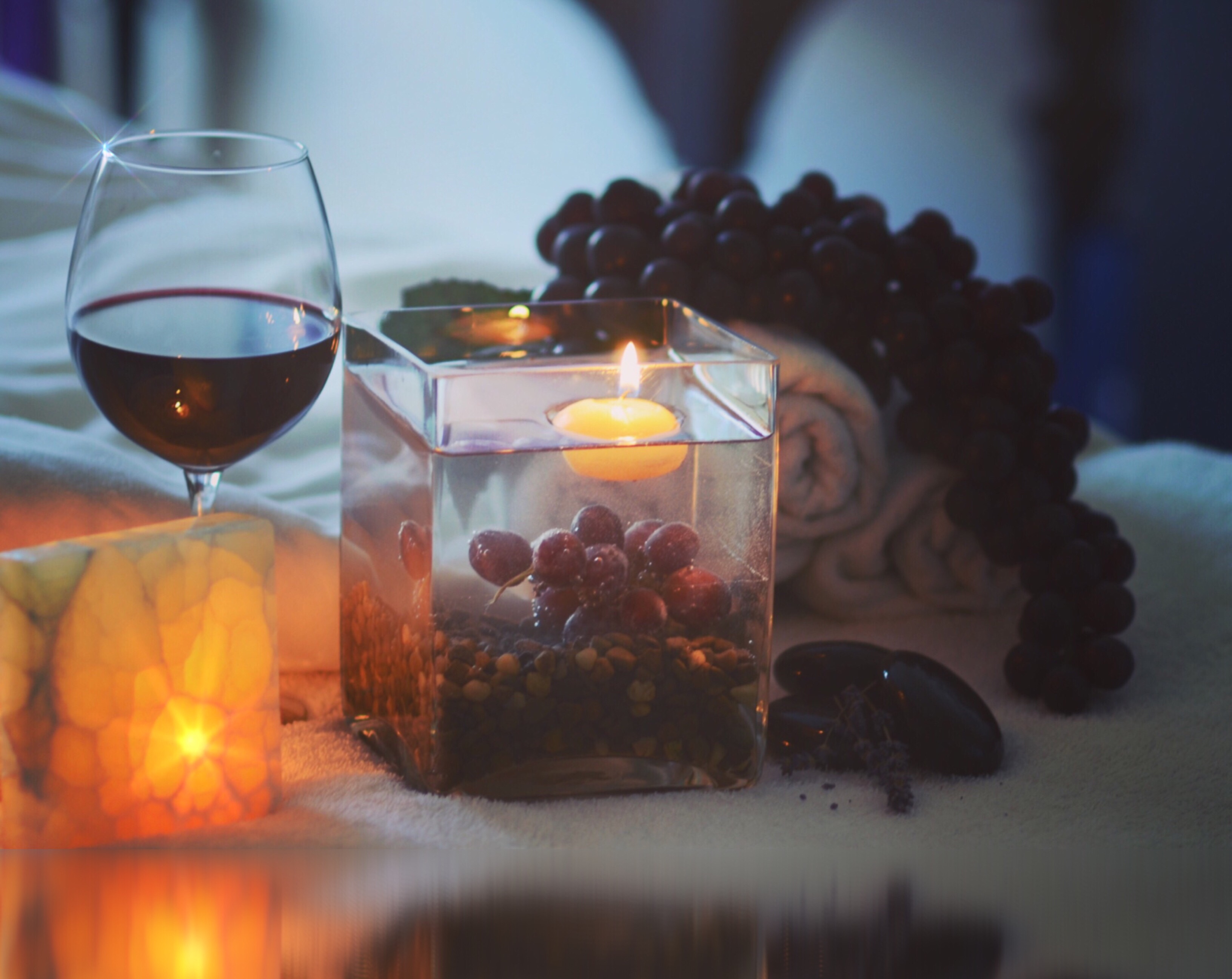
The glow of the candle sets the mood. You breathe deeply, then relax. You know there will be wine…except it’s going on your face.


But not like this…

Over the years we’ve read much about the health benefits of drinking wine, especially resveratrol, a naturally occurring antioxidant found in red grape skins. In the earliest days of the Tour de France, riders would occasionally stop to swig some red wine (or beer) in order to thin the blood to help them through the tougher sections of the race. How they managed to get back on their bikes to finish the climb tho…

Heart Smart

Moderate, regular consumption of red wine, which contains the highest levels of resveratrol, can help lower blood pressure,and has anti-inflammatory properties. By decreasing low-density lipoprotein (LDL) cholesterol (the bad cholesterol), resveratrol helps to improve overall cardiac health, as well as protecting both the heart tissue, and arteries.

A recent study by the University of Alberta’s Faculty of Medicine and Dentistry showed that high doses of resveratrol improved physical performance, heart function and muscle strength in lab models. Did they chug massive amounts of wine before hitting the gym? That would just make me fall off the treadmill. The subjects took it in pill form, which is much safer. All of the performance, none of the buzz.

Check out my video below for more info! 💆🏼‍♀️

Wine Skin

While much focus is placed on resveratrol in grape skins and wine, it is produced within the stalk and leaves as well as the mature grape skins. It acts like sunscreen for grape vines and other plant life, working to safeguard plants from UV rays of the sun, as well as other environmental stressors such as atmospheric toxins, and fluctuations in climate and temperature.

For humans, environmental stress from weather, sun damage, worry/anxiety, and poor diet can all lead to skin aging; free radicals are produced naturally as we age. Resveratrol, when applied topically to the skin, acts as an antioxidant, protecting the skin against exposure to harmful UVA rays, as well as providing anti-aging properties. According to Dermatology Times, a recent clinical trial of a stabilized resveratrol and vitamin E serum demonstrated improvement in elements of skin aging, including firmness and elasticity. When skin products containing resveratrol are combined with hyaluronic acid and peptides, stimulation of collagen and elastin are improved. By stimulating proteins, known as sirtuins (these repair DNA and decrease inflammation), resveratrol can increase cell life in the body, heightening skin’s defense systems to fight disease, therefore prolonging cell life. Gentle exfoliation of old, dead skin cells, and hydration are also benefits.

Much like the exercise study, resveratrol in these skin formulations is in usually high doses. Sadly, the benefits to the skin don’t usually happen if you just drink a lot of red wine. I’ve tried it.

Vinotherapy in spas utilize resveratrol in facial and body masks and creams.

It can take many forms, from having ground up skins and pulp kneaded into the skin, to the application of concentrated grapeseed oil in massage, to mud masks combining powdered grape products and mineralized clay.

Two leading vinotherapy spa products are:

Caudalie ~

* founded in France in 1993, Caudalie was one of the first companies to cultivate resveratrol in cosmetic applications in 2001.

* in 2006, made the commitment to use no parabens and create products that are natural and environmentally conscious.

Vine Vera ~

* released in 2012, Vine Vera uses resveratrol in all products, combining it with essential oils, vitamins and minerals to keep it as natural as possible.

* since not everyone has the same issues with their skin, there are 10 varied collections to address individual skin care needs.

So, to unlock the secrets of youthful skin, look no further than the humble grape. And make sure to enjoy a nice glass of wine while you’re at it.

Cheers! 🍷🍇

©TheWineStudent, 2018

Texas: A Lone Star State of Wine

On a trip last year to San Antonio, I was fixin’ to find a bottle of Texas wine. Way better than a cowboy hat, this was a way to, literally, bring home a taste of Texas. Yee Haw! I decided to save it for a special night back in Ohio, when I would plan out a great dinner to make me think of the yelluh rose sunsets, warm evening breezes, and the scent of sagebrush. Perhaps the only way to recreate all of that would be to fly back to Texas, But maybe a sip or two of the wine would help…

(Be sure to check out the video below for more facts on Texas wine!🤠)


Holy Crop

The first known vineyards in North America were planted by Franciscan priests in Texas in 1662. They accompanied the earliest explorers, chronicling the journey, and serving the Church as protectors of the Native Americans of Texas. Their task was to spread Christianity to Native culture and to extend Spanish culture to whatever lands the Crown granted them as their field.

Farming was the main occupation of the new communities in order to become self-sufficient. Included in the crops of corn, beans, squash, melon and sugar cane, was grapes; the earliest vineyards. Orchards were also planted, producing apples, peaches and other fruits.

In the 1800’s, when European settlers arrived, they brought cuttings which progressed the domestic growing of vines, and winemaking. As time went on, though, winemaking was eclipsed by other agricultural pursuits.

Test Run

It wasn’t until the 1960’s that modern winemaking in Texas took hold, spear-headed by Texas Tech University chemistry professor Clinton ‘Doc’ McPherson, and business partner Bob Reed. Experimenting with approximately 140 grape varieties, they wanted to see which would flourish in the local climate and soil. Lesser known varieties such as Grenache, Temperanillo, Muscat and Chenin Blanc were found to grow very well.

Yet in the ’70’s many of these vines were pulled out in favor of more recognizable varieties. The focus began to center on selling the big names, like Cab Sauv, Sauvignon Blanc, and Chardonnay, even though they didn’t necessarily produce the best wine.

In 2005, real growth occurred in the Texas wine industry when the state passed a direct shipping bill, allowing Texas wineries to ship directly to both in and out-of-state customers.

State laws also allowed wines to be labeled ‘Texas’ if 75 percent of the fruit that went into the bottle came from the state; 25 percent could come from anywhere else. This happened because more wine was being produced than grapes were grown to support the process. Now that there is more vigor in the industry; more agriculture is available to supply the winemaking needs, producers are working to change the law, requiring Texas-labeled wine to be made from 100 percent Texas fruit within the next five years.

Under the Texan Sun

While Texas boasts big, beautiful, warm summers similar in climate to Spain, central Italy and Portugal, the greatest challenges are hail, late spring frost, lack of water (in some areas) and Pierce’s Disease, a bacterium spread by the glassy-winged sharp shooter. Kinda sounds like a bad hombre from an old Western, “I seen ‘im, Pa. It was a glassy-winged sharp shooter terrorizin’ the town!” This critter feeds on infected vegetation, then injects the bacteria into the sap of nearby grapevines, blocking the movement of water into the vine, thereby killing it. The main effect is on the vine’s ability to produce a crop, and it doesn’t affect the wine quality, nor does it produce any health risk to consumers. But it is a significant pest, and surfaces in Texas because of the mild winters.

There are a total of eight American Viticulture Area (AVA) appellations, the two largest being Texas Hill Country and Texas High Plains.

Texas Hill Country ~

• At 9 million acres, the largest AVA in Texas.

• Bell Mountain and Fredricksburg are two unique microclimates w/ this blanket AVA.

• Comprised of low, rolling hills, steep canyons, and the highest elevations drought is not an issue.

• Primarily made up of limestone soil, producing well-structured wines with low acidity.

• Variable weather, and bitter frosts make winegrowing a challenge.

• Top aromatics, especially in blends, less focussed fruit than Texas High Plains.

Texas High Plains ~

The second largest AVA in Texas.

Is located west of the elevation line, elevation rises from 3,000 to 4100 feet.

Climate is semi-arid with average rainfall of just 18’, so irrigation is necessary

Well drained soils and intense winds dry out the vineyards and help guard against frost and disease.

One of the only Texas wine regions with varying daytime temperatures during ripening season, which is integral to balancing ripe flavors and acidity.

Viewed by many as the likely hub of Texas’ future premier winemaking.

Movin’ On

According to Courtney Schiessl of VinePair, while Cabernet and Merlot had generally been seen as the go-to red wines, Mouvédre is the grape that will likely put Texas wines on the map. It is easier to grow, and because it buds late in the season, misses the danger of late frosts. Other varieties, including Tannat, Italian grape varieties Tempranillo, and Sangiovese, handle the Texan heat well without losing their acidity during the hot spikes of the summer.

The wine I brought home was a 2014 Texas Hills Vineyard Kick Butt Cabernet. Paired with a dinner of Texas dry-rub barbecue ribs, homemade cole slaw, bourbon baked beans and corn bread from scratch, this Cab was a little different than many I have sampled. It had a nice nose of dark cherry, HubbyDoug thought it had a bourbon-y undertone that gave a nice complexity. While it had the same black cherry fruity vibe, it tasted much earthier, had less acidity, and was not as boldly fruit forward as some Napa Cabs. But that’s ok. Part of what I look for when tasting wines from diverse areas is tasting the differences between growing regions; I don’t want them all to taste the same. The beauty, though, was that it developed a nice little spicy bite when paired with the ribs.

Given the long history of Texas vineyards, I was curious about the age of the vines of this Cab. Lisa Lang, from Texas Hill Vineyard said [via email] that the Cabernet vines were “the second vines we planted; they are 21 years old.” Relatively speaking, this is a young’un. 🤠

Texas Hills Vineyard produces a wide range of wines, both white and red that are a good representation of their unique growing region.

Paul Ozbirn, an advanced sommelier at Parkside Projects of Austin, said [via texasmonthly.com ] “The quality of Texas wine is steadily increasing. While there will always be some producers that lag behind the curve, which is true of any wine-growing region, most are refining their viniculture and expressing varietal character. Less oak, lower alcohols, and attention to detail in the wineries are beginning to speak volumes with varietals that may sound obscure to most, but their response to our dry Texas climate is indisputable. Aglianico, Sangiovese, and even Tinta Cão are thriving here, and present quite the exciting potential for the future of Texas wine.”

The future of the wine industry in Texas is very bright. And it seems to be positioning itself to produce some great wines that express the unique aspects of both the varietal, and appellation. By moving away from familiar varieties, and cultivating lesser-known grapes that are well suited to its particular climate and soil, they’re on their way to producing something truly exceptional, and outstanding. And very Texan.

Cheers, y’all! 🍷🤠

©️TheWineStudent, 2018


Searching for a Pot of Gold: My Hunt for Irish Wines

Like trying to find a leprechaun hiding in fields of green, Irish wine can be almost impossible to locate. A few years ago, I wrote about the existence of wine from Ireland; curious at the time if there even was such a thing. I hadn’t seen any bottles locally or read very much in wine magazines about them. Each year, as St. Patty’s Day approached, I’d talk to several local wine merchants about trying to find them, and each year I would hear, “If you’d only asked a little earlier, we might’ve been able to find some for you!” Arrrgh! My bad. My timing was always off.

This year, I was determined. I began my quest in mid-January, searching, not only for the wine itself, but how to get a bottle. Short of flying to Ireland to buy it, I was told that because of small shipment sizes, and varied state-to-state legalities/constraints regarding shipping international wine, my request would be incredibly difficult and expensive to fulfill. Dauntless, and into the wee small hours, I searched and found two Irish wineries: Thomas Walk Vineyard, and Lusca Irish Wine.

Be sure to click the embedded video for some more information about the wineries and cool pics of how the vines are grown!


Thomas Walk Vineyard ~

Originating in 1980, Thomas Walk was one of the first wine makers to successfully, and organically, grow red grapes outdoors in Ireland. Hailing from Germany, and enjoying a good challenge, he chose to bring German wine-making techniques to the Emerald Isle and its cool, damp climate. Years of perseverance and research led to the discovery that the ‘Vitis Amurensis’ (Amurensis Walk) or ‘Rondo’ varietal could thrive. Located in the Kinsale region, their vineyards eventually expanded to include south-facing microclimates, planted entirely with Rondo.

Organic and sustainable are key components in the cultivation of this wine, with most of the process done by hand. Minimal pruning ensures that grapes can be harvested from ergonomically safe and comfortable standing positions. The distance travelled to the winery from the vineyard is short, ensuring optimum freshness of the grapes which are de-stemmed and crushed the same day. No sitting around for these berries. All grapes used in the wine are cultivated only from Thomas Walk vineyards. After fermentation, the wine rests with occasional removal of any sediments, without using any additional filtering methods. Occasionally, there may be some sediment in the bottles, but this is normal and shows that the wine was clarified organically, without filters or centrifuge.

Some of the wines produced include:

• Rosé

• Velvet ~ similar to Pinot Noir

• Exubérance Clairet | Exubérance Rosé ~ sparklers made in the méthode traditionnelle’

Lusca Irish Wine ~

Named for the village of Lusk, where it is located, Lusca Irish Wine has been cultivated since 2002. To grow within the challenges of Ireland’s climate, David Llewellyn adapted a way around this: he grows his vines in ‘tunnels’ ~ metal hoops that are assembled up over the rows and draped with a polythene cover. Both fruit and foliage are well-protected from rain, thereby keeping disease and pests at bay without the use of pesticides. As well, temperature inside the cover is raised to help late-ripening fruit mature during typical cool summers. The combined effects of the tunnel and using the disease-resistant Rondo varietal has proven to be most successful.

Their wine grapes consist of Cabernet Sauvignon, Merlot, Dunkfelder and Rondo for red wine. Until recently, Sauvignon Blanc and Gewurtztraminer were cultivated but have since been pulled to focus on red varietals. Like Thomas Walk, Lusca’s total wine-making process, from vine to bottle, is accomplished entirely on site. And only simple, traditional methods are used; allowing the wine to clear naturally, without complex filtration. The wine is fermented and finished dry in the bottle, without any back-sweetening during bottling. All wine is hand bottled and labelled. Currently, they have a production of around 500 bottles per year, but with the additional plantings of reds, they are hoping to increase production to 2,000 bottles in the future.

As well as making wine, Llewellyn cultivates a functioning orchard producing:

• Apple Juice

• Pear juice

• Vinegar

• Cider

• Mulled Cider

Ah, luck, (with a wee bit of persistence), was on my side. With the kind help of Saileog and Rutherson from Wines on the Green | Celtic Whiskey Shop in Dublin, my bottle of 2015 Lusca Irish Wine Cab | Merlot arrived here in the Cleve, safe and sound, within a week.

But alas! I will not open it this year. When I asked David Llewellyn via email how long I should cellar it, he said, “ I think it should improve over the next 2-3 years or so, and remain very good for a further 2-3 years at least.”

I look forward to it!

With that, I’ll leave you with a wee Irish blessing:

“‘Tis better by far at the rainbows end to find not a pot of gold, but the heart of a friend.”

Tis also better to share a bottle of wine with that friend! 😉

Whatever drinkable you choose to celebrate St. Patty’s Day, please pace yourself, and imbibe safely.

Sláinte!🍷🍀

©TheWineStudent, 2018