Let Us Prey

It was a cold and blustery night in the Cleve; wild arctic winds whipped the snow around like an angry toddler shaking up a snow globe. Braving the elements, HubbyDoug and I met our friends, Shelly and Hal, for dinner and drinks at Humble Winebar in Lakewood, a funkycool restaurant, just southwest of downtown Cleveland. Looking for something to restore some warmth the icy night had stolen, Shelly noticed Predator Old Vine Zinfandel on the menu. Having fond memories of our time in Lodi at the Macchia event two years ago, and being fond of the Zin, we thought we’d give it a try. Allison, our server, said that it was a rich, full-bodied wine with notes of blackberry, chocolate and hints of bacon ( yum ~ I like bacon).

It was just as Allison described, but along with the rich dark fruit vibe and bacon, was a beautiful pepper finish that kept us warm well after the last sip. It was a more complex, layered wine. Paired with the roasted artichokes, sun-dried tomato goat cheese and proscuitto, it complimented the flavors; coaxing out creamier quality of the cheese. The tuna puttanesca had a bit of a peppery | garlic vibe to begin with, and the Predator brought more of that to the forefront. When I sipped a bit with the sausage pizza, I found the pepper of both to be quite heavy; I’m not always comfortable breaking a sweat at dinner ~ it was just too much of a good thing.

I think what I enjoyed best about this wine was that it had an old-world consistency: The taste you got at the start of the glass is what you enjoyed from the last drop. The bacon vibe that I loved so much, I deduce, came from barrel-aging, perhaps in an older barrel with more toasting to bring out the smoked essence. But that’s just a guess.

Hal and Dougie give it a thumbs up!

Hal and Dougie give it a thumbs up!

Intrigued by the Old Vine phenomenon, I wanted to investigate further. At first glance, most old vines look like they wouldn’t produce anything other than dust. But looks can deceive. Ravenswood winemaker and founder, Joel Peterson (via Sonoma County Winegrape Commission/ History in a Glass, May 2007) states that Old Vine Zinfandel “represents the most unique and traditional wine of California.”

Peterson defines Old Vine Zinfandel:

  • 0-10 years: young vines
  • 10-50 : middle age
  • 50- 80: old vines
  • 80+ : ancient
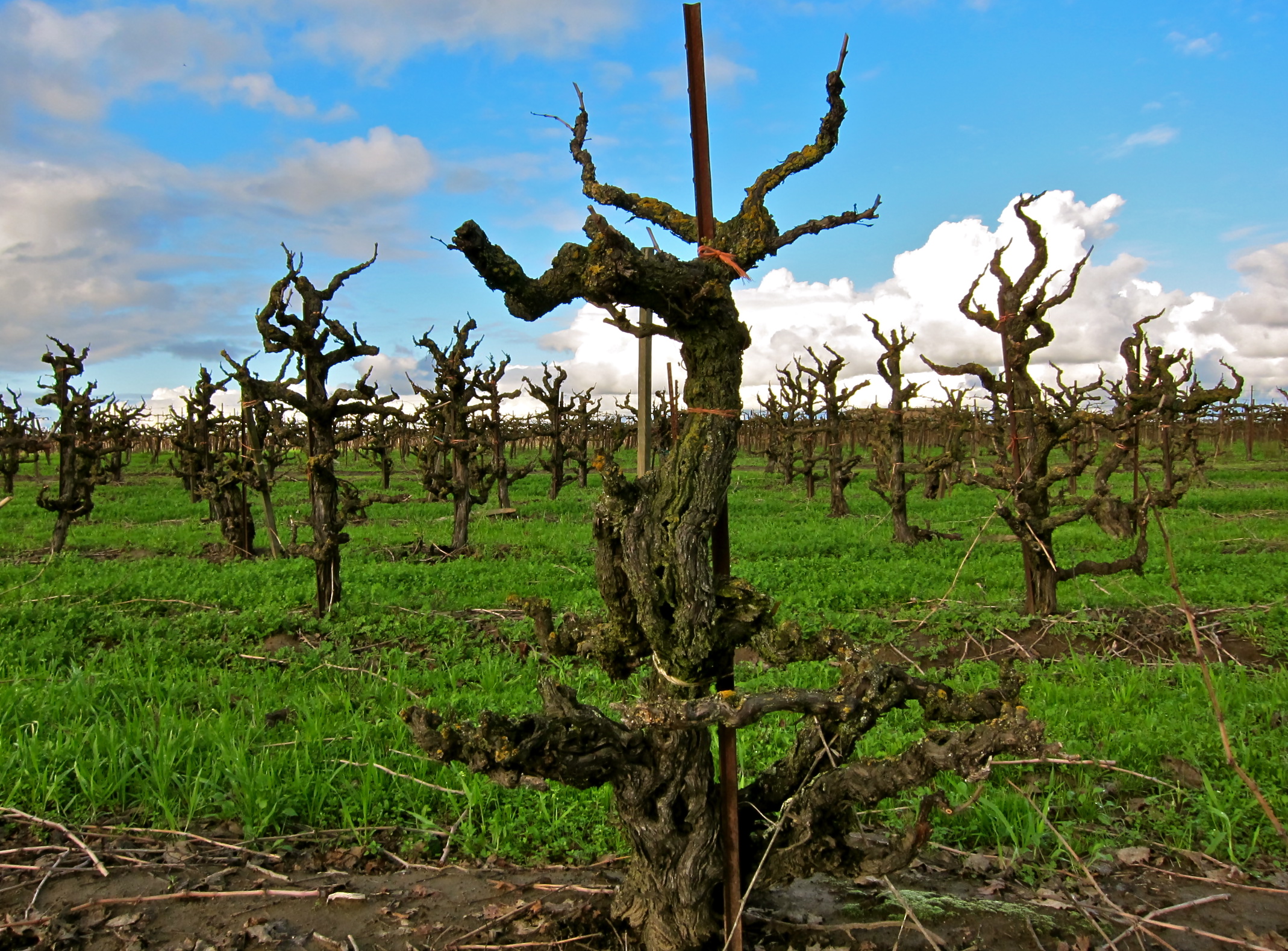
Old Vine, Head-Trained Zin (Image via Lodiwine)

Old Vine, Head-Trained Zin (Image via LodiWin

According to the wine blog Vinobo, most old Zinfandel vineyards are head-pruned meaning that the vine looks like an umbrella, with vines cascading from the top (trellised grapes, which most of us are familiar with, have clusters in a row, roughly waist high). Sun can shine into the middle of the vine of head-pruned grapes, since the leaves cascade from the top. As the sunlight patterns change through the day, different angles of the vine get what’s known as ‘dappled sunlight‘ therefore no grapes get burned. The dappling effect creates a perfect condition for nurturing Zinfandel, yet theses grapes are very labour intensive to harvest: They must be hand picked.Trellised grapes also can be pruned for the dappling effect but can be machine harvested, which is so much easier for the grower and crew.

Old vine Zinyards generally have lower yield than many other varietals, no irrigation and the soils are thin which makes the vine work a little harder. But all that hard work pays off with more power, color and intensity in the wine. With age comes ‘experience’ and older Zins tend to benefit from their time in the sun ~ their fruit tend to ripen more evenly, and gain more spice the older the plant. Just as we tend to get pruney with too much sun exposure, on Zins it actually works as they age.

And if you’re looking for a serious predator, look no further than the ladybug on the label; that’s what they use as a natural predator against nasties that invade the vineyard.

Cheers!

©TheWineStudent, 2014

Top Three Picks for Thanksgiving Dinner: Red, White and Bubbles

The snow is starting to swirl and I’m so excited to see my sisters, Megan and Shiona, who are coming to visit for the holiday! This year, instead of my safe and sure one wine dinner, I want to make it a little more festive. We’re still going to serve Pinot Noir ~ it’s a favorite of HubbyDoug and I’m thankful for him, so without question, it’s on the menu.

But I’ve found myself enjoying whites this year; George at Royal Park Fine Wine in Strongsville suggested Gerwurztraminer as a nice change of pace. He said that the spice of this wine would beautifully coax out the flavors of the turkey (which on its own can be a little mellow) and any vegetable dishes we had on the side.

Two should do, right? No, I don’t think so. I wanted to begin the celebration on a fun note. Bring on the bubbly!

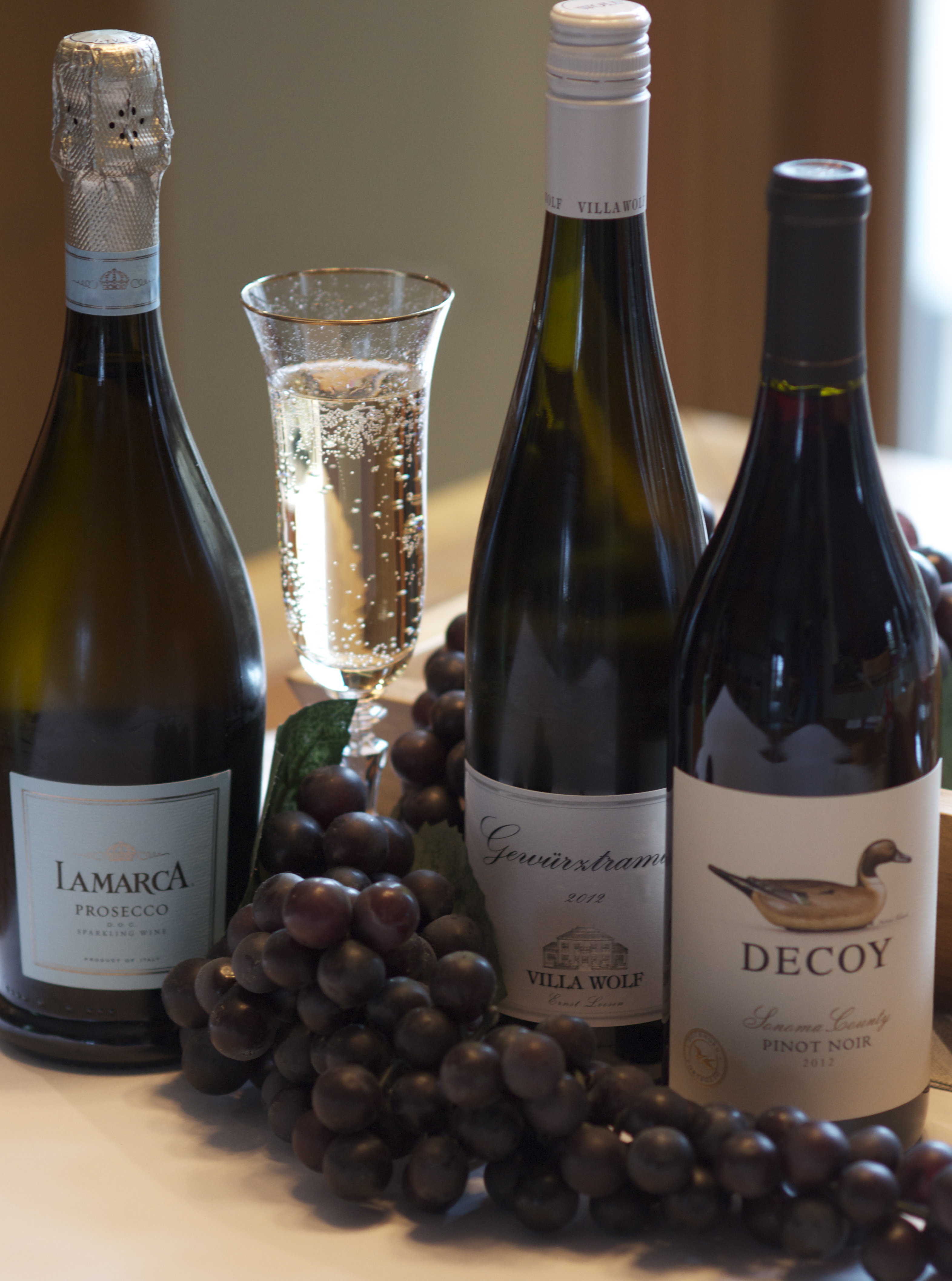
So… here are my choices for Thanksgiving dinner, 2013:

 2012 LaMarca Prosecco (Italy) ~ It was described as a great sparkler that was not lip puckering dry, but also not cloyingly sweet. The tasting notes say that it is fresh and vibrant feel with essences of golden apple, white peach and honeysuckle. I believe I’ll pair this with a warm Brie and toast points, and fresh fruit.

2012 Villa Wolf Gerwurztraminer (Germany) ~ Combining fruit and spice should be a nice counterbalance to the mild turkey, and just enough acidity to cut through some of the fat from the gravy.

2012 Decoy Pinot Noir (Sonoma County) ~ Steadfast and true, Pinot Noir, with its low to medium tannins is a staple for lighter fare. Since it is also has high acidity, it, too, will be perfect with lots of gravy and mashed potatoes dripping with butter (blood pressure cuff not included). Tasting notes say that essences of red fruit (red cherry, strawberry and the tang of raspberry) are prominent. I think it’ll be interesting to experience how differently the food tastes with each wine choice.

I am thankful for wonderful family and friends; those who have made a long trip to be with us in the Cleve, and those who are with us in spirit. And I feel very thankful to those of you who read the blog. It means a great deal to me.

No matter what you choose to pair with your holiday dinner, I hope you all have a wonderful, happy and safe Thanksgiving.

Cheers!

©TheWineStudent, 2013

No-jolais


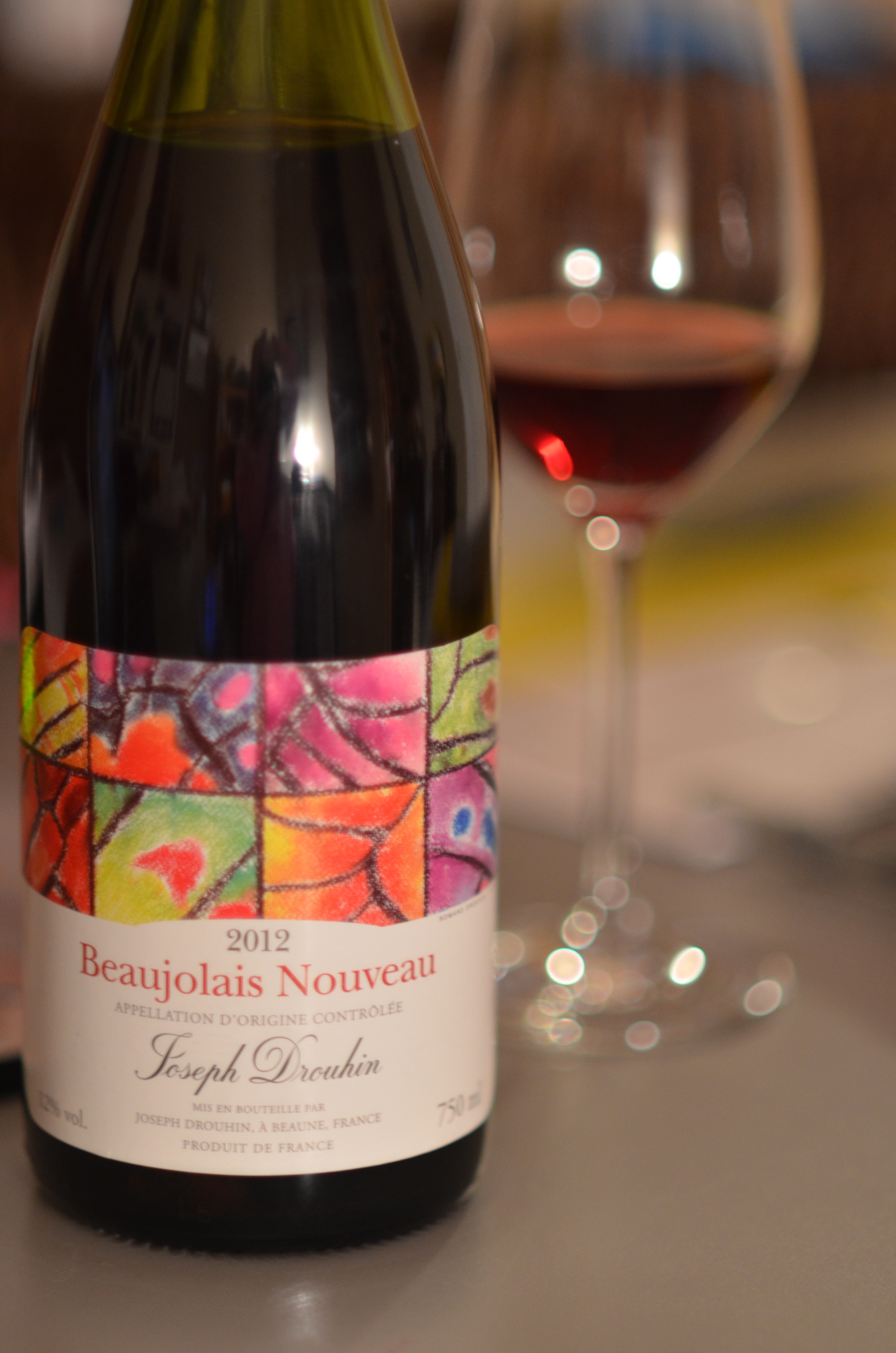
When she wrinkled her nose and winced, I knew that maybe I shouldn’t go there. I’d asked my local wine consultant about a 2012 Beaujolais I’d just found in my wine collection. Low in the rack and fairly dusty (I guessed I missed a few spots with the Swiffer), it had been long forgotten. I wondered if it would it be worth opening or would I have a bottle of imported vinegar? The wince should’ve been enough of a deterrent. I’d found last year that it was somewhat lacking with my holiday meal; even with a mild turkey, it didn’t really come alive. So, wincing looks aside, I chose to test it. I just don’t feel right about dumping a bottle unless I know it really has no hope.

The good news was that it didn’t smell like a musty basement, the bad was that it really hadn’t gotten any more depth or interest over the year in a bottle. At least it was consistent.

Traditionally, Beaujolais is to be consumed young, and only in a rare vintage, could you find a more mature, drinkable offering. According to Wine Spectator, the 2013 vintage is particularly interesting due to a rainy spring season, late flowering and subsequent delayed harvest, and a larger difference between the Beaujolais Nouveau and the Beaujolais – Villages Nouveau (the latter having much more ‘grip’ and length of finish).

I know, I missed the big release on November 21 with all it’s fanfare and celebration. And perhaps if we’re feeling like we want to revisit already explored territory over the holiday, we’ll try a bottle of the ’13.

But I think we’ll be busy sampling a few treats I’ve lined up to celebrate and give thanks.

Cheers!

©TheWineStudent, 2013

Wine-y Wednesday: Lucky Me

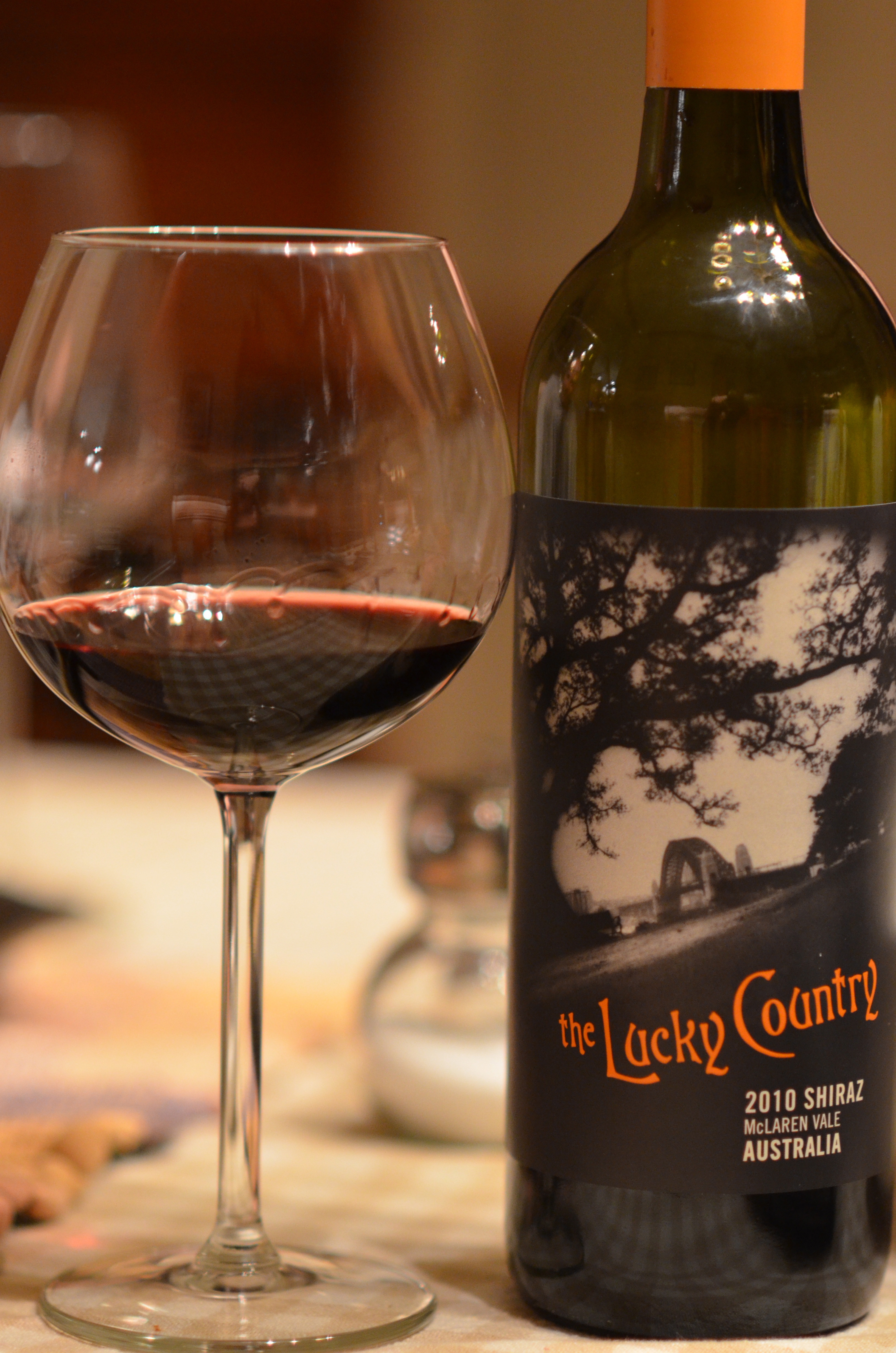
I was preparing a lovely, fresh cod dinner and wasn’t sure which wine would work (that’s a lot of alliteration, so have a sip). Regular convention would say: White wine. But Wine Student convention asks, “What’ve you got within quick reach?” Hmmm….something with a bit of pep to bring out the flavors of a light fish. At the Fabulous Food and Wine Show (more about that in my next post),  I’d been turned on to a great Shiraz ~ The Lucky Country, 2010. In addition to the fish, I was also making the lovely Janet’s Tomato Soup with Lemon and Rosemary, and since there was a bit of a spicy vibe in the soup, I thought it might be a nice change from the ordinary.

I was impressed by the depth and round quality of this wine when HubbyDoug and I sampled  it on the weekend, and since it was within reach…! The Lucky Country more than lived up to its name; full of rich, dark fruit; with a round and creamy mouthfeel, it melded beautifully with the light quality of the breaded fish, and finished off with a tiny little kick of licorice. It tasted so good with the fish that I found myself taking each bite, and savoring a long, languid sip.

It made a hump-day meal so much more enjoyable. Lucky me!

Cheers!

©TheWineStudent, 2013.

Tricks and Treats!

It’s my favorite time of year: Halloween. And in the spirit of the holiday (that’s a pun ~ so please, take a sip), I chose three different wines that embody this seasonal vibe. I chose them, not based on their wine merits, but the label art (bad Wine Student, bad). I thought they looked fun, and if they happen not to be too bad in my skull goblet, then it’s a happy surprise. And isn’t being taken by surprise what Halloween is all about?

So, Igor, get the corkscrew and let’s get on with the tasting! After all, these bottles won’t open themselves… or will they??

  • Treat White ~  A ’12 white table wine from Chateau Diana Winery in California, I found Treat to be a pleasant enough white. As light in color as a scarecrow’s locks, it had a nose that I had to work a bit for. Once I got there, it had a light pineapple essence. It was as refreshing and tang-y; a little like a lemon drop. It had a surprising little cream-y finish that wasn’t as long-lasting as a handful of candy corn, but was still satisfying. Would I sip it in a Cleveland boneyard way after dark? Probably not. With the temps dipping to near-freezing, my old bones need a little something beefier to keep them warm.
  • Zombie Zin ~  also from Chateau Diana winery, this Zombie was a skull-chewing, brain sucking little Zin ~ but that might be the acidity. The nose (which didn’t fall off) had a bright, cherry vibe and it had a clear, claret color that turned a cool purple in the setting sun. Most Zins I’ve had in the past have been very creamy, full-bodied and rich. This one at first taste seemed  young, and a little thin but it settled into a finish of buttery coconut that I found I could sink my teeth into.
  • Skeleton Malbec ~  from Skeleton Vineyards was  deep blood-red in color.  At first sniff, I detected a waft of perfume;  maybe dried black roses from a long forgotten  wreath?  It tasted of blackberry jam and spice, with an earthy quality. Much like the Zombie Zin, the mouthfeel was lighter than expected from an Argentina Malbec. It seemed as though it needed a little more time in the catacombs. It wasn’t bad, but not quite what I was expecting at first sip.

I realize that most Halloween- themed wines are just that; fermented fun with cool labels that look funky on a decorated bar. Pair them with the right ghoul and you’ll probably have a great night.

Which wine made the cut for the skull goblet? The Zombie Zin. I couldn’t help it; zombie see, zombie drink.

Cheers, and Happy Halloween!

©TheWineStudent, 2013

This slideshow requires JavaScript.

Summer Solstice, Wine, and Finding a G-Spot?

This slideshow requires JavaScript.

Wait. What? Yeah, I thought the same thing when I saw the list of wine offerings last weekend at the 11th Annual Sarah’s Vineyard Summer Solstice Festival in Cuyahoga Falls. I’d been looking forward to this event for a while because I had wanted try some other local wineries in North East Ohio that I’ve yet to visit. It’s great  because you can sample from many local wineries that aren’t always featured at other wine events in and around the Cleve. We started by sampling Sarah’s Vineyard‘s top three; The Sweet Elisa ~ a Concord and Niagara grape blend; Painted Lady ~ Riesling and Chardonnay and the Miserabile ~ A Tuscan blend of Merlot, Sangiovese and Zin ~ their biggest seller of the festival’s first two nights. The woman next to me described it as ‘powerful’ and it was probably the most interesting and complex of the wines we sampled.

The best wine name had to go to Red Horse Winery’s G-Spot; a Riesling blended with a tart little hint of Granny Smith apple. I’m not one for apple wine but this wasn’t a bad combination; refreshing and crisp, it definitely got everyone’s attention. HubbyDoug’s pick of the day was their Pinot Noir.

I liked Mastropietro‘s  Chambourcin ~ which, served slightly chilled, seemed to have a little more depth of flavor than normally found in a typical blush. It provided a nice, light sip on this smokin’ hot day.

Summer Solstice is a time when we celebrate the promise of wonderful things to come. This festival was a great celebration of some Ohio wineries’ proud offerings of the season.

Cheers!

©TheWineStudent, 2013

The Altruist

At almost every event at my parents home, Dad was the ringmaster. Once he’d greeted you with a big, warm hug, he’d ask what beverage he could serve you. For family dinners, he always had some sort of red wine on hand. He wasn’t a connoisseur by any means. For a wine to make his cut it had to have three things: a fairly recognizable name, it should be red (because it was healthier) and it had to come in a large enough bottle so everyone could have one … or a few glasses. He chose what he thought everyone else would like. Ultimately, his choice really didn’t matter; what mattered was how great a time we had dining, and sipping wine with a spirited conversation.The wine played a small yet pivotal role.

A winemaker once told me that part of what made a wine good is the experience you had while drinking it. The wine should not only taste good but enhance the fun you had with the people around you. My dad didn’t choose wine for its cache, expense or terroir. He chose it because it seemed right. And we always had a great time. So in that sense, he chose well.

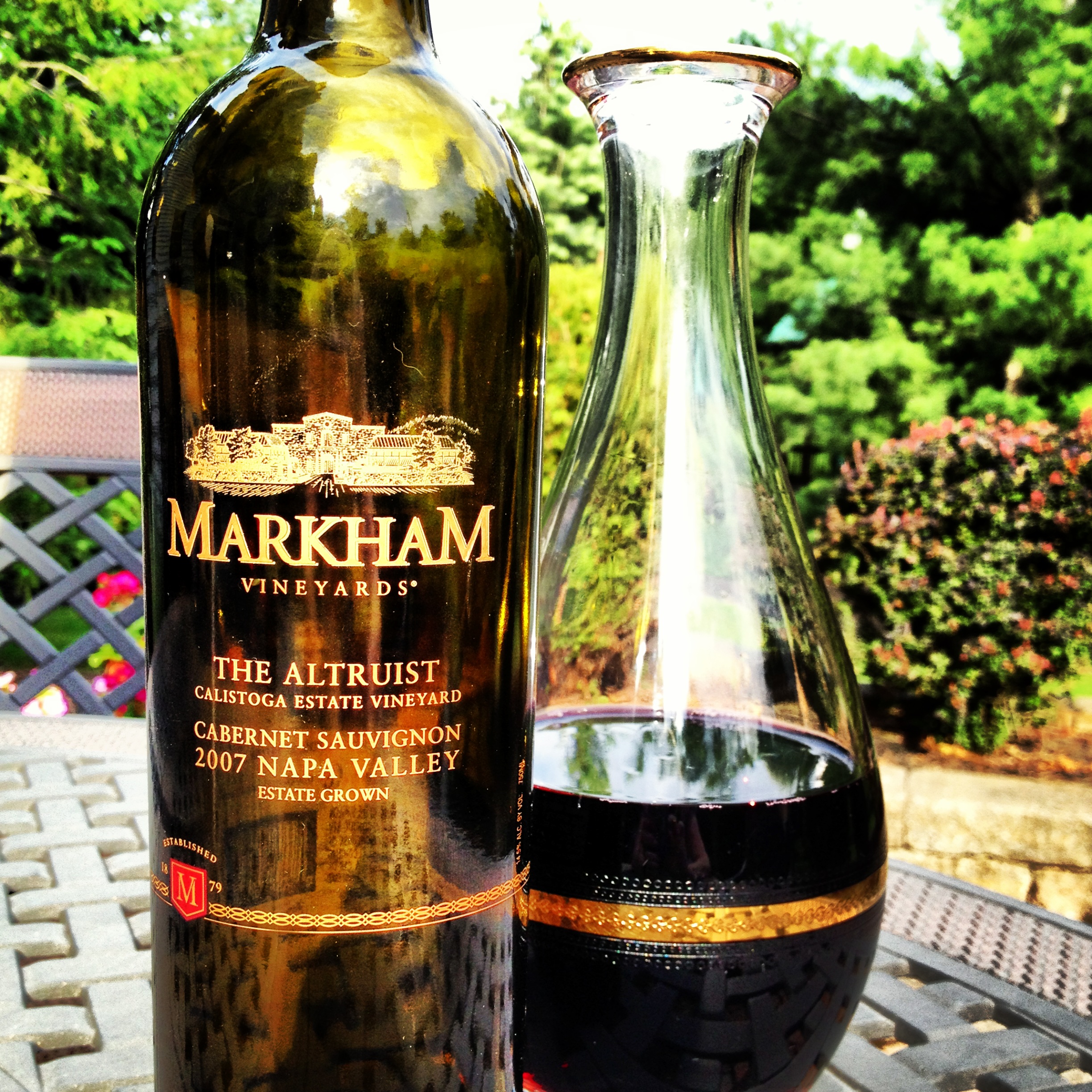
Tonight, to celebrate HubbyDoug, and both our fathers who’ve moved on to the great beyond, we chose a new wine for us ~ an ’07  Markham Vineyards The Altruist Cabernet Sauvignon. I fell in love with the full blackberry on the nose that I didn’t have to work too hard to get. It tasted of rich, black cherry, cassis, and alcohol (that didn’t make me cough). On the finish was a laid back caramel and vanilla. The mouthfeel was very creamy even though it was dry wine.  And it made an amazing transition from our filet mignon with garlic mashed potatoes to strawberry | pineapple shortcake. I didn’t believe a dry, complex red could make that jump. But it did, and beautifully.

Though we lost him only three years ago, this is is the first Father’s Day that doesn’t hurt. And I know he’d be okay with that. Like most fathers, the best ones anyway, he’d want me to move forward, remember the spirit of the good times we had, and to make more, new and wonderful memories.

An altruist is exactly how I’d describe my dad. He did so much for so many throughout his life. This was a fitting wine with which to toast him.

To all Dads today ~ those still present with us, or in spirit, I raise my glass.

Cheers!

©TheWineStudent, 2013

2013 Cleveland Wine Festival

This slideshow requires JavaScript.

The night breeze was almost tropical. And that’s saying something for the Cleve. Every year, I look forward to going to the Cleveland Wine Festival at Voinovich Park, and this year it was spectacular. My friends, HubbyDoug and I arrived early enough to sample responsibly and get a good look at this year’s offerings. The pick of the night for my friends Terri and Shelly: the 2012 Estancia Moscato. Light and refreshing, it delivered a nice complexity with the sweetness, which made it a good sipping wine ~ requiring seconds (and thirds) to get the ‘full view’ of flavors. At least, that’s what they told me.

What I found most interesting this year was seeing a real change in label art. Many of the brands represented moved towards (especially for their entry-level wines) more eye-catching, funky artwork; spectrum of pastel to neon to color-blocked lettering, backgrounds, and lots of movement on the label. Be.Wines had a little test you could take to discover what type of wine suited you. I thought it’d be really interesting to see how the test scores changed as the night went on; someone who started the evening as a steadfast golden retriever (one of the choices) might end up as a jungle cat by closing time. Rowrrr!  They seemed to be reaching their target market; I saw a lot of  Millennial ladies taking the test as the night went on.

Many Ohio wines were well-represented and my choice for the evening was Laurello Vineyards Rodavi, a 50 | 50 blend of Merlot and  Cabernet Franc.I’m not always a fan of Merlot but blended with their Cab Franc, it brought an extra dimension of fruit and tannin that I don’t find with Merlot on its own.  I was also fortunate to sample a little of their 2012 Cabernet Franc, which I found to be a delicate combination of red cherry and a hint of vanilla.

When all the elements come together to make a great evening: good weather, great friends, food and wine, you can’t ask for anything more.

Cheers!

©TheWineStudent, 2013

Corked

I’m not one to make a fuss but this was bad. That said, the beautiful thing about wine is that myriad styles can produce different scents and flavours ranging from floral to fruity to earthy and leathery. These are elements that may be pleasing, or not, depending on one’s own personal taste. For instance, I might like my reds to taste a little like mushrooms and wet leaves and molasses; you might enjoy one more jammy with a toasty-chocolatey vibe. And that’s okay. That’s what we love.

In the WSET course, we learned about what scents can be expected from good wines but also how to determine if there are faults ~ primarily whether a wine is corked. Cork taint in wine happens when naturally occurring fungus in the cork comes into contact with chlorides in bleach and other components used in winery sterilization. This creates the chemical compound TCA  (2,4,6 – trichloranisole) and it can affect not only the bottle but the entire winery. It’s a main reason why most wineries no longer use chlorine based products for sanitation. What does it taste like? Imagine chewing on a piece of wet, moldy cardboard. And while it poses no health threat if you drink corked wine, I can’t imagine why you’d want to. Blech.

So I did something I never do in a restaurant. I sent it back. It took a bit of deliberation because I used to think it was really officious of someone to send back a bottle; I mean who do they think they are?? And I think if you do it politely (as we did), it makes it easier for everyone. When you buy premium wine by the bottle, you should get what you’re paying for. It also helps make the restaurant aware of any problems with the wine they stock.

So the next time you’re dining out and find what’s in your glass is smelling like soggy cardboard, don’t be afraid. Send it back. You’re  paying a lot for that vintage ~ it really should be good to the last drop.

Cheers!

©TheWineStudent, 2013

Fun with Finals

I admit it: I was a little anxious. Yesterday was my exam for the WSET Level 1 Foundation course. I’d studied and paid attention in class, yet occasionally had the feeling in the pit of my stomach that I used to get before I wrote an exam. And it’d been a while since I’d studied for anything. While the course was only three weeks, there was a lot of great information shared not only in the study guide  but in class as well. The wealth of knowledge of instructors Paul Giudici and American Wine School Founder, Marianne Frantz, made the class so interesting and fun; their love and enjoyment of wine was infectious. We studied about the seven noble varieties, styles of wine and how other factors like oak, tannin and acidity affects the wine. We also e xplored the appropriate temperatures for serving wines (including varying temps for white and sweet and sparkling. Not all reds should be served at room temperature). We looked at the importance of correct glassware and why to keep it clean: Dust and detergent residue can adversely affect the taste.

The final night’s class on food and wine pairing  ~ the one  I missed, was in addition to my study notes that, thankfully, I had with me. I learned that: Sweeter and savory dishes can amplify your perception of bitterness, acidity and alcohol burn in your wine. Foods that are higher in acidity and salt can enhance your perception of  the wine’s body, sweetness and fruitiness. Until this class, when I’d choose wine with a dish, I typically thought only of the standard, safe-and-sure pairing principles: White wine with lighter meats and fish; reds with beef and certain pasta dishes.  I’ve since learned that it goes much further than that, in order to get the best taste experience. It’s good to consider the salt-to-acid ratio, not just in the food but also in your wine. For instance, if you’re having a dinner that’s packing some major Chili heat, you’d want to pair it with a lower alcohol white or low-tannin | low-alcohol red. Since Chili heat increases the perception of bitterness, acid and alcohol burn, pairing with a high alcohol wine would be like trying to put out a fire with gasoline. Yowza!

Once I turned the test paper over and read the questions, my nerves fell away. And to celebrate after the exam, I cracked open an ’02 Tempranillo. It was lovely and creamy; deep purple in color and tasted  of rich, ripe raspberry.

I really enjoyed my time at the American Wine School and I hope my schedule will allow me to take the other levels in the WSET Foundation series. If you’re looking for a great, fun way to improve your wine knowledge, I recommend checking out the AWS | WSET Foundation series classes.

Cheers!

©TheWineStudent, 2013