Of Port and Sherry

I wanted to add a little more about my experience at the Fabulous Food Show on Sunday. I went as I normally do for the wine sampling. I was particularly interested in the seminar on chocolate and wine pairing given by Joe Fink of Fantasy Candies and Marianne Franz of the American Wine School. I wasn’t disappointed.
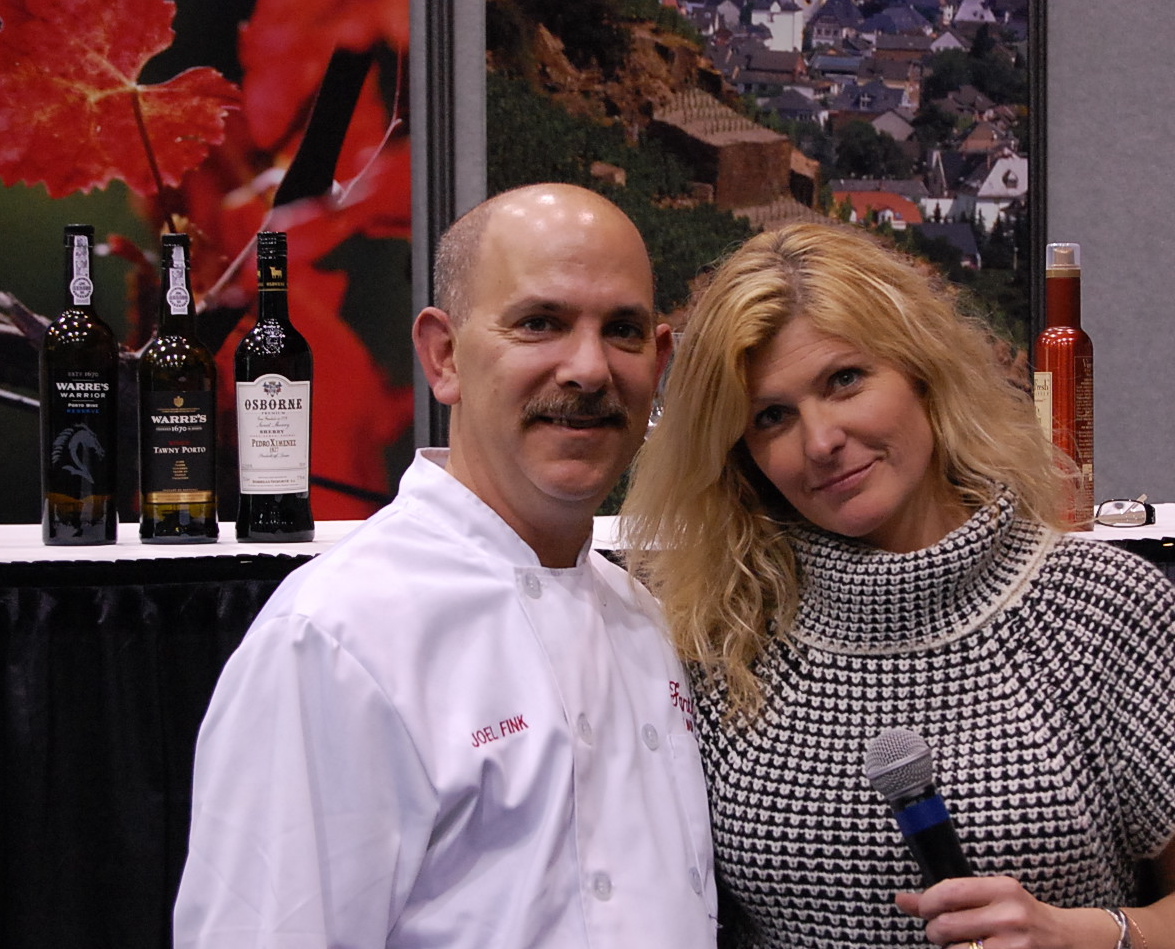
Joe and Marianne
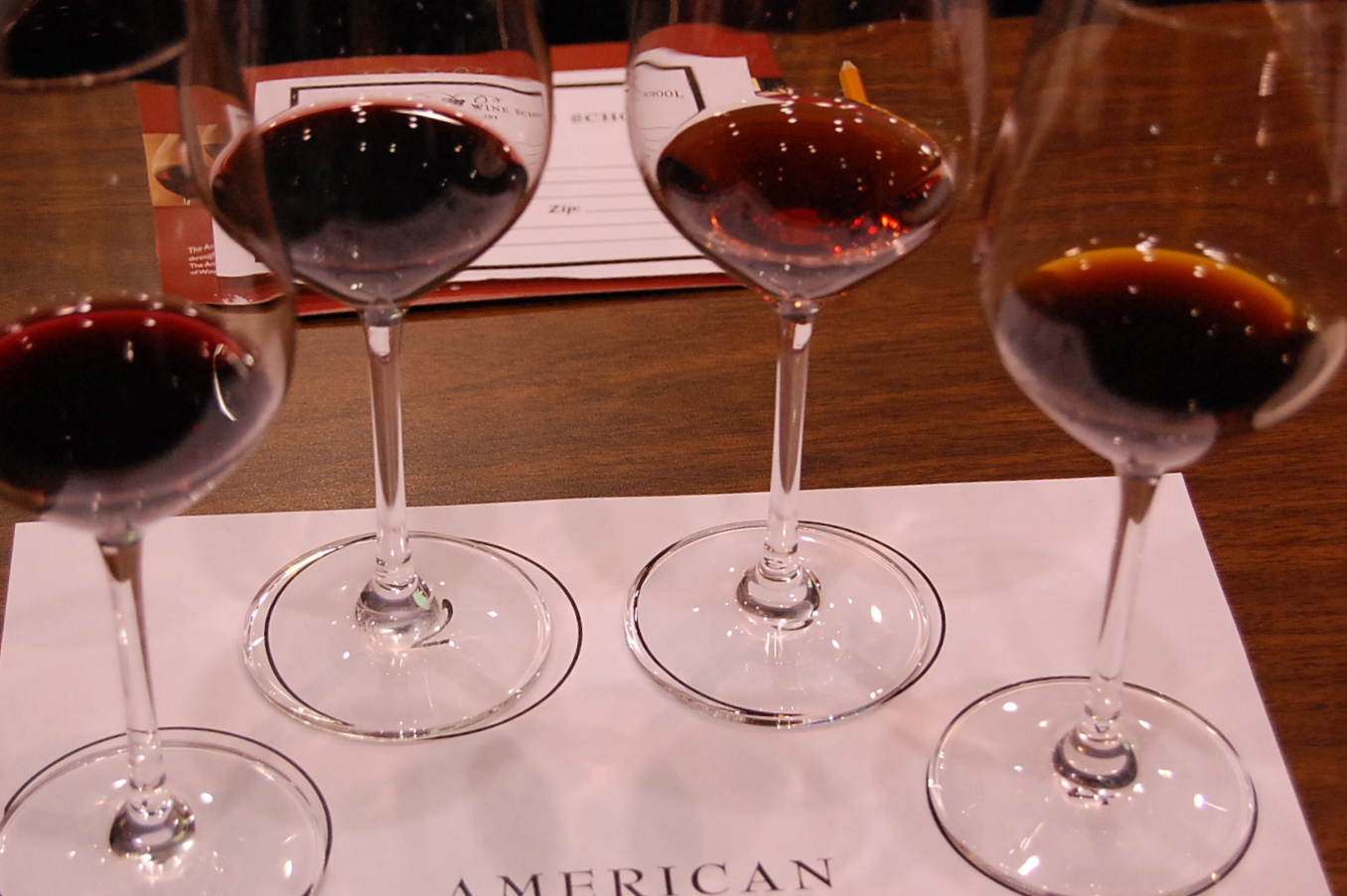
Joe and Marianne


Four Sips of Yum

Four Sips of Yum


We started with four wines in front of us ranging from a hearty Cameron Hughes Bin 257 Cab Sav, a Warre’s Warrior Special Reserve Port, Warre’s Tawny Port and finally an Osborne PX Sherry. Starting from left to right we paired the Cab with a dark chocolate containing about 72% cocoa. The wine on it’s own was great but pairing it with the  exotic richness of the dark chocolate opened up and new level of deep rich berry and  added a light caramel finish I didn’t expect. While I’d pair chocolate with just about anything, I hadn’t thought of enjoying it with a Cab, which I generally save for a hearty beef dinner on a cold winter’s night. But that’s why I’m the student, and this is a learning experience.

We moved on to a 65% cocoa and paired that with the Special Reserve Port (alright, I tried some of the 72% with this as well, and it was really good). I’m not really a port drinker; in the past I’d found it to be too sweet, almost cloying, so this was a nice way to open my eyes to the world of port and how it could be served. As Marianne noted, sometimes two sweets together can cut down the sweetness you actually experience. But maybe it was the high I got from all the great chocolate that made me feel so accepting. Either way, I was enjoying the combination of the port and chocolate. Of the two, I found the tawny port much richer, complex when paired with the 65% cocoa sample.
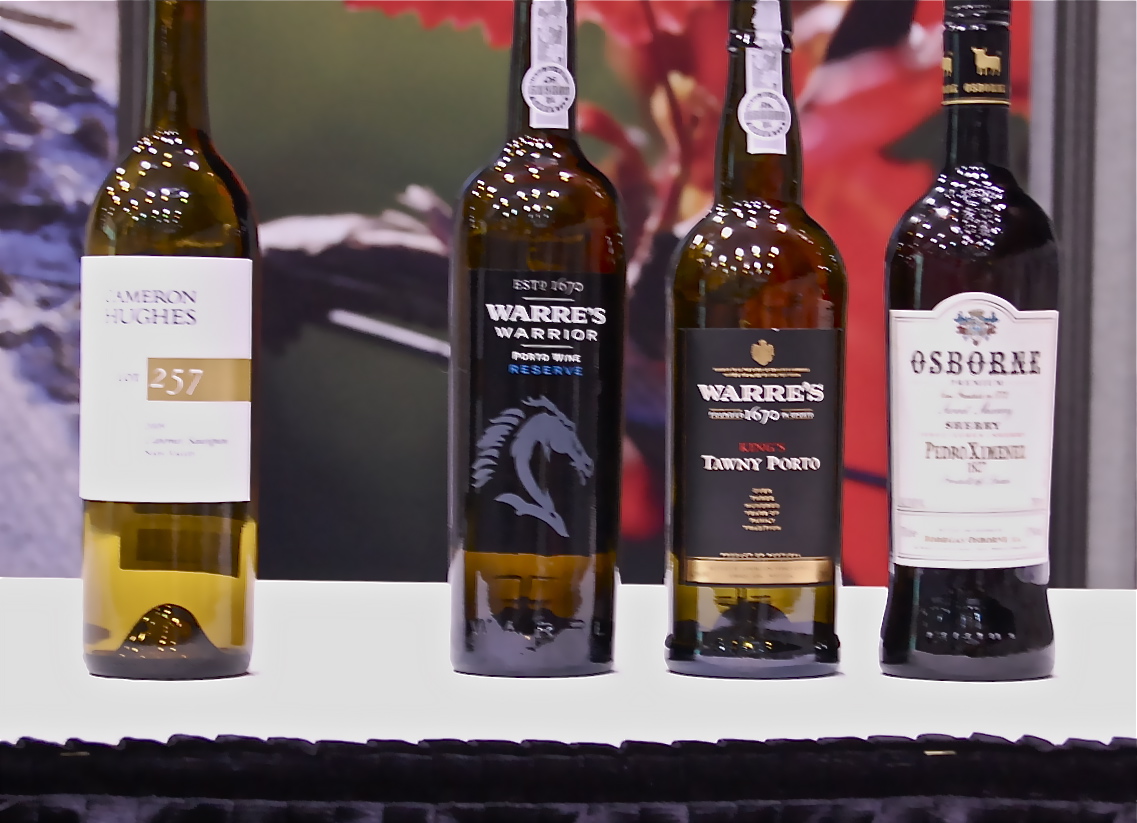
Samples of the day ~ Vote for Pedro!

Samples of the Day ~ Vote for Pedro!

As the tasting went on, I became more interested in what the PX in my last glass would taste like. For years, I’ve had the cliched idea that sherry was something you kept in a cupboard and threw into a crock pot when nothing else was available. I was about to be schooled. I found myself intriqued by the color: a rich, golden brown with thick legs when you swirled it. Thick legs, in this case, is a compliment. The bouquet was of a buttery caramel toffee with a hint of a sweet cigar. Yes, cigar. You know when you smell a waft of a sweet tobacco in the air on a warm summer night? It was like that. When I told my friend Terri (who was also sampling) what I tasted, she looked at me like I was crazy…or needed to be cut off. I was neither. We paired this with with a honey-like milk chocolate and it brought out even more depth of the flavours. Once Terri tried the chocolate and sherry  together, she understood what I meant. When I researched a little further, I learned that Pedro Ximenez is actually made from a sweet vinegar made from grapes that have been sun-dried.

We had a great hour of decadence.  The best part was we didn’t get kicked out of class.

Cheers!


Field Trip ~ The Fabulous Food Show in Cleveland


Cheers!

Wine Making 101 ~ Red, Red Wine

It’s November and harvest time is really winding down. Now in the vineyards, they’re getting ready for late harvest and in a few areas of the US and Canada (notably Niagara), preparing for Icewine. That’s a topic I’ll delve into more throughly a little later on.

I thought I’d head back to the study hall and focus on red wine making.

Beautiful Grapes [Image via LovetoKnow]The initial process is the same as I described a few posts back with white wines, the difference for reds is the amount of time the juice is left in contact with the skins. Most blue skinned grapes have a colorless juice which contains: water, sugar and acid. Once the mustis placed in a vessel to soak the skins with the liquid juice a very quick separation occurs. Seeds settle to the bottom, skins float to the top and form what’s called a ‘cap’.

The skins contribute the color, flavor, tannin and some aromatics. It makes sense that the skins need to stay in contact with the juice as long as possible to achieve the quality the winemaker is looking to produce. The amount of time that there is skin contact is called maceration. Say that slowly to yourself a couple of times; if you say it fast it sounds like something else.

After the initial separation, the seeds are removed once by straining through a screen. The juice and skins are then reintroduced to one another one of two ways: by pumping the juice over the skins or by punching down the cap. Punching the cap is exactly what it sounds like: the skins are pushed or plunged into the juice to allow for more skin contact, thereby increasing all the qualities we look for in a truly, wonderful red wine.

Punching the Cap [Image via Flickr]The total amount of punching down the cap, pumping over; maceration time depend on the type of grape, the style of wine, equipment and the winemaker, depending on his or her style and philosophy. plunging the cap is generally done every four hours when fermentation is most active. With time and manipulation, the skins become saturated with liquid and the cap drops. The wine is then drained off, leaving the skins to be pressed (since they now contain wine). The wine produced from skins when pressed is called press wine(makes sense) is highly concentrated, more intense and more tannic.

A final step sometimes involves what’s called chaptalization: adding sugar to the must, before fermentation, to yield the desired alcohol in the finished product. I say sometimes because countries such as Australia, Austria, Italy, South Africa and the state of California prohibit the practice. Regions where sugar content in the grapes is low are able to do so.

While all this punching, plunging and pumping is great, it’s a matter of timing that truly makes a great wine. A tight reign must be kept on the temperatures produced by processing; too much heat (caused by too much manipulation) will cause too much fermentation, rendering the end product undrinkable. Colder temperatures prevent excessive fermentation and allow for maximum fruit extraction. When fermentation takes place, so does alcohol production. That doesn’t sound like a bad thing, I know, but it’s another factor that that can go against the winemakers vision of how the style of their wine should be.

The whole process takes around 7-21 days to complete depending on the type of red. It’s then transferred to either stainless steel tanks or barrels where it’s stored and then bottled.

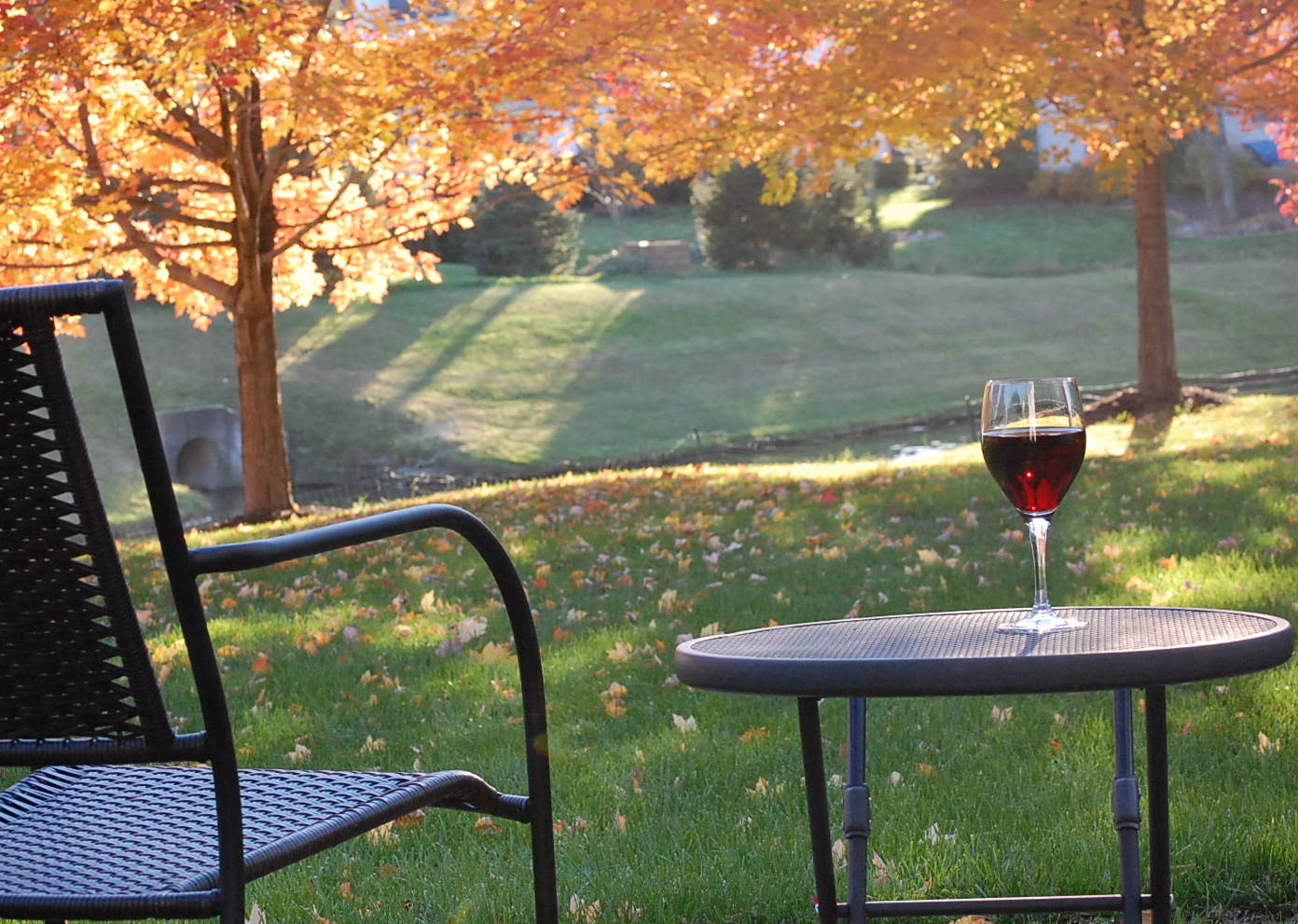
A nice leggy Red

A nice leggy Red

I don’t know about you but all this writing about wine is making me thirsty.

Cheers!

Wine Tasting 101~ An Italian Stallion

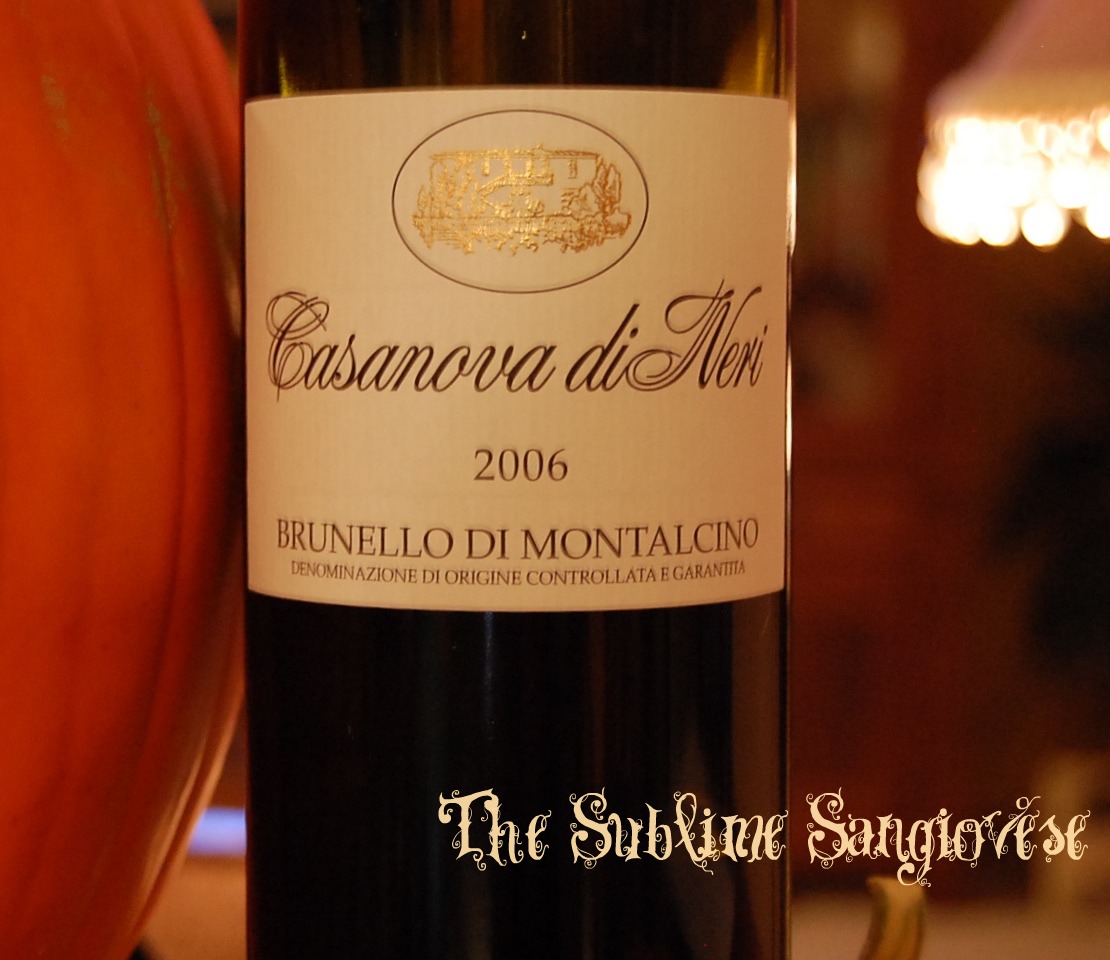
A new favorite

A new favorite.

Tonight, I had a romp with a great Italian Sangiovese (Brunello di Montalcino): an 06 Casanova di Neri.  Since my husband brought the bottle back with him from a recent trip to Italy, I asked for his input.  His take: a mix of black currant on the first nose, that melted into a sweet toffee as the sips went on. I thought it had more of a strawberry preserve  vibe on the nose with a slightly astringent feel. At the end, it morphed into an almost cherry pie, dessert-like finish.  So sinful and gorgeous, it almost made my eyes roll back…but not quite.

What I know of old-world wine is that the first sip will generally be just like the end: good to the last drop. And that’s what many like and depend on in a wine. That’s what draws them to old world wine vs. new world wine time and time again: they always know what to expect when it’s rolling in around in their glass.

It was my first foray into the world of Italian wine and I can honestly say that I wasn’t disappointed. A few more glasses and I might even need a cigarette.

Cheers!

Wine Tasting ~ Original Zin and a little PromisQuity.

Zin-ful

Zin-ful

 I’ll admit it: I drink around. As a student of wine, I believe that I have to try a variety of wines to find out what I like and, more important, why I like it. I can’t buy a case of one type of wine. I have to experiment and the one I choose to spend the night with might not last until the next weekend.  For this recent wine night with the girls, we compared and contrasted two Zinfandels. In the past, I haven’t necessarily favored the beloved Zinfandel; I’m not exactly sure why. I guess until now, I thought they weren’t full- bodied enough for my liking. That’s what making assumptions does: it makes an ass of, well, just me in this case.

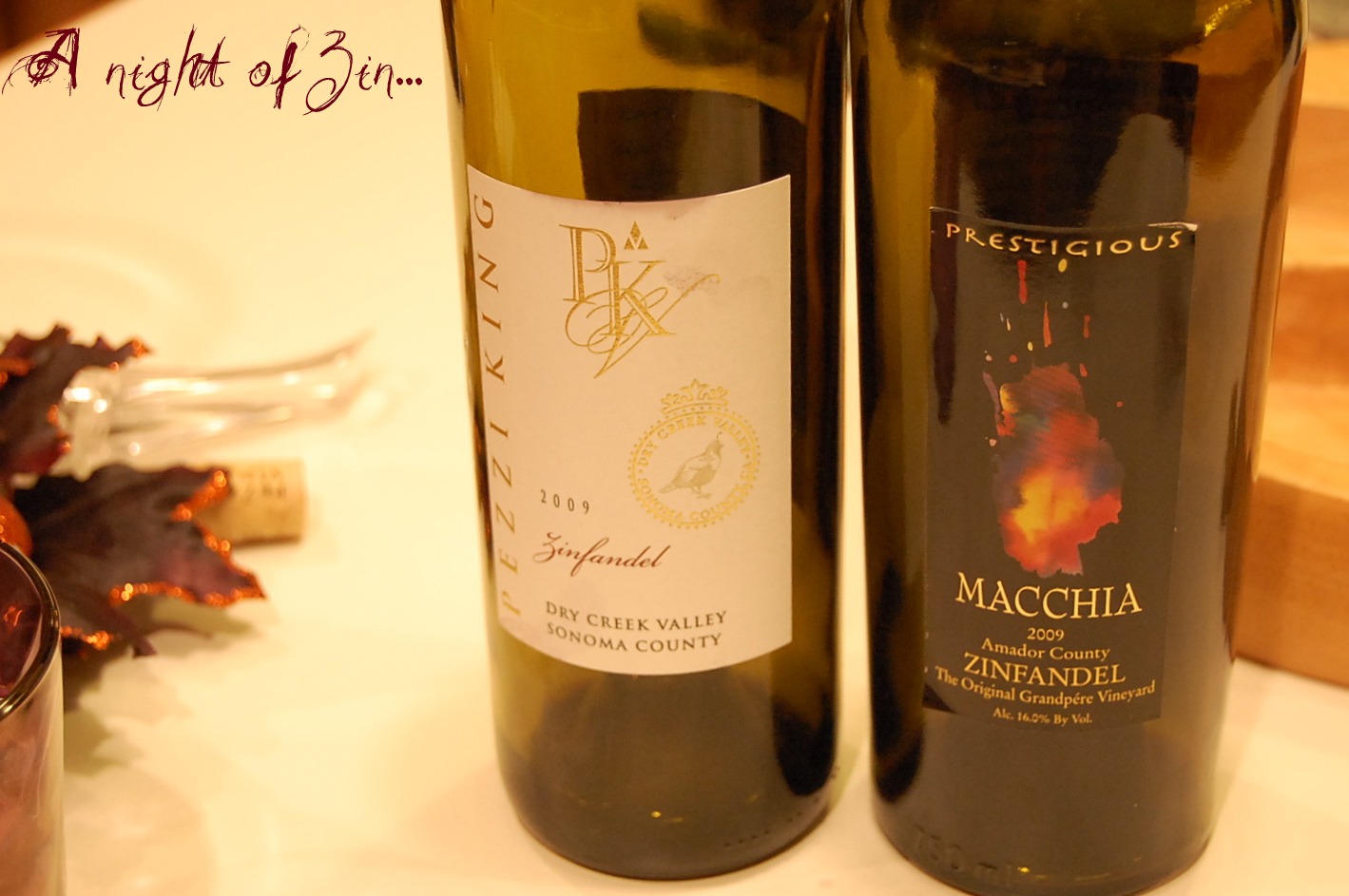
 We chose to go with 09 Macchia ‘Prestigious’ Zinfandel and an 09 Pezzi King Zin from Dry Creek Valley in Sonoma. The Macchia had a lovely, deep red color, was gentle on the nose and possessed a rich, bold berry on first taste. The next sips brought out more of the richness and lusty flavor. It made me think of a Cabernet in its style; I was pleasantly surprised.  We were unanimous in our appreciation of this wine and it seemed to pair very well with the assortment of mild cheeses I had set out.

The Pezzi King Zin was also a pleasant drinking wine but the consensus was that it tasted very young, as though it could be cellared a little longer. While we did pour both through aerators, it might have enhanced the Pezzi to have been decanted for a time.

PromisQous

PromisQous

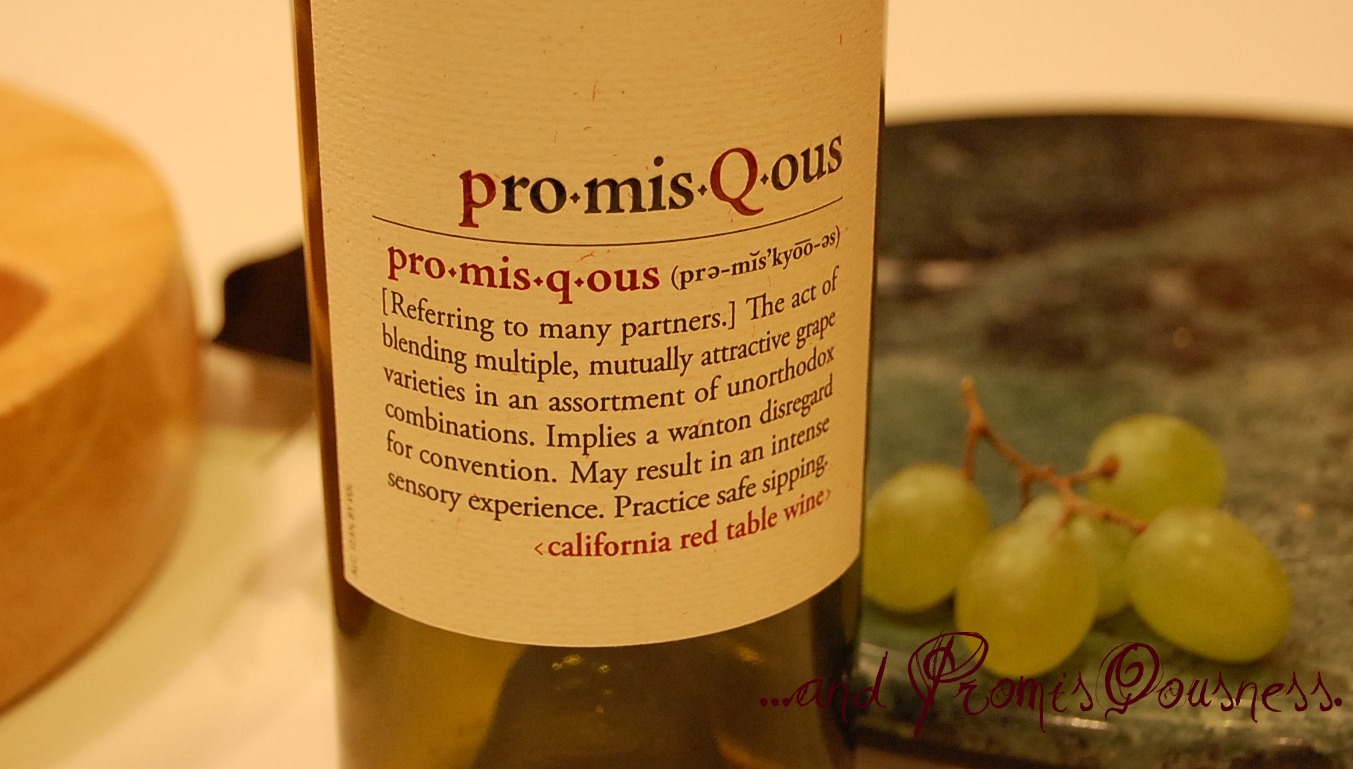
With the night still being young, we moved on to PromisQous, a red wine blend from California. It boasted a “delightful dalliance” of Zin, Merlot, Cabernet Sauvignon and Petit Syrah. We found that it was indeed a playful little minx and paired very well with the sharp cheddar left on our plates from the earlier tasting.

It was a great night of tasting, trying some new wines I’d never experienced before and getting to know some new friends. I’m not sure what the next wine night theme will be but with so many great wines out there, I’m sure it’ll be just as fun.

Just don’t expect me to call you in the morning.

Cheers!

Night School

09 Red Rock Winery Reserve Pinot Noir

09 Red Rock Winery Reserve Pinot Noir

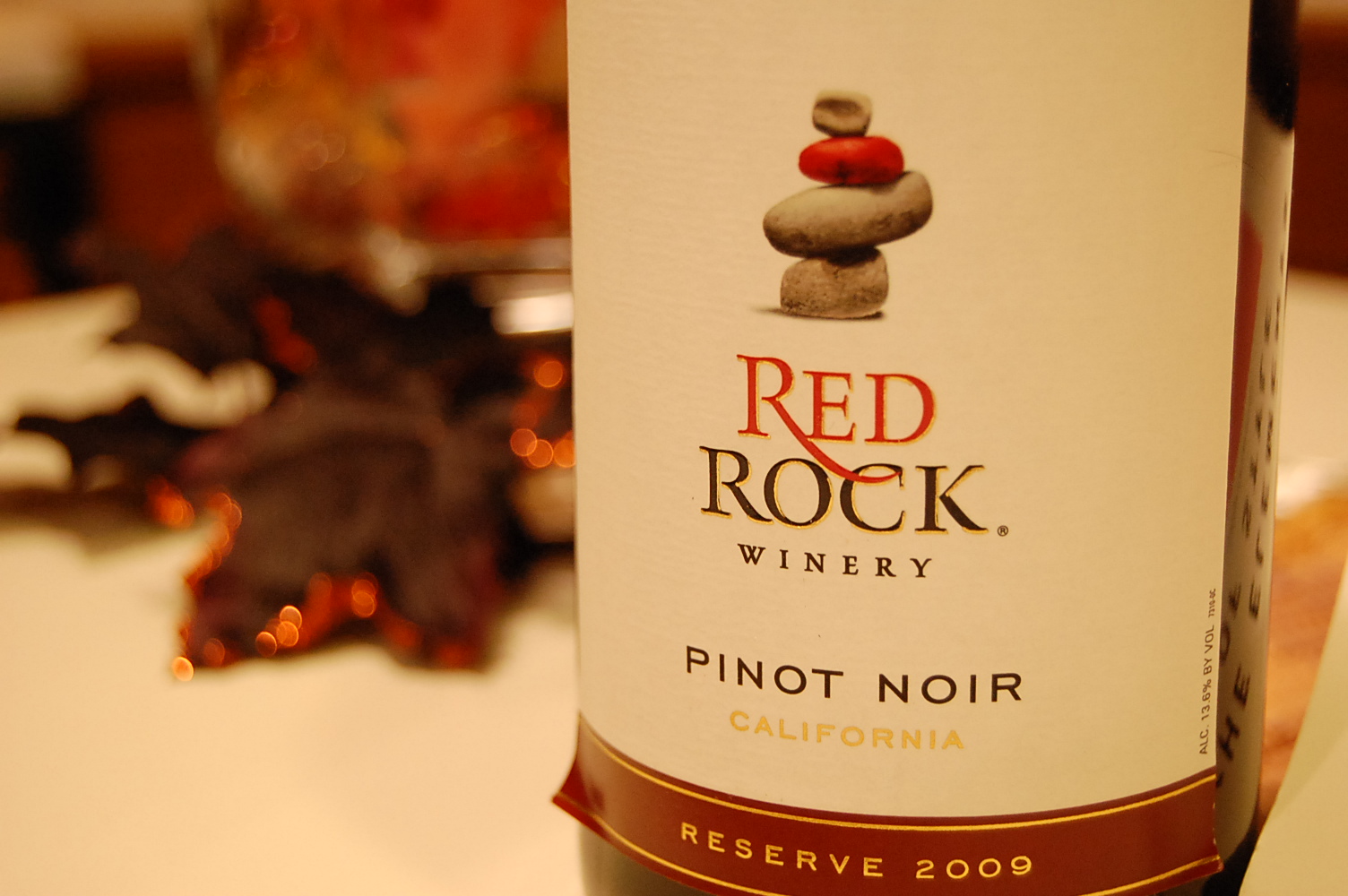
A benefit to online learning is that I can enjoy a glass of wine while in class. I couldn’t do that as an undergrad, so this is a nice perk. While I was waiting for our chat to begin, I thought a lovely red might get the creative juices flowing, so I closed my eyes…and chose another Pinot (we have a few in our cellar right now). It was one I hadn’t heard of before: an 09 Red Rock Reserve from California.

At first, I found it had a musty, black cherry quality on the nose, and a vinyl and berry taste with a slight metallic finish. None of these qualities were bad, per se, it’s just what I experienced. A few more sips revealed a nice peppery heat that I began to really enjoy (it’s still drizzly here in the Cleve).

There were some technical problems with my class chat session that never did get resolved, so I was able to enjoy more than one glass.
I didn’t learn much about grammar tonight, but I did learn that Red Rock Winery makes a very nice, unique Pinot. I also learned that 09 is shaping up to be a very good year.

Cheers!

Candlelight, some wine and me

Taking the chill away

Taking the chill away

I’ve been out in the cold and dreary Cleveland weather today. So when I got home, I wanted something to take the chill away. I chose an 09 Santa Cristina Sangiovese. It had a nose of berry and the taste of mineral and pepper. I won’t even rate it tonight; that’s not the point. Tonight, it’s about enjoying the wine with my blanket, my candles and a good book.

Cheers!

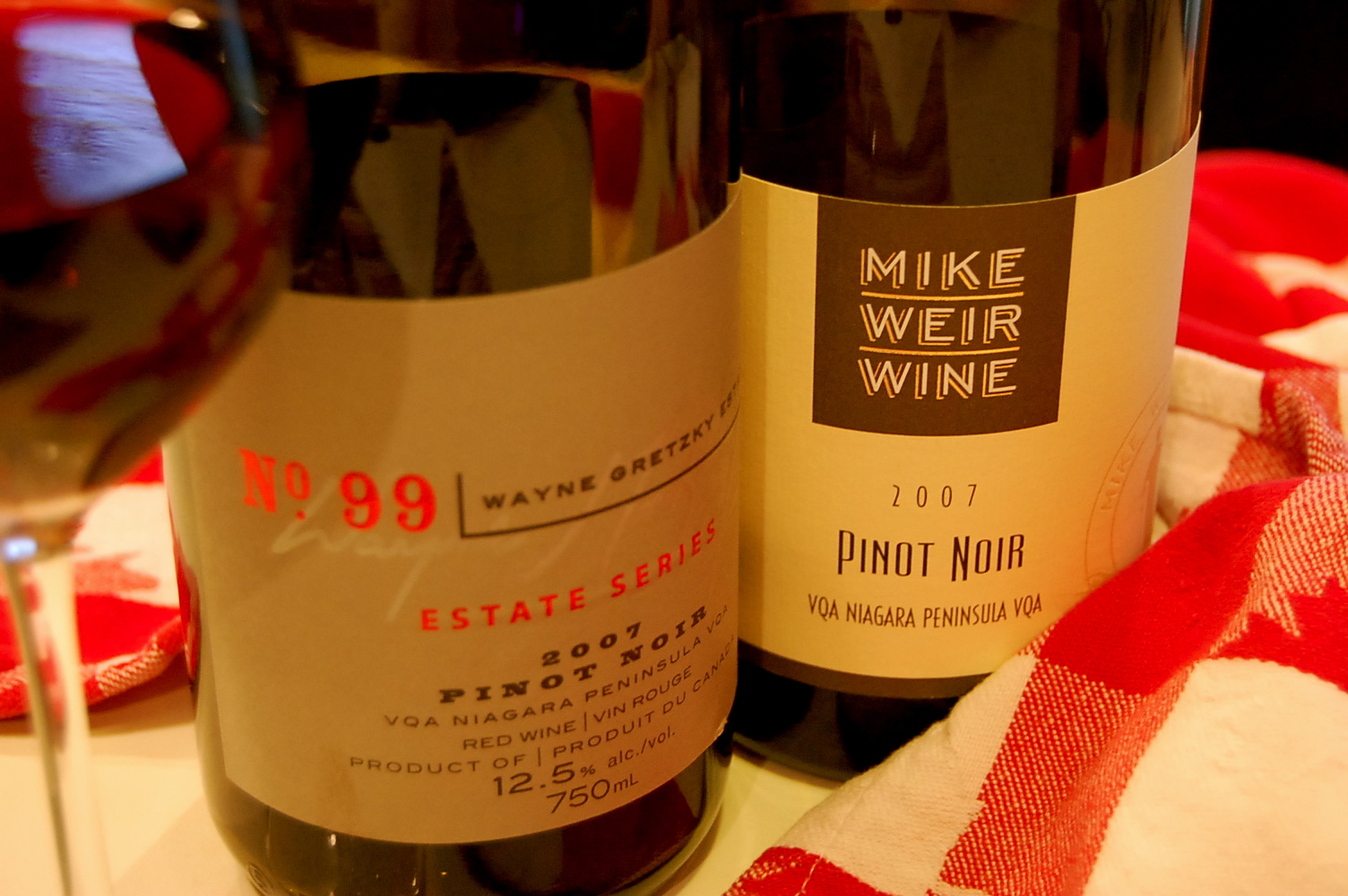
Face-off! 2007 Mike Weir vs. 2007 Wayne Gretzky Pinot Noir

2007 Wayne Gretzky Estate/ Mike Weir Wine Pinot Noir

2007 Wayne Gretzky Estate/ Mike Weir Wine Pinot Noir

Last night, I had a little tasting with my friends Judy and Terri and I wanted it to be as unbiased as possible. Since I’m an ex-pat from the Niagara region, I’m partial to many wines from that area, not just the Icewine that it’s noted for. Maybe I’m feeling a little homesick especially since it’s Grape and Wine Festival time. Sigh. I know it’s called ‘The Niagara Wine Festival‘ now, but it’ll always be ‘Grape and Wine’ to me.

For years, I’ve enjoyed the whites and particularly liked what had been coming off the vine from Mike Weir Wine. Having never sampled anything from Wayne Gretzky Estates, I wanted to try something different and compare the two. To keep things on equal footing, I chose the same type and vintage, otherwise it could be like comparing apples to oranges, and not really a fair fight. We poured both through an aerator since we didn’t have time to decant.

Armed with both the Wine Aroma Wheel and Mouth-feel Wheel, we started with the 2007 Mike Weir Wine Pinot Noir. The color ranged from a burgundy (Terri) to light claret (me) to garnet (Judy). We all agreed that, sadly, there didn’t seem to be much on the nose. As for mouth-feel, it seemed to be a bit thin and watery; as if it could’ve been cellared longer. We found the taste to be more tart berry; Judy thought it had a grippy, alcohol feel. Terri thought it had more of a chemical, bitter feel. She described it as ‘gird-y’: for her, it produced more of a burn-like sensation going down. Overall, it wasn’t bad, it just tasted quite young. I wondered if pairing it with something like Brie and fruit might have brought out more of its depth.

On to the 2007 Wayne Gretzky Estates (Estate Series) Pinot Noir. By comparison, the Gretzky was richer in color; a deep garnet with nice floral notes on the nose.  The mouth-feel was warm, satin-y and supple with a viscous, mouth coat texture (yes, ‘mouth coat’ is listed in the wheel). Terri found it had a smoother, softer, fuller texture compared to the Weir. It tasted of rich cherry, sulfur with a light smoky, butter finish, and would probably pair well with a nice filet or roasted chicken. We thought it was a nice wine to drink all on its own, from start to finish.

Looks like, for now, No.99 is still the Great One.

Cheers!

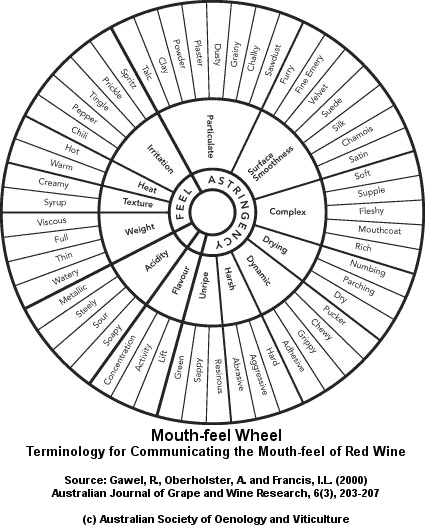
Wine Tasting 101~ The Mouth~feel Wheel

The Mouth~feel Wheel

The Mouth~feel Wheel

It’s been a busy time for the Wine Student; none of it wine related, I’m sad to say. So, yes, I’ve been blowing off my studies a bit. I’m back to the study hall and picking up where I left off: the Mouth~feel Wheel. Like the Wine Aroma Wheel, the Mouth~feel Wheel, is made up of various terms that describe how red wine feels when it’s on your tongue. This part of wine tasting is really new to me: I’ve never thought of wine as ‘chewy’ or ‘grippy’; according to the Mouth-feel Wheel, it can be.

Developed by Richard Gawel in collaboration with Dr. Leigh Francis and Anita Oberholster of the Australian Wine Research Institute, the Mouth~feel Wheel lists 53 terms to describe red wine’s various sensations and texture. When I was looking through the wheel, I noticed some of the terms weren’t anything I’d ever use to describe wine. Like ‘chamois’. Chamois, according to the wheel, describes the surface smoothness and astringency of the wine. A harsh wine could be described as hard and aggressive while a complex wine might be fleshy, rich or supple.

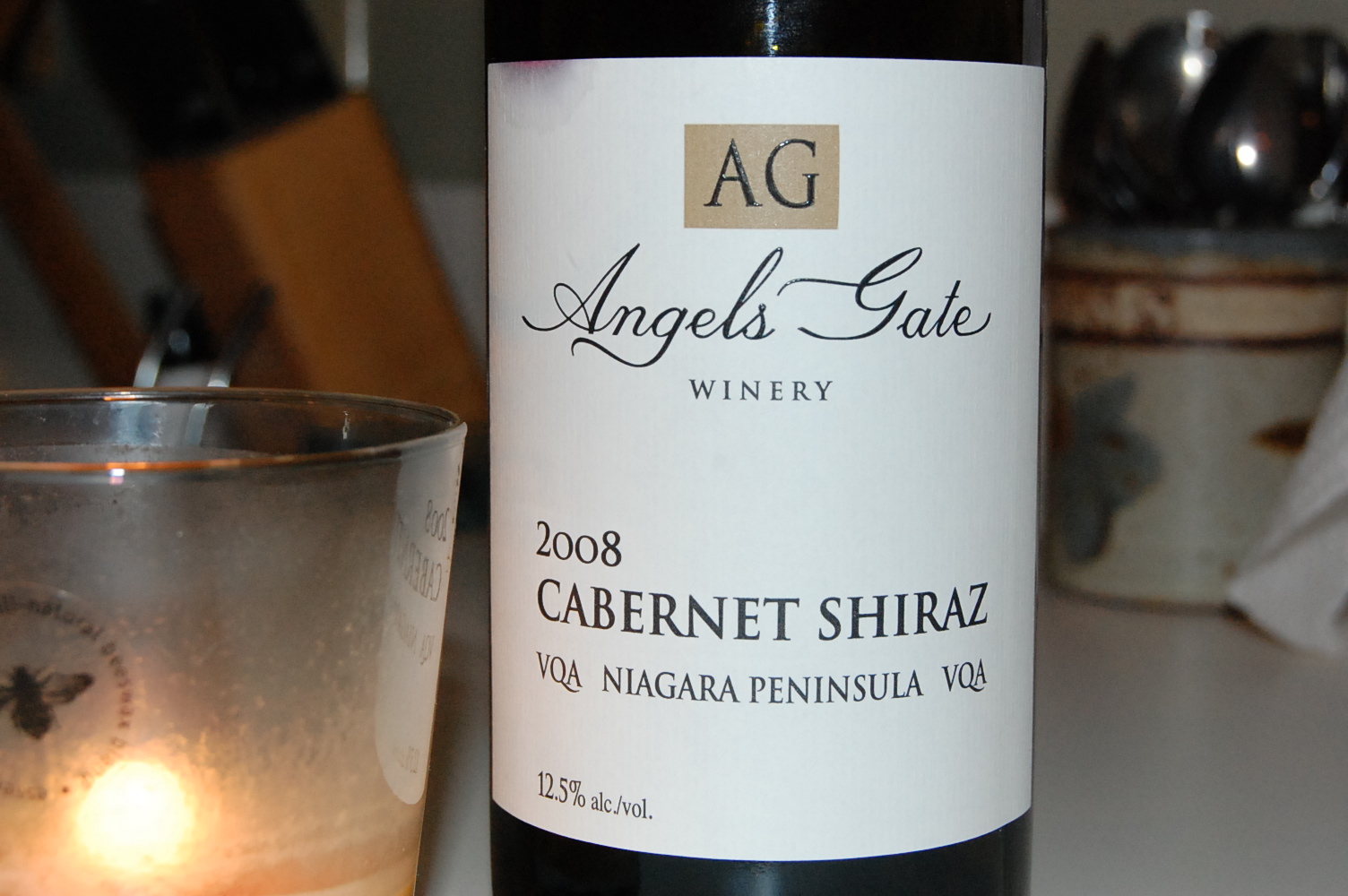
My friend Katrin (who was visiting for the weekend) and I decided to take a spin with two offerings: a 2008 Angel’s Gate Cabernet Shiraz from Niagara and a 2009 Sean Minor Pinot Noir, Carneros.

We found the Angel’s Gate Cab Shiraz to be ‘astringent’ or “pucker-y,’ with a thin weight. It seemed a little young but pairing it with dark chocolate covered pomegranates seemed to cut it nicely.

The Sean Minor Pinot Noir, Carneros offered us more mouth~feel. I found it had a fuzzy sensation with a slight tingle; Katrin found it to be ‘fleshy’ and ‘active.’ We agreed that it provided a good measure of heat: warm and peppery and the finish was like ‘microsuede.’ I’ve never tasted microsuede, but it’s probably like a chamois.

It took us a few glances around the wheel to really put terms to how the wines felt, and the more we sampled, the better the descriptions became. We likened it to CSI for wines, except I don’t think our findings would ever hold up in a court of law.

Cheers!


2008 Angel's Gate Cabernet Shiraz

2008 Angel's Gate Cabernet Shiraz