What I Did This Summer Part 2: Redemption, a Star Turn and a Little French Kiss 💋

Jordan Winery and Vineyard

After a busy few weeks of getting my daughter moved and relatively settled in at college, I’m back to my studies. Here’s the second half of my ‘what I did this summer’ report.

The second day of our excellent wine adventure took Hubby Doug and I to three vastly different wineries. One had a home-spun vibe, one had a very cinematic feel and the last took us back in time to a beautiful french chateau.

Alexander Valley Vineyard (AVV) ~ In 1961, Harry and Maggie Wetzel purchased the homestead of Cyrus Alexander (the valley’s namesake). In 1963, they planted their first grapes, and In 1968, with perseverance and resolve, their first Cabernet was bottled and a lifetime love of winemaking was born. Winemaker Kevin Hall along with three generations of the Wetzel family are continuing the family legacy of winemaking and farming.
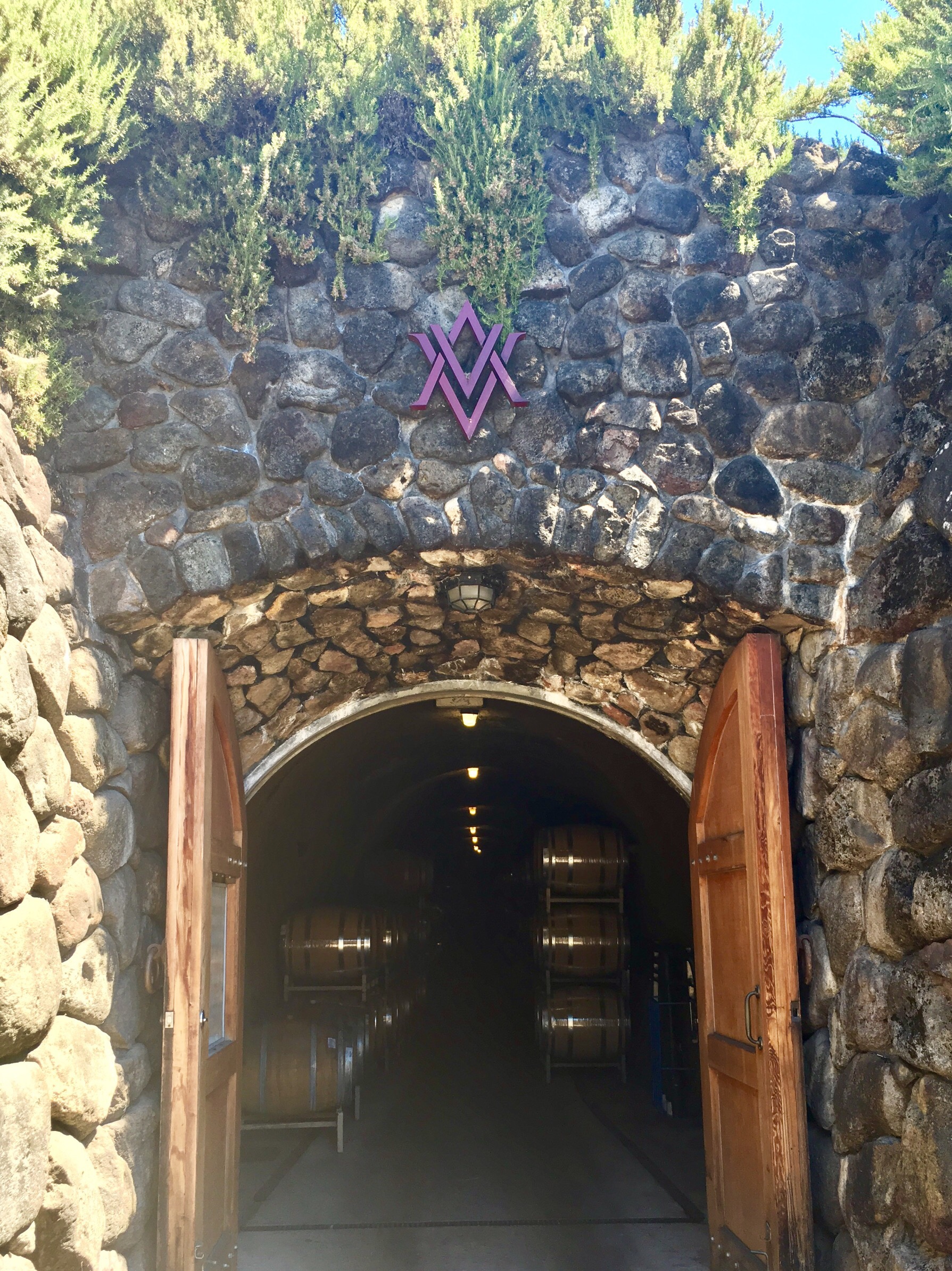
The winery has a cosy tasting room, and an underground cave where we learned about how wines are barrel aged. Very cool (literally). 🙂
When we arrived at AVV, it was just after they’d opened for the day. And while it seemed a bit early to sample, in the name of research we summoned the ‘five-o’clock-somewhere’ rule and tried a couple of small samples. Our two favorite were the 2013 Redemption Zinfandel and the 2012 Cyrus. Both were beautifully nuanced, yet full-bodied.

This slideshow requires JavaScript.


Francis Ford Coppola ~ Driving through the archway gave us the feel of what it must have been like to drive on to a movie lot (without the guard asking if you’re ‘on the list’). Coppola winery was one of the most unique I’ve experienced. It had a img_5614picturesque pool area with cabine where you can spend the day with your family. Most water areas at wineries are reservoirs, overflow basins or decorative ponds that they always kick me out of. Bocce courts and lazy hammocks overlooking the valley give a chill vibe that invite you to grab a glass and relax.
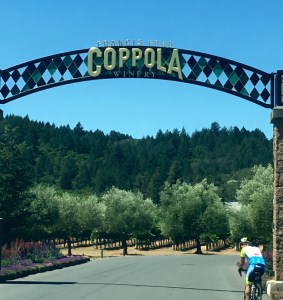
Inside the winery is the main tasting room and movie museum with select memorabilia from several Coppola classics including Apocalypse Now, Tucker: The Man and His Dream, Bram Stoker’s Dracula, and the giant neon martini glass from One From The Heart. Our tasting experience was the Sonoma Inclusive at the main tasting bar. Our pick of the flight was the 2012 Director’s Cut Cinema blend of Cab Sauv, Zin, Petit Syrah and Syrah, and the 2012 1Mille Cab Franc.

One of the coolest wine tasting experiences that I’d love to return for is Tasting in the Dark. Small groups are led to the Coppola tasting labs, then blindfolded and led through a variety of sensory appreciation activities designed to fine tune the senses. Hoby Wedler, a UC Davis graduate, who is himself without sight, leads each group to the discovery of flavor and essence; allowing other senses to become stronger in the absence of sight. As we know when one sense is gone, others take over, and this experience would be amazing to help one begin sharpening their palate.

This slideshow requires JavaScript.

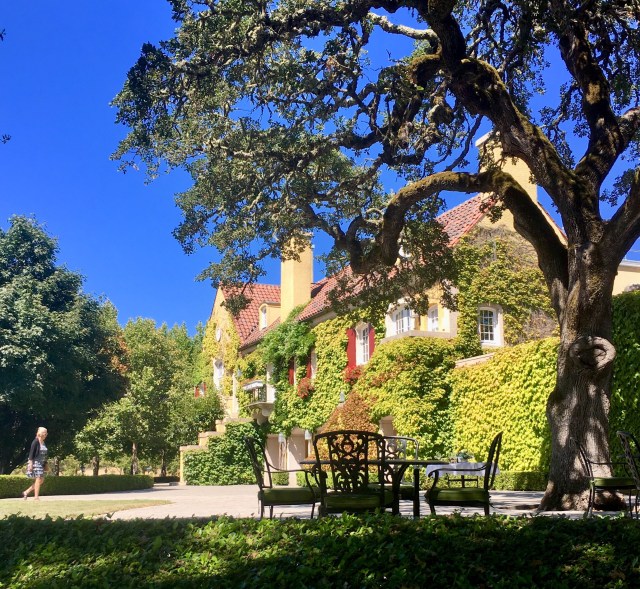
Jordan Vineyard and Winery ~ our final stop of the day took us up a winding road to another world. This by appointment only winery made me think a little of Marie Antoinette’s Petit Trianon – beautiful, elegant and very regal.
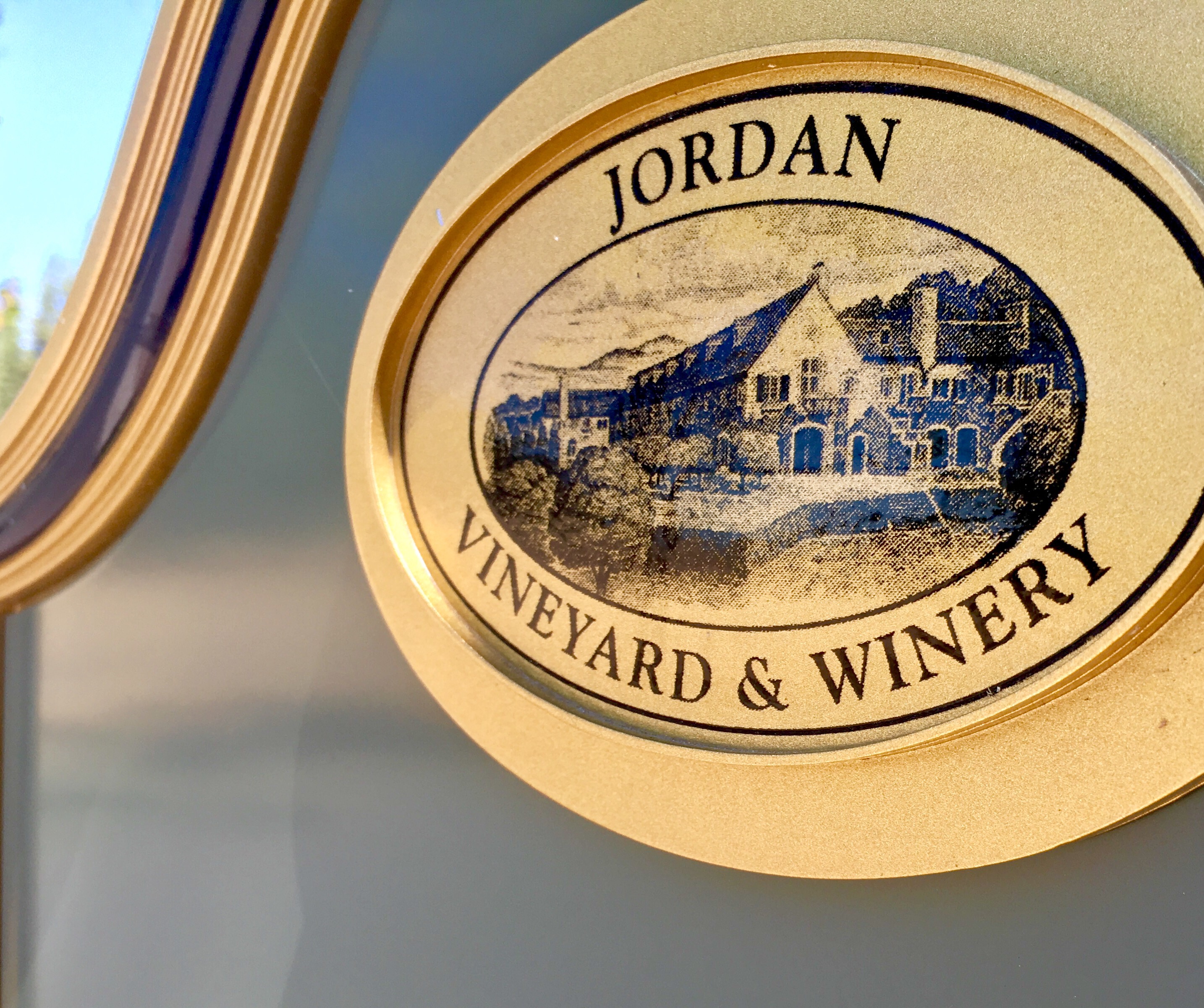
When Jordan was established in 1972, the choice was deliberate to focus on creating only singular varietals, but doing them very well. Their Cab Sauv is produced from the Alexander Valley, and Chardonnay exclusively from the Russian River Valley. The philosophy being that by focussing on singular wines, a better continuity of style will be achieved, and a consistent realization of balance between fruit, acidity, tannin, and alcohol. Each vintage you open will generally have the same qualities time after time.

We chose the Library Tasting, a one hour tasting. The Chardonnay tasting was paired with an Ahi Poke with Quinoa and Heirloom Tomatoes. Usually I’m not into raw tuna but this was a lovely combination that beautifully enhanced the subtle notes of the wine.

On to the private tasting room where we sampled three older vintage Cabernet Sauvignon paired with a variety of artisan cheeses and a Jordan Estate Olive Oil.

Our pick? If you guessed Cab Sauv, grab yourself a glass of wine because you are very smart! Our vintage was the 2007~ something very special indeed.

This slideshow requires JavaScript.


It was an amazing day of touring and tasting and I hope one day I’ll be lucky enough to go back.

Cheers!

©TheWineStudent, 2016

Red, white and… not blue :D


On this particularly beautiful Independence Day weekend, HubbyDoug and I decided to try something new. It’s a chill weekend, which we purposely decided to keep relaxed; no superbig plans, just a come-what-may vibe.

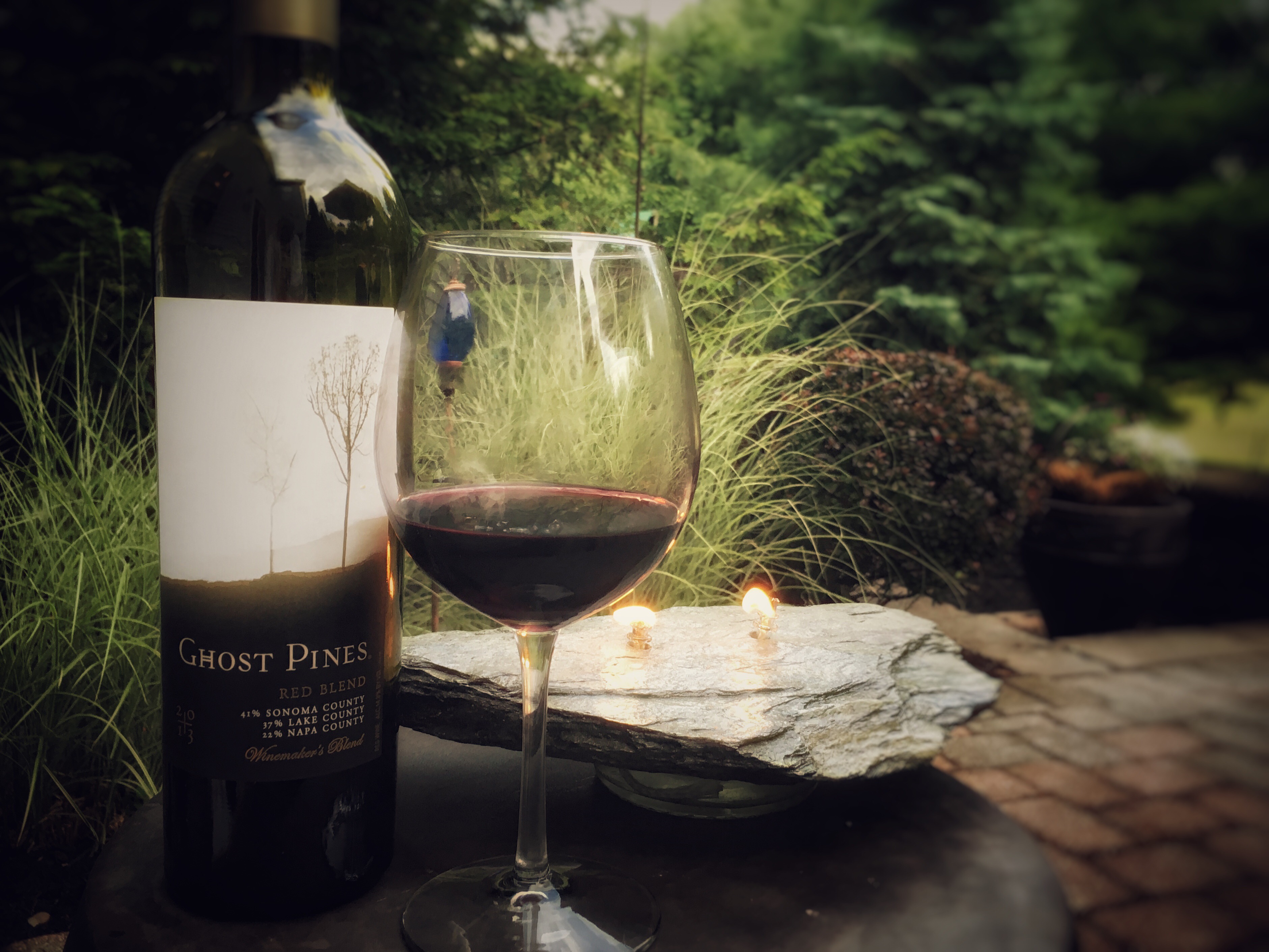
To celebrate, we found a 2013 Ghost Pines Red Winemaker’s Blend. Combining Zinfandel, Cab Sauv, Syrah, Merlot, Petit Syrah, and Primitivo, this wine was so complex and flavorful, even from the first  waft of the bouquet. Hints of lush blackberry jam on the nose, with rich blueberry compote and a cinnamon finish on the palate made this wine one of the most intriguing sips I’ve experienced in a very long time.

With a bottle this nice, we didn’t need fireworks.

I hope you all have a safe and happy July 4th!

Cheers!

Tricks and Treats: my top picks for Hallowe’en ’15! 

The witching hour is nigh! And to celebrate, I narrowed down my choices this year to two bewitching vintages. The label art had a little to do with it. But what was listed on the label was most intriguing.

I offer up to you, in no particular order (and also because I haven’t tried them… yet) ~ my top two Hallowe’en wine picks!

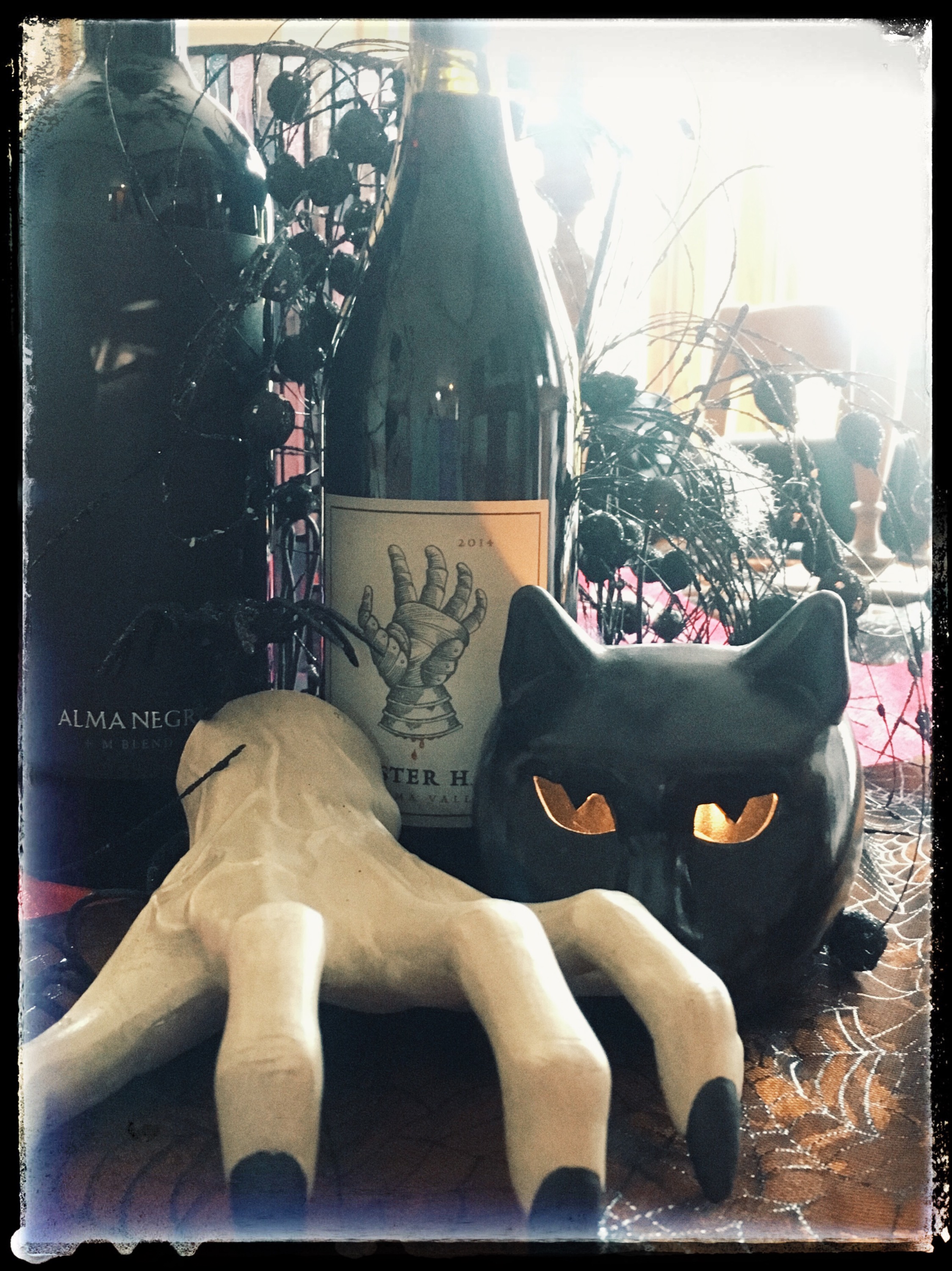
2012 Alma Negra M Blend (black soul) ~ a blend so mysterious, they don’t even list what’s in it! Which, frankly, is what piqued my curiosity. A little trip into the catacombs to research was indicated. Grape varietals in this blend are Bonarda and Malbec. Oh, the skeleton references i could make about Bone-arda (bad pun = everybody sip). Bonarda, described as the ‘workhorse’ grape of Argentina, produces large yields is lighter-bodied than Malbec yet fruit forward with flavors of cherry, plum with moderate acid and light tannins. This vintage was aged eight months in 50% American – 50% French oak barrels.
 2014 Sinister Hand ~ This spirited vintage, while young, is made in the Rhone style, blending Grenache, Syrah, Mourvedre and Cinsault. Prone to rot in damp conditions (think nasty zombie),  Cinsault thrives in hot appellations. When added to Rhone, it adds structure, perfume and softness, making this offering sound beautifully complex indeed.

Anyone who loves a good horror story can tell you, it’s not the simple tale that’s spine-tingling. It’s the one that builds, and has complex twists and turns that are the most satisfying.

The real trick for me will be to not rip into these treats before Hallowe’en!

Cheers! 
©TheWineStudent, 2015

Happy Hallowine!

It’s two days to ghoul and if you haven’t found something for your goblet, I have some suggestions for you. And you don’t have to go into the dark recesses of the catacombs to find them. Most were at World Market at spooktacular price points.

Remember a while back I wrote that when I make a bad pun, you can take a sip? Start now before they get really horrific.

Am I bewitched by a label? I confess, I am a big sucker for fun label art. HubbyDoug just looks at me, rolls his eyes and spins his head around a few times. Good thing he hasn’t started speaking in tongues; I might have to consult an exorcist.

I stayed with the blood reds this year, in keeping with the season. Here is my bare bones list, in no particular order:

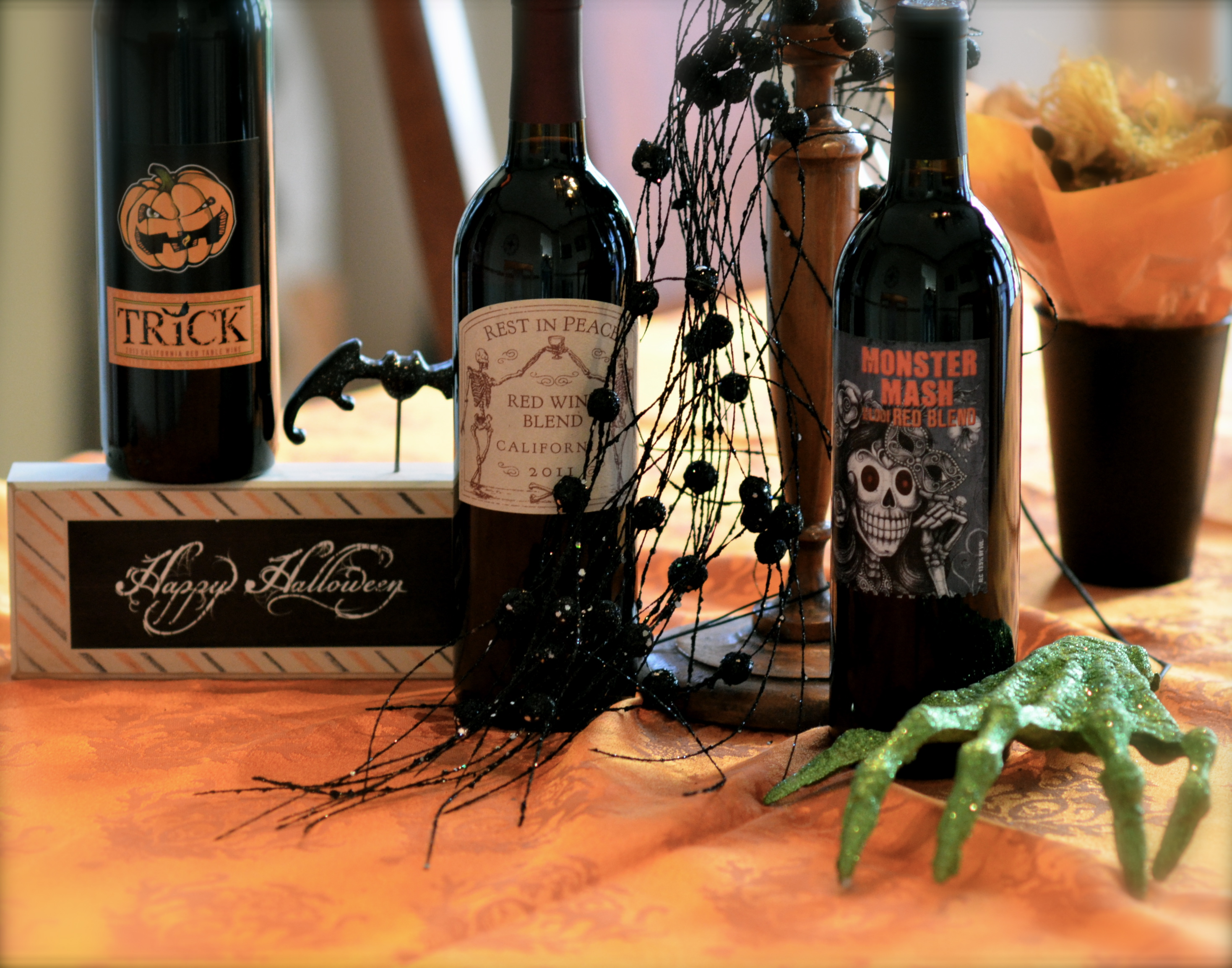
  • Rest In Peace ~ 2011 California Red Wine Blend ~ I quite liked the fruit forward, raspberry jammy vibe. It settled into pleasant earthier tastes of tobacco, leather(face) and the tiniest whisper of chocolate on the finish. A nice sipping wine to keep the vampires from your door.
  • Monster Mash ~ 2012 Lodi Red Blend ~ A melding of Lodi Zinfandel and Petit Sirah. It surprisingly had a nose as thin as Slenderman. But no matter; it had a nice tobacco ` cherry vibe with high alcohol and oak flavors. If you have a taste for a somewhat grounded, yet bright red go for this mash. It’s a graveyard smash.
  • Trick ~ 2013 California Red Table Wine ~ The lightest in color, this Trick was a little more of a tart-y treat (kind of like most women’s Halloween costumes). It tasted of unripened strawberry and cherry, and reminded me a little of War Heads sour candy with its pucker-y, ‘get you in the sides of the mouth’ effect. Nice if you like a little zing in your wine.
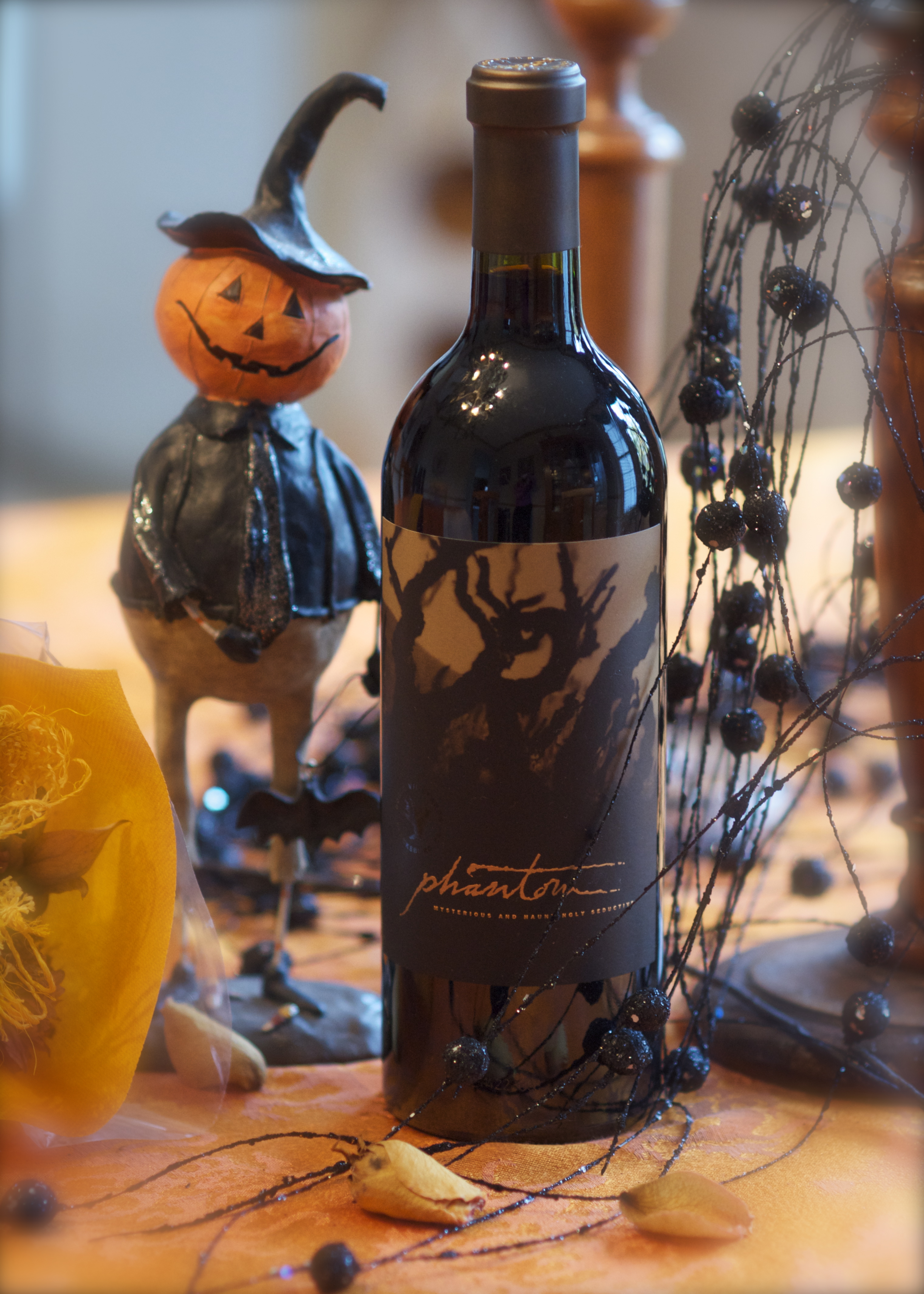
  • Phantom ~ 2011 California Red ~ Bogle Vineyards ~ This phantom was no misty apparition, from the moment I opened the bottle I detected a spirited nose of rich, raspberry jam. It had the deepest blood red color of the four and tasted of blackberry with a little smoke. The flavours were subtle and lurking at first, then I slowly became aware of them. But I wasn’t afraid. This was a friendly ghost.

On All Hallow’s, the devil is in the details. And I hope these few suggestions help get you started to find the most fun for your celebrations. Scaring up some poison for fright night should be like child’s play. But stay away from the two buck Chuck(y).

I hope you all have a safe and happy Halloween!

Boo!

©TheWineStudent, 2014

Viva El Vino! Cinco de Mayo and Mexican Wine

Spicy hot days and cool evenings can produce some fantastic wine. With vineyards planted as far back as 1524, Baja, and in particular, the Guadalupe Valley in Mexico has been producing some wonderful vintages.To celebrate Cinco de Mayo, I could’ve chosen a traditional shot of Tequila, blended a Margarita or at least poured an icy Corona. But I remembered a bottle of wine that we bought on our last trip to Cancun. And I was instantly transported back to savoring a glass as we enjoyed a shimmery golden sunset. Pop goes the cork.

A Little History Lesson

In the earliest days of the Spanish settlers in Mexico, they brought with them grapevines since they believed, as many of us still do today, that wine was nutritional, healthy and quite fun to drink. There was little need to convince the Mexican people of this; the Aztecs had been already cultivating the wild Cimarron grape from which juice was extracted, mixed with fruits and slightly fermented to create a beverage known as acachuk. As decreed by Hernan Cortes in 1524, settlers were ordered to plant a thousand grapevines for every one hundred natives in their service.

Mission Statement

The expansion of viticulture in the Baja region occurred largely because of the Jesuit priest Fray Eusebio Khun who in1683, founded several missions which began cultivating indigenous grapes and making wine for religious ceremony held at each of the missions. In 1697, Father Juan de Ugarte became the “founding father of Baja’s viticulture.” On one of his trips to Guaymas, he brought back some ‘vitis vinifera’ vine cuttings to be cultivated, since the endemic grape varietals didn’t meet the Spanish criterion for wine grapes. Over the years, ministry and laypersons worked together to increase the volume of wine production as well as the expansion of vine growing regions to where they launched new outreach missions. The divine was happening to the vine. And yes, that was a really bad pun, and so you must drink some good wine to cleanse your brain.

The Baja wine region includes:

  • Santo Tomas Valley ~ founded in 1791 and located 18kilometers from the Pacific Ocean maturity temps of the grapes vary between 14 – 36 degrees celsius
  • Guadalupe Valley ~ founded in 1834 it is by far the largest area of wine development. Located 30 kilometers north of Ensenada, is 320 meters above sea level and is the most topographically diverse ranging from granite to red clay. Low temps at night and high daytime temps make for an area that has the most favorable environment for maximum grape development.
  • Ojos Negro Valley ~ It was so named due to the two oval swamps that looked like black eyes. These marsh areas have all but disappeared due to underground depletion but what remains is a diverse vegetative environment with highly cultivated irrigation systems to accommodate for the higher levels of rainfall.
  • San Vicente Valley ~ Located 90 km south of Ensenada with an altitude of 110 meters above sea level, San Vicente has unique vineyards where the grape maturity temps from a minimum of 10 degrees celsius.

 Muy Caliente!

Much of Mexico can be too hot to produce very flavorful wines; the heat has a tendency to push the grapes into ripeness before full flavor can be developed. The Guadalupe Valley has a unique microclimate of mineral-rich soil and sea breezes that gently cool the heat; bringing the grapes into a robust maturity. Our wine for tonight is Pitxos a combination of an 07 Grenache, 05 Syrah and an 06 Merlot from Bodegas de Santo Tomas in Ensenada. And while I wouldn’t normally pair a blend like this with chicken, the heat from the spices I’ll use might just be a good juxtaposition. Since I had to do a product shot, I did have a sample. On its own, it’s very rich with black cherry overtones, mild to moderate spice, a definite alcohol vibe (probably from the hot climate), and zippy currant on the finish. And I can say that it travelled quite well (we bought it in ’11); withstanding a plane ride home and undisturbed cellaring since then.

Wines from Mexico are available in the US from Wines from Baja.com.

Whatever your choice of drink to celebrate the day, I wish you a happy and safe Cinco de Mayo.

Que tengas uns noche buenisima!

©TheWineStudent, 2014


Vintage Ohio Wine Festival ’13

This slideshow requires JavaScript.

The skies were changeable, and in the Cleve this summer, it’s been pretty much  the norm. Throwing caution to the wind but coating my hair with another layer of anti-humidity hairspray, I met HubbyDoug and our friends, Z and Cindy, on the East side to check out the Vintage Ohio Wine Festival at the Lake Metroparks Farmpark in Kirtland, OH.

The place was huge, with tasting areas scattered throughout food and craft booths. Surveying it all we just decided to find a spot and get in line. Our pick for the night: The Winery at Spring Hill ~ Chambourcin. It had a light and refreshing cranberry vibe and offered the most complexity of the wines we sampled. I also enjoyed the Auburn Twin Oaks Winery ~ Maple and Vine sweet dessert wine.  Made from a blend of Riesling, Traminette, Vignole, Vidal, and infused with maple syrup , I thought it would pair nicely with richer, creamier cheeses such as Brie, goat or triple creme. As for sweets with this sweet; fresh fruit (pear, fig, apple)  or delicate biscotti would enhance the flavours. Anything too tart… wouldn’t be smart. Okay, I’m really sorry, that was bad.  And if you’re reading this after 5pm, you should have a sip of wine. Maybe two.

On our way out, we stopped by the American Wine Society booth. I had a great chat with reps Arlene Mole, and Janice Cobett, Regional Vice President. The AWS promotes wine appreciation through education and they told me about some  upcoming events, including the National Conference taking place in Sandusky this November. Hmmm, spending a weekend learning more about wine? I’m there!

The festival features live music with local talent, cooking demonstrations, wine education seminars, a ‘Meet the Wine Makers Experience‘ and a Gourmet Food Truck Explosion, which, as we happily discovered,  just meant really amazing gourmet fusion entrees.

The fun continues today, from 1 until 10 pm.

Cheers!

©TheWineStudent, 2013

Summer Solstice, Wine, and Finding a G-Spot?

This slideshow requires JavaScript.

Wait. What? Yeah, I thought the same thing when I saw the list of wine offerings last weekend at the 11th Annual Sarah’s Vineyard Summer Solstice Festival in Cuyahoga Falls. I’d been looking forward to this event for a while because I had wanted try some other local wineries in North East Ohio that I’ve yet to visit. It’s great  because you can sample from many local wineries that aren’t always featured at other wine events in and around the Cleve. We started by sampling Sarah’s Vineyard‘s top three; The Sweet Elisa ~ a Concord and Niagara grape blend; Painted Lady ~ Riesling and Chardonnay and the Miserabile ~ A Tuscan blend of Merlot, Sangiovese and Zin ~ their biggest seller of the festival’s first two nights. The woman next to me described it as ‘powerful’ and it was probably the most interesting and complex of the wines we sampled.

The best wine name had to go to Red Horse Winery’s G-Spot; a Riesling blended with a tart little hint of Granny Smith apple. I’m not one for apple wine but this wasn’t a bad combination; refreshing and crisp, it definitely got everyone’s attention. HubbyDoug’s pick of the day was their Pinot Noir.

I liked Mastropietro‘s  Chambourcin ~ which, served slightly chilled, seemed to have a little more depth of flavor than normally found in a typical blush. It provided a nice, light sip on this smokin’ hot day.

Summer Solstice is a time when we celebrate the promise of wonderful things to come. This festival was a great celebration of some Ohio wineries’ proud offerings of the season.

Cheers!

©TheWineStudent, 2013

Workin’ it in Washington

Pretty in Pink

Pretty in Pink

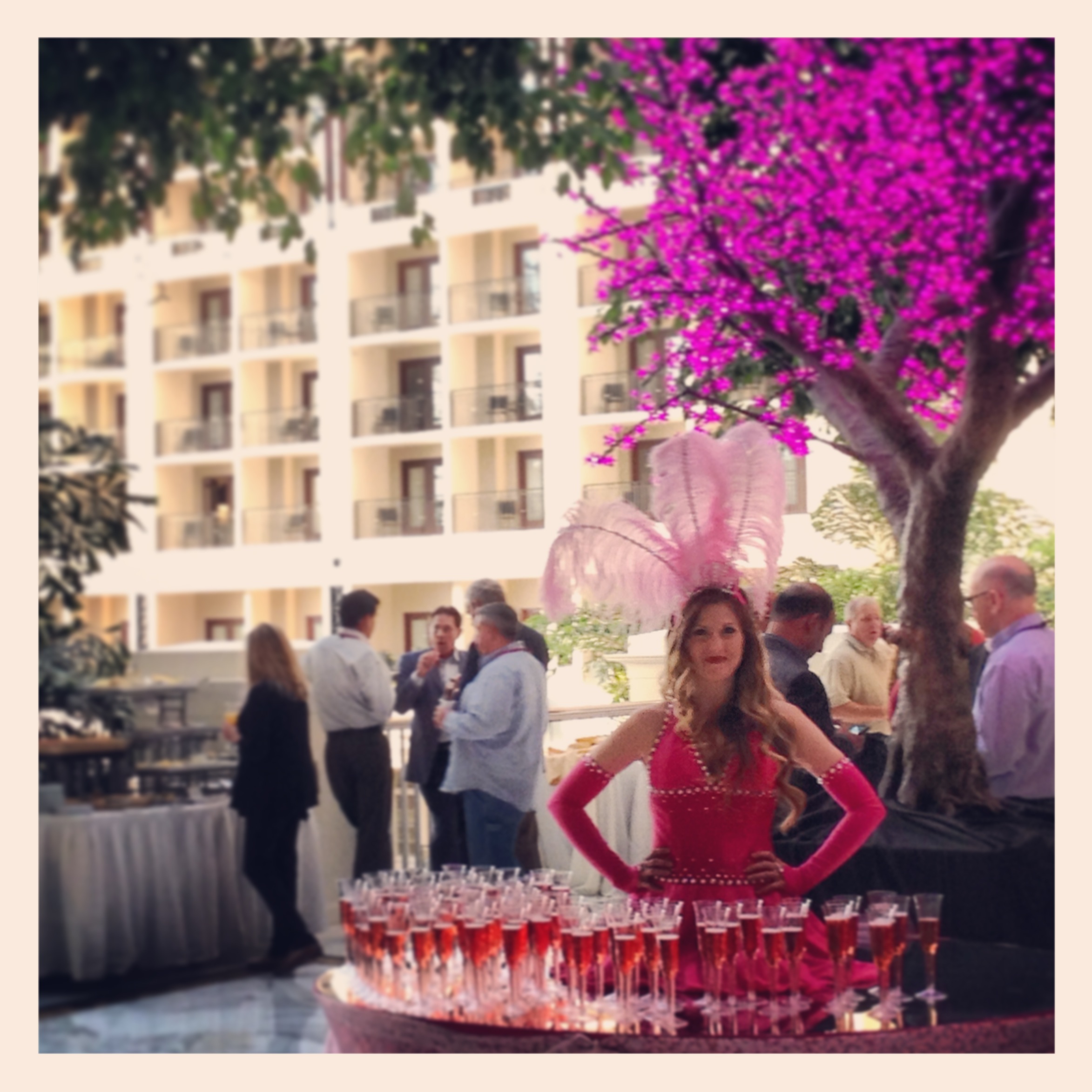
Bubbly and fun, this lovely girl was serving a Pink Prosecco Party Punch. She was working an event I attended this past weekend in DC. While it wasn’t specifically a wine event, there was always a glass of fermented fun nearby. Which is good, since it usually helps to loosen the tie of even the stuffiest stuffed shirt.

Prosecco is a sparkling wine from, most notably,  the region of Veneto in North Eastern Italy.  Pink Prosecco is just what it sounds like. What makes it pink? Skin contact with the Pinot Nero (Noir) grape.  According to WineSearcher.com the varietal blend is: 85% Prosecco (Glera) ~ the 15% remaining may include: Bianchetta Trevigana, Perera, Chardonnay, Pinot Grigio, and Pinot Noir (if you want it pink). Some notable brands worth sampling: Ruffino ($12), Canella ($17), Bisol Bel Star ($20). For mixing in punch, you might want to stick with the lower priced offerings. If you’re going to spend $20 on a bottle, it’s best to keep it the star of the show.

I find that sparklers like Prosecco go right to my head, so my rule of thumb is: One glass to feel dreamy ~ two or more and it’s lights out. But when combined with one of the first warm evenings of spring, it prompted me to start thinking, and anticipating, a great season ~ alfresco and under the stars.

Cheers!

©TheWineStudent, 2013

Peggy, Joan and Betty: My Top Three Mad Wine Cocktails

The Ladies: Peggy (L), Joan (C) and Betty (R)

The Ladies: Peggy (L), Joan (C) and Betty (R)

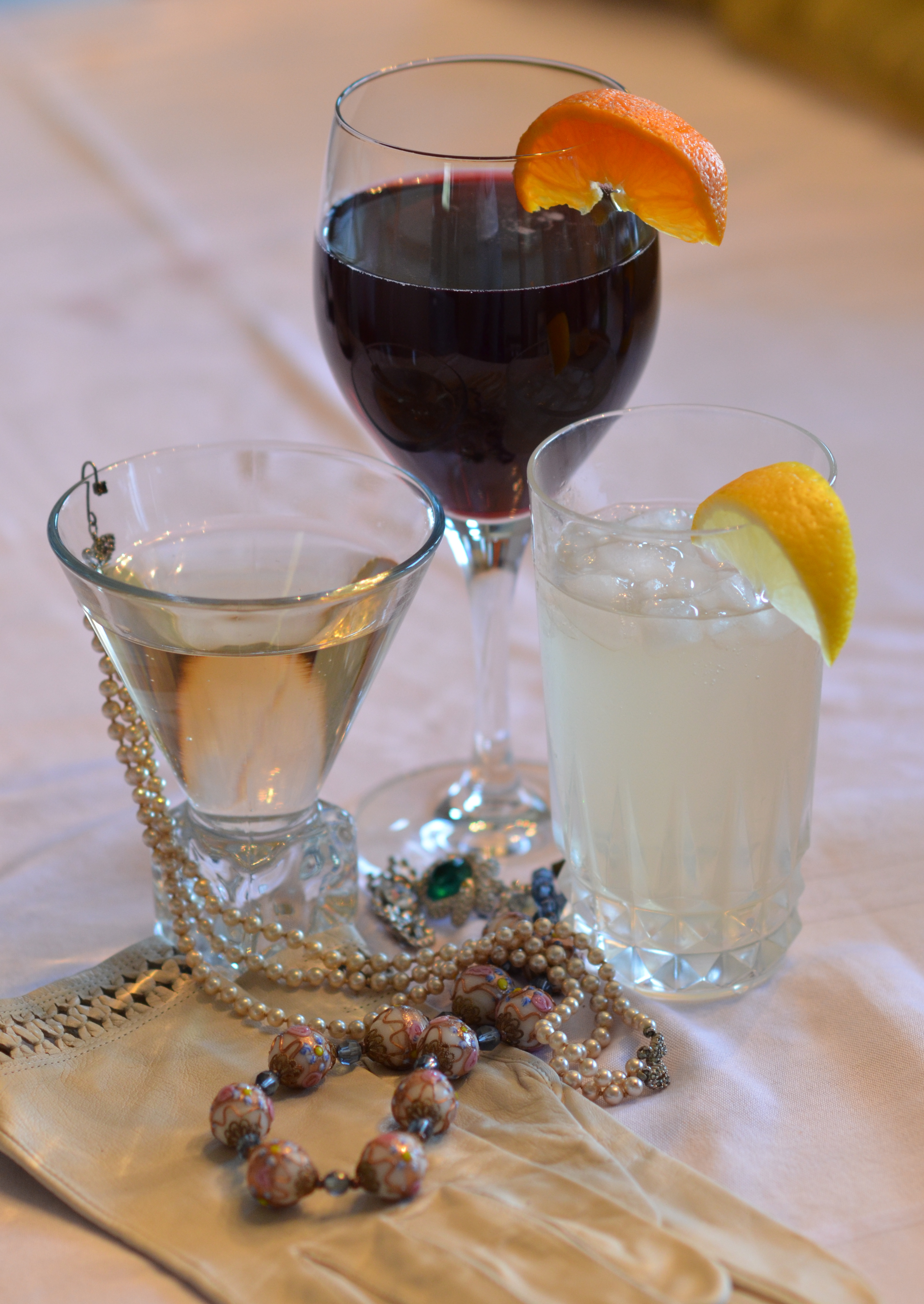
It’s no secret that I love AMC’s Mad Men. In the spirit of its Season 6 premier tonight, I found some wine-based cocktails that made me think of my three favorite lady characters: Peggy, Joan and Betty.

The Peggy (Operator)

2oz chilled dry white wine

2oz dry ginger ale

1 tsp lime juice

Pour over some cracked ice in an old fashioned glass. Garnish with a slice of lime and a generous dollop of sarcasm.

The Joan (Cabernet Cobbler)

4oz chilled Cabernet Sauvignon

1tsp fresh lemon juice

1tsp superfine sugar

2oz soda water

Dissolve sugar in lemon juice and water in a big, beautiful wine glass. Pour in Cabernet, stir gently and garnish with a slice of orange and a knowing wink.

The Betty (Diamond Fizz)

2oz Gin

juice of 1/2 lemon

1tsp powdered sugar

chilled Champagne

Shake gin, lemon juice sugar and ice, then strain into a high ball glass and fill with chilled Champagne. Garnish with an icy stare and a touch of resentment.

After some of the shocks of last season, I’m honestly not sure where this season will take us. But if memory serves, the Mad Men way of dealing life’s challenges is to remain calm, fasten your seat belt and smooth the rough edges with a great cocktail.

Cheers!

©TheWineStudent, 2013

Field Trip ~ Colaneri Estate Winery, Niagara.on.the.Lake ON

@ Colaneri Estate Winery

@ Colaneri Estate Winery

One of the things I love about going home to Niagara for the holidays; apart from seeing family and friends, is picking a new winery to try. Since I left almost 5 years ago, there has been an explosion of great wineries with something to please every palate.

When HubbyDoug and I were walking the main street we slipped into a little bar for a glass to take away the chill. We were treated to a Colaneri Estate Winery ’09 Cabernet Corposo. I noticed a distinctive richness and old world vibe from the very first sip. To be honest, my experience with many Niagara reds has been somewhat disappointing. They have a tendency towards a lightness and a green, vegetal quality that I don’t always care for. While they eventually settle into a pleasant flavor, it’s generally when you get to the bottom of the glass. I like a red to look me in the eye as it gently takes me by the collar and eases me back into my chair. This wine winked as it looked me in the eye.

I had to find out what made it so unique. A trip to the winery became my top priority.

Colaneri wines are made using an appassimento process that dates back to ancient Roman times. Harvested grapes are hung to dry before winemaking, to remove any excess water, thus shriveling the grapes. And why would you want this kind of shrinkage? All the better to concentrate the sugars and flavors in the resulting wine.

  • Recioto ~ also an ancient style of winemaking and also incorpporating the drying of grapes to concentrate the sugar content. Recioto may be red or white, dry or sweet. The dryer wines in this style are Amarone which can be intense at 16% alcohol.
  • Ripasso is a style that means to revisit or go over. It involves a double fermentation process in which additional dried grape skins are added. The sugar content has been heightened by drying and this increases the final alcohol and phenolic content in the wine which is known as passito.

Our winery guide, Pam, explained that Colaneri was one of only three Niagara region wineries to use this process. Their wines are kiln-dried, using both greenhouses with industrial fans and tobacco kilns. ”Since the kilns were no longer being used to dry tobacco, they have been put to use in winemaking”, she said. In the tobacco kilns, the fans push air up through the floor; where the greenhouse fans circulate the air around the fruit. The drying process can take up to two months with skin contact completed within 7-10 days.

After harvest, the grapes for Amarone and Recioto are set aside to dry in trays in kilns, or are hung in lofts ~ the hanging and careful placement in trays allows for complete air circulation so no mold develops. There they stay for approximately four months after which the semidried grapes are crushed and fermented with the grape skins. The grapes not used for Amarone or Recioto are crushed and fermented to be used later.

Once prolonged skin contact has finished, the wine is stored for aging. The additional wine (that had been fermented seperately) is introduced by being pumped over the Amarone | Recioto skins, thus starting the second fermentation. The saturated skins are still quite full of unfermented sugars, making them high in aromatics and tannins.

It was time to began our tasting with a spectrum of lighter fare: Pinot Grigio, Sauvignon Blanc, Gewurtztraminer, Chenin Blanc. The Chenin Blanc was my favorite; it had a taste of pear, pineapple and cotton candy (yum) with lots of citrus on the nose. Pam then took us into the reds starting the Red Blend ~ a combination of Cab Sav, Syrah, Merlot, Cab Franc and Petit Verdot. She mentioned that it was their everyday wine that pairs well with everything from pizza to red meats to chocolate.

We then turned our attention to the Cabernet that we had enjoyed the day before. The scent of rich molasses was prominent on the nose with sweet tobacco, blackberry and raspberry resonating on the palate. Awesome.

The Cabernet Franc was rich and flavorful, with an distinct essence of plum. Pam mentioned that some who tried it but don’t enjoy prunes/plums weren’t always fans. She recommended pairing with tomato-y dishes to counterbalance the prune essence.

We spend a good part of the afternoon sipping and learning a lot about some very special wines. Pam was friendly, knowledgeable and made the field trip to Colaneri so much fun.

I came away from the trip feeling happy to have discovered a jewel of a Niagara wine. I’ll make a point to look for more wines created using this time-honored method.

Cheers!

©TheWineStudent, 2013