The weather had been so grey and damp lately, I’m feeling it in my bones. Because the chill is going so deep, I wanted to find a wine that could warm me to my toes.
The 2021 Unshackled Cabernet Sauvignon was a luscious choice. With its deep pomegranate color, dark chocolate essence on the nose, and creamy mouthfeel, this wine helped me to break free from the cold. At least for a little while.
Soft tannins joined with flavors of black currant and blueberry, much like a dark fruit compote. Warming hints of clove lead my palate to a cozy, buttery smooth finish. Toasty!
“I don’t mind being locked in here, but at least leave me a corkscrew.”
– Natalie MacLean
In her book, Red, White and Drunk All Over, Canadian wine writer Natalie MacLean was referencing Edgar Allan Poe’s short story, The Cask of Amontillado. Essentially, it’s about a guy who gets fed up with a rival always insulting him so he creates a ruse to trap him, literally, in a catacombs cellar in search of a good glass of wine. I can see why the rival might fall for it. But this is a cautionary tale: never go on a drunken hunt for wine, especially if it leads you to a dank, musty, skull-filled cellar, lest you be shackled and bricked into a room. You’ll need more than a corkscrew, my friend.
And so, with the midnight hour close at hand, join me, as we descend into… the catacombs.
I know I left a great vintage down there, somewhere.
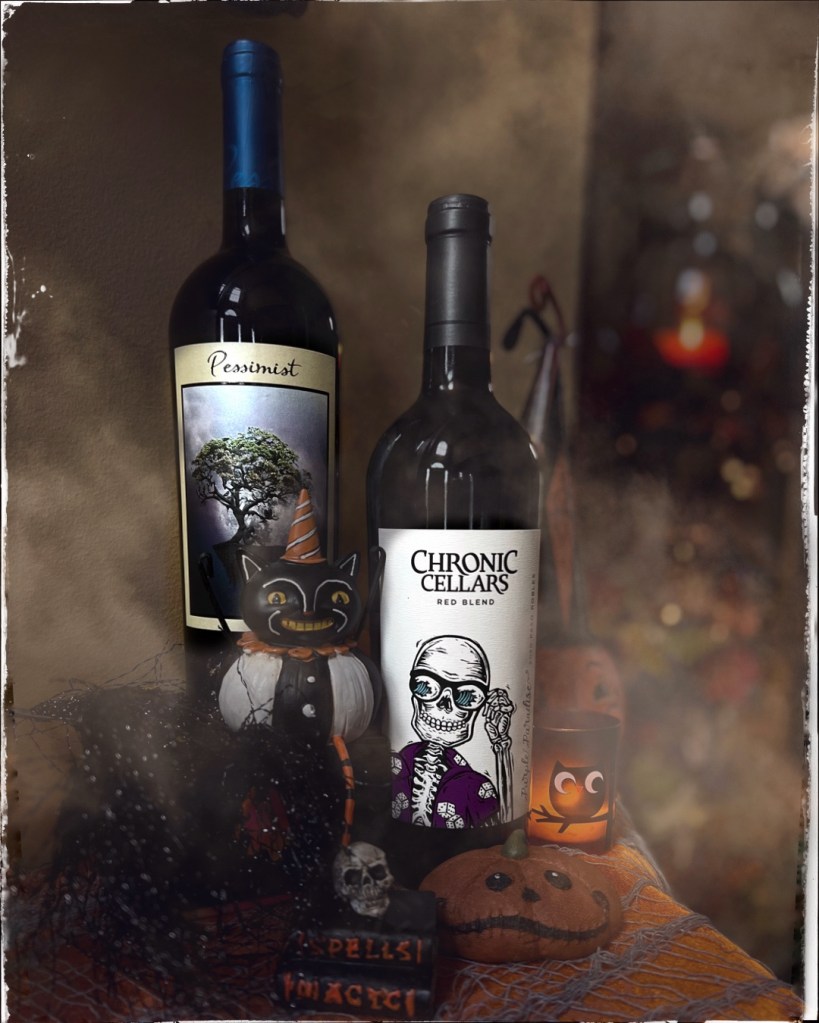
Judging by most of Poe’s writings, he seemed to be an eternal pessimist so this is choice is apropos.
A haunting blend of 62% Petit Sirah, 18% Zinfandel, 17% Syrah and 3% Lagrien.
🍇Tasting notes – Hints of black cherry on the nose, deep blood red in color, it tasted of ripe, smoldering fruit compote – rich blueberry, dark raspberry and blackberry. Whispers of spice lingered like an apparition, then evaporated on the finish. When paired with a creamy Brie, the fruity, jammy vibe was coaxed out. With cheddar, the jammyness gave way to a more subdued vibe. It had a rich mouthfeel with substantial legs. 15.2% alc.
Simple, tasty and bewitching, and, though similar, this blend turns the tables on the Pessimist with 70% Zinfandel, 16% Petit Sirah, 10% Syrah and 4% Grenache.
🍇Tasting Notes: Rich, creamy flavors of mocha chocolate, stewed blueberry and raspberry, with hushed whispers of leather, and smoked dark cocoa on the nose. Paired with a simple dish of pasta, olive oil, fresh parmesan and basil, the flavors settled in to a more savory, less fruit forward vibe. The color was deep purple burgundy, and mouthfeel wasn’t quite as full as the Pessimist – it had skeleton legs on the glass. 14.8% alc
$16.99💰
It’s interesting that these two wines, both Paso Robles, both similar in character and flavors, can have subtle, tasty differences.
Both wines had such beautiful, deep purply-red color that I know my teeth are purple.
So…
What is the difference between Petit Sirah and Syrah? According to Wine Spectator’s Dr. Vinny, Petit Sirah and Syrah (Shiraz) are two different types of grapes. Petit grapes are smaller in size than Syrah, and have a more dense skin-to-pulp ratio. This makes their color dark like ink, rich in flavor, and more tannic than Syrah. Small is mighty.
In this haunting season, please tread carefully. Beware the late night drunken scavenger hunt for the elusive vintage. And if anyone mentions a cask of Amontillado, run!
What was the coolest field trip you ever went on in school?
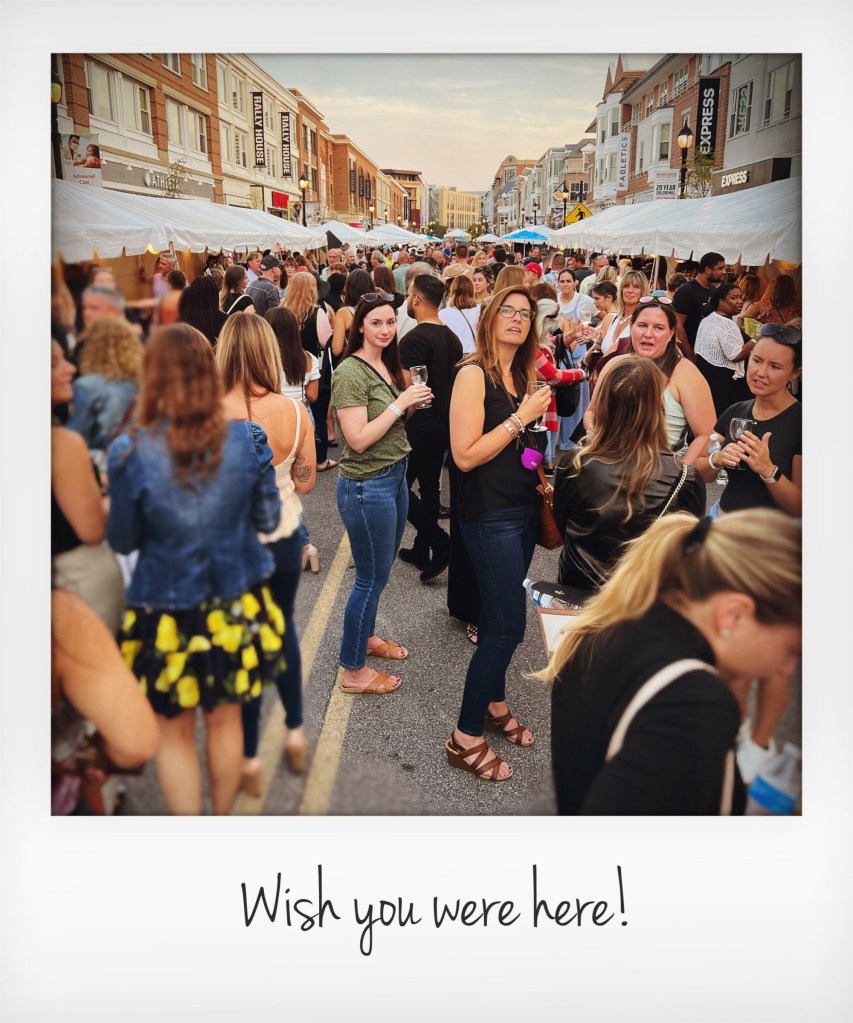
For a wine student like me, this is pretty much the Holy Grail. Where else can you learn about wine, meet people who love it, & sample the product, too?So much fun!
It was a beautifully dry, lush blend of Chardonnay and Pinot Noir giving it a nice, subtle complexity. This would be lovely for a Sunday brunch. But honestly, all of them would!☺️
Click the video below to join me at the festival!
Lots of great sampling to be had and the proceeds go to help many wonderful children!🌈
The Crocker Park Wine Festival continues Sept 17th from 2pm until 10pm.
Dig if you will the picture: you’re in a great restaurant, your sommelier has just opened a wonderful bottle of wine at your table. They pour a bit in your glass. You swirl, then you sniff, then you sip. You nod to the somm that all is well, and the remaining glasses are poured. Easy, right?
But what happens if you get a wine that smells (or tastes) awful? The immediate impulse (aside from spitting it all over the tablecloth) is to just grin and bear it, and pretend that it’s delightful. Don’t make waves, and don’t seem like a wine snob. Wait. You’re paying for that bottle; it should be delightful.
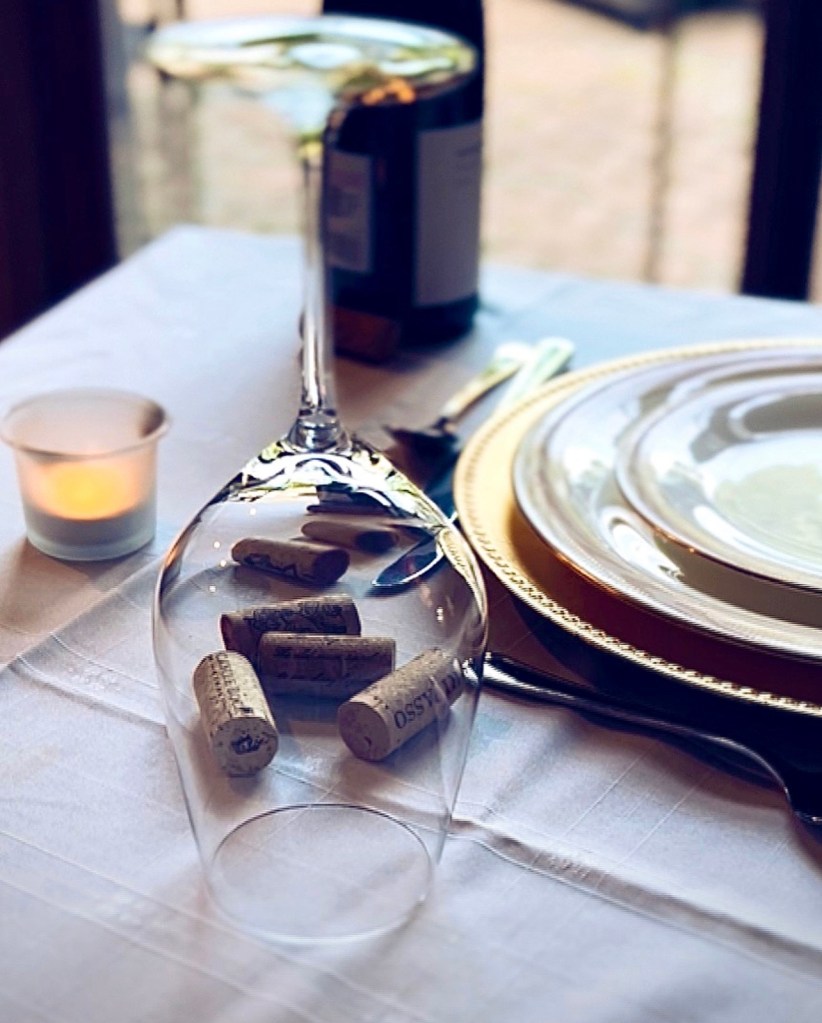
How can you detect the fault in our wine? Start with your nose. Especially with things like cork taint, the nose always knows. Think back to the restaurant example, and the swirl, sniff, sip. This isn’t just fluffy posturing, there is a point to it. If the wine is corked, it’ll smell like wet newspapers, musty cardboard or, yep, a wet dog. We love Fido, but not in our wine.
What to do at a restaurant if you’ve noticed cork taint or another fault? With kindness, send it back. Yes. Send. It. Back. This is precisely why they have you sample the wine before pouring for the rest of the table. Be polite but don’t be shy. Most restaurants want to know if they have a bad bottle. It might not be an isolated situation; the entire case or shipment may be off. You’re paying a lot of money to not drink bad wine.
Please remember to be kind to your server or somm. Any fault isn’t their fault. They are there to help you.♥️
Now, if you’ve opened your wine at home and it’s corked, don’t dump it! Pour the remaining wine back into the bottle and take it back to your place of purchase. Most wine sellers will happily take it back or will offer an exchange. In fact, it’s good to let them know so they can notify their distributor or the winery. Companies need to know if they have a bad batch floating around; their reputation’s on the line.
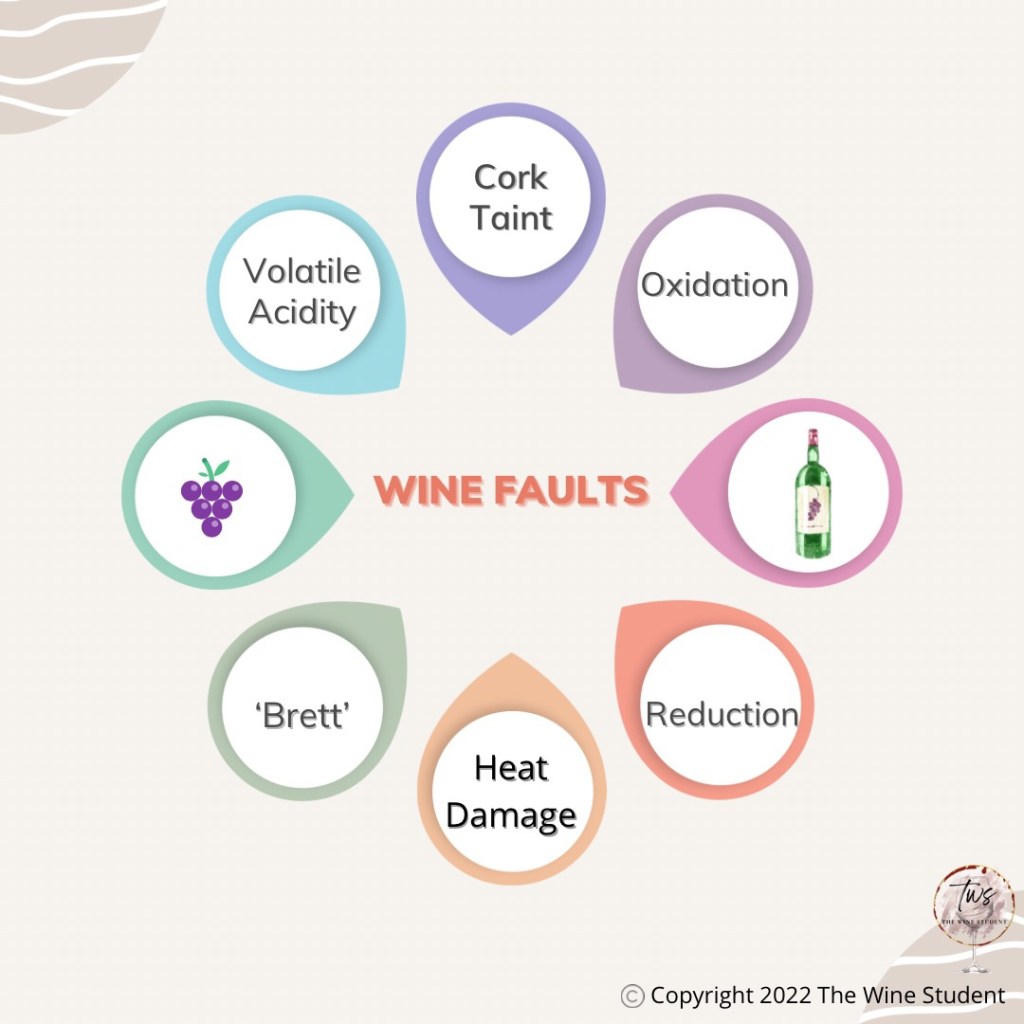
Some Causes of Faulty Wine:
Cork Taint ~
• Infected cork – caused by chlorine (TCA-Trichloranisole) coming in contact with corks
• TCA compounds may also be present in wood/rubber in the winery (barrels, beams, rubber transfer tubing, etc) – this is why even some screw cap wines can become corked
Also: corkin your wine doesn’t mean your wine is corked. A crumbly cork doesn’t always mean the integrity of the wine is compromised. But be safe and taste the wine before you serve it!
Remedy: to get rid of floating cork bits pour your wine through a fine mesh strainer or coffee filter
Oxidation ~
• Wine (red or white) has a brownish tinge
• Not always bad – sometimes oxidation can be a winemaking choice
• It can be prominent (in a good way) in Sherries or Tawny Port
• Oxidation can happen over time to all wine, white or red, and happens when storage allows too much oxygen into the bottle (e.g. storing bottles upright instead of sideways)
• If you find this in young, light wines, like Pinot Grigio, Pinot Noir, Sauv Blanc, it’s a fault
• Smells like: sharp scents of bruised apples, linseed oil, a nutty or caramel vibe (which is not always a bad thing)
• Ask whether the wine is meant to be oxidized before sending it back⚠️
Brettanomyces ~
• Not technically bad, Brett is a wild yeast that ferments along with wine yeast
• Earthy, rustic aromas permeate the wine which many enjoy, and can be a winemaking choice
• Smells like: bandage (medicinal), sweaty leather or a barnyard ~ and if that’s your thing, it’s not a fault!
Reduction ~
• Occurs when wine doesn’t get enough oxygen during winemaking – balance is everything
• Remedy: Decanting the wine can help (by providing needed oxygen) or stirring your wine with a silver spoon. If it doesn’t help, kindly send it back
Volatile Acidity (VA) ~
• In small amounts, VA can contribute to the complexity of wine, giving it depth, though many people can be very sensitive to this, making it unpleasant to drink
• In larger amounts, it becomes a nice mix for salad dressing
• Having some VA doesn’t make it necessarily a fault, but if it’s not for you, see if you can exchange it for something different
Smells like: nail polish remover, sharp vinegar
Heat | UV Damage ~
• Damage from UV rays doesn’t just happen to skin, it is a serious issue for wine as well.
• Light + heat increase chemical reactions that cause premature aging of wine and heat can cause the bottle to expand a bit, loosening the seal, and letting air in
• ‘Light strike’ happens when wine is exposed to direct light – e.g. if the wine is left in a sunny window
• Wine can also suffer damage when left in a too hot car (even for an hour) or stored in a room that has wide temperature fluctuations or is too hot.
• Many hot climate wineries will not ship their wines in peak heat seasons to avoid heat damage in shipping.
• Sparkling and white, and older wines are the most vulnerable.
• Smells like: not much on the nose, and it tastes ‘cooked’
• Remedy: don’t leave your wine in a hot car or store in sunny window!🥵
Now that you know what to look for, hopefully you feel a little more confident in deciding if your wine should be enjoyed or sent back.
The more you sniff (and taste) the better you’ll get at detecting the faults in your wine.
“The Ladybug wears no disguises. She is just what she advertises. A speckled spectacle of spring, A fashion statement on the wing…. A miniature orange kite. A tiny dot-to-dot delight.”- J. Patrick Lewis
During the busy days of summer, it’s easy to forget the little things; a warm evening breeze, toes in the sand, glass of wine in your hand. If the past two years have taught us nothing else, it’s the simple pleasures that we need to pay attention to. Little things sometimes have the biggest impact.
Farmers and gardeners love the lady bug. According to ThoughtCo.com, the lady bug (beetle) are beneficial predators who munch on many pests of the garden such as scale insects, whiteflies, mites and especially, aphids. Over the course of a day, a lady bug can scarf down 50 aphids, over a lifetime (about a year), they can consume over 5,000. They really are the ladies who lunch.
Too much of a good thing, though, can become a challenge for growers; an overpopulation can mean that many bugs can snuggle up in the fruit. And this can subsequently taint the wine if they’re not sorted out at pressing.
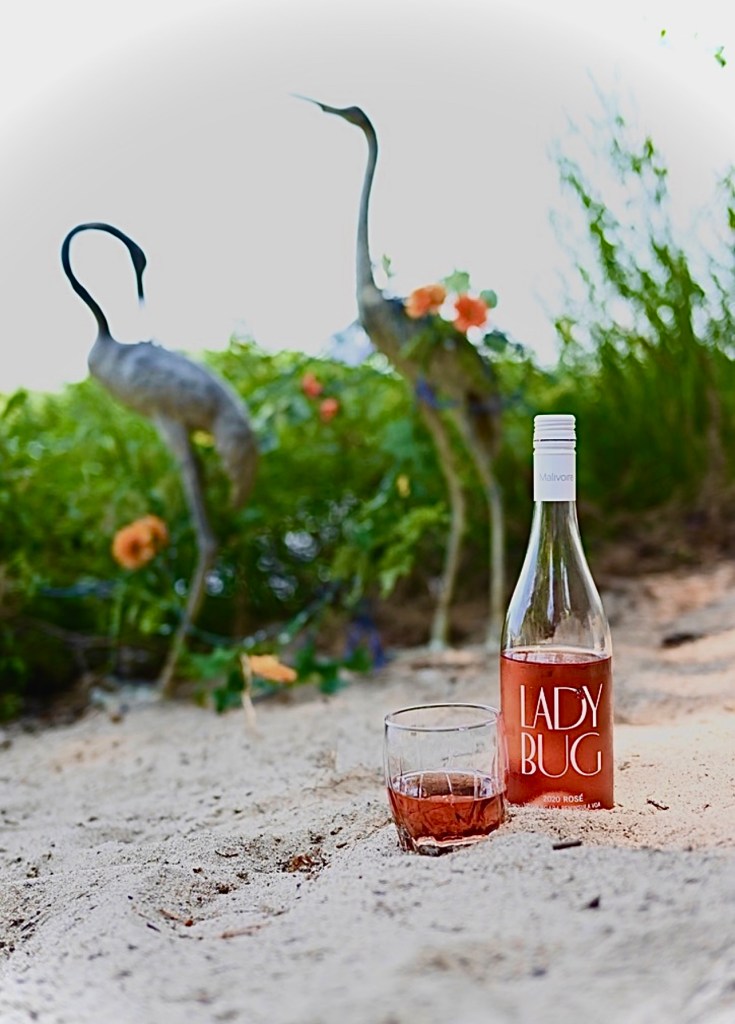
Searching for a nice light wine to pair with my evening chicken stir fry, I discovered this little but mighty gem: 2020 Malivoire Lady Bug. Located in Beamsville, ON, Malivoire is aCertifiedSustainable winery. Made from a blend of 56% Cabernet Franc, 36% Gamay, 8% Pinot Noir, and cultivated especially for this wine, the grapes are harvested when sugars are at 19.5 Brix. The crushed grapes then soak in free-run juice ( juice that runs freely out of the tank by gravity) between two and twelve hours before press. After cold-fermentation and stabilization, the wine is transferred to stainless steel tanks to rest before bottling.
This lady bug had a surprising complexity, revealing different layers of flavor with each sip. Many single varietal roses are good but one-dimensional.
Check out the video below for more summer fun!🏖
Some tasting notes for ya!
• bright berry on the nose – flavors of red raspberry, strawberry,
• cherry, pomegranate – nice burst of tart flavor that sparkled down into a tangy tart that lingered on the finish.
• bouncy mouthfeel makes it great to sip on its own yet it paired beautifully with a gently spiced chicken stir fry with jasmine rice.
A long time ago, when I worked as a bartender, I once served a wine that was orange.
It was not a design choice. It was just bad.
So when I saw that orange wine has been making a big splash, I was a little skeptical. Fool me once…
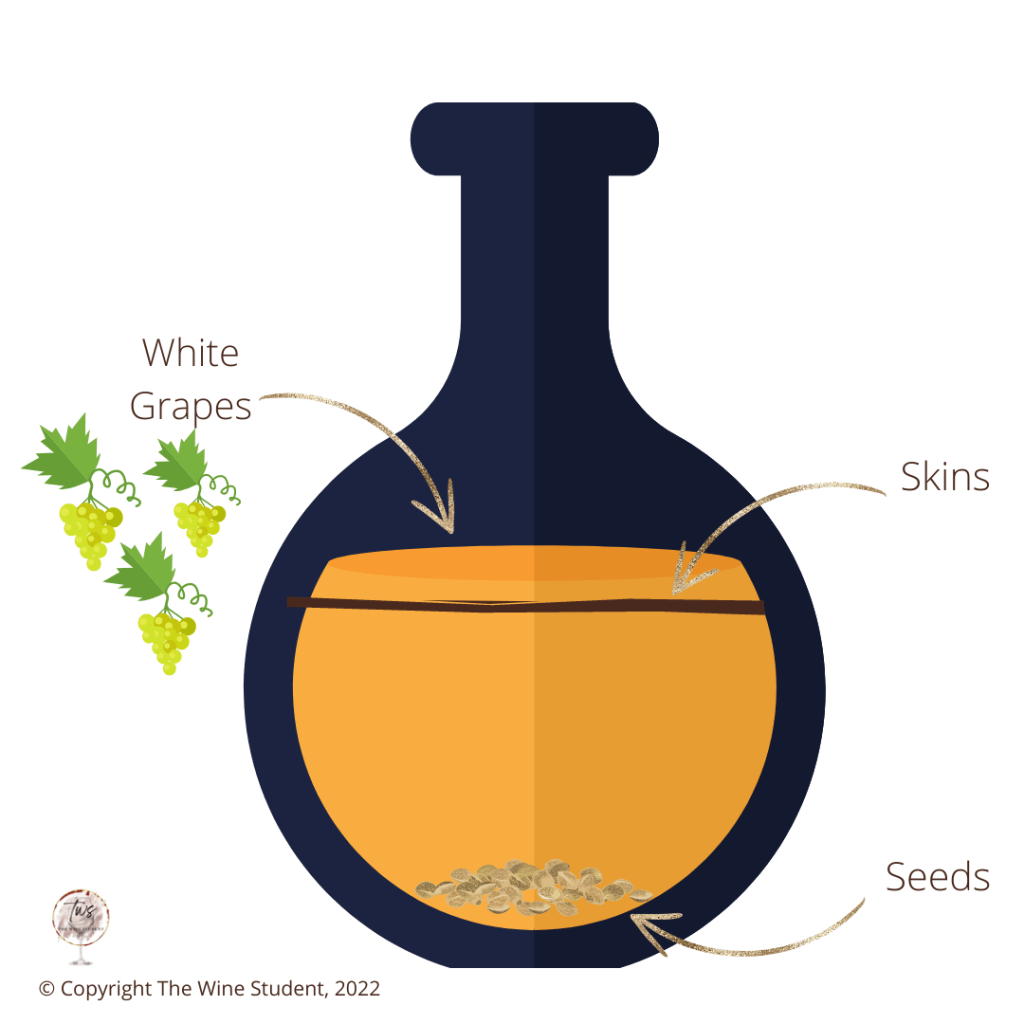
Orange wine is not made from oranges. It’s also not a rosé. It’s actually a natural white wine that gets its colour and flavor from keeping the white grape skins and seeds in contact with the juice for between 4-30 days. The orange colour comes, in part, from the lignin in grape seeds. The longer the contact, the deeper the colour. Most white wines have little to no skin contact.
In most wine production, seeds get discarded prior to any processing of the juice and fermentation. That’s because seed contact can make wine taste bitter. So how do orange wines stack up? Do they taste sour or bitter? It depends. While technically a white wine, orange wines are very dry and tannic, much like a bold red wine. Flavors are bold and brassy with aromas of honeyed jack fruit, sourdough, juniper (like gin), brazil nut, apricot, orange blossom, and bruised apple. They can be very intense on the palate with a sour vibe much like a fruit based beer.
What is jack fruit? I don’t know jack $&@! about jack fruit so I did a little research. When ripe, jack fruit has a strong aroma and tastes like tropical fruit: mango and pineapple, and banana.
Orange wine is not a new ‘oops’. It is an ancient process dating back roughly 5000 years. All elements were left to ferment for time in large buried clay vessels called quevri (kev-ree).
Check out the video below for a little summer fun!
Pairing:
Bold for bold, orange wines pair well with bold foods like curry and Moroccan dishes, Korean and traditional Japanese cuisine. Because of the high tannin, and hint of almond-like nuttiness, it can pair with beef and fish. This is something you can play around with to find your favorite.
It’s a white wine that thinks it’s a red so the pairings could be really colourful. But be careful of the spice quotient: it will bring out the heat in some dishes.🌶🌶🌶
If you’re looking for ‘grippier’ offerings with increased tannin, look for 30+ days of skin contact; fresher, lighter versions have maybe 4-10 days. Because they’re natural with little to no preservatives, drink within 2-3 days after opening. Store in cool, dark areas (between 50-60F). Serve chilled, at around 55-65F. If it’s too cold, you’ll lose the nuance of the flavors.
Look for wines from Italy, Solvenia, Australia, France, South Africa, Austria, and the US.
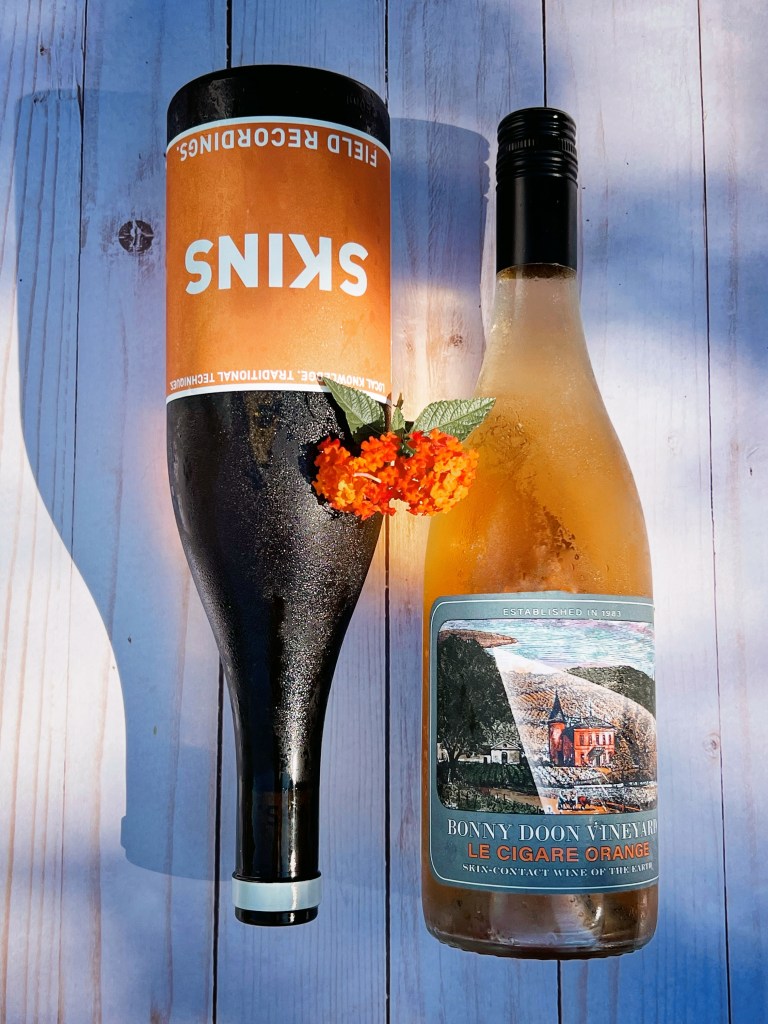
I recently tasted a 2021 Bonny Doon Vineyards Le Cigare Orange (California). It is the ‘skin-contact wine of the earth’ (says so right on the bottle) and is made from 10% Grenache, 80% Grenache Blanc and 10% Orange Muscat. It had a hint of orange blossom on the nose, and a sour, almond vibe on the palate with a dry, puckery, yet bouncy mouthfeel. Flavors of white peach, early-ripe apricot and citrus lingered on the finish.
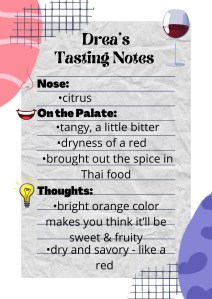
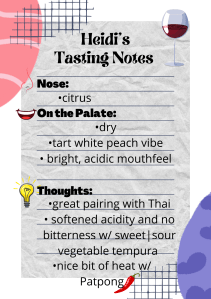
I chose the Field Recordings Skins to share and here’s what we thought:
(Pairing with Thai food)
These orange wines restored my faith that not all orange wine is wine gone bad. And they can be very different than what you might be expecting. But isn’t that half the fun about summer wines ~ trying something new, refreshing and just a little bit different?
• 2 1/2 oz Kinky Pink Liqueur – I used Mango, Passion Fruit + Blood Orange (chilled)
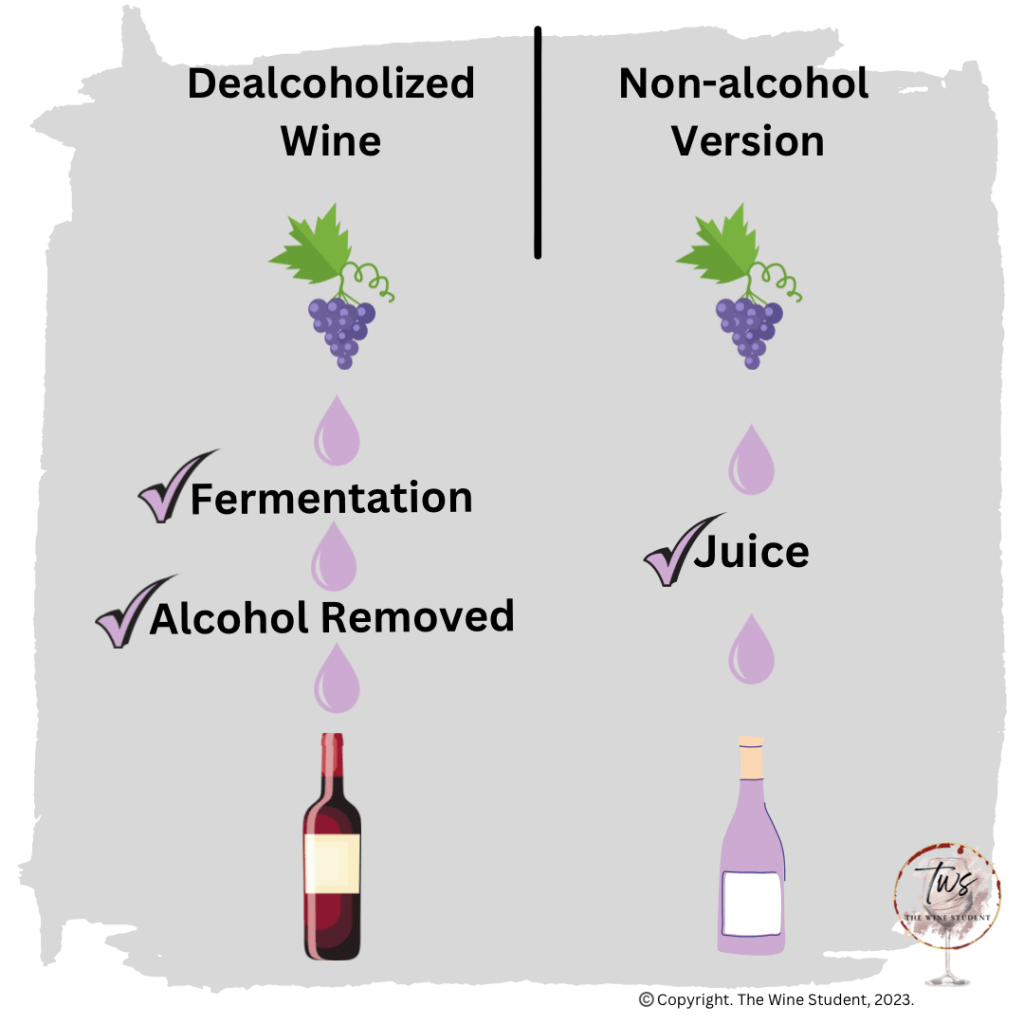
• Prosecco or Sparkling Wine (or no-alcohol sparkler)
• Fresh raspberries
• Lemon twist for garnish
Directions:
Pour tbsp Mathilde Cassis liqueur into a champagne flute (or pretty glass – Mom always deserves a pretty glass). Add Kinky Pink liqueur. Fill rest of glass with your choice of ice cold Prosecco, sparkling wine or favorite no-alcohol option.
Garnish with raspberries and twist of lemon. 🍋
Enjoy!
To all the hard working moms out there, take a some time just for you, and have a very happy Mother’s Day!💖
You’re opening your favorite bottle of wine, you take the sharp cutter blade and begin to cut, scrape or pull the foil capsule off the bottle. Where does it go next? Probably into the trash. Hey, we all do this; I’m guilty as well. And it’s just a little bit of foil, no big. But when you consider that the US alone generates approximately 286 tons of waste per year, much of which ends up in landfill, a little foil can become a big problem.
Click the video below for more info!👇
In days of old, foil capsules were placed on corks because they prevented rodents and cork weevils from getting into the bottle.
Historically, these foils were made from lead, which we now know is poisonous. Lead was phased out by law in many countries beginning in the late 1970’s.
Capsules are now made from polyethylene or aluminum, which can be recycled, but more often than not, ends up in landfill.
Another issue with capsules is that they obscure the cork and fill level in the bottle. This is important – if the fill is not close to the cork, the wine may become oxidized. Which means not-so-great wine for you.
Additionally, there’s a great expense to the winemaker by using capsules, costing approximately $25,000 per year.
Now, there’s a growing movement to eliminate capsulesaltogether. With advances in quality control and cellar management, weevils and rodents aren’t the problem they once were. And with screw caps, there’s no issue at all.
Screw caps have steadily become the preferred choice for bottle closure, with many benefits. According to George Zaboura ofRoyal Park Fine Wines, “screw cap closures are better for the wine. There’s less chance of air getting into the bottle and less chance of the wine being tainted.”
And since they’re made from aluminum, you can recycle your screw caps!
An easy way is to put them back on the empty bottle and place in the recycle bin. You can also collect them in a large can, and once filled, crimp the top and place with your recyclables. This keeps the caps from flying about.
There is still much love, however, for the cork. Cork has, historically, been the preferred wine closure for generations, steeped in tradition. Made from the bark of the cork oak treewhich is grown primarily in Northeast Africa, Portugal, Spain, France, Morocco and Tunisia; one tree’s bark can provide enough cork for hundreds of bottles. The tree remains unharmed during the harvest – the bark is scraped off the surface.The material is a renewable, sustainable and biodegradable which makes it an environmentally friendly bottle closure. Natural corks can be recycled. Find out how to recycle yours here!
Additionally, microscopic pores allow minute amounts of air to contact the wine which is key for proper aging, something the screw cap is lacking. With many reds, some of them investments, sometimes that microscopic bit of air can be the difference between a spectacular sip, and one that’s pretty good.
And where would we be without the ceremony and tradition? Popping a cork is much more romantic and satisfying than twisting off a cap.
You may occasionally notice some bottles are dipped in a wax. This is another way to seal the wine without the capsule but it’s very time consuming and costly for the winemaker. That’s why you’ll probably only see the wax seal on very select, more expensive wines. When I was out looking for wines, I found only three vintages (out of the entire wine shop) that had a wax seal.
Cork has its share of drawbacks – the quality can be variable, the material can be fragile and the cost is up to three times more than a screw caps. As well, there is the issue of cork taint – which can make your wine taste like wet newspaper. No one wants their wine to taste like wet newspaper. That’s nasty!
As with any debate about the environment, there are many points of view. So the choice is yours. With more of a push towards sustainability, reducing waste and recycling, there can be many ways to love our wine and help make a healthier planet. 🌎🌱💚
If you live where there is a regular accumulation of snow, then this winter has been a long one. And if you’ve been a little reluctant to go out right now, and just finished bingeing SuperPumped, The Dropout, or S2 of Bridgerton, here’s a way to unplug, and decompress. And apart from just drinking wine, which is always nice, reading about it can be just as interesting (without the buzz).
Below are two books that helped me get through many a long winter’s journey into night.
Packed with lots of info, and so well-written, they’re like taking a comprehensive, self-directed wine course without the hefty fee and stress-inducing exam at the end.
Check out the video below for a little taste of what you’ll find!
From the #1 ranked wine education site winefolly.com, Wine Folly: Magnum Edition is a culmination of many viewpoints: from wine writers and educators, to wine professionals and scientists.
Madeline Puckette is a wine sommelier, writer and visual designer. Justin Hammack is an entrepreneur, digital strategist and web developer.
This book takes you on a journey through the basics and beyond; how wine is made, facts about drinking wine (and how to avoid that pesky headache), a funny section on wine etiquette, and how to smell wine (to actually detect faults, not just to look fancy). It lays everything out with super cool graphics, and easy to digest descriptions that make learning easy if you’re new to wine, and a great review if you’re an old pro.
Sohm was named 2008 Best Sommelier in the World by the Worldwide Sommelier Association and namesake of the Aldo Sohm Wine Barin New York City. Christine Muhlke is former food editor of the New York Times Magazine, and contributing editor at Bon Appêtit magazine.
Wine Simple also has great depth of information, fun graphics, and cool side bars. An added feature: the main points of each section are highlighted for you, saving you time (and highlighter).
Check out the ‘Wine With Bad Raps” section for a good rundown on pre-conceived wine reputations that might make you go “hmmmm…”. It may have you completely reconsidering your next wine purchase.
There’s also an honest view about boxed, bagged and canned wines (spoiler: they’re not all that bad).
Both books examine wine regions, flavor profiles, practical magic of storing and serving, and much more.
Each have excellent chapters about food and wine pairing, which can be daunting at the best of times. And each have fun graphics, charts and practical info about cooking with wine. Wine Folly has a little pairing exercise that involves potato chips, cheese, honey and a pickle. I am SO going to try this in an upcoming post!
Both books are excellent and make learning accessible, enjoyable, and will have you understanding, pairing and enjoying wine like a pro in no time!
If you read either (or both) let me know what you think in the comments! 👇
With this February being what it is, we probably want to be cozying up under a soft, warm blanket, with a fire or candle glowing and enjoying a glass or two of something nice.
The pickings this year were a little slim in terms of wines marketed specifically to Valentine’s Day. This could be due to the current and pervasive supply chain issues. Whatever the reason, I managed to find a couple that looked fun and holiday ready.
Check out the video I made for a little more info on these fun wines!❣️
Made in the Douro region of Portugal, this is a luscious red blend from Portugal comprised of 35% Touriga Nacional, 35% Touriga Franca, and 30% Tinta Roriz grapes. Hand-picked and quietly left to mature for two years in stainless steel tanks, it is deep in color with an intense dark berry, blueberry vibe with both leathery and hint ‘o’ mint qualities. Younger wines have more of a violet vibe on the nose and they tend to have a dry and grippy mouthfeel due to bolder tannins.
The Douro region has a drier climate, with very warm summers. Because of an unusually dry, warm summer in 2017, harvest was a little early; mid – August, when the fruit was at its peak.
Tasting Notes:
• Deep ruby color – rich and clear – so beautiful in the glass
• Hints of violet (a soft, powdery raspberry vibe on the top) and caramel on the nose
• Dark, rich raspberry and blackberry w/a lush mouthfeel
• Medium tannin and mid-hi alcohol
• Paired beautifully with vegetarian pizza and fresh ripe blackberries
• Decant for at least an hour to open flavors
$19.99
Santero Villa Jolanda I Love You Extra Dry Spumante – This is one of the cutest damn bottles I’ve seen so far. Santero comes up with seasonal cool graphics; Halloween (which always sells out so I can never get my hands on one ), Christmas, and Valentine’s Day.
That’s part of the reason to check it out, and as an affordable sparkler, this is a fun offering. Especially if you’ve spent some of your cash on flowers, chocolate, and dinner, it adds up. Your sparkling wine should never leave you with a negative balance. Some might disagree on that statement. And while it is true, the sky can be the limit on what you can pay for a beautiful sparkling wine, feel free to adjust your Valentine’s budget accordingly.
Tasting Notes:
• Light yellow straw color – lots of pretty bubbles
• Nice acidity, not too sweet
• Flavors of honeydew melon, pear, cream
• Lighter body, refreshing mouthfeel,
• No decanting needed (don’t want to lose those bubbles)
• Serve ice cold
• Pairs: Anything
• $15.99
I hope you all have a happy and safe Valentine’s Day!💝
Please enjoy responsibly, and if you can’t be the with wine you love, love the wine you’re with!🥰