My Wild Irish Wine 🍷🍀🧝🏻‍♀️

With the luck o’ the Irish at yer back, may you find health, happiness and a pot of gold. Okay, that’s not really a blessing but a mashup of a few.

St. Patrick’s Day is a sure sign that spring is on its way. And spring is often viewed as a season of magic and alchemy. Wine is also a blend of magic and alchemy. Especially Irish wine.

Growing conditions in the Emerald Isle can pose many challenges to winemaking. And that’s where the magic comes in.

I first wrote about my quest for the 2015 Lusca Cab/Merlot in 2018 so this is a bit of a fun throwback.

Established in 2002 by fruit alchemist David LLewellyn, Lusca cultivates several varieties of grapes including Cabernet Sauvignon Merlot, Dunkelfelder and Rondo – a grape that can heartily withstand Ireland’s damp, misty weather.

Click the video to learn more about Irish wine and how its made!👇🍀

A few years ago I was determined to find my little pot of gold, and I did. To read more about my search click here. Since then this lucky bottle has remained, relatively undisturbed, in my little cellar wine fridge. I hope it’s been enough to ensure its good condition. All told, it has aged about 9 years. I had many thoughts before opening: has it already peaked? Is it a delightful vinegar? But maybe luck would be on my side.

There was only one way to find out…

Time to release the wine!

To be safe, I decanted for about 2 hours. I wanted to let it open up as fully as possible to make a fair assessment. So how was it?

It didn’t turn to vinegar! I wasn’t as concerned about the wine as my storage. I don’t have a fancy wine cellar, and occasionally had to move the bottle around. I had been worried that after all this time, maybe some oxygen had gotten inside. But I was so happy that all seemed to be well. Magic!

It was a lighter bodied Cab/Merlot. I enjoyed delicate notes of blackberry, dried herbs, and a pleasant, earthy cedar undercurrent. I found myself swirling my glass often to coax out every essence. It had a clear, deep ruby color giving way to a slight brownish rim variation (the outer edge of the wine). This suggests aging of the wine. I didn’t notice any nutty or toffee flavors that indicate an oxidized wine.

As I tasted, I noticed the sun was shining – here in the Cleve we catch it while we can- so I bundled up, sipped my glass outside.

To find out more or to order a bottle visit: The Celtic Whiskey Shop & Wines on the Green. They are super friendly and helpful.

I send you all the blessings to have a safe, fun and magical St. Patrick’s Day! ✨

Sláinte!🍷🍀

Friday Feature: McBride Sisters Wine Company🍷

To celebrate International Women’s Day, I popped open this bottle. I toasted all women with a beautiful glass that filled my senses with the scents and flavors of rich blackberry, black cherry, and a hint of chocolate on the finish. But what really intrigued me was the story and vision of this wine company.

Since 2005, Robin and Andréa McBride have created not only the largest Black-owned wine company in the United States, but one that is inclusive, accessible, socially aware, and sustainable.

As well as producing some pretty incredible wines, their roles as visionaries, innovators, leaders and advocates led to the development of the SHECANWines Fund initiative. It was created to promote the professional advancement of women in the wine industry in an effort to help close the gender and race gap.

To date, the SHE CAN Fund has invested more than $3 million in the professional advancement and career growth of high-potential, professional women, with a specific focus on women of color.

This year’s focus: Women learning and excelling in the business of wine.🎉

This includes:

•Supply Chain

•Sales & Marketing

•Viticulture

•Mass Wine Production

•Winery Operations

•Point of Purchase

•Importing & Exporting

🗓️ Applications open April 3rd! To find out more check out: www.mcbridesistersfund.org/#YESSHECAN

Cheers!🥂

©️Copyright. The Wine Student, 2023.

Boozy Book Review: The Widow Clicquot by Tilar J. Mazzeo🍾🥂

Perseverance, passion and steely determination.

That’s what it means to be a woman in any generation. To honor International Women’s Day, I wanted to explore more about the life of the Widow Clicquot, the most famous of the champagne widows.

A daughter of privilege, Barbe-Nicole Ponsant was expected to live an ornamental existence, yet her life was anything but. Married at age 21 to François Clicquot, then widowed at 27, she continued the wine passion project she and her husband started when they first married. Over time, she immersed herself in the art and science of winemaking, keeping a watch on all aspects from the vineyard to the cellar, to blending and aging the wine, and finally managing the business of champagne both in France and beyond. This was not an easy task in a male dominated industry. She had to work twice as hard to be recognized for her ingenuity and business acumen. Does this sound familiar?

While she did not adore the emperor Napoleon himself, nor many of his policies, under Napoleonic code, widows could assume prominent trade roles within business. Barbe-Nicole was able to use this to her advantage. But the road to prosperity wasn’t as easy as popping a cork. Lean times through the wars created an environment of doubt and anxiety at every turn. International trade embargoes imposed by the British left the first shipments languishing in Amsterdam warehouses, where fluctuating temperatures could ruin the wine. Further restraints against Champagne leveraged by Russia and other countries made international dealings difficult and dangerous.

But she pressed on.

The Year of the Comet Vintage in 1811 proved the stars were aligned to create one the best growing seasons in the Champagne’s history. Conditions were perfect from bud to harvest. Sugar levels that produced both alcohol and bubbles occurred naturally in this vintage. The only thing stopping her was fate. War was raging and threatening to ravage her business.

During this time she bottled her wines, and had the foresight to have the cellar bricked up to seal this vintage from pillagers. This had the added effect of allowing the wine to rest on the lees (the yeast) for longer than usual, creating a spectacularly beautiful, flavorful, and potent sparkler. Her 1811 comet cuvée made her an international celebrity, pushing Moët, who had the largess of the Russian markets, back a few spaces.

Prior to the lifting of international embargoes, she gambled by securing passage of her wines into Russia well before her competitors – a move that could have potentially ruined her, but payed off.

“I didn’t have any hope of doing anything [and] the advance of the Russians over the Rhine was the last straw. And now, out of all the misfortunes came the good business I have had, and I dare to hope for more. We can’t always be unlucky, in my experience. And so, my dear friend: courage, patience, and resignation.”

Barbe-Nicole Clicquot Ponsant

Mazzeo paints a rich, sweeping story from documentation, supposition, and anecdotal reportage. There’s much that she assumes the widow Clicquot must have felt and seen. But this works to create an intriguing tale. This is an engaging and fascinating read about the First Lady of Champagne, and what it means to persevere against all odds.💪🍾

Cheers! 🥂

©️Copyright. The Wine Student. 2023

These Women’s Work🍇🍷

Happy International Women’s Month!🎉

Here’s to all the amazing, strong women in the world: may we know them, may we be them, may we raise them, & may we enjoy their amazing wines! 🥂

I’ve written before about some amazing women winemakers, and a great book that celebrates them.

It’s wonderful to read about their journeys from vine to wine. Each woman has a unique tale to tell. Their stories are not always easy but they’re worth sharing; not just for us but to inspire our daughters, and their daughters, and generations of daughters.

These stories, especially in this current political landscape, are crucial. They show the courage, strength and perseverance that is very much like the struggles of the vine itself.

Visit their sites. Read their stories. If you can, buy their wines. You’ll be glad you did.

🍇 Theopolis Vineyards

🍷 McBride Sisters

🍇 Aslina Wines

🍷 Imagery Estate Winery

🍇 Groth Vineyards & Winery

🍷 Screaming Eagle

To get you started in the Niagara Peninsula:

🍇 Drea’s Wine Company

🍷 Sue Ann Staff Winery

🍇 Two Sisters

Read about more awesome Canadian women winemakers here.

Also check out Wine Women.org dedicated to championing the advancement of women’s careers in the wine industry.

Here are two more great books to look for:

Women Winemakers: Personal Odysseys by Lucia Albino Gilbert & John C. Gilbert

Labor of Love: Women Winemakers of Piedmont by Suzanna Hoffman – a historical perspective of women

Cheers!🍷

©️Copyright. The Wine Student, 2023.

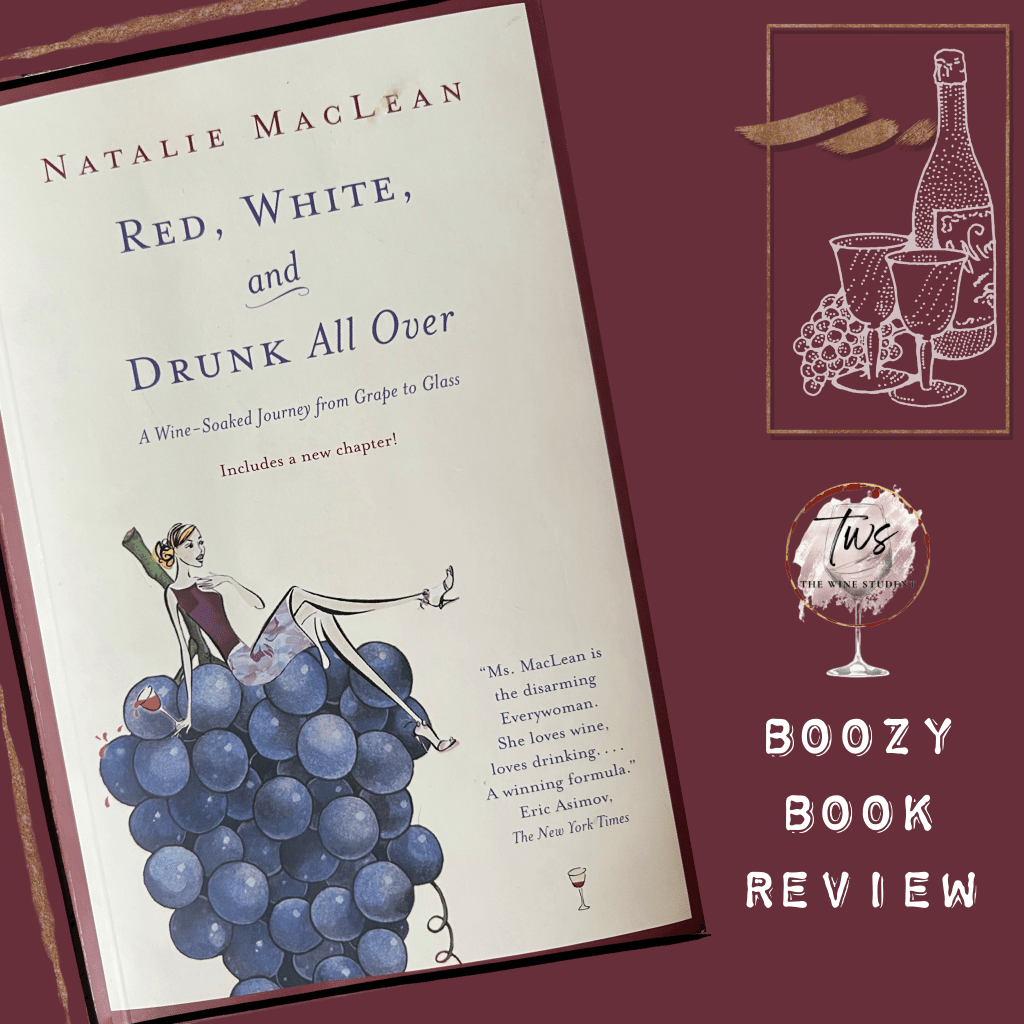
Boozy Book Review: Red, White, and Drunk All Over by Natalie MacLean 📖🍷

From vineyard to table, and everywhere in between, Canadian wine writer Natalie MacLean has seen, done, and drunk it all. On a summer trip to Muskoka, ON, last year, I was looking for my next great dock read. I found this book nestled amongst the shelves at The Owl Pen vintage book store in Bracebridge.

Published in 2006, Red, White, and Drunk All Over takes the reader along on MacLean’s journey discovering the earthy mysteries of the wines of Burgundy in France, helping collect zinfandel grapes in Sonoma Valley, California, working as a novice sommelier, learning how to sell wine at two bi-coastal retail shops, and much more. Along with the wine, it’s the people she meets that make the stories so fascinating. With each experience, MacLean takes us beyond the glass, and deep into the intriguing world of wine. Every new adventure teaches us so much about all aspects of wine; from soil to the grapes, harvest to the cellar, bottle to the glass, first sip to the buzz. Her descriptions are delicious.

With honesty and humour, MacLean illuminates how intimidating wine world can be, even for an accomplished expert. And she keeps it real by reiterating how, with perseverance, and taking a deep breath or two, one can find their groove and truly enjoy the ride.

This is a wonderfully accessible book for anyone interested in wine world; from seasoned oenophile to novice wine enthusiast. It’s a fun and informative read; an excellent reference for those just beginning a career in wine. It would be cool if it was required reading for college wine courses.

I think this quote honestly sums up what attracts many of us to wine,

“But I have to confess, much as I’m drawn to its nuances, I wouldn’t be writing about wine if it weren’t for the buzz. I love the way a glass of wine makes me feel – invigorated and animated, released from my natural shyness. After a couple of glasses, I’m mellow, soothed, contemplative.” Yup.

Good news: You don’t have to make a trek to Muskoka to find this book. Here’s the link.

Note: the cover art may be different than mine. 😉

Cheers!🍷

©️Copyright, The Wine Student, 2023.

Better Than Chocolate: 2023 Valentine Wine Picks!💝

Eduardo Galeano once wrote, “We are all mortal until the first kiss and the second glass of wine.”

It’s true – that first kiss can make us feel like we’ve had that second glass of wine; dizzy, fizzy, and warm all over. Don’t get me wrong, I love me some chocolate but it doesn’t usually make me feel like that. And chocolate doesn’t always fit in my wine glass.🍫

This year, I wanted to explore a couple of intriguing alternatives to the chocolate covered heart.

Check out the video below for more info about these wines!👇

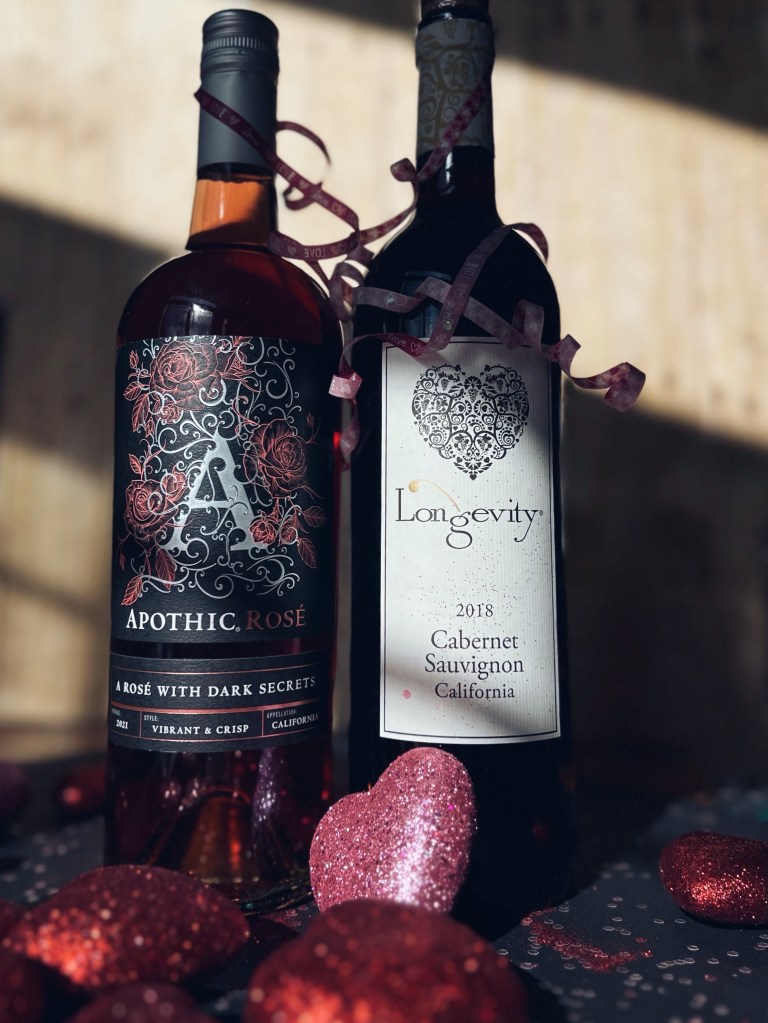
Apothic Rosé-

The label says that it’s the “rosé with a dark secret”. I would like to know what that secret is. Though maybe that’s what the second glass is for.

From E&J Gallo, and cultivated in Central Valley, California, this wine is a beautiful, deep rose-gold color. The classic color of many rosés is a light-medium salmon pink. This is a Grenache, Temperanillo, Pinot Noir, Sangiovese & Carignane blend that created a rich color in the glass. It had a subtle cherry vibe on the nose, and flavors of lush strawberry, ripe raspberry, and a sensual whisper of dark chocolate on the finish. Interlaced all together, it tasted like… more!

Also cool: the label art of swirling roses was designed by tattoo artist Sasha Masiuk.

💰Price point: $11.99

Longevity 2018 Cabernet Sauvignon

From the growing region of Livermore Valley, California, Longevity is one of the largest Black-owned wineries in the United States.

Deep, ruby red in color, this Cab was immediately drinkable. I tasted without decanting, and it was flavorful right out of the bottle. Often, a little merlot is blended with cabs to soften the harsh tannins. This was a cab with no harsh edges. Softer tannins made for a smooth and satiny experience, like slipping on a lux pair of silk pajamas. Classic flavors of red plum, black cherry, blackberry swirled together, with a little black licorice lingering on the finish. Together it created a deep, well-structured profile.

Their description of the wine was ‘muscular’, which is very true of most cabs. But no heavy lifting was required to enjoy this wine. This was full-bodied but not overpowering; so nice to slowly sip and savor.

The twist-off cork is genius! Like its sister the screw cap, it made opening the wine a breeze, especially if you’ve forgotten your wine key (corkscrew). It made storing even easier. No leaks!

The label is what first attracted me; a beautiful heart. Take a closer look and you’ll see the intertwining of grapes, hearts and vines. The heart was designed by Longevity’s owner, and winemaker Philip Long’s late wife-and business partner, Debra, who saw the design as an expression of their both their love of wine, and each other.

💰Price Point: $15.99

So whether you’re enjoying à deux or just celebrating you, surrender this Valentine’s to a little decadence. It’s better than chocolate!♥️🍫

Cheers!🍷💋

©️Copyright. The Wine Student. 2023

Heidi & Pam’s Excellent Ice Wine Adventure! 🧊🥂

In the past, I’ve written about Ice Wine; how it’s harvested, how it’s made, and how it’s enjoyed. Like all remarkable feats of winemaking, it is a delicate balance of weather, timing, and the tenacity of everyone involved to help create it.

I’d been feeling pretty blue that I couldn’t be at The Niagara Ice Wine Festival. For me, the festival was always a place to connect with friends and sample some great wines. But the weather here in the Cleve has been unpredictable, gray and drab. Squalls of snow kept blowing in whenever I could possibly travel. Bah.

But… I had my own bottle of ice wine that I’d been wanting to share. And then I remembered my neighbor, Pam, also had a bottle of ice wine that she wanted to share. Things were looking up. Hey, if I can’t be at the festival, I’ll have a little one of my own. Let the pop-up Ice Wine Fest begin!

I quickly put together some treats to sample with our two wines; then made my way through the frozen Ohio tundra. Ice and snow doggedly lashed at my face. Inch by inch I walked, trudging through glacial molasses, uphill – both ways!

Ok, I only had to walk next door. But it was very yucky and slick outside.

Here’s what we enjoyed:

Pam had a Breitenbach Vidal Blanc that she’d found on a recent visit to Amish Country in Dover, Ohio. I brought a 2015 Jackson-Triggs Vidal Reserve from Niagara, Ontario.

Now, if we were true die-hards we would’ve enjoyed them outside. But it was way too frosty, so we enjoyed them inside Pam’s kitchen.

Starting with:

Breitenbach Vidal Blanc – had a clear, golden blonde color, and with a light syrup mouthfeel. It tasted young but with a blossoming structure. The flavor was most like a pluot. Yes, a pluot. A pluot is a stone fruit hybrid of plum and apricot. It looks like a plum, and it tastes like a plum, yet it has that delicate floral sweetness of ripe apricot. We paired first with a bit of brie – which decreased its sweetness. Salty pistachios neutralized the flavor almost entirely. Shifting back to sweet, milk chocolate ramped up the sweetness, and strawberries fully coaxed out both the sweet, and the fruitiness.

Price point: $43.95

2015 Jackson-Triggs Vidal Reserve– was light amber in color, and was sweet, less fruity, but possessed a robust, full-bodied mouthfeel. It had a honey-like viscosity, but then took a slow curve to a bourbon vibe. Pairing it with a salted chocolate Heath bar, decreased its presence a little. But when we paired it with brie, it became a melt-in-your-mouth butterscotch sensation. Since it was an older vintage, the flavors were more melded and mature, and influenced by some gentle oxidation. But this it gave a delightfully lush taste.

Price Point: the 2015 listed at $72.99 on wine.com but newer vintages: $39.99 at LCBO.

It was a tale of two very different vintages, and I guess it was a little like comparing apples to oranges. Yet the idea wasn’t to evaluate as much as enjoy the wine, noting little elements unique to each.

I think the nicest part was being able to spend some time with a good friend. All too often, as winter settles in, we sometimes see less of our friends and neighbors. This was a sweet, impromptu opportunity to reconnect and catch up.

The Niagara Ice Wine Festival concludes this Sunday, January 29th. The Ohio Ice Wine Festival runs from March 1st-31st, in and around Geneva, OH. Since it’s a little closer to home, I’m hoping to check it out!

The little wine bottle puffer in the cover photo is Iceware by Wild Eye Designs. I purchased mine from Amazon.

Cheers!

©️Copyright. The Wine Student. 2023

Dry Spell

The last of the holiday treats are gone, and you feel like you need to take a little break. You’ve decided to embrace Dry January. Good for you! In your quest, maybe you’ve noticed a few alcohol-removed, dealcoholized or non-alcohol wines on the shelves of your local store.

Although the tipsy factor might not be there, alcohol-removed red wines, like their boozy cousins, contain resveratrol, a powerful anti-oxidant contained in the skins of red wine grapes.

Here are some other health benefits of drinking dealcoholized red wine:

• Decreased risk of cardiovascular disease

• Decreased risk of cancer, inflammation, diabetes

• Decreased blood pressure

• Less calories than regular wine

• Decreased passing out while binge-watching your favorite show and missing the best part

What’s the difference between dealcoholized and the non-alcohol version? Dealcoholized wine has gone through the traditional processes of winemaking: fermentation – which ensures skin contact, and turns grape juice into wine. The alcohol is then removed before bottling. Non-alcohol vino goes straight from juice to the bottle with no fermentation.

Still, it can be a little confusing when you’re searching for these wines. So check the label.

On the front, look for the term ‘alcohol-removed wine’. The back will have a nutrition facts label, and the terms ‘contains less than 0.5% alcohol by volume’ and dealcoholized wine’. Some non-alcohol offerings simply state “wine alternative” which means it is juice that hasn’t been fermented.

So how do you take alcohol out of wine?

Here are three methods:

Spinning Cone Technology:

Freshly fermented wine, made in the traditional way, is poured into the top of a spinning cone column. Rotating cones transform the wine by centrifugal force, and turn it into a thin filmy liquid. Nitrogen gas is then fed into the bottom part of the column to extract flavors and aromas of the wine, and to prevent the wine from oxidation. The remaining liquid is passed through the column again to remove the alcohol. Flavor and aroma essences are then recombined with the dealcoholized wine, and blended with unfermented varietal grape juice to replace any lost volume. This creates a wine with less than 0.5% alcohol by volume. The entire process is done repeatedly and at low temperatures.

Vacuum Distillation:

Similar to spinning cone, traditional winemaking occurs before the alcohol is removed by extracting off the alcohol at a low temperature in a vacuum, keeping the wine’s flavors and aromas intact. Once the alcohol is removed, the essences and flavors are mixed back in.

Reverse Osmosis:

We’ve heard about this for water purification; in winemaking the process is the same. Wine passes through a very fine filter that water and ethanol pass through. The ingredients of wine, such as tannins, and other elements responsible for color, flavor and aroma are left behind.

According to liquor.com, here are some of the more popular alcohol-removed wines:

Best Red:

Ariel Cabernet Sauvignon – $32.45

Fre Merlot – $9.99

Best White:

Giesen Marlborough Sauvignon Blanc 0% Alcohol – $16.99

Luminara Alcohol-Removed Chardonnay – $16.99

Best Rosé:

St. Regis Nonalcoholic Shiraz Rosé – $17.99

Best Brunch Bubbly:

Freixenet Sparkling Alcohol-Removed Wine – $9.99

I tried the Fre Merlot. The consistency is thinner than its traditional counterpart. It tastes sweet, like a natural varietal grape juice. It had a nice, bright mouthfeel, and a beautiful claret color. And the looks you get when you pour a glass at 10:00 am are pretty comical. 😆

If you want to enjoy a dry new year, but still want enjoy the health benefits of red wine, take a closer look at some of these wine options. And let me know what you think in the comments!

Cheers!🍷

©️Copyright. The Wine Student, 2023.

Chill Me Now🍾

We’ve all been there. It’s almost zero hour, almost go time. But wait! You suddenly remember that your primo bottle of bubbly is… still sitting on the counter. At room temperature. Damn. What to do?

If you’ve got 30 minutes, you’ve got it covered!

Your first instinct might be to put your bubbly in the freezer. If you do, make sure to watch your time! The reason? Pressure in the bottle can build up quickly. Any more than 30 minutes in the deep freeze, and you might have some premature poppage, and no one wants that. So maybe try this as a last resort.

And you don’t want to open it warm because you’ll shoot your eye out (or someone else’s). Part of the reason sparkling wine is chilled is to decrease some of the internal pressure; making opening the bottle easier, and less dangerous to everyone around you. Also: who wants to drink warm sparkling wine?

But the clock is ticking, and you don’t have time! Actually, you do. I got you.

The best, quickest, and safest method is an ice water bath.

Click the video below to find out more!👇

Ice Water Bath:

• Fill an ice bucket, pail, deep tray or sink half way with cold water

• Place bottle(s) in the container

• Fill the rest of the way with ice and add some salt.

• Leave 30 minutes (or a little longer if you can). Be sure to turn the bottle occasionally to ensure an all-over chill.

Adding salt to the ice water lowers the freezing point of the water, making the mixture much colder. The ice will melt more slowly because the water’s freezing and melting points have been lowered by the addition of salt. This also helps keep the cold temperature consistent.

When I worked the wine show last fall, we quickly cooled our sparkling wines using ice water baths. It only took about 30 minutes or so to efficiently chill the bottles so they could be opened safely, and were cold enough to drink.

So chill! You’ve got your sparkle covered.✨

Have a safe and Happy New Year!🍾🥳♥️

Cheers!🥂

©️Copyright. The Wine Student, 2022.

Sweets to the Sweet!🎄🍭

It’s holiday time! 🎅 Time for some fun, and time for tasting!🍷🎄

Click the video below for a little wine round up!

👇😄

Typically, the rule is sweet wines with sweet treats, but we might take a few little twists and turns in candy land! 🍭🍬

Candy Cane Ice Cream –

Peppermint has always seemed like a tough pairing with wine. And I guess because brushing your teeth before a wine tasting always makes for a wonky flavor. Maybe it’s a toothpaste thing (heavier concentration of mint, surfactants in toothpaste that maybe coat the tongue) rather than a mint thing?🤷🏼‍♀️

But since peppermint is an aromatic herb, why not try it with an aromatic white wine or rosé?

Gewürztraminer – intense floral aromas, grapefruit and lychee. Higher sweetness pairs with sweetness and mint. And just saying Gewürztraminer makes you sound kind of drunk. Don’t believe me? Try it!

Sauternes – dessert wine from Bordeaux with Botrytis cinerea (which makes it delightfully sweet). Flavors of honey, quince and apricot make it sweet and oh so smooth. 🍯

Sparkling Rosé – nothing better than bubbles to cut into some of the creaminess of the ice cream. The gentle acidity of the delicate fruity notes play hide and seek with the minty sweetness of the ice cream. 🍨🍾

Gingerbread Sticky Toffee Pudding

Combining gingerbread with dates, cloves, allspice and toffee is basically a carnival on your palate!🎪

Chenin Blanc – sweet golden nectar of pear, yellow apple, chamomile and honey, little more acidic to help carve through the richness of the toffee and cake consistency.

•Riesling – aromatic variety ranging from bone-dry to quite sweet. If you like dry, look for “Trocken” on the label. Anything sweeter: look for “Pradikat” – Kabinett (sweet) , Spatlese (sweeter), Auslese (sweeter still), all the way to Eiswein (sweetie sweet). Flavors range from dried apricot, citrus, green apple, green papaya, jasmine, depending on the growing region. High acidity again cuts into the rich cake.

Port – Beautiful notes of black plum, chocolate, dries cherry and cinnamon complement this ooey gooey dessert as you nestle deeper into a spicy bliss with each sip.

Fruit Cake

I always feel a little bad for the nutty fruit cake. It’s so maligned. True, some can be as dense as a brick (and maybe even taste like one). But the combination of the buttery rum cake, rich nuts and dried fruit can be a lovely melt-in-your-mouth experience. Aromatic whites are a terrific pairing but so are some light-medium bodied reds.🍷

Torrontés From Argentina, this white wine can smell sweet but is dry and matches well with the spices, and melded aromatic flavors in fruit cake. Flavors of rose petal, geranium and peach round out this interesting wine.

Cabernet Franc – Flavors of strawberry, raspberry and a hint of chili pepper make this a nice complement to the fruit cake’s nutty vibe.

Merlot – Merlot is a softer red, and often blended with Cab Sauv soften its harsher nature. Yummy flavors of black cherry, plum and chocolate add to the fun, making that fruit cake the best you’ve ever had.

And if you find yourself overwhelmed, Ice Wine goes with everything!

So there ya go! Sometimes the best pairings are unexpected. Feel free to try your favorite holiday treats with different new, and fun wines.🍷🎄

♥️Thank you so much for stopping by, and supporting my blog. It’s fun to write, and I hope it’s fun to read.♥️

Wishing you all a happy and healthy holiday season, and we’ll see you in the new year for more wine adventures!🥂

Be safe, everyone!🤗

Cheers!🍷

©️Copyright. The Wine Student, 2022.