Itâs suddenly that time of year again, where oneâs fancy turns to⌠cleaning. đ§˝đŞŁ
If we donât often use decanters, we tend to forget about them, and they sit in the back of a cupboard or cabinet. If youâre like me, you might leave them on a countertop where they are exposed to dust, and kitchen grime.
Sure, you can try to blow the dust out of your decanter right before you fill it with wine, but trust me, this is not a good plan. đśâđŤď¸ Kitchen dust and wine do not mix. The âearthyâ vibe that you think will enhance the wine? Nah. Not a chance.
Help is on the way!
Click the video below to see an easy way to clean your decanter before your next wine dinner! đ
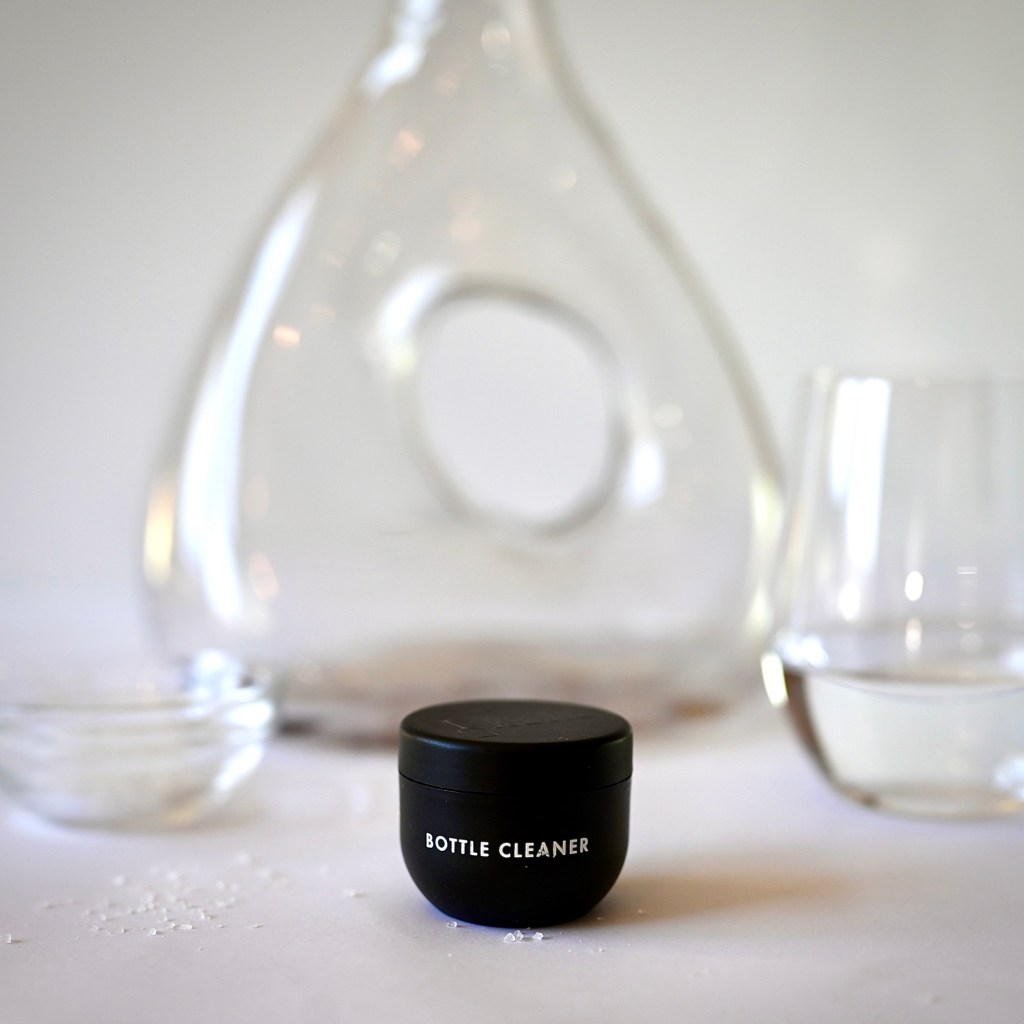
There are a few methods out there but I found the Riedel Bottle Cleaner to be one of the best, natural cleaners.
I had a decanter that had a lot of old wine sediment that water and salt alone couldnât seem to loosen.
Carefully pouring the little stainless steel balls into the decanter (with water and about 2Tbsp of coarse sea salt) I swished for a full 2 minutes. Like magic, all of the stubborn sediment from the bottom and sides was loosened. After a good rinse, the decanter looked sparkling clean!â¨
At $15.99 this cleaner is reusable, non-toxic and very user-friendly.
To be clear, this post is not sponsored content. I just found this was a cool product I purchased few years ago and wanted to share with you.
Every December 31st, many of us resolve to change a few things for the new year. Maybe weâre getting back on the treadmill; maybe itâs the promise to cut back on those indulgences we allowed ourselves over the holidays.
For many, we go cold turkey – cutting out alcohol in all its forms = Dry January. But every so often we reach for a bottle without thinking. Itâs automatic. Maybe itâs a part of a nice dinner or celebrating the end of a day.
One of the things I love about wine is its sensual nature. I like the feel of the glass in my hands, the scents on the nose, the complexity of flavors as they caress the palate. The buzz isnât always the attraction (tho it can be fun).
The challenge with many dealcoholized wines is experiencing the same essences, flavors and mouthfeel of wine with alcohol. It usually just tastes like grape juice. Which is fine butâŚit just doesnât have the same vibe. And pairing with food can be even more tricky.
Alcohol is often what gives wine its body and texture, creating that nice bounciness (or solid gravitas) on the tongue.
Dealcoholized wines contain the exact grape varietals as its boozy counterpart. The difference in the processes used to remove the alcohol. This wine is created using the cold-filtration method.
Health Benefits of Dealcoholized Wine:
*Contains resveratrol, the component in red wine that has anti-oxidant properties
*Decreases stroke – promotes HDL (the good cholesterol) and decreases LDL (bad cholesterol)
*Anti-aging
*Anti-inflammatory – protecting cells, especially in the heart and brain from damage
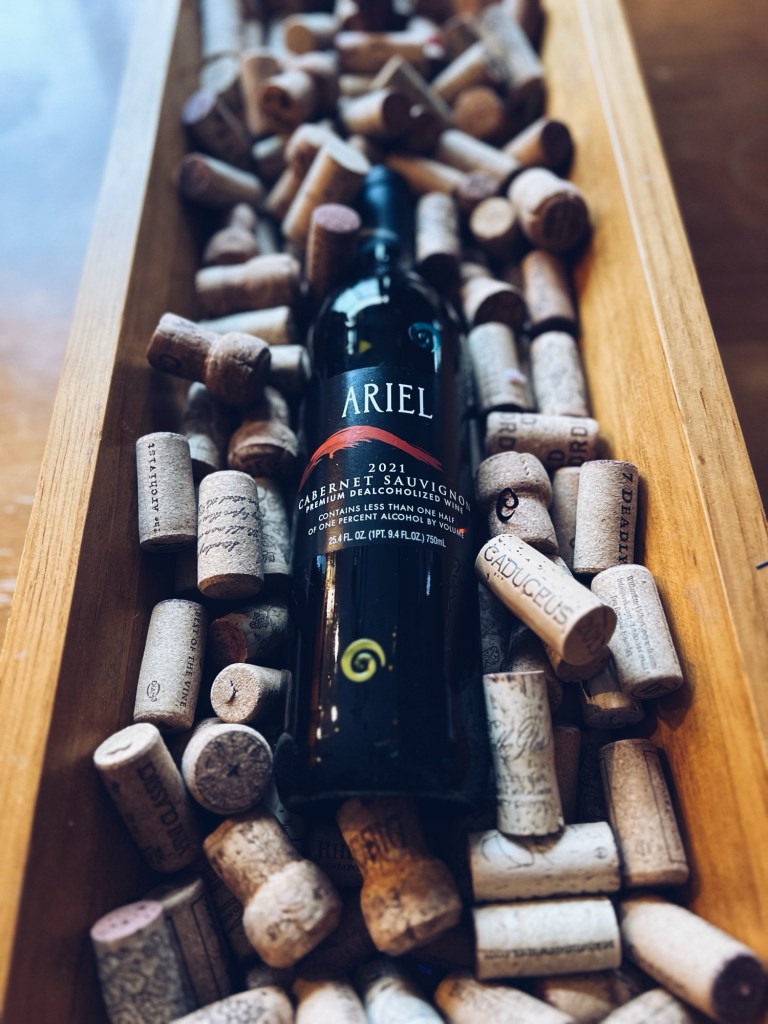
It had a lighter mouthfeel, bright essence of cherry with underlying earthiness that lingered for a bit on the finish. Itâs refreshing little vibe is fun with a sweetness thatâs not cloying. In the glass it has the clarity and deep ruby color of a Cab. HubbyDoug was fooled! He thought Iâd already blown off my dry January pledge! Lol Such little faith.
Most dealcoholized winemakers make it pretty clear that their wine will taste different than what wine drinkers are typically used to. And thatâs true. But for the pure enjoyment of a beverage with all the benefits of red wine ( and none of the side effects) itâs a nice change.
So raise a glass to Dry January to all those who participate!
Now I know youâre not going to have just a turkey on your table. But I wanted to keep it simple and spotlight the star of the show (though maybe itâs a featured player, as we all know the real star is you).â¨
According to Food and Wine magazine, turkeyâs rich flavor profile; light and dark meat, and its juicy texture matches well with a wide variety of wines and traditional side dishes.
Keep in mind that whatâs good for the turkey is probably going to be good for the side dishes.
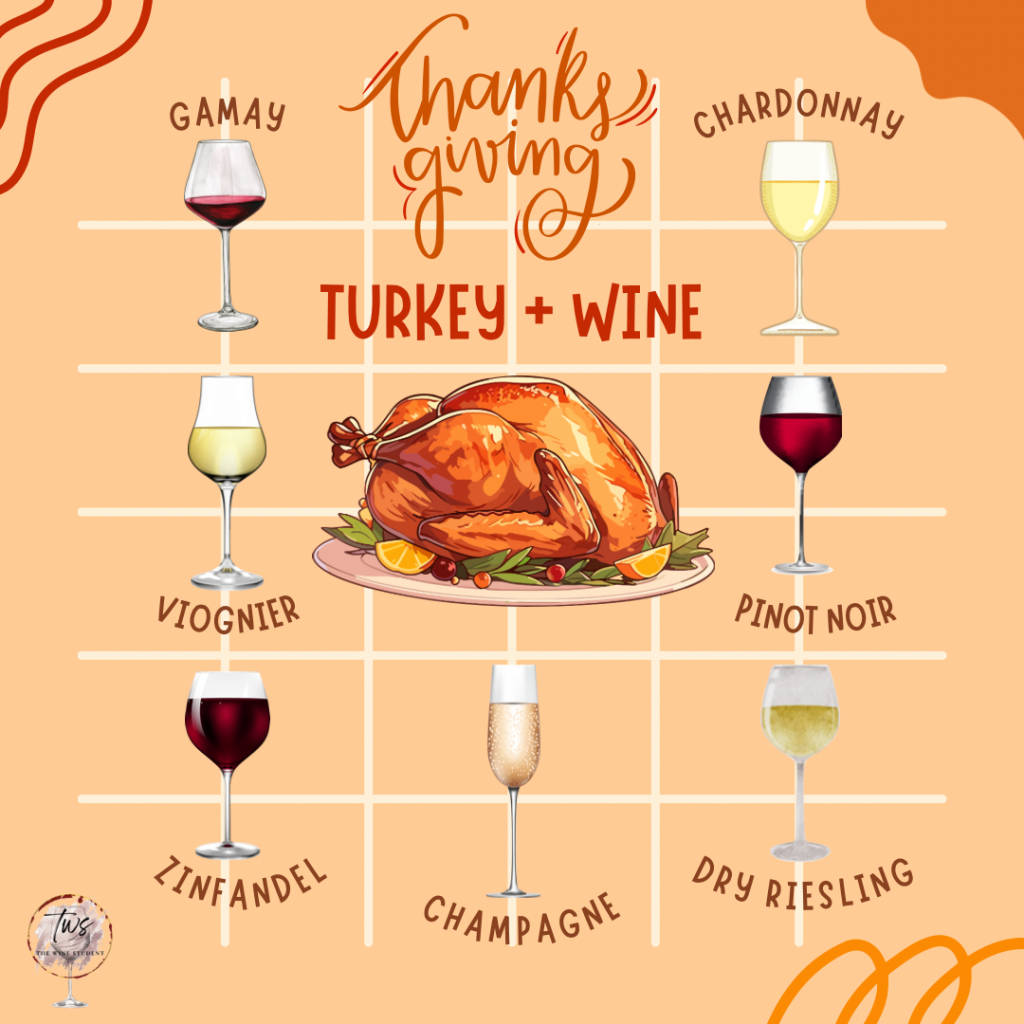
â˘Dry Riesling– OK⌠wait a minute, this isnât the sugar bomb you think it is. Many have the view that riesling always equals cloyingly sweet. But this dry offering is the riesling you never knew you wanted. High acidity and plentiful minerality make this a most agreeable turkey companion.
â˘Chardonnay – Sometimes chosen because of its name recognition, Chardonnay can be a wonderful pairing with turkey. Crisp acidity, and fuller-bodied vibe make it a pleasure to sip. Old World offerings, particularly from France, are more citrus-forward with a stalwart mineral heart. New World Chards from the US, Australia and South America have a juicier, stone fruit vibe. Hint: Add a little to the turkey as you baste.
â˘Gamay – The Beaujolais grape, but skip past the Nouveau and head straight for a more mature offering to enjoy. Pleasant high acid, lo tannin, and a satisfying grippy mouthfeel make this wine one of the best pairings with turkey.
â˘Pinot Noir – A classic, Pinot Noirâs playful flavors of cherry make this a great pairing for both turkey and your favorite sides. Pinots from France have a grounded, earthy, mushroom-y, tart cherry gravitas where New World Pinots brings forth a brighter complex cherry vibe. đ
â˘Viognier – An excellent, but not as well known match, Viognierâs whispers of honey and rich ripe stone fruit essences are wonderful with the tender turkey. Look for amazing offerings from Northern Rhone, South Africa and Australia.
â˘Zinfandel – Jammy, juicy and fruit forward, this wine is a boss pairing with both light and dark turkey meat, and many traditional Tgiving sides. A big hit on turkey day, you might want to splurge and buy a couple of bottles. đ
â˘Champagne – Bubbles and high acidity make this wine a merry treat to cut through the richness of the turkey and all side dishes. And it makes your holiday table scape even more festive and fun! đĽ
When all is said and done, these are simply suggestions to dial back some of the guesswork when picking your wine. In the end, itâs really about sharing time with family and friends. And whatever wine(s) you choose to adorn your Thanksgiving table this year, I hope you have happy and healthy holiday!đ§Ą
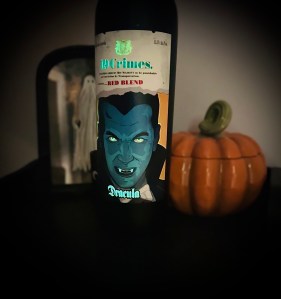
Itâs a crisp October night. Candles lit, you nestle in with a great horror novel. The moon is full, suddenly thereâs the sound of leaves rustling outside. You shake off the sensation of the hairs standing up on the back of your neck. Itâs just silly jitters. And then you hear the scratching at the windowâŚ
One of my favorite Halloween novels is Stephen Kingâs Salemâs Lot. I also loved the classic 1979 film version to get my creep on and send shivers down my spine. The freaky glowing eyes, the glimpse of fangs in the moonlight, the creepy little kids wanting to come in and play, the slow creak of the rocking chair in the empty room upstairs. And that house.
Lore tells you never to invite a vampire inside your home. But these two are ok. Let them in.
Check out the video below for more spooky fun!đ
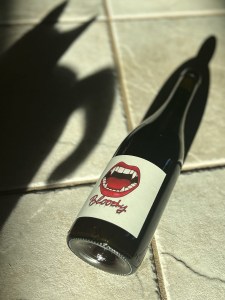
Organically grown in Franceâs Loire Valley, this Bloody wine is made from hand-harvested Grolleau grapes. Picking by hand is what can account for a higher price point. This is labour intensive work. Similar to Pinot Noir, this grape variety is thin-skinned, has fewer tannins, and is very susceptible to damage and disease. Extra care must be taken. Whole cluster fermentation is also used to impart more of a fruit forward quality and give a bright acidity on the palate.
The color is a bright, vibrant red as it pours. It seems to levitate just like Danny Glick floating to your window.
On the nose: ⢠blackberry ⢠cherry
Flavor profile: ⢠sour cherry ( a little like a Jolly Rancher) ⢠herbaceous ⢠earthy vibe
Pairs well with: ⢠Red peppers staked with goat cheese ⢠Grilled seasoned chicken ⢠Mild creamy cheeses ⢠Patè
â˘Eco-wine tour w/ Owenâs Hiking & Adventures @ Vineland Estates
â˘Ice Wine Cocktail Party
â˘Lazy Saturday Tasting @ iCellarsEstate Winery
They say you canât go home again. Iâm happy to report thatâs not always true. I went home to Niagara this past weekend. And it was wonderful!
Click the video below for more fun!
đď¸Friday – At Vineland Estates, my friend Deb and I got out on the vineyard (and part of the Bruce Trail) with Owen Bjorgan of Owenâs Hiking and Adventures. We learned about the Niagara bench ecosystems, how they affect the vineyards and the resulting wine. It was awesome to taste the wines in the spot they were grown.
Winding our way from the Riesling vineyard through a small nearby forest, Owen explained how the forest, in close proximity, provides numerous ecosystem benefits to vineyards, such as increased whole-farm yield, increased soil water-holding capacity, reduced erosion, cleaner watersheds. With this being a natural agroforest ( it was there first), set a little away from the vines, there is little to no competition for nutrients, resources and light. All the benefits and no fighting.
It was incredible to leisurely hike, enjoy the cool of the forest, and end our tour back in the sunny warmth of the vineyard. Itâs very healing spending time in nature⌠the wine didnât hurt, either!đˇ
Hailed as the âevent of the summerâ and held at Hiscott House, a private residence in Niagara-on-the-Lake, my friend Steffanie and I enjoyed, of course, fabulous Ice Wine cocktails. đ¸ Add to that a diverse menu of savory and sweet treats, ending the evening with a chocolate Ice Wine shot. It was the place to see and be seen, and was a great evening for great causes. â¨
â˘
đď¸Saturday – with Friday being so busy, it was great to slow down, chill and have a lazy Saturday. Deb, Shiona and I met for a leisurely wine tasting at iCellars Estate Winery. This is a favorite spot, especially during harvest. We meditated on our flights of Chardonnay, Rose, the Arinna Red Blend, and Cabernet Sauvignon. This yearâs pick – the Cab Sauv!
We spent some time after our flights enjoying a glass outside on the patio, gazing out as the golden sun warmed the vineyard.
And as we drove away, I saw a motorcycle with two dogs in goggles in the sidecar. And I know what youâre thinking⌠what do they put in their wine? I asked Deb if she saw it too. She did.
Luckily, I got a picture.
If youâre in the Niagara region, make a point of experiencing these great wineries. There are so many to choose from, and each with their own unique style.
I love RosĂŠ. I love it in summer. I love it in my picnic basket. But I was looking for a change. I wanted a couple of wines that were light and refreshing but not my usual go to. I circled back to a couple of wines that Iâve not had in a while: Pinot Gris and Beaujolais.
Made from Gamay grapes, this is no Beaujolais Nouveau,which is consumed right after harvest, and of which Iâm not generally a fan. Itâs way way too young. This wine was light-bodied, fruity and earthily floral. Paired with the Asian ramen salad, it brought out more of the fruit and had a lovely finish that lingered. Often, I find Beaujolais a little too fleeting but this pairing was both lively and light, highlighting the ripe peach flavors in the salad.
I paired the Pinot Gris with both the dill deviled eggs and the grilled cauliflower. While starting out with subtle flavors of white peach, cantaloupe and lemon zest, I liked the brightness and acidity that picked up nuances in the Dijon mustard and seasoning, while cutting a nice little swath through the creamy richness of the dill/egg mixture. With the cauliflower, its subtle vibe melded well with the creamy feta and brought out the heat of the red pepper, especially on the finish. It was like little fireworks on the tongue, an unexpected but nice surprise. It was a totally different wine with this pairing.â¨
And I guess that goes to show you; first impressions are not always what they seem. Sometimes circling back can help you discover what you may have missed the first time around.
I think thatâs one of the many things I love about wine – the flavors and characteristics they possess on their own, and how that can completely change when paired with food. Textures, protein, fruit, vegetal vibes can bring out so much more depth on both sides of the equation. Food + wine = awesome!
Whatever you choose to pair with your holidays, may they be safe and happy.đď¸đ˘đĄ
I think we can call it official – summertime is here!đđĽ
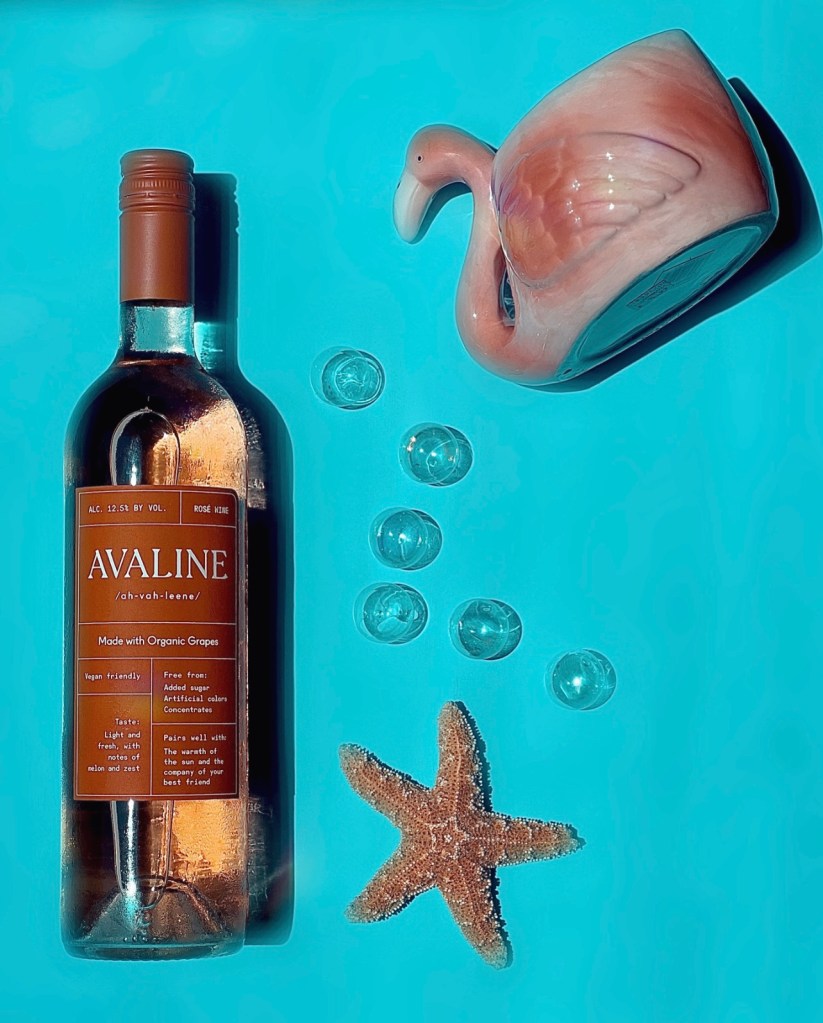
And when that mercury starts to climb, we want less heat and more chill in our glass. A clear choice to beat the heat this season is Avaline (ah-vah-leene) RosĂŠ.
Cameron Diazand business partner Katharine Powerbonded over both a glass of wine, and a shared philosophy: to make great quality wines that are purely organic. They partner only with growers who share their commitment; using only natural methods to create wines from 100% certified organic fruit, with zero synthetic pesticides. No artificial colors, refined sugars or additives are present, and transparency in all winemaking, and labeling, is key. Current regulations do not require nutritional/ingredient information on wine labels. Other than the percentage of alcohol and short varietal list, most of us donât always know whatâs in our glass. This is something Diaz and Power wanted to highlight.
With respect to sustainable winemaking, their sourced vineyards are generally lo-irrigation, or they are dry-farmed, relying only on rain water to provide moisture. With water shortages becoming globally prevalent for growers, decreasing fresh water consumption has become a necessity.
Benefits of lo-irrigation and dry-farming are many: itâs an environmentally responsible choice, and produces more intense flavor in the fruit. Like all things, balance is important. Dry- farming is best with well-established vines that have deep root systems. However, it can take years before this happens. Vines that have regular irrigation tend to have more shallow root systems – they donât have to work as hard to find their water source. To coax the younger vines into strong fruit producers, sometimes low irrigation, only when needed, is essential.
Avaline RosĂŠ, a Vin de France wine, is cultivated in Provence by Famille Negrel wines. Their vineyards are lo-irrigation, adding moisture only when necessary, especially if the crop is in danger. Chickpeas are grown on site to provide vital nitrogen to the vines. Their vineyards are certified organic by ECOCERT.
Sometimes rosĂŠs can taste watered down, as though the crop had too much rain at harvest. Others taste as more heavy-handed, trying too hard to be flavorful. This wine, with its blend of Cinsault, Grenache, Cabernet Sauv, Syrah and Caladoc is flavorful, fresh and well-balanced.
Tasting notes:
Flavors of honeydew melon, orange zest, cardamom/ginger spice, and tart white peach lingered gently on the finish. Ethereal and delicious, and possessing a light-bodied, yet lingering mouthfeel.đ
A 5FL OZ pour was 107 calories, 2.6G carbs and zero fat (says so right on the label).
Visiting the Biltmore Estateis like taking a journey back in time. An awesome example of both architecture and design, its esthetic influenced by the great chateaux of France.
Click the video below to tour with me!đ
Weâd originally planned this trip with our friends Carl and Deb, in May 2020⌠and we all know what wasnât happening then. So it was wonderful to finally have all our schedules reconnect!
When I first researched Biltmore, I was pleasantly surprised to learn about their winery. Documents dating back to 1916 show that George Vanderbilthad begun collecting wines for his cellar. Jump forward to the early 1970âs, William Cecil, George Vanderbiltâs grandson, established vineyards on the property. The first Biltmore wines were made available for sale in 1979 under French winemaster Phillipe Jourdainâs direction. In May 1985, Biltmore Estate Winery opened its doors to the public for tours and tastings. Building on the original French-American hybrid plantings, Jourdain planted additional vinifera varietals to ensure the future of their wine cultivation.
Sharon Fenchakjoined Biltmore in 1999, eventually becoming winemaker in 2003, then head winemaker in 2018, further crafting on the foundations laid out by previous winemakers, Jourdain and Bernard Delille. She now oversees an annual production of approximately 150,000 cases.
Situated in the Blue Ridge Mountains, at an elevation of 2,500 ft, growing conditions in this part of North Carolina can be challenging, especially with rapidly fluctuating temperatures during growing season. Days here are warm yet humid, with cooler nights, a high incidence of rainfall, and risk of late-harvest frost. This combination makes growing more delicate varieties difficult. Heartier varieties flourish here. Polk County, just south of the estate, has a lower elevation and a âthermal beltâ micro climate, reducing the risk of damage to the fruit.
Locally sourced wines include robust varietals including Chardonnay, Cabernet Sauvignon, Cabernet Franc, Petit Verdot, and Merlot. Their Biltmore Reserve NC RosĂŠ is a home-grown, balanced blend of heartier Cab Sauv and Cab Franc of both estate and lower elevation North Carolina vineyards.
To produce a wide array of offerings, grapes and juice are sourced from not only North Carolina but California and Washington. Their American Series wines reflect this diversity.
The winery also maintains a commitment to sustainability; using locally sourced water from nearby Long Valley Lake, and recycling their plastic, glass, paper and steel. Adjacent to the Winery, is a nine-acre, 1.7 megawatt system that includes more than 7,000 solar panels to help counterbalance estate energy usage. Grape byproducts such as crushed stems and skins are used for mulch and compost. Retired barrels become planters and used corks are repurposed as wine racks to display their wines in retail stores. Biltmore has also partnered with Cork Reharvest and the Cork Forest Conservation Allianceto reuse corks and help decrease the depletion of cork trees. Visitors are encouraged to drop off used corks at the winery, all estate restaurants, andWhole Foods stores throughout North Carolina.
Out of town? You can mail your used corks to: Biltmore Estate Wine Company Re: Cork Recycling 1 North Pack Square Asheville, NC 28801 đ
We tasted some wonderful wines on our tour but here are the three we took home:
2021 Biltmore Estate Grenache Blanc
My pick: The 2021 Limited ReleaseGrenache Blanc.While itâs not from indigenous grapes, I loved the bright, refreshing and flavorful alternative to RosĂŠ. Iâm used to grenache as a lovely red so this was a treat. a nice, bouncy alternative. Tropical flavors of banana, melon, citrusy mandarin, and a light, playful mouthfeel. I canât wait to pair with some delicate cheeses, fruit or charcuterie.
2020 Biltmore Estate Tempranillo
Dougieâs pick: The 2020 Limited Release Tempranillo. American Appellation with flavors of dark fruit, fig, and nice grippiness from the tannins. Aged 16-20 months in oak.
13% alcohol. $24.00
2020 Biltmore Estate Malbec
Our pick: The 2020 Limited Release Malbec.Something fun for Malbec Mondays! We havenât had Malbec in some time so this was a nice change from our go to Pinot Noir. Rich blueberry, blackberry and plum with a hint of spice on the finish. Also aged 16-20 months in oak. Itâs one to savor slowly and enjoy with maybe a nice beef brisket. Yum!
13% alcohol. $ 22.40
The best part about the trip was finally reconnecting with our friends again, and to take a little step back in time. âĽď¸
Biltmore is definitely worthy of a place on your bucket list; and the wine makes it even better!
When I first saw this book I thought it might be an easy, breezy trip through wine world. From the first chapter, itâs clear that this is a tenacious, and unforgettable journey.
In Wine Girl, Victoria Jamesshines a graphic spotlight on her struggles rising through the ranks from greasy-spoon diners to Michelin- starred restaurants. Becoming Americaâs youngest sommelier was not an easy climb. James is remarkably honest about her chaotic early life, her struggles with addiction, and her unwavering determination to carve a place for herself in the world of wine. Incremental wins for her are everything. And they speak to the power of not giving up, even with some scorched hope along the way.
James pulls no punches about life in the wine industry. She paints an honest picture of the rampant misogyny, racism and abuse, not only from entitled guests but many in power positions within the worlds of hospitality, and wine. It can be a harrowing read at times. But itâs an important journey to share. There is light at the end of her story.
Because of her experiences, James co-founded Wine Empowered, with Cynthia Cheng and Amy Zhou. This non-profit provides free wine education, and support of leadership careers in wine world for minorities and women, as well as promoting safe work environments for all.
This is a significant book for everyone, especially those working in and around the world of wine and hospitality.
Bunny is not a book about Easter. Not even close. And itâs not really a story about wine (but there is a wine cocktail reference so, in that sense, it fits nicely into my boozy book review standards). Bunny is a tale of dark academia and the power of loneliness and imagination.
Brief synopsis: Samantha Mackey is an MFA grad student at a prestigious New England college. She has absolutely nothing in common with her privileged writing seminar group who all hug, and express their undying love to each other as they squeal âBUNNY!!!â whenever they meet.
One day, Samantha gets a random invitation to the bunniesâ conclave called âSmut Salonâ. Well, who wouldnât be just a little bit curious? On the surface, everything in bunny life is pink mini-cupcakes, fluffy party dresses and mind-altering cocktails. What lies beneath is much more sinister. Or⌠is it?
The book shines a flashlight on the often fine line between what is and isnât real. It explores how easily one can fall down a rabbit hole of imagination, while asking the question, âI wonder what those perfect lives must be like?â We accompany Samantha as she enters into this glitter frosted world of privilege, only to find a sordid, inky-dark underbelly. Mona Awad does a deft job of subtly erasing the line between reality and fantasy, and often I found myself asking, âDid that really just happen?â
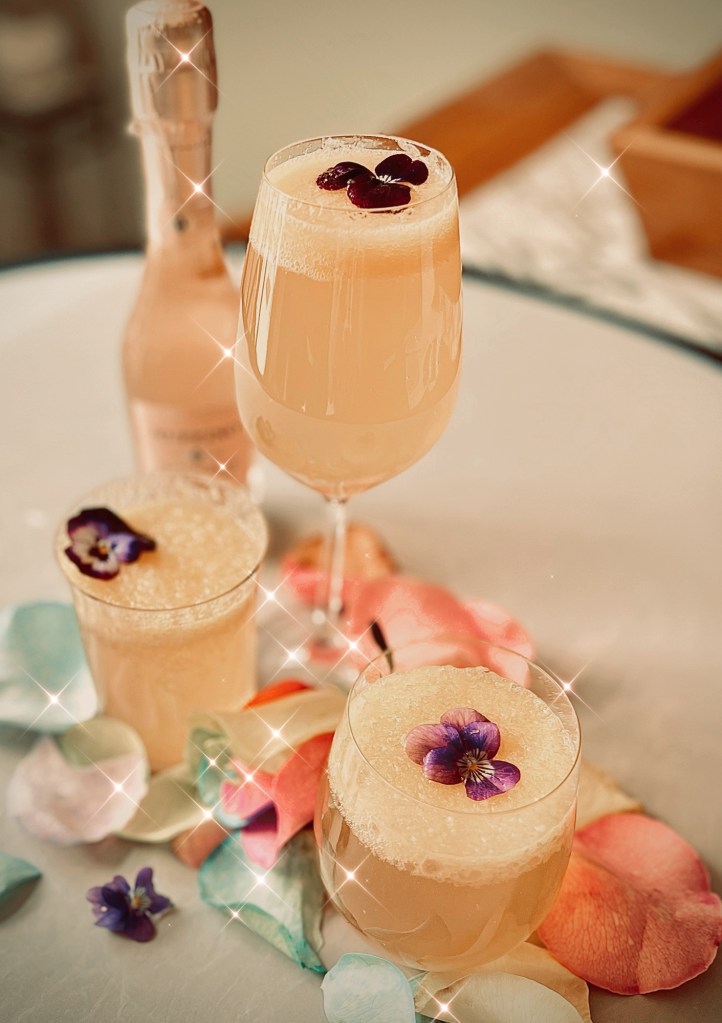
The cocktail in the book is a French 75 – itâs typically made with gin but Iâm not a fan so switched it to vodka. Since a secondary theme includes mini-cupcakes (and one of the characters is nick-named Cupcake), why not add some pink sparkles to the mix?