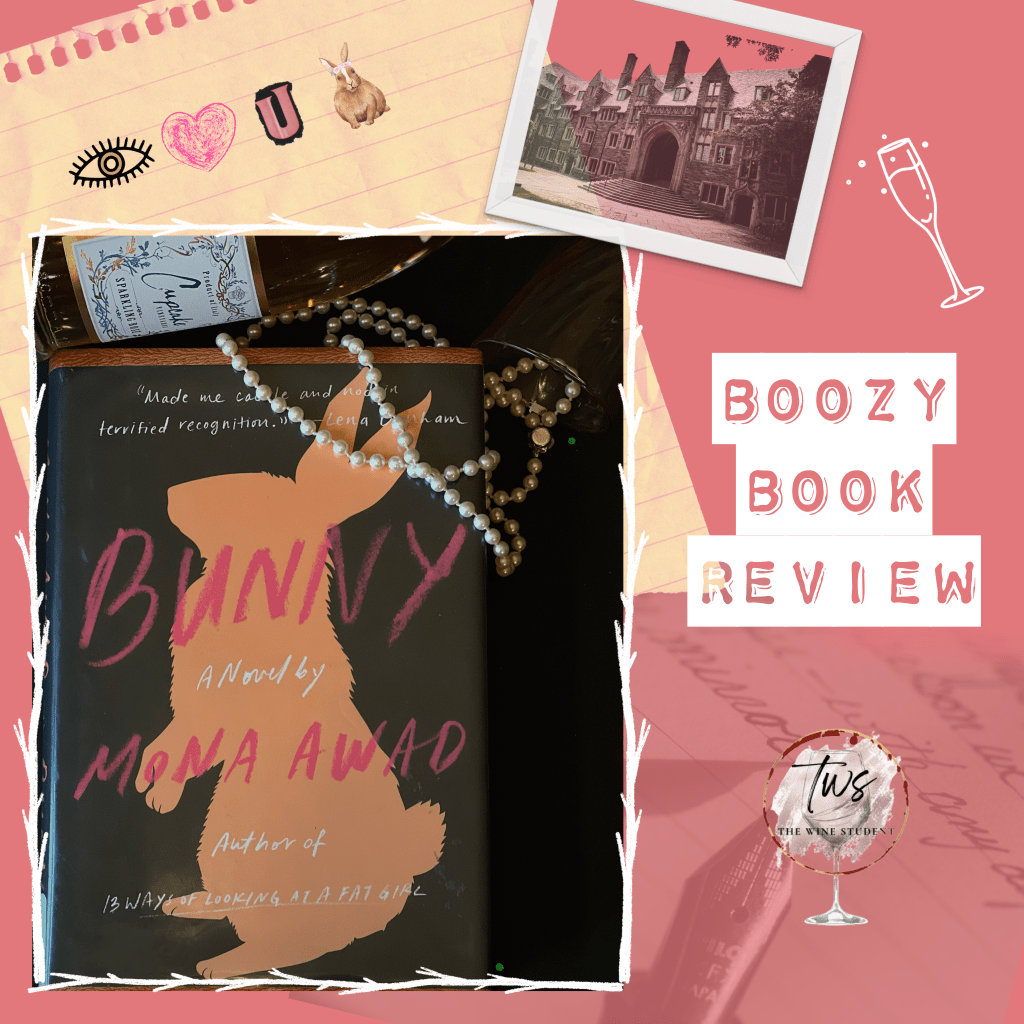
Boozy Book Review: Bunny by Mona Awad🐰

Bunny is not a book about Easter. Not even close. And it’s not really a story about wine (but there is a wine cocktail reference so, in that sense, it fits nicely into my boozy book review standards). Bunny is a tale of dark academia and the power of loneliness and imagination.

Brief synopsis: Samantha Mackey is an MFA grad student at a prestigious New England college. She has absolutely nothing in common with her privileged writing seminar group who all hug, and express their undying love to each other as they squeal ‘BUNNY!!!’ whenever they meet.

One day, Samantha gets a random invitation to the bunnies’ conclave called ‘Smut Salon’. Well, who wouldn’t be just a little bit curious? On the surface, everything in bunny life is pink mini-cupcakes, fluffy party dresses and mind-altering cocktails. What lies beneath is much more sinister. Or… is it?

The book shines a flashlight on the often fine line between what is and isn’t real. It explores how easily one can fall down a rabbit hole of imagination, while asking the question, “I wonder what those perfect lives must be like?” We accompany Samantha as she enters into this glitter frosted world of privilege, only to find a sordid, inky-dark underbelly. Mona Awad does a deft job of subtly erasing the line between reality and fantasy, and often I found myself asking, “Did that really just happen?”

The cocktail in the book is a French 75 – it’s typically made with gin but I’m not a fan so switched it to vodka. Since a secondary theme includes mini-cupcakes (and one of the characters is nick-named Cupcake), why not add some pink sparkles to the mix?

What was my pick? Cupcake Rosé!

French 75 (w/ vodka)

•1/2 oz fresh lemon juice

•1/2 oz simple syrup

•1 oz vodka (if you don’t like gin)

•4 oz pink Champagne or sparkling wine

•splash grenadine (optional)

•garnish: lemon ribbon twist, sugar rim

Hoppy reading! 🐰 (ok, bad pun, everybody drink!)

©️Copyright. The Wine Student. 2023.

My Wild Irish Wine 🍷🍀🧝🏻‍♀️

With the luck o’ the Irish at yer back, may you find health, happiness and a pot of gold. Okay, that’s not really a blessing but a mashup of a few.

St. Patrick’s Day is a sure sign that spring is on its way. And spring is often viewed as a season of magic and alchemy. Wine is also a blend of magic and alchemy. Especially Irish wine.

Growing conditions in the Emerald Isle can pose many challenges to winemaking. And that’s where the magic comes in.

I first wrote about my quest for the 2015 Lusca Cab/Merlot in 2018 so this is a bit of a fun throwback.

Established in 2002 by fruit alchemist David LLewellyn, Lusca cultivates several varieties of grapes including Cabernet Sauvignon Merlot, Dunkelfelder and Rondo – a grape that can heartily withstand Ireland’s damp, misty weather.

Click the video to learn more about Irish wine and how its made!👇🍀

A few years ago I was determined to find my little pot of gold, and I did. To read more about my search click here. Since then this lucky bottle has remained, relatively undisturbed, in my little cellar wine fridge. I hope it’s been enough to ensure its good condition. All told, it has aged about 9 years. I had many thoughts before opening: has it already peaked? Is it a delightful vinegar? But maybe luck would be on my side.

There was only one way to find out…

Time to release the wine!

To be safe, I decanted for about 2 hours. I wanted to let it open up as fully as possible to make a fair assessment. So how was it?

It didn’t turn to vinegar! I wasn’t as concerned about the wine as my storage. I don’t have a fancy wine cellar, and occasionally had to move the bottle around. I had been worried that after all this time, maybe some oxygen had gotten inside. But I was so happy that all seemed to be well. Magic!

It was a lighter bodied Cab/Merlot. I enjoyed delicate notes of blackberry, dried herbs, and a pleasant, earthy cedar undercurrent. I found myself swirling my glass often to coax out every essence. It had a clear, deep ruby color giving way to a slight brownish rim variation (the outer edge of the wine). This suggests aging of the wine. I didn’t notice any nutty or toffee flavors that indicate an oxidized wine.

As I tasted, I noticed the sun was shining – here in the Cleve we catch it while we can- so I bundled up, sipped my glass outside.

To find out more or to order a bottle visit: The Celtic Whiskey Shop & Wines on the Green. They are super friendly and helpful.

I send you all the blessings to have a safe, fun and magical St. Patrick’s Day! ✨

Sláinte!🍷🍀

Friday Feature: McBride Sisters Wine Company🍷

To celebrate International Women’s Day, I popped open this bottle. I toasted all women with a beautiful glass that filled my senses with the scents and flavors of rich blackberry, black cherry, and a hint of chocolate on the finish. But what really intrigued me was the story and vision of this wine company.

Since 2005, Robin and Andréa McBride have created not only the largest Black-owned wine company in the United States, but one that is inclusive, accessible, socially aware, and sustainable.

As well as producing some pretty incredible wines, their roles as visionaries, innovators, leaders and advocates led to the development of the SHECANWines Fund initiative. It was created to promote the professional advancement of women in the wine industry in an effort to help close the gender and race gap.

To date, the SHE CAN Fund has invested more than $3 million in the professional advancement and career growth of high-potential, professional women, with a specific focus on women of color.

This year’s focus: Women learning and excelling in the business of wine.🎉

This includes:

•Supply Chain

•Sales & Marketing

•Viticulture

•Mass Wine Production

•Winery Operations

•Point of Purchase

•Importing & Exporting

🗓️ Applications open April 3rd! To find out more check out: www.mcbridesistersfund.org/#YESSHECAN

Cheers!🥂

©️Copyright. The Wine Student, 2023.

Boozy Book Review: The Widow Clicquot by Tilar J. Mazzeo🍾🥂

Perseverance, passion and steely determination.

That’s what it means to be a woman in any generation. To honor International Women’s Day, I wanted to explore more about the life of the Widow Clicquot, the most famous of the champagne widows.

A daughter of privilege, Barbe-Nicole Ponsant was expected to live an ornamental existence, yet her life was anything but. Married at age 21 to François Clicquot, then widowed at 27, she continued the wine passion project she and her husband started when they first married. Over time, she immersed herself in the art and science of winemaking, keeping a watch on all aspects from the vineyard to the cellar, to blending and aging the wine, and finally managing the business of champagne both in France and beyond. This was not an easy task in a male dominated industry. She had to work twice as hard to be recognized for her ingenuity and business acumen. Does this sound familiar?

While she did not adore the emperor Napoleon himself, nor many of his policies, under Napoleonic code, widows could assume prominent trade roles within business. Barbe-Nicole was able to use this to her advantage. But the road to prosperity wasn’t as easy as popping a cork. Lean times through the wars created an environment of doubt and anxiety at every turn. International trade embargoes imposed by the British left the first shipments languishing in Amsterdam warehouses, where fluctuating temperatures could ruin the wine. Further restraints against Champagne leveraged by Russia and other countries made international dealings difficult and dangerous.

But she pressed on.

The Year of the Comet Vintage in 1811 proved the stars were aligned to create one the best growing seasons in the Champagne’s history. Conditions were perfect from bud to harvest. Sugar levels that produced both alcohol and bubbles occurred naturally in this vintage. The only thing stopping her was fate. War was raging and threatening to ravage her business.

During this time she bottled her wines, and had the foresight to have the cellar bricked up to seal this vintage from pillagers. This had the added effect of allowing the wine to rest on the lees (the yeast) for longer than usual, creating a spectacularly beautiful, flavorful, and potent sparkler. Her 1811 comet cuvée made her an international celebrity, pushing Moët, who had the largess of the Russian markets, back a few spaces.

Prior to the lifting of international embargoes, she gambled by securing passage of her wines into Russia well before her competitors – a move that could have potentially ruined her, but payed off.

“I didn’t have any hope of doing anything [and] the advance of the Russians over the Rhine was the last straw. And now, out of all the misfortunes came the good business I have had, and I dare to hope for more. We can’t always be unlucky, in my experience. And so, my dear friend: courage, patience, and resignation.”

Barbe-Nicole Clicquot Ponsant

Mazzeo paints a rich, sweeping story from documentation, supposition, and anecdotal reportage. There’s much that she assumes the widow Clicquot must have felt and seen. But this works to create an intriguing tale. This is an engaging and fascinating read about the First Lady of Champagne, and what it means to persevere against all odds.💪🍾

Cheers! 🥂

©️Copyright. The Wine Student. 2023

These Women’s Work🍇🍷

Happy International Women’s Month!🎉

Here’s to all the amazing, strong women in the world: may we know them, may we be them, may we raise them, & may we enjoy their amazing wines! 🥂

I’ve written before about some amazing women winemakers, and a great book that celebrates them.

It’s wonderful to read about their journeys from vine to wine. Each woman has a unique tale to tell. Their stories are not always easy but they’re worth sharing; not just for us but to inspire our daughters, and their daughters, and generations of daughters.

These stories, especially in this current political landscape, are crucial. They show the courage, strength and perseverance that is very much like the struggles of the vine itself.

Visit their sites. Read their stories. If you can, buy their wines. You’ll be glad you did.

🍇 Theopolis Vineyards

🍷 McBride Sisters

🍇 Aslina Wines

🍷 Imagery Estate Winery

🍇 Groth Vineyards & Winery

🍷 Screaming Eagle

To get you started in the Niagara Peninsula:

🍇 Drea’s Wine Company

🍷 Sue Ann Staff Winery

🍇 Two Sisters

Read about more awesome Canadian women winemakers here.

Also check out Wine Women.org dedicated to championing the advancement of women’s careers in the wine industry.

Here are two more great books to look for:

Women Winemakers: Personal Odysseys by Lucia Albino Gilbert & John C. Gilbert

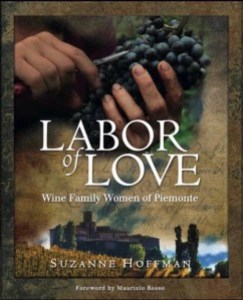
Labor of Love: Women Winemakers of Piedmont by Suzanna Hoffman – a historical perspective of women

Cheers!🍷

©️Copyright. The Wine Student, 2023.