Sparkler Series – Part 3 – Paired Off!

Happy New Year!

The general rule of thumb for pairing sparkling wines – fish, cheese, chicken.

But what if you’re not feeling that? What if you’re feeling adventurous and want to be free of all rules?

I say, go for it. For the most part, the sky’s the limit, just keep a few tiny guidelines in mind:

Serve your sparkler well chilled – the bottle opens easier and more safely when it’s cold. Allow a bit of time for the bubbly froth to settle and the delicate aromas to unfold.

Here’s a great chart from bubblysideoflife.com gives the levels of sweetness to look for when choosing. Not all sparklers are the same.

And the answer is usually right on the label!
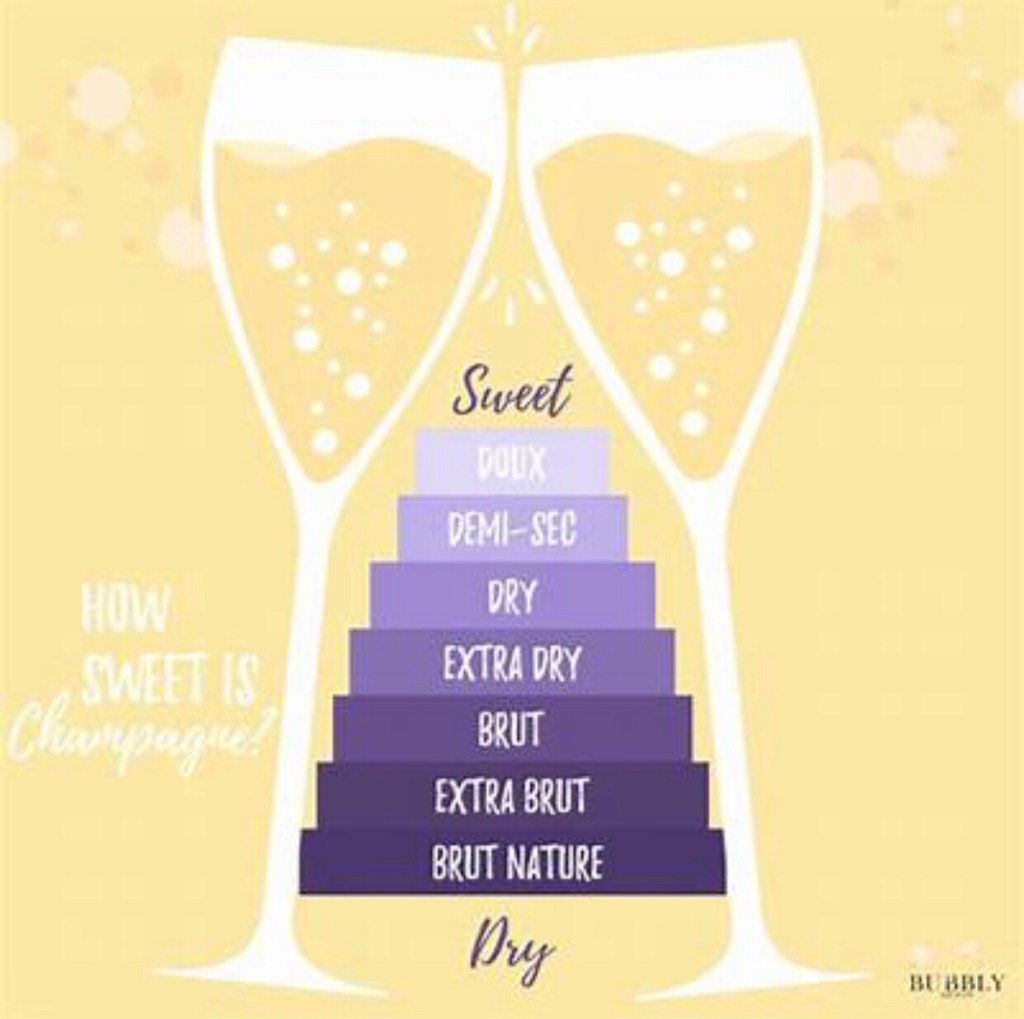
Sweetness Levels🥂
[Image via Bubbly Side of Life]

From dry to sweet, when pairing all wines, not just sparkling, you want to:

Match Flavor and Texture – For the most part, you don’t want your food to overpower your wine, or vice versa. You want both to compliment each other; bringing out each other’s best. Intensity of food and wine means its weight, which includes things like, salt, sweet, acidity, spiciness, etc. You want balance. For instance, I don’t enjoy a delicate, low tannin Pinot Noir with a hearty, fatty, juicy steak. The steak, (especially if served with a smoky or spicy sauce) overpowers the delicate flavours of the Pinot Noir, which doesn’t have enough tannins to cut through the robust fattiness of steak. It’s not that the wine is bad, it just doesn’t match with the weight of the food.

A beefy, hearty Cabernet Sauvignon, with it’s higher tannin and alcohol punches within its weight class, and matches the steak sip for bite.

Likewise, pairing a Cab with a delicate white fish, overpowers the flavor and weight of the fish so all you taste is the Cab.

When pairing sparkling wines with food, the same principles apply. Lighter, brighter effervescent wines provide a delicate acidity, and in the case of Champagne, have some richness and aged flavors that give you a different experience. I’ve paired Prosecco with a rich, creamy buttery orecchietti pasta dish that was amazing. The bright, fruitiness and acidity cut through the heavy cream of the dish, cleansing the palate with each sip. So if you’re craving mac and cheese (with any combination of cheeses), do it! Experiment! See what you like!😍

The key is matching the prominent aspects of the food and the wine.
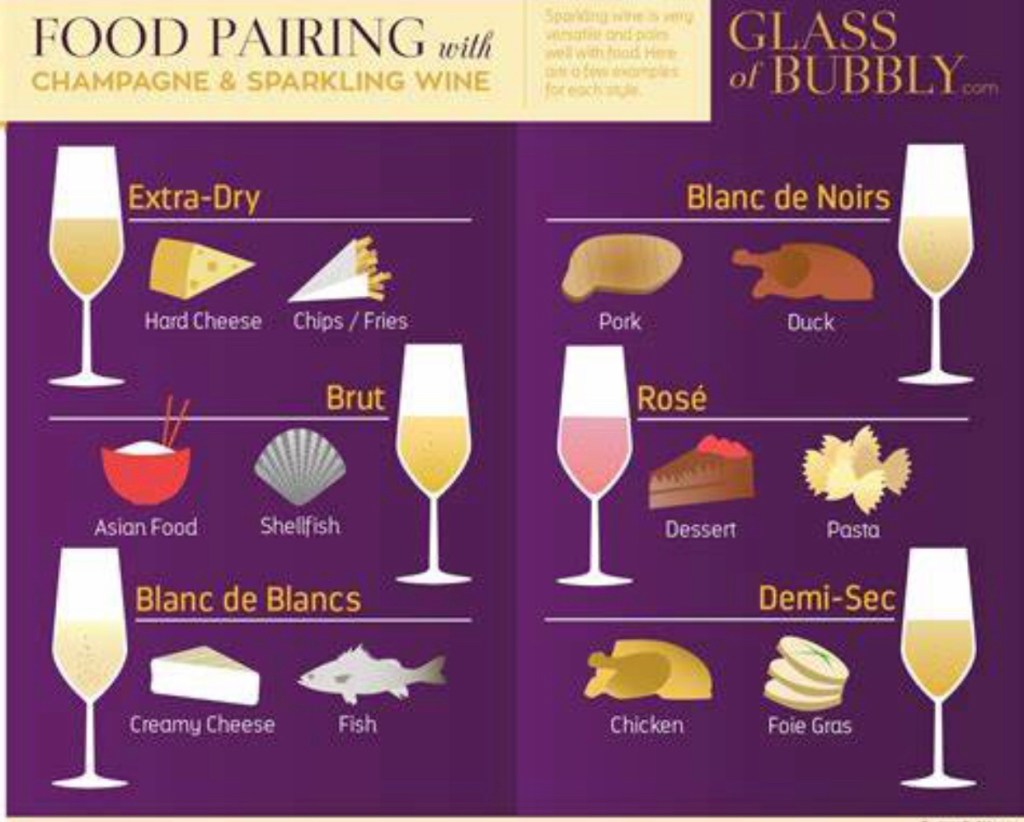
Traditional Pairings [Image via Glass of Bubbly.com]

Sweet with Heat – To avoid feeling the burn, pair spicy fare with a sparkling wine that has some residual sugar in it. Sugar cools down the heat of your dish, creating balance.

⚠️Avoid pairing spicy foods with wines that have high alcohol. These will ramp up the heat, creating a three alarm blaze in your mouth. 🔥Most of us don’t enjoy sweating our way through dinner. 🥵 Going spicy? Choose a sparkler that has Extra-Dry, Dry, Demi-Sec or even Doux on the label.

Acid with Fat – Fatty or fried foods play well with high acid wines like Champagne. The acidity cuts a swath through the fat and fried, salty goodness; cleansing your palate for the next bite!

Try fried chicken or french fries, or put out a bowl of potato chips and watch them disappear!

Smoke ‘n’ Oak – Pair gently charred foods with sparklers aged in oak. Think traditional method Brut or Extra-Brut. And keep the meat on the lighter side; chicken, shrimp. Grilled foods tame the oak intensity and bring out the fruity aspects of the wine.

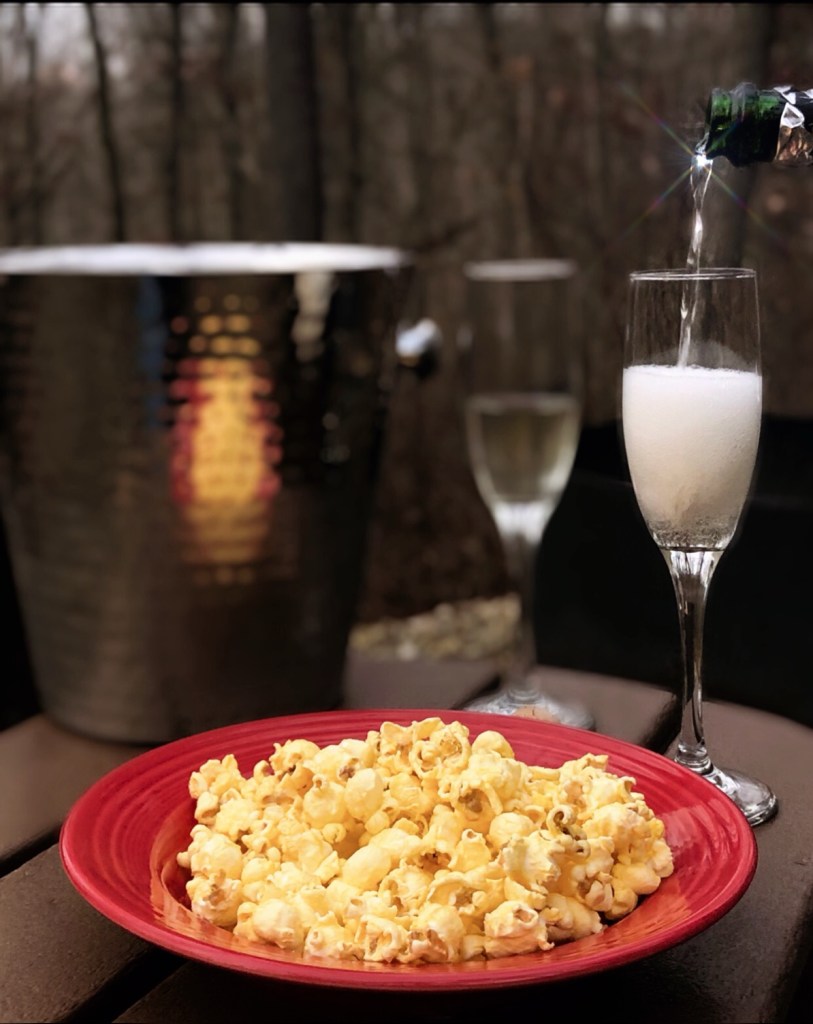
Sweet and Salty – If you love Chicago Mix popcorn (cheddar cheese and caramel blend) you know what’s going on here. Pairing salty foods with a sweet or almost sweet wine makes sweet wine more fruity (and less sweet), and salty foods more savoury. Try… corn dogs! Think about it – you have the gentle smokiness of the sausage inside, combined with the subtle sweetness of the corn bread on the outside, deep fried, and the sauce you put on top (dijon mustard, sweet bbq, ketchup) can change the vibe even more.

I like to keep it classy!😉

Sweet for the Sweet – with dessert, pair a wine that’s at least as sweet, if not sweeter. Sweet wines tend to highlight the sweet aspects of food. If your food is sweeter than your wine, the wine will fade, and seem dull. Again, go for sparkling wines that are higher on the sweet list; Dry, Demi-Sec or Doux.

Pair it with leftover Christmas cookies, Kit Kats, ice cream.🍪🍫🍨

Whatever sparkler you choose, whatever glass you have, whatever food you pair it with, please have yourself have a very happy, safe and healthy New Year!🎉🥳🍾

**Don’t forget to join me tomorrow, Thursday, December 30th, 11:00am on 900CHML’s Bill Kelly Show -with guest host Shiona Thompson!🎙

Thank you so much for visiting and your support!🥰

Cheers!🥂

©️Copyright. The Wine Student, 2021

Sparkler Series – Part 2 – Kiss My Glass!

Last time, we did a deep dive into sparkling wines, looked at a few different ones and how they’re made. Today, we’ll take a little look at how to show off those tiny bubbles. 🥂
Which glass is best? Best is a tricky term. It can simply depend on what you have on hand, and what you like.
But if you want to showcase your sparkling wine, especially if you’ve made an investment in that sparkling wine, it’s good to know some of the differences.
Let’s look at four types:

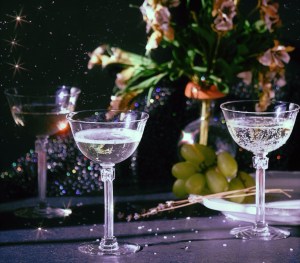
Coupe Glass

Coupe This glass is the most classic version of all to showcase your sparkling wines. It’s the glass that typically has a wide bowl and opening. The much-circulated myth that King Louis XVI had the glass fashioned after Marie Antoinette’s breast, is just that, a myth. The glass was actually designed in 1660’s England by a Benedictine monk. While it can be a pretty and very classic way to serve your sparkling wine (and the best way to make a Champagne fountain), its design is not optimal. Because of the wide bowl and opening, both the effervescence and delicate aromas of the wine dissipate and fade very quickly. You want to enjoy the bubbles for a while. The coupe glass doesn’t allow for that.
Sorry to burst your bubble.

The Flute

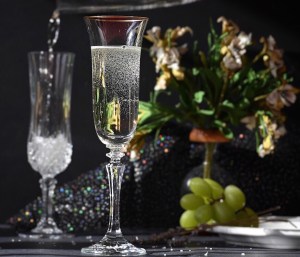
FluteWe’ve all seen and held a Champagne flute at least once in our lives. Long and cylindrical, the flute has a much smaller opening and a higher fill line. This can highlight the bubbles as they escape to the surface. Some even have little etches carved at the bottom creating a beautiful necklace effect as the bubbles travel up the sides of the glass. Gorgeous! This design does keep the bubbles intact for prolonged toasting and your 20th try for your perfect Instagram. That’s a plus.
But it’s also a minus because the surface area (and high fill in the glass) doesn’t allow for the wine to aerate, or let the delicate aromas of the sparkler to develop or unfold to its full potential. And if you’ve made an investment purchase, you want to fully taste what you’ve paid so much to enjoy.
Also, have you ever tried to get your nose into a Champagne flute? That’s trouble just waiting to happen.

Tulip (Redux) – This glass is ideal for any sparkling wine. It has a round shape that narrows gently at the top. This enables both bubble formation and aromas to fully open allowing for the perfect expression of the wine. And you can get your nose into the glass!

Why do I keep wanting you to stick your nose into the glass? To better appreciate all the aromas and flavors of the wine as you sip!

Tulip /Tapering Glass

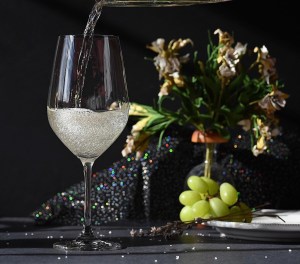
Tapering Wine Glass – Similar to the red Burgundy glass, this has a larger bowl than the tulip and a somewhat tapered top. This design allows your sparkler to breathe, and open up; bundling all of the flavors and aromas to your nose and palate, and maximizing the full potential of the wine. And the bubbles still look pretty enough for your selfie.

Whatever style of glass you have, try to make sure it has a stem. I know, stemless is a cool looking trend but sparkling wines are meant to be enjoyed cold. Cold temps keep the fresh, vibrant character of the wine and the bubbles bubbling. The heat from your hand as you hold the stemless glass can warm the wine too quickly, removing the chill and tarnishing some of the sparkle.

Of course, if your wine won’t be in the glass that long, all bets are off – a jelly jar is just fine!😁

Next time – Part 3 – Unique Pairings – What to serve with your sparkler when oysters and fish just aren’t your thing.

*Be sure to join me on 900CHML’s Bill Kelly Show, (w/guest host Shiona Thompson) on Thursday, December 30th at 11:00am!🎙🎉

Cheers!🥂

©️Copyright. The Wine Student, 2021

Sparkler Series – Part 1 – Your Pocket Guide to Sparkling Wines


With the holidays fast approaching, we’re all turning our attention to fun, festive wines to fill our goblets. Even if our evenings may still be a little on the quiet side, enjoyable sparklers are out there to lift your spirits.
But finding the right one can take little prep and planning; there are so many options to choose from. Where to begin? Not to worry! In this 3-part series, we’ll explore several to help you decide which sparkling wines might make your holiday a little brighter.


So what IS the difference between Champagne and other sparkling wines? What glass should I serve it in? I don’t want to serve it with the same old tidbits…what’s unique and fun? These are the burning questions.
We have a bit of ground to cover so… settle in and check out the little video below for a
crash course!👇


Let’s take a closer look at four types of sparkling wines: Champagne, Prosecco, Cava, and Asti.


Champagne:
Champagne can only be called Champagne if it’s made in the Champagne region of France. No other place. Everything else is sparkling wine and as we’ll see, there are many, many bubbling options.
Made in the Traditional Method, and using a blend including Chardonnay, Pinot Noir (and Pinot Meunier), grapes are picked by hand, then quickly and gently pressed in whole bunches to mininmize any skin contact with the juice – leading to unwanted color or tannin in the end product.After press, it goes through a settling process to remove any solids.
Primary Fermentation: is much like still wine at a temperature of 64-68F. The fermentation vessel can be stainless steel tanks, concrete egg vessels, oak vats or barrels. It’s here that many go through malolactic fermentation (where good bacteria convert the hard malic acid (green apple like) to the softer lactic acid (a creamier vibe) which lowers the overall acidity of the wine.
The still wine is then aged, sometimes clarified by filtering, fining or centrifugation. The wine can also be aged on the lees (or dead yeast left over from fermentation). This is what gives the sparkling wine it’s bready or biscuity flavor and creamier mouthfeel. A pink color can be achieved by adding back some red wine, or giving the still wine a small amount of contact with the red grape skins.
After the addition of sugar, nutrients and yeast (liquer de tirage) bottling occurs – here is where the sparkling magic happens! Once bottled, it’s capped with what looks like a bottle cap so that the secondary fermentation can occur. This occurs at a cooler temperature (50-54F) – and a longer process than before. At the end of secondary fermentation, the bubbles have formed, and as the yeast has gobbled up all the sugar, it dies and decomposes. Bottles are then moved to storage where the now sparkling wine will rest on the yeast (lees) for a desired amount of time.

While resting, the bottles are gently and gradually rotated over time until they are in a vertical position – neck of the bottle upside down -to bring any sediment into one smaller area. At this point, the neck of the bottle is placed in a shallow freezing solution of liquid nitrogen and the semi-frozen sediment ‘plug’ is then propelled out of the bottle by the built up pressure. The beauty is that very little liquid is lost, and all of the dead yeast and sticky sediment is gone from the sparkling wine.


The bottle is then topped up with a small mixture of wine and sugar (dosage) to provide the desired amount of residual sugar, which acts to balance the high acidity of the wine.
Bottles are then corked, secured with a wire cage, and ready to ship or cellar.
Traditional method is why there is a higher alcohol content, and it’s why Champagne can be cellared for many years.
A true luxury item, this takes considerable time, skill, and craft to create what goes into your glass, and explains why many are so expensive.
Flavors: citrus, yellow apple, cream, almond, toast.
Brands: Veuve Clicquot, Moet & Chandon, Louis Roederer, and the big daddy, Dom Pérignon. **Keep your eyes open for Blanc de Blanc ~ Champagne made from 100% Chardonnay.


Prosecco:
Like Champagne, Prosecco can only be a true version if it is produced in Veneto region, Italy, the some of the best being from the sub-region of Valdobbiadene. Primary grape is Glera (though it is often blended) and it’s made in the Charmat or single tank method. Here, the base wines are added together with the sugar and yeast in a large stainless steel tank. As the wine goes through it’s secondary fermentation, CO2 is released causing the tank to pressurize. The wines are then filtered, then bottled without aging.
Prosecco generally has a fresher character (with only minor secondary yeast flavors) and should be enjoyed young, within 2-3 years of bottling.
Sweetness levels:
Brut: Dry, little or no detectable sweetness. 0-12 grams of sugar/litre.
Most Champagne is Brut.
Extra Sec (Extra Dry): Some detectable sweetness/sugar. 12-17 grams/litre residual sugar Sec (Dry): Noticeable sweetness/sugar. 17-32 grams/litre
Flavors: green apple, honeydew melon, pear, lager, cream.

Brands: Toresella, Ruffino, Tesoro Della, LaMarca


Cava:
From Spain, and made in the Traditional Method, this is made from three varieties; Xarello, Macabeo, Parellada.
This is a very earthy, rich and complex wine, can be cellared.
Flavors: marzipan, white chocolate, brioche.
Brands: Freixenet, Segura Viudad Brut Reserva, Elyssia.


Asti:
Another notable offering from Italy, Asti is produced in Piedmont using the Moscato Bianco grape. It’s made sparkling by single tank fermentation, giving it a bright and crisp quality, and is sweeter and lower in alcohol than the other three types.
Flavors: tangerine, apricot, peach and pear.
Brands: Martini & Rossi, Spumante, Risata.

This gives you a little more to think about when going to purchase your fun wines for the holidays.


Next post, we’ll explore which is the best glass to truly showcase the look and flavors of your sparkler!🥂


Cheers!🎄 🍾


© Copyright, The Wine Student, 2021.