Skin Deep ~ The Beauty of Wine

img_5856

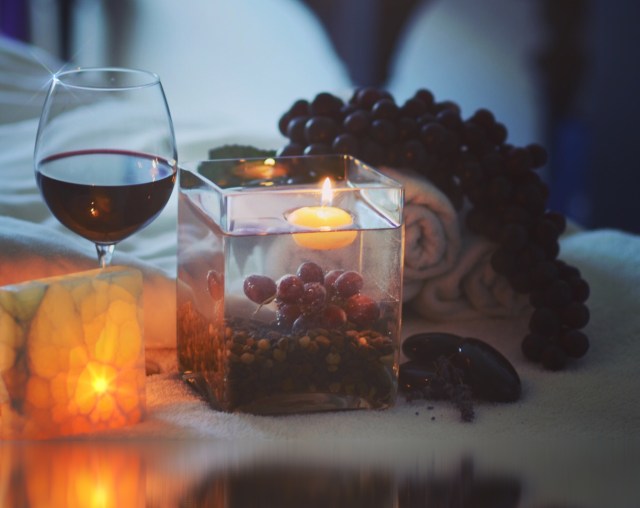
The glow of the candle sets the mood. You breathe deeply, then relax. You know there will be wine…except it’s going on your face.


But not like this…

Over the years we’ve read much about the health benefits of drinking wine, especially resveratrol, a naturally occurring antioxidant found in red grape skins. In the earliest days of the Tour de France, riders would occasionally stop to swig some red wine (or beer) in order to thin the blood to help them through the tougher sections of the race. How they managed to get back on their bikes to finish the climb tho…

Heart Smart

Moderate, regular consumption of red wine, which contains the highest levels of resveratrol, can help lower blood pressure,and has anti-inflammatory properties. By decreasing low-density lipoprotein (LDL) cholesterol (the bad cholesterol), resveratrol helps to improve overall cardiac health, as well as protecting both the heart tissue, and arteries.

A recent study by the University of Alberta’s Faculty of Medicine and Dentistry showed that high doses of resveratrol improved physical performance, heart function and muscle strength in lab models. Did they chug massive amounts of wine before hitting the gym? That would just make me fall off the treadmill. The subjects took it in pill form, which is much safer. All of the performance, none of the buzz.

Check out my video below for more info! 💆🏼‍♀️

Wine Skin

While much focus is placed on resveratrol in grape skins and wine, it is produced within the stalk and leaves as well as the mature grape skins. It acts like sunscreen for grape vines and other plant life, working to safeguard plants from UV rays of the sun, as well as other environmental stressors such as atmospheric toxins, and fluctuations in climate and temperature.

For humans, environmental stress from weather, sun damage, worry/anxiety, and poor diet can all lead to skin aging; free radicals are produced naturally as we age. Resveratrol, when applied topically to the skin, acts as an antioxidant, protecting the skin against exposure to harmful UVA rays, as well as providing anti-aging properties. According to Dermatology Times, a recent clinical trial of a stabilized resveratrol and vitamin E serum demonstrated improvement in elements of skin aging, including firmness and elasticity. When skin products containing resveratrol are combined with hyaluronic acid and peptides, stimulation of collagen and elastin are improved. By stimulating proteins, known as sirtuins (these repair DNA and decrease inflammation), resveratrol can increase cell life in the body, heightening skin’s defense systems to fight disease, therefore prolonging cell life. Gentle exfoliation of old, dead skin cells, and hydration are also benefits.

Much like the exercise study, resveratrol in these skin formulations is in usually high doses. Sadly, the benefits to the skin don’t usually happen if you just drink a lot of red wine. I’ve tried it.

Vinotherapy in spas utilize resveratrol in facial and body masks and creams.

It can take many forms, from having ground up skins and pulp kneaded into the skin, to the application of concentrated grapeseed oil in massage, to mud masks combining powdered grape products and mineralized clay.

Two leading vinotherapy spa products are:

Caudalie ~

* founded in France in 1993, Caudalie was one of the first companies to cultivate resveratrol in cosmetic applications in 2001.

* in 2006, made the commitment to use no parabens and create products that are natural and environmentally conscious.

Vine Vera ~

* released in 2012, Vine Vera uses resveratrol in all products, combining it with essential oils, vitamins and minerals to keep it as natural as possible.

* since not everyone has the same issues with their skin, there are 10 varied collections to address individual skin care needs.

So, to unlock the secrets of youthful skin, look no further than the humble grape. And make sure to enjoy a nice glass of wine while you’re at it.

Cheers! 🍷🍇

©TheWineStudent, 2018

Texas: A Lone Star State of Wine

On a trip last year to San Antonio, I was fixin’ to find a bottle of Texas wine. Way better than a cowboy hat, this was a way to, literally, bring home a taste of Texas. Yee Haw! I decided to save it for a special night back in Ohio, when I would plan out a great dinner to make me think of the yelluh rose sunsets, warm evening breezes, and the scent of sagebrush. Perhaps the only way to recreate all of that would be to fly back to Texas, But maybe a sip or two of the wine would help…

(Be sure to check out the video below for more facts on Texas wine!🤠)


Holy Crop

The first known vineyards in North America were planted by Franciscan priests in Texas in 1662. They accompanied the earliest explorers, chronicling the journey, and serving the Church as protectors of the Native Americans of Texas. Their task was to spread Christianity to Native culture and to extend Spanish culture to whatever lands the Crown granted them as their field.

Farming was the main occupation of the new communities in order to become self-sufficient. Included in the crops of corn, beans, squash, melon and sugar cane, was grapes; the earliest vineyards. Orchards were also planted, producing apples, peaches and other fruits.

In the 1800’s, when European settlers arrived, they brought cuttings which progressed the domestic growing of vines, and winemaking. As time went on, though, winemaking was eclipsed by other agricultural pursuits.

Test Run

It wasn’t until the 1960’s that modern winemaking in Texas took hold, spear-headed by Texas Tech University chemistry professor Clinton ‘Doc’ McPherson, and business partner Bob Reed. Experimenting with approximately 140 grape varieties, they wanted to see which would flourish in the local climate and soil. Lesser known varieties such as Grenache, Temperanillo, Muscat and Chenin Blanc were found to grow very well.

Yet in the ’70’s many of these vines were pulled out in favor of more recognizable varieties. The focus began to center on selling the big names, like Cab Sauv, Sauvignon Blanc, and Chardonnay, even though they didn’t necessarily produce the best wine.

In 2005, real growth occurred in the Texas wine industry when the state passed a direct shipping bill, allowing Texas wineries to ship directly to both in and out-of-state customers.

State laws also allowed wines to be labeled ‘Texas’ if 75 percent of the fruit that went into the bottle came from the state; 25 percent could come from anywhere else. This happened because more wine was being produced than grapes were grown to support the process. Now that there is more vigor in the industry; more agriculture is available to supply the winemaking needs, producers are working to change the law, requiring Texas-labeled wine to be made from 100 percent Texas fruit within the next five years.

Under the Texan Sun

While Texas boasts big, beautiful, warm summers similar in climate to Spain, central Italy and Portugal, the greatest challenges are hail, late spring frost, lack of water (in some areas) and Pierce’s Disease, a bacterium spread by the glassy-winged sharp shooter. Kinda sounds like a bad hombre from an old Western, “I seen ‘im, Pa. It was a glassy-winged sharp shooter terrorizin’ the town!” This critter feeds on infected vegetation, then injects the bacteria into the sap of nearby grapevines, blocking the movement of water into the vine, thereby killing it. The main effect is on the vine’s ability to produce a crop, and it doesn’t affect the wine quality, nor does it produce any health risk to consumers. But it is a significant pest, and surfaces in Texas because of the mild winters.

There are a total of eight American Viticulture Area (AVA) appellations, the two largest being Texas Hill Country and Texas High Plains.

Texas Hill Country ~

• At 9 million acres, the largest AVA in Texas.

• Bell Mountain and Fredricksburg are two unique microclimates w/ this blanket AVA.

• Comprised of low, rolling hills, steep canyons, and the highest elevations drought is not an issue.

• Primarily made up of limestone soil, producing well-structured wines with low acidity.

• Variable weather, and bitter frosts make winegrowing a challenge.

• Top aromatics, especially in blends, less focussed fruit than Texas High Plains.

Texas High Plains ~

The second largest AVA in Texas.

Is located west of the elevation line, elevation rises from 3,000 to 4100 feet.

Climate is semi-arid with average rainfall of just 18’, so irrigation is necessary

Well drained soils and intense winds dry out the vineyards and help guard against frost and disease.

One of the only Texas wine regions with varying daytime temperatures during ripening season, which is integral to balancing ripe flavors and acidity.

Viewed by many as the likely hub of Texas’ future premier winemaking.

Movin’ On

According to Courtney Schiessl of VinePair, while Cabernet and Merlot had generally been seen as the go-to red wines, Mouvédre is the grape that will likely put Texas wines on the map. It is easier to grow, and because it buds late in the season, misses the danger of late frosts. Other varieties, including Tannat, Italian grape varieties Tempranillo, and Sangiovese, handle the Texan heat well without losing their acidity during the hot spikes of the summer.

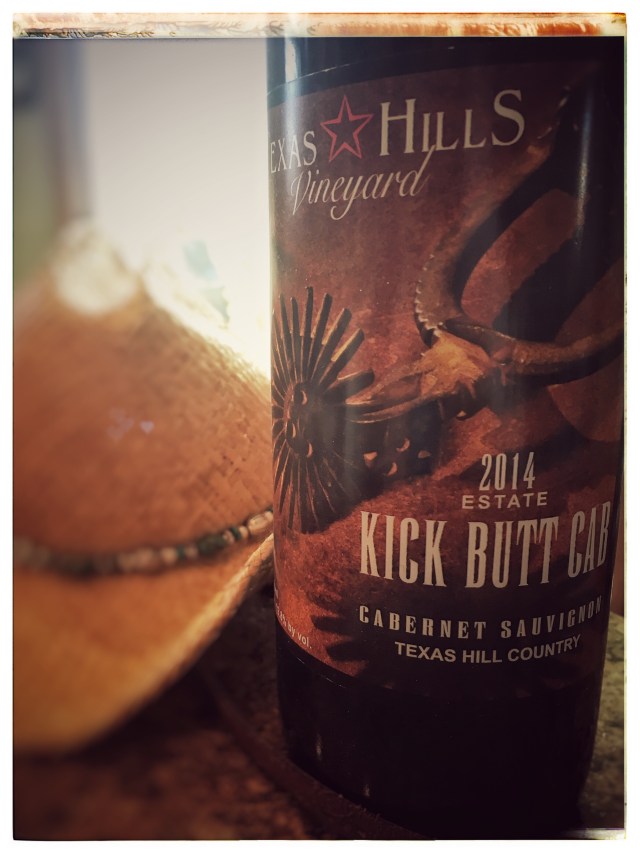
The wine I brought home was a 2014 Texas Hills Vineyard Kick Butt Cabernet. Paired with a dinner of Texas dry-rub barbecue ribs, homemade cole slaw, bourbon baked beans and corn bread from scratch, this Cab was a little different than many I have sampled. It had a nice nose of dark cherry, HubbyDoug thought it had a bourbon-y undertone that gave a nice complexity. While it had the same black cherry fruity vibe, it tasted much earthier, had less acidity, and was not as boldly fruit forward as some Napa Cabs. But that’s ok. Part of what I look for when tasting wines from diverse areas is tasting the differences between growing regions; I don’t want them all to taste the same. The beauty, though, was that it developed a nice little spicy bite when paired with the ribs.

Given the long history of Texas vineyards, I was curious about the age of the vines of this Cab. Lisa Lang, from Texas Hill Vineyard said [via email] that the Cabernet vines were “the second vines we planted; they are 21 years old.” Relatively speaking, this is a young’un. 🤠

Texas Hills Vineyard produces a wide range of wines, both white and red that are a good representation of their unique growing region.

Paul Ozbirn, an advanced sommelier at Parkside Projects of Austin, said [via texasmonthly.com ] “The quality of Texas wine is steadily increasing. While there will always be some producers that lag behind the curve, which is true of any wine-growing region, most are refining their viniculture and expressing varietal character. Less oak, lower alcohols, and attention to detail in the wineries are beginning to speak volumes with varietals that may sound obscure to most, but their response to our dry Texas climate is indisputable. Aglianico, Sangiovese, and even Tinta Cão are thriving here, and present quite the exciting potential for the future of Texas wine.”

The future of the wine industry in Texas is very bright. And it seems to be positioning itself to produce some great wines that express the unique aspects of both the varietal, and appellation. By moving away from familiar varieties, and cultivating lesser-known grapes that are well suited to its particular climate and soil, they’re on their way to producing something truly exceptional, and outstanding. And very Texan.

Cheers, y’all! 🍷🤠

©️TheWineStudent, 2018