The Thankful Heart

Emerson once wrote, “Cultivate the habit of being grateful for every good thing that comes to you, and to give thanks continuously.” It’s something I try to do in my daily life but it’s not always easy, especially with running here and there getting things ready for the official start to holiday season.

I think that’s what is nice about opening a bottle of wine; time slows for a second when you open the bottle, pour a glass for yourself and those you’re with. You take a moment, think of a little toast (no matter how profound or cheesy) and then take that first sip together. It’s a nice ritual.

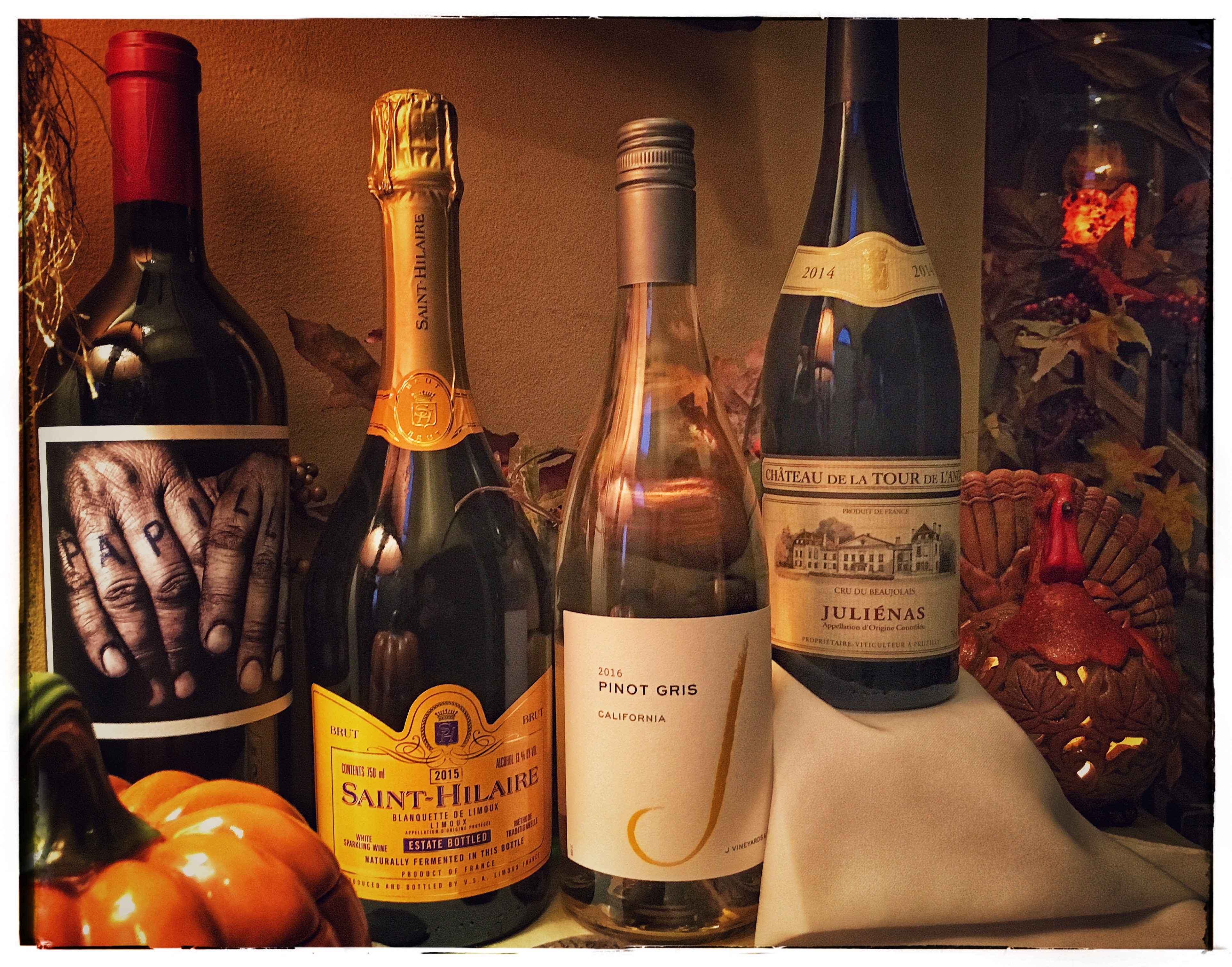
After tasting some wines at the annual Heinen’s Holiday Wine Tasting, here a few of my picks to enhance your holiday ritual! šŸ„‚

And, yes, I will happily share my bottle of Papillon with dessert!

Cultivating the habit of gratitude and thankfulness is easy this time of year. And it’s a good thing to remember beyond the holidays.

I am truly thankful for my family, my friends and to all of you who stop by and check out my blog. ā˜ŗļø

I hope you all have a happy and healthy Thanksgiving! šŸ·šŸ¦ƒā¤ļø

Cheers! šŸ¾šŸ„‚

Field Trip: Wine Dining with Orin Swift Wines

img_4145.jpg

This wine event at Bar Cento in Ohio City couldn’t have fallen on a better night. It was the perfect antidote to the cold November rain that was making me feel dark and drab.

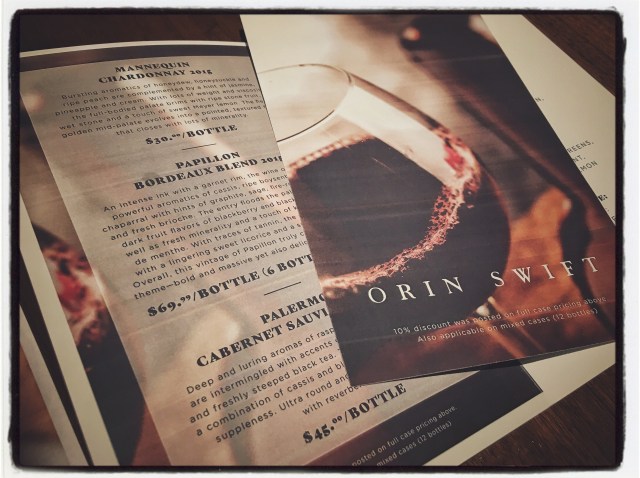
This wine pairing, presented by Chris Victor, National Account Manager for E&J Gallo, and Superior Beverage of Cleveland paired three wonderful wines from the cellars of Orin Swift with an amazing three course menu created by Chef Sean Conroy.

Our first pairing was a 2015 Mannequin Chardonnay with the Amuse Bouche of fall veggies featuring acorn squash, red beet, sweet potato, sultana and Brussels sprouts. The Chardonnay tasted of ripe white peach, jasmine with a nice acidity that was softened bu the creaminess of the food and the sweet of the sultana. We continued with the Chardonnay into the 1st course of halibut, pumpkin, saffron, pine nut, and golden sage. The delicate flavor of the halibut with saffron sauce was nicely balanced with the bright citrusy vibe of the wine.

Next up was the 2015 Papillon Bordeaux Blend that paired well with our 2nd course that included lamb rack, mustard greens, merguez, and eggplant. Yummy! The flavours of ripe blackberry, dark cherry and subtle tannin played beautifully with the mustard greens and horseradish eggplant, coaxing out a flavourful bite spice in the wine.

Our final course was Clafoutis: a baked flan-like dessert of brandied cherries, fresh fig, and DiSaronno Amaretto. Paired with the 2014 Palermo Cabernet Sauvignon, it provided and unexpected, amazing surprise of the evening; I’ve never enjoyed a Cab with dessert before. I’d always thought they were too heavy. But the silky combination of blackberry and cassis didn’t overpower the delicate, flavourful dessert, it enhanced the richness of the cherries and Amaretto. I had always thought that in pairing wine and dessert the rule was sweet for sweet. This pairing proved that rules were made to be broken.

As the evening came to a close, our group’s discussion turned to the 2014 Mercury Head Cabernet Sauvignon and as luck would have it, we were treated to a small sample. Outstanding!

Sometimes, even in the darkest, rainiest night, a little light can shine in: great friends, great food and some amazing wines. And if you’re really lucky, you can find all three in one place.

Cheers! šŸ·

This slideshow requires JavaScript.

©TheWine Student, 2017


Freezer Burn

I wish I could say it was a science experiment but it was really just an accident. I’d done what many of us do when a guest asks for a glass of white wine and you have none chilled: throw it in the freezer for a few minutes.

When I went to retrieve it, the wine had pretty much solidified, and thawing it out was going to take some time. Winesicles, anyone??

So what happens to the wine if, say, it’s left in the freezer for a few hours? Or worse. Overnight?!

Cold Snap

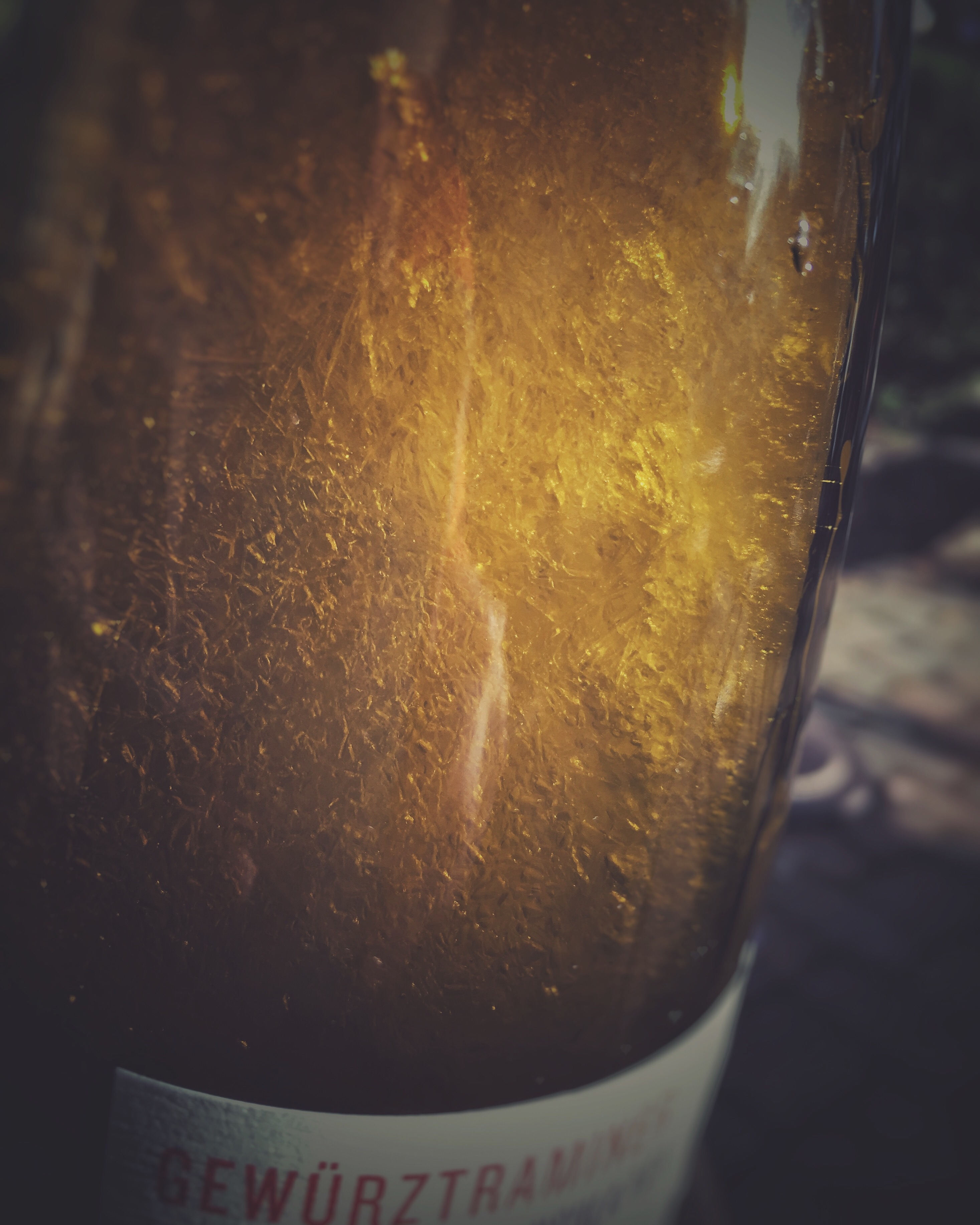
During the process of winemaking, a phenomenon takes place called tartrate or cold stabilization ~ where the wine is purposefully chilled down freezing for a short amount of time during fermentation. This is done to prevent the formation of tartaric acid crystals – wine ā€˜diamonds’ – after bottling. If cold stabilization doesn’t happen, the chances increase that crystals will form as soon as you place the bottle in the refrigerator or if it’s stored for long periods of time. Sometimes the crystals can look like tiny shards of glass in the bottle or when your pour it in your glass. It doesn’t mean that anything is wrong with the wine if you notice these crystals in the bottle or on the cork; tartaric acid is a naturally occurring function in wine making. After fermentation, some wines have an excess saturation of tartaric acid which solidifies and forms crystals. Chilling it out prevents this from occurring.

Pretty ice crystals... and crunchy, too!

Better Safe Than Sorry

So if wine in the bottle freezes does it go bad? Before we talk about the wine inside, there are some safety issues to consider:

• If your bottle has a cork, freezing might push it out. As the water content of the wine begins to freeze, it can expand and push out the cork especially if there isn’t much space in the bottle.

• Your bottle may burst. As the air surrounding the bottle rapidly cools, the liquid inside rapidly expands and Ka-BOOM! A bottle rocket in your freezer.

• NEVER, ever freeze any sparkling wine! The contents are under pressure as it is and freezing will increase the odds of it exploding.

Spin the Bottle

If you want to quick-chill any wine quickly, Somm Brian Smith recommends: ā€œfilling a bucket with 50 | 50 mix of ice and water, a little salt, and then take a spoon and spin it around and around the bottle.ā€ The centrifugal force will move the rapidly chilling water around the bottle allowing more of the contents to come in contact with the cold glass. Cool!

Keep in mind that wine that has been frozen doesn’t miraculously become… Ice Wine. Sorry, I know you’re thinking, ā€œIt’s iced up, and it’s wine so…ā€ but nope. And honestly, it’s really not worth the risk of popped corks or exploding bottles.

The good news is: for the most part, the wine inside will not be damaged. While freezing can separate the water from other components of the wine, and this has the potential alter the flavor somewhat, it’s generally so subtle that no one will notice.

So chill! That frozen bottle you forgot about might be a little crunchy at first, but as it thaws, it should taste the same as it ever was. Just really, really cold.

Cheers! šŸ·