Workin’ it in Washington

Pretty in Pink

Pretty in Pink

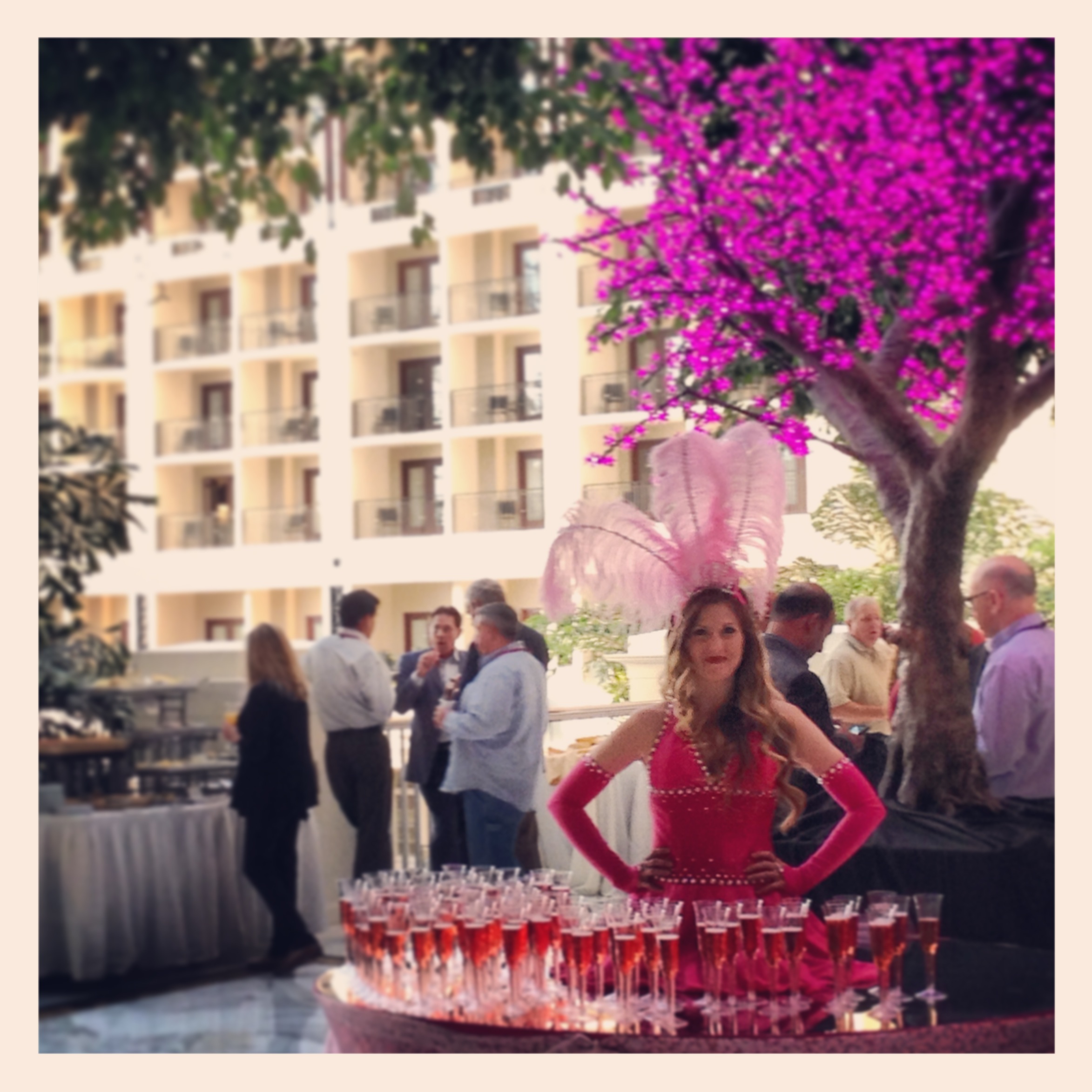
Bubbly and fun, this lovely girl was serving a Pink Prosecco Party Punch. She was working an event I attended this past weekend in DC. While it wasn’t specifically a wine event, there was always a glass of fermented fun nearby. Which is good, since it usually helps to loosen the tie of even the stuffiest stuffed shirt.

Prosecco is a sparkling wine from, most notably,  the region of Veneto in North Eastern Italy.  Pink Prosecco is just what it sounds like. What makes it pink? Skin contact with the Pinot Nero (Noir) grape.  According to WineSearcher.com the varietal blend is: 85% Prosecco (Glera) ~ the 15% remaining may include: Bianchetta Trevigana, Perera, Chardonnay, Pinot Grigio, and Pinot Noir (if you want it pink). Some notable brands worth sampling: Ruffino ($12), Canella ($17), Bisol Bel Star ($20). For mixing in punch, you might want to stick with the lower priced offerings. If you’re going to spend $20 on a bottle, it’s best to keep it the star of the show.

I find that sparklers like Prosecco go right to my head, so my rule of thumb is: One glass to feel dreamy ~ two or more and it’s lights out. But when combined with one of the first warm evenings of spring, it prompted me to start thinking, and anticipating, a great season ~ alfresco and under the stars.

Cheers!

©TheWineStudent, 2013

Breathe Easy: The Winebreather Carafe

The Winebreather image via givesimple

The Winebreather image via givesimple

A few posts back, I wrote about decanters and aerators and found that there was a significant difference in wine when you use them. I recently read about the Menu Winebreather Carafe. Menu claims that it adds 10x more oxygen to the wine in under 2 minutes…hmmm…that’s pretty interesting … and fast.  When you decant, you have to wait about 2 hours to to get the full effect of the oxygenation. Aeration is pretty instantaneous by comparison.

The way it works: You press the decanter onto the top of any wine bottle then flip it over to pour the wine into the decanter and serve. The beauty of this design is that if there’s any wine left in your decanter, and that’s a big if, you flip again, pour the remaining wine back into the bottle to store in the fridge. That’s kind of cool.

It retails for $49.95 and is available pretty much everywhere including Menu, Wine Enthusiast and Amazon.

Having a little science background (which can be a dangerous thing) I couldn’t just go by marketing copy and a few gold stars (although it seemed to score a lot of them).

Oh no, I’m going to do my own experiment ~ decanter vs. aerator vs. winebreather. I’d like to see for myself what’s what. Alas, I’ll have to wait a couple of days for the last constant; the Winebreather isn’t available at my local wine shops.  That’s a bit of a drag but it’s okay.

I’ll be sure to write a full report on my findings. But to pass the time, I’ll continue to enjoy my Rabbit. The aerator, I mean.

Cheers!

©TheWineStudent, 2013

Peggy, Joan and Betty: My Top Three Mad Wine Cocktails

The Ladies: Peggy (L), Joan (C) and Betty (R)

The Ladies: Peggy (L), Joan (C) and Betty (R)

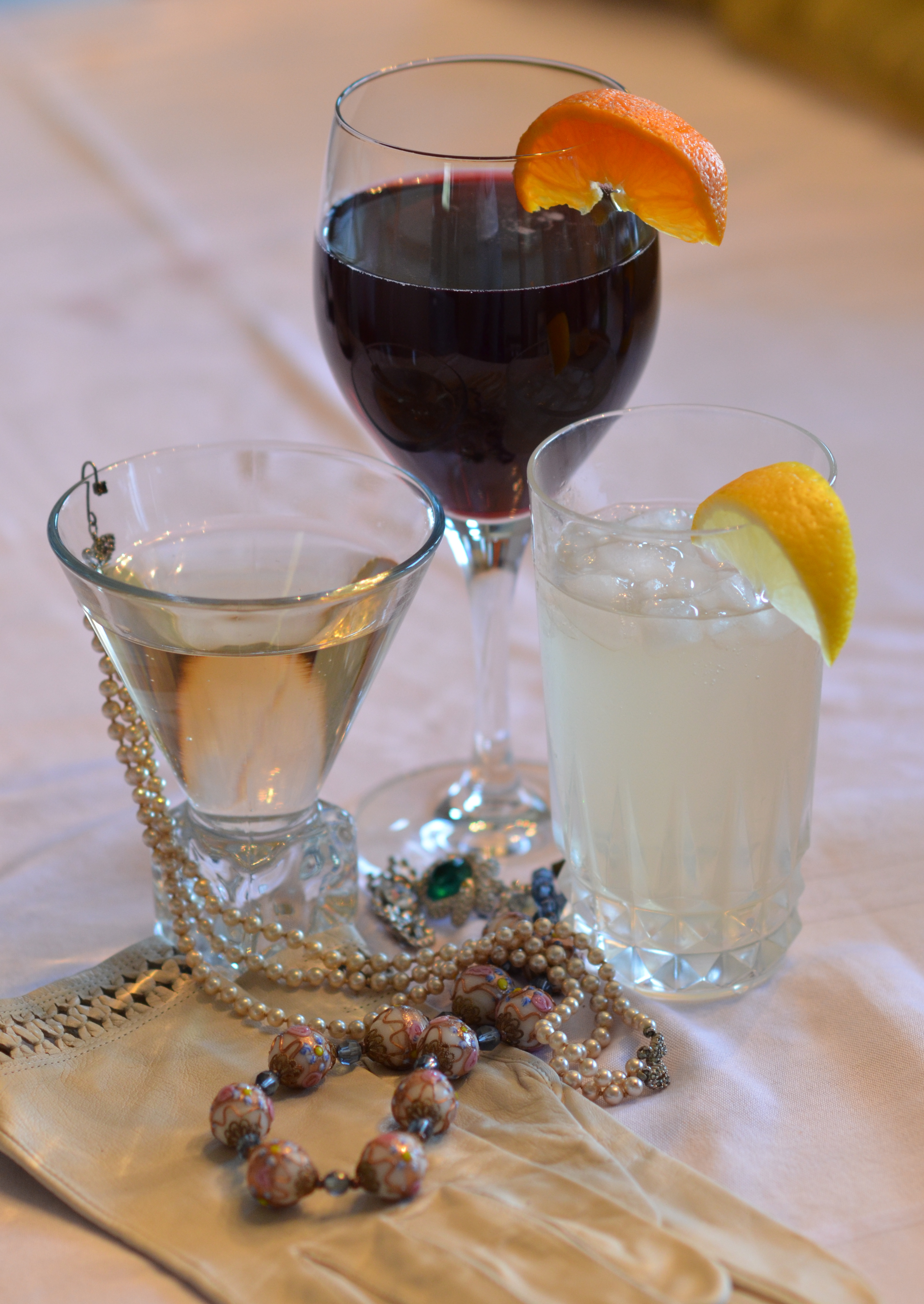
It’s no secret that I love AMC’s Mad Men. In the spirit of its Season 6 premier tonight, I found some wine-based cocktails that made me think of my three favorite lady characters: Peggy, Joan and Betty.

The Peggy (Operator)

2oz chilled dry white wine

2oz dry ginger ale

1 tsp lime juice

Pour over some cracked ice in an old fashioned glass. Garnish with a slice of lime and a generous dollop of sarcasm.

The Joan (Cabernet Cobbler)

4oz chilled Cabernet Sauvignon

1tsp fresh lemon juice

1tsp superfine sugar

2oz soda water

Dissolve sugar in lemon juice and water in a big, beautiful wine glass. Pour in Cabernet, stir gently and garnish with a slice of orange and a knowing wink.

The Betty (Diamond Fizz)

2oz Gin

juice of 1/2 lemon

1tsp powdered sugar

chilled Champagne

Shake gin, lemon juice sugar and ice, then strain into a high ball glass and fill with chilled Champagne. Garnish with an icy stare and a touch of resentment.

After some of the shocks of last season, I’m honestly not sure where this season will take us. But if memory serves, the Mad Men way of dealing life’s challenges is to remain calm, fasten your seat belt and smooth the rough edges with a great cocktail.

Cheers!

©TheWineStudent, 2013

It’s Always Sweet in Florida: San Sebastian Winery


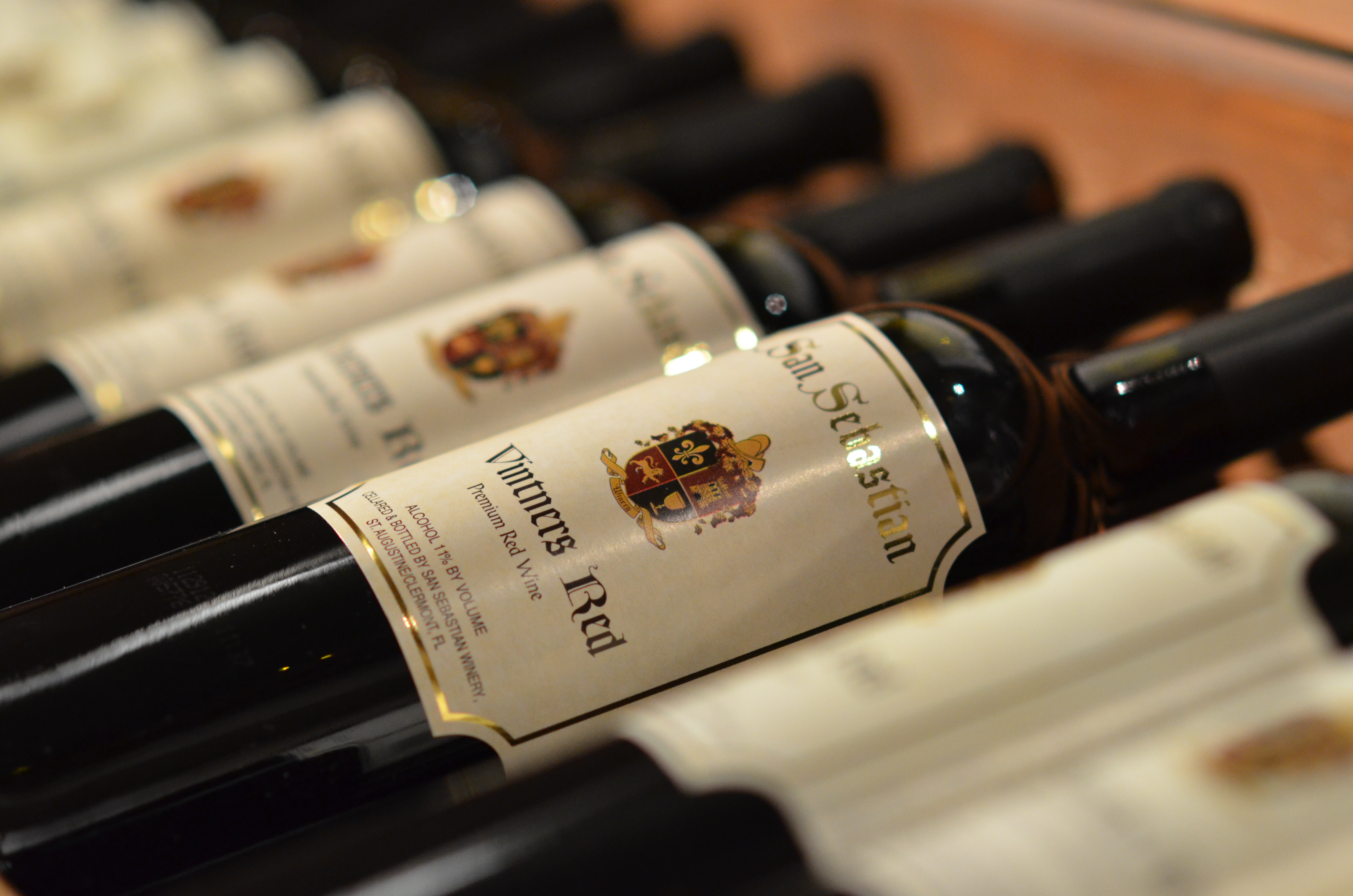
Wherever I travel, I always try to find a winery. Not that I can’t go a day without a glass of wine, but it’s a great way to check out local offerings and to taste the differences in growing regions. On this first trip to Jacksonville, I wasn’t sure I’d find one so close. San Sebastian Winery in St. Augustine, was only 45 minutes away by car. Sweet.

Established in 1996, San Sebastien Winery uses a combination of hybrid bunch grapes; Stover, Suwannee, Blanc Du Bois along with Muscadine. The Muscadine grape thrives in humid, warm conditions and well-drained, loamy sand. It bears fruit in small, loose clusters that allow for better air flow and circulation. If you look at the picture, they look really different from what we’re used to here in Ohio.
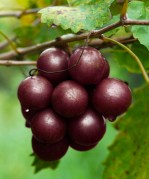
Muscadine Grapes Image via drlindseyduncun

Muscadine Grapes Image via drlindseyduncun

Their growing season begins from bud break in mid-March to harvest in late July and August.The skins change from a bronze into a deep blackberry color, when fully ripe, and have a very high content of polyphenols and trans-resveratrol, highly touted for its’ health benefits. Muscadine wine is typically sweeter due to the sugar content from the winemaking process.

Unlike many wineries I’ve visited, there was no direct access to their vineyards, (Lakeridge Winery) located several miles away in Clermont, Fla. So we toured the winery, saw an informational video about how wine is made, had a quick look at the barrel room, the bottling area and finally wound it all up in the tasting room. There, we sampled a few of their products including: the Castillo Red (very Merlot-like) and the Stover Reserve ~ quickly moving down the list, from dry to sweet, until we reached the sherry and port.

Tour guide Doc Michealson, instructed visitors on why the swirl is important and, specifically, how to properly sip the port and sherry. He explained that it would take three sips of each to get the full flavor. One lone sip and all we’d taste would be “the booze”, not that there’s anything wrong with that. However, I got his point that the beauty was in tasting the nuance of the flavors. For a winery whose mandate is for visitors to take with them some education about wine, and also a bottle or two, they do a nice job.

We found that most of the wines tended to be on the sweet side, even ones that were billed as dry, tasted quite sweet. That makes sense given the type of cultivar that do well in summer heat as well as the style of winemaking. It also could be because our palates are used to beefier, full-bodied reds from Italy, Oregon, Washington and Napa.

But that was the most interesting element because it was a true expression of their particular terroir.

Instead of being a copy of some other style, it was uniquely their own.

Cheers!

This slideshow requires JavaScript.


©TheWineStudent, 2013