Mangia! Mangia!

The Beautiful 07 Ruffino Santedame Chianti

The Beautiful 07 Ruffino Santedame Chianti

It’s a drab, rainy Tuesday night in the Cleve, and I wanted to pair my weekly pasta dish with something special. Looking in our  wine rack, I found an 07 Ruffino Santedame Chianti. I’ve always enjoyed Ruffino in the past, and thought I’d pair it with my freshly made tomato basil sauce with (leftover) meatloaf crumble ~ yes, I’m frugal and, yes, it’s better than it might sound.

The bright, rich color, as it poured into my glass, was very inviting but the thing that was most intriguing was that I couldn’t place what was going on with the nose. It smelled of a lovely perfume, which was a new vibe for me.  And it was bugging me that I couldn’t quite place it. Finally, it dawned on me: It was rose. And it wasn’t the kind of rose you associate with the cheap stuff; it was the light-scent-that-delicately-wafts-on-the-air-of-a-summer-breeze rose.

The mouthfeel was on the grippy side with a velvety finish and the predominant flavor was of a bold, sour cherry. The sour of the cherry beautifully counterbalanced the savoury of the sauce that made the pairing really terrific. For a back- to- basics dinner the night after summer’s last long weekend, a few fireworks still managed to pop.


Cheers!


Back to the Books!

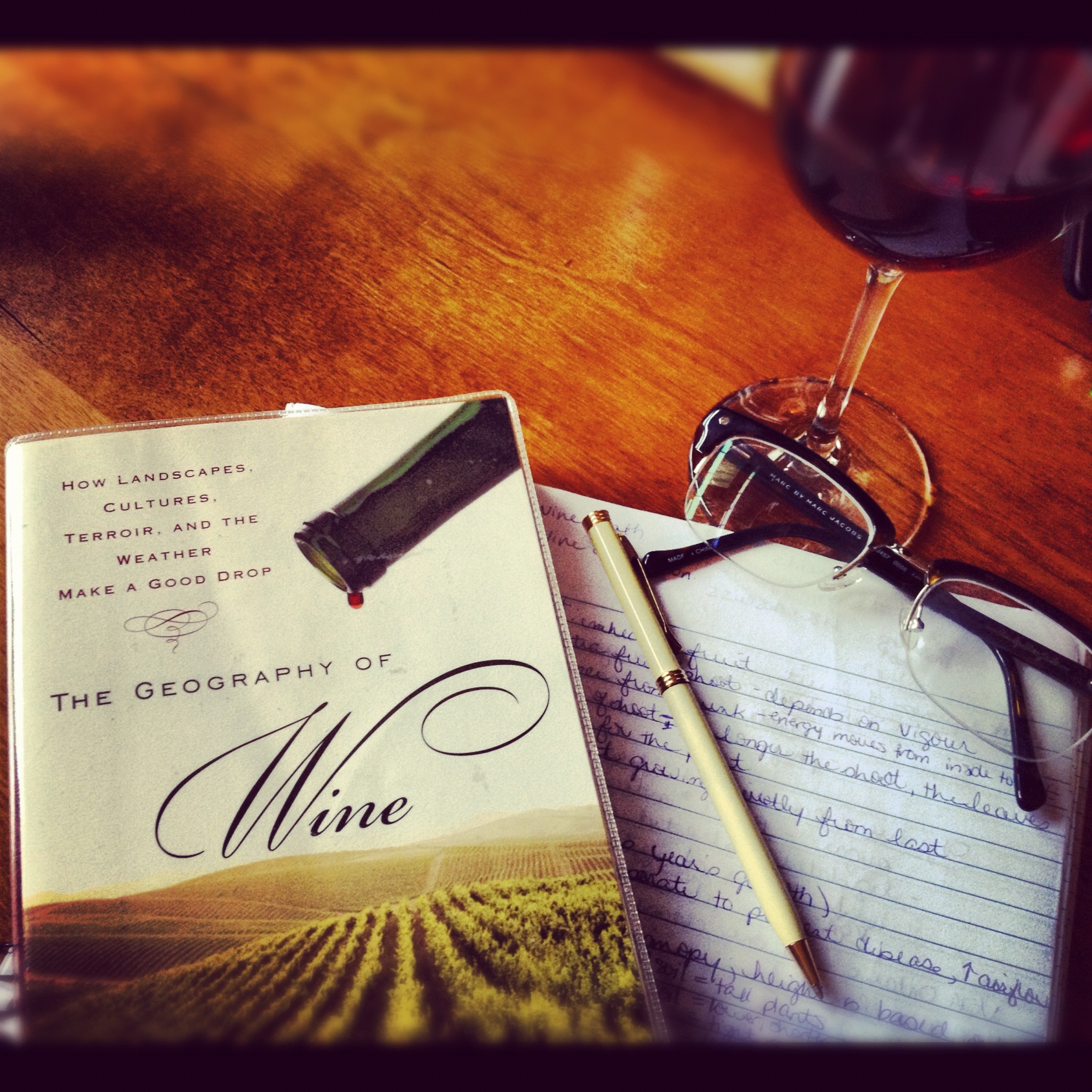
books and wine: homework can be fun!

books and wine: homework can be fun!

Summer, what summer? It’s been crazy busy and now that my daughter is safely into her new school routine ~ I still can’t believe she’s actually in high school ~ I thought I would do a little reading to help me come back to earth, so to speak. ‘The Geography of Wine” by Brian J. Sommers was a great exploration of various world wine regions and what makes them unique from a geographer’s perspective. What I liked about his approach was he took a subject that had the potential of being very dry (wait ~ was that a pun? you know my policy on puns ~ bottoms up!) and boring but made it very accessible and interesting.

If you’ve ever been curious about terroir and the role geography plays in the concept, this book summons all aspects. In a way that’s easily read for the lay person, Sommers deftly explores the biogeography of the grape, how urbanization affects wine geography, and economics ~ including the politics of wine with respect to its’ unique growing regions. In the last chapter, he discusses his own love of wine and how in each glass,  not only do you taste the grape but you taste a great deal about the culture of where it’s grown, nurtured and loved.

I’ll write more about terroir in another post but in the meantime, I’d like to recommend this book as a great reference for discovering that what goes into your glass is so much more than just fermented grapes.

Cheers!